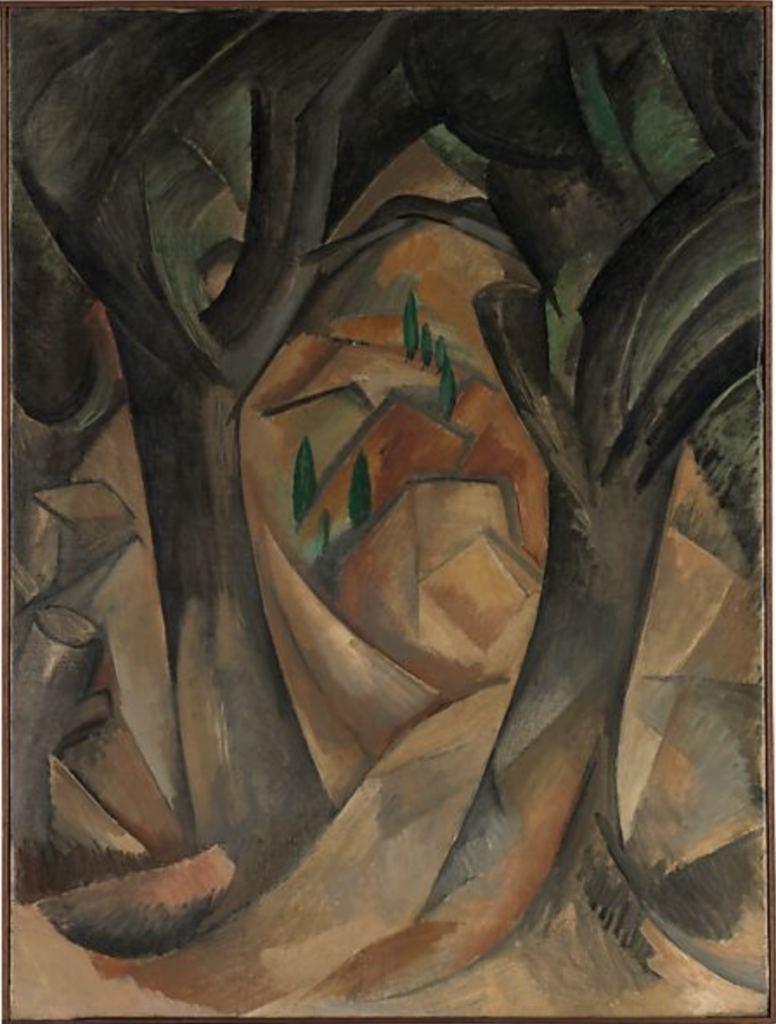
1. Georges Braque, Trees at L’Estaque
In 1908, Georges Braque painted Trees at L’Estaque while emulating Cézanne’s structured landscapes. This work eventually became one of the most iconic Cubist paintings in art history. When the critic Louis Vauxcelles saw the abstracted forms, he dismissed them as mere “cubes.” This remark led Guillaume Apollinaire to coin the term Cubism. Consequently, the artistic exploration of Picasso and Braque formed a cohesive movement. Their work rejected the established notion that art must copy nature. They boldly abandoned techniques like perspective, modeling, and foreshortening to redefine the modern canvas.
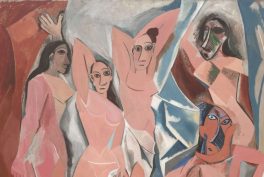
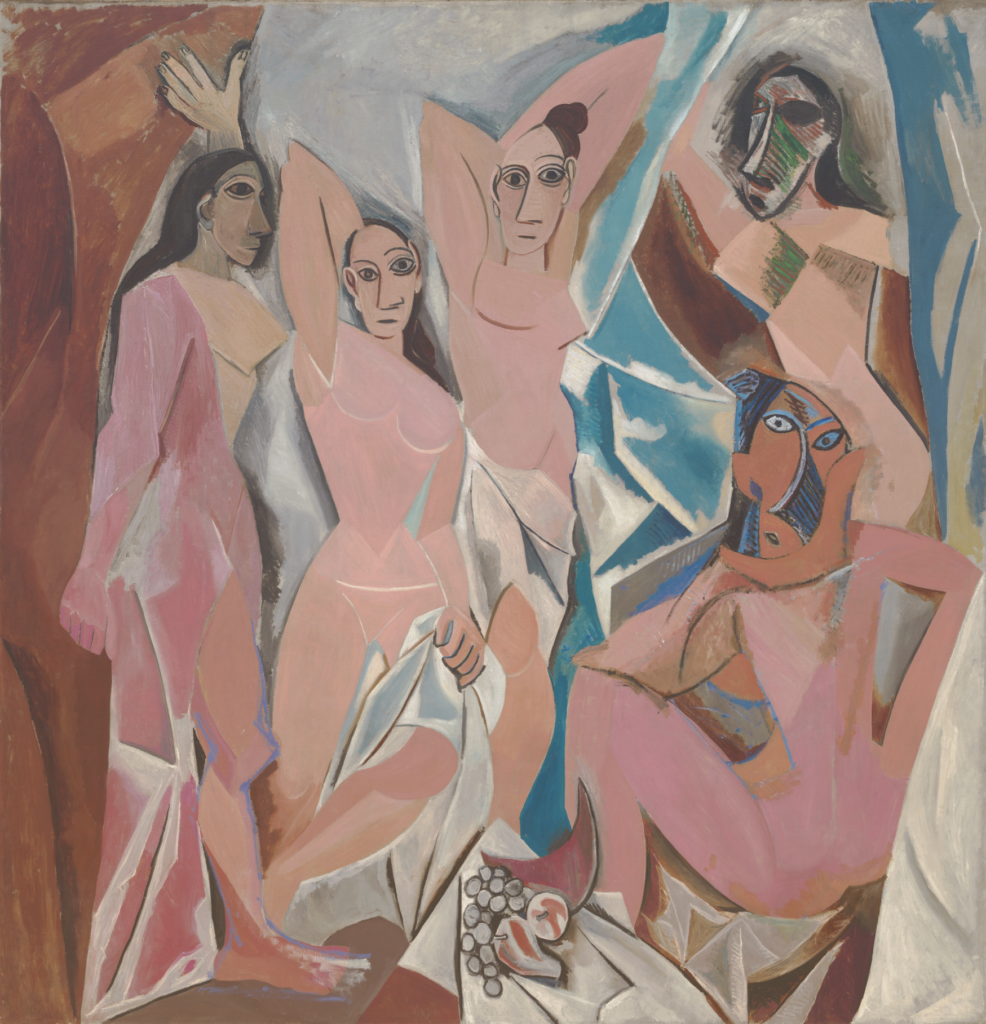
2. Pablo Picasso, Les Demoiselles d’Avignon
In 1907, Pablo Picasso painted Les Demoiselles d’Avignon. This masterpiece marked a dramatic break from traditional composition with five nude women depicted as flat, splintered planes. While Picasso pioneered this shift, all Cubists eventually drew heavy influence from Primitivism and various non-Western sources. Specifically, these artists engaged with the stylization and distortion found in African art to shatter existing conventions.
Picasso first encountered these powerful aesthetics at the Musée d’Ethnographie du Trocadéro earlier that year. These “magic objects” inspired the movement to substitute raw, geometric energy for classical representations. Consequently, the painting’s jagged forms signaled the emergence of a new pictorial language. This cultural synthesis redefined the boundaries of modern art for an entire generation of painters.
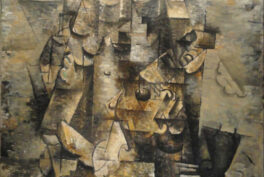
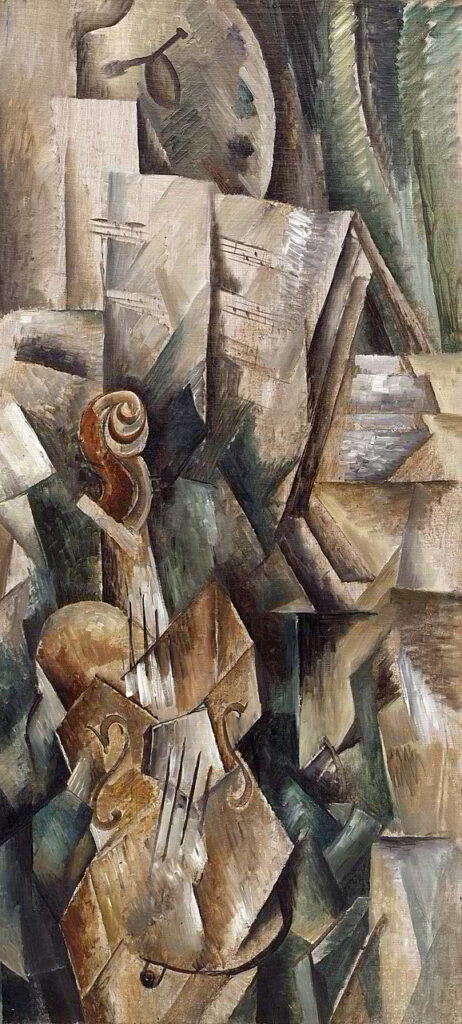
3. Georges Braque, Violin and Palette
Braque’s 1909 masterpiece signaled a shift toward the rigorous intellectualism of Analytical Cubism. By fragmenting the violin and sheet music into crystalline layers, the artist effectively blended his subjects with their surrounding environment. This composition highlights a shallow, relief-like space that flatly rejects any illusion of depth or traditional modeling.
Specifically, Braque misaligned various facets to emphasize the physical two-dimensionality of the canvas itself. A startlingly realistic nail at the top creates a witty, trompe-l’oeil contrast against the otherwise fragmented, geometric forms. This work stands among the most iconic Cubist paintings because it captures the internal rhythm of objects rather than their outward appearance. It is an ideal example of how early pioneers reassembled reality through a purely structural lens.
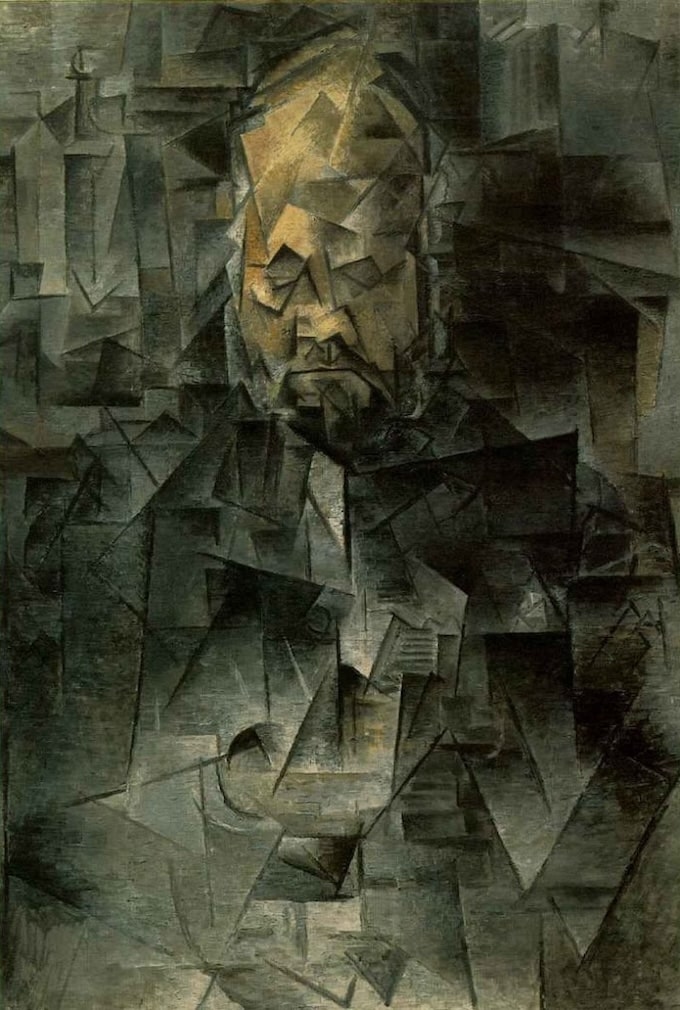
4. Pablo Picasso, Portrait of Ambroise Vollard
By 1910, Pablo Picasso pushed analytical cubism to its most extreme and complex limits. In this portrait, he completely dissected the famous art dealer into a grid of tiny, interlocking planes. He abandoned traditional modeling and foreshortening to treat the figure and background as a single, cohesive entity. Despite this intense fragmentation, the viewer can still perceive Vollard’s massive forehead and downcast eyes. Picasso utilized a muted palette of ochre and gray to keep the focus strictly on the structural geometry. It successfully captures the essence of a person without conforming to realistim.
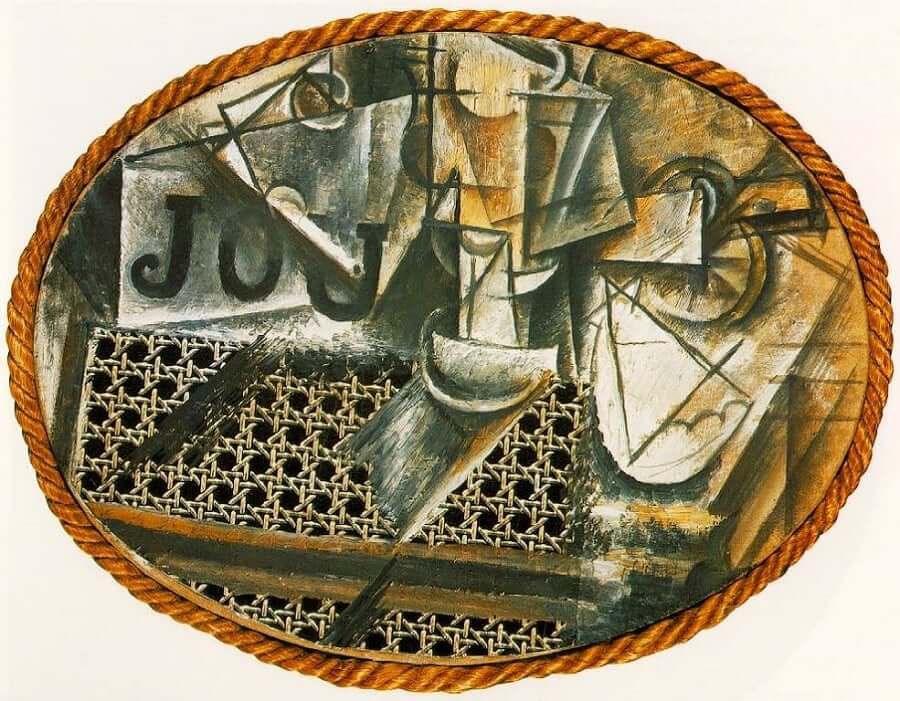
5. Pablo Picasso, Still Life with Chair Caning
In 1912, Picasso fundamentally altered the course of modern art with Still Life with Chair Caning, widely recognized as the first Cubist collage. This work marked the shift from “analyzing” objects to the constructive phase of Synthetic Cubism. Rather than imitating texture with a brush, Picasso physically affixed a piece of oilcloth, preprinted with a rattan cane pattern, directly onto the canvas.
He then surrounded the oval composition with a real length of hemp rope, treating the painting as a tangible “tableau-objet” (painting-object) rather than a mere window into a scene. By mixing low-brow, mass-produced materials with high art, he introduced a slice of reality into the fictive realm of painting.
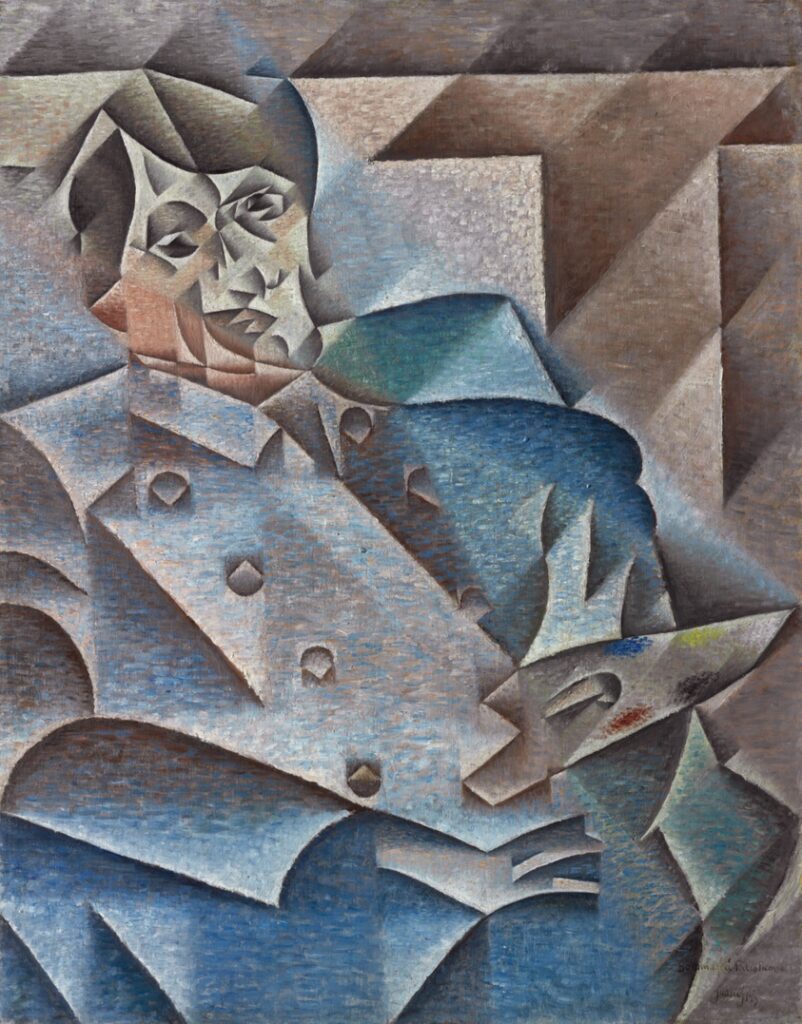
6. Juan Gris, Portrait of Pablo Picasso
Often called the “Third Musketeer” of the movement, Juan Gris brought a mathematical precision to the style that contrasted with the more intuitive approach of his peers. His 1912 Portrait of Pablo Picasso serves as a definitive example of analytical cubism while simultaneously hinting at the artist’s unique, systematic logic. Gris organized the composition into a diagonal grid of cool blues, grays, and ambers, segmenting Picasso’s features into a series of rhythmic, geometric planes.
Unlike earlier experiments, this work maintains a legible structure that allows the viewer to easily identify the subject’s silhouette and stature. By treating the human form as a complex architectural puzzle, Gris foregrounded the intellectual rigor associated with these iconic Cubist paintings. He effectively bridged the gap between raw experimentation and a disciplined, harmonious aesthetic that would inform the movement later.
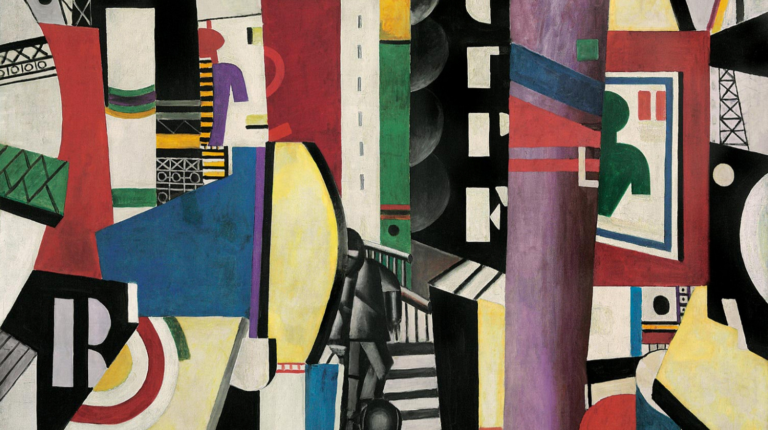
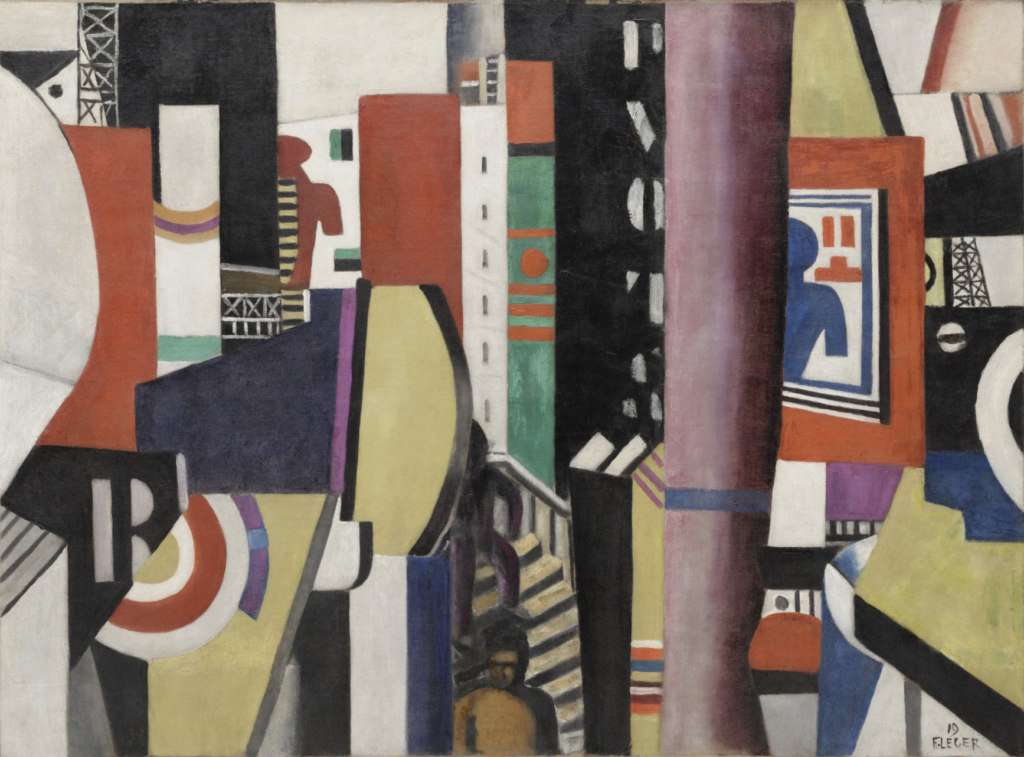
7. Fernand Léger, The City
Fernand Léger injected a mechanical heartbeat into the canvas with his masterpiece, The City. Many scholars place this work among the most iconic Cubist paintings. Léger traded soft edges for the sharp, metallic rhythms of the industrial age. Huge geometric slabs overlap to mimic the soaring height of modern skyscrapers. Bold primary colors recall the intensity of neon street signs.
Flat grays and blacks ground the composition in steel and asphalt. Léger transformed humans into tubular silhouettes to match their mechanical surroundings. The artist viewed the bustling metropolis as a beautiful, synchronized engine. Consequently, his composition vibrates with a sense of constant, frantic motion as he rejected stagnant art for the speed of early 20th century life.
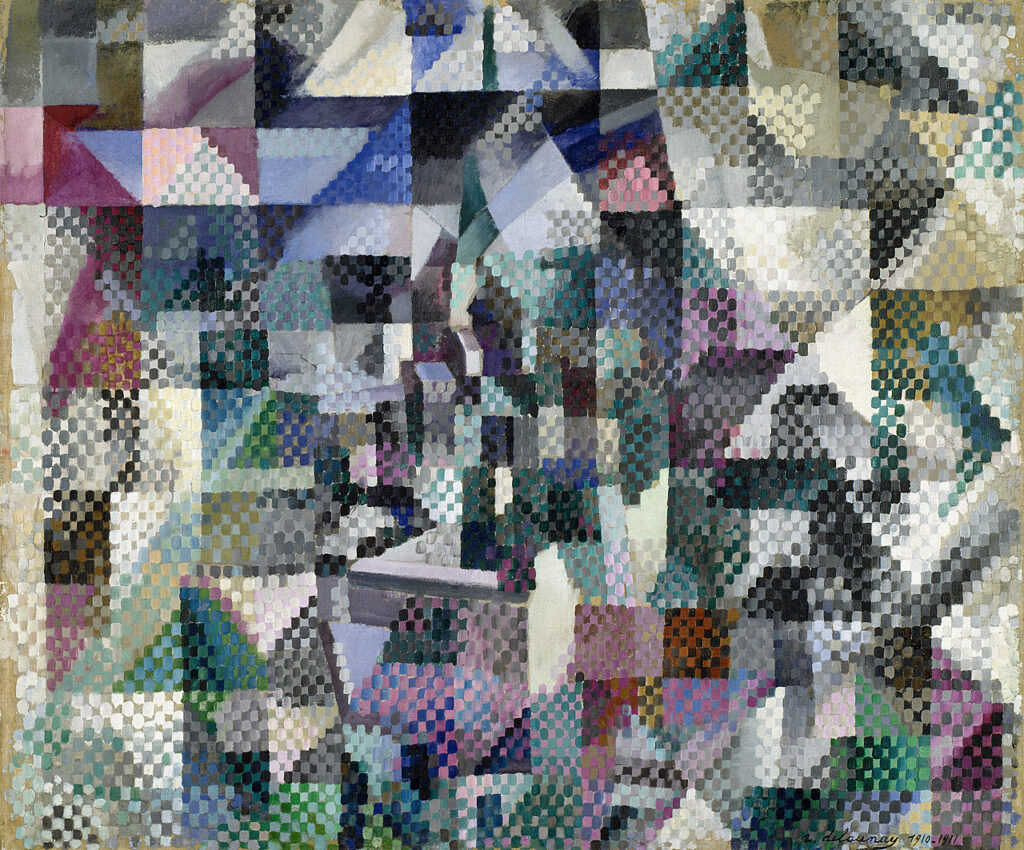
8. Robert Delaunay, Windows on the City No.3
Robert Delaunay shattered the somber palette of early Cubism with Simultaneous Windows on the City. This radiant piece officially introduced Orphism to the art world. He adopted the traditional fractured grid but improvised it, adding vibrant, pure color to the mix. His vivid approach differs sharply with the muted tones found in earlier Cubist paintings. The artist used contrasting hues to emulate the flickering quality of light through glass. This visual experiment replaces solid objects with rhythmic, transparent planes. Ultimately, Delaunay transformed a simple view of the Eiffel Tower into a shimmering window of pure energy.
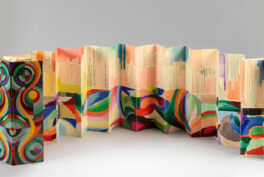
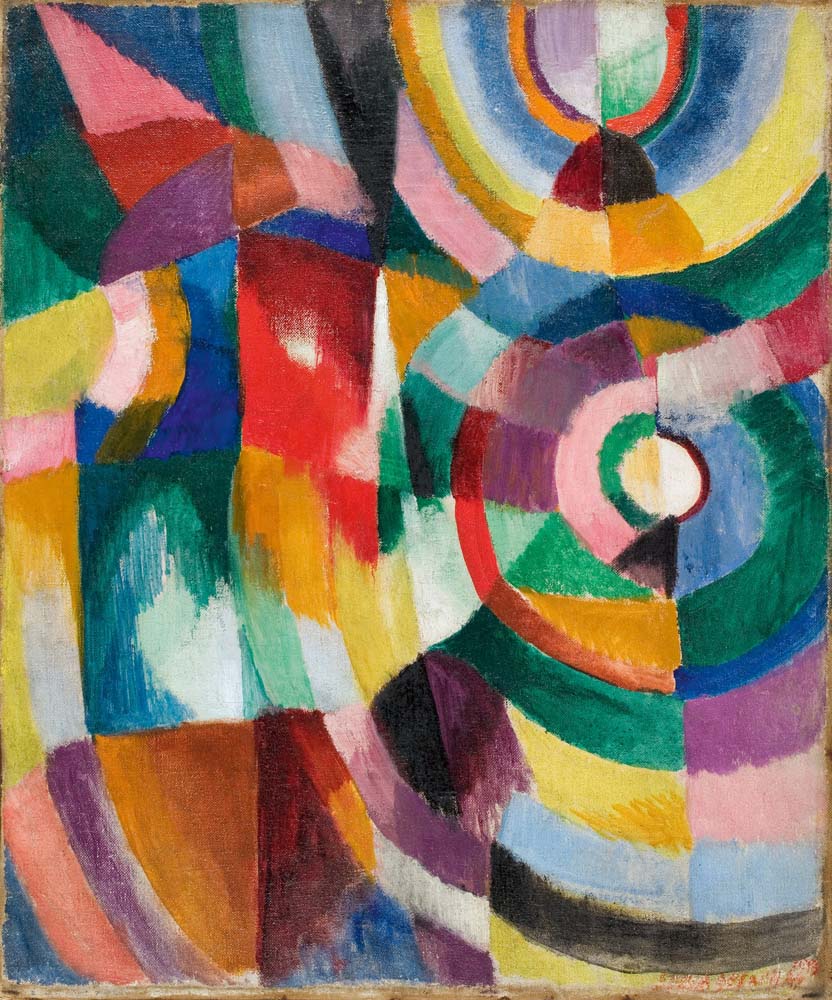
9. Sonia Delaunay, Electric Prisms
Sonia Delaunay pushed the boundaries of light and motion in her mesmerizing Electric Prisms, a vital contribution from a woman artist of the avant-garde. She applied the logic of fragmentation to the artificial glow of modern Parisian street lamps. Her work captures the birth of simultanism (a term that describes how colors look different depending on the colors around them) through a series of overlapping, concentric circles.
These vibrant disks create a sense of rhythm that mirrors the energy of a bustling city. Her vision extended far beyond the traditional frame of a gallery. She successfully translated these geometric theories into the realms of fashion and interior design. This transition proved that modern art could function as a lived, tactile experience. Thus, Sonia Delaunay further bridged the gap between high intellectual theory and everyday urban life. She transformed the static world into a swirling, colored dance of mechanical light.
10. Bohumil Kubišta, Saint Sebastian
Bohumil Kubišta delivers a haunting, powerful finale with his spiritual masterpiece, Saint Sebastian. This work establishes Prague as a vital epicenter for innovation outside the Parisian art scene. He masterfully fused sharp, geometric planes with the raw emotional intensity of Expressionism. The artist used jagged lines to emphasize the physical suffering of the martyred saint. Meanwhile, a rigid mathematical structure maintains a sense of calm, intellectual control. This unique “Czecho-Cubist” style adds profound psychological depth to the movement’s technical evolution.
Kubišta proved that modern geometry could handle ancient, sacred narratives with ease. His approach provides a striking contrast to the more secular themes seen in other iconic Cubist paintings. The composition forces the viewer to confront both the beauty of form and the reality of pain. Ultimately, he successfully combined cutting-edge science and timeless human emotion. This painting marks the moment where the style transcended mere decoration to become a vessel for the soul.
The Fragmented Legacy
Though the formal Cubist movement lasted less than a decade, its impact shattered the trajectory of Western art forever. By dismantling the Renaissance “window” and replacing it with a flat structure of the intellect, Picasso and Braque provided the blueprint for nearly every abstract movement that followed. This list represents only a fraction of the era’s prolific output, focusing specifically on the works that served as structural milestones rather than personal career highlights.
Even years later, the movement’s DNA remained visible in monumental works like Picasso’s Guernica, proving that Cubism as a defined movement was brief, but the new way of seeing the world it initiated was bound to last. We have featured here the pillars that redefined the canvas, moving art away from a naturalistic imitation toward a radical, multifaceted reality.
P.S. If you want to learn more about this fascinating art movement and its artists, we’ve prepared a special online course Cubism 101: Picasso, Braque and the Others. First lesson is free of charge!