
Fanny Eaton—Pre-Raphaelite Muse from Jamaica
Fanny Eaton was a regular model for the Pre-Raphaelites during the 1860s and features in a number of famous works. Yet for most of the last century,...
Catriona Miller 19 February 2026
From van Gogh’s sunflowers, through golden dresses, to tranquil landscapes—yellow lights up the scene. It is the color of the sun, associated with hope, energy, and happiness. Here are 10 amazing yellow paintings worth seeing—and maybe even feeling their warmth just by looking at them.
There is a sun, a light that, for want of another word, I can only call yellow, pale sulfur yellow, or pale golden citron. How lovely yellow is!
A letter to his brother Theo, August 12, 1888. Van Gogh Museum.
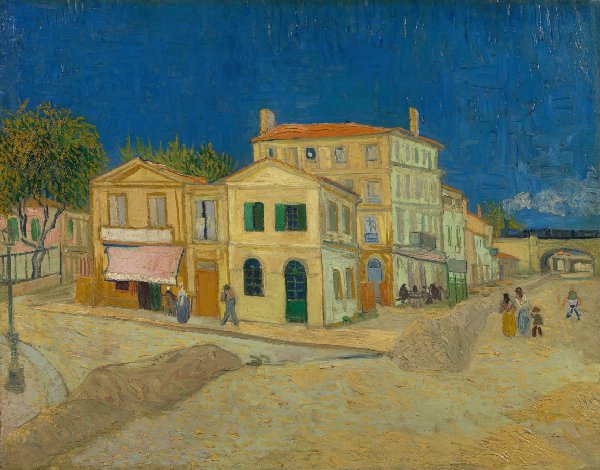
Vincent van Gogh, The Yellow House (The Street), 1888, Van Gogh Museum, Amsterdam, Netherlands. Museum’s website.
When thinking of yellow paintings, Vincent van Gogh immediately comes to mind. Although the artist began with dark tones, he soon switched to a bright palette, inspired by the Impressionists and the popularity of more vivid colors at the time.
The Yellow House depicts the place he rented in 1888 in the French town of Arles. The building with green shutters became both his home and studio where he welcomed his friends, including Paul Gauguin. Here, van Gogh captured his home and its surroundings in warm sunlit shades with touches of green, contrasting with the vivid, dark blue sky.
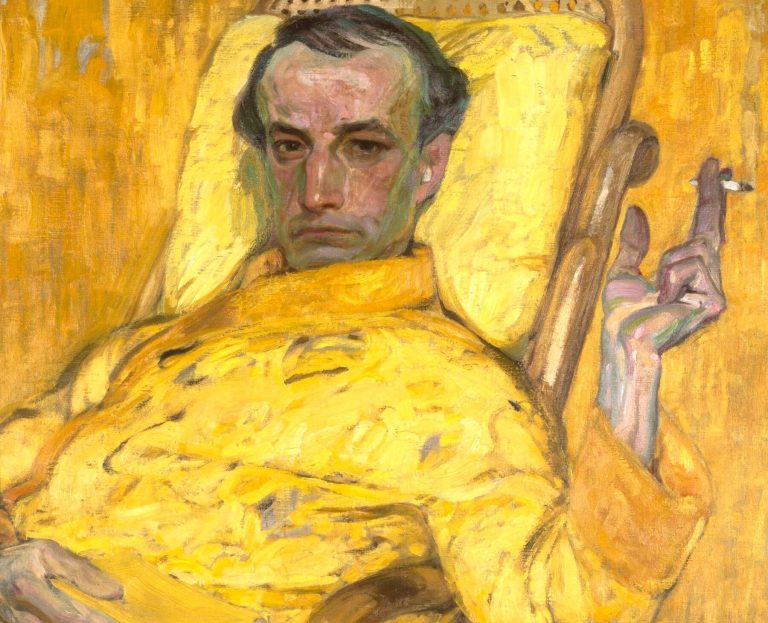
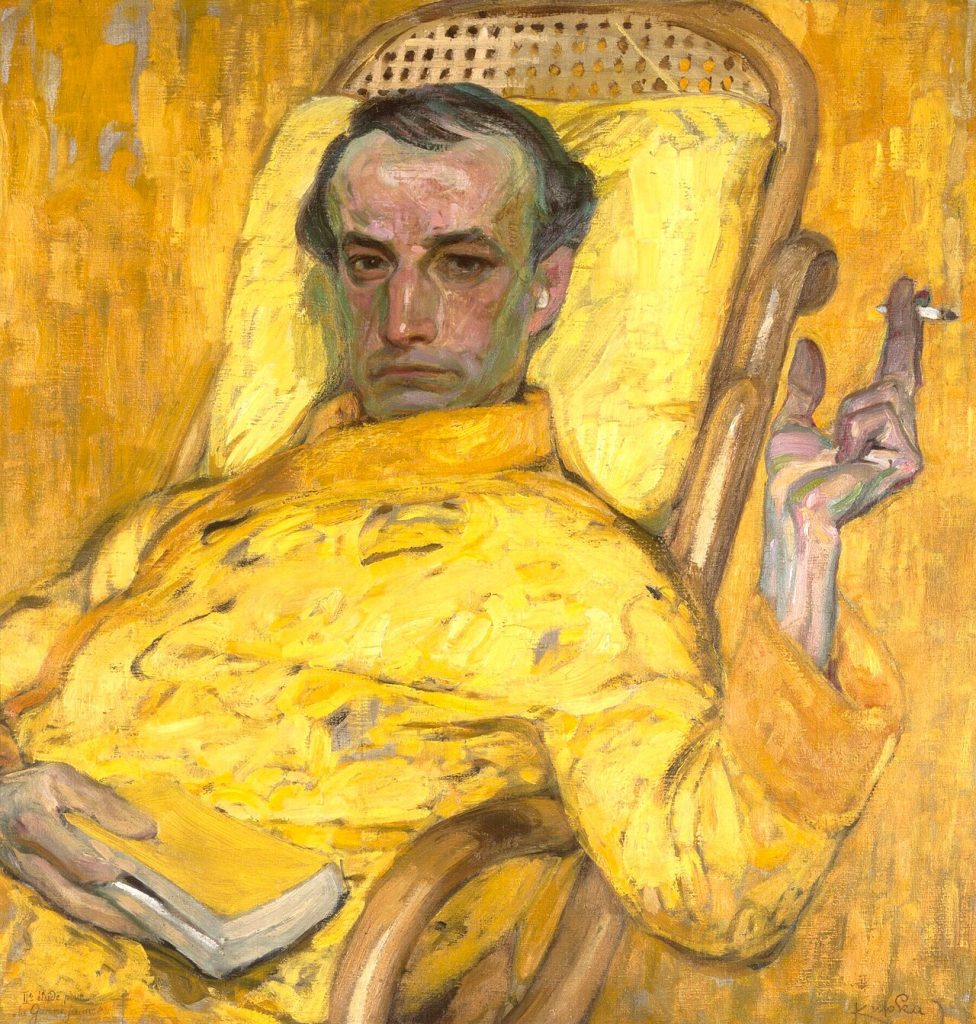
František Kupka, The Yellow Scale, c. 1907, Museum of Fine Arts, Houston, TX, USA. Wikimedia Commons (public domain).
In The Yellow Scale, František Kupka covers himself and the space around him in vivid shades of yellow, from warm to citrus tones. While holding a book in one hand and a cigarette in the other, his serious eyes look straight at the viewer.
His expression suggests a head full of deep thoughts. The lively yellows contrast with his introspective look, reflecting Kupka’s fascination with color, light, and spirituality, as well as his interest in the energy of nature—themes he presented in his abstract works.
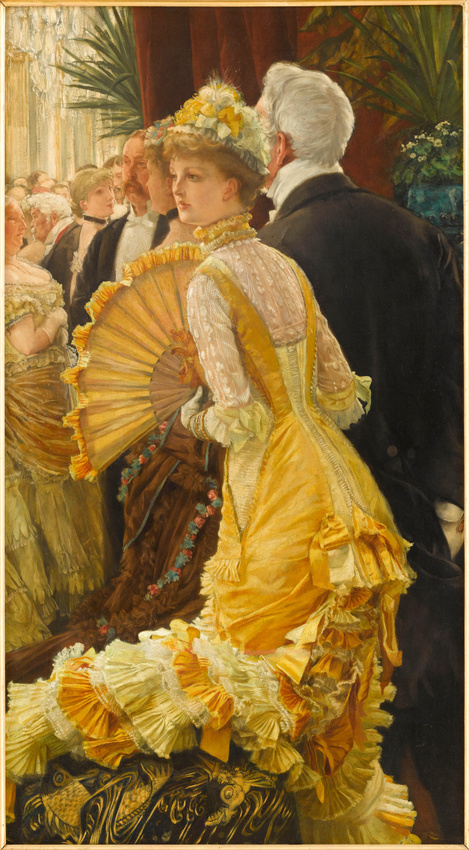
James Tissot, Evening, 1878, Musée d’Orsay, Paris, France. Museum’s website.
James Tissot is known for painting women in very elegant and stylish attire. In the Evening he depicts a young woman dressed in a luxurious yellow dress, full of folds and lace. She is attending a ball, with the help of the older man on her side, being introduced to society. Her fan and hair ornament complement the dress, and the whole look reflects Victorian style.
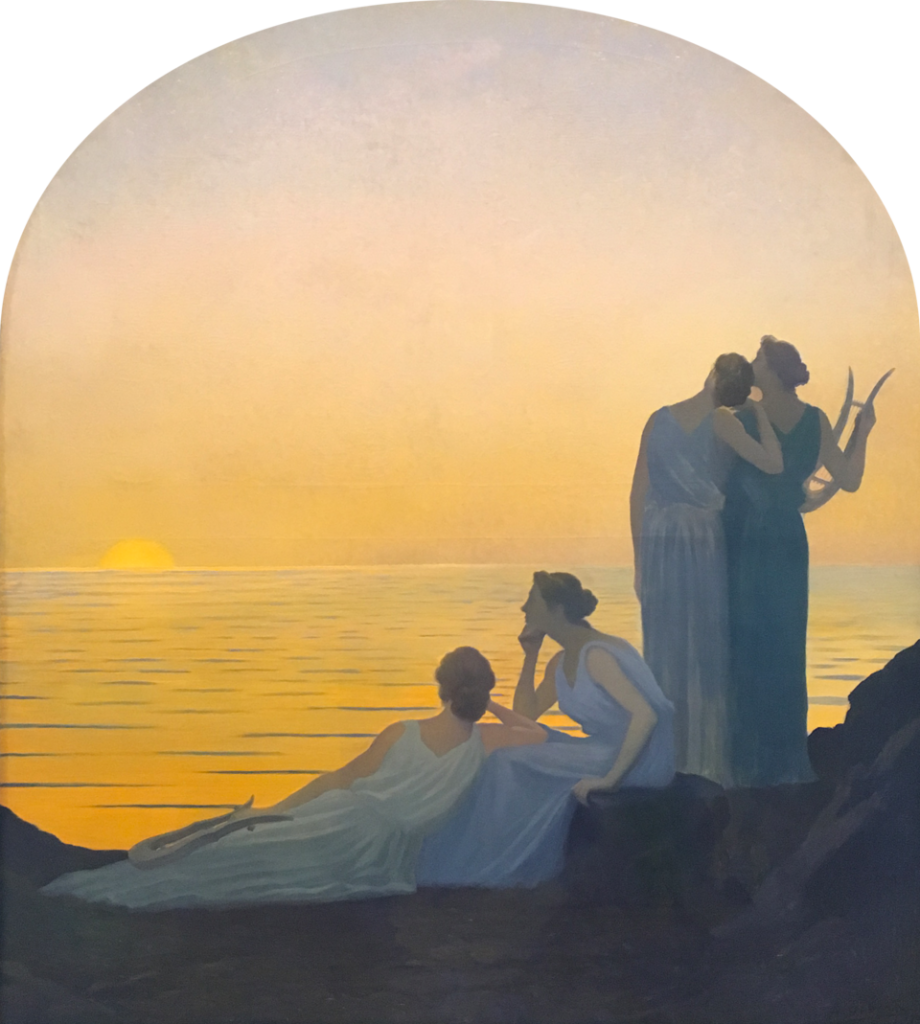
Alphonse Osbert, Soir Antique, 1908, Petit Palais, Paris, France. Wikimedia Commons (public domain).
There is something very soothing about watching the sunset, especially by the water. This tranquil moment is what the French Symbolist painter Alphonse Osbert captures in Soir Antique. The sky and waves turn into warm yellow and orange tones.
Four women, in harmonious and almost theatrical poses watch the sunset, and the whole scene feels lyrical, calm, and quiet. Osbert was known for painting landscapes mostly at dawn or dusk, often including mysterious, almost mythological female figures.
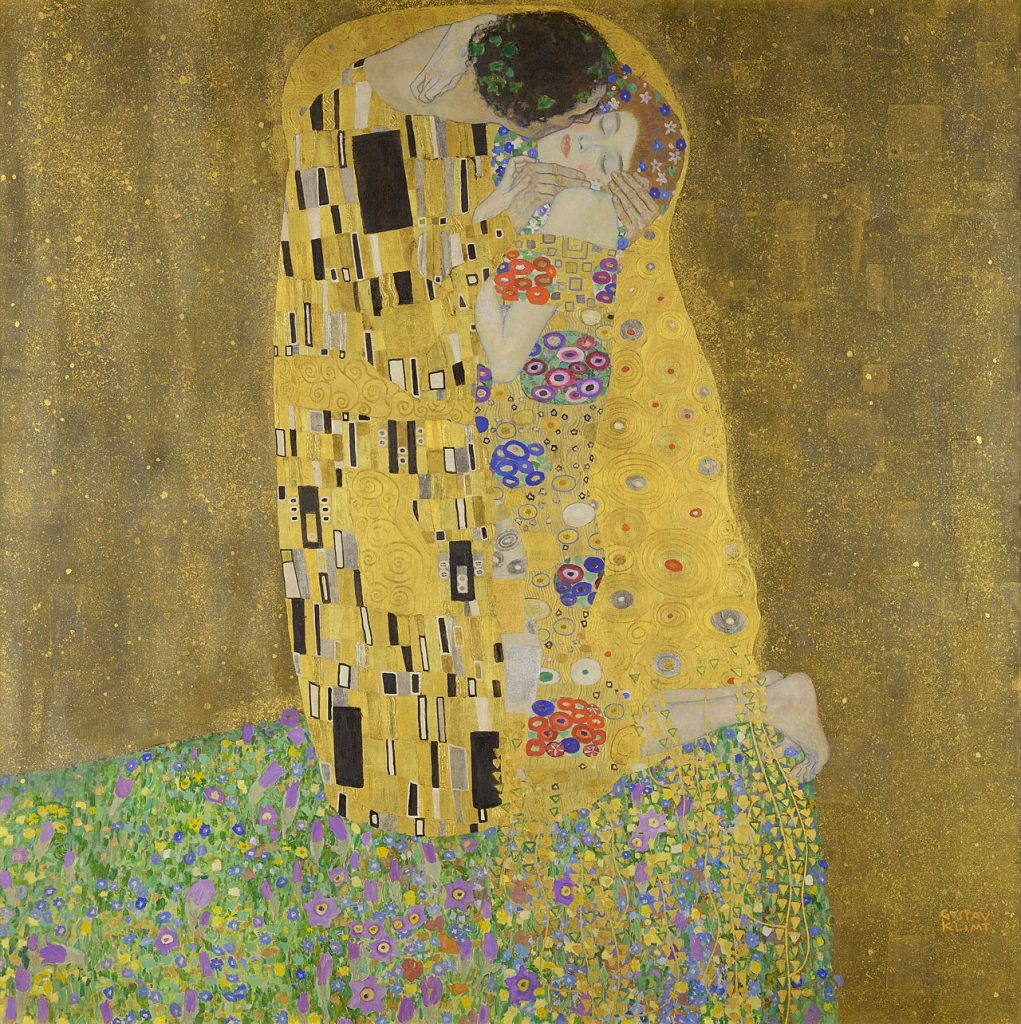
Gustav Klimt, The Kiss, 1907–1908, Österreichische Galerie Belvedere, Vienna, Austria. Wikimedia Commons (public domain).
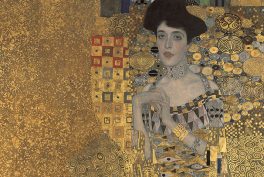
Another artist known for his golden yellow tones is Gustav Klimt. His most famous painting, The Kiss, was created during the artist’s Golden Period. At that time, Klimt focused on adding glowing touches to his art, often in portrayals of women. This artwork presents the lovers dressed in gold, with geometric patterns on their garments, standing in a meadow full of flowers.
To this day, it remains one of the most celebrated paintings, known not only for falling within the yellow and gold category but also for its timeless portrayal of love, while leaving room for multiple interpretations.
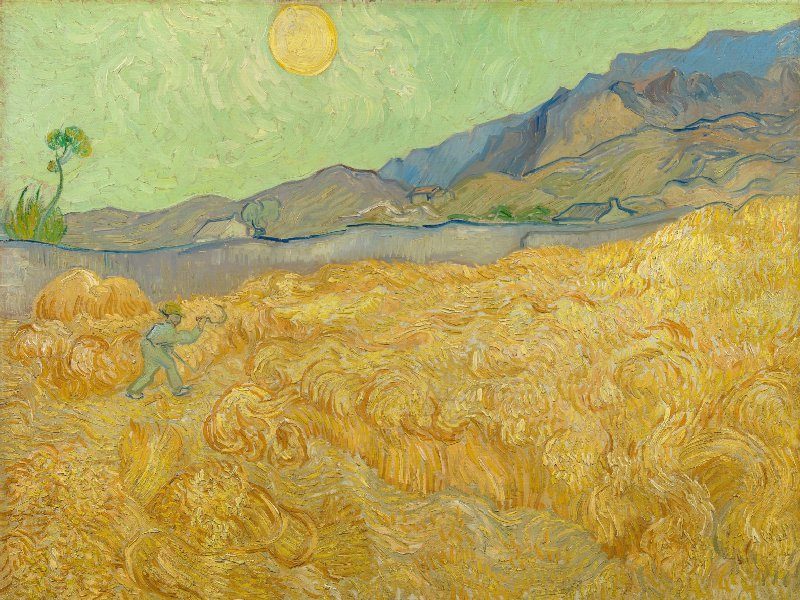
Vincent van Gogh, Wheatfield with a Reaper, 1889, Van Gogh Museum, Amsterdam, Netherlands. Museum’s website.
Van Gogh stayed in the Saint-Rémy hospital in 1889, where he spent much of his time painting the views outside his window. This period was incredibly productive, and one of the scenes he captured shows a reaper working on a hot summer day.
Even though it seems like a simple depiction of everyday labor, the reaper symbolizes death, while the wheat represents life being slowly taken away. Yet the artist captured this moment as a natural part of life, using delicate colors to create a warm, visually pleasing image.
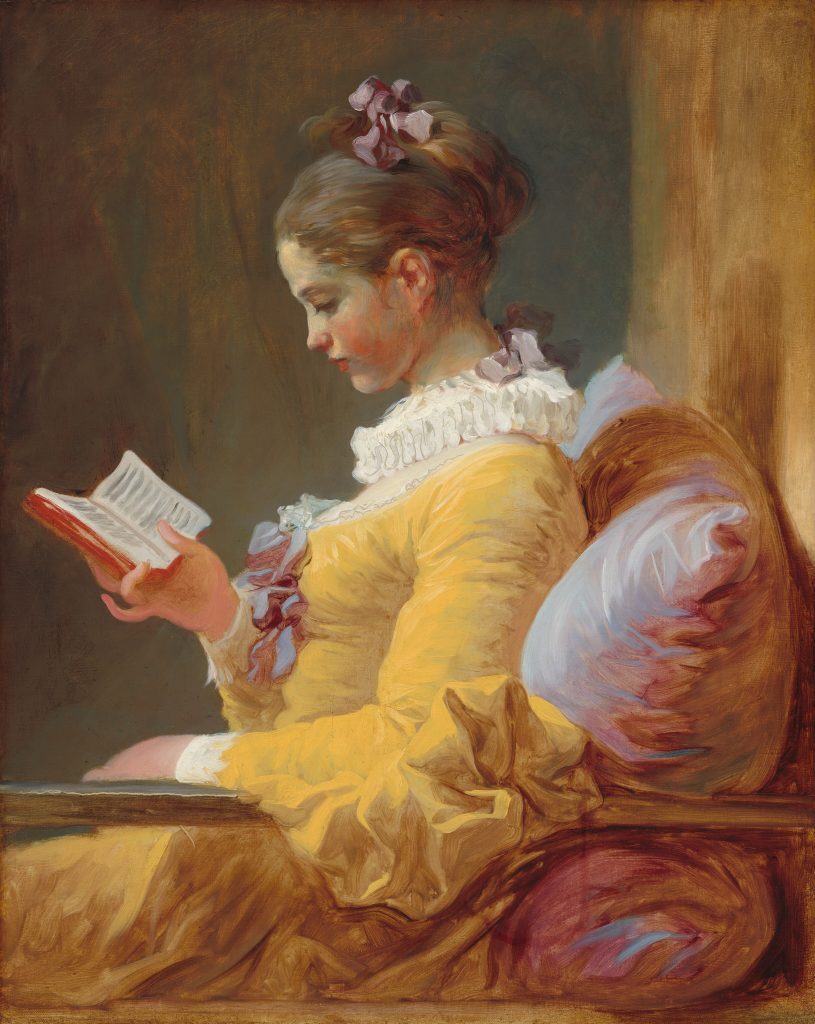
Jean-Honoré Fragonard, Young Girl Reading, c. 1769, National Gallery of Art, Washington, DC, USA. Museum’s website.
Here, a young girl is absorbed in her book, almost as if she has forgotten her surroundings, lost deeply in the story. She wears a yellow dress with a white collar and pink ribbons, looking comfortable as she leans against a large cushion. Jean-Honoré Fragonard, a French Rococo painter, created this composition, which radiates warmth and calm, turning a simple moment of reading into an elegant, visually refined scene.
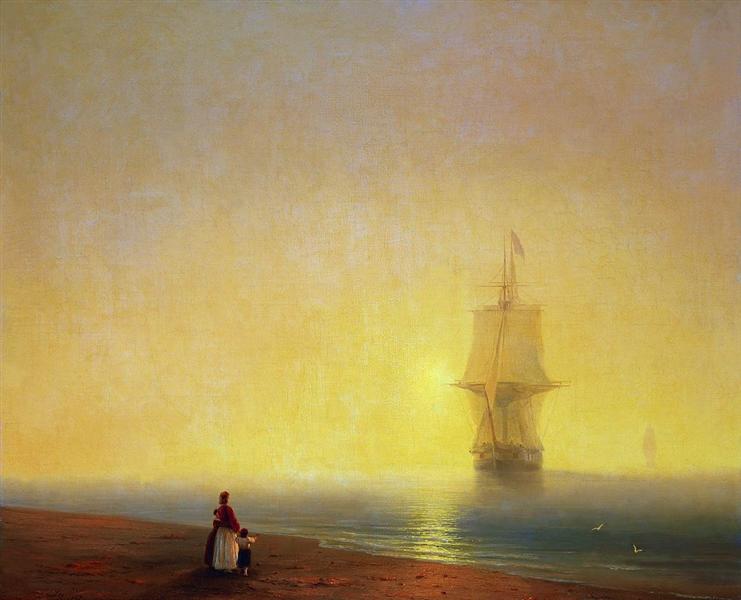
Ivan Aivazovsky, Morning at Sea, 1849, State Museum-Reserve Pavlovsk, Saint Petersburg, Russia. WikiArt (public domain).
A very peaceful painting from the Romantic period, Morning at Sea is one of Ivan Aivazovsky’s landscapes. A ship sails, seemingly towards the coast, with the shadow of another boat visible in the distance, while a woman and her children stand on the beach, either admiring it or awaiting its arrival. Delicate color transitions, a signature of the painter’s style, make the landscape feel almost dreamlike.
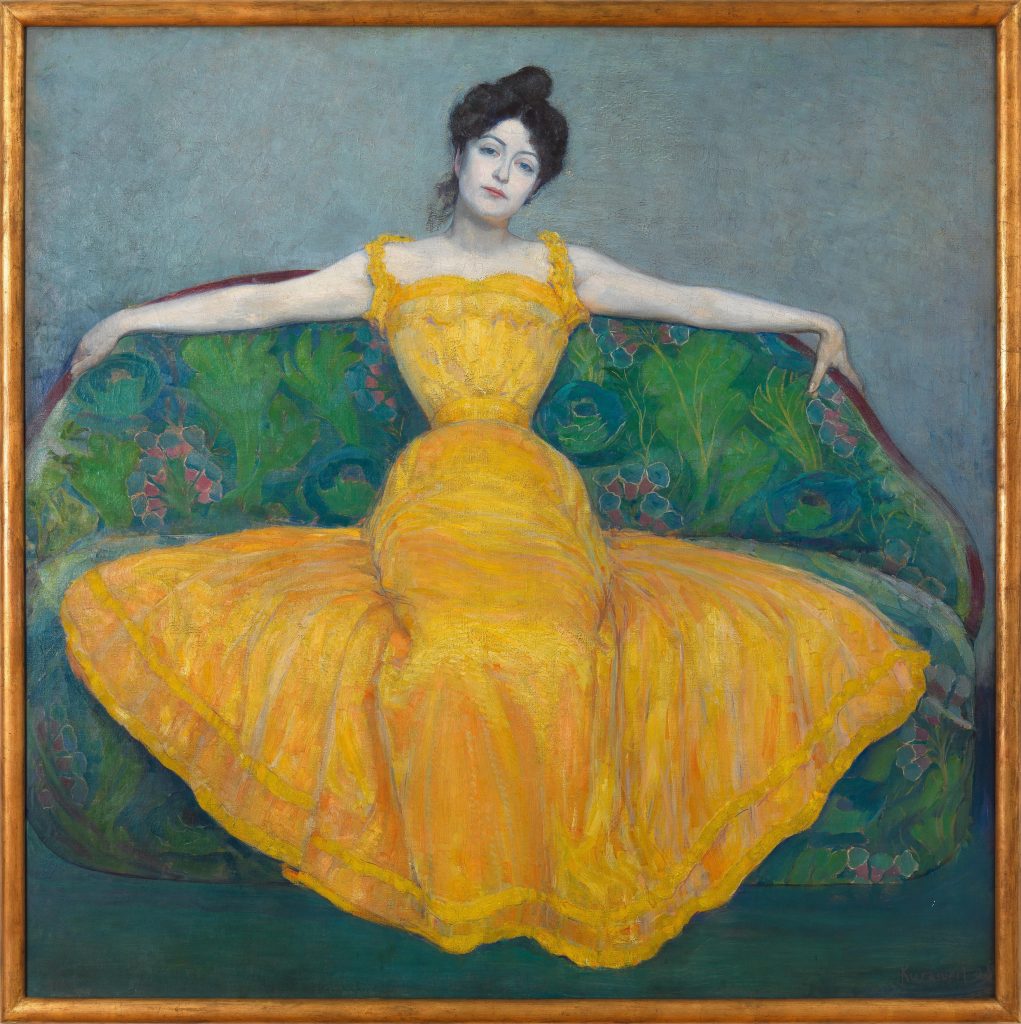
Max Kurzweil, Lady in a Yellow Dress, 1899, Vienna Museum, Vienna, Austria. Museum’s website.
Max Kurzweil, an Austrian painter and one of the founding members of the Vienna Secession, painted his wife Martha in a confident pose, with dreamy eyes. The vivid yellow of her dress, along with the way it drapes all over the floral-patterned sofa, also adds character. Her pale skin contrasts with her dark hair and the cooler background, making the dress stand out even more.
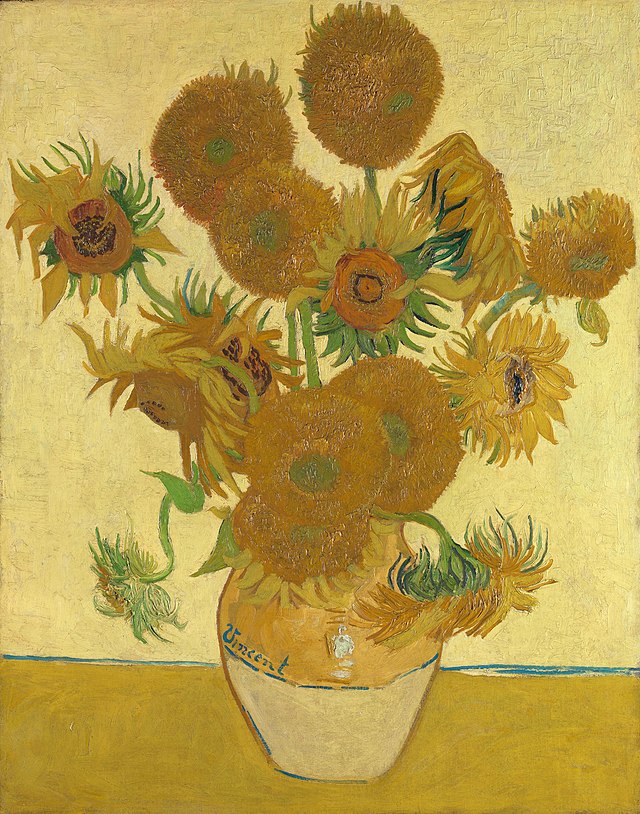
Vincent van Gogh, Sunflowers, 1888, National Gallery, London, UK. Wikimedia Commons (public domain).
Last but not least—undoubtedly the most famous vase of flowers in art history. Van Gogh created a series of Sunflowers to decorate a room in the yellow house for the visit of his friend Paul Gauguin. The artist once declared, “The sunflower is mine.” This reflects how deeply he loves these radiant flowers, while also identifying with their fading and the passing of time. Today, these iconic works can be admired in cities such as London, Philadelphia, or Tokyo.
These masterpieces show why yellow paintings continue to captivate viewers with their warmth, energy, and beauty. You can see Sunflowers along with other magnificent yellow paintings, from February 13 to May 17, 2026, at the Van Gogh Museum in the exhibition Yellow. Beyond Van Gogh’s Colour.
DailyArt Magazine needs your support. Every contribution, however big or small, is very valuable for our future. Thanks to it, we will be able to sustain and grow the Magazine. Thank you for your help!