

Masterpiece Story: Judith and Holofernes by Caravaggio
Judith and Holofernes is a Caravaggio masterpiece that captures Biblical murder and drama. Rarely has death been captured so intensely and violently...
James W Singer 13 September 2026
30 November 2025 min Read
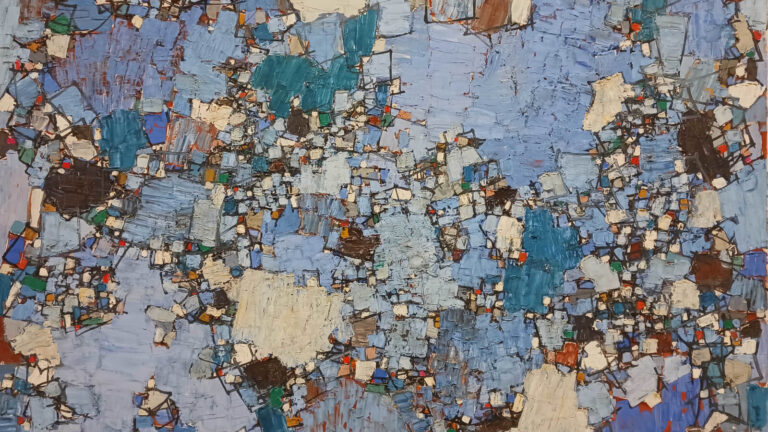
Natalia Dumitresco, Gris et Blanc, c. 1960, Musée d’Art Moderne de Paris, Paris, France. Detail.
Gris et Blanc is a masterpiece by Natalia Dumitresco that explores the visual complexity of Abstract Expressionism. The work captivates through its refined balance of form and texture, drawing the viewer into a contemplative visual experience.
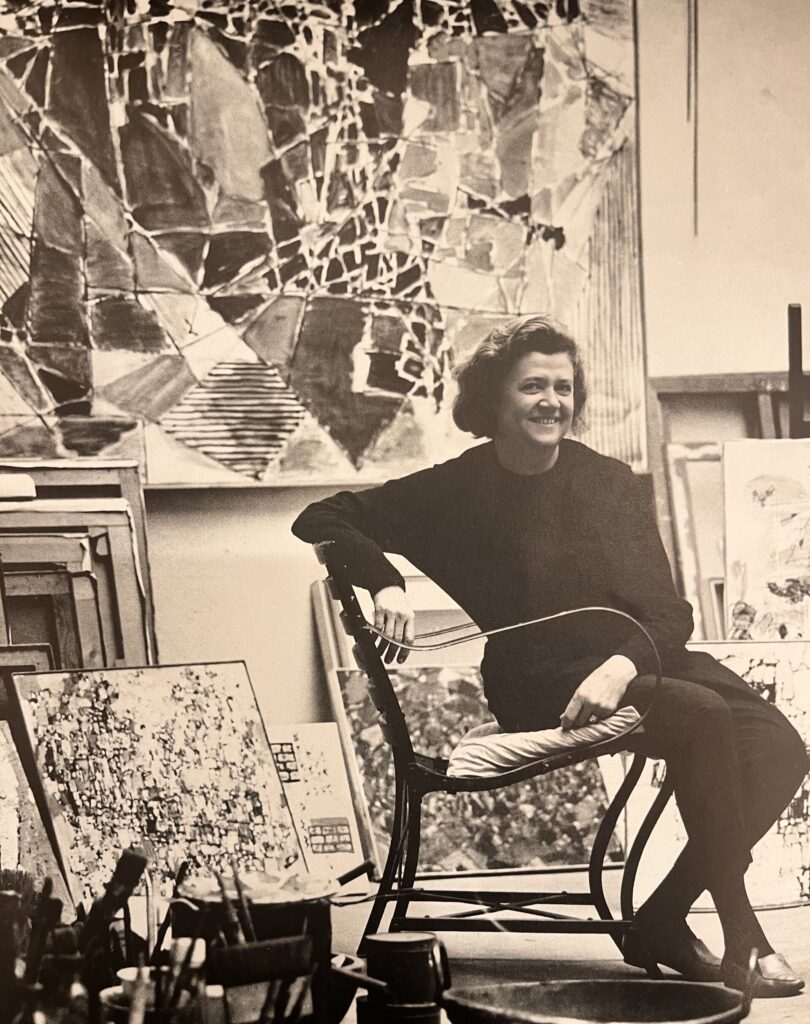
Photograph of Natalia Dumitresco. © Artcurial/D. Le Buhan. Galerie Hervé Courtaigne.
Natalia Dumitresco (1915–1997) was one of the prominent Abstract Expressionist painters in mid-20th-century Paris, France. She was also a leading artist within the Salon des Réalités Nouvelles, the French artistic association devoted to abstract painting. Dumitresco’s nonrepresentational images are filled with patterned colors and recurring lines that create a sense of rhythm and repetition. Gris et Blanc is a masterful example of her signature style and of the larger Abstract Expressionist movement.
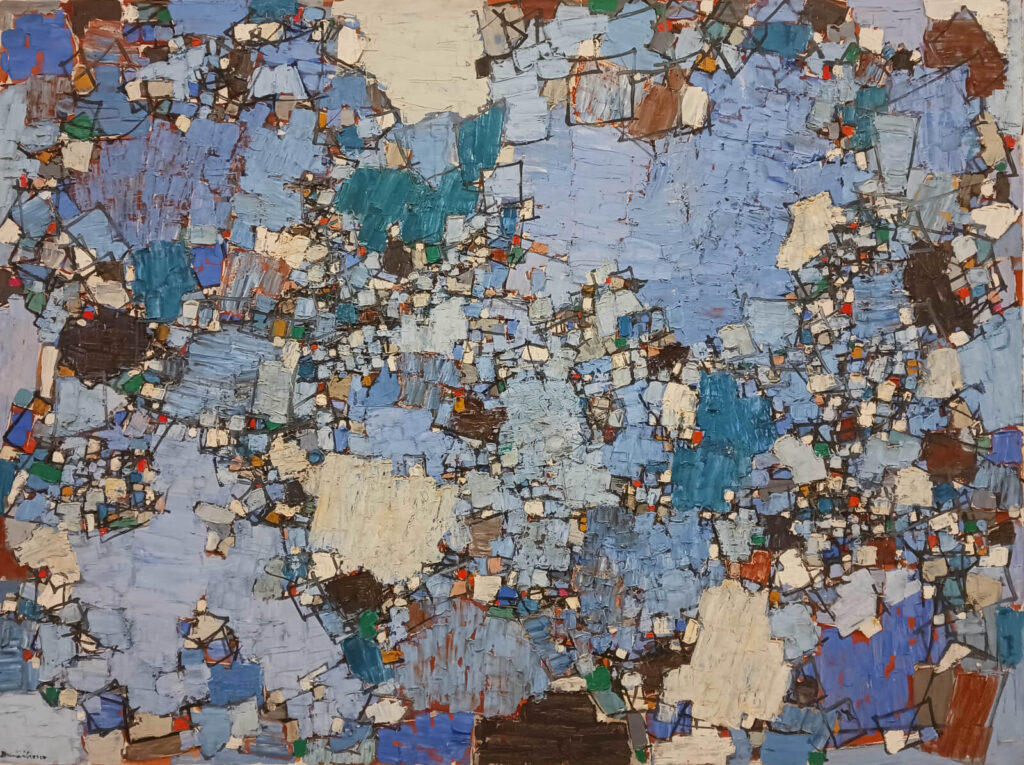
Natalia Dumitresco, Gris et Blanc, c. 1960, Musée d’Art Moderne de Paris, Paris, France.
Gris et Blanc is an oil on canvas measuring 97 by 130 cm (38 3/16 x 51 3/16 in.). As an abstract painting, it does not attempt to realistically imitate the subject. It does not aim to depict a person, place, or object—it is the opposite of representational painting. However, the avoidance of visual verisimilitude does not suggest a lack of ideas, intentions, and emotion.
The canvas is dominated by shades of gray and white—hence its title, Gris et Blanc (Gray and White). These shades are multidimensional rather than flat. They vary in depth and intensity by assuming hints of blue, green, and even brown throughout the scattered and patterned composition. When a patch of gray is juxtaposed with a patch of blue, the gray takes on blue overtones. It does not remain a pure gray but reflects the qualities of its neighboring color.
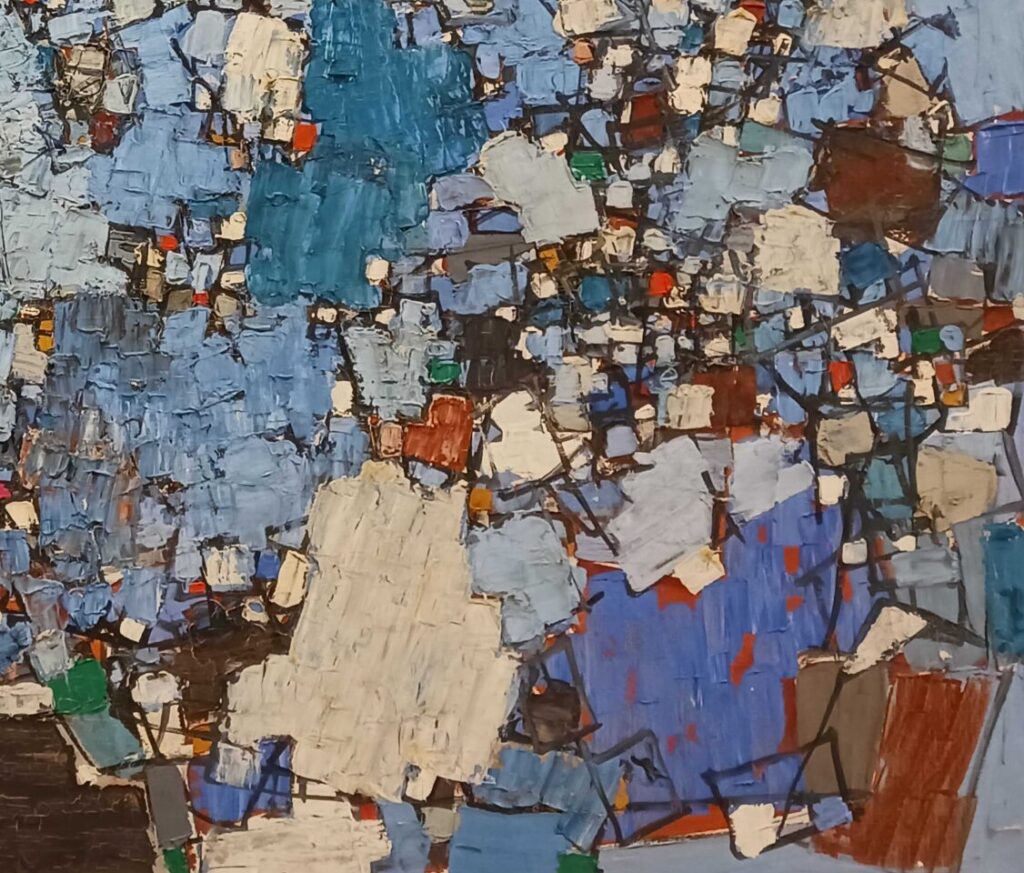
Natalia Dumitresco, Gris et Blanc, c. 1960, Musée d’Art Moderne de Paris, Paris, France. Detail.
Hence, as suggested by color theory, colors are not fixed, immutable values. They are suggestive and adaptive depending on their context. When complementary colors, such as red and green, are placed near each other, they appear more vibrant and intense. Consequently, Dumitresco uses discernment and experimentation to draw the viewer in with a visually engaging interplay of colors.
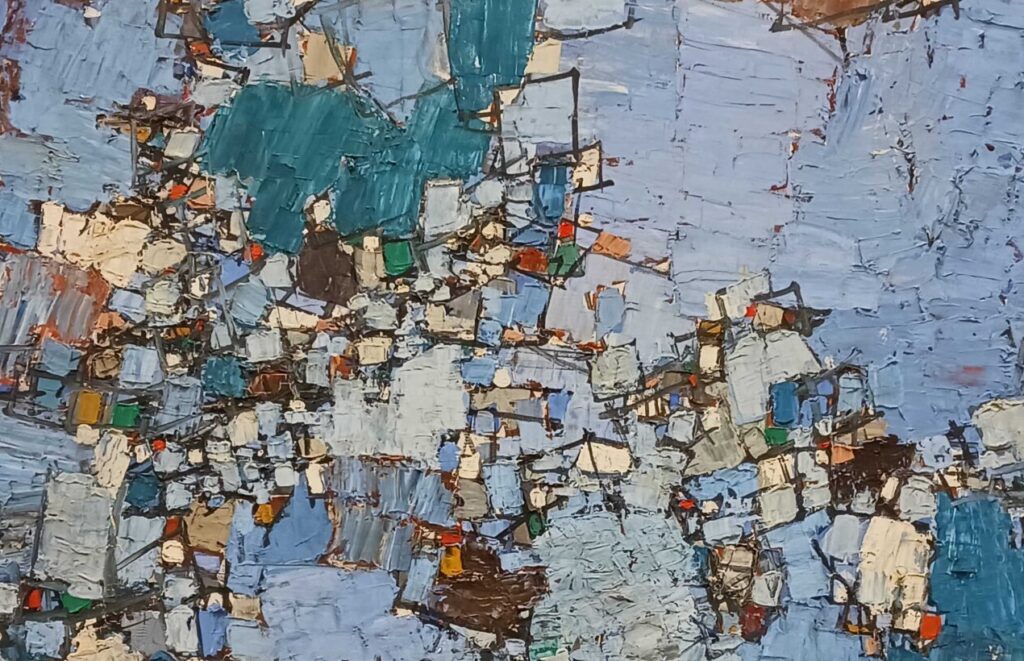
Natalia Dumitresco, Gris et Blanc, c. 1960, Musée d’Art Moderne de Paris, Paris, France. Detail.
Gris et Blanc further intensifies the viewer’s visual engagement with its patterns and lines. A loose mesh of grids overlays the canvas. Like coordinates implying recurring points of interest, the pattern suggests predictability amid the chaos.
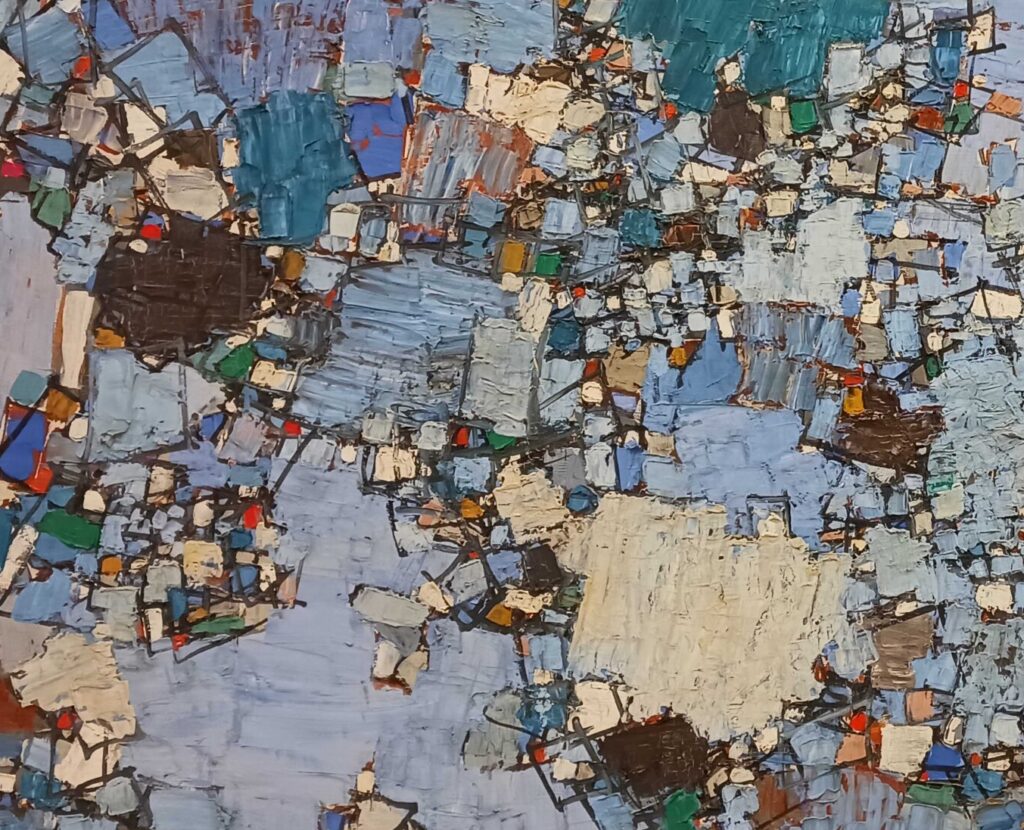
Natalia Dumitresco, Gris et Blanc, c. 1960, Musée d’Art Moderne de Paris, Paris, France. Detail.
Expanding on this theme, the painting resembles an abstracted map of central Bucharest, Dumitresco’s hometown. The Romanian capital is a warren of side streets and enclaves linked and divided by grand avenues and monuments. The sprawling, majestic parks punctuate the cityscape, providing greenery and relief for its residents. Gris et Blanc echoes this patterning with its grid-like insertions of color. The canvas appears to be a patchwork of streets, neighborhoods, and parks from a bird’s-eye view. At first glance, the image seems chaotic, but then subtle patterns of repetition emerge.
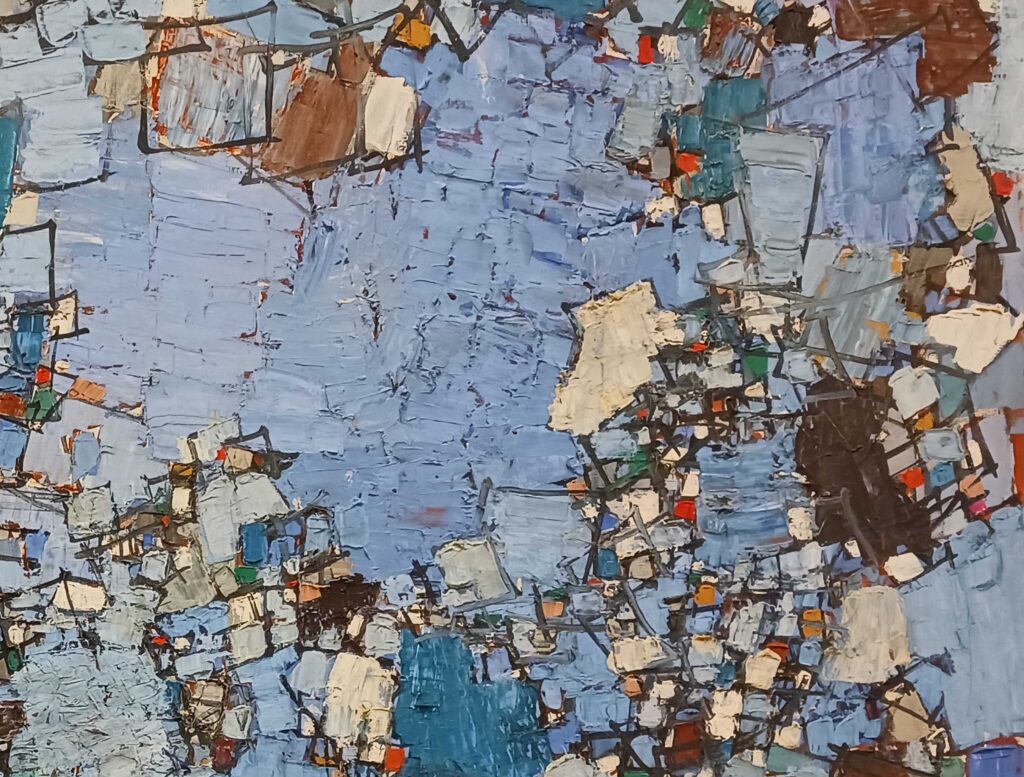
Natalia Dumitresco, Gris et Blanc, c. 1960, Musée d’Art Moderne de Paris, Paris, France. Detail.
What was Dumitresco trying to express through this painting? Was it simply a visual experiment of line, pattern, and color? Or was she thinking of her war-torn homeland while she lived in Paris from 1947 onward? Abstract Expressionism is both abstract and expressive—typically with a hidden meaning, message, or thought behind the image. The intrigue, fun, and perhaps frustration are for the viewer to discover.
“Gris et blanc,” Musée d’Art Moderne de Paris Collection. Retrieved Nov. 11, 2025.
“Natalia Dumitresco,” Archives of Women Artists Research & Exhibitions. Retrieved Nov. 11, 2025.
“Natalia Dumitresco,” Galerie Hervé Courtaigne. Retrieved Nov. 11, 2025.
DailyArt Magazine needs your support. Every contribution, however big or small, is very valuable for our future. Thanks to it, we will be able to sustain and grow the Magazine. Thank you for your help!

James W. Singer is an art historian and fine art photographer. He earned a Bachelor of Arts in Art History from the University of Florida. He later moved to Paris, France. He currently writes “Masterpiece” articles for DailyArt Magazine.

Coffee-fueled writer, artist, and daydreamer.
Judith and Holofernes is a Caravaggio masterpiece that captures Biblical murder and drama. Rarely has death been captured so intensely and violently...
James W Singer 13 September 2026
Explore an astonishing 1915 nude self portrait by American modernist painter Florine Stettheimer.
Candy Bedworth 21 September 2026
Winslow Homer (1836–1910) was one of the leading American Realist painters. His painting The Veteran in a New Field is a masterpiece of late...
James W Singer 30 August 2026
At first glance, A Goldsmith in His Shop (1449) appears to depict an ordinary visit to a jeweller. Yet Petrus Christus transformed an ordinary...
Shivani Gupta 23 August 2026