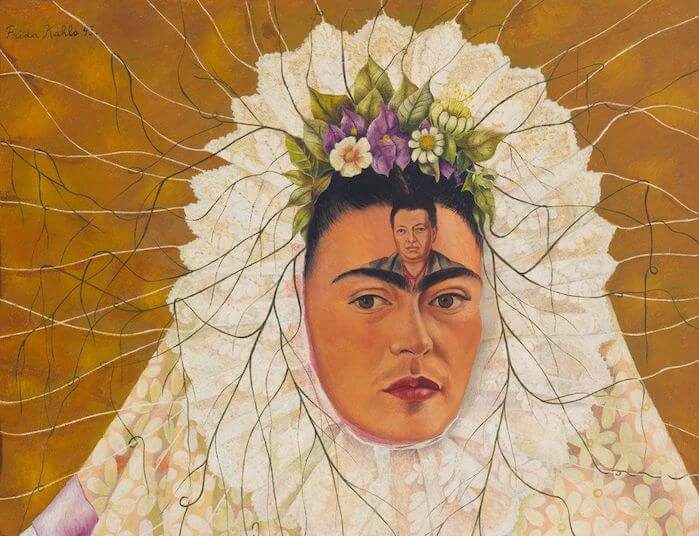
Frida Kahlo—a female surrealist to some, and a pioneer of her own artistic expression. Her first European exhibition, championed by André Breton, introduced her unique style to the world. Drawing inspiration from Christian symbolism, local traditions, and her own dreams, Kahlo masterfully depicted her life and reality as a Mexican woman—a theme she emphasized throughout her career. However, it was a life-altering bus accident that left her deeply wounded, forever shaping both her personal journey and artistic narrative.
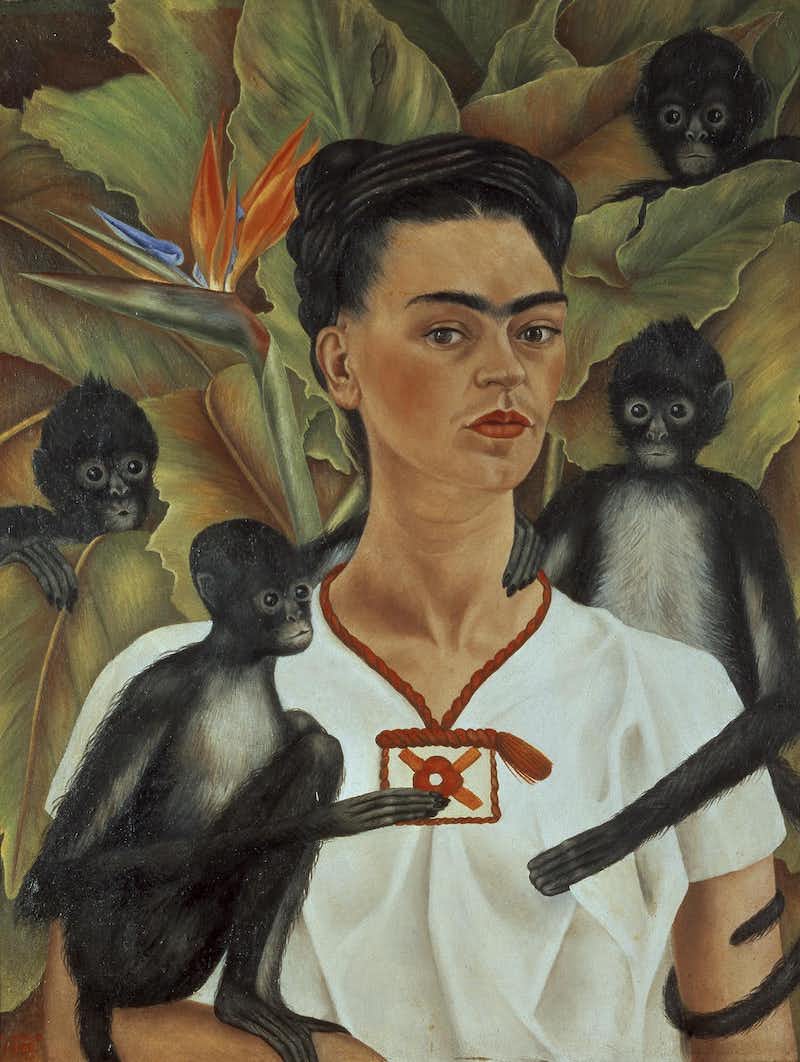
After periods of depression and miscarriages in her life, she surrounded herself with animals. She liked to use animals as models in her artworks. Her paintings are domesticated by monkeys, hummingbirds, dogs, and cats. One of her self-portraits depicts her with four spider monkeys. The animals became protective and tender symbols to Kahlo. On the contrary, Mexican mythology suggests monkeys are symbols of lust.
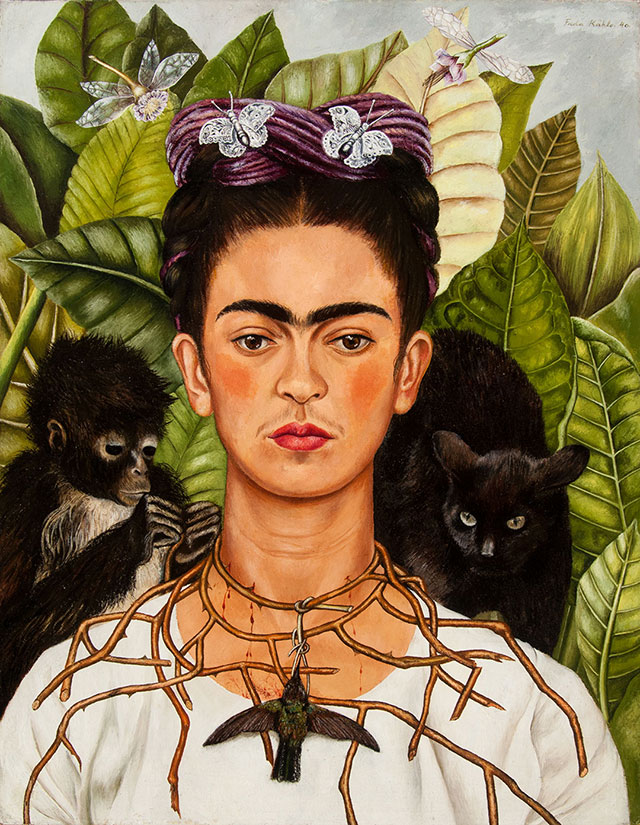
One of Frida Kahlo’s most significant self-portrait was Self-Portrait with Thorn Necklace and Hummingbird. According to some art historians, Kahlo wanted to show that she had been resurrected and had started a new life with this painting. As a symbol of this idea, the hummingbird was placed on her necklace. The hummingbird symbolizes hope and good luck in Mexican culture. However, the audience may notice the black cat–known as a symbol of bad luck–taking its place behind the right shoulder of Kahlo. Different interpretations say that the hummingbird pendant refers to Huitzilopochtli. It is an Aztec god of war and may refer to the pain Kahlo suffered all her life internally.
Frida Kahlo, Self Portrait with Thorn Necklace and Hummingbird, 1940, Harry Ransom Center, University of Texas at Austin, Austin, TX, USA.
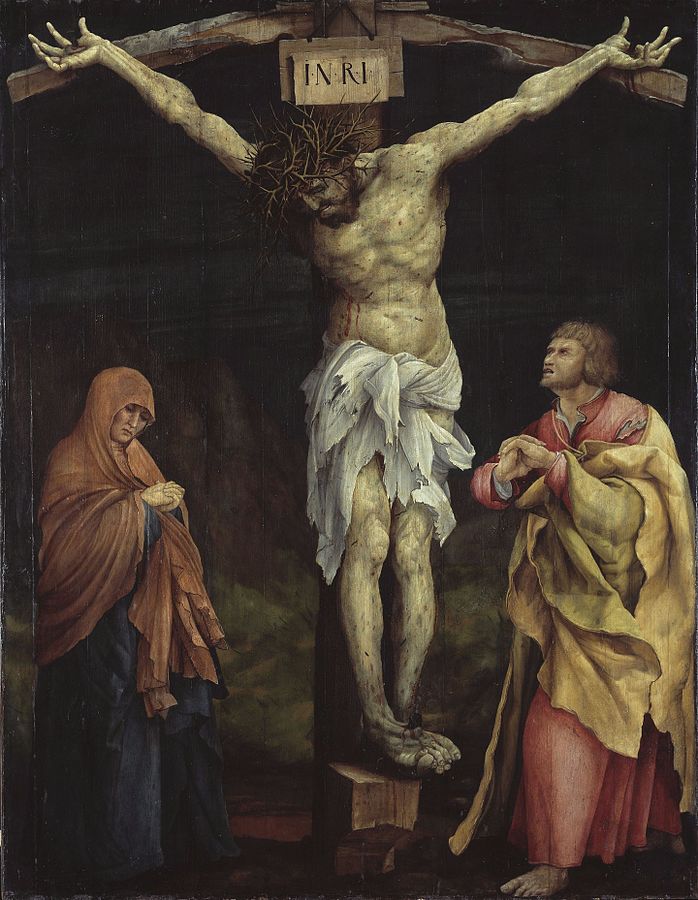
Other important symbols of the painting were butterflies and the thorn necklace. Butterflies symbolize resurrection, and it may refer to her rebirth in life after the accident. Furthermore, the thorn necklace she wears may be the symbol of Jesus’ crown of thorns, which he bore while being dragged to his crucifixion.
Matthias Grünewald, Christ on Cross, 1470-1528, panel from the Tauberbischofsheim Altarpiece, Staatliche Kunsthalle Karlsruhe, Karlsruhe, Germany.
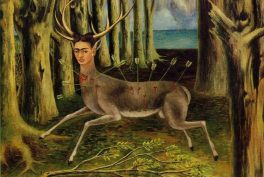
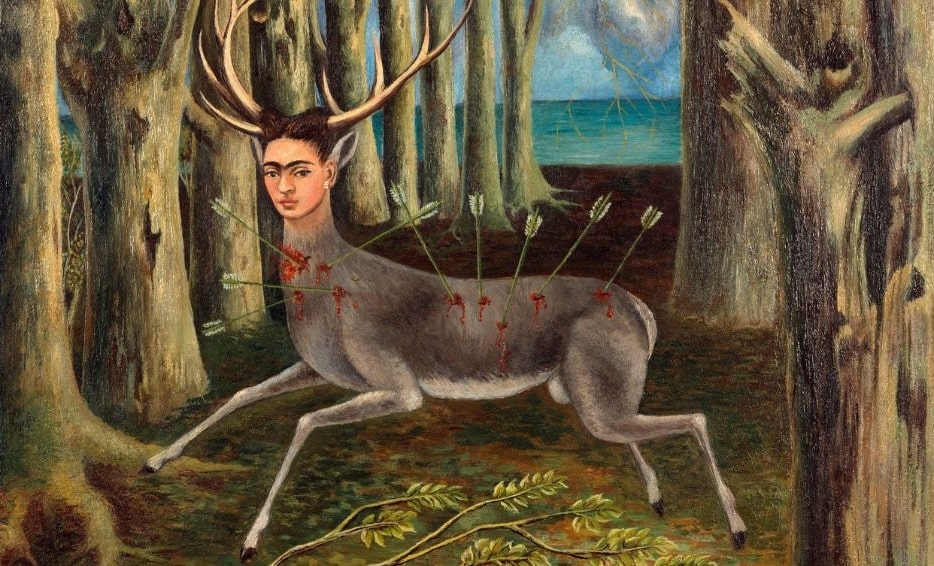
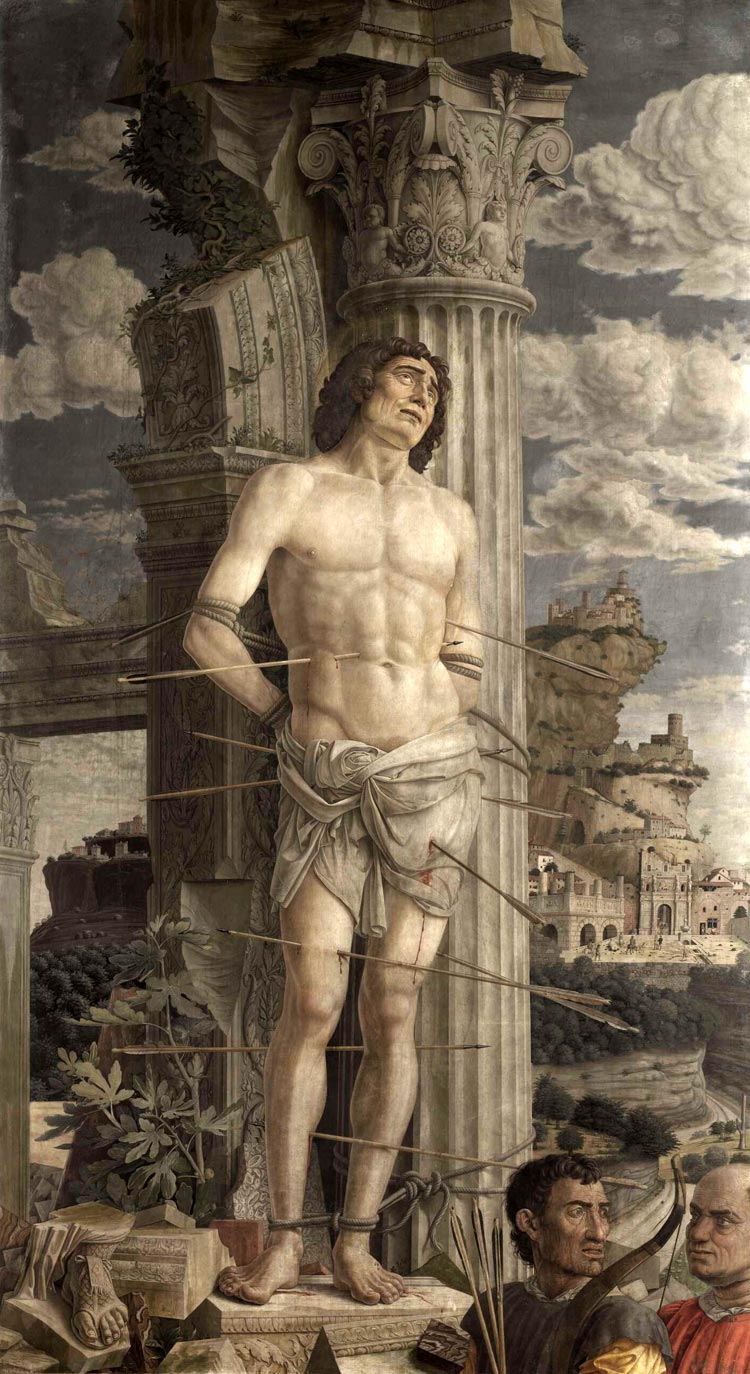
In addition to these symbols, Kahlo created a painting that uses both Christianity and animal symbolism in one subject matter. The Little Deer depicts her as a deer with a human face. The artist portrayed herself in this painting. However, there is a much more important detail in this artwork – the deer wounded by the arrows reminds us of Andrea Mantegna’s depiction of Saint Sebastian from 1480. It may also be a reference to crucifixion and resurrection.
Frida Kahlo, The Wounded Deer, 1946, private collection of Carolyn Harb. Frida Kahlo.
Andrea Mantegna, St.Sebastian, 1457-1459, Kunsthistorisches Museum, Vienna, Austria.
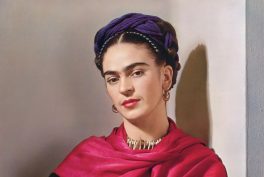
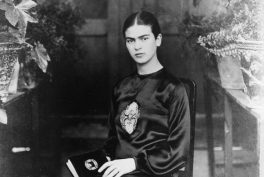
Kahlo’s strong character can be seen not only in her intriguing paintings, which are directly linked to her life, but also in her famous, colorful clothing.
We love art history and writing about it. Your support helps us to sustain DailyArt Magazine and keep it running.
DailyArt Magazine needs your support. Every contribution, however big or small, is very valuable for our future. Thanks to it, we will be able to sustain and grow the Magazine. Thank you for your help!
'Painting the Light: The Story of Berthe Morisot, First Woman Impressionist' is written by Natalia Iacobelli and illustrated by Rosanna Tasker. Read about this inspiring new children's book from Reycraft Books.
Rolinda Sharples painted the world of Jane Austen, and the political turmoil unfolding beyond the ballroom. Her paintings capture Regency society as...
Bologna, in northern Italy, fostered more women artists in the early modern period than any other European city. Nowhere else matched the number, the...