Masterpiece Story: Woman on Charpoy by Amrita Sher-Gil
Amrita Sher-Gil’s work has long been examined through the binaries of modernist and traditional, East and West. These debates have often...
Shivani Gupta 8 November 2026
22 November 2026 min Read
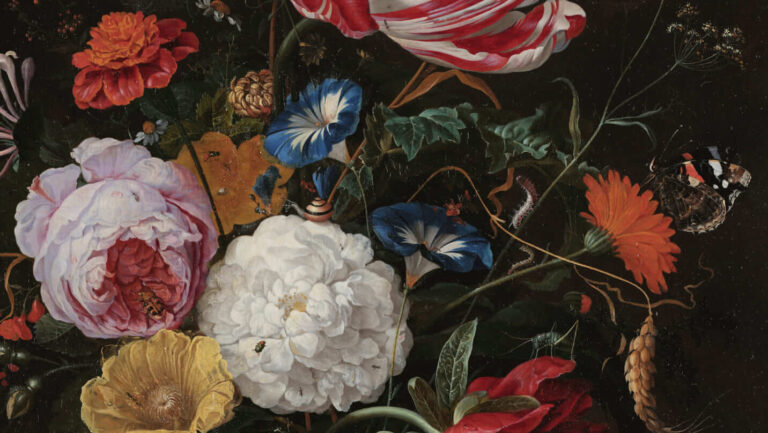
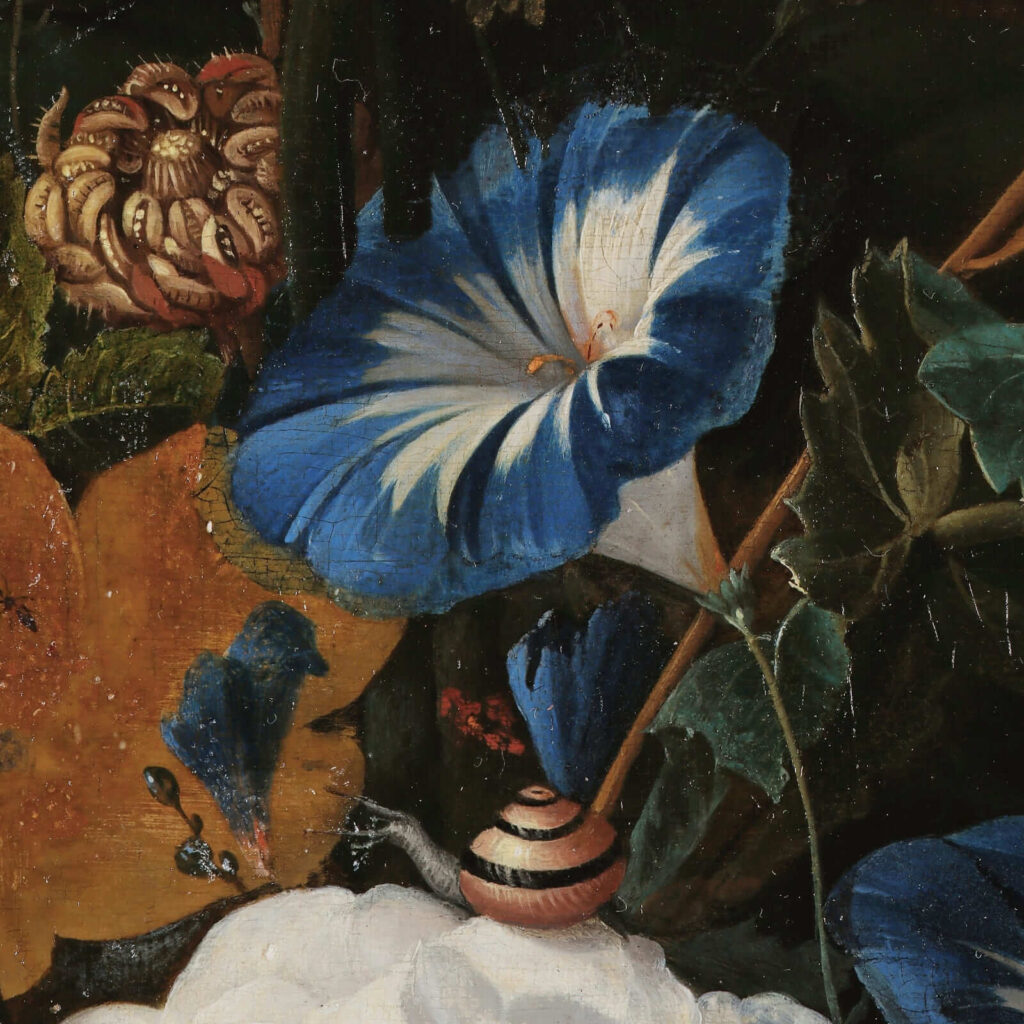
Jan Davidsz. de Heem, Vase of Flowers, 17th century, Royal Museums of Fine Arts of Belgium, Brussels, Belgium. Detail.
Vase of Flowers by Jan Davidsz. de Heem is a masterpiece of still-life painting and a remarkable example of the Dutch Golden Age. At first glance, its exquisite detail and lifelike flowers seem to capture nature at its finest. But can a bouquet that looks so fresh and real actually be a floral fantasy? Let’s take a closer look at how visual beauty intertwines with deep moral themes.
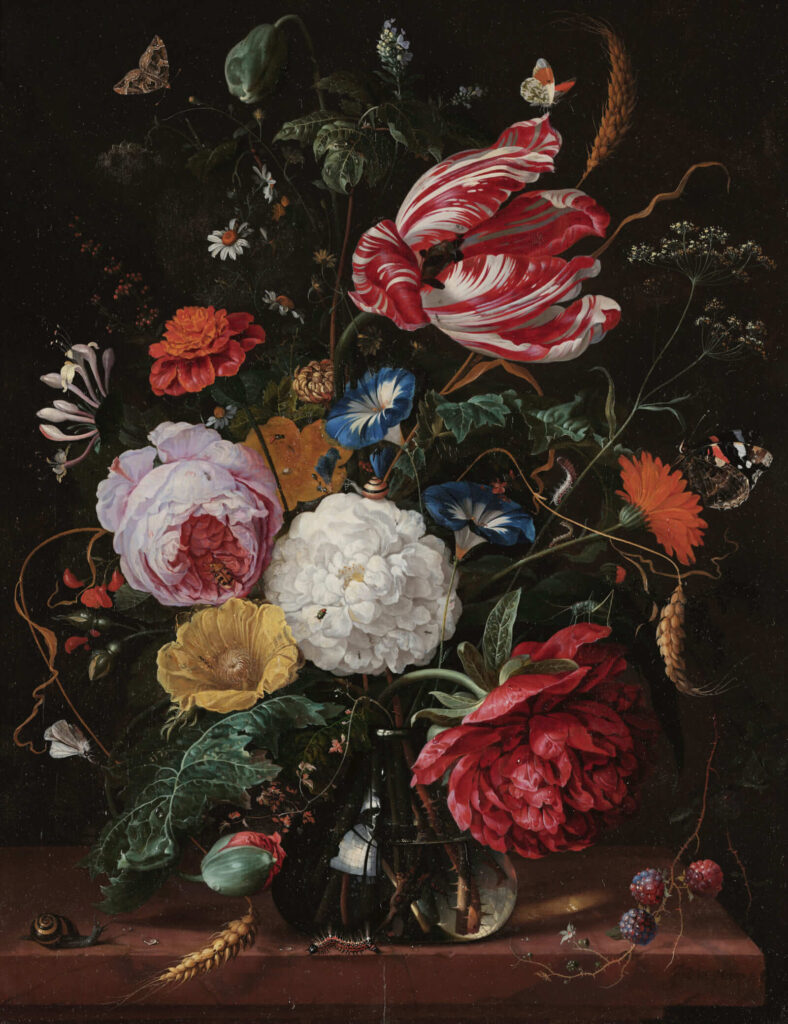
Jan Davidsz. de Heem, Vase of Flowers, 17th century, Royal Museums of Fine Arts of Belgium, Brussels, Belgium.
The Dutch Golden Age (1588–1672) is considered a high point in the social, economic, and political history of the Netherlands. It was an era when the Dutch Republic was a leading European power with global trade routes, diverse art markets, and pioneering scientific discoveries. Its society supported and promoted many artists still well-known today, such as Rembrandt van Rijn (1606–1669), Johannes Vermeer (1632–1675), and Rachel Ruysch (1664–1750). However, not all artists have maintained their name recognition over the centuries, and some have sadly slipped into obscurity among museum visitors.
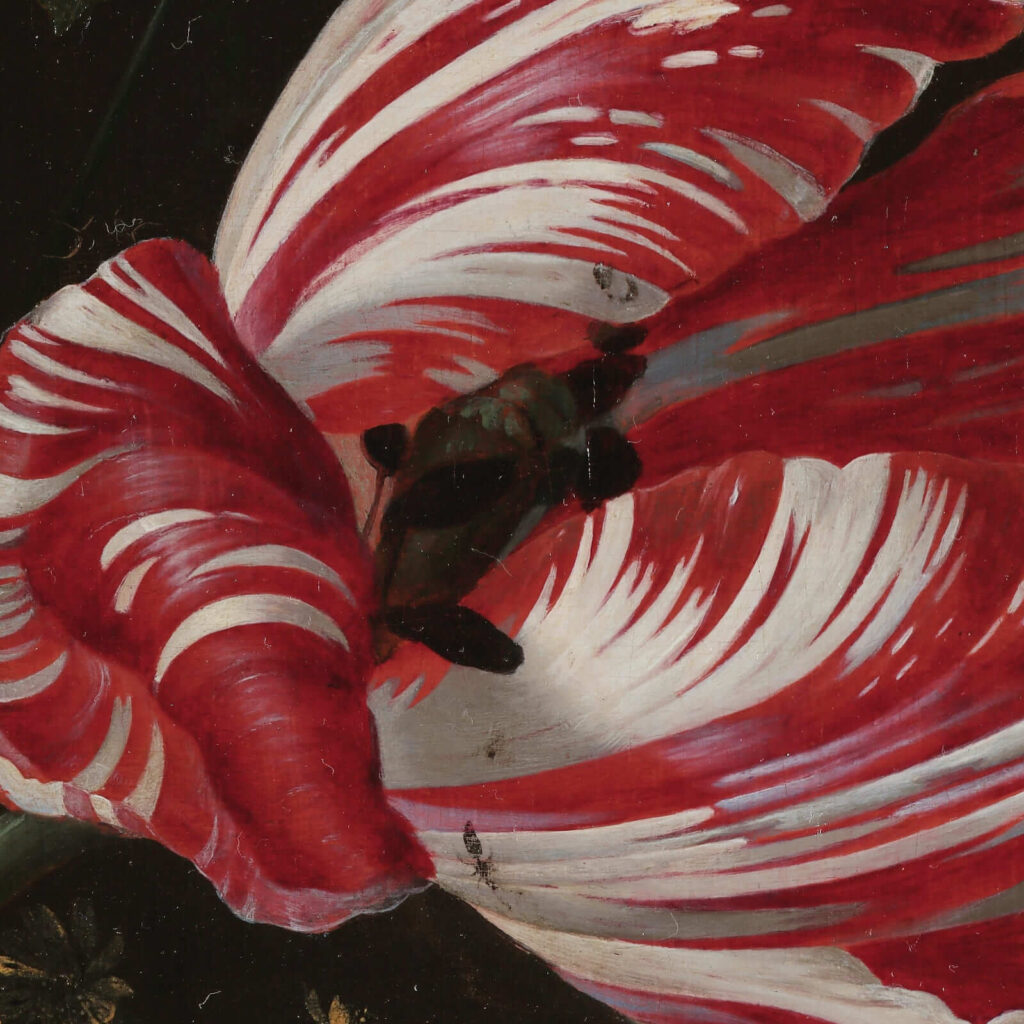
Jan Davidsz. de Heem, Vase of Flowers, 17th century, Royal Museums of Fine Arts of Belgium, Brussels, Belgium. Detail.
Jan Davidsz. de Heem (Utrecht, 1606–Antwerp, 1684) is one such example of faded stardom. He was widely considered one of the greatest still-life painters of his generation. He was patronized by the aristocracy, collected by the elite, and showered with commissions. At times during his prolific career, he could barely meet his clients’ demands for more and more images. De Heem was praised as extremely gifted and versatile in capturing his subjects’ likenesses. His images were almost photographic before the age of modern photography.
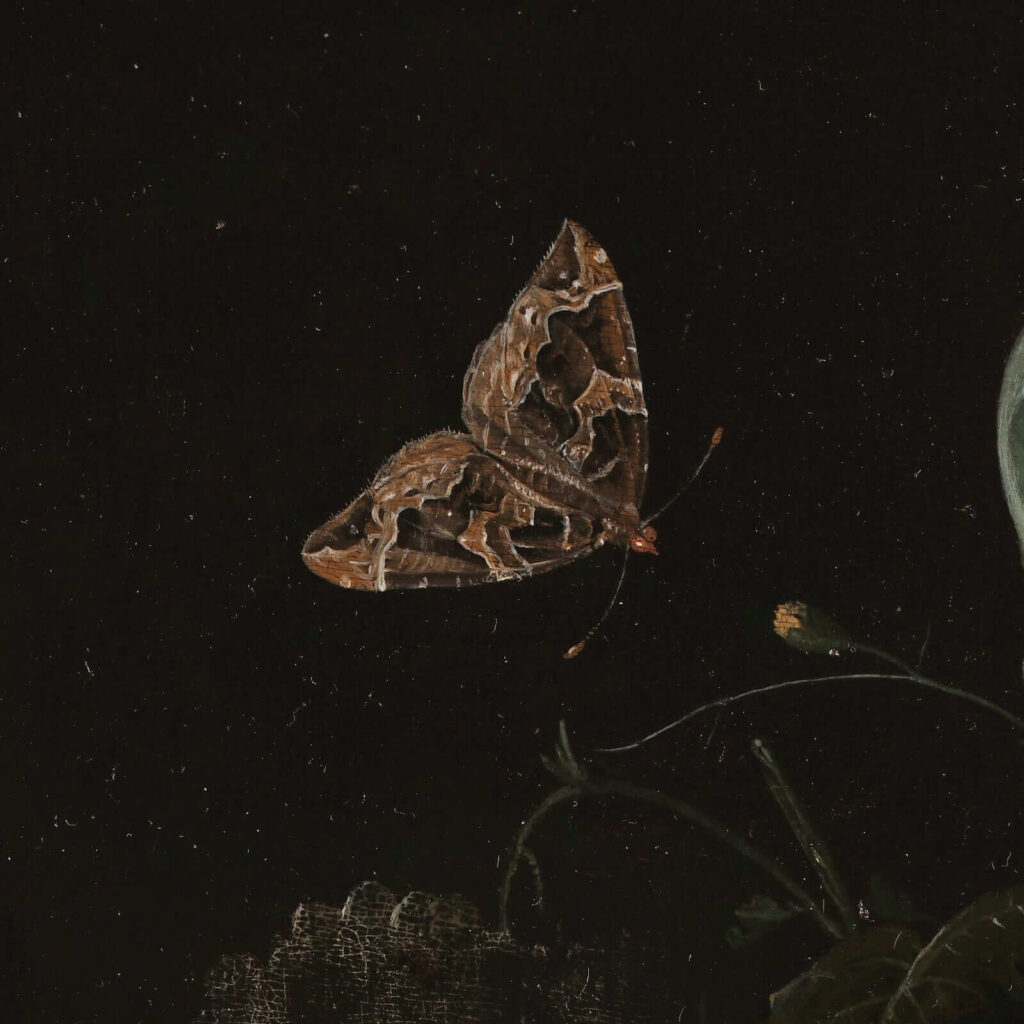
Jan Davidsz. de Heem, Vase of Flowers, 17th century, Royal Museums of Fine Arts of Belgium, Brussels, Belgium. Detail.
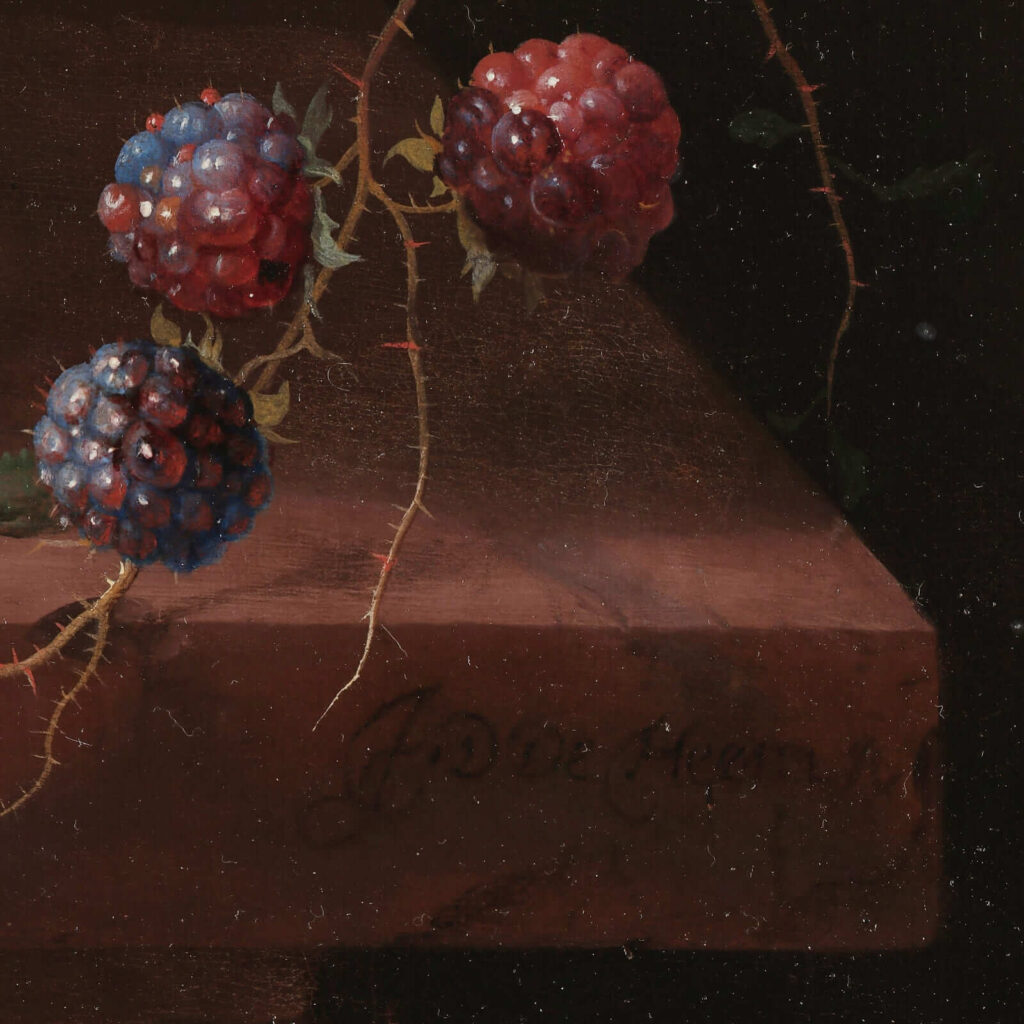
Vase of Flowers by de Heem is one of his overlooked masterpieces. It is a still-life painting made from oil paint on a wooden panel. It is a small image, around 47.5 x 37 cm (18 11/16 x 14 9/16 in.) featuring a luxurious bouquet of flowers arranged in a clear glass vase atop a stone table. However, this painting is not just a pretty bunch of flowers. It is crawling with interesting details symbolizing darker and deeper themes.
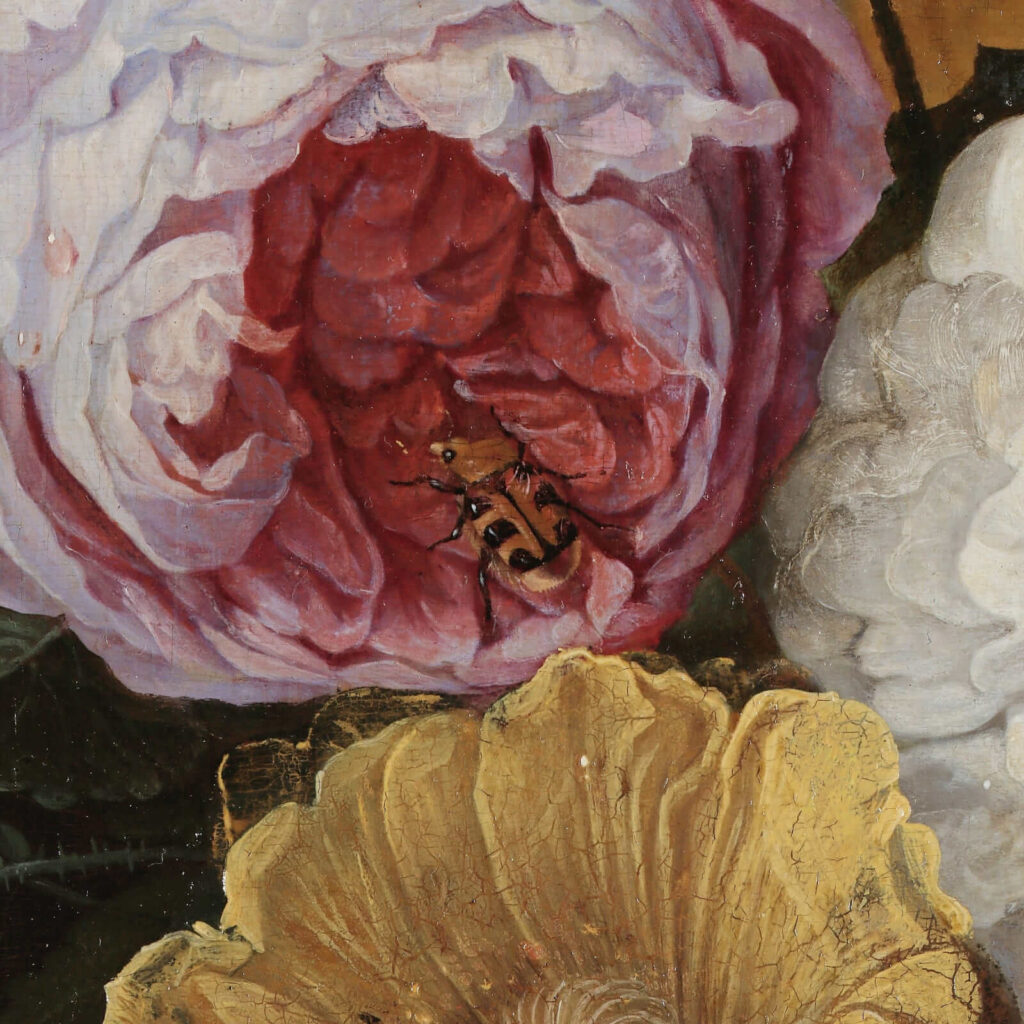
Jan Davidsz. de Heem, Vase of Flowers, 17th century, Royal Museums of Fine Arts of Belgium, Brussels, Belgium. Detail.
The floral arrangement is a vibrant and brilliant composition of petals, stems, and leaves. It is a realistic portrayal of many varieties of flowers such as tulips, roses, peonies, and morning glories. It feels fresh and real, but in actuality, it is a floral fantasy.
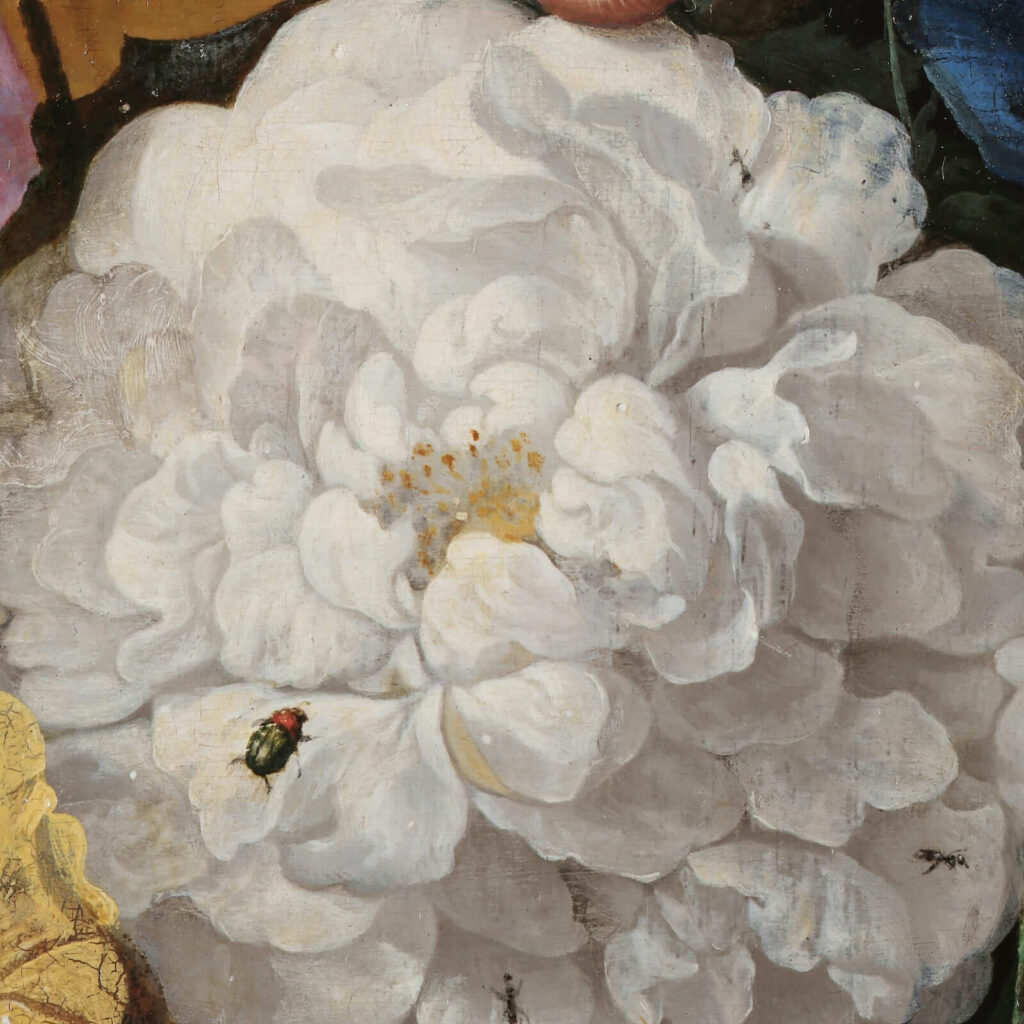
Jan Davidsz. de Heem, Vase of Flowers, 17th century, Royal Museums of Fine Arts of Belgium, Brussels, Belgium. Detail.
The arrangement is a visual dream because most of these flowers have different blooming seasons and would therefore not be available in bloom at the same time. De Heem is presenting the viewer with a floral dream, a “what-if” bouquet showing all the flowers simultaneously in season.
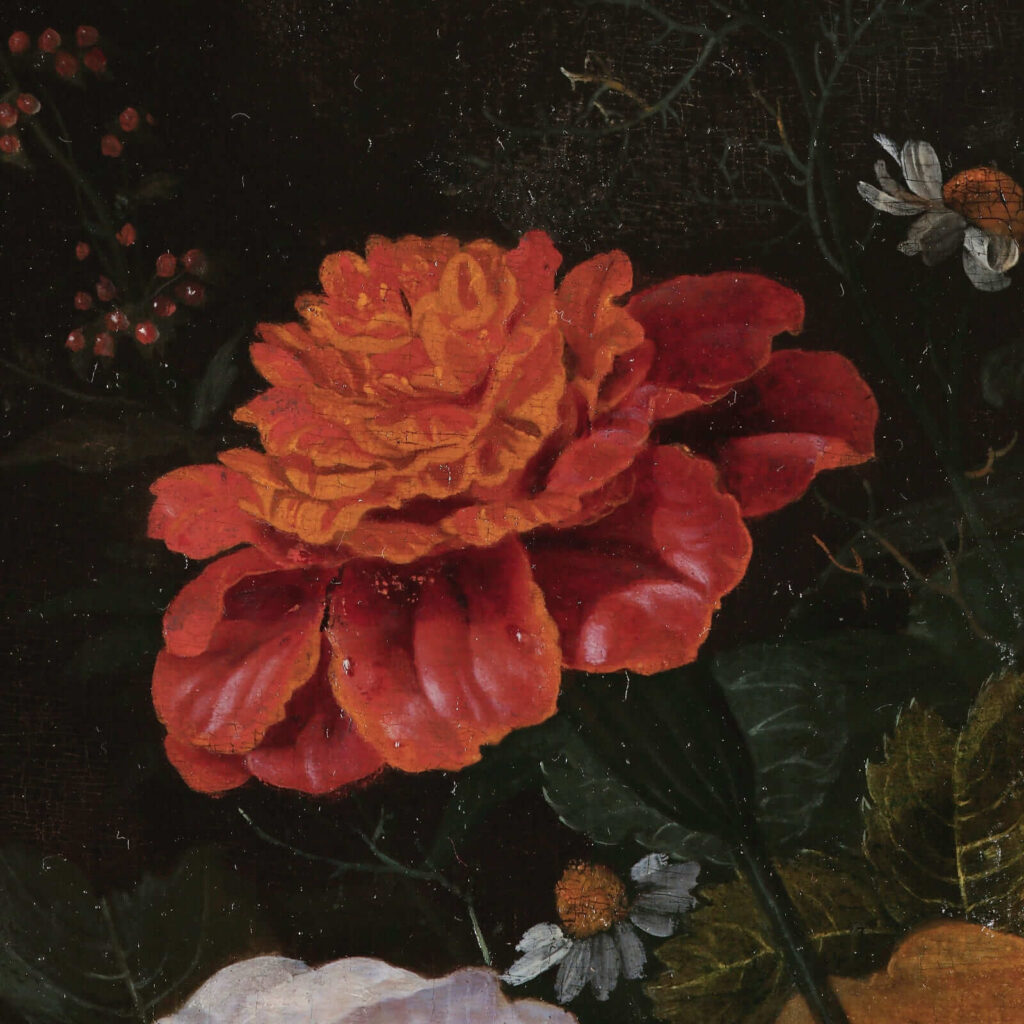
Jan Davidsz. de Heem, Vase of Flowers, 17th century, Royal Museums of Fine Arts of Belgium, Brussels, Belgium. Detail.
Christianity was a powerful force in the 17th-century Dutch Republic. It significantly influenced Dutch society’s inward beliefs and outward practices. Lifespans were typically shorter in the 17th century than they are today, and Christianity gave spiritual and philosophical meaning to the fleeting human condition. Ars longa, vita brevis (art is long, life is short) could have served as a mantra within the artistic communities during the Dutch Golden Age. Artists painted images to capture the glory of God, the divine presence, while reminding the viewer that life is impermanent.
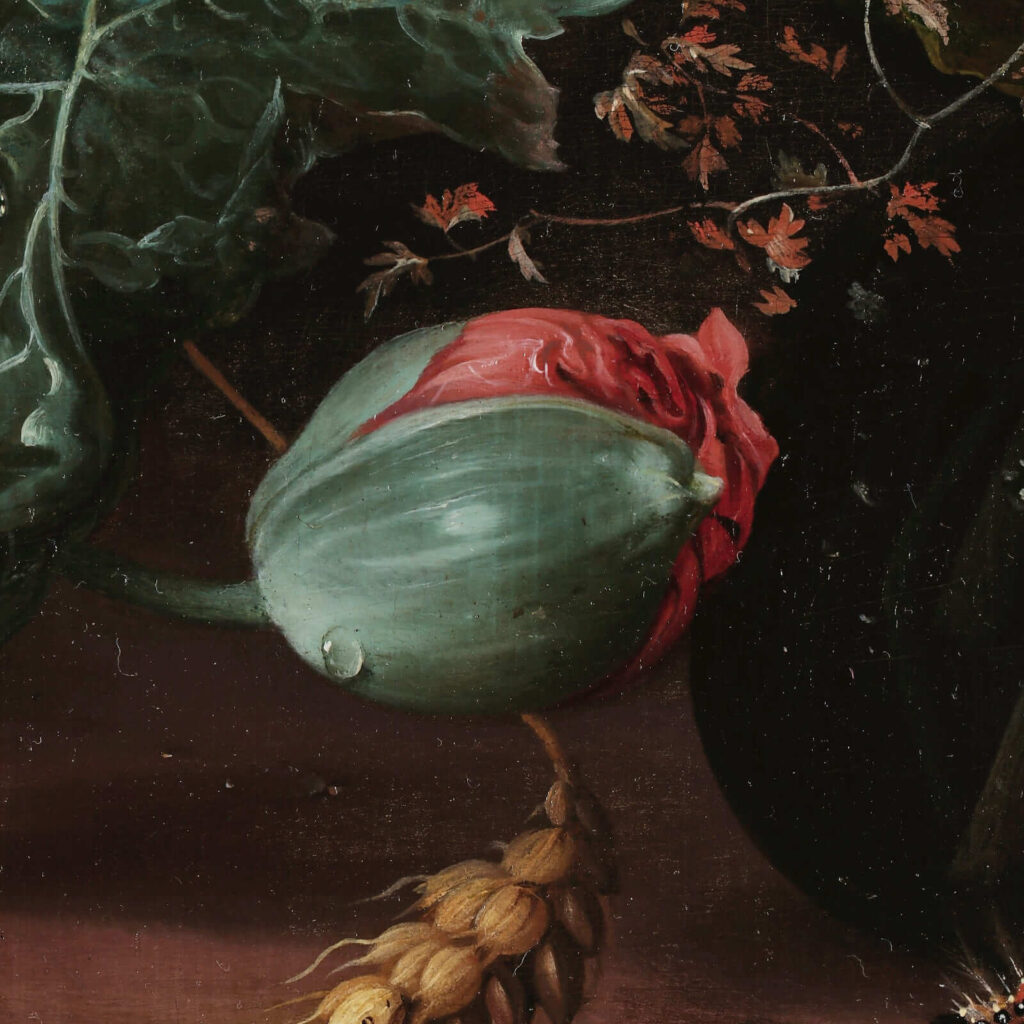
Jan Davidsz. de Heem, Vase of Flowers, 17th century, Royal Museums of Fine Arts of Belgium, Brussels, Belgium. Detail.
Memento mori (remember that you will die) held hands with Ars longa, vita brevis and infused “pretty” flower paintings with a tinge of irony and sadness. De Heem did not simply paint beautiful flowers. He included hints of death and decay, in plain sight but noticeable only when we pay close attention to the painting. Sometimes the best hidden details are more obvious than we think.
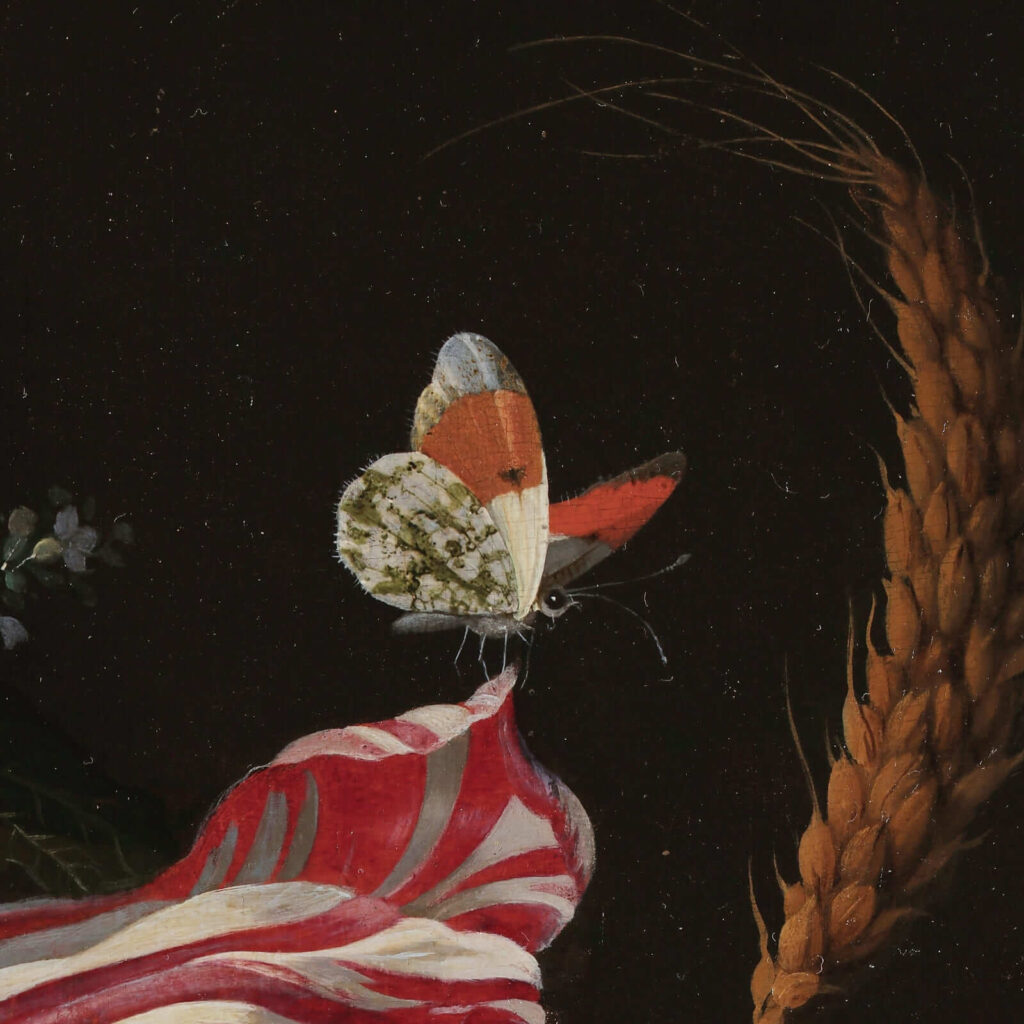
Jan Davidsz. de Heem, Vase of Flowers, 17th century, Royal Museums of Fine Arts of Belgium, Brussels, Belgium. Detail.
Bugs, creepy crawlies, insects. Whatever people call them, they evoke strong reactions from viewers. Some people admire the invertebrates for their biological wonders. Others are disgusted and recoil at the sight of them. De Heem captivates the viewer with his many creatures scattered throughout the floral composition. There are snails, grasshoppers, moths, ants, and beetles surrounding the blooms and crawling throughout them.
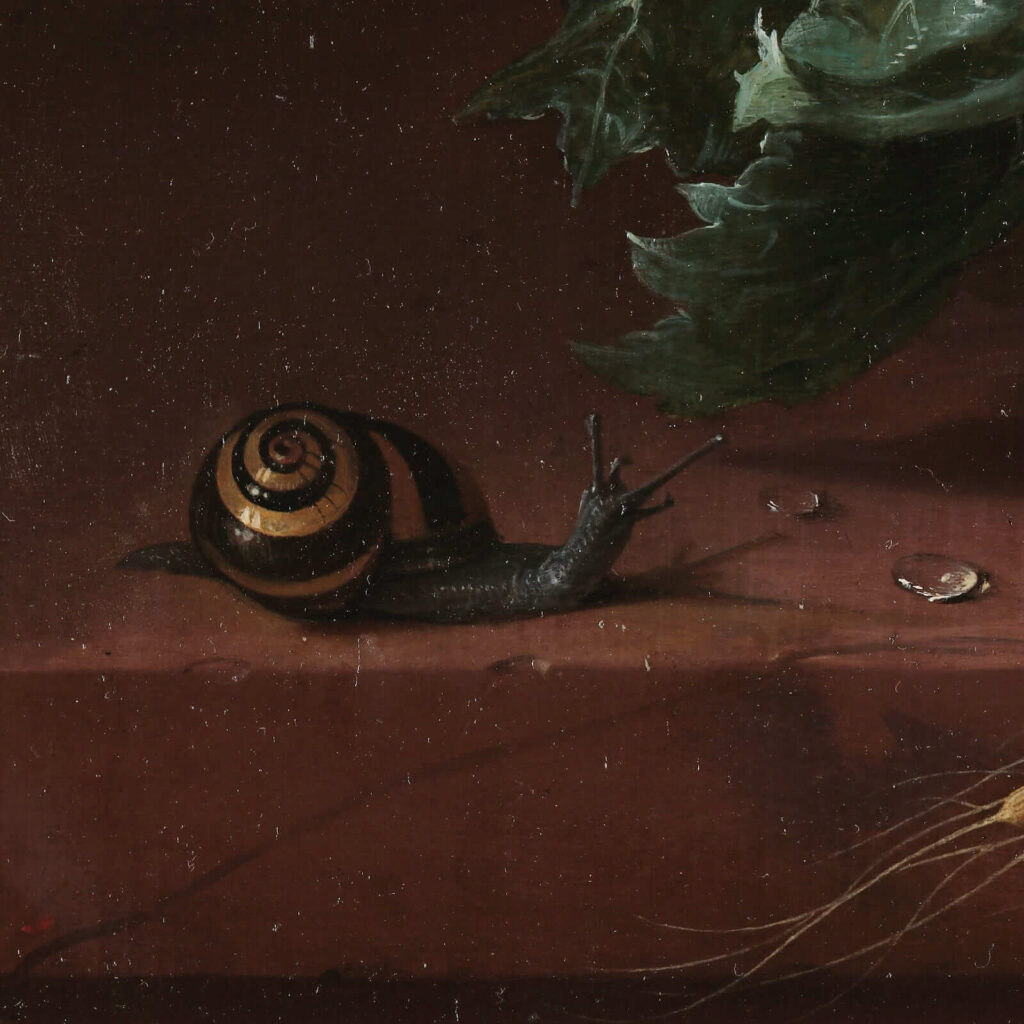
Jan Davidsz. de Heem, Vase of Flowers, 17th century, Royal Museums of Fine Arts of Belgium, Brussels, Belgium. Detail.
These bugs represent darkness and decay. Like rotting fruit attracting flies, flowers past their prime attract insects. Some blooms are tinged with brown edges, while others look a bit aged and wilted. The viewer can almost smell slight whiffs of mature perfume. The flowers are beautiful in their maturity, having lived a full season and, like humans, showing blemishes rather than reflecting perfection.
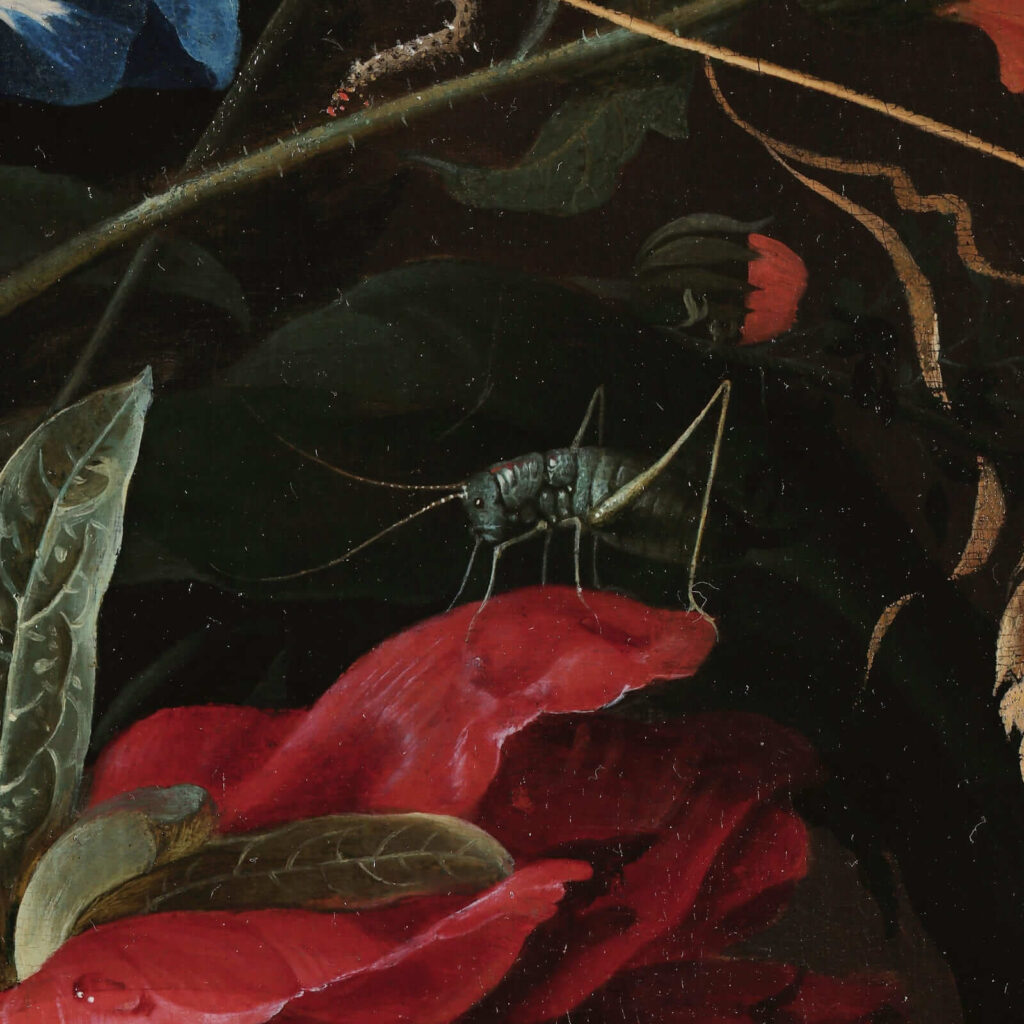
Jan Davidsz. de Heem, Vase of Flowers, 17th century, Royal Museums of Fine Arts of Belgium, Brussels, Belgium. Detail.
Why are some insects, like cockroaches, almost universally disliked while others, like caterpillars and butterflies, receive almost universal appreciation?
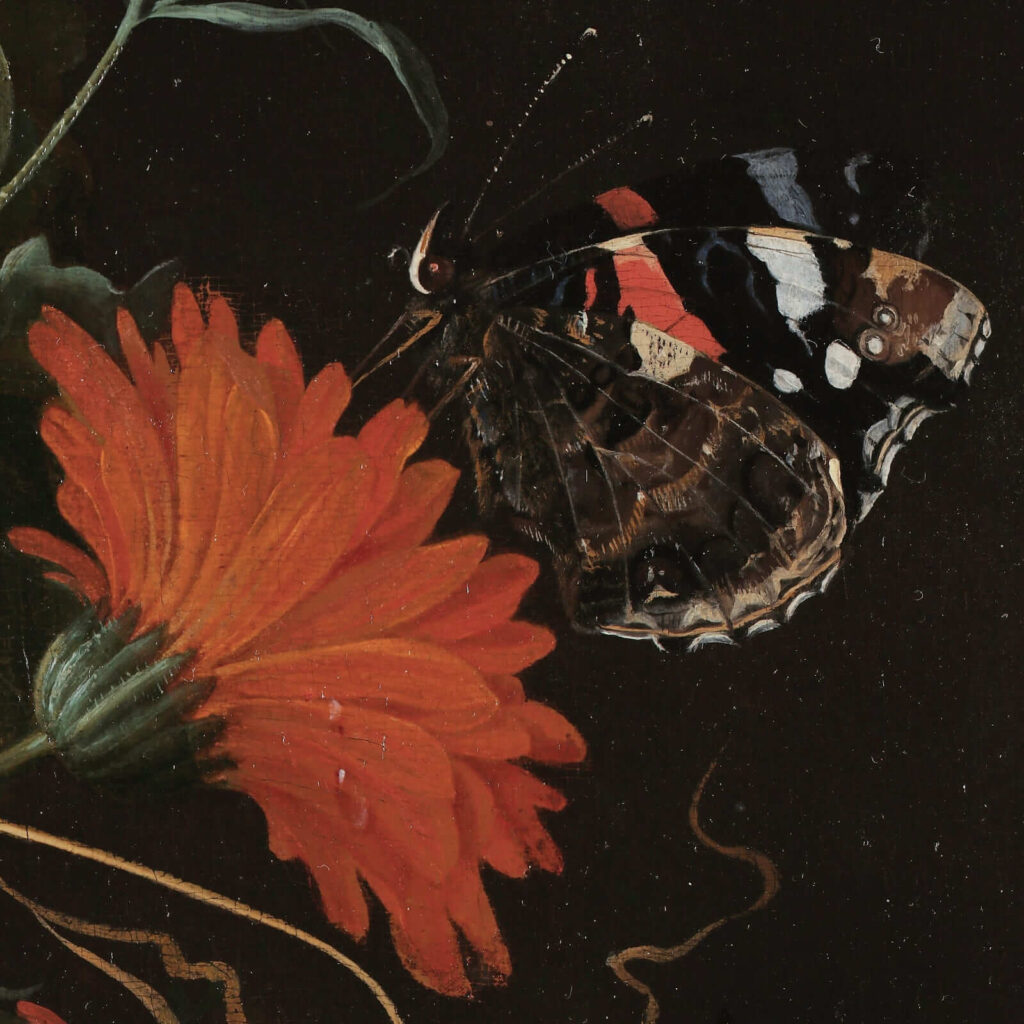
Jan Davidsz. de Heem, Vase of Flowers, 17th century, Royal Museums of Fine Arts of Belgium, Brussels, Belgium. Detail.
Why is the insect world so sharply divided into the likable and unlikable? Perhaps life is too short to have muddling middle emotions? Perhaps life is about strong passions of like and dislike, about having strong opinions? Well, according to some 17th-century artists, caterpillars and butterflies deserve appreciation because they symbolized the Christian ideals of redemption and resurrection.
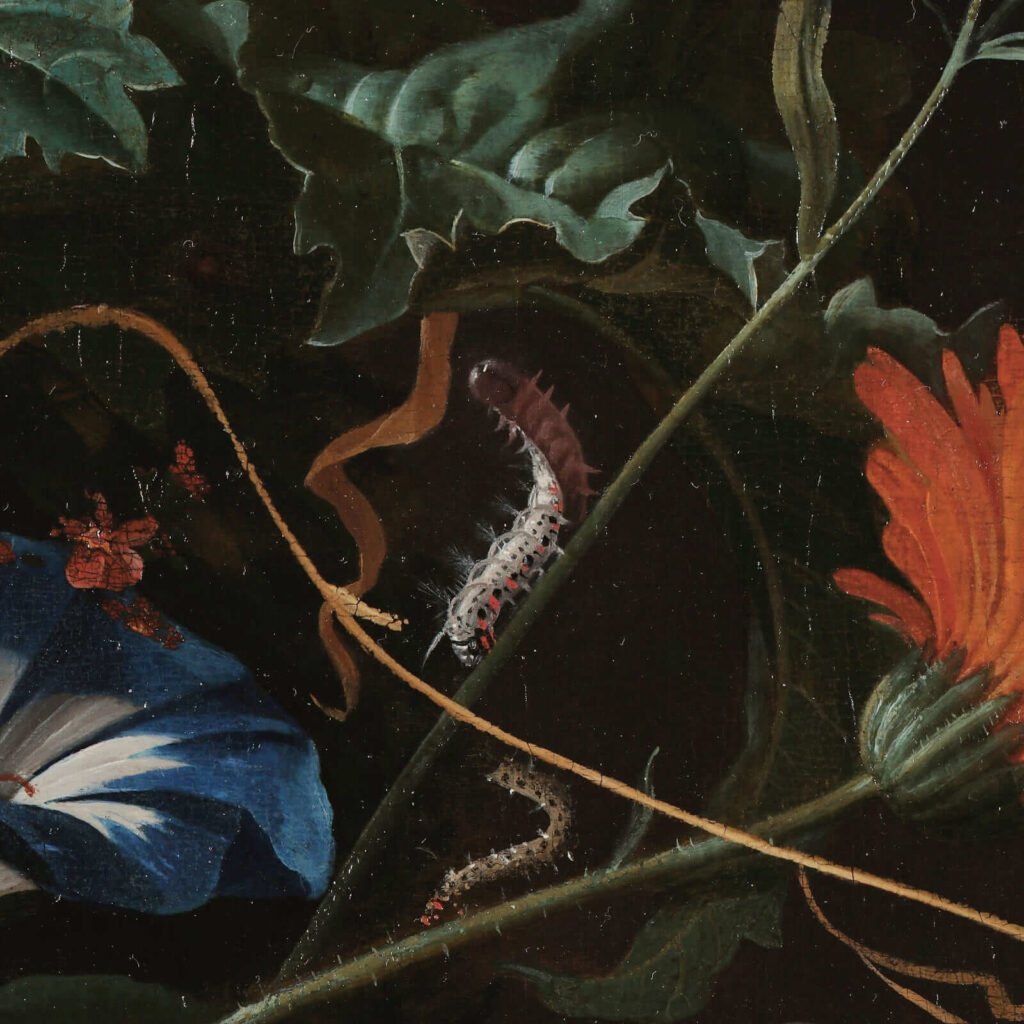
Jan Davidsz. de Heem, Vase of Flowers, 17th century, Royal Museums of Fine Arts of Belgium, Brussels, Belgium. Detail.
Christian themes are further expanded by the inclusion of two stalks of wheat, which symbolize the Eucharist. De Heem may have included some dark elements in the painting, but he also balanced them with light elements of hope and faith.
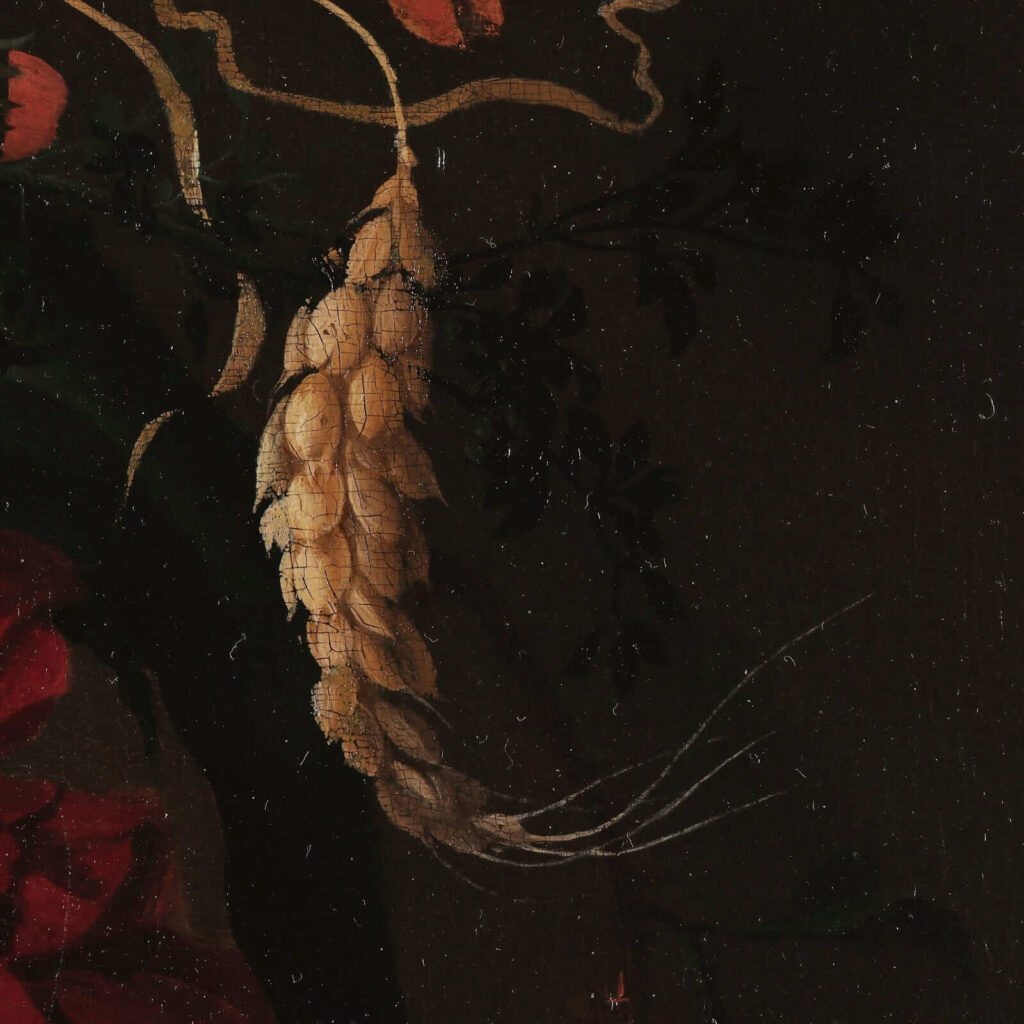
Jan Davidsz. de Heem, Vase of Flowers, 17th century, Royal Museums of Fine Arts of Belgium, Brussels, Belgium. Detail.
De Heem was a master of capturing realistic textures. His petals feel light, velvety, and delicate.
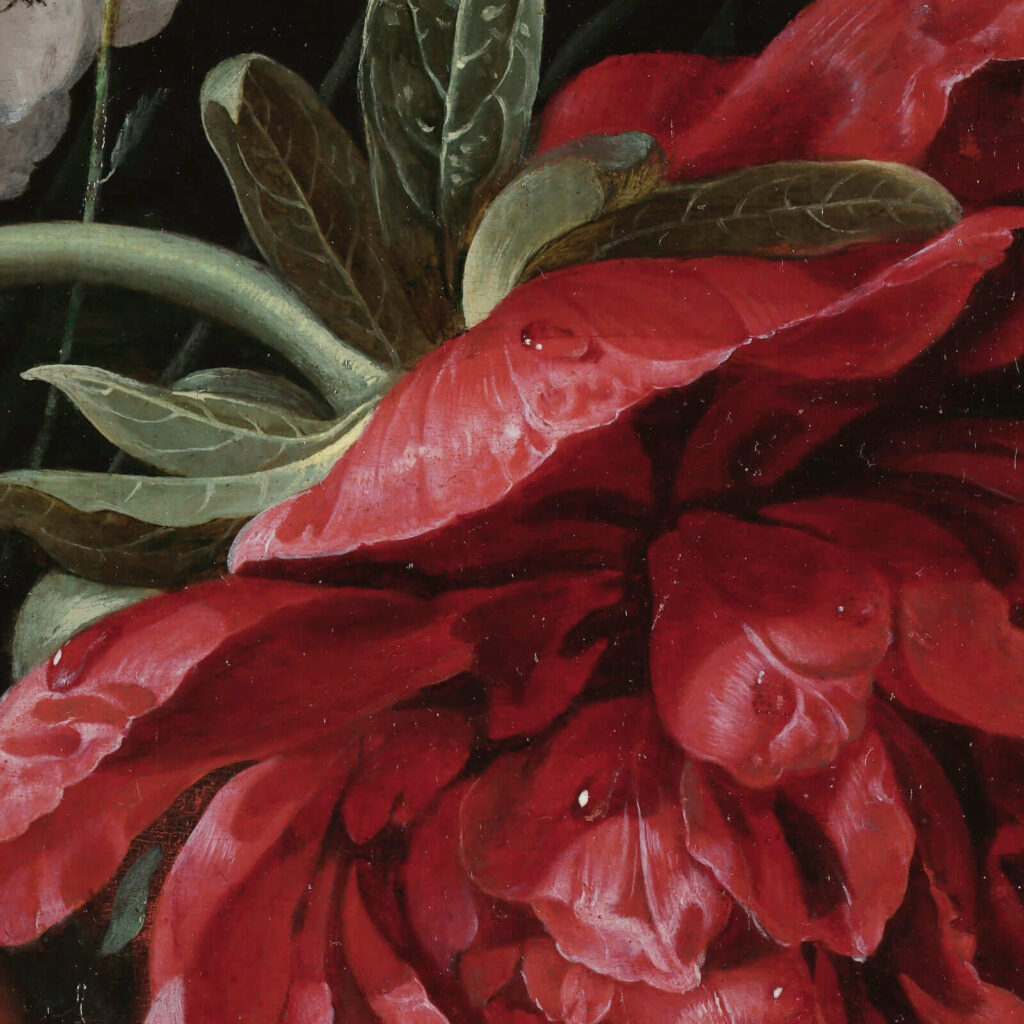
Jan Davidsz. de Heem, Vase of Flowers, 17th century, Royal Museums of Fine Arts of Belgium, Brussels, Belgium. Detail.
His treatment of clear glass is remarkable. Note how the glass vase reflects a window from behind the viewer. Notice also how de Heem implies the waterline inside the glass by a sliver of reflection and distortion. He successfully renders long opaque stems in a glass vase filled with clear water. It is verisimilitude at its finest.
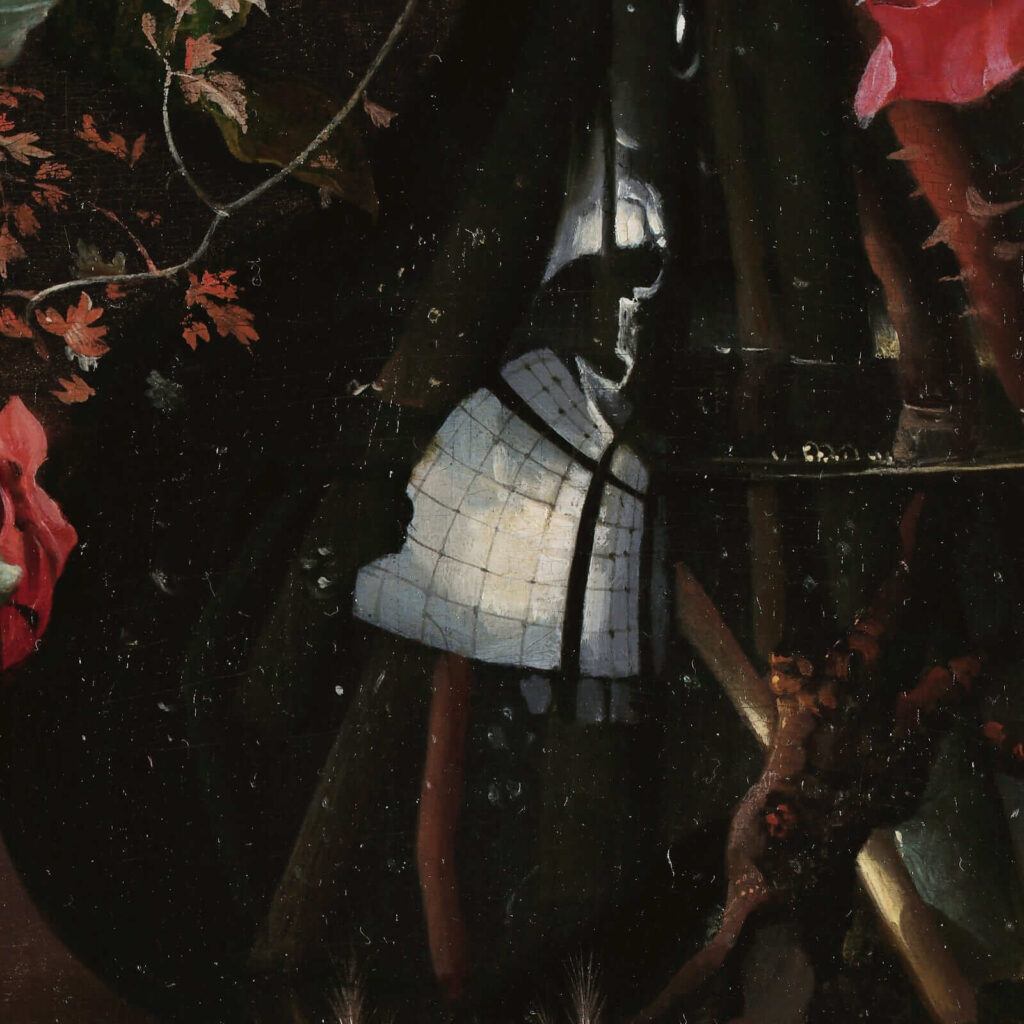
Jan Davidsz. de Heem, Vase of Flowers, 17th century, Royal Museums of Fine Arts of Belgium, Brussels, Belgium. Detail.
Why is a master artist like de Heem so underrated by contemporary society? Have we lost the ability to stop and admire traditional art? No, traditional art remains strongly appreciated. Just look at the public’s excitement whenever a Rembrandt, Vermeer, or Ruysch exhibition is assembled and tours major cities. The problem is the art world. It loves to promote, repackage, and resell the same “name brand” artists over and over through books, prints, and exhibitions because it knows they are safe income generators. Why take a gamble on a de Heem exhibition when an exhibition centered on a few major Rembrandts is guaranteed to attract the crowds?
Jan Davidsz. de Heem, Vase of Flowers, 17th century, Royal Museums of Fine Arts of Belgium, Brussels, Belgium. Detail.
Therefore, until de Heem takes his rightful place alongside Vermeer, reader, please take pride in being a connoisseur of still lifes from the Dutch Golden Age. You are in the know, and you can enjoy his works. His pieces are represented in almost all major collections, including the Rijksmuseum, Amsterdam; the Louvre, Paris; State Hermitage Museum, Saint Petersburg; Museo del Prado, Madrid; Kunsthistorisches Museum, Vienna; Metropolitan Museum of Art, New York City. If these bastions of culture have and display pieces by de Heem, then surely he deserves a reevaluation and a wider recognition. Go. Enjoy them. Ars longa, vita brevis!
Jan Davidsz. de Heem, Vase of Flowers, 17th century, Royal Museums of Fine Arts of Belgium, Brussels, Belgium. Detail.
P.S. If you enjoy floral paintings, we encourage you to check out our Flowers in Art postcards, featuring spectacular still-life paintings!
Vase of Flowers, Royal Museums of Fine Arts of Belgium Online Collection. Retrieved: November 7, 2026.
Vase of Flowers, Google Arts & Culture. Retrieved: November 7, 2026.
DailyArt Magazine needs your support. Every contribution, however big or small, is very valuable for our future. Thanks to it, we will be able to sustain and grow the Magazine. Thank you for your help!

James W. Singer is an art historian specialising in the visual arts of eighteenth-century France. His artistic passions also include Ancient Egypt and Baroque Italy. He currently lives in Paris where he continues to write "Masterpiece Story" articles for DailyArt Magazine.

Coffee-fueled writer, artist, and daydreamer.
Amrita Sher-Gil’s work has long been examined through the binaries of modernist and traditional, East and West. These debates have often...
Shivani Gupta 8 November 2026
Why would a powerful emperor place a spiritual leader above other rulers, including the King of England? Bichitr’s Jahangir Preferring a Sufi...
James W Singer 8 November 2026
Judith and Holofernes is a Caravaggio masterpiece that captures Biblical murder and drama. Rarely has death been captured so intensely and violently...
James W Singer 13 September 2026
Explore an astonishing 1915 nude self portrait by American modernist painter Florine Stettheimer.
Candy Bedworth 21 September 2026