Summary
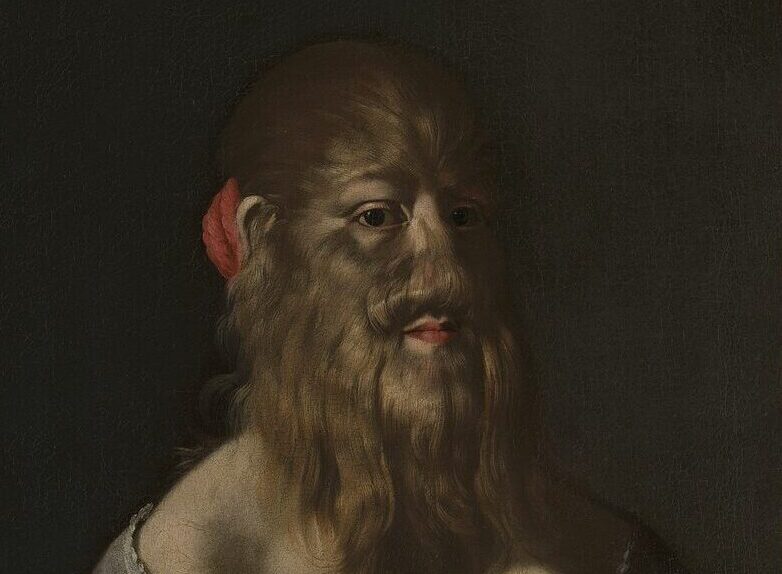
- Facial hair in women, though common, is often stigmatized. Excessive hair growth can stem from various medical conditions.
- In ancient art, Venus sometimes appeared with both male and female traits, symbolizing divine androgyny and potent sexuality.
- Queen Hatshepsut wore the ceremonial false beard of the pharaohs.
- Hippocrates described Phaethousa of Abdera, whose beard growth after her husband’s departure was attributed to grief and chastity.
- Saint Wilgefortis miraculously grew a beard to escape an unwanted marriage, leading to her crucifixion.
- Helena Antonia was a bearded court performer of the 1500s.
- Jusepe de Ribera’s 1631 portrait of Magdalena Ventura, the Bearded Woman of Abruzzi, presents her with striking realism and compassion.
- Barbara Urselin gained fame as a musician and performer, touring Europe.
- Lavinia Fontana’s portrait of Antonietta Gonzales, a girl with hypertrichosis, reflects Renaissance scientific curiosity.
- Women with unusual traits were often deemed witches, as in Macbeth.
- Bearded performer Annie Jones rose to fame under P.T. Barnum and later defended sideshow artists against the label “freaks.”
- Julia Pastrana, a Mexican performer cruelly exhibited as “The Ape Woman,” died in childbirth at 25, after which her embalmed body and that of her baby were displayed for decades.
- Jane Barnell, known as Lady Olga, was a bearded performer and actress in Freaks, whose troubled life began with childhood exploitation.
- Clémentine Delait became a local celebrity in Lorraine, France, inspiring the film Rosalie.
- Today, figures like Jennifer Miller and the LGBTQ+ community challenge stigma around female body hair.
- Conchita Wurst, the bearded drag artist who won Eurovision in 2014, blends masculinity and femininity to challenge gender norms.
- Harnaam Kaur, a bearded social media influencer, transforms past bullying into empowerment.
Secret Shame
Although beauty standards can change across time and culture, modern humans are generally uncomfortable with the idea of facial hair in women. Yet facial hair in women is very common. And sadly, it is also a very common cause of deep anxiety; we women spend time and money hiding our shameful, hairy secret.
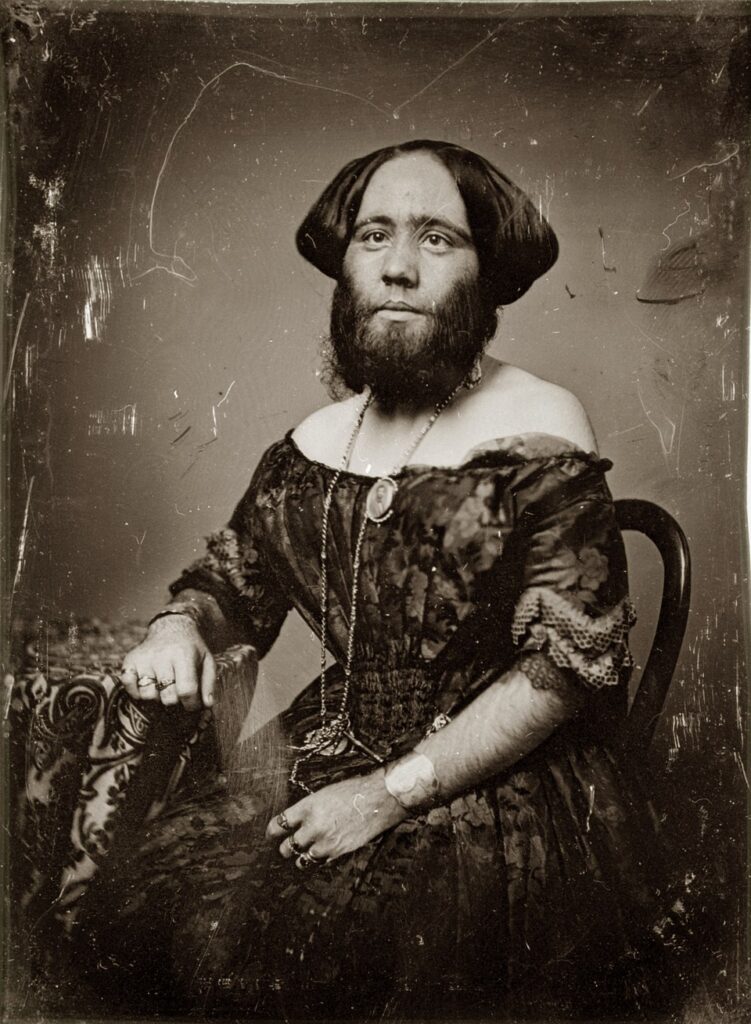
Portrait of Josephine Clofullia, 1853, Missouri History Museum, St. Louis, MO, USA. Photograph by Thomas Martin Easterly.
The Science
Hypertrichosis, unkindly known in the past as “werewolf syndrome,” is the unusual genetic condition where hair grows all over the body. Hairiness is usually called hirsutism in women; it can be caused by polycystic ovary syndrome (PCOS), Cushing’s syndrome, and other rarer disorders.
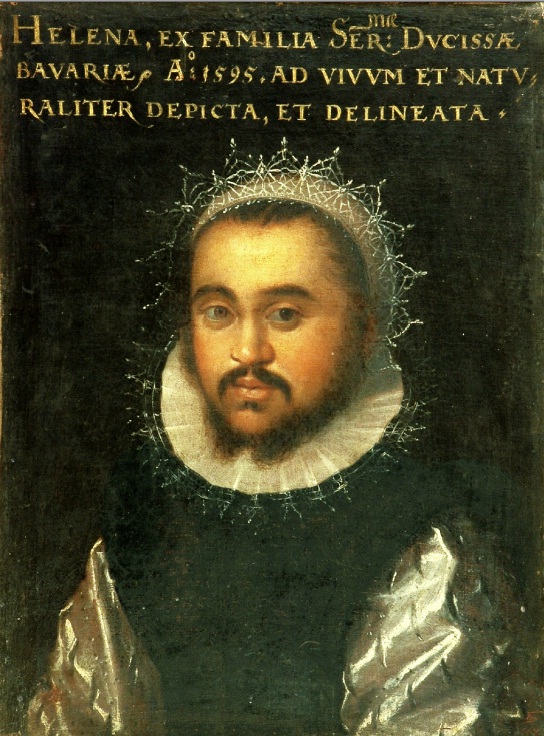
Portrait of Helena Antonia of Liege, 1595, Bavarian National Museum, Munich, Germany.
Goddess Beards
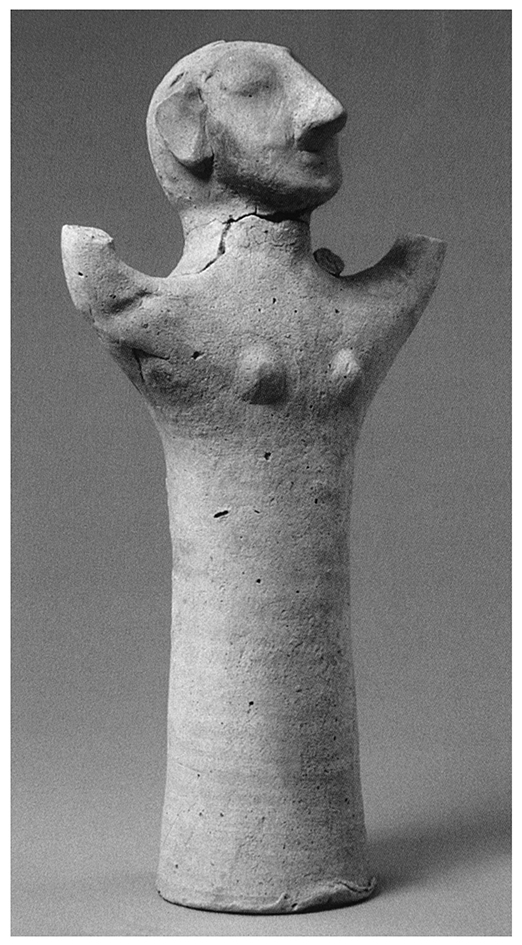
The Bearded Goddess, Agia Eirini, Cyprus, 8th century BCE, Medelhavsmuseet, Stockholm, Sweden.
The Greek goddess Aphrodite was sometimes shown with a beard (and even a phallus), which is interesting, as we often think of her as the very embodiment of female perfection and beauty. The ancients had no problem understanding that a divine god-figure could combine the male and female. To them, someone with dual characteristics held powerful sexual potency.
The Romans knew Aphrodite as Venus, and the statue of Venus Barbata of ancient Cyprus was a similarly dual-natured figure. Worshippers engaged in cross-dressing rituals, with women wearing fake facial hair.
Egyptian Queens
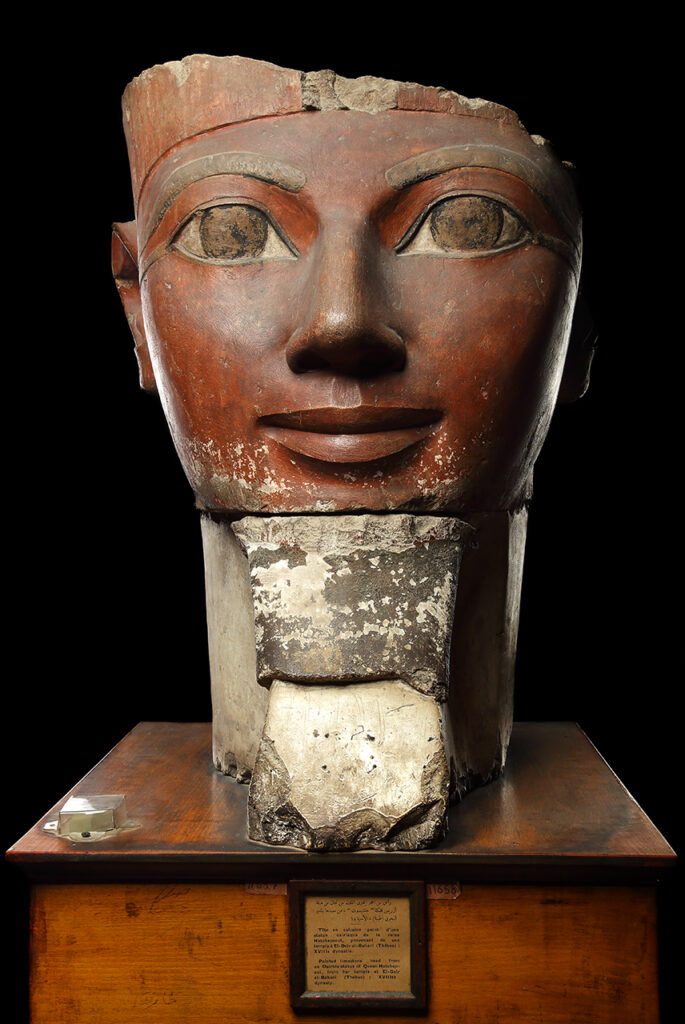
Head of Queen Hatshepsut, c. 1479–1458 BCE, Egyptian Museum, Cairo, Egypt.
In ancient Egypt, a pharaoh would wear a fabulous strap-on beard, made of leather and gold, called a postiche. Queen Hatshepsut, ruler of Egypt in the 15th century BCE, assumed the full regalia of the pharaoh, including this false beard. She did not do this to disguise herself, but rather to signify that, although she was a woman, she fully commanded the same respect as a male pharaoh and was a god on earth.
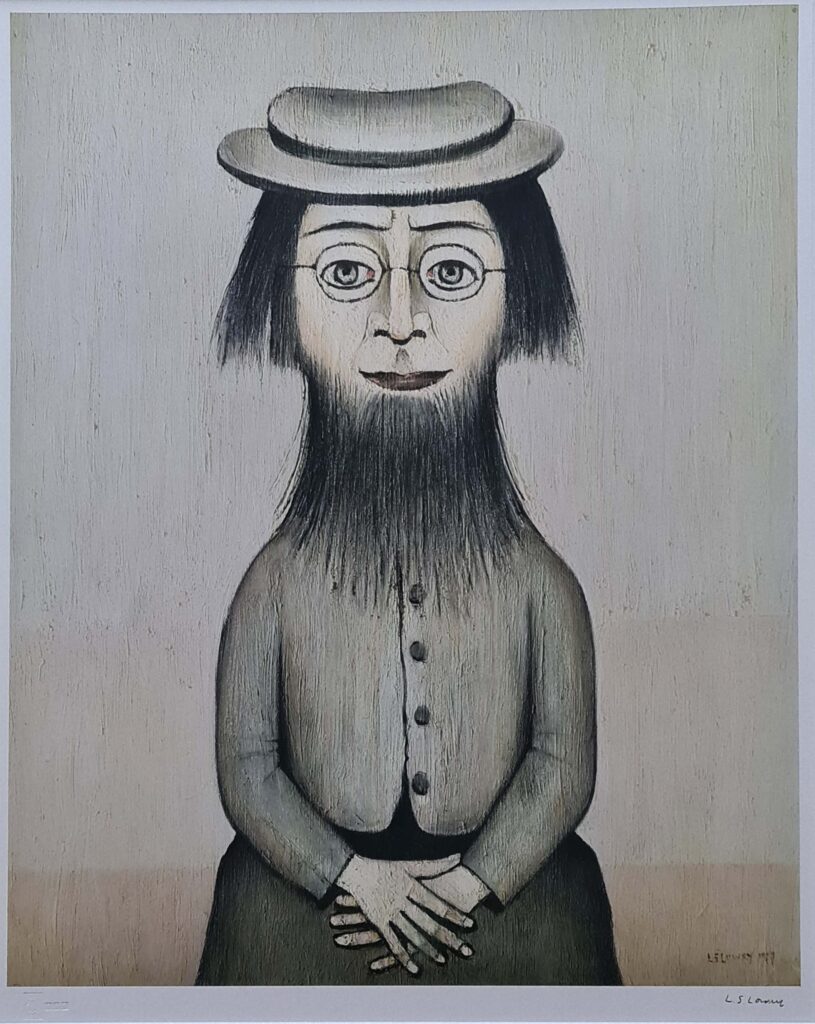
L. S. Lowry, Woman with Beard, 1975. Artist’s website.
Lovesick Beards
Hippocrates, Greek physician and philosopher, wrote a case history detailing how Phaethousa of Abdera ceased menstruating and then grew a beard after her husband, Pytheus, left her. The idea that sexually chaste women could grow beards lingered until the Middle Ages. Hippocrates described Phaethusa as “heartbroken,” and according to his ancient medical theories, prolonged emotional distress caused a “masculinization” of the wife.
Medieval Saint
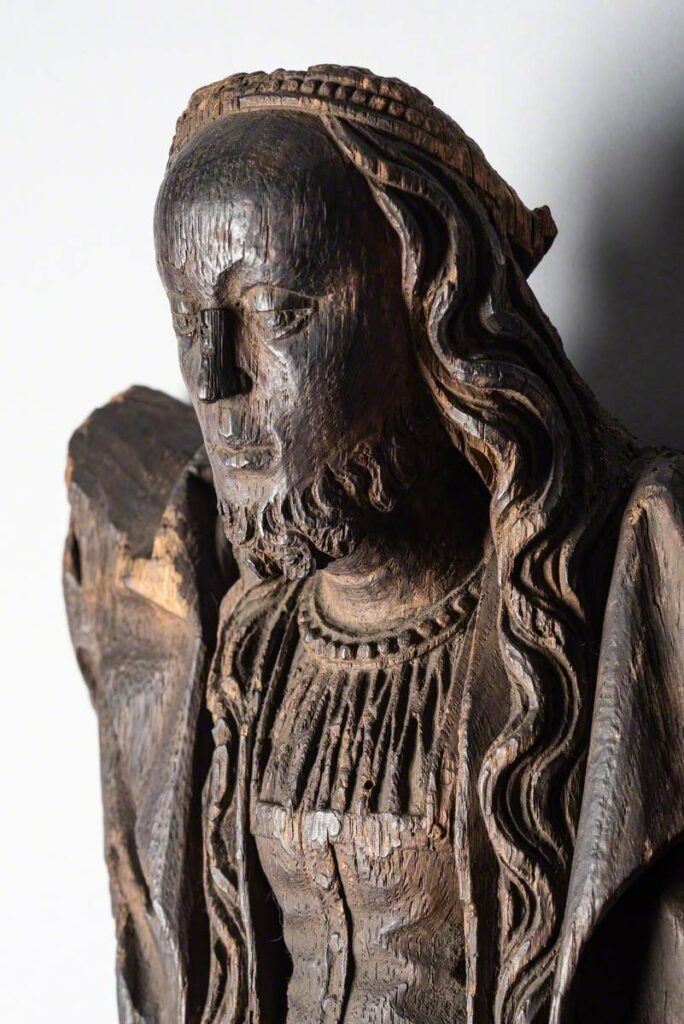
Saint Wilgefortis, c. 1520, Storiel, Bangor, UK.
Is this a folk tale or a real woman? We don’t know. But she is absolutely fascinating! According to the legend, Wilgefortis was a pious noblewoman who took a vow of chastity. Despite this, and to further his political connections, her father, the King of Portugal, promised her in marriage to a pagan king. A despairing Wilgefortis prayed to become repulsive to her suitor, and her pleas were answered when she grew a full beard on her face. Her enraged father crucified her.
Depictions of Wilgefortis usually show her on a cross, in a long tunic with a full beard. She is still venerated as the patron saint of women seeking liberation from abusive husbands.
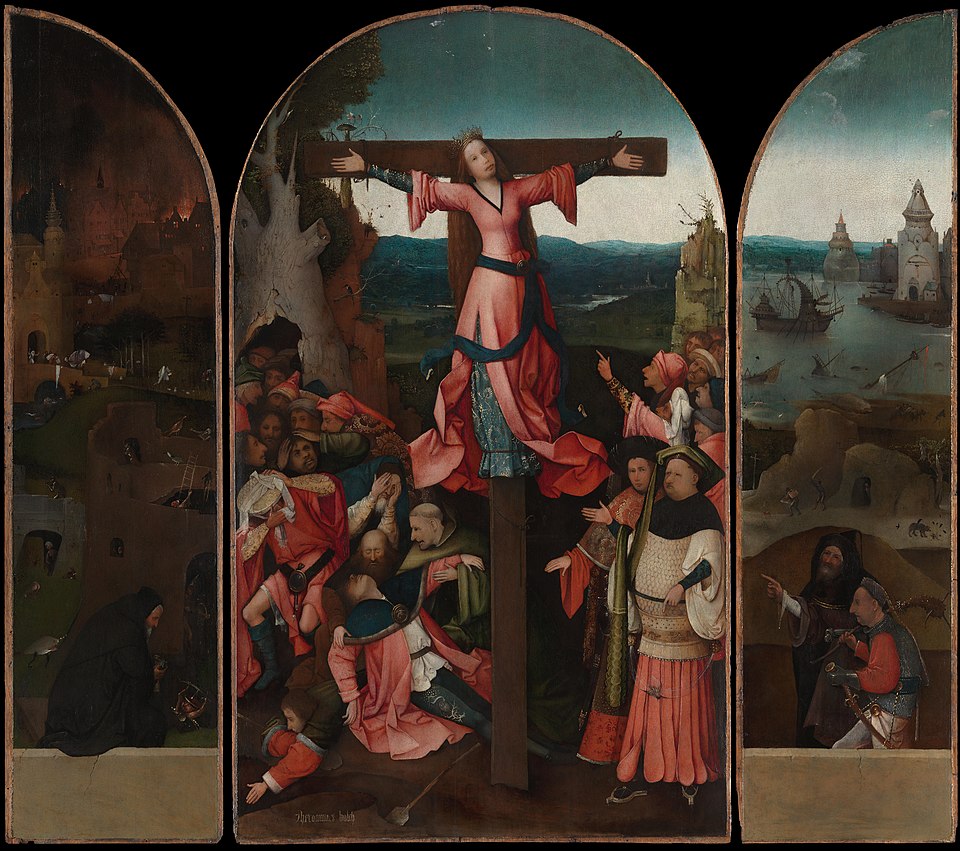
Hieronymus Bosch, The Crucifixion of Saint Wilgefortis, 1497, Gallerie dell’Accademia, Venice, Italy.
Lady in Waiting
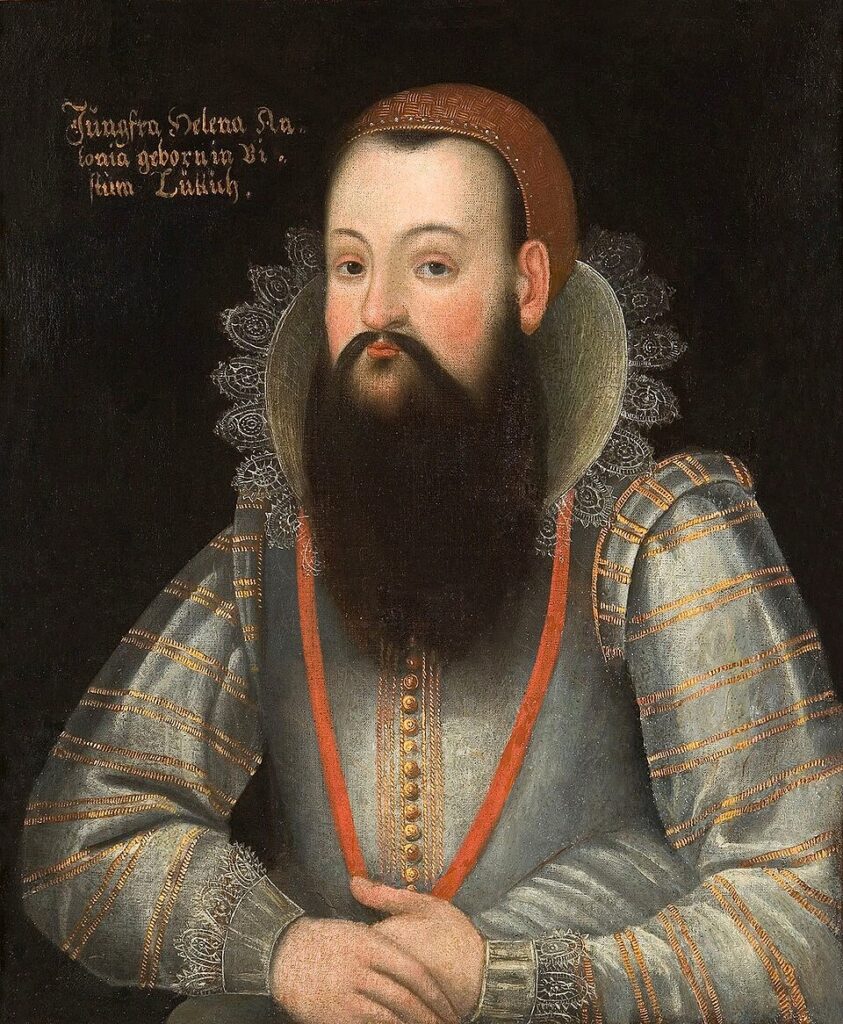
Portrait of Helena Antonia of Liege, c. 1621, National Museum in Wroclaw, Wrocław, Poland.
Born in the 1500s, Helena Antonia grew a beard from an early age. Her parents gifted her to royalty as a court performer (Helena was also of limited stature). As a lady-in-waiting, she was passed from Maria Anna of Bavaria to the Holy Roman Empress Maria of Austria, then on to Constance of Austria. Helena was painted three times during her court days. Aged 42, she moved on to join a freak show in Wrocław, and although she was an incredibly famous woman, she was never heard from again.
The Bearded Woman of Abruzzi
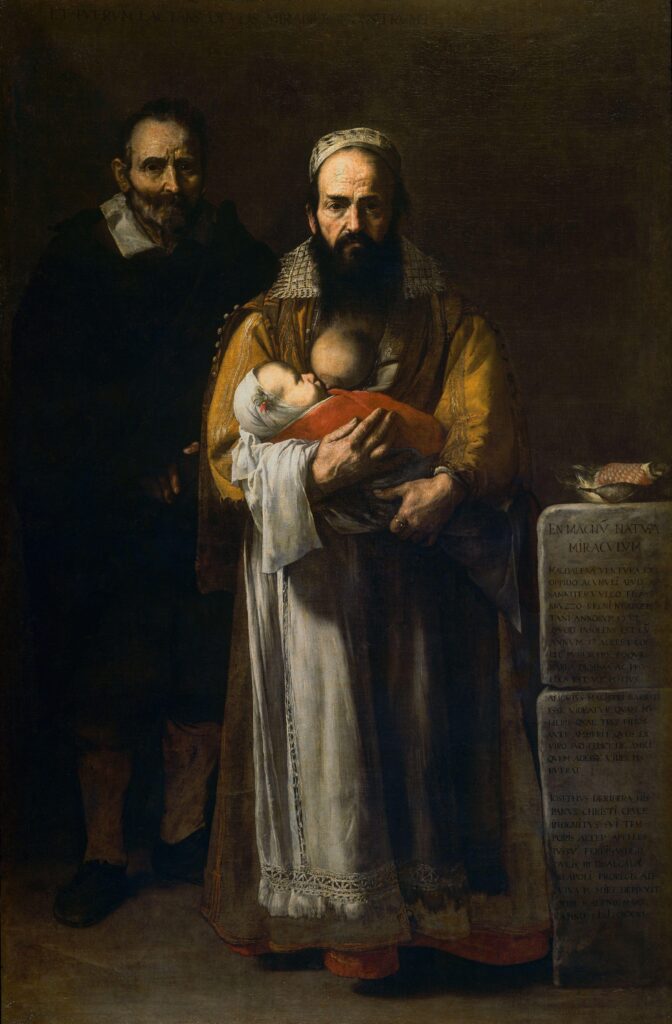
Jusepe de Ribera, Magdalena Ventura with Husband and Son, 1631, Museo Fondación Duque de Lerma, Toledo, Spain.
Perhaps the most famous of all bearded woman portraits is of Magdalena Ventura, known as the Bearded Woman of Abruzzi. The Spanish painter Jusepe de Ribera was commissioned by the Duke of Alcalá to paint this portrait in 1631.
We see Magdalena, with a luxurious dark beard and manly features. But anatomically, this body is female—she is breastfeeding the baby she birthed. Her husband, with a much sparser beard, stands to the side. The inclusion of the baby and husband draws attention to the wonder and spectacle of her condition. Ribera’s approach feels very realistic and certainly makes a spectacle of the figures. And yet it also feels compassionate.
Educated Celebrity
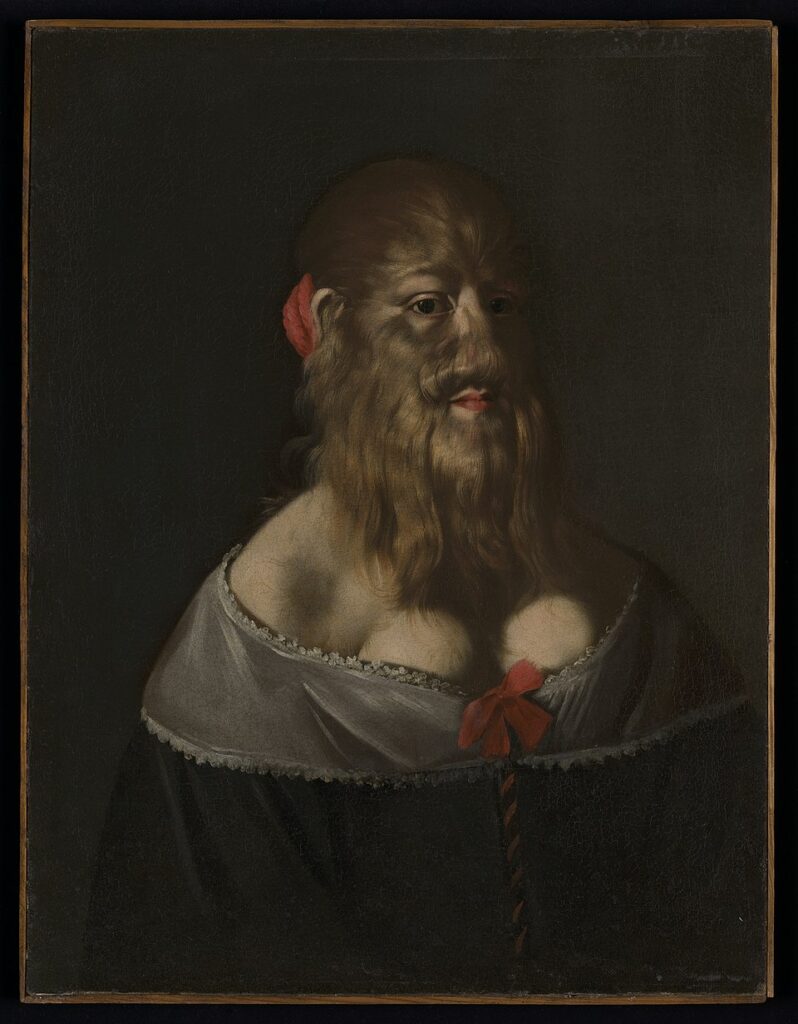
Giovanni Francesco Guerrieri, Barbara van Beck, 17th century, Wellcome Collection, London, UK.
Barbara Urselin was an entrepreneur and celebrity. Born in Germany in 1629, she was well educated by her family and later married Johan Michael van Beck, who considered Barbara his road to fame and fortune. They toured Europe, with Barbara, a fashionable woman and fine musician, playing the harpsichord. However, at age 39, Barbara disappears from the records, and we never hear of her again.
Bearded Child
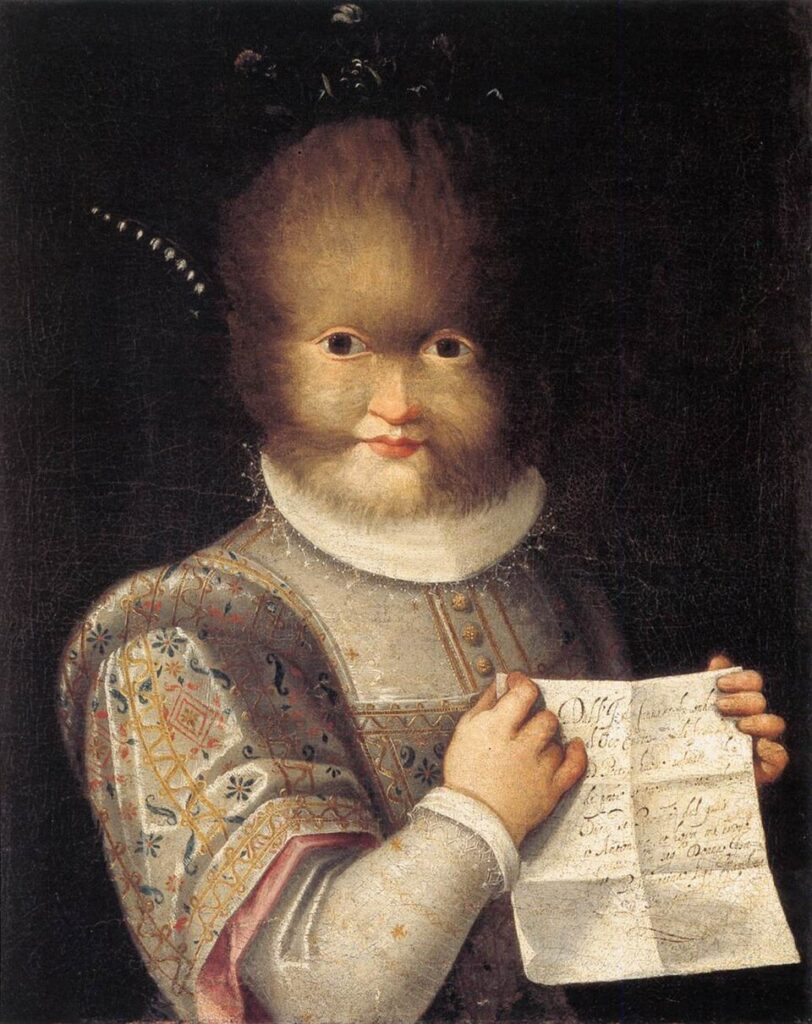
Lavinia Fontana, Portrait of Antonietta Gonzales, c. 1595, Musée des Beaux-Arts de Blois, Blois, France.
In this portrait, Lavinia Fontana presents Antonietta Gonzales, daughter of the Gonzales family, who were known across European courts for their congenital hypertrichosis. Fontana clothes the girl in an embroidered brocade dress, and the painting is styled in the manner of aristocratic portraiture.
The painting reflects the late 16th-century intersections of art, science, and culture. Fontana’s desire was to document human difference without judgment. This is a particular and individual child, and her direct gaze shows no hint of shame.
Hairy, Warty Witches
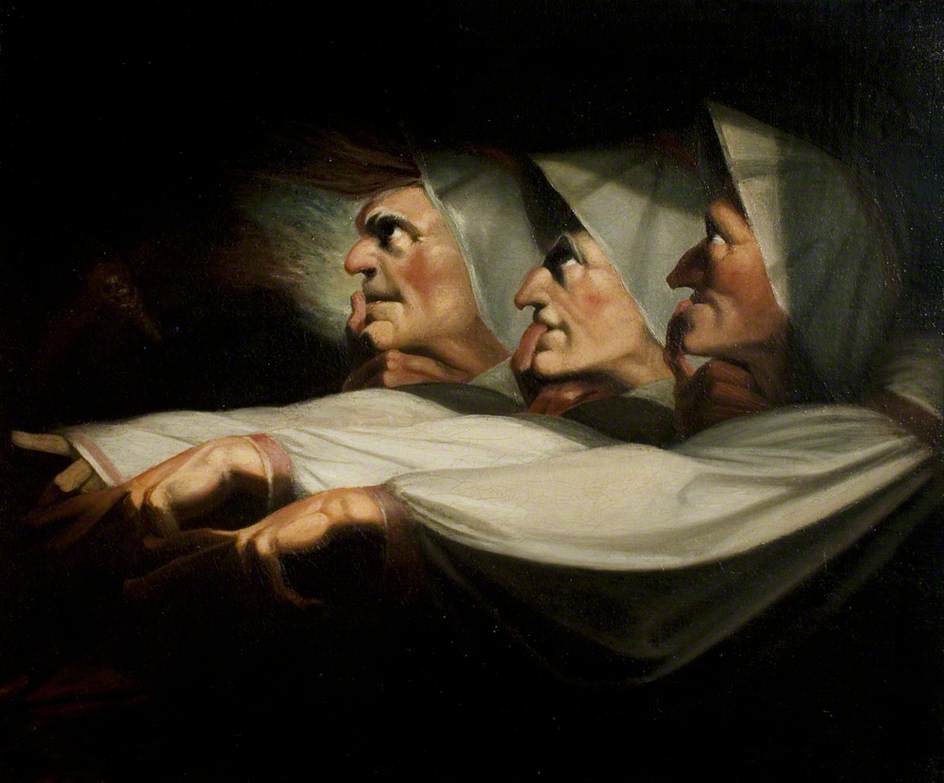
Henry Fuseli, The Weird Sisters (Macbeth, Act I, Scene 3), 1783, Royal Shakespeare Theatre, Stratford-upon-Avon, UK.
Intolerance of unusual physical differences has meant that some women have been branded as witches. Ugly, cursed creatures with hairy, warty chins were either to be laughed at or repulsed by. Macbeth, the play by William Shakespeare, has three very famous witches, all with facial hair, who defy the natural order of the world. The character Banquo is horrified by their hairy appearance, declaring: “You should be women and yet your beards forbid me to interpret that you are so.”
Sideshow Freaks
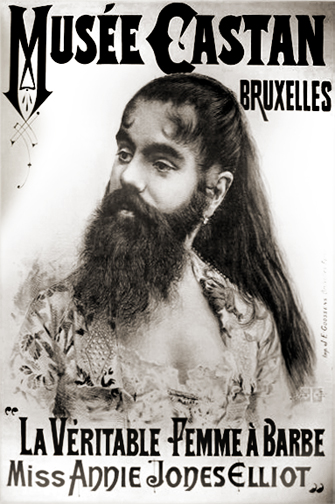
Annie Jones on a circus poster, c. 1881. Wikimedia Commons (public domain).
In the 19th century, owners of circuses and sideshows sought unusual oddities who could be exhibited to the public for money. The character of the Bearded Lady in the film The Greatest Showman was inspired by real-life performer Annie Jones, who was exhibited by American circus entrepreneur P. T. Barnum.
Individuals in sideshow exhibits often endured the most intolerable living conditions, treated almost like animals or pets. However, some did achieve celebrity and made some money. Annie Jones was taken away by P.T. Barnum in her childhood. But as an adult, she served as a spokesperson for performers and advocated against the derogatory term “freaks.”
Ugliest Woman in the World?
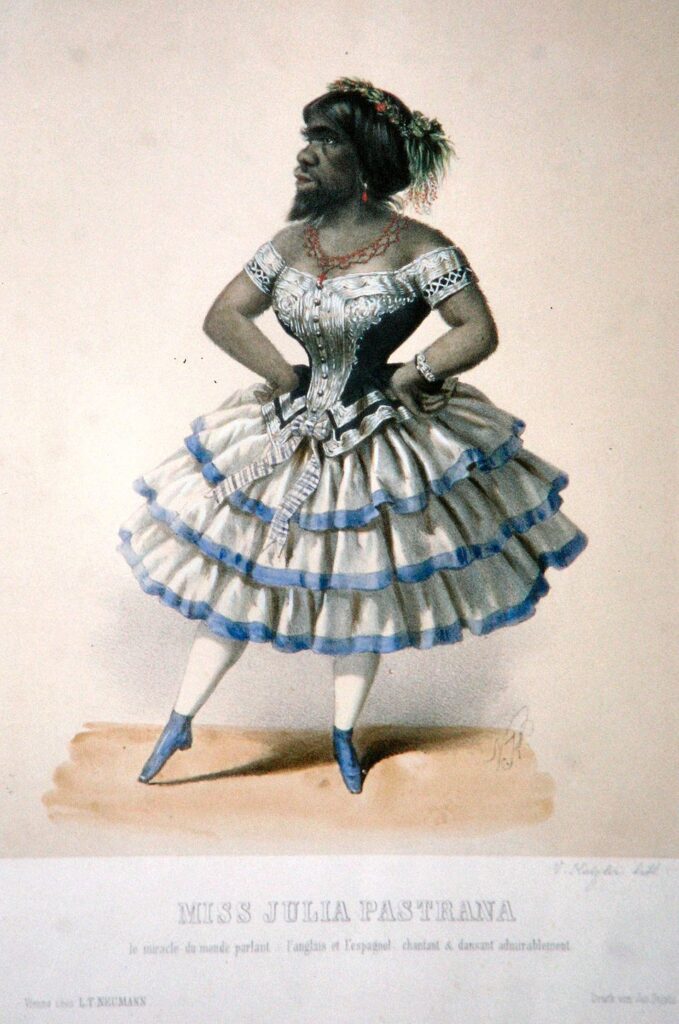
Vinzenz Katzler, Julia Pastrana, c. 1860. Wikimedia Commons (public domain).
Indigenous Mexican Julia Pastrana was sold to the circus as a child, and by the age of 20, she was being exhibited as a dancing and singing attraction across Britain and America. She married her manager, Theodor Lent, who advertised her as “The Ape Woman,” “The Bear Woman,” and even “The Ugliest Woman in the World.”
Julia died in childbirth while on tour in Moscow, aged just 25. Her son lived a mere three days. This was not the end for poor Julia, though. Her body, and that of her tiny baby, were preserved through embalming and taxidermy, and they continued to be exhibited to the public for over a century.
Challenging Ugly Racism
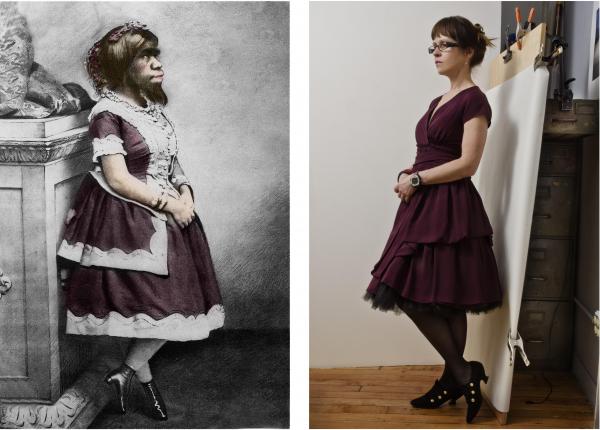
Laura Anderson Barbata, Julia y Laura, 2013. Artist’s website.
The bodies of Julia Pastrana and her baby toured circuses and amusement parks until 1972. Public opinion finally turned against such indignity, and the bodies were placed in storage in Sweden. Soon after, baby Pastrana was smashed to pieces by vandals, and his remains were eaten by mice. Julia’s body was stolen, found, and then moved to Norway, where scientists continued to experiment on her remains.
After lobbying by activist and artist Laura Anderson Barbata, Maria was finally laid to rest in her home region of Sinaloa, Mexico, in 2013. Race and ethnicity play a significant part in these stories. So-called scientists in the past considered dark skin and hairiness to be a sign of an inferior race, even comparing hairy women with apes and gorillas.
Lady Olga
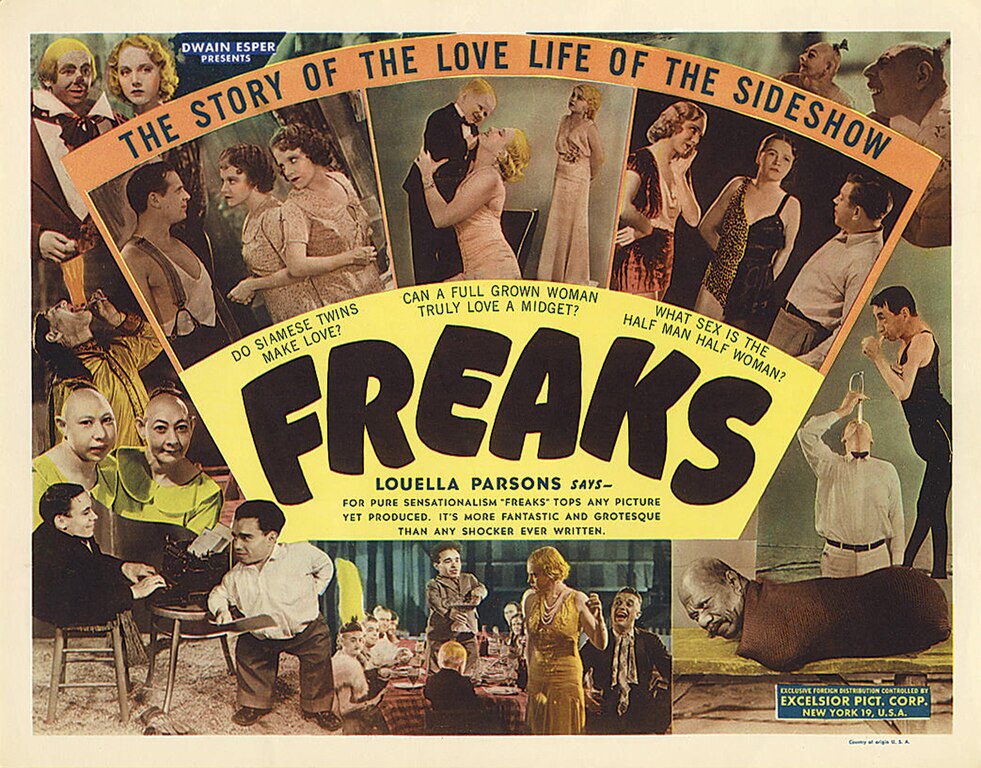
Lobby card for the film Freaks, directed by Tod Browning, 1932. Wikimedia Commons (public domain).
Jane Barnell, also known as Lady Olga, was an American circus performer. She famously played the bearded lady in Tod Browning’s 1932 cult classic film Freaks. Another woman with a tragic history, she was sold to the circus aged four (her mother believed she was cursed). Travelling in Germany, she became ill and was abandoned in an orphanage. By sheer luck, she was reunited with her father at the age of five. However, functioning within “normal” society proved impossible for Jane and she returned to circus performing. She became a trapeze artist, but after a railway accident, she turned to commercial photography.
The Cafe of the Bearded Woman
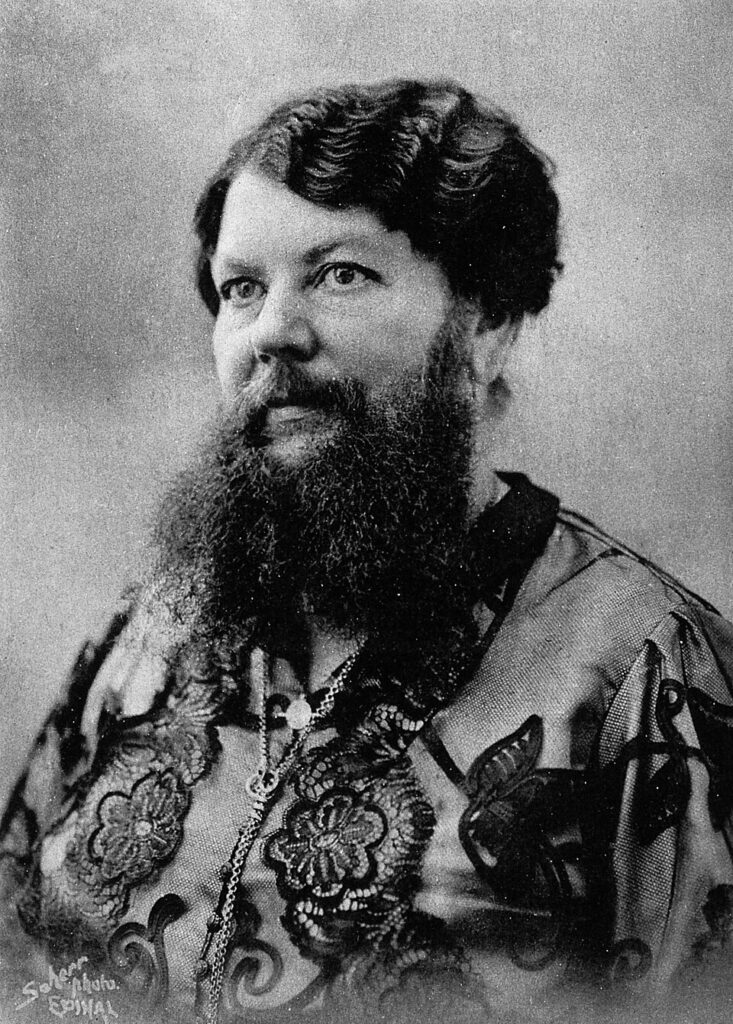
Madame Delait, 1923, Wellcome Collection, London, UK.
The illustrious career of Clémentine Delait began when she worked with her husband in a cafe in Lorraine, northern France. She attracted so many customers that they renamed the cafe after her. Clémentine was the most celebrated bearded woman of the early 20th century, very proud of her beard, which she cared for with meticulous grooming.
Film director Stéphanie Di Giusto recently completed her period drama Rosalie, based on the real-life story of Clémentine Delait, starring Nadia Tereszkiewicz. A touching and moving portrayal, Rosalie prays to Saint Wilgefortis for guidance, and yes, I cried.
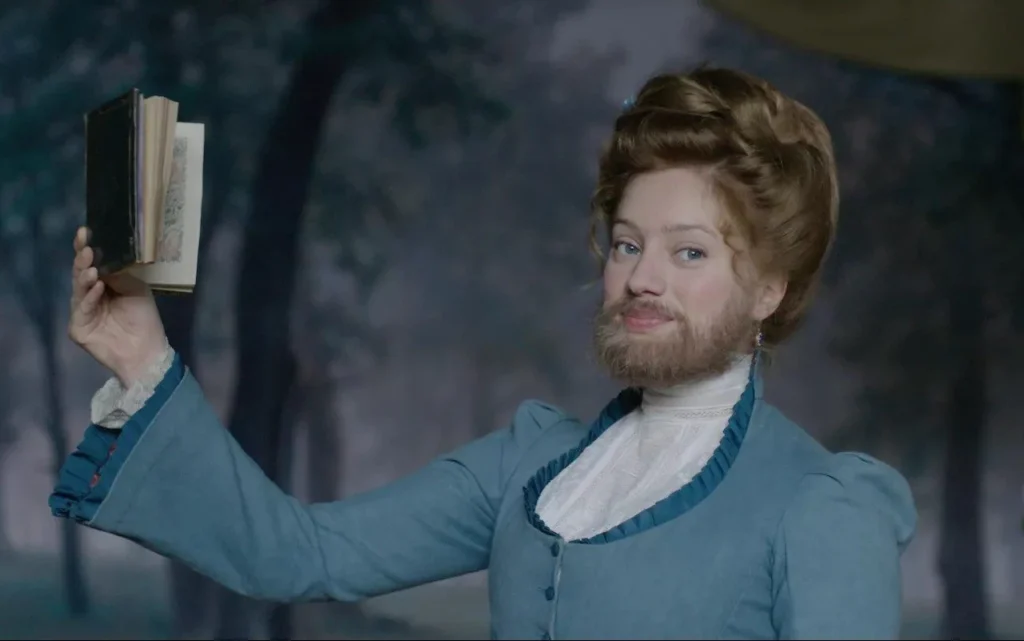
Movie still from Rosalie, directed by Stephanie Di Giusto, 2023. IMDb.
Freakshow or Feminism?
Thankfully, today, some people are trying to push back against the stigma, horror, and derision normally shown to hairy women. LGBTQ+ communities in particular promote the acceptance of hair as a perfectly natural part of ANY body. A woman with a beard doesn’t conform to societal norms but instead embraces her own unique path. That includes Jennifer Miller, professor, writer, performer, and founder of New York-based Circus Amok.
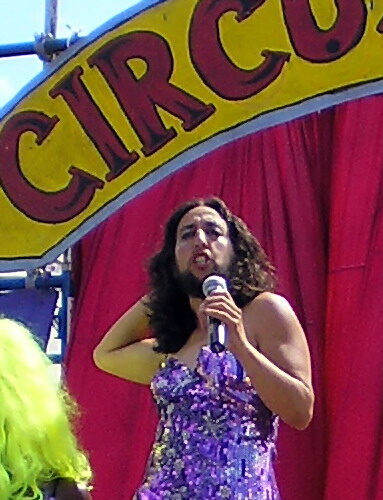
Photograph of Jennifer Miller, 2025. Photograph by David Shankbone via Wikimedia Commons (CC BY 2.5).
Eurovision Controversy
In 2014, the winner of the Eurovision Song Contest was a drag artist by the name of Conchita Wurst. Their male persona (he) is Tom, their female persona (she) is Conchita. Why include a man in an article about bearded women? Because this astonishing performer mixes a full beard with a feminine look, playfully challenging gender roles. Some religious leaders called the performance deviant and claimed it caused the floods that devastated the Balkans days later. A bit of a niche belief, perhaps? Others hail Conchita as an icon of gender fluidity—and gorgeous grooming!
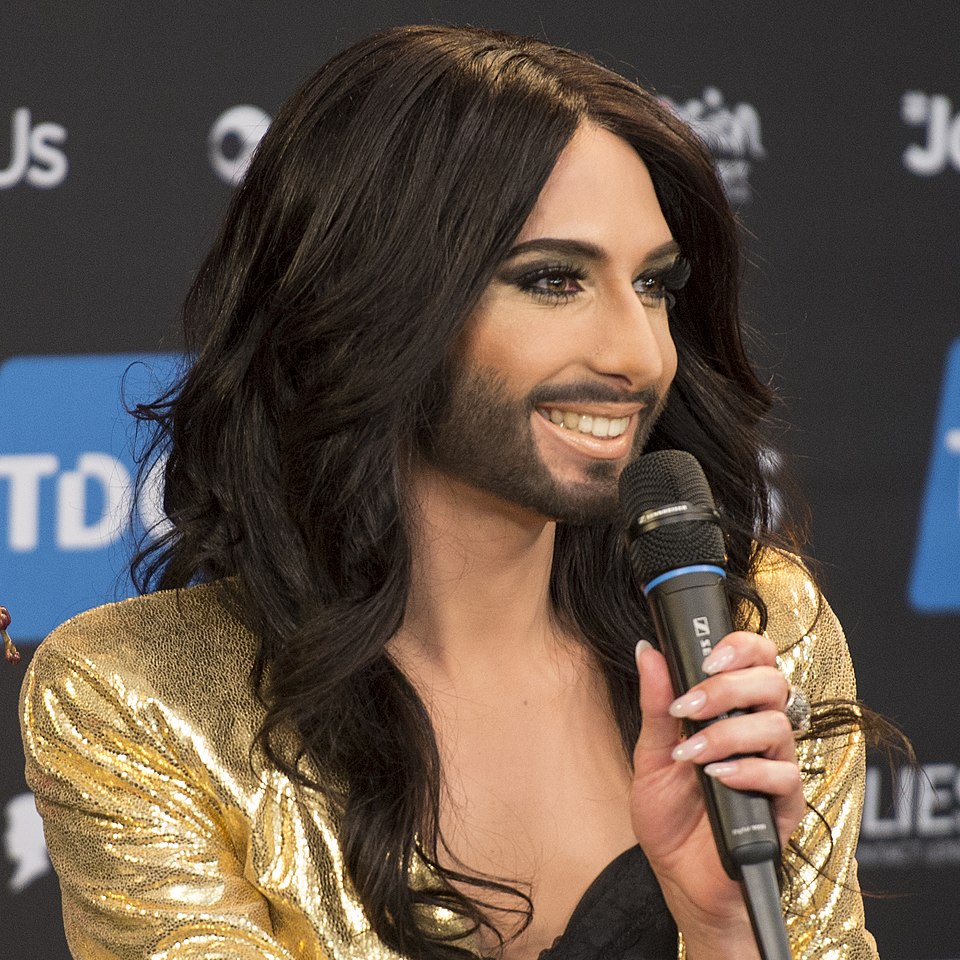
Conchita Wurst, 2014. Photograph by Albin Olsson via Wikimedia Commons (CC BY-SA 3.0).
Beautiful Beards
Harnaam Kaur is a social media influencer who sports a chic beard alongside her bright lipstick and jewel colored turbans. Bullied and abused from an early age, Harnaam now adorns herself and posts on Instagram, refusing to hide herself away. At least 40 percent of women have some sort of facial hair. That’s a lot! Maybe it’s time to stop policing the boundaries between normal and abnormal, and celebrate hairiness in all its lush and abundant diversity!

Harnaam Kaur, 2025. MSN.






.jpg)