




The Ethics of Depicting Nude Children in Art
Explore the challenges of representing naked children in art. How much do societal norms shape our views?
Candy Bedworth 16 July 2026
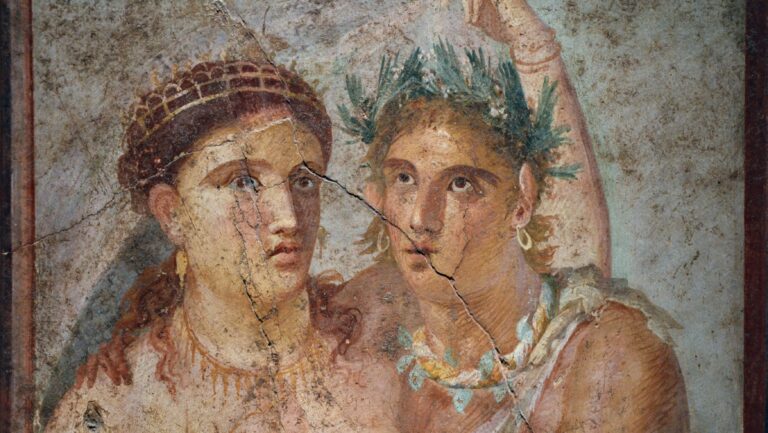
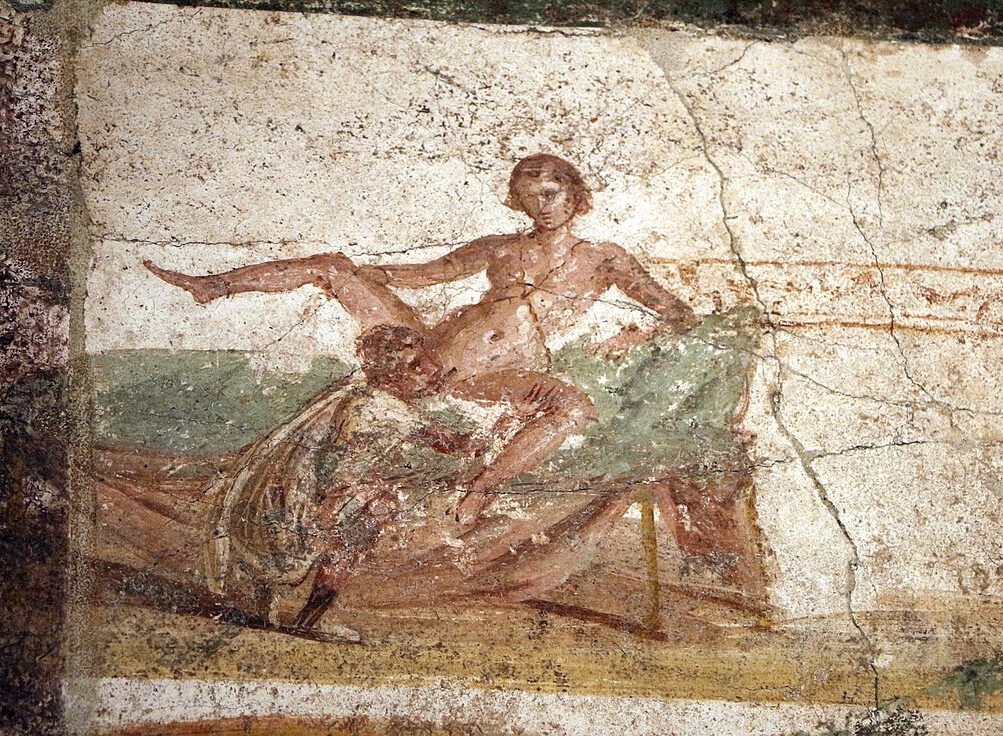
Fragment of wall painting depicting a satyr and a maenad, House of Caecilius Jucundus in Pompeii, Naples National Archaeological Museum, Naples, Italy. Photograph by Carole Raddato via Wikimedia Commons (CC BY-SA 2.0). Detail.
Erotic art in Pompeii and Herculaneum is a shocking phenomenon often omitted from textbooks about ancient history. These famous Roman cities destroyed by the eruption of Mount Vesuvius in 79 CE were discovered with preserved buildings and artifacts in the 18th century. Archaeological work has revealed that the cities were full of erotic artifacts such as frescoes, statues, and even household items decorated with sexual themes. It was so shocking to scholars that a large number of these artifacts from Pompeii were locked away from the public for nearly 200 years.
Re-opened, closed, re-opened again, and then closed again for nearly 100 years, the Secret Museum, which is a part of the National Archaeological Museum in Naples, now presents some of the shocking excavated art from Pompeii that for years was perceived as obscene, or at least problematic. So what exactly can we see in Pompeii and Herculaneum?
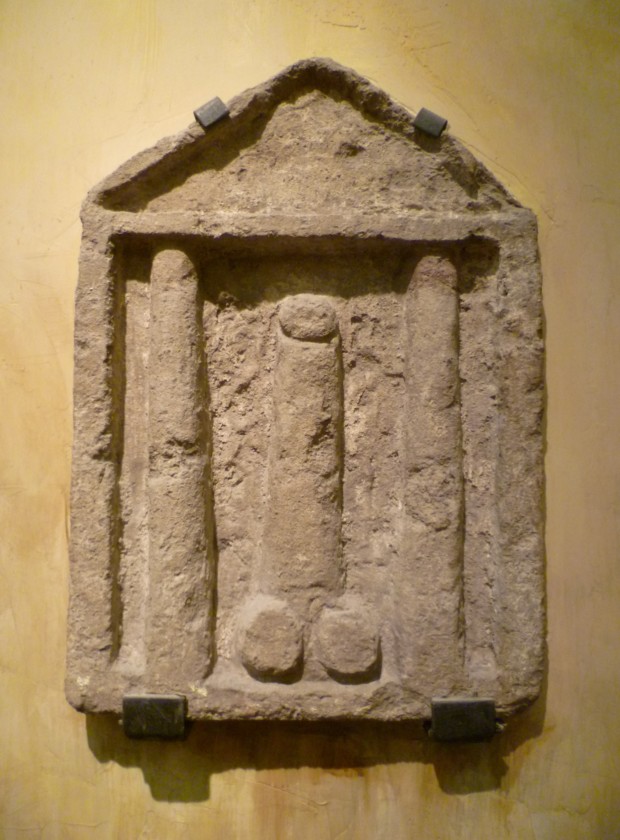
The phallus as an independent phenomenon or as a body part of Pan, Priapus, or a similar deity was a common image. Priapus was a god of sex and fertility and was often shown with an oversized erection.
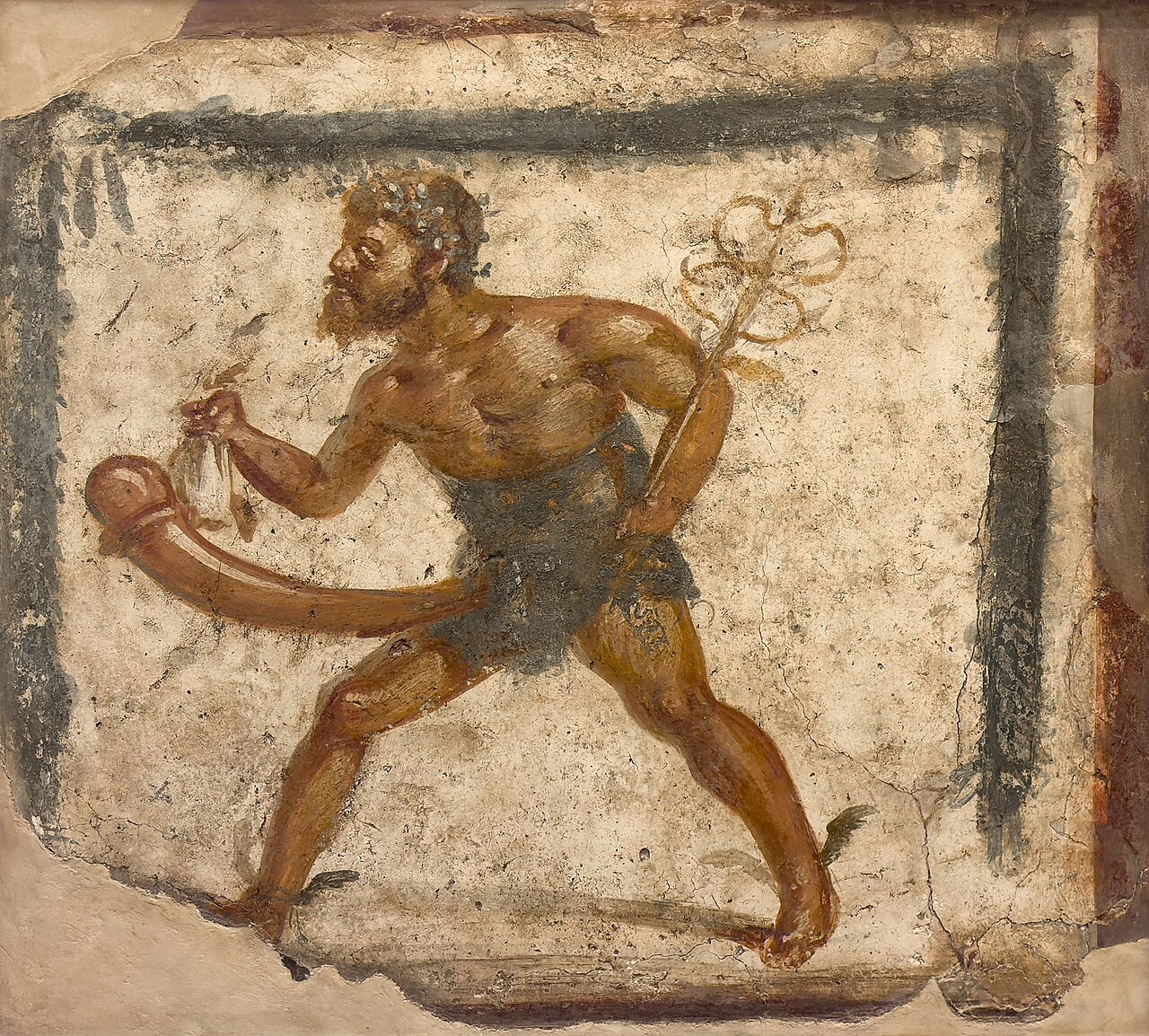
The phalluses might have also been treated as a ward against the evil eye, which sounds like quite an interesting concept nowadays.
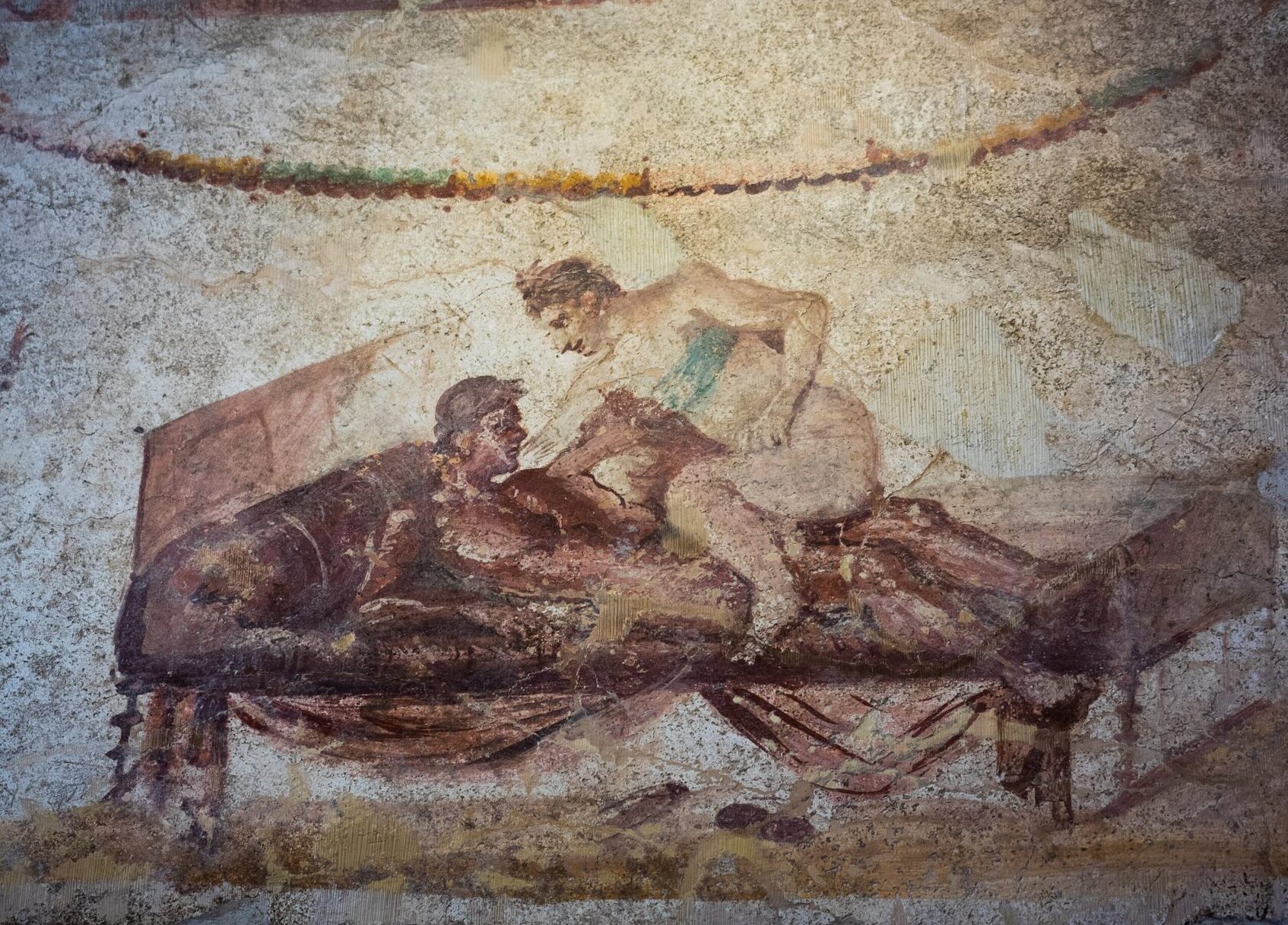
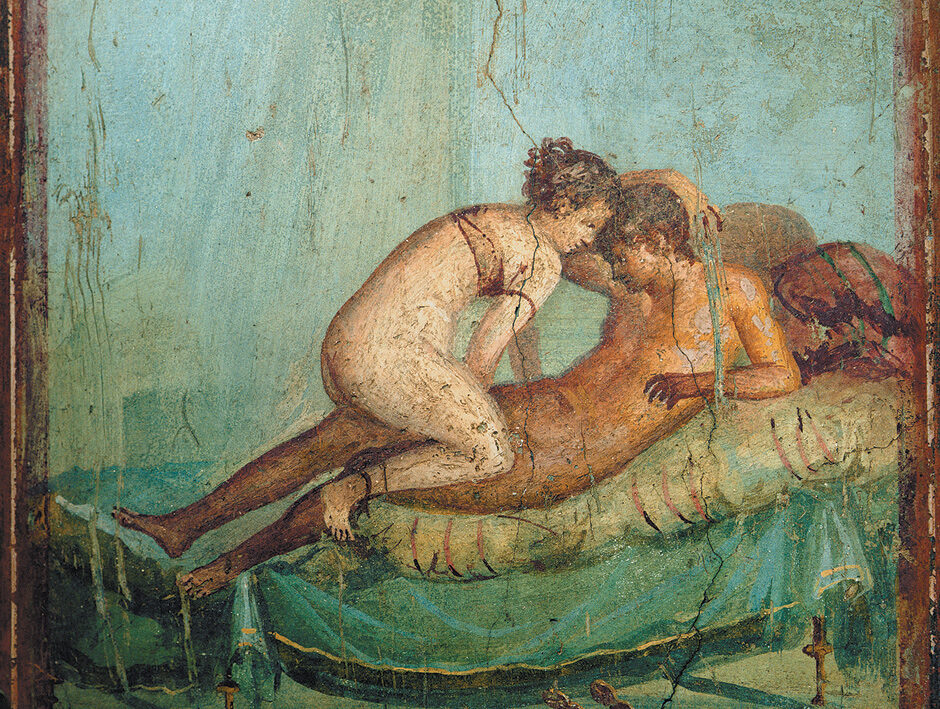
In Pompei and Herculaneum, you can find a lot of large erotic frescoes on the walls. They might have been advertisements for brothels. Brothels had many erotic paintings and graffiti in the interiors to enhance the sensual atmosphere of the place. The most interesting of these buildings was called the Lupanar and had 10 rooms (cubicula, 5 per floor), a balcony, and a latrine.
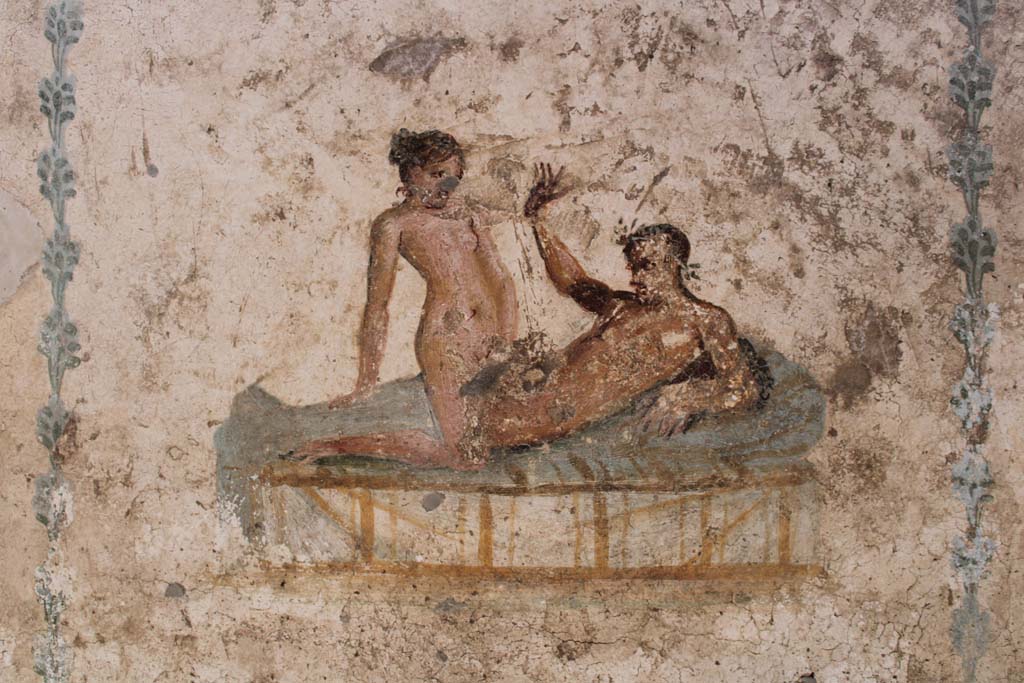
Sex work was relatively inexpensive for the Roman male, but it is important to note that even a low-priced sex worker earned more than three times the wages of an unskilled urban laborer. However, it was unlikely a freedwoman would enter the profession.
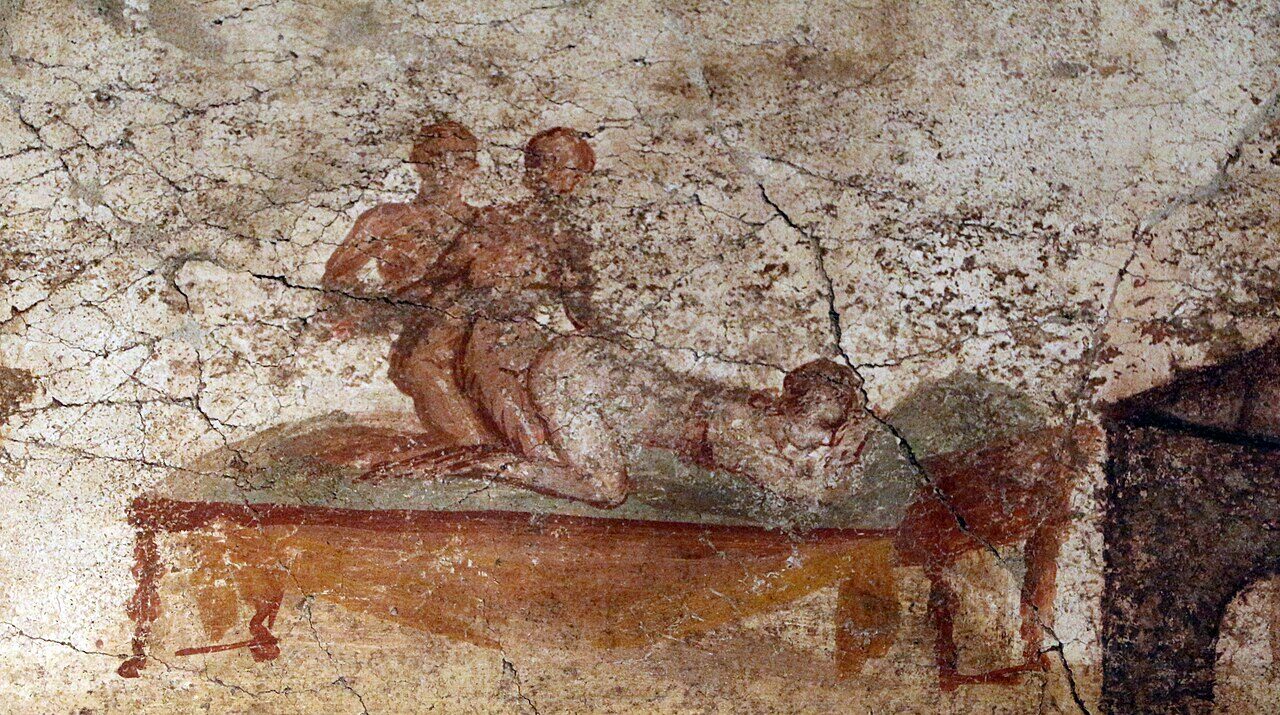
These paintings were found in a changing room on one side of the Suburban Baths, excavated in the early 1980s. The function of these depictions is not yet clear. Likely, they indicated that the sex workers offered their services on the upper floor of the bathhouse, and these were a sort of advertisement. One hypothesis says that their purpose was to decorate the walls with joyful scenes, which was a popular thing in Roman culture.
There is also one more interesting explanation: that they might have served as reminders of where one had left one’s clothes. Well, whatever works!
DailyArt Magazine needs your support. Every contribution, however big or small, is very valuable for our future. Thanks to it, we will be able to sustain and grow the Magazine. Thank you for your help!

Art Historian, founder and CEO of DailyArtMagazine.com and DailyArt mobile app. But to be honest, her greatest accomplishment is being the owner of Pimpek the Cat.
Explore the challenges of representing naked children in art. How much do societal norms shape our views?
Candy Bedworth 16 July 2026
Explore the representation of the female body and buttocks in art, celebrating diversity and beauty across history and modern culture.
Candy Bedworth 29 January 2026
Erotic, playful, and unexpectedly sophisticated, shunga holds a unique place in Japanese visual culture. But there is often far more than mere...
Katerina Papouliou 5 March 2026
Nudity started being an important subject in art in ancient Greece. The male body was celebrated at sports competitions or religious festivals, it...
Anuradha Sroha 14 May 2026


.jpg#/media/File:Fragment_of_wall_painting_depicting_a_satyr_and_a_maenad,_from_the_House_of_Caecilius_Jucundus_in_Pompeii,_Naples_National_Archaeological_Museum_(17322266511).jpg)

.jpg#/media/File:Fresco_of_Hermes_as_Priapus_(Gabinetto_Segreto).jpg)
.jpg#/media/File:Unidentified_fresco_painting_in_Pompeii,_2016_(1).jpg)
#/media/File:Pompeii_-_Casa_del_Centenario_-_Cubiculum_2.jpg)