
10 Autumn Activities Inspired by Impressionist Paintings
Autumn is such a colorful season! Here are 10 activities inspired by Impressionist autumn paintings to enjoy during this time of year.
Andra Patricia Ritisan 22 September 2025
3 February 2026 min Read
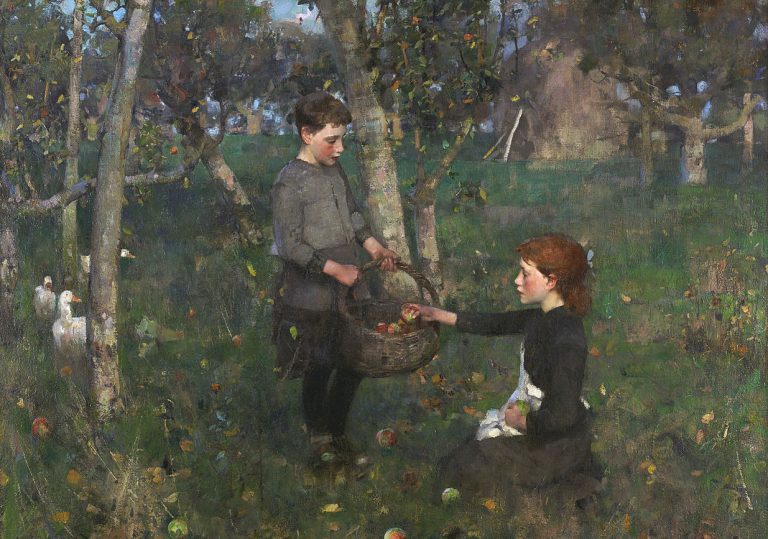
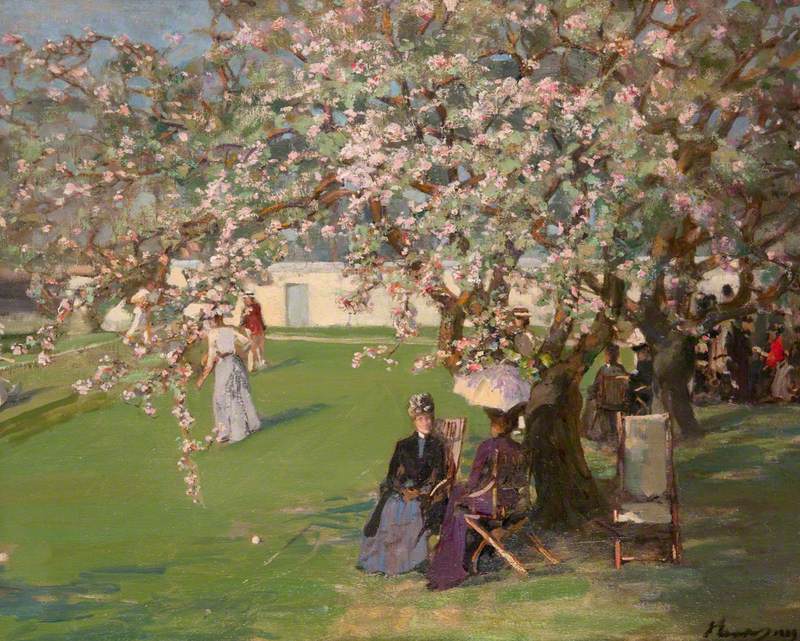
James Guthrie, In the Orchard, 1886, National Gallery of Scotland, Edinburgh, UK. Detail.
The Glasgow Boys were a group of Scottish Impressionists who placed the city of Glasgow on the artistic scene in the last third of the 19th century. Their work brought Impressionism to Scotland and rejuvenated the country’s pictorial panorama. The innovative pictorial tendencies of the Glasgow Boys and the distancing from Academicism were revolutionary at the time. James Guthrie and John Lavery were the most prominent figures of the group.
As it is widely known, Impressionism may be one of the most influential, recognizable, and loved artistic movements, despite its harsh beginnings and its initial detractors. When we talk about Impressionism, we all think about colorful sunrises, dancing ballerinas, beautiful landscapes executed en plein air, and, of course, water lilies. Great artists of the movement like Edgar Degas, Édouard Manet, Claude Monet, Pierre-Auguste Renoir, and Berthe Morisot created some of the most iconic masterpieces, earning the support and admiration of famous writers such as Émile Zola and Stéphane Mallarmé.
But what do all these great artists have in common? They were all French. This is why we tend to relate Impressionism with France and Paris in particular. Even though French Impressionists might be the most famous ones, the truth is that there’s much more of this magnificent style beyond France’s borders! Have you ever heard about the Scottish Impressionists?

The Glasgow Boys were a group of about 20 painters from different backgrounds who were united by ties of friendship. They all lived in Glasgow, where they shared studios, painted and, of course, exchanged artistic ideas. They didn’t have a common statement or manifesto, but they were all interested in overcoming Academicism and managed to oppose the guidelines set by the Royal Scottish Academy at the time. At the beginning, the Glasgow Boys were inspired by French and Dutch Realism. In particular, they were deeply influenced by the French Naturalist painter Jules Bastien-Lepage.
By the late 1880s, the Glasgow Boys began to develop their impressionist style. The Scottish Impressionists stood out for their great use of color, pattern, and texture in their paintings. Similar to other European Impressionists of their time, they were inspired by Japanese art and included the flattened forms of Japanese prints in their artworks. Their interest in prosaic and everyday topics, such as life in the country, was also seen as a change.
Like the French Impressionists, they revolutionized painting by working en plein air. Thanks to them, Glasgow became the leading artistic center in Scotland during this period, surpassing Edinburgh.
The Glasgow Boys group was active during Glasgow’s major industrial and economic expansion in the 19th century, and this economic boom influenced the progressive artistic tastes of the city’s wealthy citizens. The group benefited from this growth, particularly from the increasing wealth of the bourgeoisie and upper-middle class. Greater prosperity and higher purchasing power led to a stronger interest in art and a gradual refinement of public taste.
The Scottish Impressionists also enjoyed the support of important collectors and art dealers, who acted as patrons and stimulated the artistic experiments and nonconformist spirit of artists. For instance, Alexander Reid, who personally knew painters such as Vincent van Gogh and Paul Gauguin, financed and supported the Glasgow Boys. The art patrons brought works by the French Impressionists, the Hague School, and Barbizon painters to Glasgow, inspiring the young Scottish artists and opening up new horizons in the artistic field.
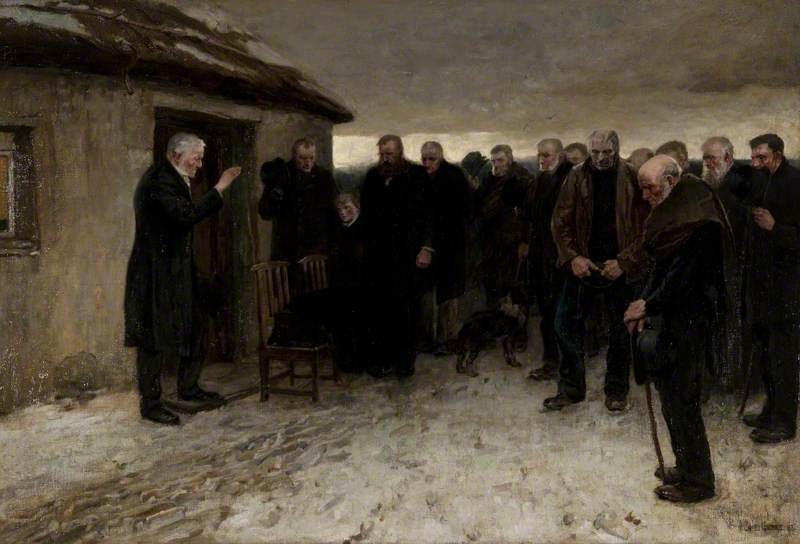
Two of the most preeminent figures of the group were James Guthrie (1859–1930) and John Lavery (1856–1941). The former was self-taught, but that did not prevent him from becoming the mainstay of the group. Influenced by French Realism—Jules Bastien-Lepage and Gustave Courbet, his style moved closer to Impressionism around 1882. The day-to-day matter of the topics and the new treatment of tonality and brushstroke in his later paintings manifest this change. One of his earliest works, A Funeral Service in the Highlands, seems to be directly inspired by Courbet’s The Burial at Ornans.
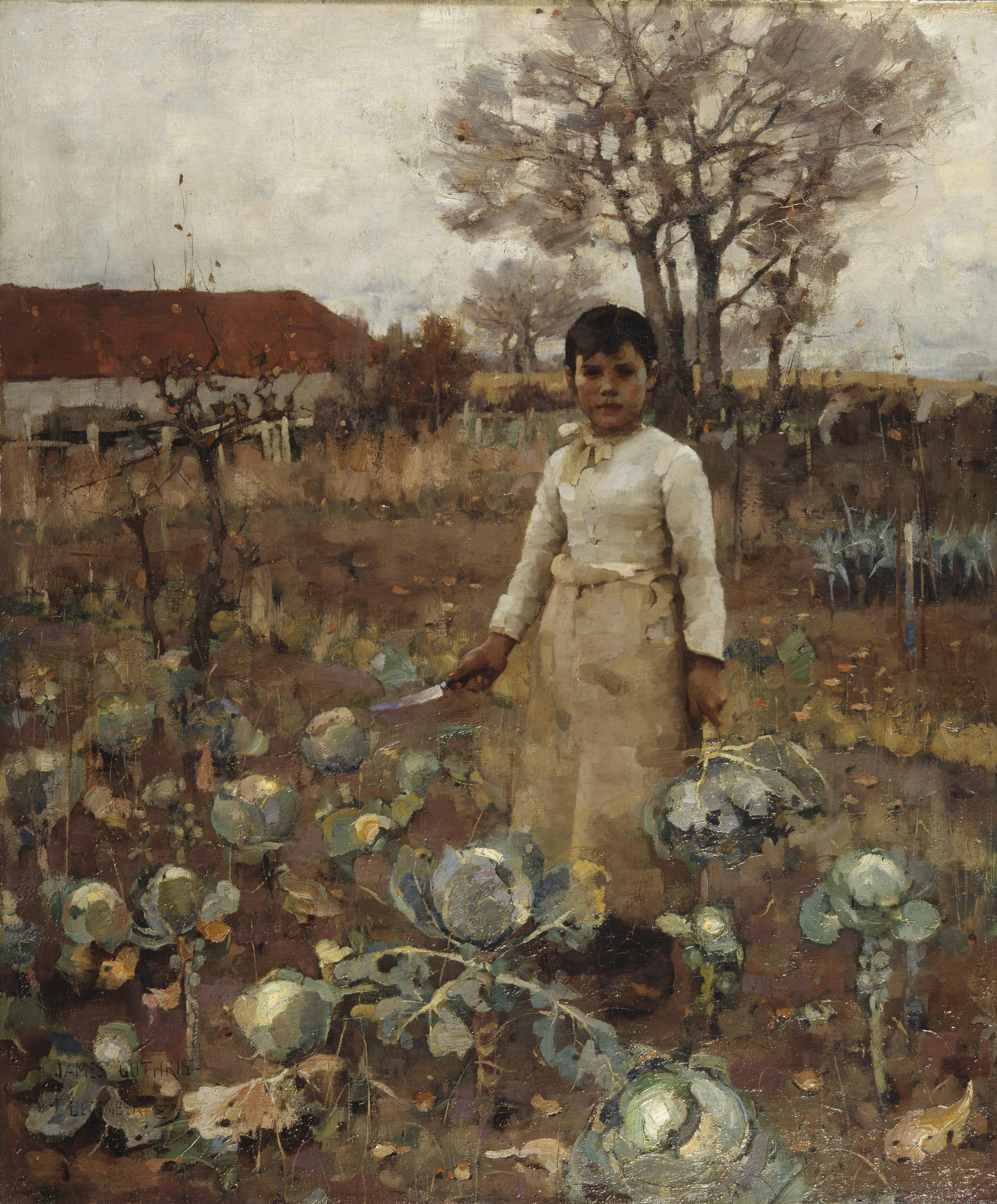 James Guthrie, A Hind’s Daughter, 1883, Scottish National Gallery, Edinburgh, UK.
His style evolved, not only in the subject matter—focusing on everyday and rural scenes—but also in tonality and brushstroke, which is visible in his later works, such as A Hind’s Daughter, or In the Orchard, in which the foliage, trees, and grass are painted in almost a Post-Impressionist manner.

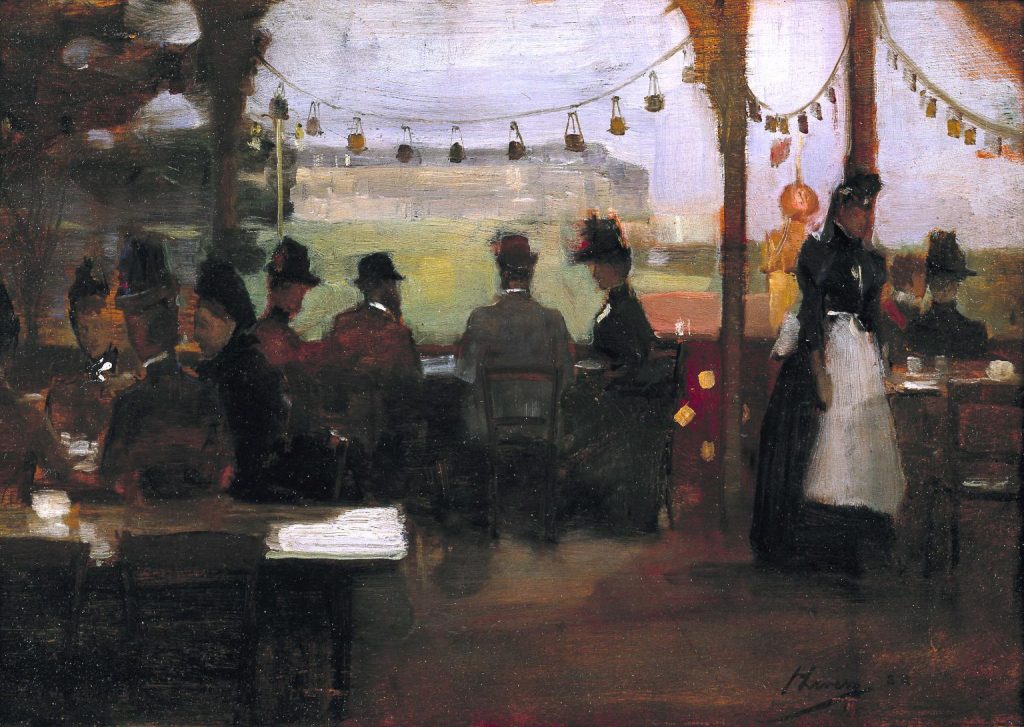
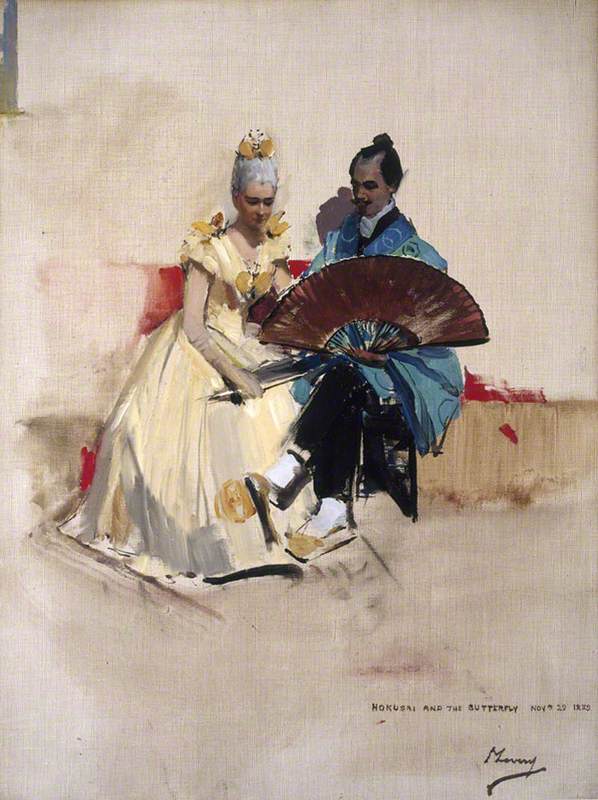
John Lavery was Irish by birth, but he settled in Glasgow after having contemplated Guthrie’s works. He studied in London and Paris but returned to Glasgow in 1885. Besides Guthrie, he was heavily inspired by Édouard Manet. At the beginning of his career as a painter, Lavery made a name for himself as a portraitist of high society. He also painted genre subjects, contemporary scenes such as the Glasgow International Festival of 1888, and landscapes. In his paintings, he emphasized color and brushstroke. Like many other impressionists, Lavery focused particularly on capturing human figures in movement in the open air.
Get your daily dose of art
Click and follow us on Google News to stay updated all the time

DailyArt Magazine needs your support. Every contribution, however big or small, is very valuable for our future. Thanks to it, we will be able to sustain and grow the Magazine. Thank you for your help!

Art lover. Constant traveller (almost a nomad). Passionate reader. Rainy days addict. Obssesed with pizza.

Autumn is such a colorful season! Here are 10 activities inspired by Impressionist autumn paintings to enjoy during this time of year.
Andra Patricia Ritisan 22 September 2025
Summer has arrived! It is time to enjoy some deserved vacations, rest, go to the beach, enjoy the sunshine, and have fun. Here are 10 Impressionist...
Jimena Escoto 28 August 2025
The sun is shining, the flowers are blooming. It is officially spring! And what style captures spring’s delicate essence better than Impressionism?...
Sandra Juszczyk 20 March 2026
The Spanish master Joaquín Sorolla (1863-1923) had a magical way of capturing light, whether it is sun-drenched beaches, shimmering water, or scenes...
Joanna Kaszubowska 30 December 2025


