

10 Alphonse Mucha Artworks You Need to Know
Czech Alphonse Mucha is a legend of the art world, a pioneer in Art Nouveau whose work still lives on through his larger-than-life artworks, mostly...
Frank Schildiner 20 August 2026
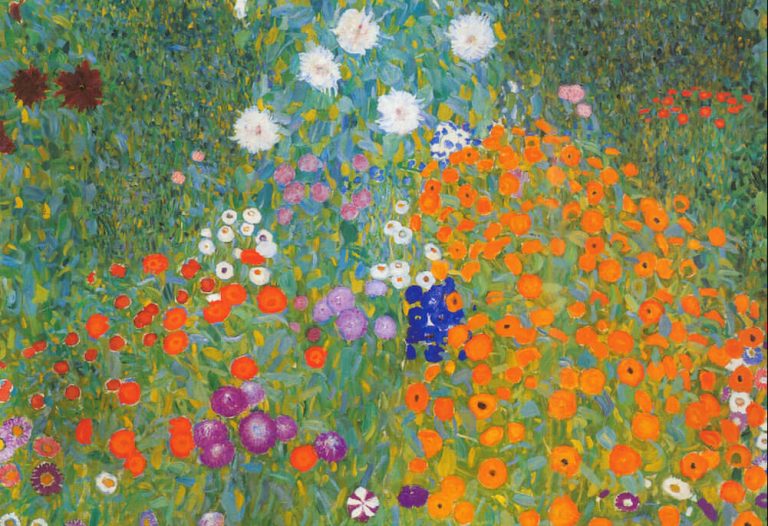
Gustav Klimt, Bauerngarten, 1907, private collection. Gustav Klimt. Detail.
When you think of Gustav Klimt, what is the first thing that comes to mind? If you are like most people, you probably thought of his portraits. You might not realize that he also painted many other things. In fact, he made quite a few landscapes throughout his career, particularly of Lake Attersee in Austria, where he spent every summer.
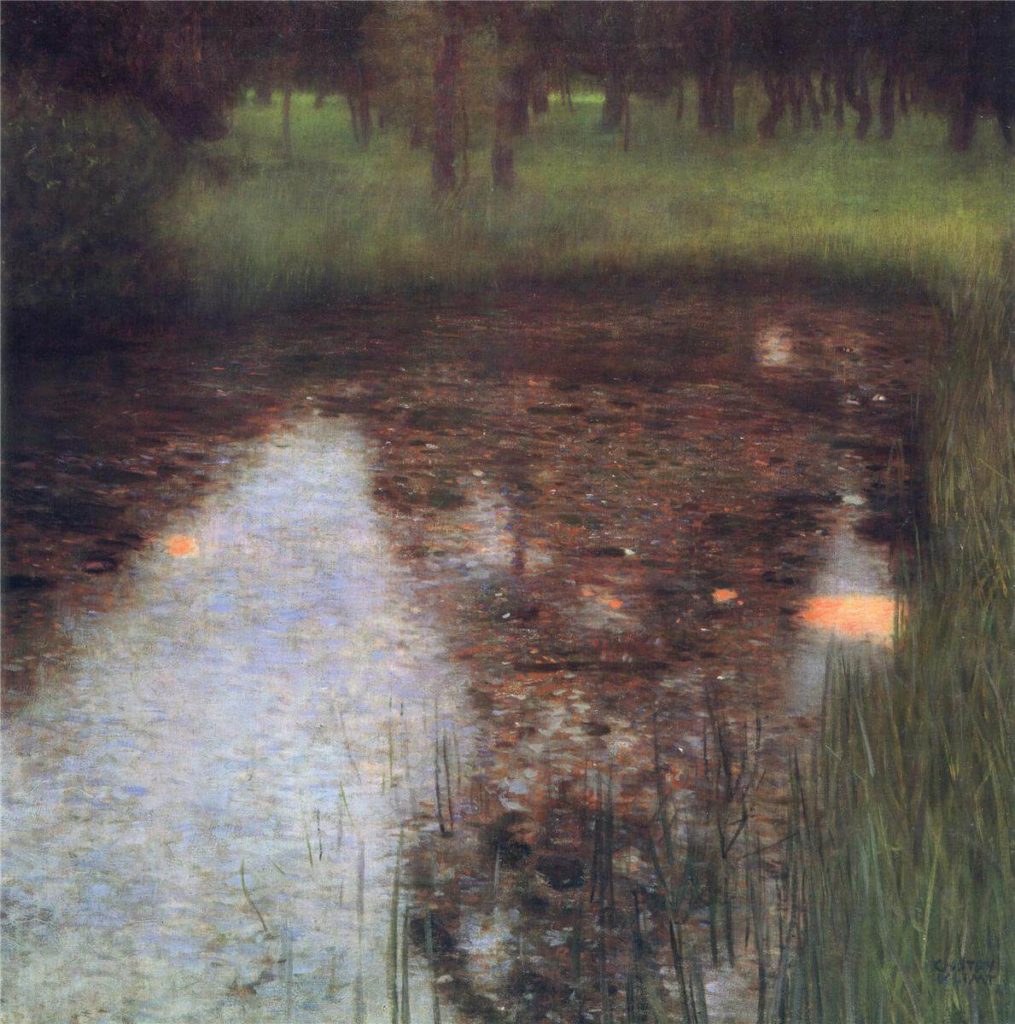
This might come as a surprise at first, but once you see one of Klimt’s landscapes, the connection with his better-known works will be clear. His most recognizable stylistic features show up as clearly in his landscapes as in his most famous works. Imagine taking the figures out of his famous portraits. What you would see behind them would be very similar to many of Klimt’s landscapes. Let’s take a look.
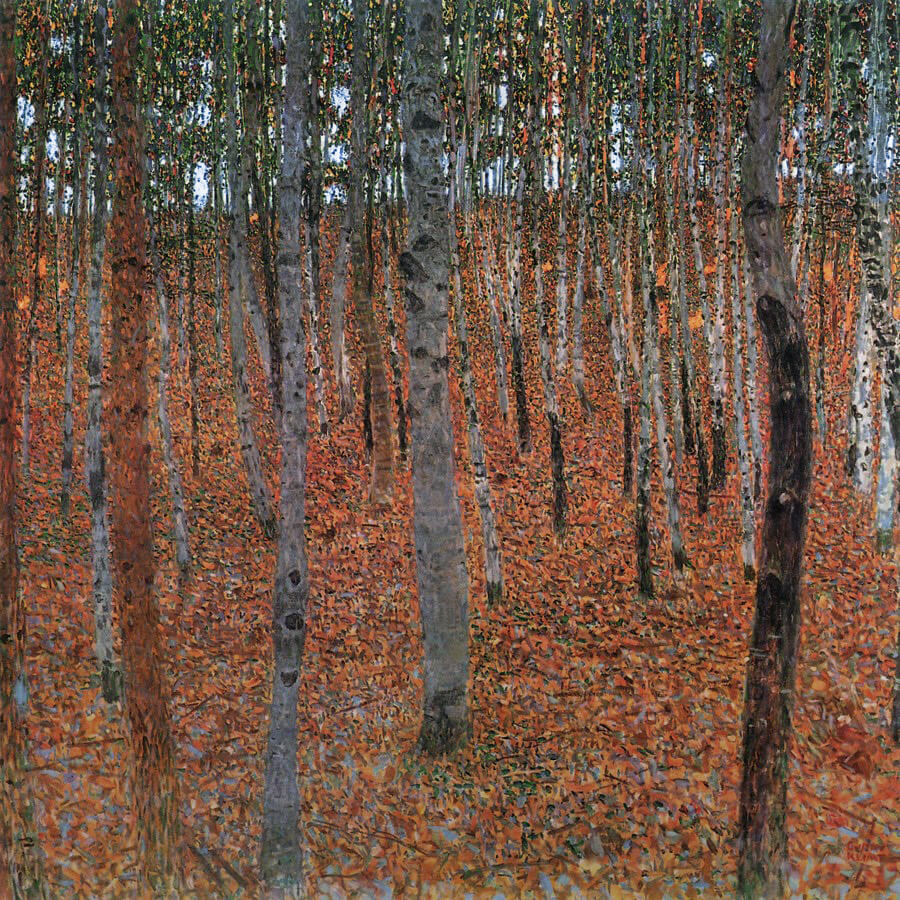
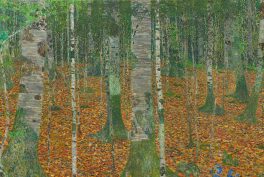
Klimt loved patterns, particularly those he saw in Byzantine icons and mosaics. He included intricate patterns in many of his well-known works, often in clothing and backgrounds. In Klimt’s landscape paintings like Forest of Beech Trees and Birch Forest, the leaves on the forest floors create tiny little patterns. They remind me of paintings by Georges Seurat, who worked in France a little before Klimt’s time. Klimt loved all kinds of decoration, and he started his career making so-called “decorative paintings” for interior design.
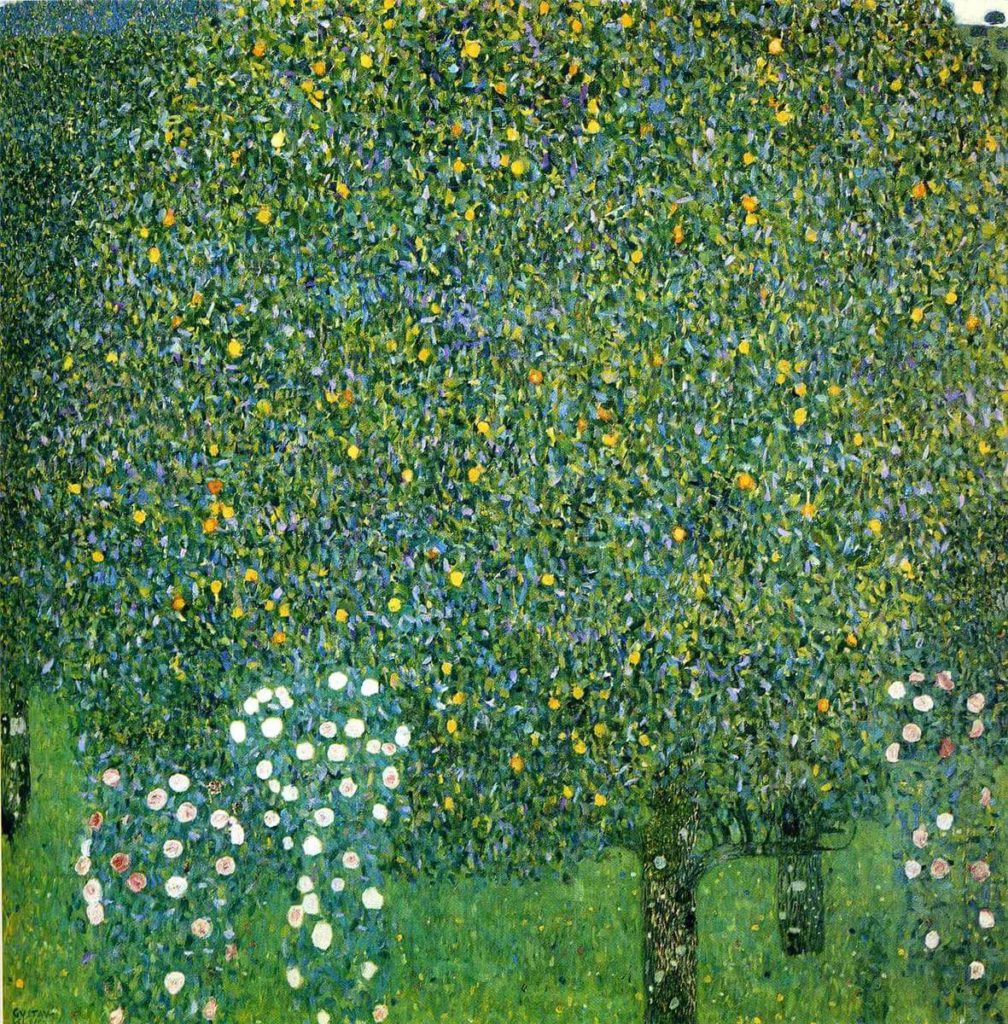
Like many other modern artists around the turn of the 20th century, Klimt made his compositions progressively flatter throughout his career. The background is very shallow, so everything appears right in front of the viewer. In Klimt’s landscapes, you can see this most clearly in Farm Garden with Sunflowers, where all the flowers seem like they are right in front of you. In other works like Orchard with Roses and Rose Bushes under Trees, the path gives a hint of background, but the flowers seem to push all the way forward anyway.
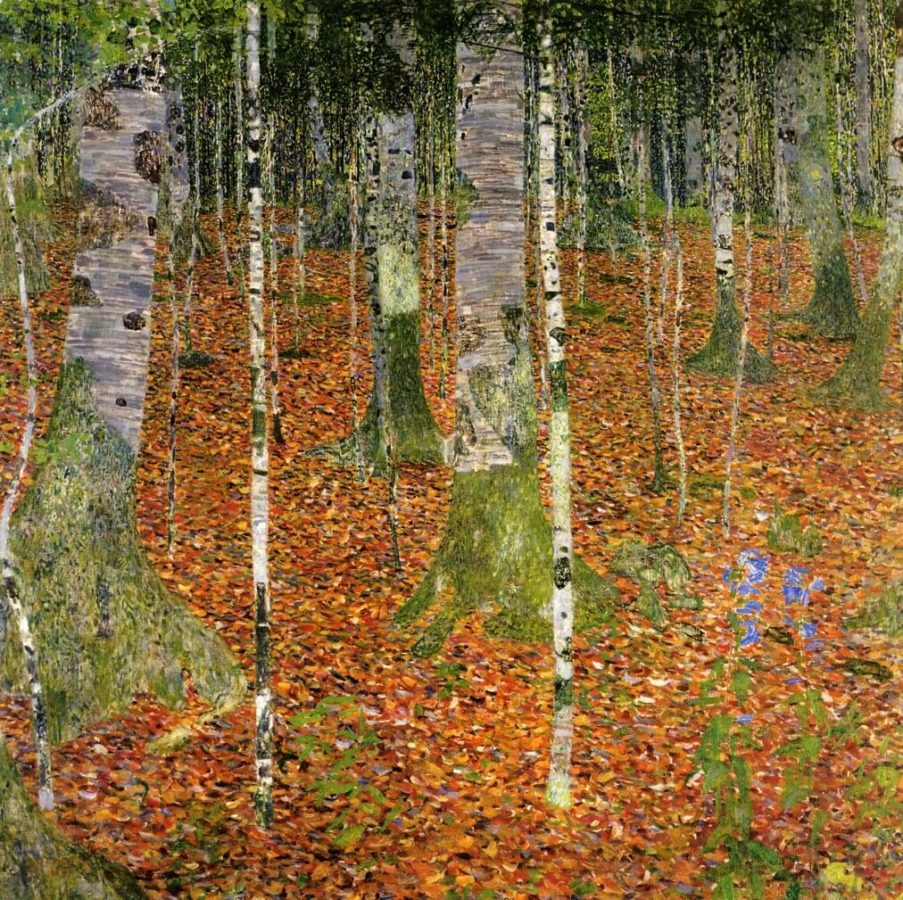
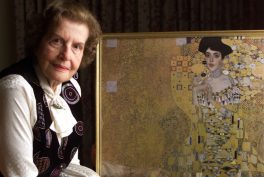
The combination of naturalism and abstraction within the same painting may be considered the most characteristic element of Klimt’s style He loved to contrast naturalistic forms and highly stylized ones by placing them side-by-side. For example, you can see this in his famous Portrait of Adele Bloch-Bauer, sometimes called the Lady in Gold. Her face, neck, and arms are very naturalistic, but the rest of her portrait is not at all. You can see the same idea in Klimt’s landscapes like Birch Forest. In that painting, the texture of the trees’ bark appears exactly as it would appear in real life, but it is juxtaposed with a much more abstract interpretation of the green and orange foliage in the scene. The effect is very unique and easily identifiable as Klimt.
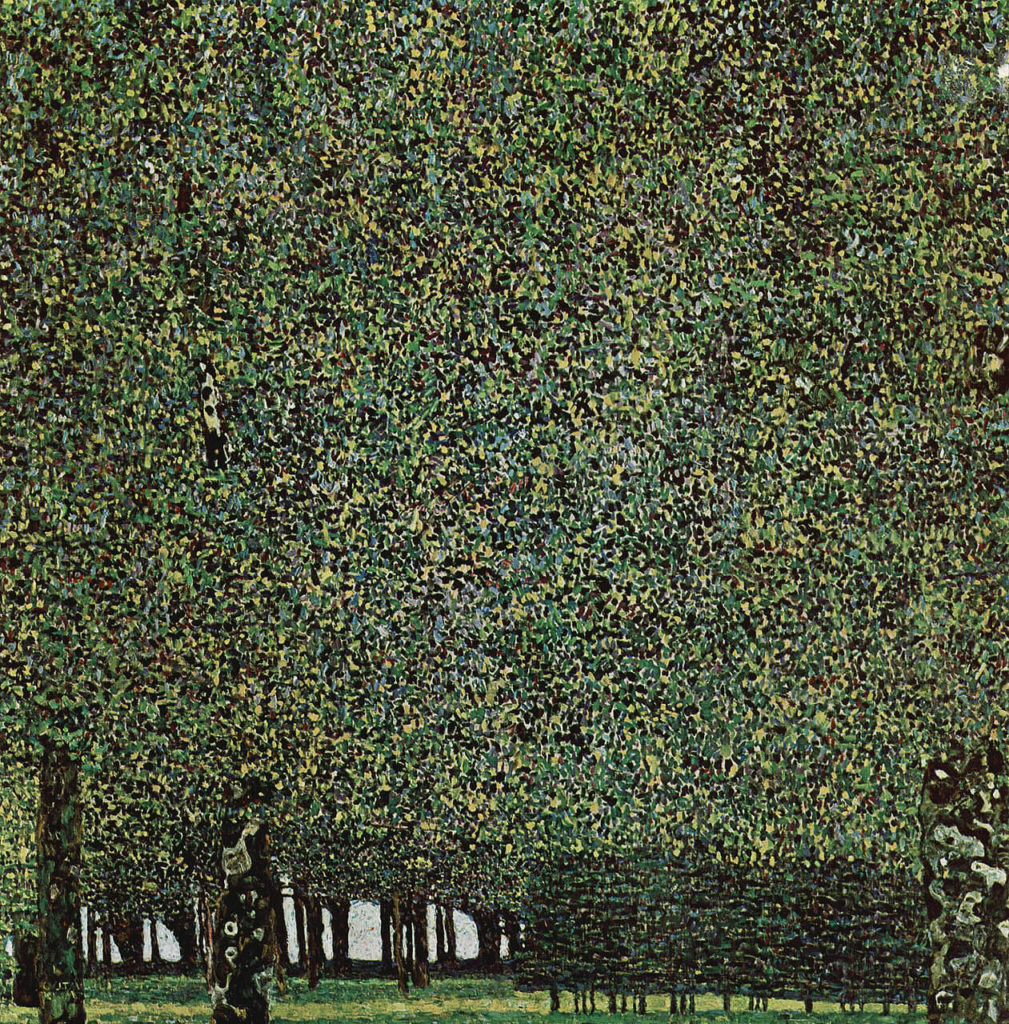
Klimt liked to ignore traditional rules about how to make a balanced composition. A good example is his landscape called The Park. The leafy treetops take up at least the upper eighty percent of the composition, while the actual park fits into the tiny sliver of canvas left at the bottom. It is an effective strategy that really gives you the sense of being in an overgrown forest. In his better-known works, such as The Kiss, Klimt placed his figures at unusual angles to create other types of inventive compositions.
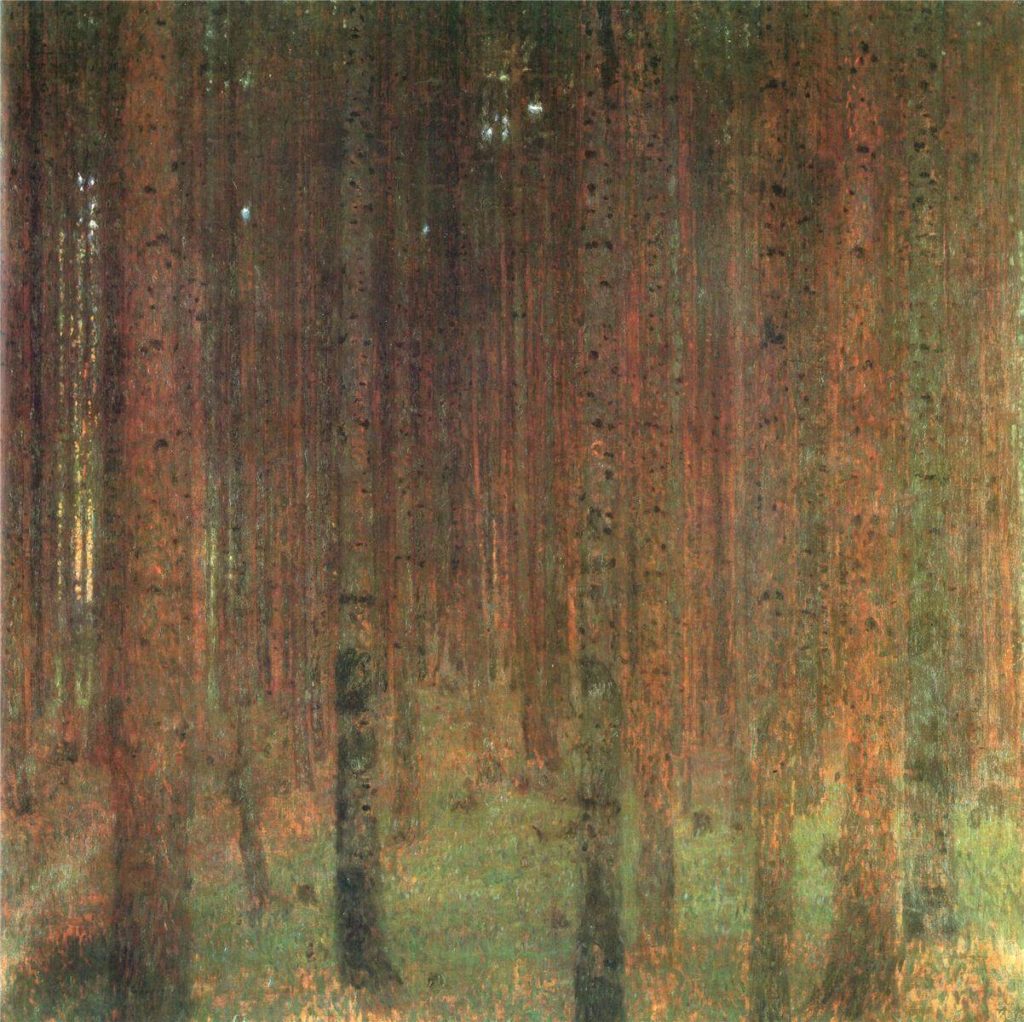
Klimt loved gold. Many people believe it is because his father was a jeweler. Most of his famous works come from his so-called “Gold Period” when he frequently used real gold leaf in paintings. One example would be his Beethoven Frieze. He also painted many landscapes around the same time. Most of Klimt’s landscapes do not actually include gold leaf (besides Tree of Life). However, he certainly knew how to include little hints of bright yellows and oranges to liven up his canvases in a similar way.
Ryan Burleson, “Klimt Landscape ‘Bauergarten’ Could Bring $45 Million“, in The New York Times, 12 Feb 2017. Accessed 14 Apr 2021.
Petra Ten-Doesschate Chu, Nineteenth-Century European Art, Second Ed., Pearson, Upper Saddle River, NJ, 2006, pp. 512-514.
“Gustav Klimt Artist Overview and Analysis,” in The Art Story. Accessed 14 Apr 2021.
Gustav Klimt: His Life & Work. Accessed 14 Apr 2021.
DailyArt Magazine needs your support. Every contribution, however big or small, is very valuable for our future. Thanks to it, we will be able to sustain and grow the Magazine. Thank you for your help!

Alexandra Kiely is an independent art historian based in the greater New York area. Her work focuses on making art, architecture, and art museums understandable to a general audience. She is the author of The Art Museum Insider, a book that guides those without art history training to have more informed and empowered experiences with art. Visit her website, A Scholarly Skater, and follow her on Instagram.
Czech Alphonse Mucha is a legend of the art world, a pioneer in Art Nouveau whose work still lives on through his larger-than-life artworks, mostly...
Frank Schildiner 20 August 2026
Gustav Klimt’s lavish gold motifs, intricate patterns, and sensuous nudes were as innovative as they were controversial. Breaking from his...
Theodore Carter, 2 July 2026
Ephraim Moses Lilien was an Art Nouveau artist who reimagined traditional Jewish motifs for the modern day. He was also an early supporter of the...
Bec Brownstone 15 December 2025
A dragonfly woman, a golden serpent of opals and rubies, and a woman waiting for an octopus are three short descriptions of authentic Art Nouveau...
Jimena Escoto 24 July 2026