
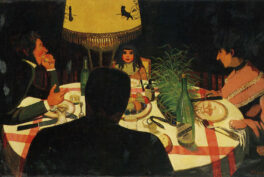
Masterpiece Story: Dinner, by Lamplight by Félix Vallotton
Félix Vallotton, a Swiss-French painter, is often called the “painter of disquiet.” His works carry tension, mystery, and psychological unease.
Kinga Dobosz 13 July 2026
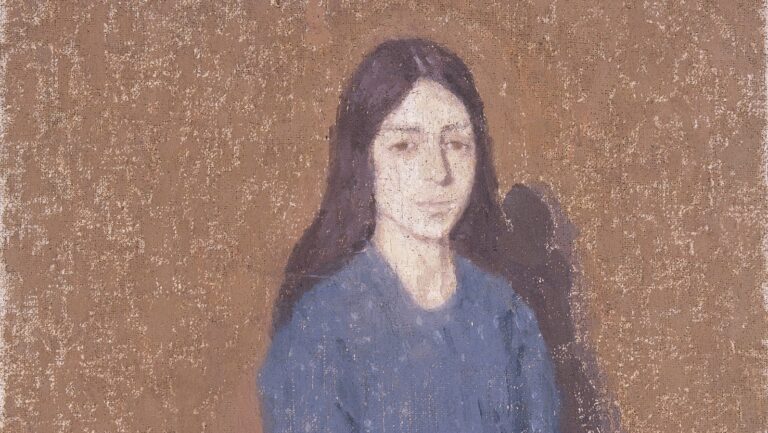
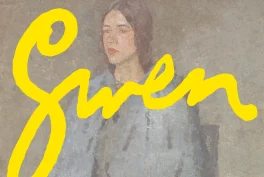
Gwen John, Girl in a Blue Dress, 1914–1915, National Museum Cardiff, Cardiff, UK. ArtUK. Detail.
Gwen John was a singular and fascinating artist. Born in Wales in 1876, she lived most of her life in Paris, France. Her work is held in galleries worldwide, but the largest and most important collection of her work is in the Amgueddfa Cymru—Museum Wales. Her work is quite simple in composition—a seated woman, an empty room—but these fleeting glimpses into the world of a complex woman are quite breathtaking.
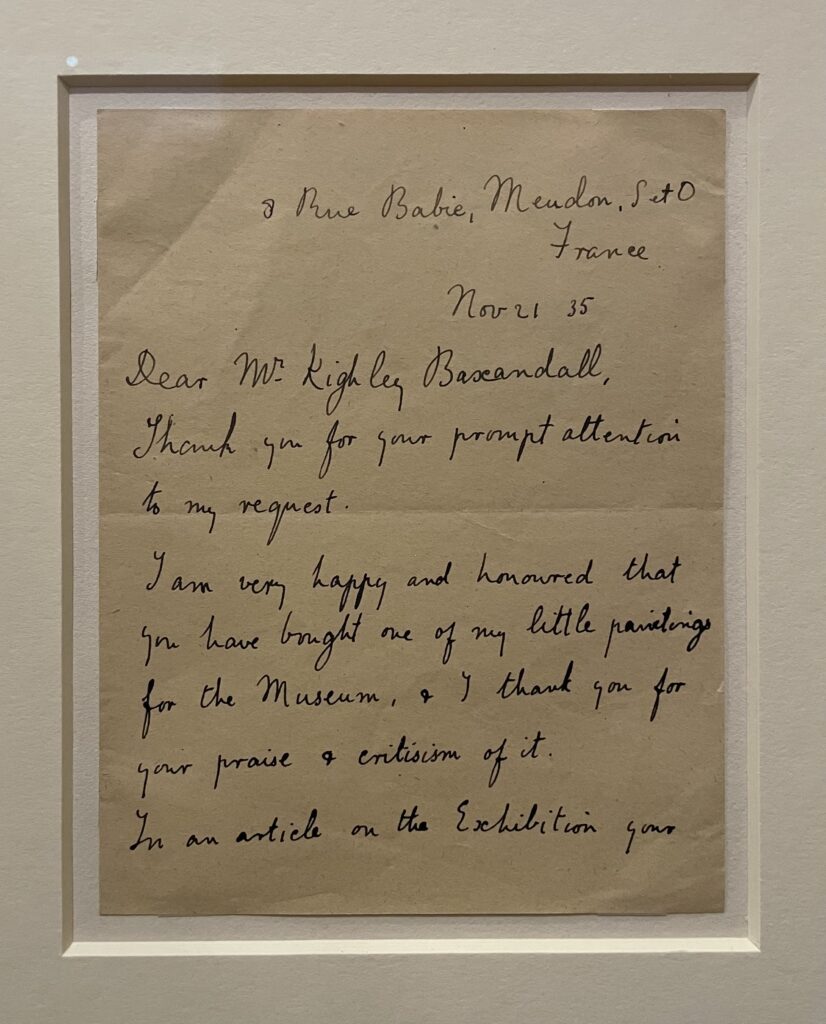
Gwen John, Letter to Museum Wales on the purchase of her painting Girl in a Blue Dress, 1935, National Museum Cardiff, Cardiff, UK. Photograph by the author.
Let us take a closer look at Girl in a Blue Dress from 1914–1915. This portrait was purchased by the Amgueddfa Cymru—Museum Wales in 1935 for £20. Gwen John was thrilled at this, saying that she had a “very chic” letter from the museum director. The letter is shown above.
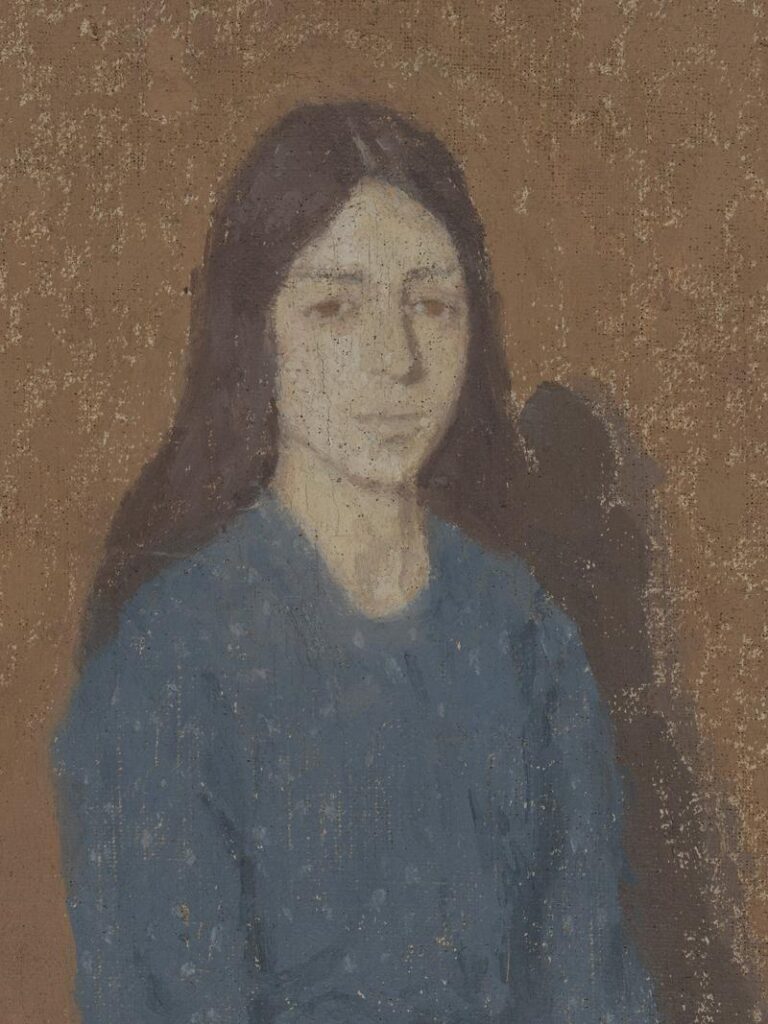
Gwen John, Girl in a Blue Dress, 1914–1915, National Museum Cardiff, Cardiff, UK. By permission of Amgueddfa Cymru—Museum Wales. Detail.
From the mid-1910s, around the time of this painting, Gwen John’s portrait technique changed significantly. Her use of paint became dry and sparing, with visible brush strokes. No varnish is used. See how the woman and the background blend together. The most unusual discovery of her work at this time is that Gwen John would often paint from the edges of the canvas, with no preparatory sketches. The spatial awareness and artistic skill required for this are astonishing.
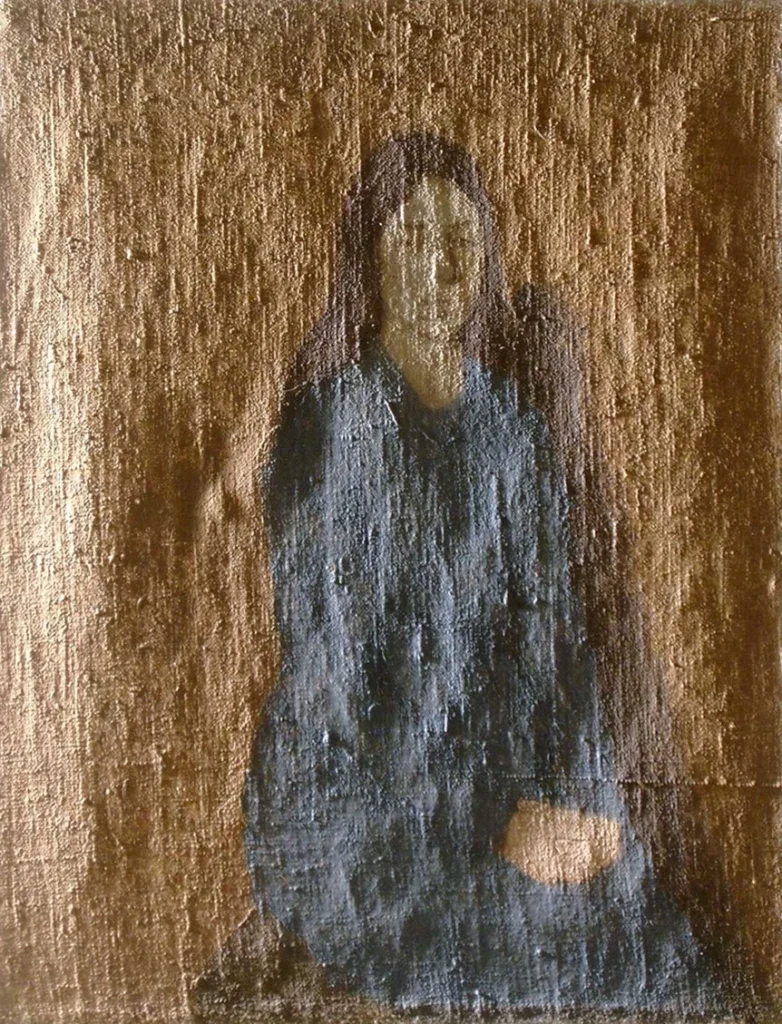
Gwen John, Girl in a Blue Dress, lit from the side, 1914–1915, National Museum Cardiff, Cardiff, UK. Museum’s website.
To create a textured surface for her canvas, Gwen John would mix warm animal glue and chalk. Oil paint layers in pinks, greys, blues, and ochres were applied very thinly and dryly. The effect is almost like a wall-painted fresco. Museum Wales has looked in detail at this painting. In the image above, when a light is shone from the side, the uneven, textured canvas is apparent. And with a light shining from behind (image below), we see how little paint has been used.
As Neil Lebeter, senior curator, said in the museum’s online blog on June 9, 2020: “This highlights John’s skill to produce a work so affecting without really using any paint at all, there’s barely anything there.”
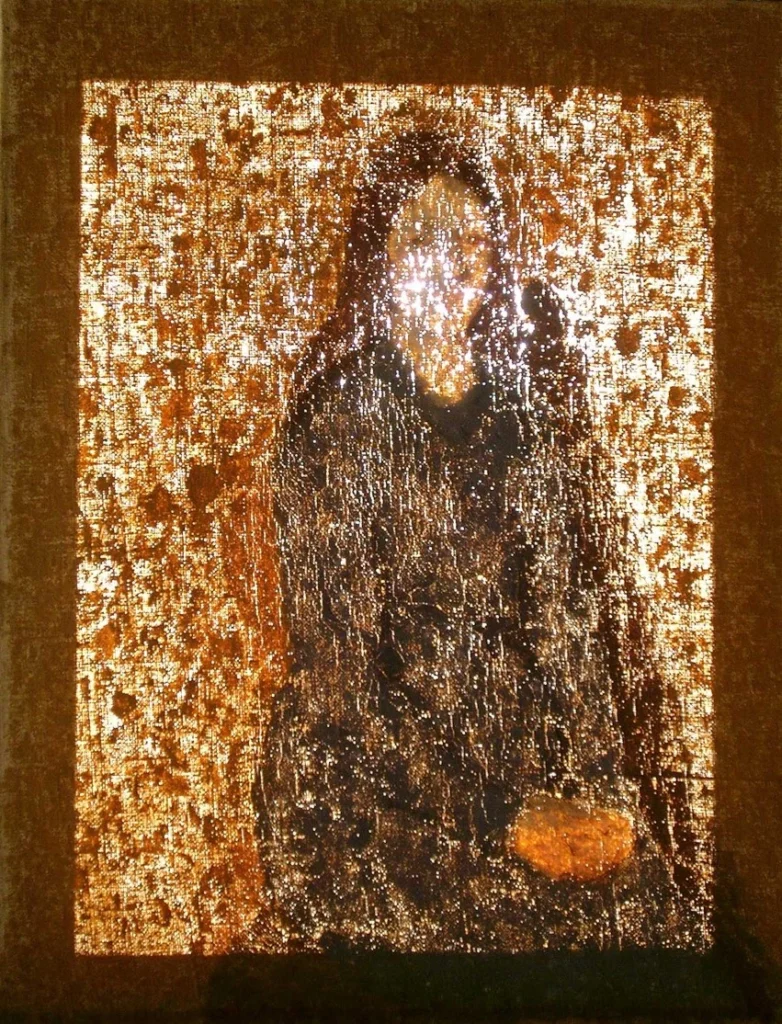
Gwen John, Girl in a Blue Dress, lit from the back, 1914–1915, National Museum Cardiff, Cardiff, UK. Museum’s website.
Women, children, and nature—this is essentially what Gwen John painted. And boy, did she paint! John returns again and again to the same symbolic images. We have 60 paintings like this one—a lone woman, three-quarter length, seated in a room, self-contained and thoughtful. Paintings like Seated Woman, The Convalescent, Girl in Mulberry Dress, and The Pilgrim return again and again to essential forms, experimenting, refining, and distilling a theme. Gwen John sought meaning with close, attentive looking.
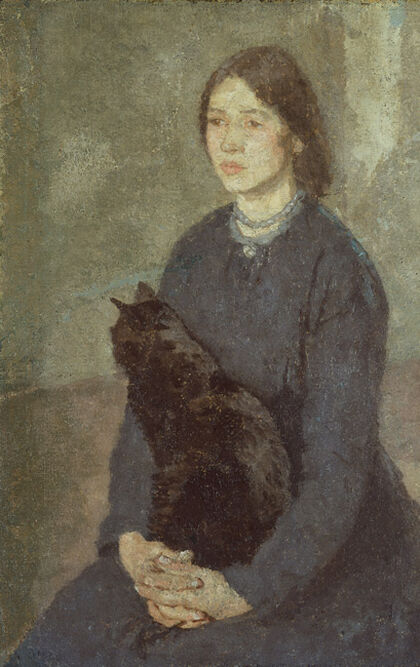
Gwen John, Woman Holding a Black Cat, c. 1918–1922, Tate, London, UK.
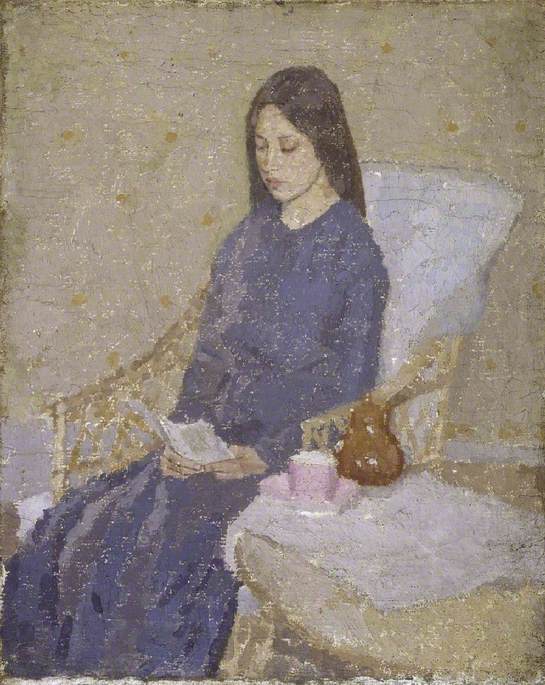
Gwen John, The Convalescent, c. 1923–1924, Fitzwilliam Museum, Cambridge, UK.
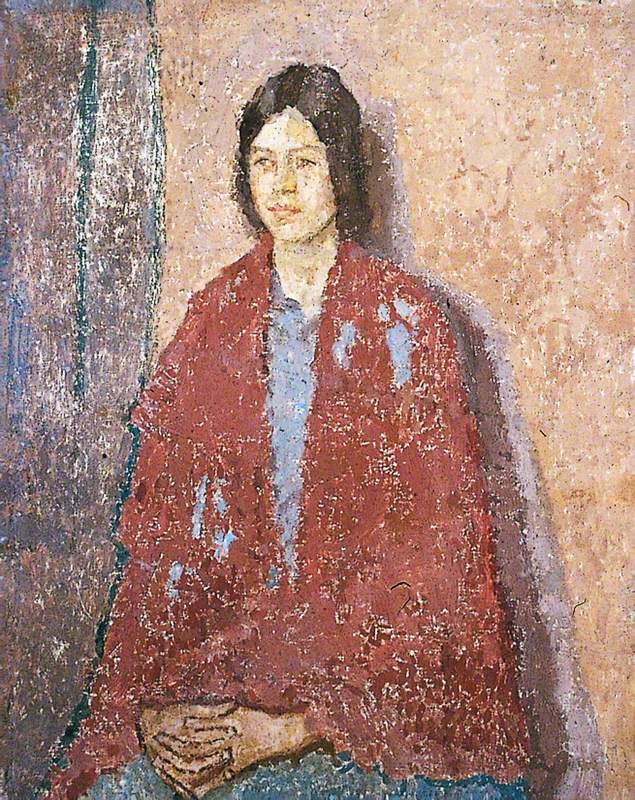
Gwen John, Young Woman in a Red Shawl, 1917–1923, York Art Gallery, York, UK.


Gwen John had a particular affection for cats and made hundreds of sketches of her pets.
A personal reflection on recovery, but also perhaps a metaphor for Europe, healing after war.
Quiet and meditative, there is a spiritual quality to Gwen John’s portraits.
The woman in this painting is a neighbor, from the time when Gwen John moved to Meudon, a quiet suburb on the edge of Paris. The identity of the woman (the artist’s most frequently used model) remains a mystery; her name was never recorded in the artist’s correspondence or in her papers. This young, globally recognized, and celebrated figure is simply “a neighbor.” This strange fact fits so well with Gwen John’s desire to explore form and space, composition and color, and the interiority of the female mind, rather than presenting a unique likeness or particular personality. The exact nature of the individual remains elusive.
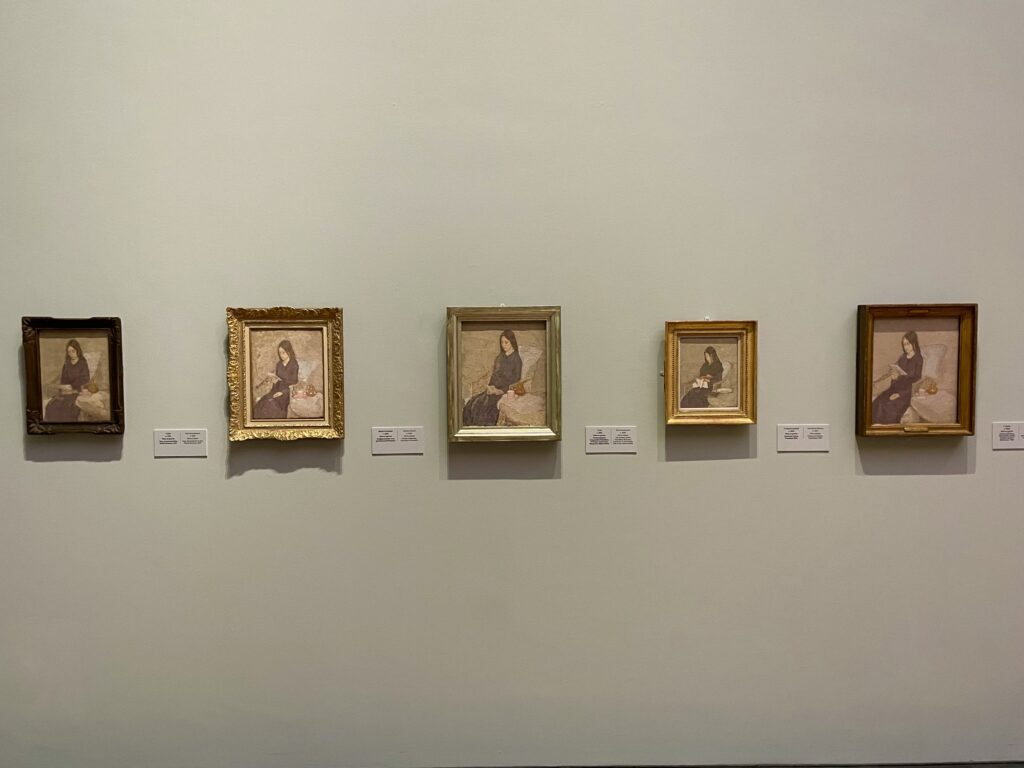
Exhibition view of Gwen John: Strange Beauties, 2026, National Museum Cardiff, Wales, UK. Photograph by the author.
This is a quiet scene, and yet, to spend time with it, you feel that it is charged with meaning and feeling. Gazing into one of Gwen John’s paintings of women, we get a real sense of stillness, but this is not passive; the viewer feels somehow connected. The Girl in a Blue Dress sits still and quiet. She looks out, but not at us. She is absorbed in internal reverie. The wall behind her is simply a tonal background; the figure itself is poised and monumental.
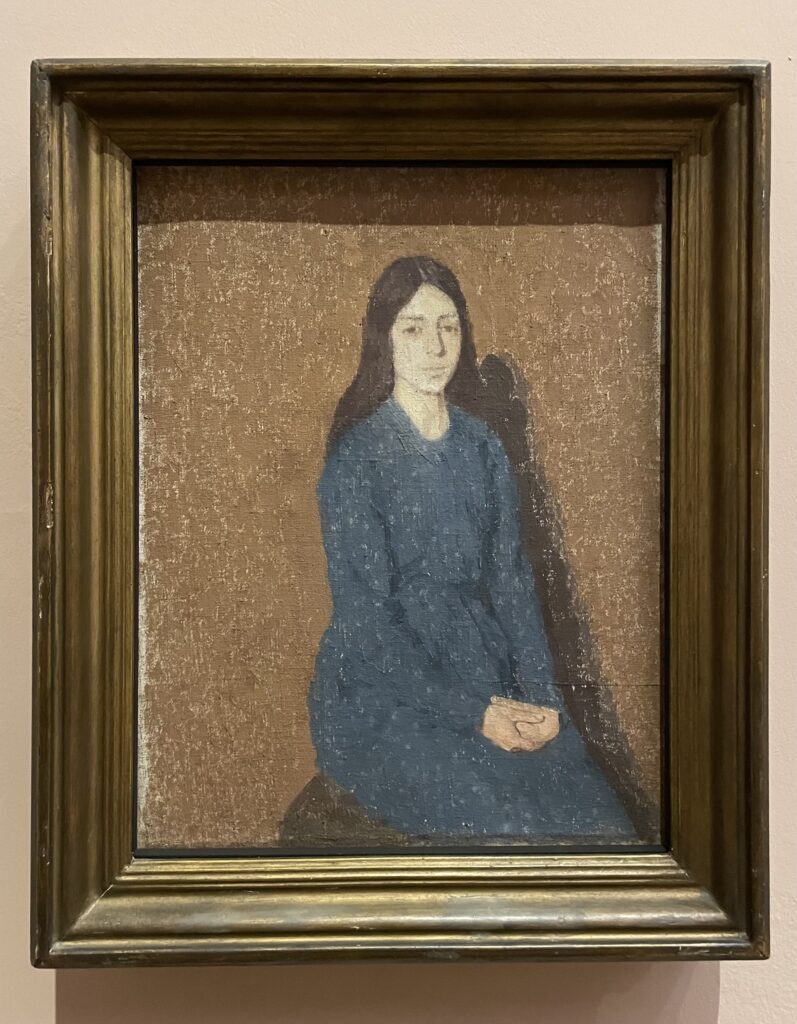
Gwen John, Girl in a Blue Dress, 1914–1915, National Museum Cardiff, Cardiff, UK. Photograph by the author.
How do you present the inner life of a woman to a world that so often is not particularly interested? How do you say so much with just the basics of a body, a chair, and sparse, subtle use of paint and color? Girl in a Blue Dress is the honest portrayal of a woman without performance. Gwen John sweeps aside ideas of how to look at women. Her sitters are symbolic and poetic yet also ordinary and everyday. She paints women reading, learning, writing, and thinking. Women with integrity and luminous presence.
P.S. You can find Gwen John’s painting in our Women Artists Postcards Set, featuring works by the amazing female artists.
DailyArt Magazine needs your support. Every contribution, however big or small, is very valuable for our future. Thanks to it, we will be able to sustain and grow the Magazine. Thank you for your help!

Candy's remote, rain-soaked farmhouse clings to a steep-sided valley in rural Wales. She raises cats, chickens, and children with varying degrees of success. Art, literature, and Lakrids licorice save her sanity on a daily basis.

Félix Vallotton, a Swiss-French painter, is often called the “painter of disquiet.” His works carry tension, mystery, and psychological unease.
Kinga Dobosz 13 July 2026
The Wedding at Cana by Paolo Veronese is a masterpiece of Venetian Renaissance art, elaborating a simple biblical story into epic proportions. The...
James W Singer 12 July 2026
Jan van Os’s Still Life with Carnations and Exotic Fruit is a celebration of summer in its most luxurious form, filled with carefully arranged...
James W Singer 28 June 2026
What kind of measures do you take when the stakes are real? When you have to get it right the first time? You can’t improvise. You triple-check,...
MJ Rivera 18 June 2026