

Sliman Mansour, Painter of Palestinian Resistance, Dies at 79
Sliman Mansour, one of the leading figures in Palestinian art, died yesterday at the age of 79. Mansour’s practice was profoundly intertwined...
Martha Teverson 25 August 2026
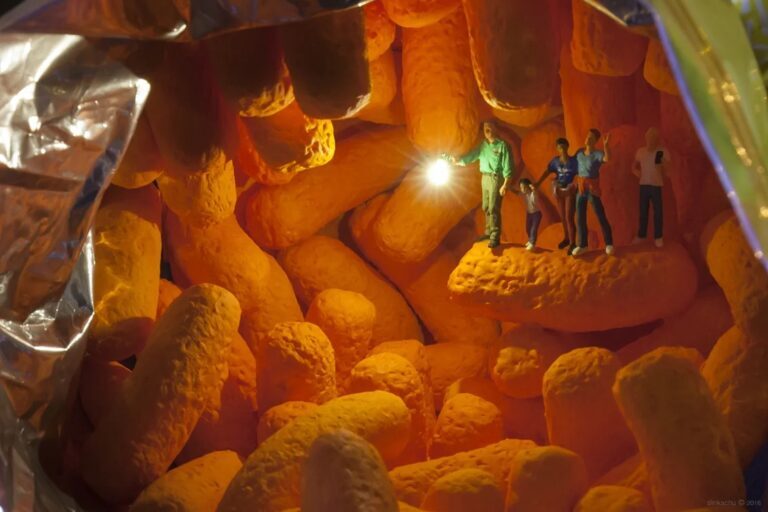
Slinkachu, Unnatural Wonder, 2016. Artist’s website. Detail.
There is a particular vertigo in crouching down to look at something the size of a fingernail. Since 2006, Slinkachu has built an entire career around miniature scenes—abandoned in the street, immortalized in photographs. Tiny painted figures turn city gutters and cracks into stages for quiet human drama. What survives is the image, and through it, 10 ways into his singular body of work.
Before he was Slinkachu, he was just a man with curly hair. Friends called him Slinky. When he needed a handle for the photography blog where he began posting his tiny interventions, Slinky morphed into Slinkachu, part nickname, part nod to the Pokémon naming conventions that were everywhere in the culture at the time. The name has stuck for two decades, and it tells you something about the project itself: playful on the surface, with a private history underneath.
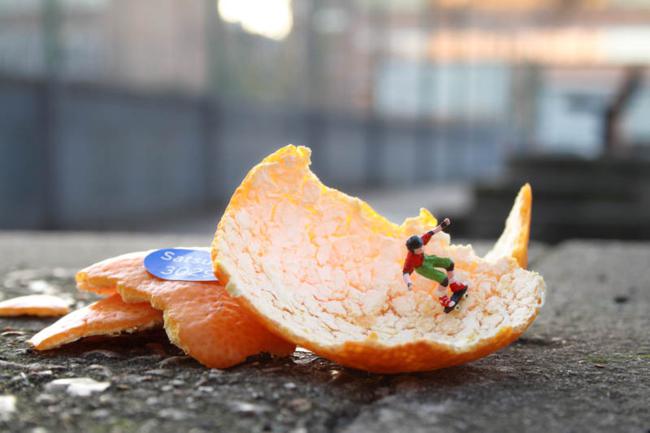
Slinkachu, Local Amenities for Children. Street Art London.
Ask Slinkachu where this all began and he will usually mention a stag beetle. Watching the insect make its slow, improbable way down a London street (where the artist is based), he found himself struck by a simple question: was this creature actually rare, or simply unnoticed, invisible in the general rush of pedestrian life?
That question, about what we fail to see at street level, became the seed of the entire project. The miniature figures are not really about smallness. They are about attention, and how little of it any city affords the things beneath eye level.
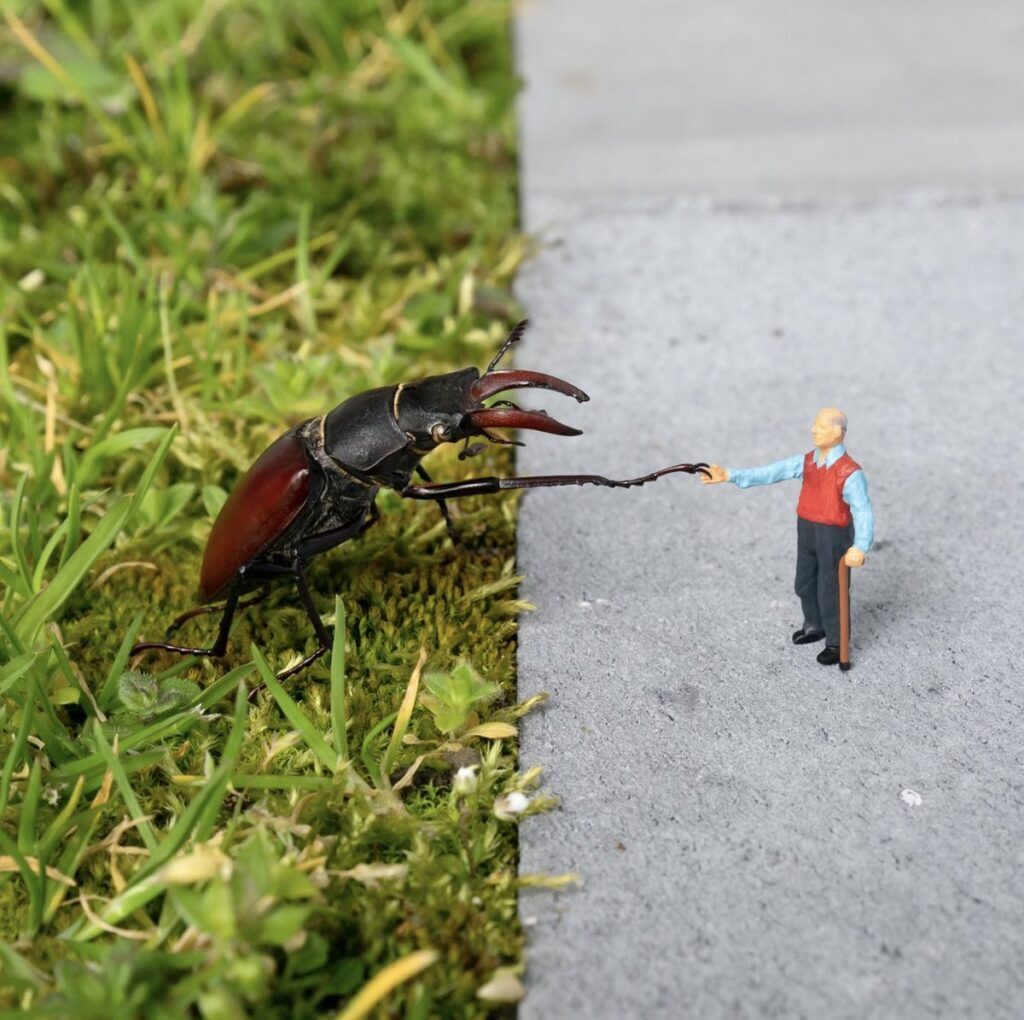
Slinkachu, Stag Beetle, 2022. Artist’s Instagram.
The formal title for this strand of Slinkachu miniature street art is The Little People Project, and its method has barely changed since it began: take mass-produced model railway figures, strip their factory paint, repaint and reposition them into new poses and new dramas, then leave them somewhere in the city for a stranger to stumble across. Some scenes last hours. Others survive for weeks before weather or foot traffic erase them. The impermanence is not a flaw in the work, it is the work.
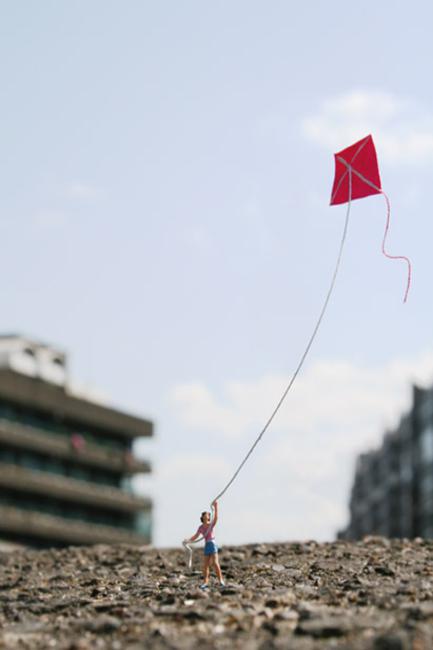
Slinkachu, High as a Kite. Street Art London.
His first book, published by Boxtree in 2009, gathered the photographs from years of these interventions into a single volume and introduced Slinkachu to an audience well beyond London’s pavements. It set the template that his later books would follow: full-page photographs of tiny scenes, shot with a macro lens against the vast, indifferent backdrop of the city, so that a discarded cigarette or a crack in the concrete becomes a landscape.
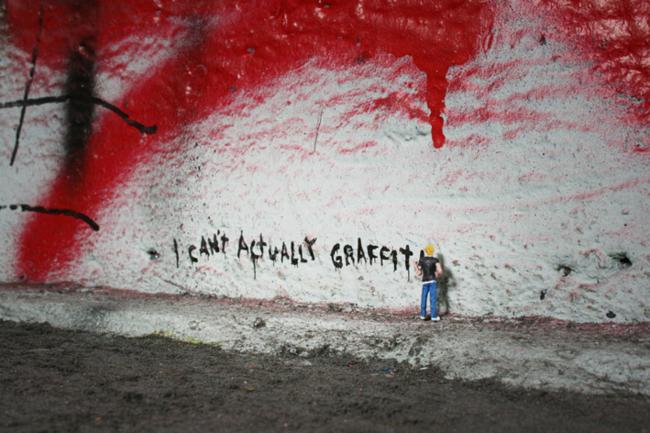
Slinkachu, I Can’t Actually Graffiti. Street Art London.
The second book, released by the publisher Lebowski in 2010, leaned further into the darker comic register that runs underneath Slinkachu’s whimsy. Titles and scenes across his catalogue toy with mugging, littering, isolation, and minor urban violence rendered at doll-house scale, which has the effect of making the darkness legible in a way it often isn’t at full size. A person can walk past a real act of urban neglect without registering it. A miniature version, staged and photographed, stops them.
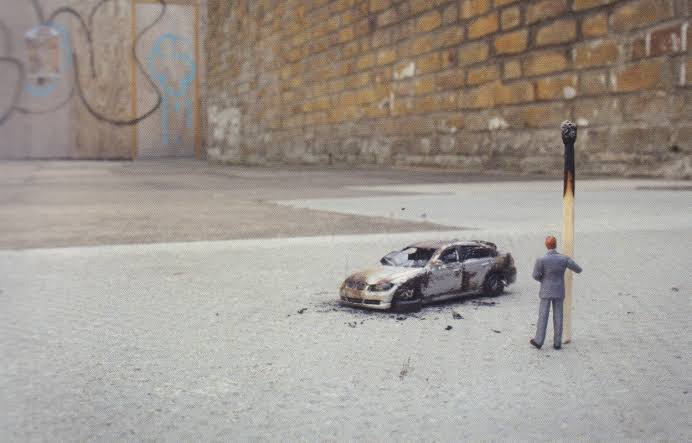
Slinkachu, Company Car from the Big Bad City book, 2010. Cult Jones.
By the time of his third book in 2012, Slinkachu had taken his miniature street art international, staging tiny scenes in cities well beyond London. Together, his three major books have sold in the hundreds of thousands of copies worldwide, an unusual commercial life for work that, in its original form, is designed to vanish within days.
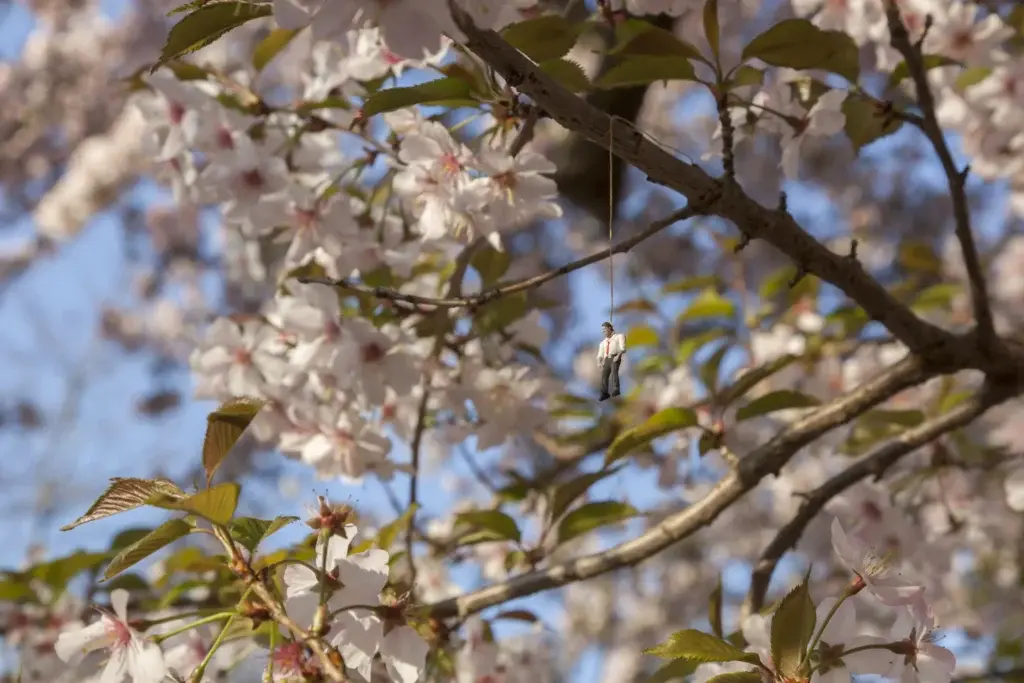
Slinkachu, Wonderful World, 2012. Artist’s website.
Photography is only one way the work survives. Slinkachu’s images and objects have moved through galleries and museums internationally, including a solo show titled Miniaturesque at Andipa Gallery in London in 2015, and appearances at art fairs such as Christie’s Multiplied. The street version of a piece disappears into the gutter; the gallery version hangs, framed, at eye level, asking to be looked at in exactly the way the original scene never did.
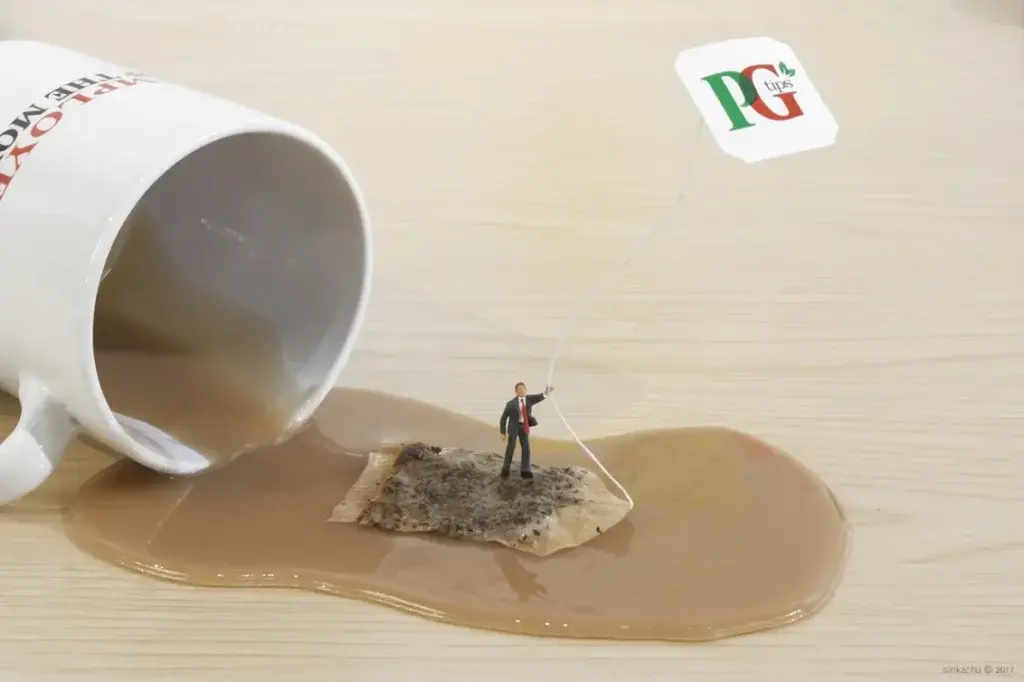
Slinkachu, Tipping Point, 2017. Artist’s website.
Slinkachu’s art is frequently discussed in relation to Banksy, and the comparison is instructive mostly for how it breaks down. Banksy trades in shock, cleverness, and overt political statement. On the contrary, Slinkachu works through subtlety and empathy instead. His narratives about the human condition are small, rather than pointed jabs at institutions. Both artists work anonymously in public space and rely on photography to give their ephemeral interventions a second life; the temperament of the work is where they part ways.
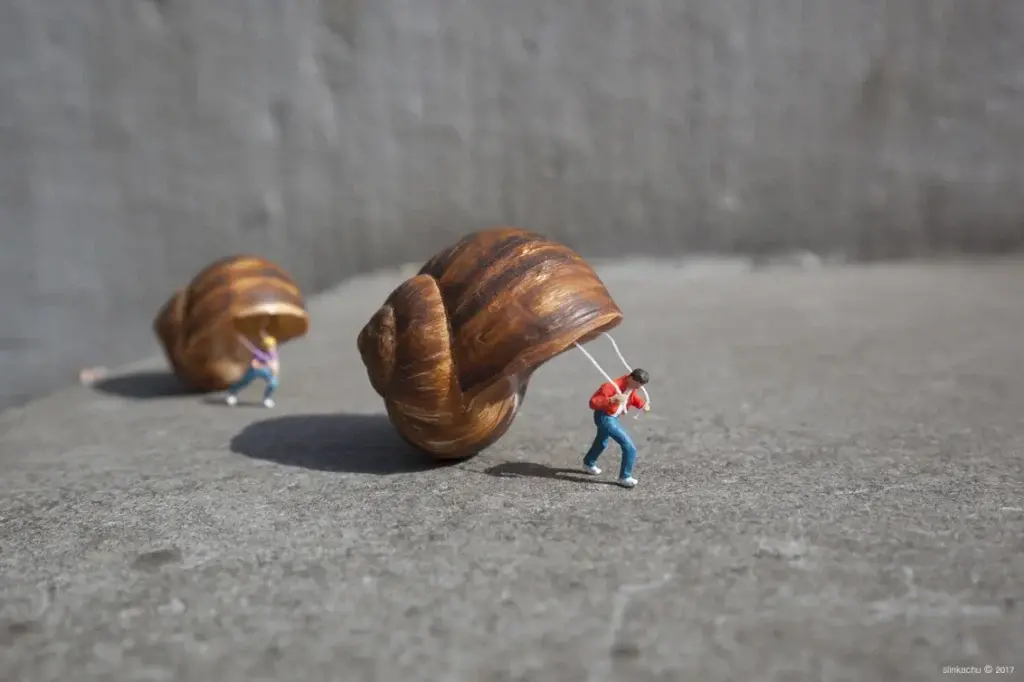
Slinkachu, Shelter, 2017. Artist’s website.
By 2018, broadcast profiles were calling Slinkachu “the god of small things” for his gift at building hidden narratives into plain sight, a nod as much to Arundhati Roy’s novel as to the artist’s own obsession with scale. It is a fitting title. His figures are gods only in the sense that they see everything and are seen by almost no one, frozen mid gesture in dramas nobody asked them to perform.
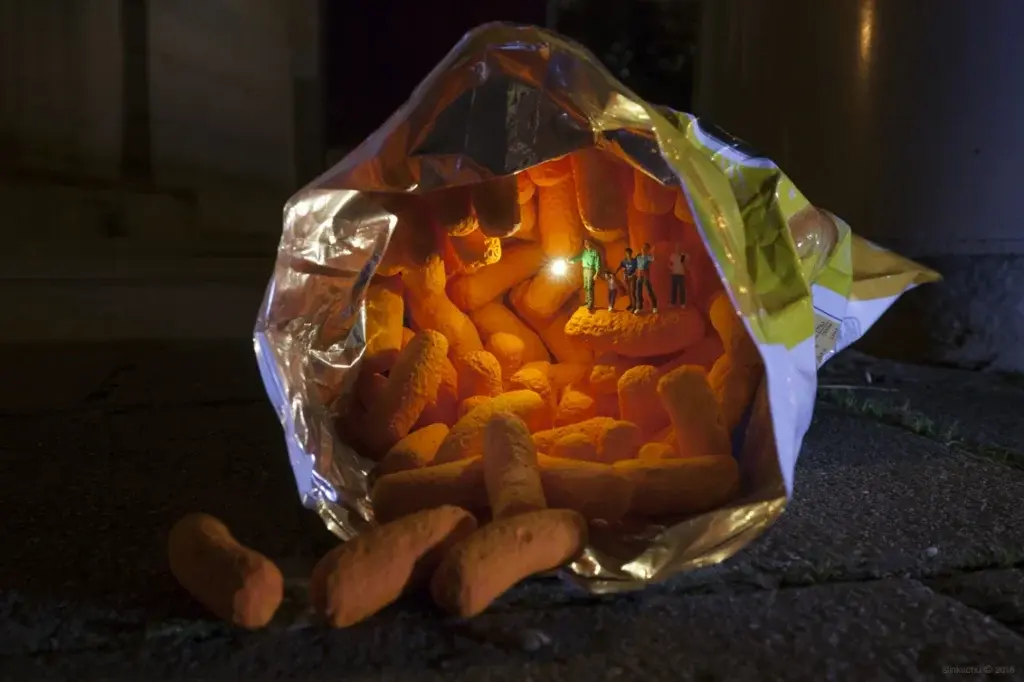
Slinkachu, Unnatural Wonder, 2016. Artist’s website.
The final, essential piece of Slinkachu’s practice is the one he insists on: almost nothing does get left behind, not permanently. The figures are abandoned, not installed in any lasting sense. What remains afterward is a photograph, a story someone tells about the strange tiny scene they found on their commute.
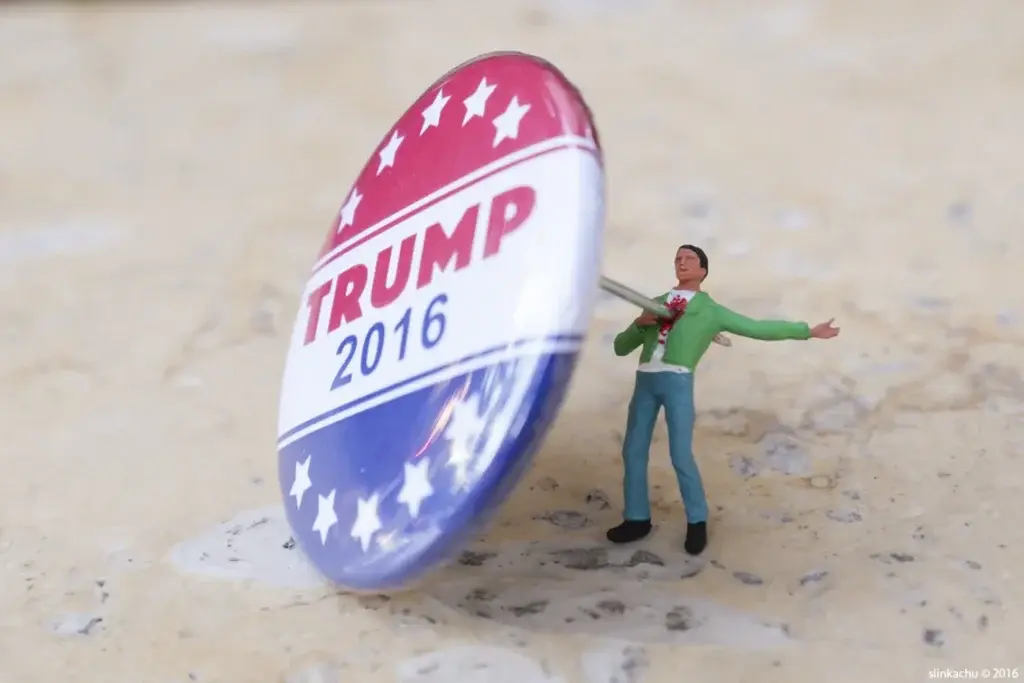
Slinkachu, Trump, 2016. Artist’s website.
DailyArt Magazine needs your support. Every contribution, however big or small, is very valuable for our future. Thanks to it, we will be able to sustain and grow the Magazine. Thank you for your help!

I'm Errika Gerakiti, an art writer and curator based in Athens. I write about modern and contemporary art, fashion, and cinema — with a particular interest in the overlooked, the uncomfortable, and the underrepresented. When I'm not writing, I'm curating exhibitions, reading, painting, sculpting, or reading. For longer reads, personal essays, and an occasional science-fiction or horror story, find me on Substack.

As an educator, writer, and neurodivergent creative, I enjoy learning and sharing through nature, the arts and novel experiences.
Sliman Mansour, one of the leading figures in Palestinian art, died yesterday at the age of 79. Mansour’s practice was profoundly intertwined...
Martha Teverson 25 August 2026
Few would claim real shock at the loss of an artist a month shy of turning 89. And then David Hockney passed away on June 11. Born in 1937, the lad...
MJ Rivera 22 June 2026
Between marquee art fairs, auction-house madness, downtown openings, uptown previews, long-awaited gallery and museum exhibitions, and the artsy...
MJ Rivera 28 May 2026
In 1952, a pianist sat before a waiting audience and played not a single note. Six years later in Paris, visitors entered a gallery expecting art and...
Tunacan Tuna 25 May 2026