Georgette Agutte was born in Paris in 1867 as the daughter of a painter. She received her first drawing lessons from the painter Gustave Moreau, who encouraged her to pursue further training at the Académie des Beaux-Arts. Agutte began studying sculpture in 1885 and met her first husband, art critic Paul Flat, through whom she entered Paris’s artistic circles. In 1893, she started attending public painting classes at the École des Beaux-Arts, since women were not yet officially admitted as students.
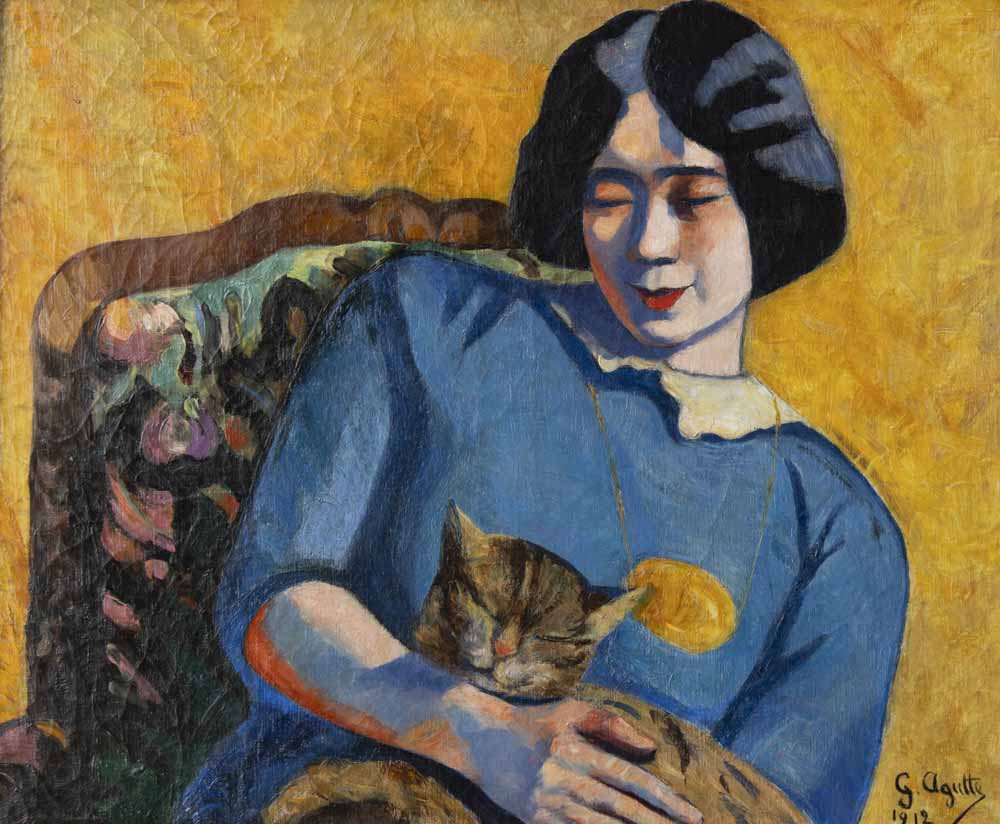
Through her artistic circles, she encountered influential figures such as Henri Matisse and Georges Rouault. Their impact can be seen in Agutte’s work, particularly in her bold and expressive use of color, as in this painting. A strong yellow background contrasts with the woman’s stark black hair and bright blue shirt. The scene shows the woman sitting casually in a chair, holding a cat and looking down. Despite the vivid colors, Agutte carefully renders shadow—especially on the woman’s hand and face—suggesting that the light source is coming from behind her on the left.
2. A Life with Marcel Sembat
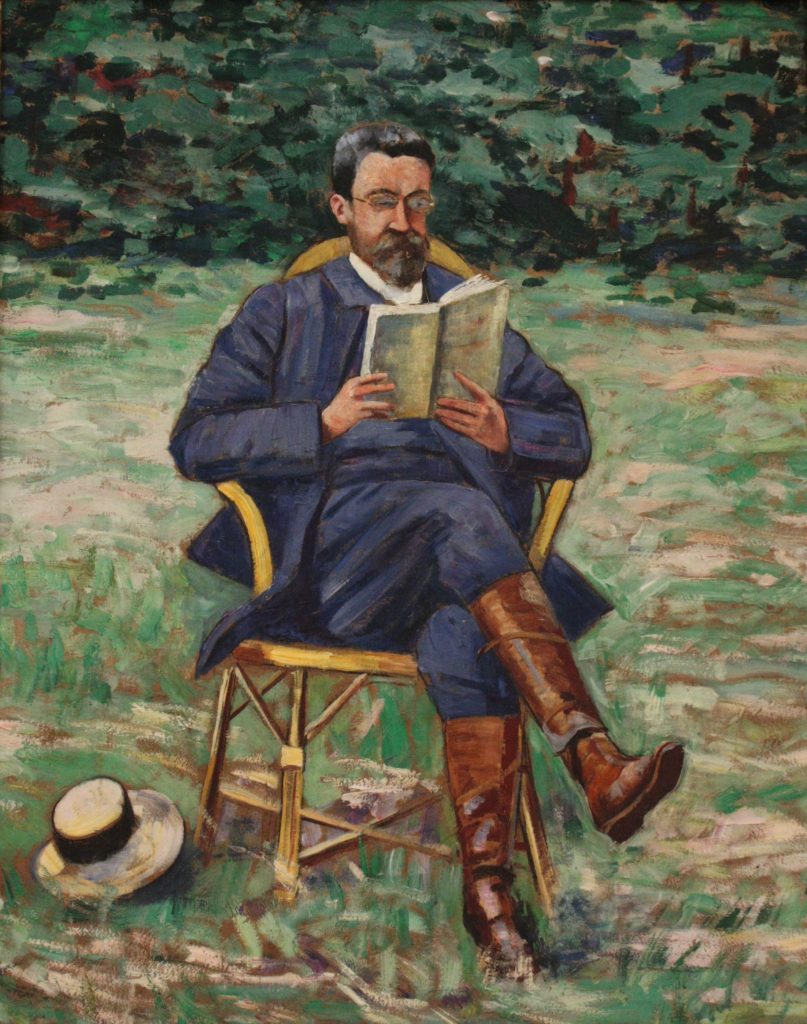
As the name explains, this painting shows her second husband, socialist politician Marcel Sembat, reading in their garden. Earlier, Georgette Agutte had divorced her first husband and left the bustle of Paris for the countryside. She established her workshop in Bonnières-sur-Seine, in Sembat’s childhood home, and the couple married in 1897. They later had a chalet built in Chamonix in the French Alps, dividing their time between their Paris apartment, her studio in Bonnières, and the alpine retreat.
This painting depicts Sembat, absorbed in a book, his legs crossed, and his posture relaxed. Agutte renders the scene with loose, broken brushstrokes that suggest the vibrancy of the surrounding nature. The figure’s dark blue suit and polished boots stand in calm contrast to the restless foliage behind him.
3. Early Works and First Exhibitions
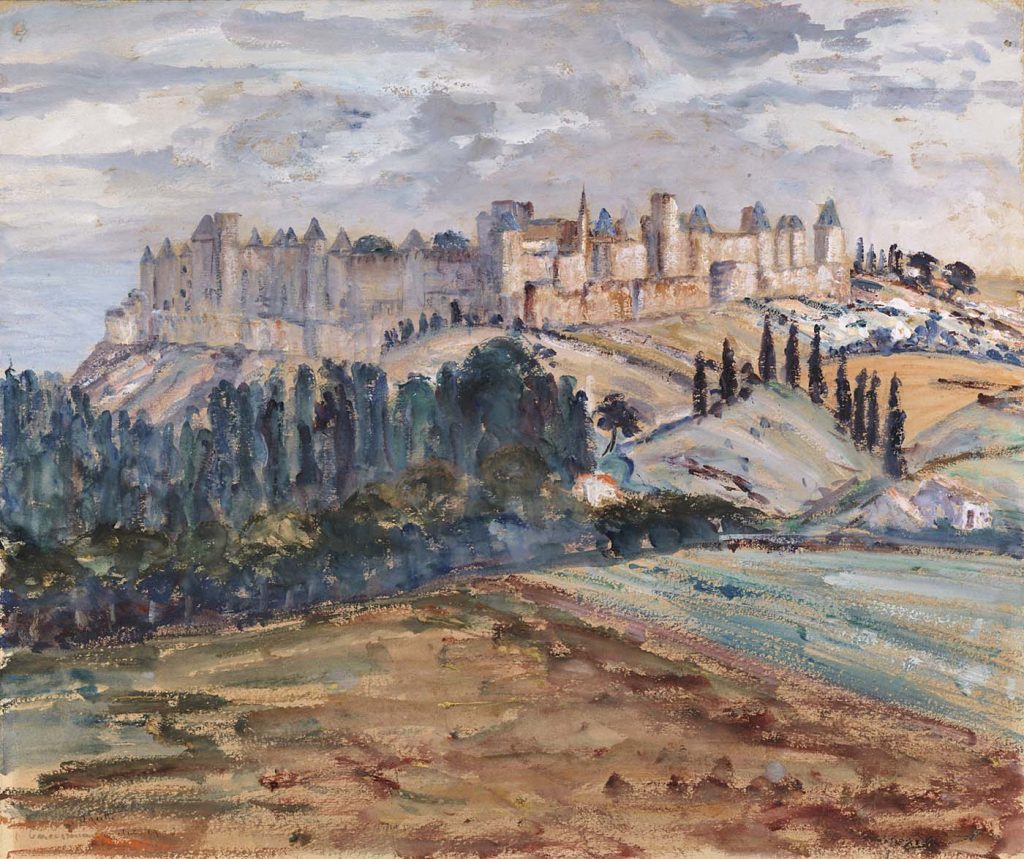
This 1903 work by Agutte is a delicate watercolor sketch, depicting a castle drawn from her imagination. The following year marked the beginning of her public exhibitions. She first showed her work at the Salon des Indépendants and soon after became one of the founding members of the Salon d’Automne, where she exhibited regularly in the years that followed. Beyond sculpture and painting, Agutte was also active in a range of decorative arts, including tapestry. However, these works received little recognition during her lifetime and only began to attract attention after her death.
4. Portraits in the Garden
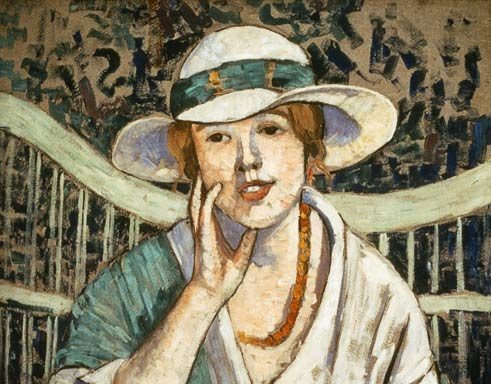
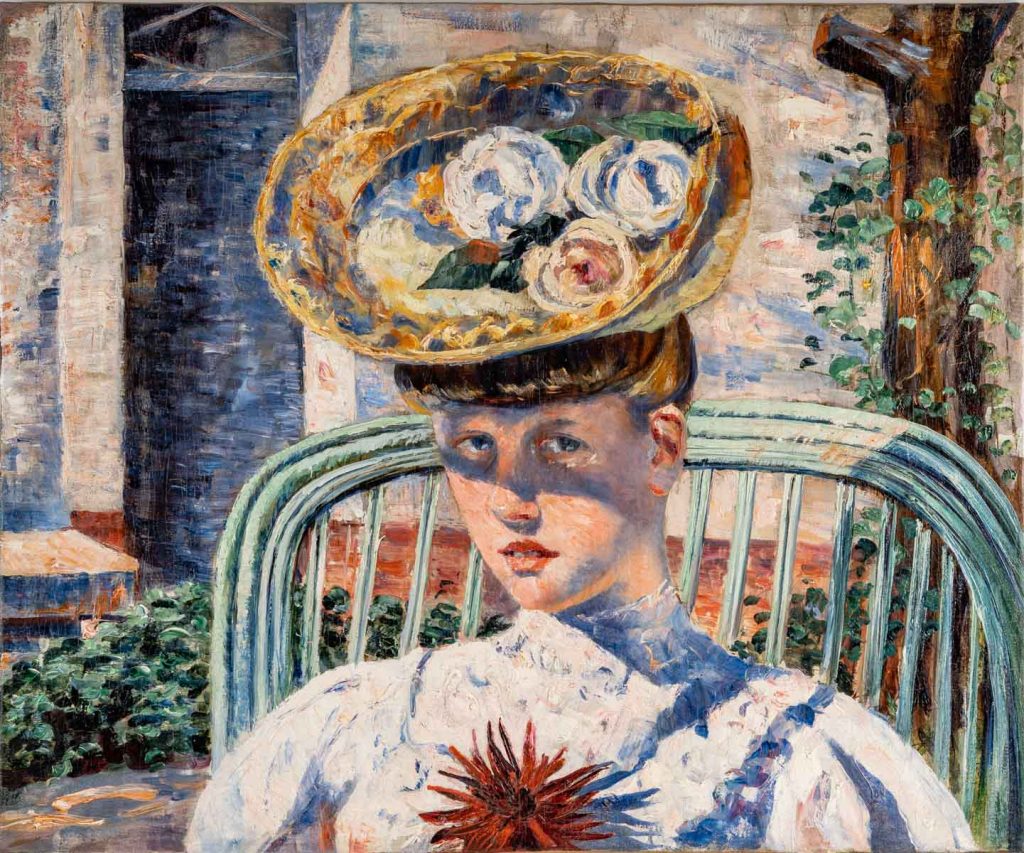
Agutte often painted portraits of her visitors in her garden in Bonnières-sur-Seine. Here, she depicts a young blonde woman with a flowery hat. Seated in a garden chair outside the house, the woman looks toward the viewer with a reserved expression that suggests a certain shyness. Sunlight fills the scene, creating a calm and quiet atmosphere, while Agutte plays with light and shadow across the sitter’s face.
The composition is also quite bold. Agutte crops it almost like a cinematic close-up. She uses this unconventional composition to create a natural and intimate view. The garden itself remains present through floral details—the flowers on the hat and the striking red bloom on the sitter’s dress, a graphic motif that appears in several of Agutte’s other works.
5. Exploring the Nude
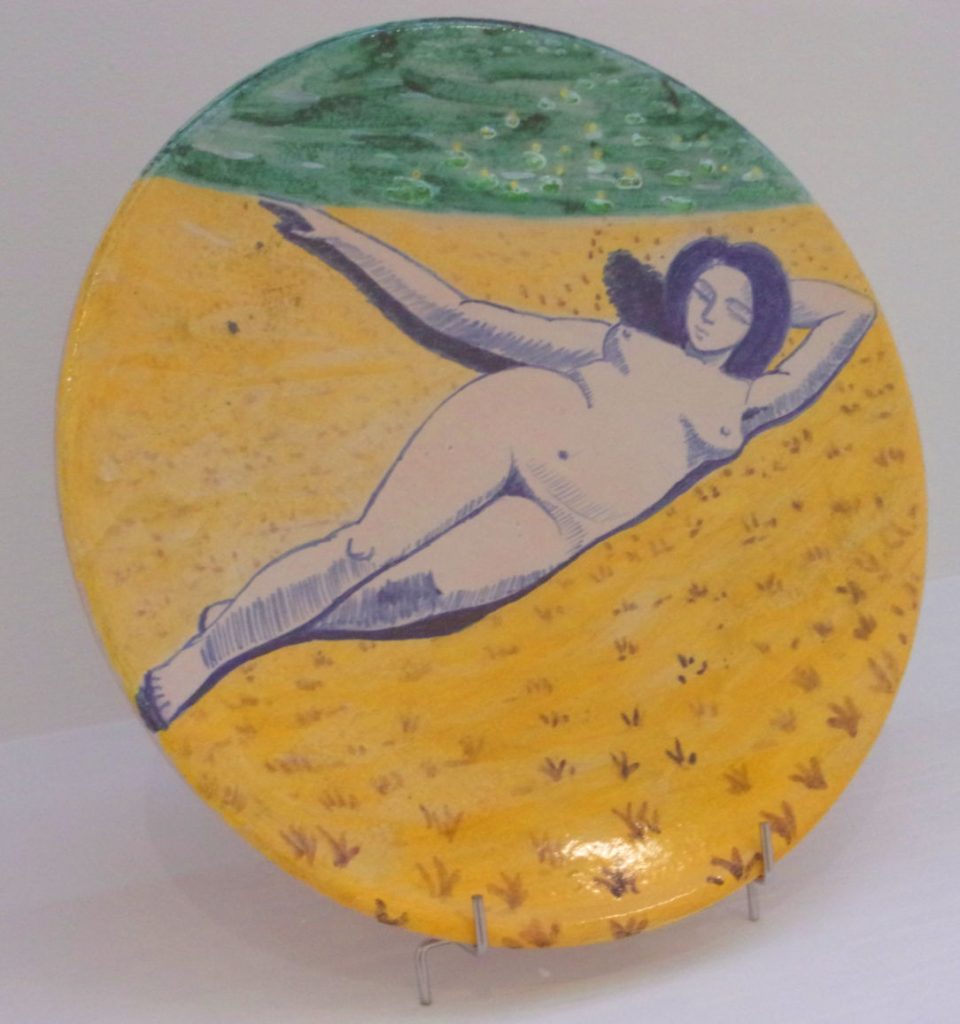
Throughout her career, Georgette Agutte frequently painted nudes, which form the second-largest group of works in her oeuvre after the portraits. Alongside painting and sculpture, she was also active in the decorative arts, an interest that may be reflected in this work.
Here, painted on a round ceramic plate, a reclining nude female figure stretches diagonally across a warm, ochre-yellow background. Her elongated limbs and relaxed pose evoke a languid moment of repose. The figure is rendered in dark outlines with minimal modeling. Behind her, a band of green suggests water or landscape, contrasting with the flattened decorative field of the foreground.
6. From Post-Impressionism to Fauvism
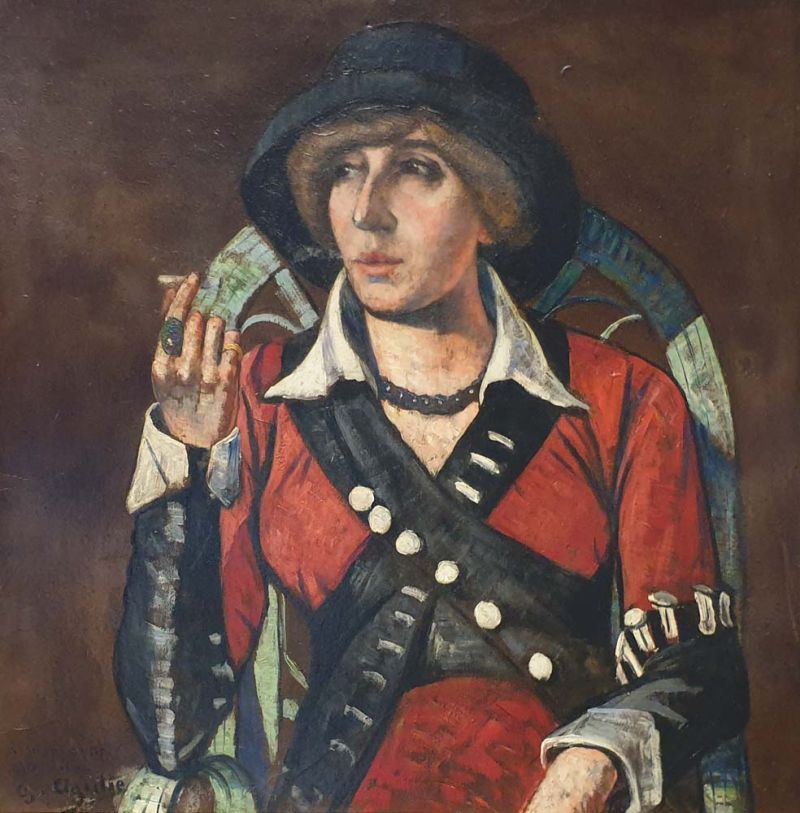
Georgette Agutte was known for her independent spirit and bold approach to color. Initially influenced by Post-Impressionism, her style later evolved—partly through her friendship with Henri Matisse—toward a moderate form of Fauvism.
This portrait reflects that evolution. Dressed in a vivid red jacket and dark hat, the sitter looks slightly away from the viewer, holding a cigarette in her hand. The woman’s posture is both composed and self-possessed, while the close framing lends the figure a quiet but commanding presence.
7. Still Life and Unconventional Materials
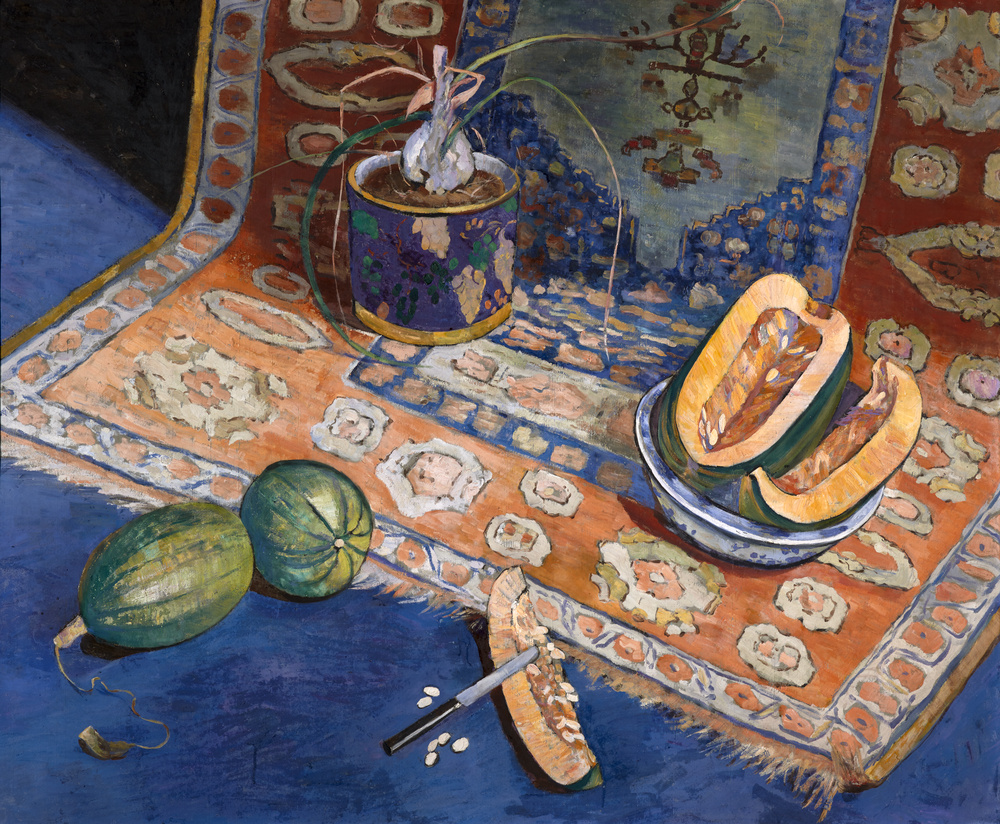
Agutte also used unconventional media, such as in this work, painted in oil on an asbestos cement support. This vivid still life depicts melons, sliced fruit, and a small potted plant across an ornate, patterned carpet. There is a sense of decorative harmony created by deep blues, warm oranges, and muted greens. The tilted perspective gives the composition a different and lively character. The work transforms everyday objects into an expressive study of pattern, color, and texture.
8. Agutte’s Landscapes
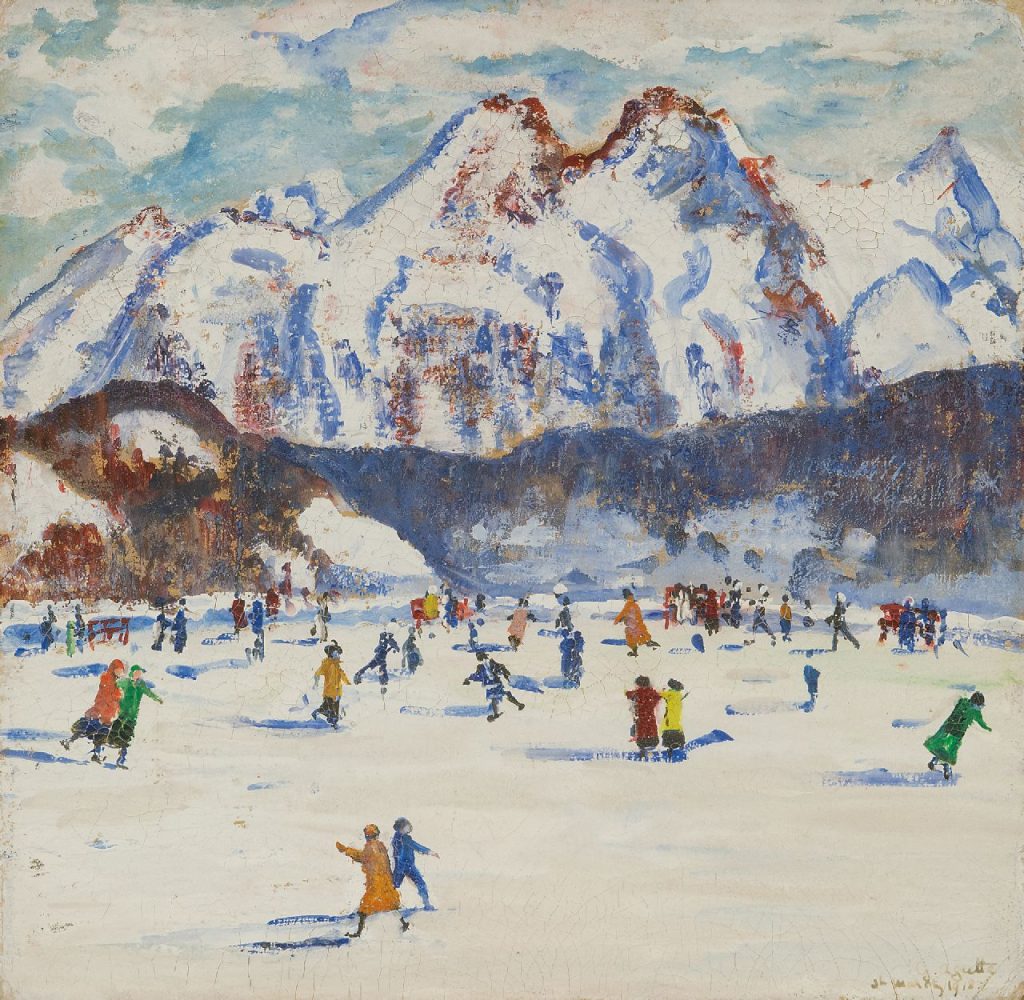
Against a sweeping backdrop of snow-covered mountains, a lively winter scene unfolds as small figures skate and stroll across a frozen expanse. Agutte employs loose brushwork and bright touches of color—reds, yellows, and blues—to animate the scattered groups of people against the pale ice and sky. Together, the scene captures both the grandeur of the landscape and the cheerful sociability of winter leisure.
9. Agutte’s Intimate Portraits
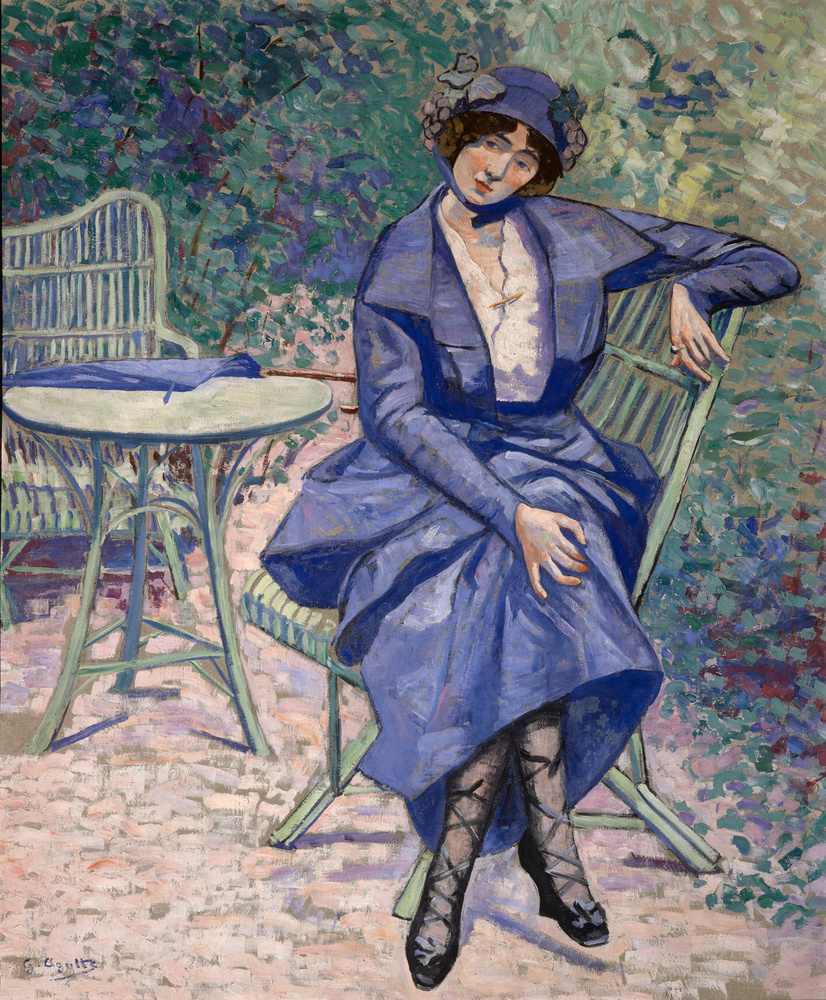
Here, Agutte once again paints a figure seated in the sunlit garden. A young woman in a blue dress rests casually on a chair. She sits in a relaxed pose next to a small table, which gives the scene a casual, everyday feeling. The artist uses many small brushstrokes and bright colors to create texture in the background and clothing. The work balances portraiture and atmosphere, capturing a quiet moment outdoors.
10. Life at the House in Bonnières-sur-Seine
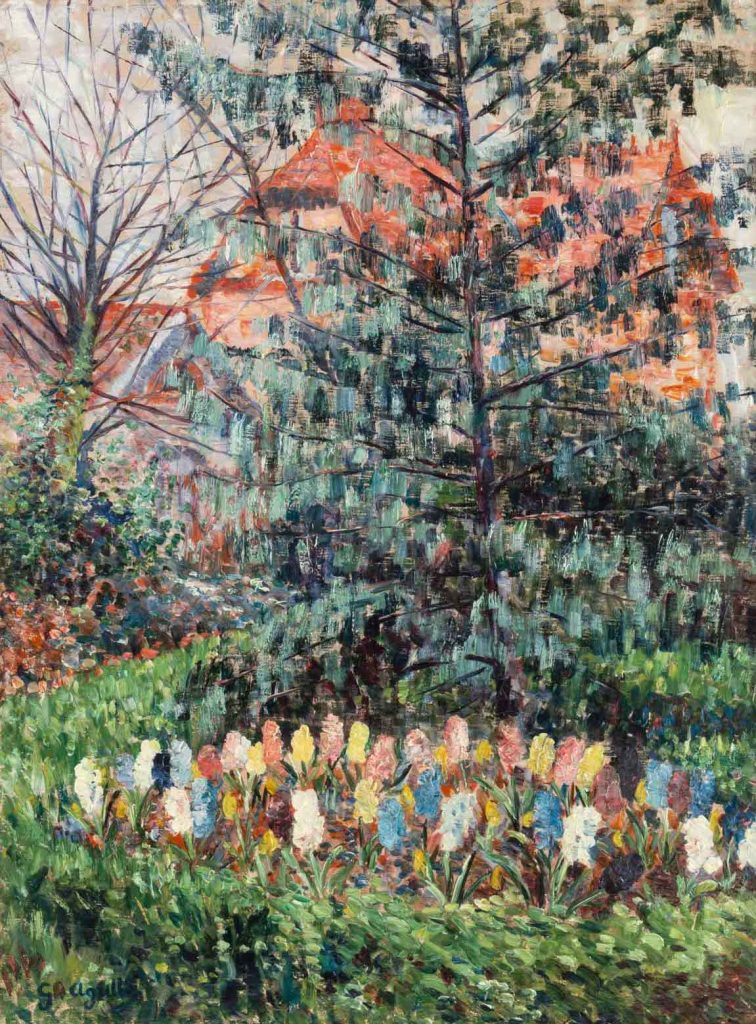
The couple, Marcel Sembat and Georgette Agutte, were a prominent pair during the Belle Époque. The politician and his wife turned their house in Bonnières-sur-Seine into a peaceful retreat away from the bustle of Paris. There, they welcomed many of their artist friends. The house was arranged according to their tastes and decorated with artworks collected by the couple. The garden in front of the house became an important source of inspiration for Agutte and appears in several of her works. Today, the Maison Agutte Sembat and its gardens have been acquired by the city of Bonnières-sur-Seine and have become a cultural institution.
The couple seemed to enjoy their life together deeply, living and working in their home surrounded by nature. They were closely devoted to one another, but eventually their story had a tragic end. After Marcel Sembat’s death, Georgette Agutte took her own life, leaving behind a brief note: “He’s been gone for 12 hours. I’m late.”
Georgette Agutte remains a remarkable artist whose work reflects her strong personality. Emotions often guided her use of bold colors and expressive brushstrokes, through which she captured quiet and intimate moments from everyday life. As one of the few women artists actively working at the turn of the 20th century, her art stands as an important contribution to the vibrant avant-garde artistic circles of her time.
P.S. If, like us, you are a fan of art created by amazing women artists, be sure to check out the Women Artists postcard sets in our shop!