

Masterpiece Story: Judith and Holofernes by Caravaggio
Judith and Holofernes is a Caravaggio masterpiece that captures Biblical murder and drama. Rarely has death been captured so intensely and violently...
James W Singer 13 September 2026
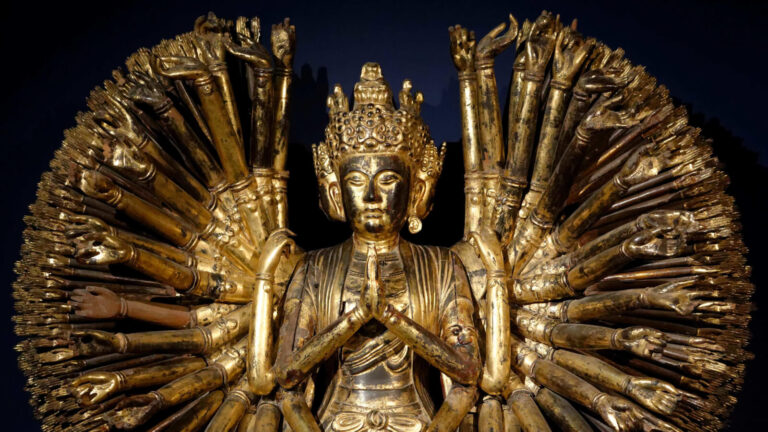
Bodhisattva Avalokiteśvara, ca. 1766-1833, Vietnam, Musée Guimet, Paris, France. Detail.
Bodhisattva Avalokiteśvara was donated to the Musée Guimet in Paris, France, in 1889 by French archeologist Gustave Dumoutier. It represents the blissful blending of secular and spiritual elegance. It is an intricately carved Vietnamese statue filled with Buddhist symbolism, beautiful sophistication, and bold drama.
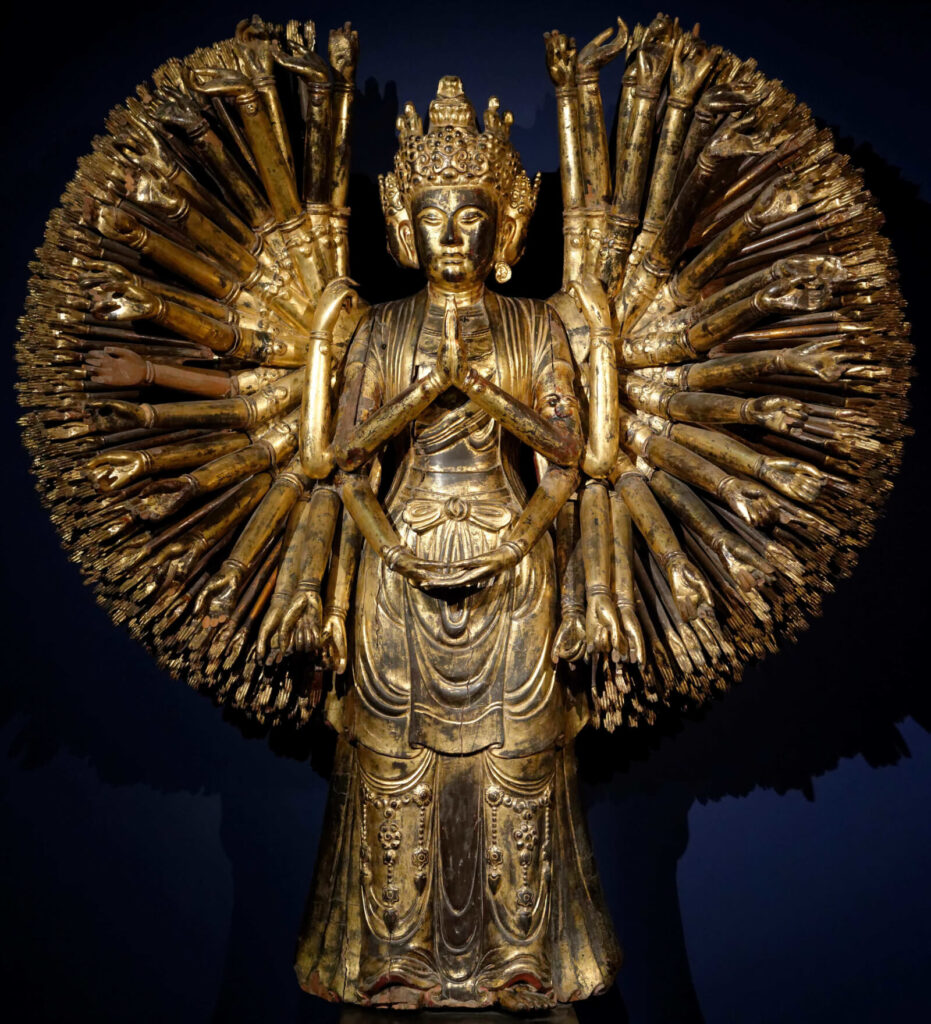
Bodhisattva Avalokiteśvara, ca. 1766-1833, Vietnam, Musée Guimet, Paris, France.
Buddhism is one of the world’s largest religions, and it centers around the teachings of Siddhartha Gautama Buddha (563–483 BCE). Buddhists believe that human life is a cycle of suffering and rebirth, and the only way to escape this cycle is by reaching enlightenment known as nirvana. Nirvana is achieved through practiced meditation, good behavior, physical labor, and spiritual purification.

Rupert Gethin, Map of the Main Modern Buddhist Sects, 2014, Foundations of Buddhism, Oxford University Press, Oxford, UK.
In Mahayana Buddhism, one of the two major branches of Buddhism, spiritual purification can be achieved through spiritual guides, or bodhisattvas, who have achieved nirvana but remain to teach humans. One such guide is the Bodhisattva Avalokiteśvara who achieved enlightenment by giving compassionate help to other Buddhists. Bodhisattva Avalokiteśvara is now regarded as one of the major bodhisattvas of Mahayana Buddhism. He or she, depending on the geographical context, first became popular in the 9th century with the spread of Zen Buddhism.
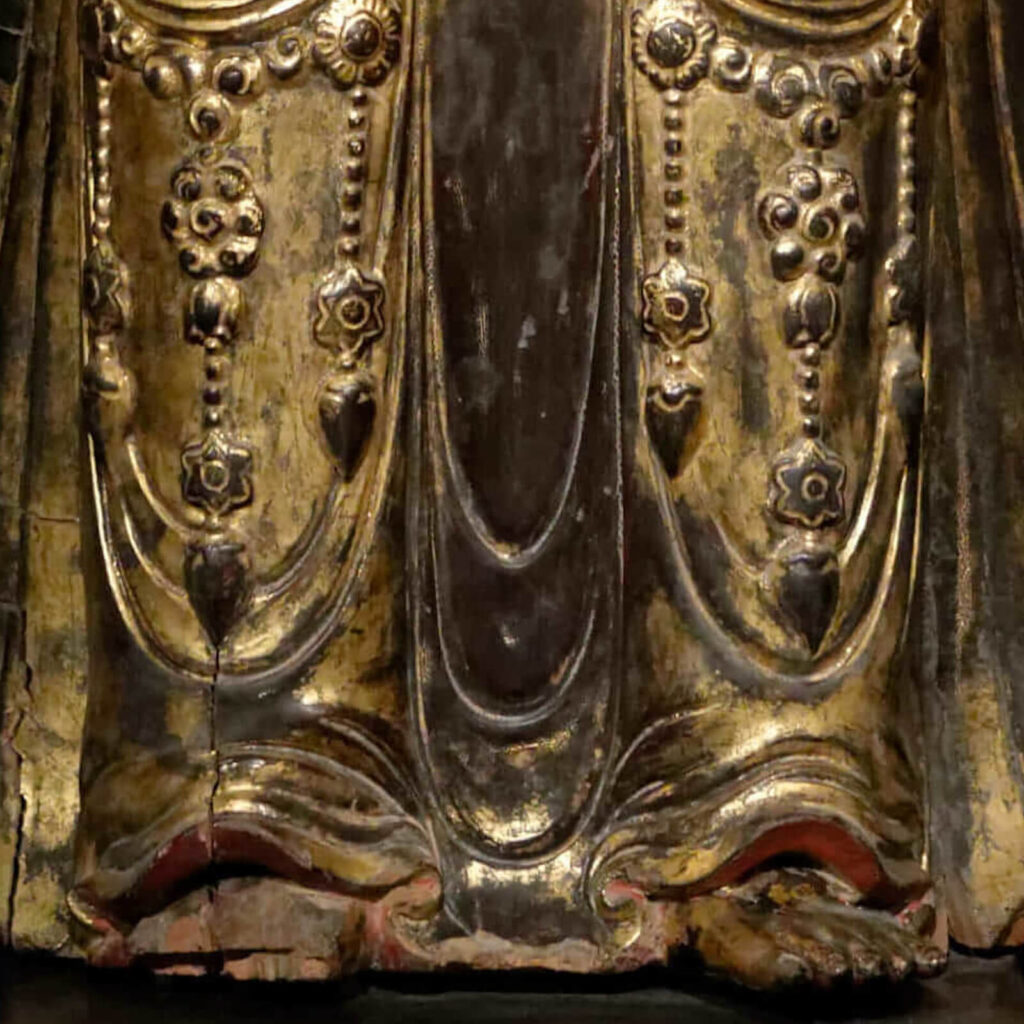
Bodhisattva Avalokiteśvara, ca. 1766-1833, Vietnam, Musée Guimet, Paris, France. Detail.
Bodhisattva Avalokiteśvara is a Vietnamese statue from the late 18th or early 19th century. It stands 1.51 m or 4 ft 11 in tall. The statue is composed of wood that is carved, lacquered, and gilt. The artwork’s most striking feature is its many arms which symbolize the bodhisattva’s ability to face all situations from all directions.
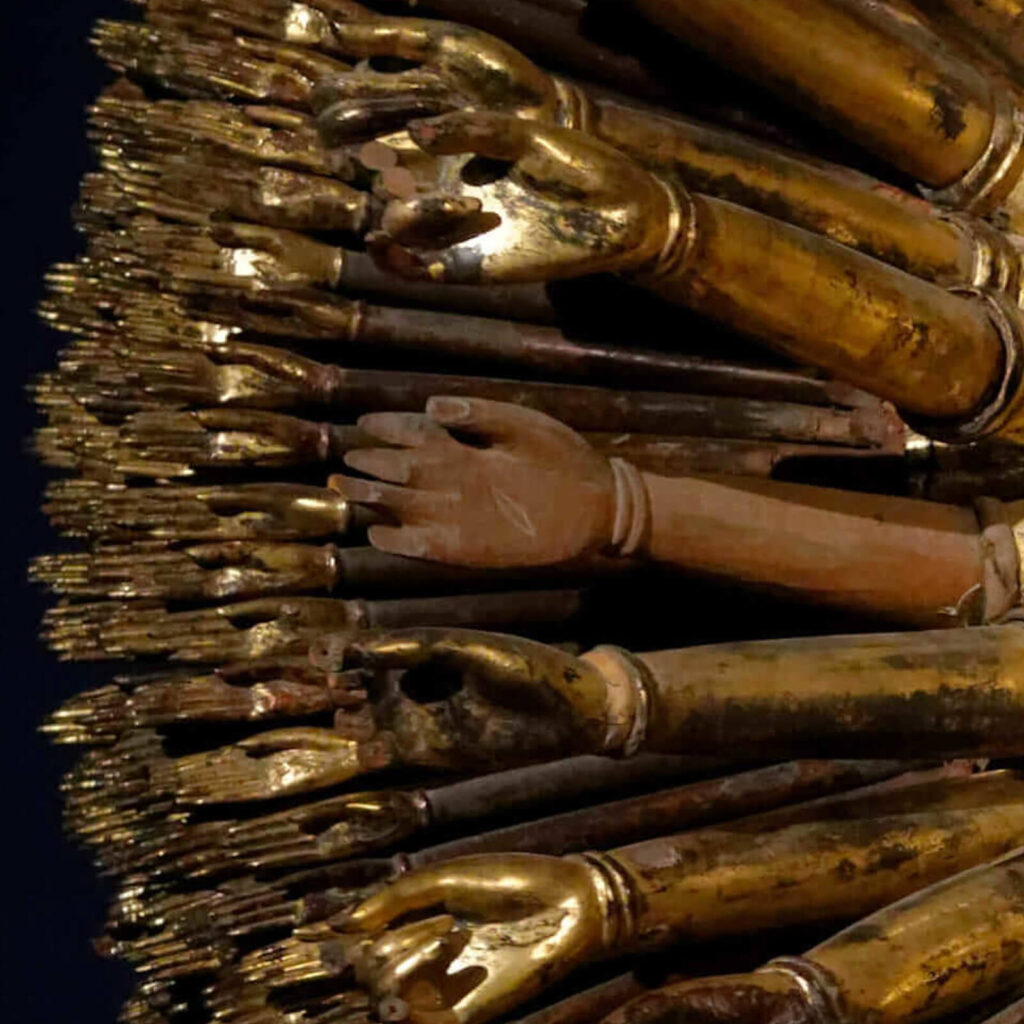
Bodhisattva Avalokiteśvara, ca. 1766-1833, Vietnam, Musée Guimet, Paris, France. Detail.
In Vietnam, where Bodhisattva Avalokiteśvara was carved, Avalokiteśvara is largely considered female and a provider of children. Therefore, Bodhisattva Avalokiteśvara depicts the Vietnamese feminine version of the bodhisattva like the neighboring Chinese Guanyin and Japanese Kannon. She embodies the Buddhist virtue of compassion and shows benevolence towards the faithful.
Avalokiteśvara has a central face with two side faces seen in the profile. This multi-faced composition represents that she sees all through her nirvana. She also wears a royal crown that is surmounted by five seated Buddhas. The crown represents her elevation and close association with the Buddha.
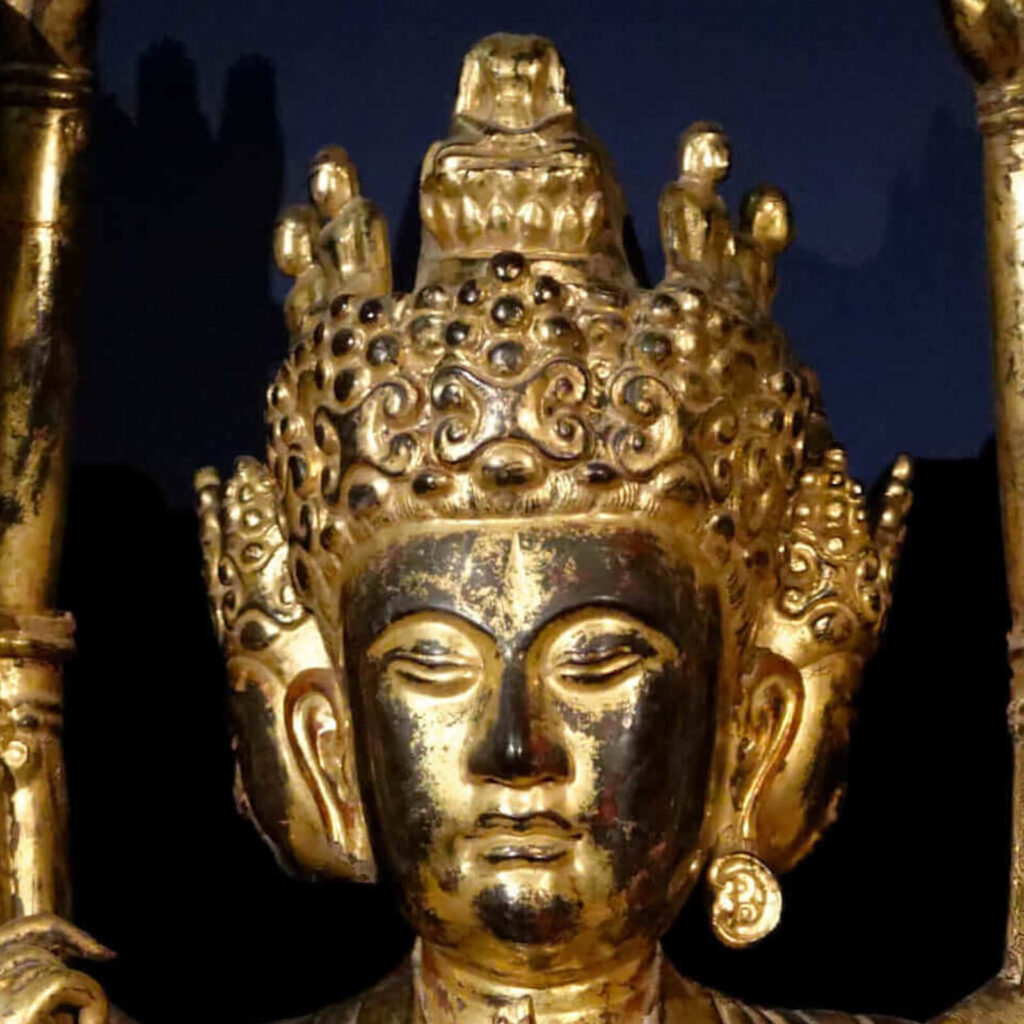
Bodhisattva Avalokiteśvara, ca. 1766-1833, Vietnam, Musée Guimet, Paris, France. Detail.
Around the bodhisattva’s neck are pearl necklaces which are symbols of spiritual wealth, compassion, and wisdom. Therefore, they are appropriate adornments for Avalokiteśvara. In front of the necklaces is a pair of hands in a prayer-like gesture known as the Namaskara Mudra. It is a Buddhist gesture for adoration, focus, and welcome. It features very commonly on statues near building entrances.
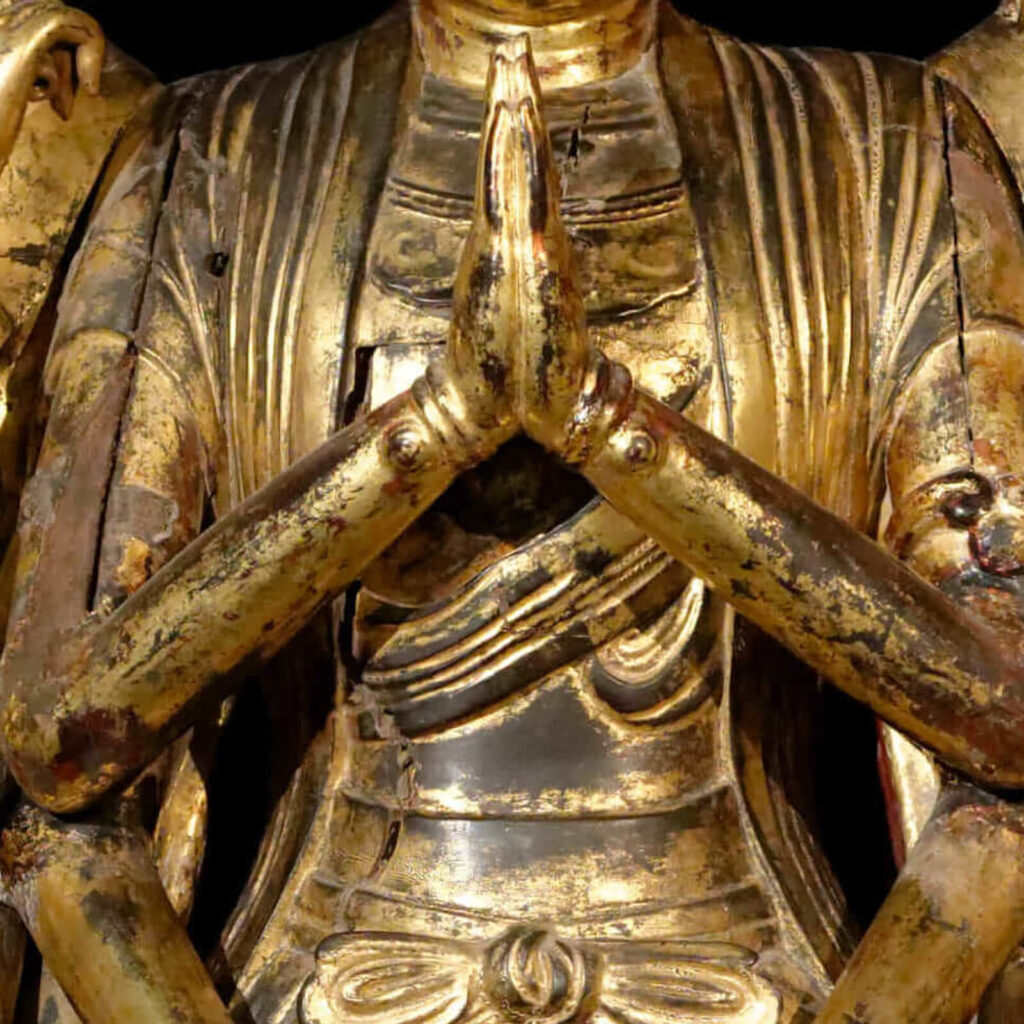
Bodhisattva Avalokiteśvara, ca. 1766-1833, Vietnam, Musée Guimet, Paris, France. Detail.
Below the Namaskara Mudra is another pair of hands in a cupped gesture known as the Dhyana Mudra. It is a Buddhist gesture for balance, meditation, and healing. Many statues in the center of buildings, like temples, often portray this mudra because of its symbolism of being centered. To the left and right are raised arms in the Karana Mudra which is to expel and repel demons. A carved knot and flowing drapery on the bodhisattva’s waist complement the overall elegance of the figure.
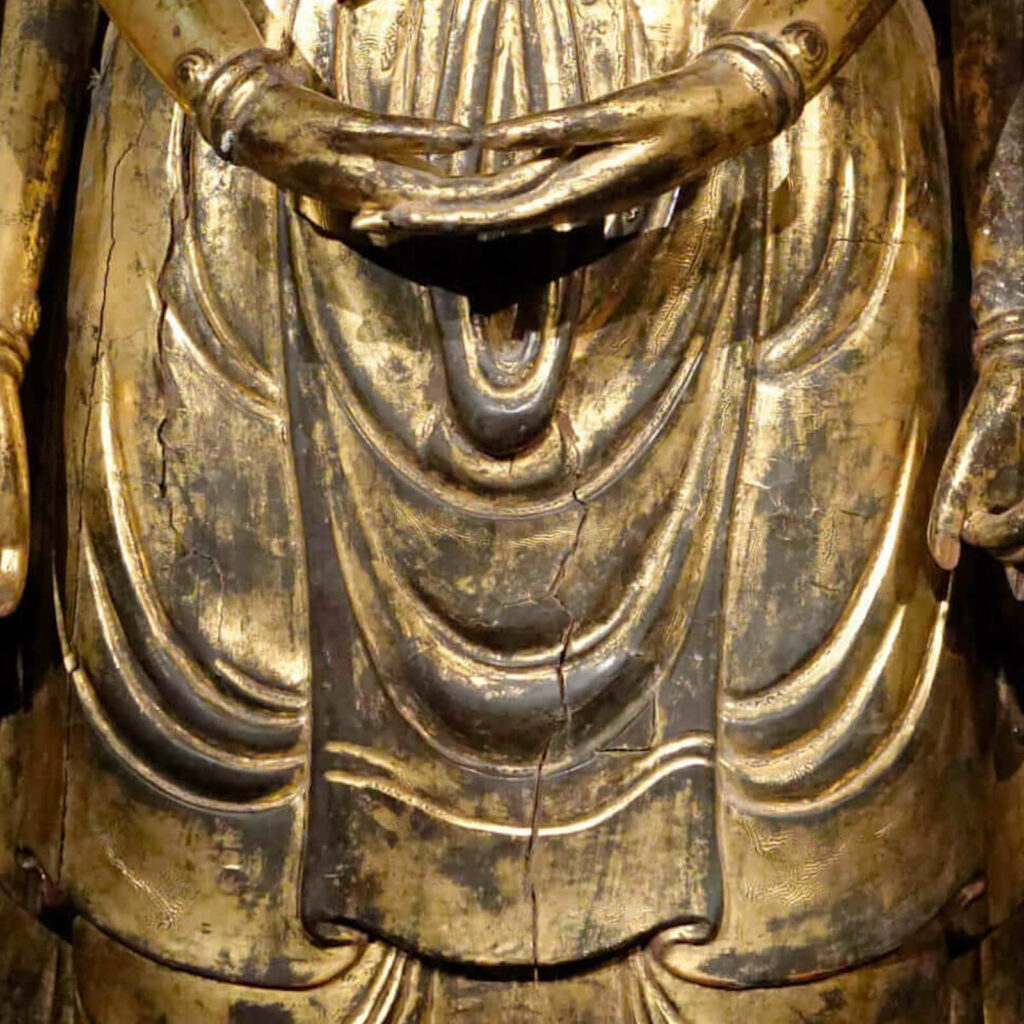
Bodhisattva Avalokiteśvara, ca. 1766-1833, Vietnam, Musée Guimet, Paris, France. Detail.
Bodhisattva Avalokiteśvara has 22 pairs of large arms. Three pairs are positioned in three mudras, and the remaining 19 pairs radiate into an almost fan-like circumference. Behind the array of large arms is a peacock tail-like spread of at least one hundred smaller arms. The assembled collection of arms resembles the Dharmachakra or the Buddhist Wheel of Dharma representing the Buddha’s First Sermon when he established the dharmas or laws of Buddhism.
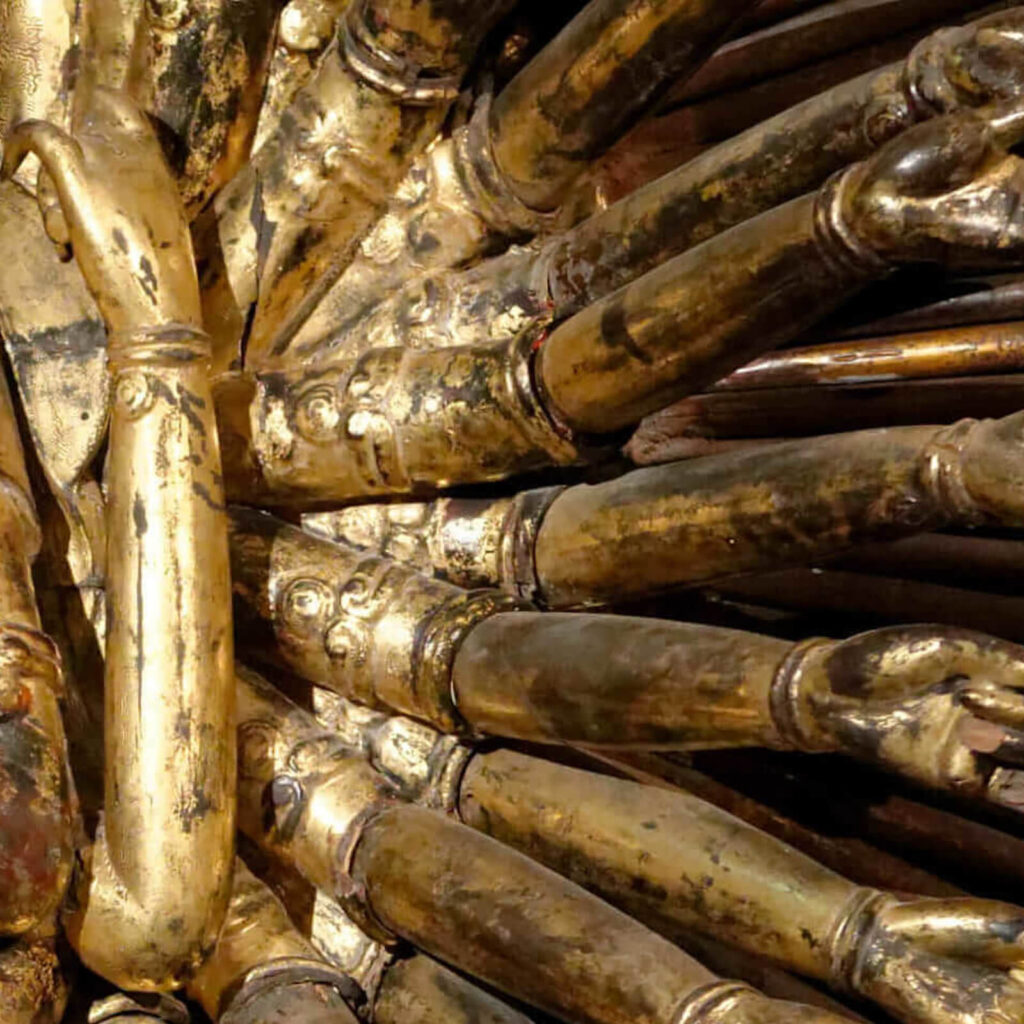
Bodhisattva Avalokiteśvara, ca. 1766-1833, Vietnam, Musée Guimet, Paris, France. Detail.
Interestingly, before being donated to the Musée Guimet in Paris, France, the statue was featured in a Buddhist pagoda at the Exposition Universelle de 1889 (Universal Exposition of 1889) hosted in Paris. The exposition’s most famous legacy is the Eiffel Tower which was constructed especially for the event. While Bodhisattva Avalokiteśvara does not achieve the hordes of tourists like the Eiffel Tower, it is still a masterpiece deserving of admiration.
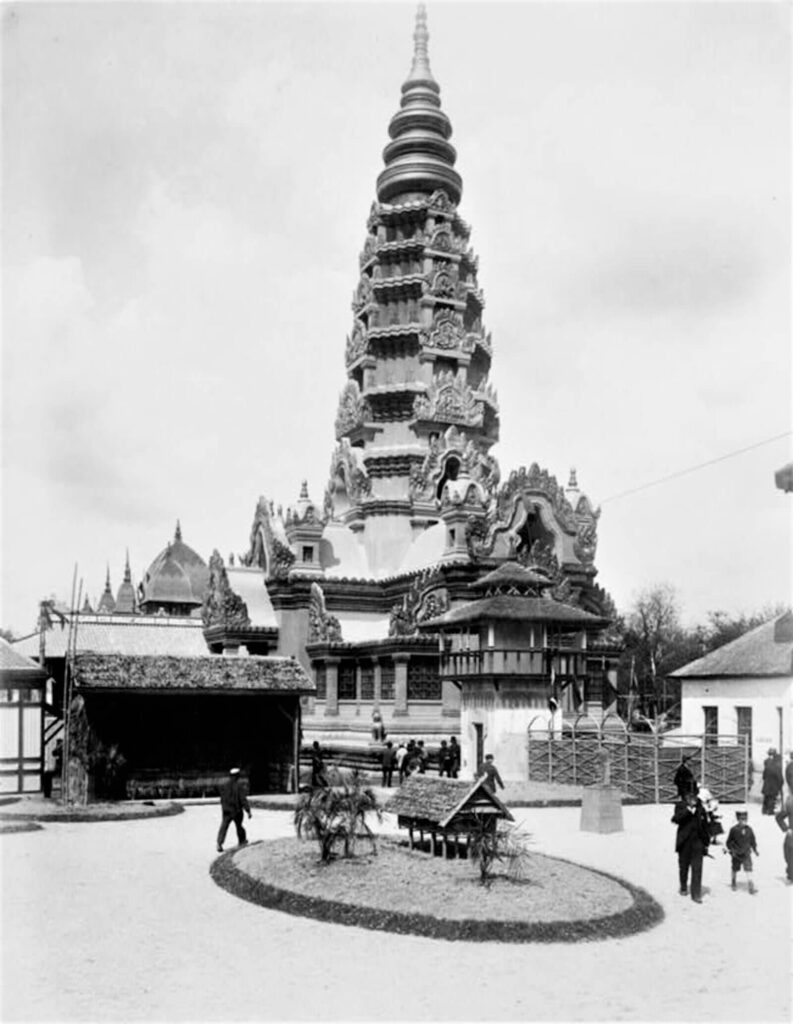
Pagoda of Angkor, Universal Exposition of 1889, Library of Congress, Washington, DC, USA.
“A Work: Avalokiteśvara or Quan Am with a Thousand Hands.” Blog. Musée Guimet. Accessed December 15, 2021.
“Avalokiteśvara.” Glossary Terms. Musée Guimet. Accessed December 15, 2021.
“Buddhism.” Resource Library. National Geographic Society. Accessed December 15, 2021.
Rupert Gethin. Foundations of Buddhism. Oxford, UK: Oxford University Press, 2014.
“Pagoda of Angkor, Paris Exhibition, 1889.” Collection. Library of Congress. Accessed December 15, 2021.
DailyArt Magazine needs your support. Every contribution, however big or small, is very valuable for our future. Thanks to it, we will be able to sustain and grow the Magazine. Thank you for your help!

James W. Singer is an art historian and fine art photographer. He earned a Bachelor of Arts in Art History from the University of Florida. He later moved to Paris, France. He currently writes “Masterpiece” articles for DailyArt Magazine.

Bec is an art nerd, bicycle enthusiast, cat mom, artist/crafter/maker from sunny Toronto, Canada.
Judith and Holofernes is a Caravaggio masterpiece that captures Biblical murder and drama. Rarely has death been captured so intensely and violently...
James W Singer 13 September 2026
Winslow Homer (1836–1910) was one of the leading American Realist painters. His painting The Veteran in a New Field is a masterpiece of late...
James W Singer 30 August 2026
At first glance, A Goldsmith in His Shop (1449) appears to depict an ordinary visit to a jeweller. Yet Petrus Christus transformed an ordinary...
Shivani Gupta 23 August 2026
With Virgin and Child as a cornerstone of her reputation, Elisabetta Sirani should be recognized as an important Italian Baroque artist. Far more...
James W Singer 16 August 2026