

Halloween Monsters: What Our Fears Reveal About Society
Halloween monsters have long served as mirrors of human fear and imagination. From vampires and witches to zombies and digital phantoms, they reveal...
Errika Gerakiti 30 October 2025
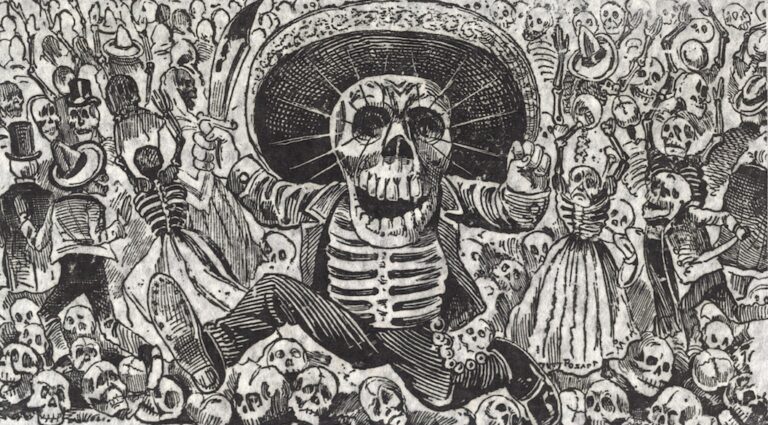
Jose Guadalupe Posada, Calavera From Oaxaca, 1910. The Public Domain Review. Detail.
Heaven and earth are never as close as they are on that day. November 1 and 2 are traditionally celebrated as the Day of the Dead when spirits come to earth to meet their relatives and eat and drink with them. At least this is what happens on the Day of the Dead in Mexico…
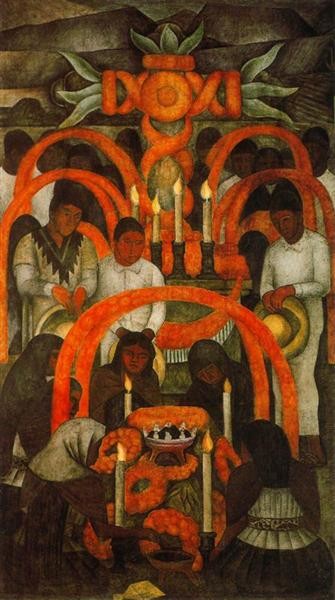
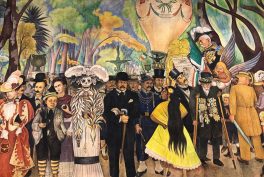
The origins of this day and its basic motifs can be traced back 3,000 years to the Aztecs, but the iconography of skeletons and skulls that is so familiar to us today, we merit to José-Guadalupe Posada, who drew hundreds of personified skeletons, and Diego Rivera, who portrayed the traditional celebrations of this holiday.
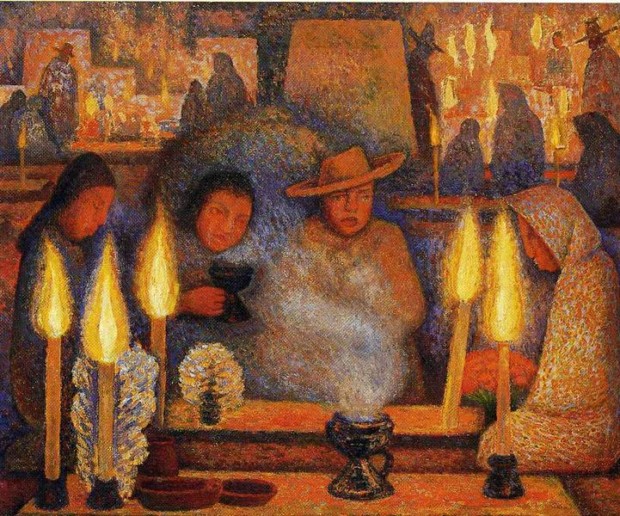
On this day, people visit their dead in cemeteries. They bring food and drinks, play cards, sing songs, and pray. They also make colorful altars for their family spirits in their houses, which are decorated with flowers, feathers, nuts, candies, and chocolate skulls.
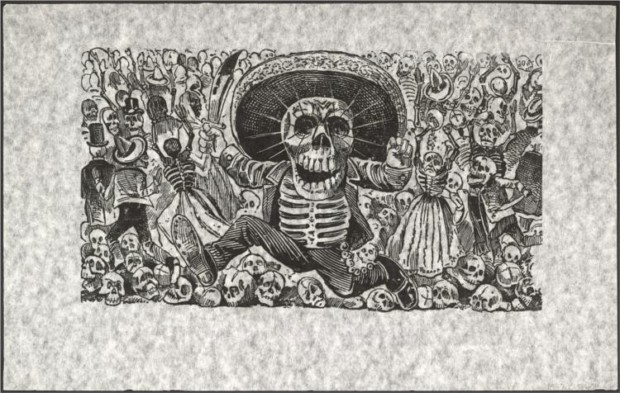
Calavera means “skull”, but its meaning can be extended to “skeletons”. Posada made a whole series of etchings depicting calaveras doing some nasty, or less nasty, things. This proud-looking one is dressed as a charro, a traditional Mexican cowboy. He is running past a crowd of skeletons with a blood-stained knife in his hand.
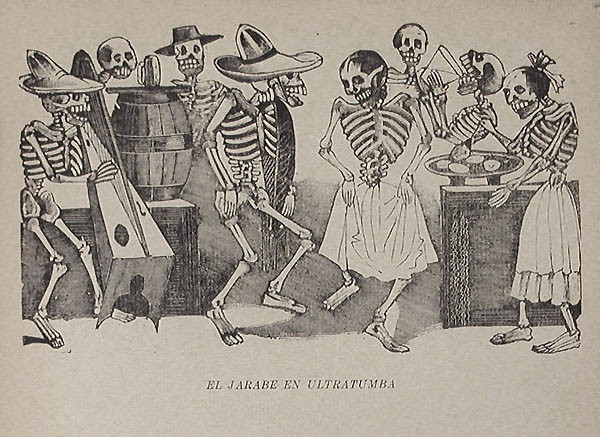
The Folk Dance Beyond the Grave depicts a group of merry skeletons who are celebrating their holiday. They eat, drink, play music, and dance the traditional Mexican folk dance, jarabe.
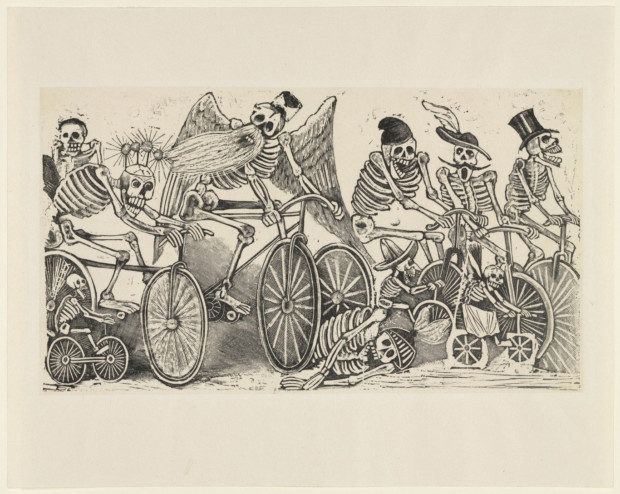
Posada published his etchings in the public press, often with a satirical message. This time, however, it’s more a moralistic one: it’s never too late to pick up sports!
DailyArt Magazine needs your support. Every contribution, however big or small, is very valuable for our future. Thanks to it, we will be able to sustain and grow the Magazine. Thank you for your help!

Magda, art historian and Italianist, she writes about art because she cannot make it herself. She loves committed and political artists like Ai Weiwei or the Futurists; like Joseph Beuys she believes that art can change us and we can change the world.

Halloween monsters have long served as mirrors of human fear and imagination. From vampires and witches to zombies and digital phantoms, they reveal...
Errika Gerakiti 30 October 2025
When you picture Halloween, a flood of familiar images rushes in: glowing jack-o’-lanterns, fluttering bats, skeletons, and black cats. But the...
Errika Gerakiti 31 October 2025
Marian Henel’s tapestries are huge. The largest one measures over 6 m in length and 3 m in width (19 ft. 8 in. by 9 ft. 10 in.). Created in the...
Zuzanna Stańska 22 May 2026
Los Caprichos are some of the most disturbing of Francisco Goya’s works. A sharp critique of society and its values, there are plenty of monsters...
Edoardo Cesarino 31 October 2024