
5 Contemporary Women Artists from Latin America You Need to Know
When we speak about contemporary art in Latin America, women artists are at the center stage. Working around various mediums and highlighting themes...
Natalia Tiberio 16 December 2024
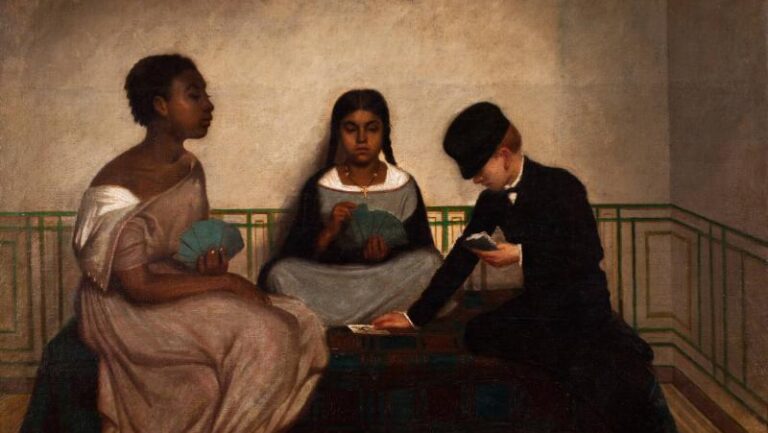
Francisco Laso, The Three Races (Las tres razas) or Equality Before the Law, 1859, Museo de Arte de Lima, Lima, Peru. Detail.
Welcome to the largest art museum in Peru: the Lima Art Museum (Museo de Arte de Lima), aptly named MALI. Opened in 1961, it presents around 1,200 works, arranged into four eras: Pre-Columbian, Colonial, Republican, and Modern/Contemporary. This chronological approach helps to understand the history and evolution of art in South America. Let’s take a look at some of the most interesting works exhibited in MALI.
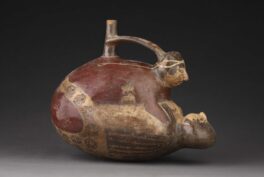
Proud of its pre-colonial civilizations, Peru has a lot of unique pottery to showcase. Many of the most refined pieces, like the two we present here from MALI, were made for ceremonial rituals or as offerings to the gods or to the lord.
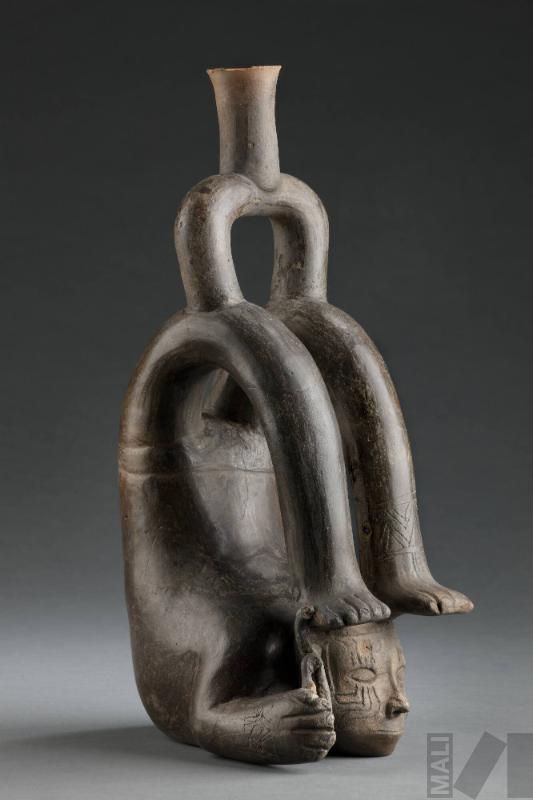
Cupisnique culture, The contortionist of Puémape, Museo de Arte de Lima, Lima, Peru.
This peculiar bottle (yes, this is a bottle!) demonstrates the fantastic ceramic skills of the peoples from the northern coast of Peru. Because they had no writing system, most of what we know about them comes from all these jars and plates: their beliefs, traditions and everyday customs. Here, though, the meaning of the contortionist is unclear—is he a victim of a disease, has he taken a ceremonial substance, or does he symbolize the snake, a sacred animal? This bottle was found in Puémape in the tomb of an important person, as an offering and a sign of devotion.
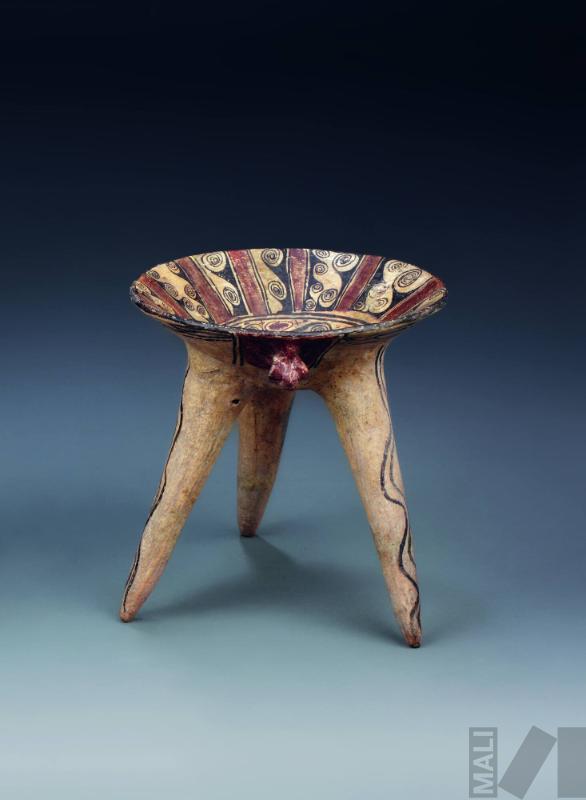
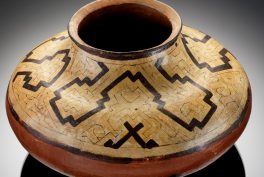
Cajamarca culture, Tripod plate, 950–1470 CE, Museo de Arte de Lima, Lima, Peru.
This perfectly shaped plate from the Cajamarca culture, uses two different natural pigments. The spiral (or wave) was a very common pattern in many native civilizations throughout South America, even when they didn’t have contact with each other. It represents the cycle of life and death, which are always intertwined. Most of these peoples believed in an afterlife in a parallel world. That is why all the tombs that were discovered contained jewels and objects of everyday life. Other patterns commonly used, both on ceramics and textiles, were steps, fish, sacred animals, and anthropomorphic figures.
The paintings created during the early colonial period were made by European artists, mainly Spaniards or Italians. Later, the descendants of the colonizers (white, rarely mixed race) were trained in full European style, reproducing the same features: white skin, European landscapes, and buildings. The hype at that time was, of course, Christian topics.
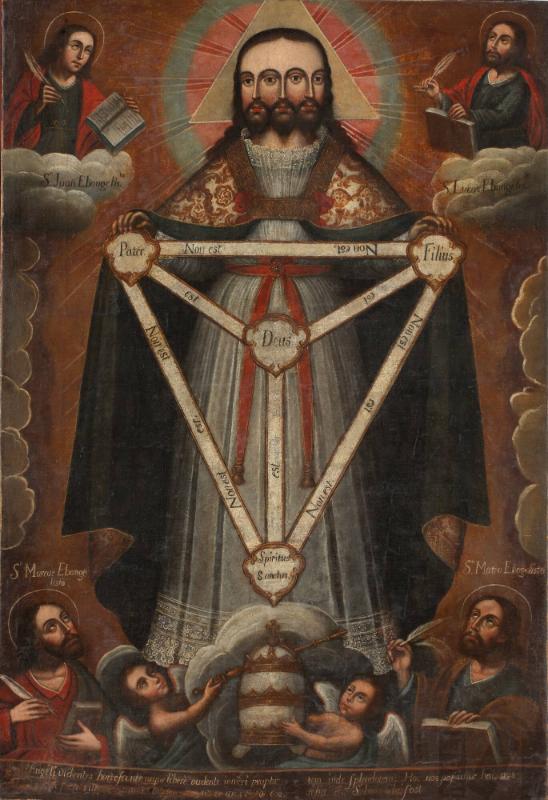
Cusco School, Trifacial Trinity (Trinidad trifacial), ca. 1750–1770, Museo de Arte de Lima, Lima, Peru.
Here is an interesting example of an iconographic theme of a three-faced Christ, which represents the Holy Trinity. The theme was banned by Pope Benedict XIV in 1745, in his document Sollicitudini nostrae. However, as you can see, these paintings were still produced in rural areas, far away from the Holy See. This trifacial Trinity was created by the Cusco School, recognizable by its lack of perspective, realistic faces, and unrefined clothes and backgrounds. There are not many surviving examples of this iconographic theme, as the Catholic Church had most of them destroyed or redone to show only one face.
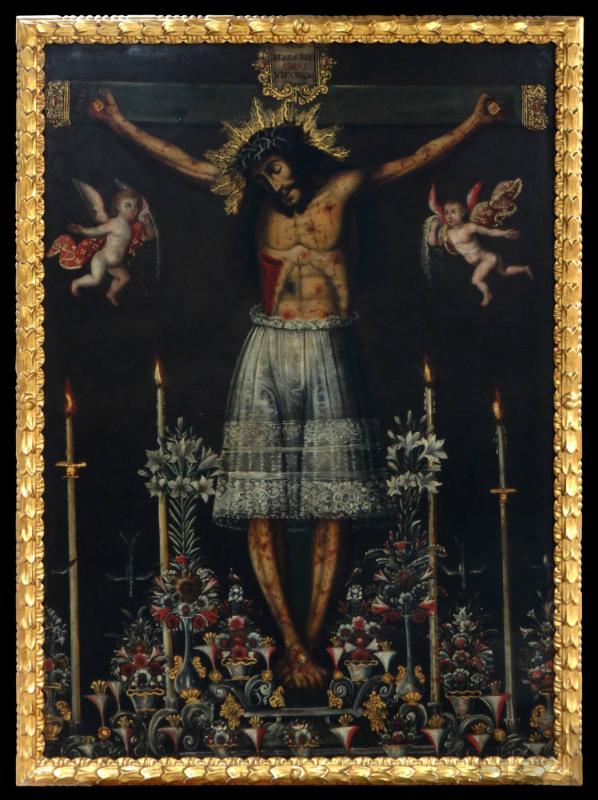
Cusco School, Lord of the Earthquakes (Señor de los Temblores), ca. 1740–1760, Museo de Arte de Lima, Lima, Peru.
The Lord of the Earthquakes is the patron of Cusco. It is said that an effigy of Jesus kept in that town helped stop an earthquake in 1650. Look at how dark and gory he looks. When the Catholic Church lost ground to Protestantism during the Reformation, its response, the Counter-Reformation, was to scare its followers back in line with threats of hell and a vivid imagery of the Passion. Many artists from the Spanish colonies therefore made religious works that are dramatic, showing tears, blood, and a dark background common to the Spanish Baroque style.
The first goal of every young republic is to define and assert its own identity. This objective concentrates all fields of society, especially the arts. After Peru achieved independence, national artists consequently broke away from the colonial style and its religious works. They soon started painting portraits of the new bourgeoisie and representations of their true roots and identity.
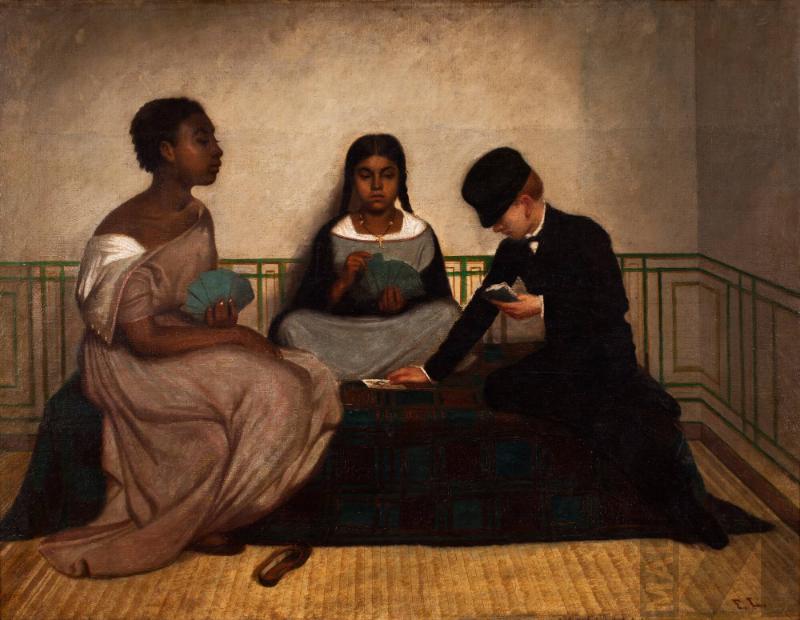
Francisco Laso, The Three Races (Las tres razas) or Equality Before the Law, 1859, Museo de Arte de Lima, Lima, Peru.
This is an obvious example of the new identity that the nation of Peru was going for. After 300 years of discrimination and slavery under colonial rule, the three “races” living in South America (the Black, daughter of the African slaves; the Indigenous, daughter of the natives; and the White, son of the colonizers) meet to share a symbolic moment of idleness.
Francisco Laso (1823–1869) stayed three times in Europe, where he learned the use of chiaroscuro and of neutral tones, which became his trademark. At the same time, the Old World appreciated his art for its representations of the indigenous. Back in Peru, he became an important politician.
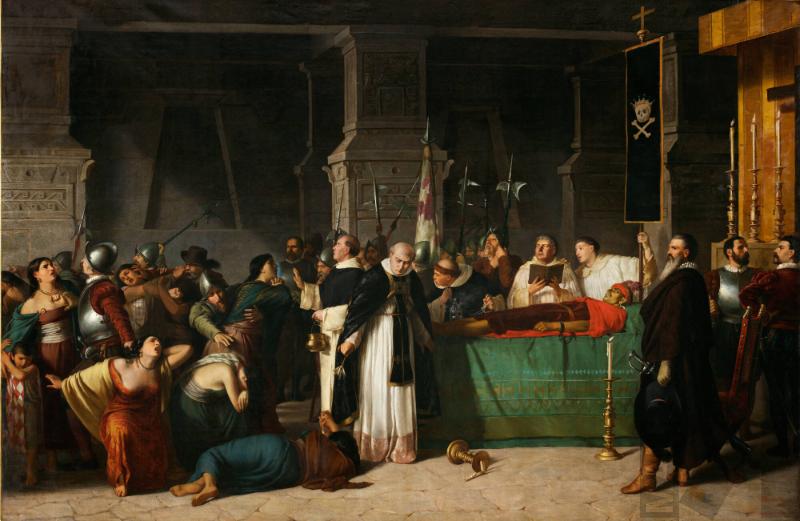
Luis Montero, The Funerals of Inca Atahualpa (Los funerales de Atahualpa), 1867, Museo de Arte de Lima, Lima, Peru.
Like most South American artists of that time, Luis Montero (1826–1869) was trained in Europe and this magnificent work (537 x 350 cm, 211 3/8 x 137 3/4 in., and weighing 200 kg!) was in fact created in Italy. It is an important piece in the history of South American art and it holds a central place in the museum. It is a great example of Indigenismo—the recognition of the cultures and rights of indigenous peoples and their full integration within society
The historical painting aims to show the superiority of the indigenous (Inca) origins over the Spanish past. Atahualpa, the last Inca ruler, was killed by conquistadors such as Francisco Pizarro (the third figure from the right). Observe the mixture of indigenous imagery (the face and dress of the Inca, the windows, the symbols on the columns) and European influence (the structure of the painting, the classicist columns, the European faces of the women).
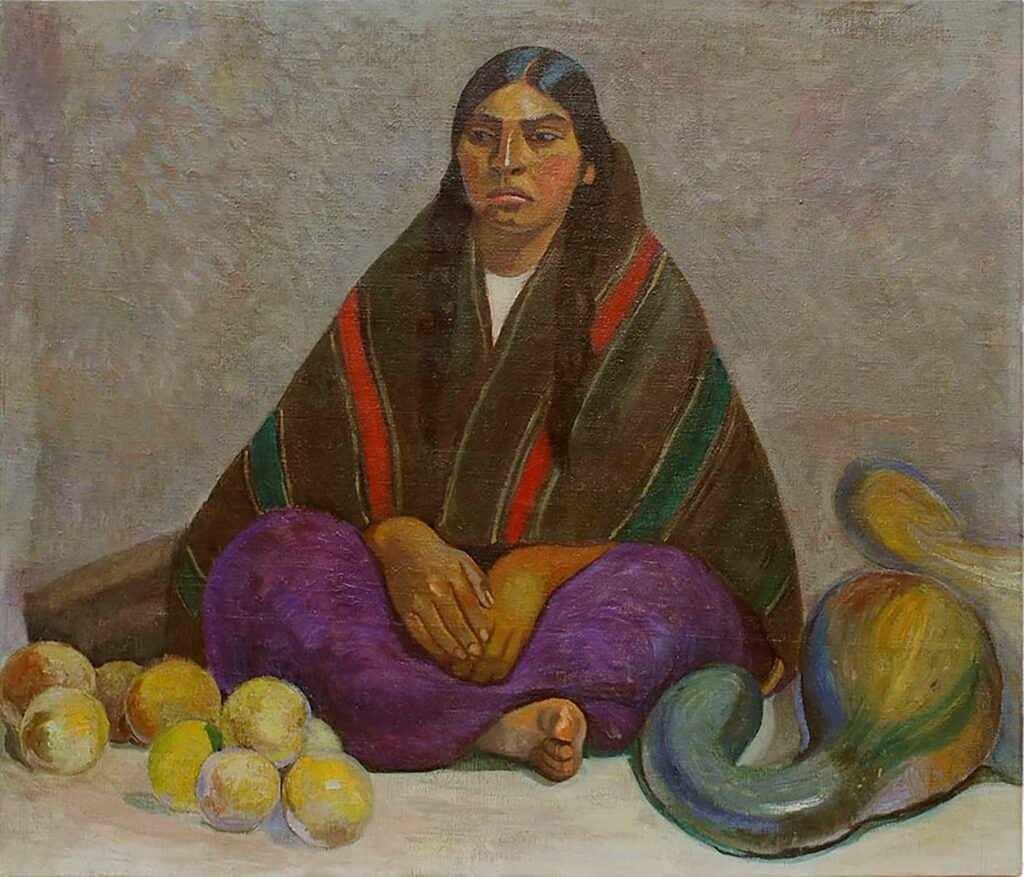
Julia Codesido, Ayacuchan Vendor (Vendedora ayacuchana), ca. 1927, Museo de Arte de Lima, Lima, Peru. Tal día como hoy.
Julia Codesido (1883–1979) was a Peruvian painter, printmaker, and educator, and one of the leading figures of the Indigenismo movement. She was also a committed feminist, actively advocating for women’s right to vote. She embraced Peru’s indigenous roots in her work and travelled throughout Peru, drawing inspiration from the communities she encountered. Her art redefined national identity and the representation of Peruvian women.
Here, she portrays a barefoot woman wrapped in a traditional Peruvian blanket, rendered in vibrant colors and with a striking, contemplative gaze.
In 1940, several South American countries officially adopted the line of Indigenismo. Artists were particularly keen on it, even though many of them still looked to Europe for training and influence.
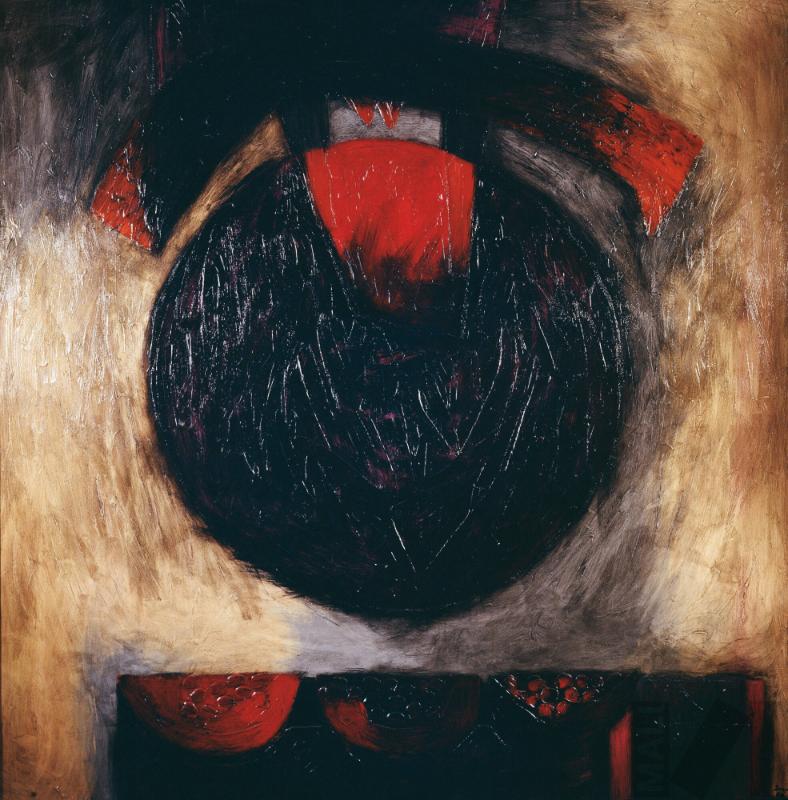
Fernando de Szyszlo, Puka Wamani, 1968, Museo de Arte de Lima, Lima, Peru.
This painting by Fernando de Szyszlo (1925–2017), a Peruvian artist of Polish origins, has a title in Quechua. Quechua was the language of the Incas and is still spoken today by around 9 million people, mainly in Peru’s countryside. Both the title and the shape clearly link to Peru’s indigenous peoples—the circle is obviously a divine figure, and the presence of claws and fangs refer to animals that were sacred for the natives. Also, the use of both dark and bright tones, darkness and light, represents the duality that was so important for several pre-Inca civilizations. The point is to give to abstraction, which is usually an international language, a local interpretation.
De Szyszlo lived for several years in France, where he became acquainted with Octavio Paz, André Breton, and abstract art, which he widely promoted upon his return to Peru in 1951.
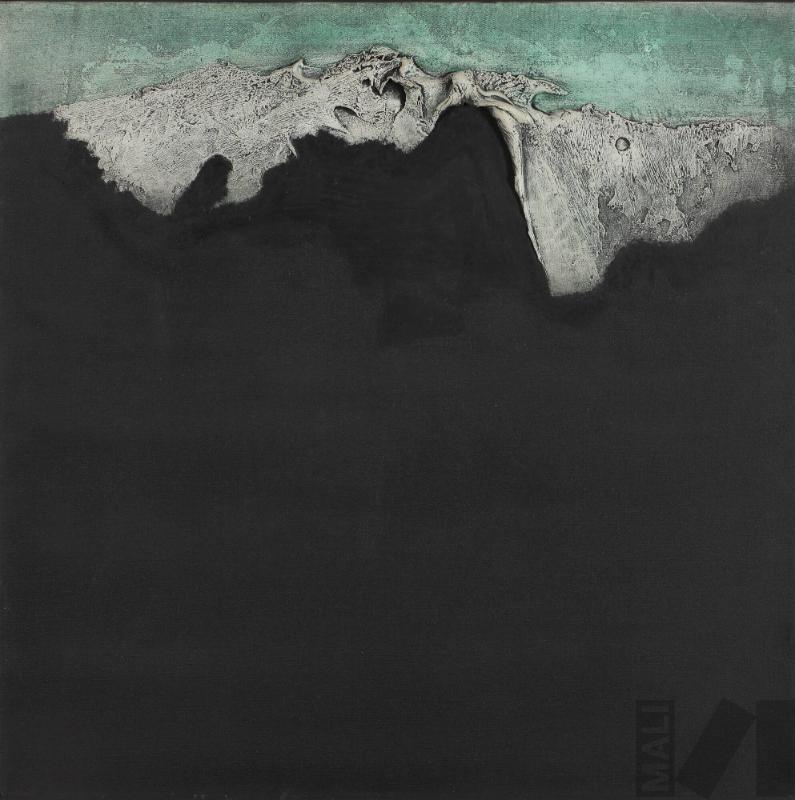
Jorge Eduardo Eielson, Infinite Landscape of the Coast of Peru (Paisaje infinito de la costa del Perú), 1961, Museo de Arte de Lima, Lima, Peru.
This painting by Jorge Eduardo Eielson (1924–2006) is part of a series of six pieces. The artist’s intention was to tell the story of Peru’s fishermen, using words, sand, hair, animal bones, fabric, and so on. Over time, the idea evolved and Eielson decided to focus on space. Hence the large black area covering three-fourths of the square canvas. In order to link it to the fishermen’s story, the artist mixed sand with paint. He also used fabric to create the white-grey part. This painting can be seen both as a coastline seen from above, or as a mountain with a greenish sky.
In his work, Eielson employed earth, small stones, and animal bones and feces. His goal was to include physical and mineral aspects of the landscape he was representing. Eielson was also a sculptor, a photographer, a poet, and a playwright.
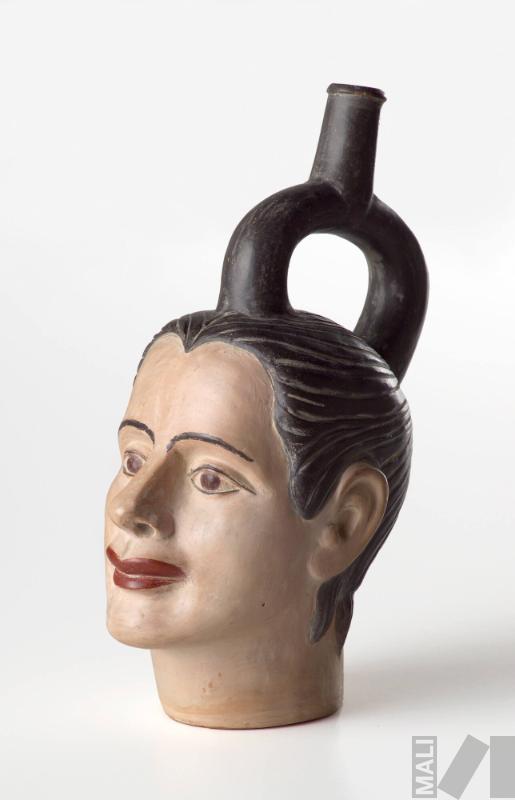
Susana Torres, Huaco Self-Portrait (Huaco Auto retrato), 2006, Museo de Arte de Lima, Lima, Peru.
To end our list, look at how this modern sculpture by Susana Torres (b. 1969) is a clear return to Peruvian roots and a nod to traditional Peruvian pottery! It reminds us that art is a perpetual looking back and moving forward.
If you’re in Lima, we really recommend spending some time in the Lima Art Museum, and we hope that our short guide will encourage you to do that and help you plan your visit.
DailyArt Magazine needs your support. Every contribution, however big or small, is very valuable for our future. Thanks to it, we will be able to sustain and grow the Magazine. Thank you for your help!

A linguist and a translator, an avid reader and a curious traveler currently exploring South America. Co-writes the cultural travel blog Green Mochila about cities, art, food, local customs and languages.

Architecture nerd, art historian, museum professional, fascinated by pre- and post-WWII modernism in Central/Eastern Europe.

Univ. of New Orleans, Fine Arts and History; Fine Artist, Professional Graphic Designer, Art Historian, Historian, Musician, worked at the New Orleans Museum of Art and MS Museum of Art; learning enthusiast!
When we speak about contemporary art in Latin America, women artists are at the center stage. Working around various mediums and highlighting themes...
Natalia Tiberio 16 December 2024
I must tell you something in secret – I love Fernando Botero’s works. Many of his works were inspired by classic art. Or maybe...
Zuzanna Stańska, Aniela Rybak-Vaganay 17 September 2026
Arthur Bispo do Rosário is a mythic figure in Brazilian art. He never considered himself an artist and he spent many years living in a psychiatric...
Natalia Tiberio 29 March 2024
In 1922, Semana de Arte Moderna (The Modern Art Week) was held in Brazil. Marking the official beginning of Modernism in Brazil, the event lasted an...
Vithória Konzen Dill 15 November 2023