



Indus Valley Civilization: Echoes of a Forgotten Past
Nestled in the plains of present-day Pakistan and northwest India lies one of the world’s most enigmatic ancient societies: the Indus Valley...
Maya M. Tola 28 August 2025
20 July 2026 min Read
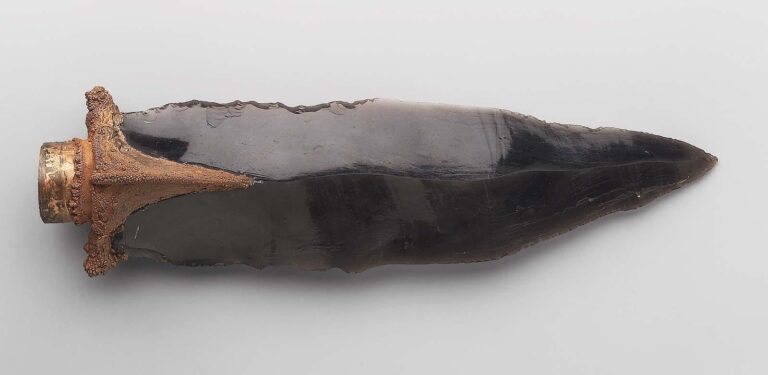
Obsidian core debitage, Mexico, ca. 1000–1500, Museum of Fine Art, Boston, MA, USA.
Obsidian is a unique natural glass that has fascinated humans for thousands of years. From ancient survival tools to luxury royal goods, many cultures prized obsidian rock for its practical qualities. In some societies, however, obsidian has gained ceremonial and symbolic significance.
Obsidian is an igneous rock born from volcanic fire. It forms when silica-rich lava erupts from a volcano and cools so rapidly that crystals have little or no time to develop, creating a naturally occurring volcanic glass with minimal crystals. While most obsidian is a deep black with natural variations, iron-rich inclusions can produce red, brown, or mahogany hues, and microscopic gas bubbles or mineral inclusions may create a striking golden or silvery sheen.
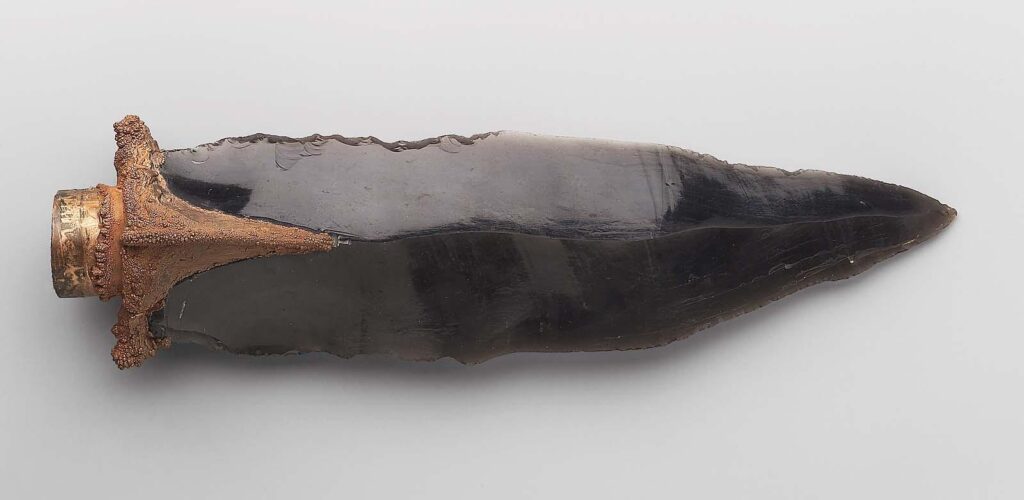
Obsidian core debitage, Mexico, ca. 1000–1500, Museum of Fine Art, Boston, MA, USA. Museum’s website.
For prehistoric peoples living near volcanic regions, obsidian became a valuable natural material. Because it fractures into extraordinarily sharp edges, it was ideal for crafting knives, spear points, scrapers, and other cutting tools. Archaeological evidence shows that humans began using obsidian very early, although the timing varies by region and archaeological site.
People learned to balance obsidian’s exceptional sharpness with its fragility, developing increasingly sophisticated methods to shape, flake, and polish the glass. As demand grew, obsidian became one of the earliest widely traded commodities, connecting communities and civilizations across remarkable distances. Today, archaeologists frequently use obsidian to trace ancient trade networks by identifying its geological origin through chemical analysis.
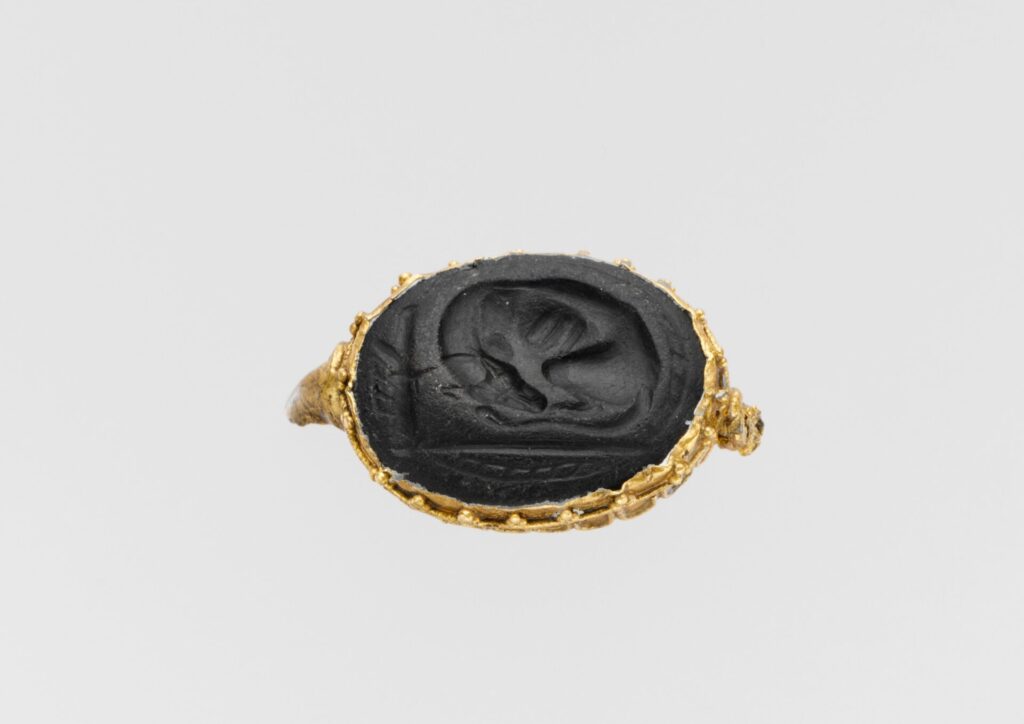
Greek Obsidian seal set in a gold ring, ca. 450–400 BCE, Metropolitan Museum of Art, New York, NY, USA. Museum’s website.
Throughout Mesoamerica, obsidian played a central role in daily life, trade, and religious practice. For civilizations such as the Maya and the Aztecs, the volcanic glass was closely associated with natural forces and spiritual beliefs. Skilled artisans transformed the fragile material into blades, ceremonial knives, sculptures, ornaments, and sacred objects using remarkably precise flaking techniques.
In later Aztec tradition, obsidian became especially associated with the deity Tezcatlipoca, whose name translates to “Smoking Mirror.” The Aztecs also fashioned polished obsidian into reflective mirrors used in ritual and ceremonial contexts.
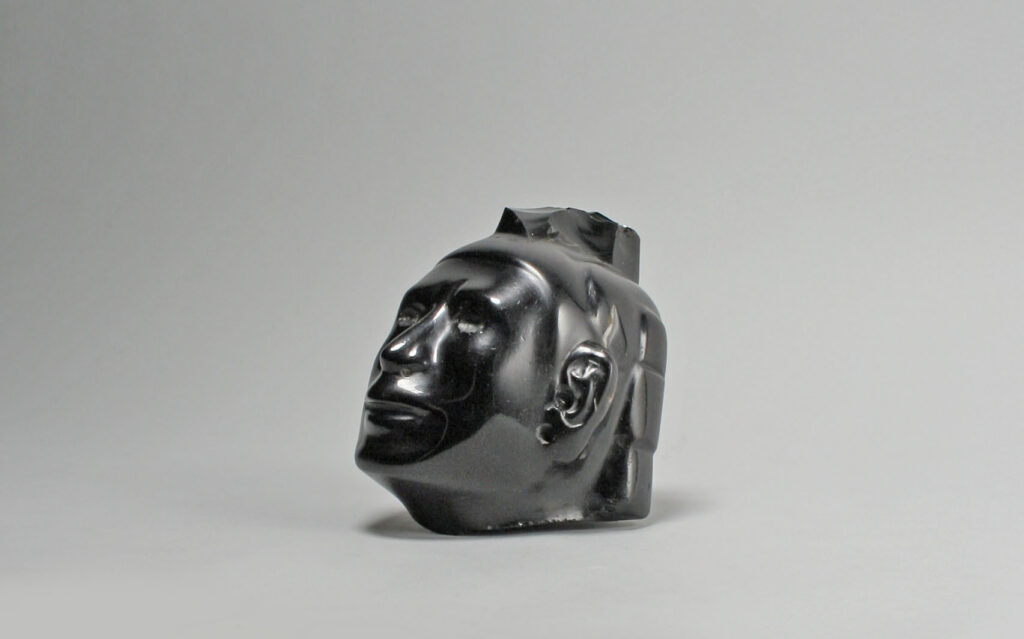
Head from Aztec figure, Xochipilli-Macuilxochitl, Mexico, ca. 15th–early 16th century CE, Metropolitan Museum of Art, New York, NY, USA. Museum’s website.
In ancient Egypt and throughout the Near East, obsidian was a symbol of wealth, prestige, and skilled craftsmanship. Because it was not naturally available in Egypt, it reached the Nile Valley through extensive trade networks. Recent geochemical studies suggest that many Egyptian obsidian artifacts originated in present-day Ethiopia, while others came from Anatolia and other neighboring regions.
Beginning in the fourth millennium BCE, Egyptian artisans designed small artifacts with obsidian. Those were blades, flakes, beads, pendants, and other luxury objects. Its highly reflective surface made it especially suitable for the pupils of inlaid eyes on coffins and funerary masks, a tradition that continued into the Roman period.
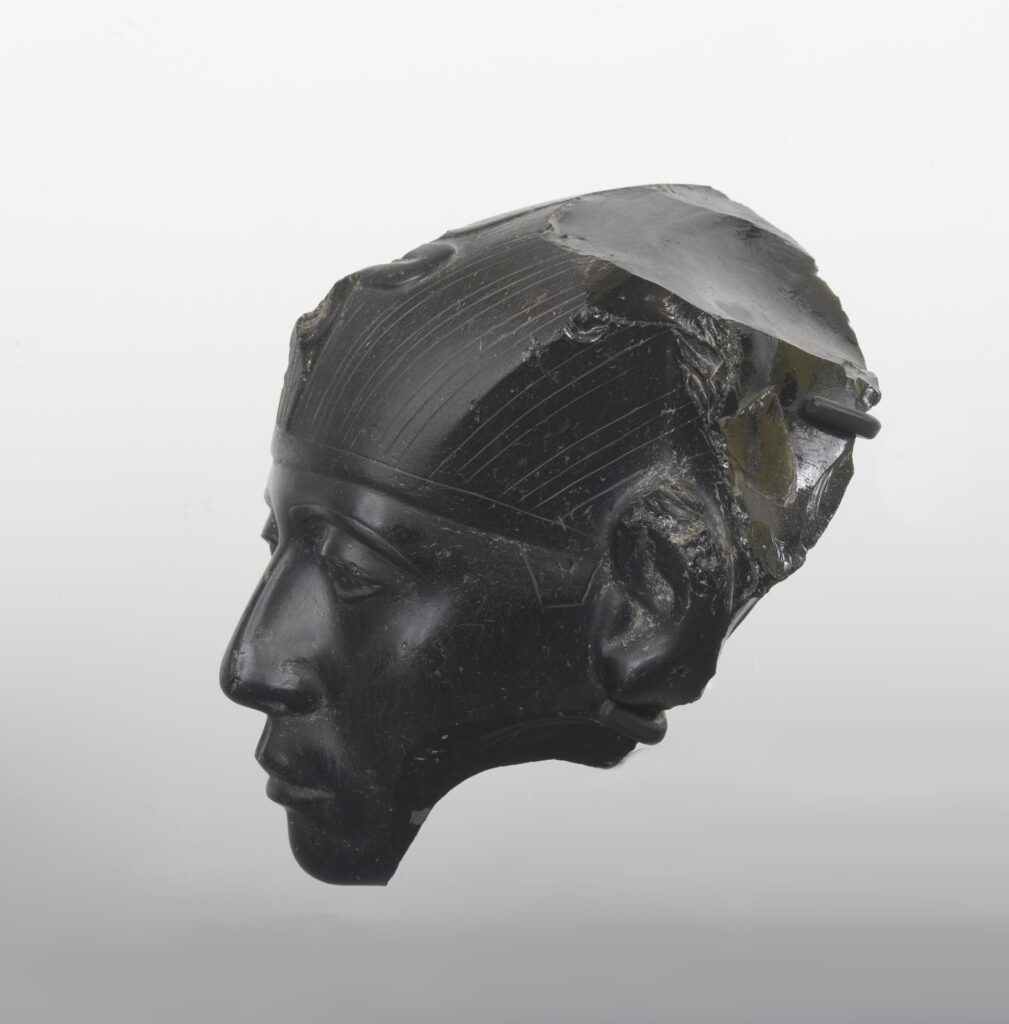
Head of King Senwosret III, Egypt, ca. 1860 BCE, Calouste Gulbenkian Museum, Lisbon, Portugal. Museum’s website.
Throughout the Hellenistic and Roman periods, obsidian remained an uncommon but highly prized luxury material. But Roman craftsmen still made it part of their decorative vessels, small sculptures, mirrors, and elaborate furniture fittings. Ancient writers, including Pliny the Elder, described its distinctive appearance and its use in luxury craftsmanship.
Although relatively few Roman obsidian objects survive today, those that do demonstrate exceptional artistry. Some were mounted or embellished with precious metals, underscoring its rarity and prestige among the Roman elite.
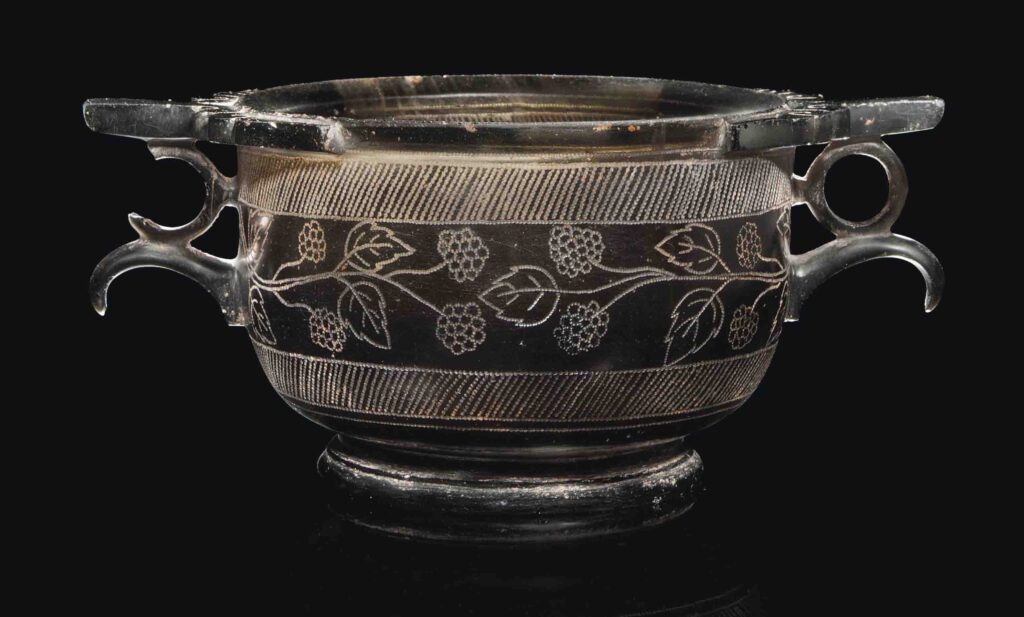
Roman obsidian skyphos, ca. 1st century BCE—1st century CE. Christie’s.
Human fascination with this remarkable volcanic glass did not end with the ancient world. Throughout the Renaissance and later centuries, artisans continued carving obsidian into cameos, seals, small sculptures, and decorative objects prized for their beauty and craftsmanship.
Today, obsidian remains a favorite rock among jewelers, sculptors, and designers. Contemporary artists continue to transform this ancient volcanic glass into distinctive jewelry, functional art, large-scale sculptures, and architectural installations, ensuring that a material first valued by prehistoric humans continues to inspire creativity thousands of years later.
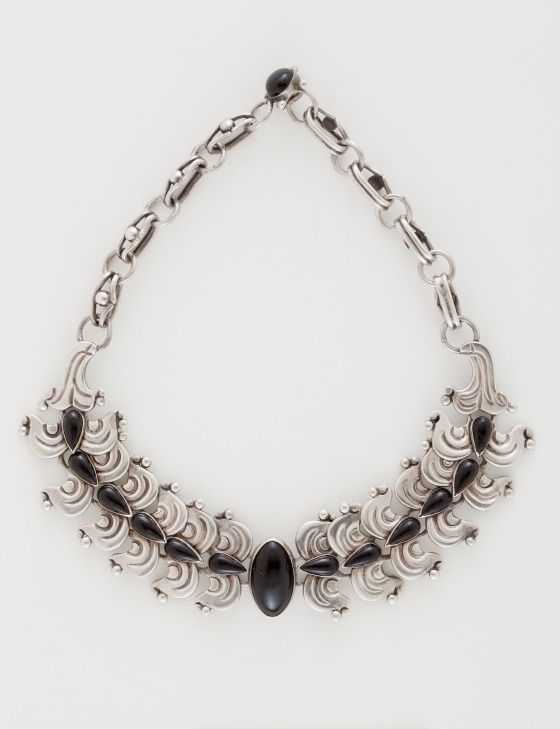
Héctor Aguilar, Feathers Necklace (Collar con plumas), ca. 1943–1948, Los Angeles County Museum of Art, Los Angeles, CA, USA. Museum’s website.
DailyArt Magazine needs your support. Every contribution, however big or small, is very valuable for our future. Thanks to it, we will be able to sustain and grow the Magazine. Thank you for your help!

Maya Tola is a Dallas-based attorney, with a zest for art history. A time traveler at heart, Maya often finds herself consumed in the contemplation of life in antiquity. She has been sharing her infectious enthusiasm for art and history since 2018 through her posts and articles for the DailyArt App and DailyArt Magazine. When she's not working or writing, you'll find Maya obsessing over plants, animals, and food (in no particular order).

Nestled in the plains of present-day Pakistan and northwest India lies one of the world’s most enigmatic ancient societies: the Indus Valley...
Maya M. Tola 28 August 2025
The Ishtar Gate, one of the most iconic remnants of Ancient Mesopotamia, stands as a testament to the grandeur of the cradle of civilization. This...
Maya M. Tola 24 July 2025
Like return claims in other Western countries, the Schøyen Collection case in Norway illustrates how viewpoints from the past still hold sway. With...
Guest Author 18 July 2023
The elusive Etruscans left behind a rich legacy of gold craftsmanship that was among the most advanced in the ancient Mediterranean world. While the...
Maya M. Tola 16 September 2026