


Masterpiece Story: Vase of Flowers by Jan Davidsz. de Heem
Vase of Flowers by Jan Davidsz. de Heem is a masterpiece of still-life painting and a remarkable example of the Dutch Golden Age. At first glance,...
James W Singer 22 November 2026
20 July 2025 min Read
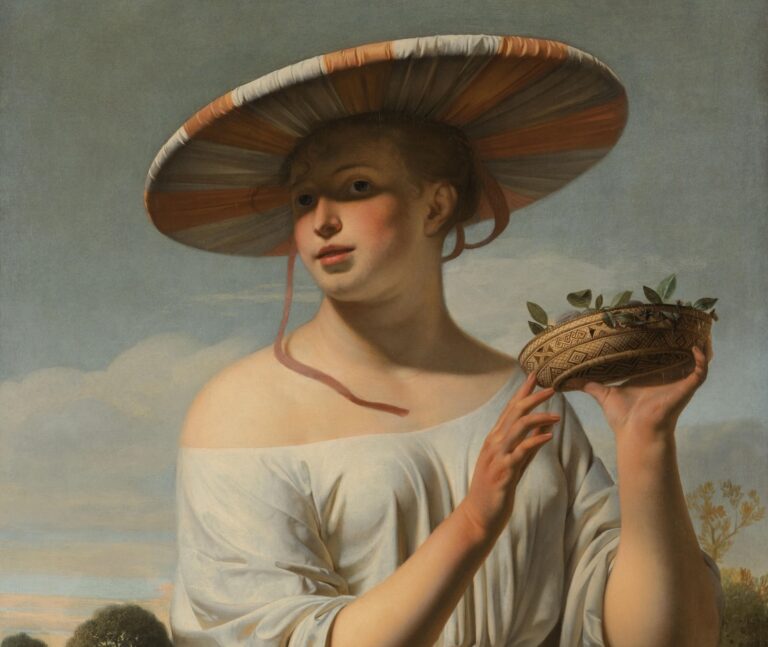
Caesar van Everdingen, Woman in a Large Hat, c. 1645–1650, Rijksmuseum, Amsterdam, Netherlands. Museum’s website. Detail.
Caesar van Everdingen’s Woman in a Large Hat is a captivating oil-on-linen painting that offers a fascinating glimpse into 17th-century Dutch Classicism and the intriguing stylistic choices of the artist. To mark DailyArt Magazine’s partnership with the Rijksmuseum, let’s take a closer look at this remarkable masterpiece.
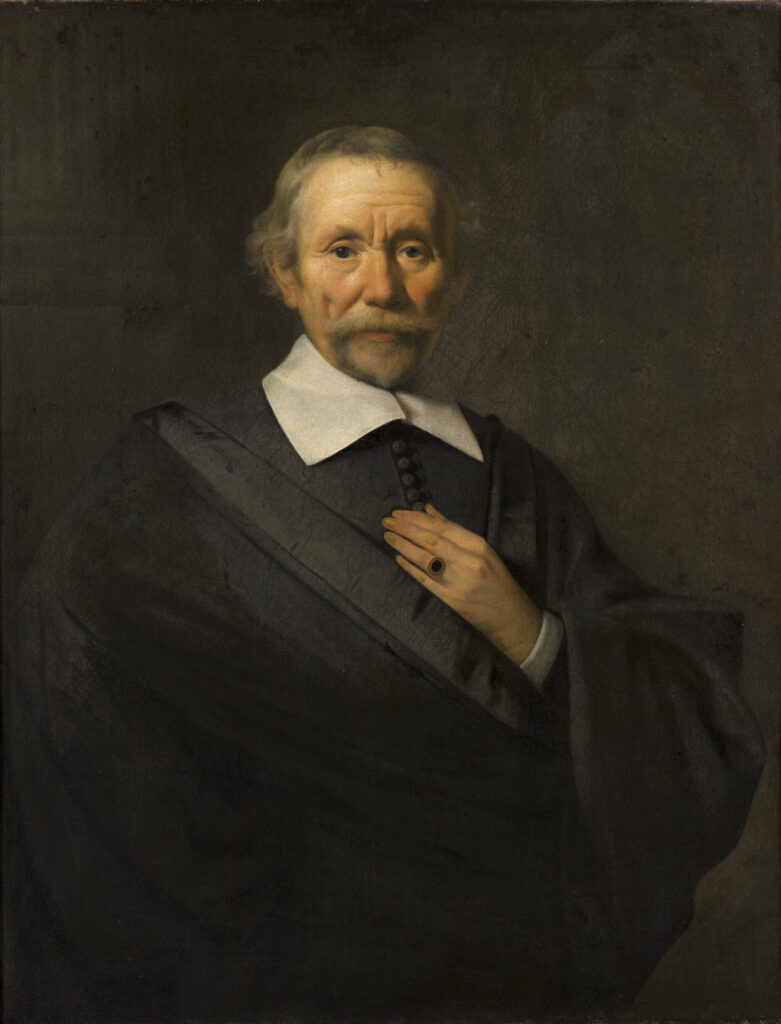
Caesar van Everdingen, Self-Portrait of Caesar Boetius van Everdingen, c. 1670, Stedelijk Museum Alkmaar, Alkmaar, Netherlands.
Caesar van Everdingen (1617–1678) was a Dutch painter who, thanks to Jacob van Campen, was significantly influenced by the classical art of Italy. This exposure shaped his distinctive style, characterized by a smooth brushstroke and an unusually bright color palette—standing in stark contrast to the darker tones favored by many of his contemporaries. In his works, Van Everdingen frequently explored allegorical themes.
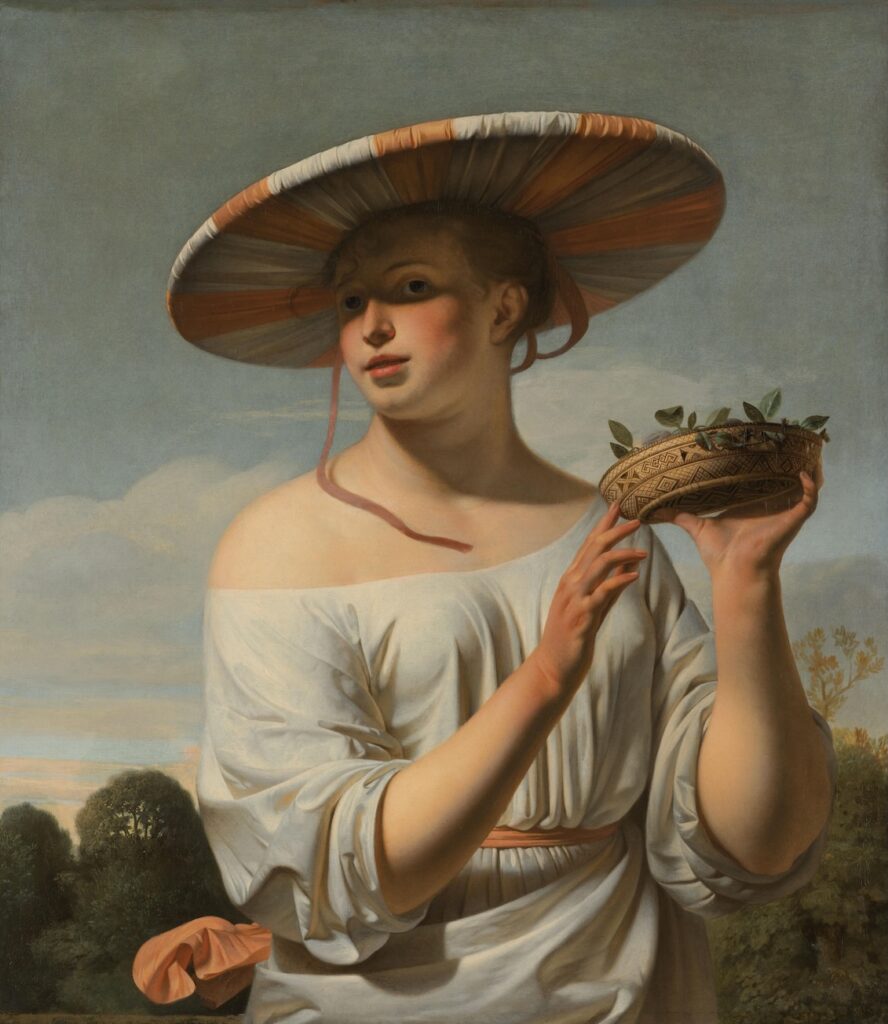
Caesar van Everdingen, Woman in a Large Hat, c. 1645–1650, Rijksmuseum, Amsterdam, Netherlands.
Woman in a Large Hat depicts a young woman against a light, partly cloudy sky, bathed in bright sunlight. Her wide-brimmed hat, woven from orange and white fabric strips, contributes to her elegant and feminine appearance. The scene clearly evokes a warm summer day, with the shadow cast by her hat adding to this impression.
Beyond its aesthetic appeal, the painting possesses an undeniable erotic meaning: Van Everdingen portrays the subject seductively and sensually, with the outline of her left nipple subtly visible through the satin fabric of her dress, and a loose pink ribbon from her hat resting on her bare shoulder. Furthermore, the basket of plums she offers with her left hand was a known symbol of lust and sexuality in that era. Her gaze is slyly directed towards the viewer.
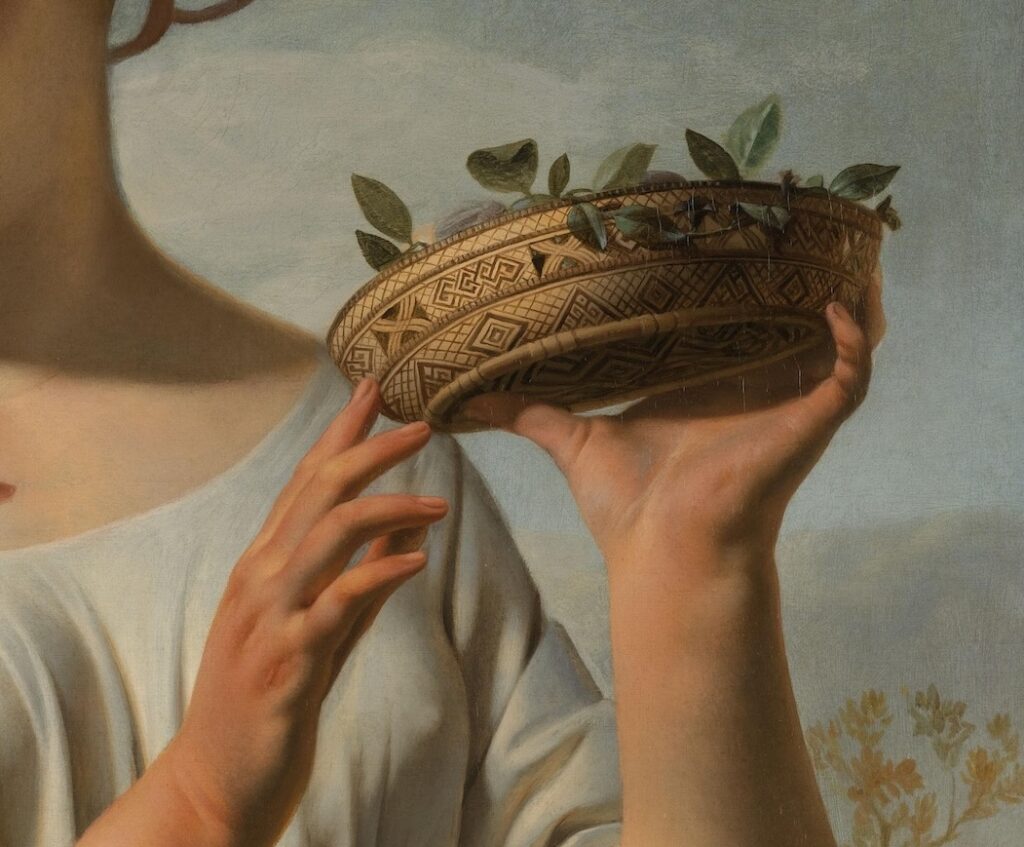
Caesar van Everdingen, Woman in a Large Hat, c. 1645–1650, Rijksmuseum, Amsterdam, Netherlands. Detail.
The painting’s unusual summery lightness is a particularly striking feature for Dutch painting in the 17th century. The artist’s use of a bright color palette became a hallmark of his style, differentiating him from other painters of the time. The lighting on the clothing, while not entirely realistic, creates the illusion of an inner glow through subtle color variations. Van Everdingen intentionally left parts of the gray underlayer visible by applying opaque paint loosely, barely touching the canvas with his brush. The softness of his brushstroke is another defining feature of his painting style.
Woman in a Large Hat also incorporates intriguing Oriental elements that were fashionable around 1645–1650, a period of global discovery, particularly for the Netherlands. The wide-brimmed hat, for example, was usually worn by Romani women and originated in Egypt. The fruit basket held by the woman may have originated from Brazil or West Africa, where similar baskets were woven.
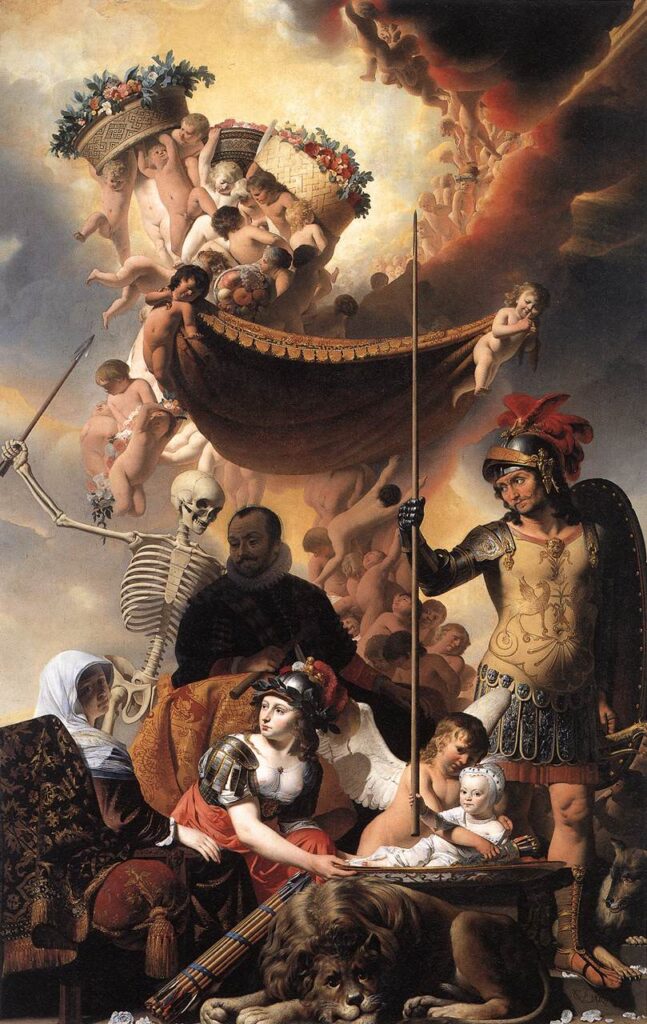
Caesar van Everdingen, Allegory of the Birth of Frederick Henry, Prince of Orange, c. 1650, Huis ten Bosch, The Hague, Netherlands.
These exotic attributes reflect the broader interest in distant lands during this period, and similar objects can be found in other contemporary paintings. Two similar baskets appear in Van Everdingen’s Allegory of the Birth of Frederick Henry, Prince of Orange.
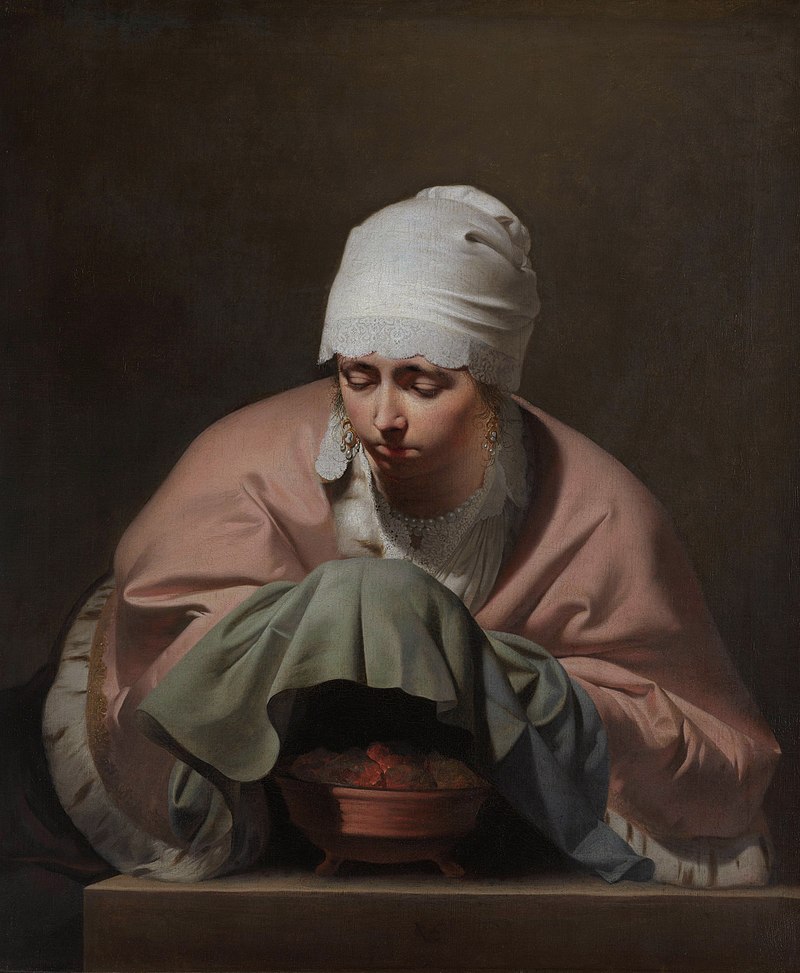
Caesar van Everdingen, A Young Woman Warming Her Hands over a Brazier: Allegory of Winter, c. 1644–1648, Rijksmuseum, Amsterdam, Netherlands.
It is plausible that Woman in a Large Hat is an allegory of summer, forming part of a larger series depicting the seasons. This theory is supported by the existence of a similar work, Allegory of Winter, painted in comparable dimensions, also by Van Everdingen.
Following Caesar van Everdingen’s death in 1678, this captivating piece was inherited by the artist’s wife, who is believed to have posed for the painting. Though unsigned, the painting was definitively attributed to Van Everdingen in 2009 by Paul Huys Janssen, a leading expert on the artist. This identification led to its acquisition by the Rijksmuseum for £1 million at a Sotheby’s auction.
Upon its arrival at the museum, the painting underwent extensive restoration due to structural damage. The Rijksmuseum’s atelier worked meticulously to revive the artwork’s original vibrant, sunny colors. While the sky could not be fully restored to its initial brilliance, the overall transformation is remarkable. This painting is now a major attraction at the Rijksmuseum—a testament to Van Everdingen’s artistry and the museum’s dedication to its preservation.
DailyArt Magazine needs your support. Every contribution, however big or small, is very valuable for our future. Thanks to it, we will be able to sustain and grow the Magazine. Thank you for your help!

Coffee-fueled writer, artist, and daydreamer.
Vase of Flowers by Jan Davidsz. de Heem is a masterpiece of still-life painting and a remarkable example of the Dutch Golden Age. At first glance,...
James W Singer 22 November 2026
Amrita Sher-Gil’s work has long been examined through the binaries of modernist and traditional, East and West. These debates have often...
Shivani Gupta 8 November 2026
Why would a powerful emperor place a spiritual leader above other rulers, including the King of England? Bichitr’s Jahangir Preferring a Sufi...
James W Singer 8 November 2026
Judith and Holofernes is a Caravaggio masterpiece that captures Biblical murder and drama. Rarely has death been captured so intensely and violently...
James W Singer 13 September 2026