

10 Paintings That Capture Coffee’s Cultural Impact
Few beverages have shaped culture quite like coffee. Artists across centuries have captured coffee in paintings, from intimate domestic moments to...
Elizabeth Provost 13 February 2026
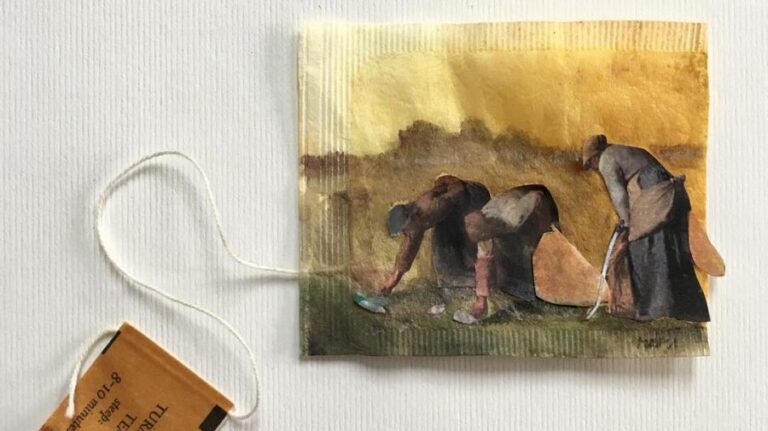
Ruby Silvious, The Gleaners Do Community Service, 2017. Instagram.
I’m sure we’ve all been told not to play with our food as we hide unappetizing peas under a sticky lump of mashed potato. And most parents have agonized over a treacherous mountain of sponge and butter icing as they attempt to recreate their child’s favorite TV character for a birthday party cake. Any art students out there struggled to recreate a lumpy pear or a rosy apple in a still life class? In those moments, we might not see food as art!
But think again. For millennia, food has appeared both as art and as inspiration for it. We need to look no further than Guiseppe Arcimboldo, whose whimsical portraits featured fruits, vegetables, and flowers.
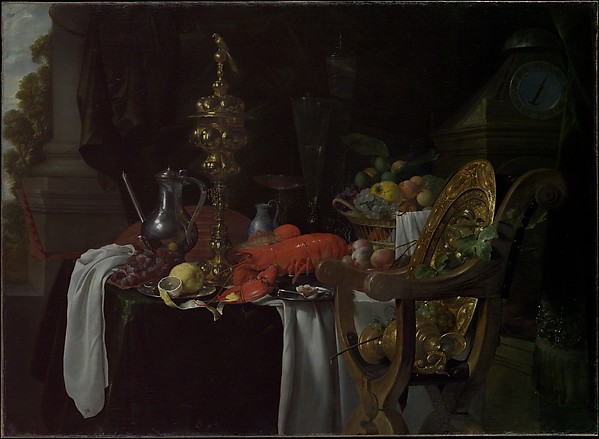
Think also of the gorgeous Dutch Golden Age still life, where dewy fruits and feathered carcasses or exotic seafood sit piled on glowing platters, exhibiting the wealth and status of their owner.
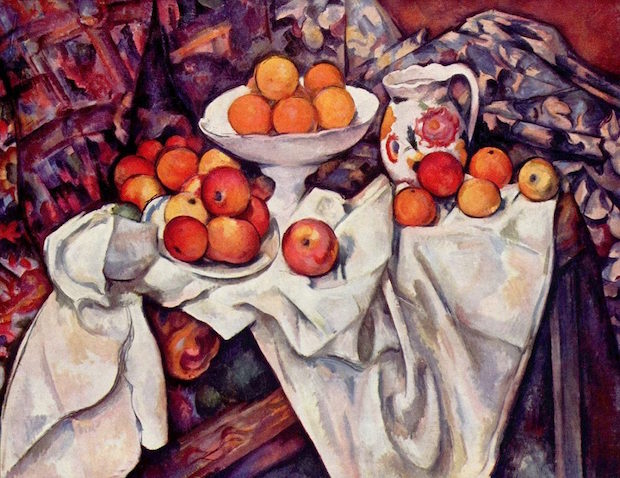
The Post-Impressionists were partial to a bit of fruitarian daubing—think of the chunky renderings of oranges by Cézanne, full of lively, vivid, colourful brushstrokes—you can almost smell the zest!
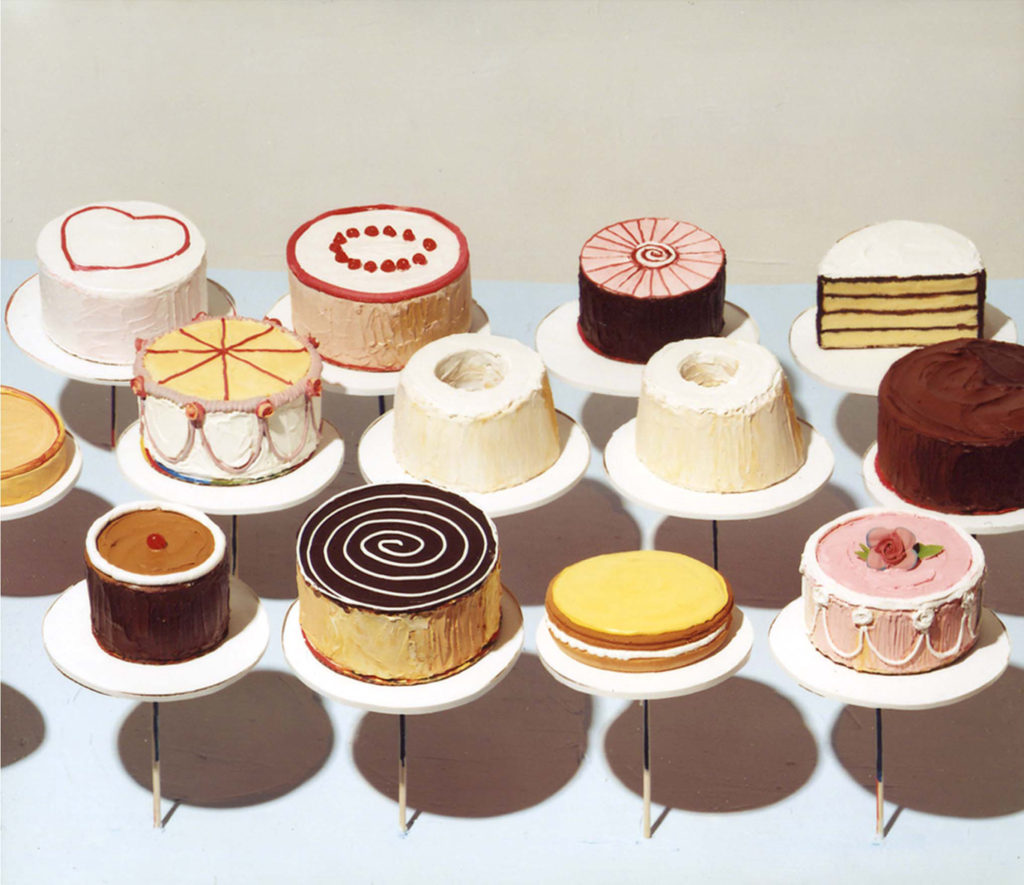
During the pop art era, food emerged as a social metaphor. We see Wayne Thiebaud painting rows of pies and cakes in bright pastel colors. And we all know the instantly recognizable Andy Warhol soup cans.
But all of this is representation. What about the food itself being the material?
As you sleepily spread luscious buttercup yellow butter onto your toast in the morning, reflect on the fact that the Buddhist practice of carving mandalas and deities from brightly tinted yak butter began way back in the 15th century.
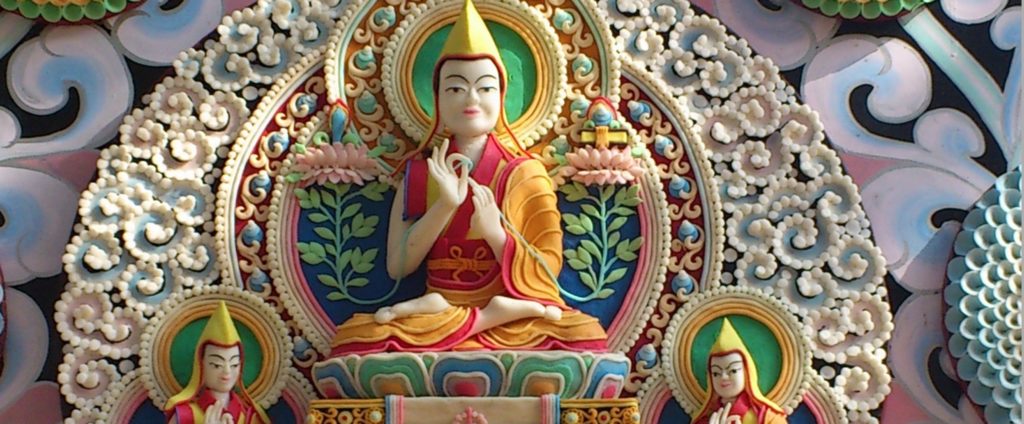
Butter sculptures were commonplace on the banquet tables of the Renaissance era. And they have been a fixture of American state fairs for decades. American sculptor Caroline Brooks used to say that butter has a “richness beyond alabaster”. She preferred it to clay, which dried and cracked more easily.
Butter does have one significant drawback as an artistic medium, however—it must be kept cold. In 1878, Brooks had planned to travel from New York to Paris with a butter sculpture for display in the International Exhibition. She waited in vain for a ship carrying enough ice to preserve her artfully carved statue containing 110lbs of butter and arrived in France too late to join the exhibition.

Staying in the dairy (you can tell I come from a farming region), Swiss-German artist Dieter Roth made a piece called Staple Cheese (A Race). The title is a pun on “steeplechase” horse racing. In 1970, in a Los Angeles gallery, he filled 37 suitcases with cheese and pressed other cheeses onto the walls. The idea was that they would drip, or “race”, toward the floor. A few days after the exhibition opened, it started to stink. The gallery was overrun with maggots and flies, and public health inspectors threatened to close it down. The artist declared that the insects were, in fact, his “true” audience and collected some of the dead flies, which he kept in a jar.
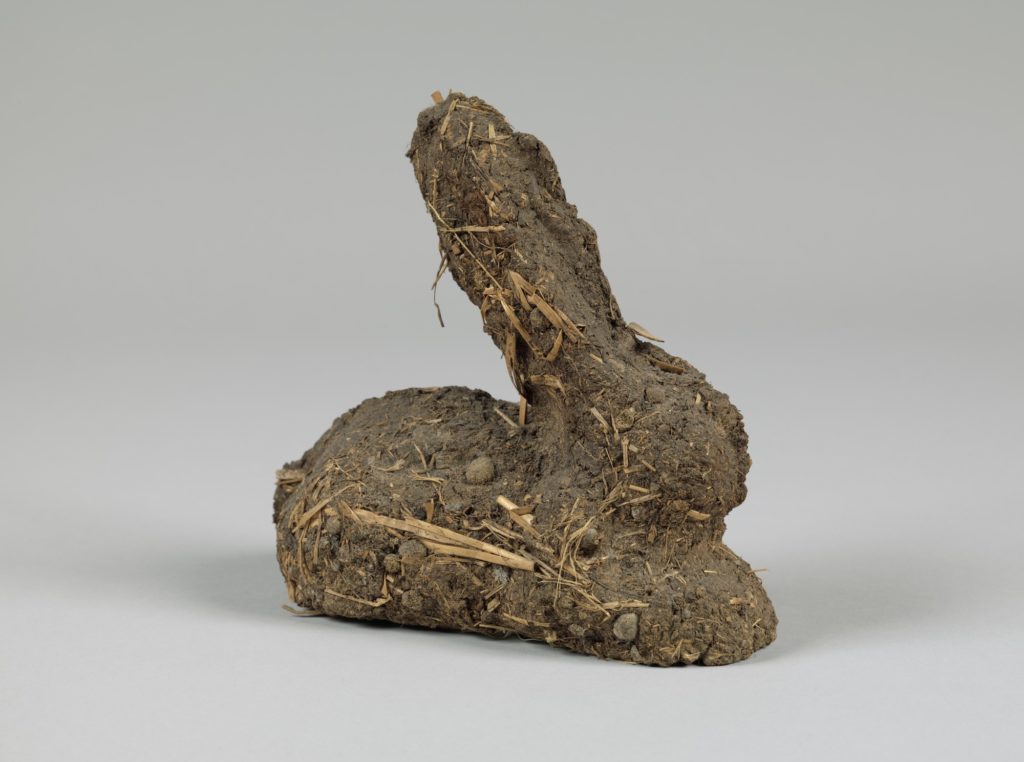
Roth used many kinds of organic, non-traditional materials in his works. This “chocolate” bunny is definitely not edible; however, made out of straw and rabbit poo.
Moving swiftly back to the seriously edible, Jason Mecier’s Kevin Bacon portrait is, of course, made out of bacon. And Ruby Silvious creates miniature portraits re-imagining classic art on used teabags. A tiny Rembrandt holds selfie sticks, and Velázquez orders a takeaway. See her The Gleaners Do Community Service image featured at the start of this article.
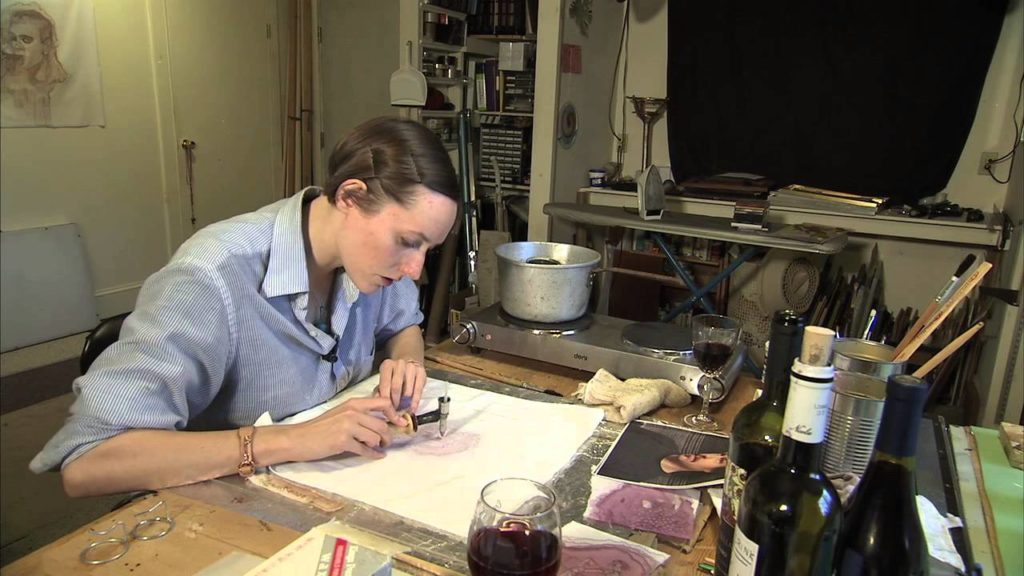
Wine stains can ruin a good tablecloth, but Amelia Fais Harnas deliberately dyes her cotton fabrics with red wine to create detailed portraits.
On a more sober note, Karl Brendel was an outsider artist diagnosed with schizophrenia who claimed to be Jesus Christ. His first artistic expression was in 1912 when he began modelling obscene figures out of chewed bread. Sadly none of them survived. These food-based Kopffüßers incensed the leaders of Nazi Germany, who compiled lists of “degenerate” art which they sought to destroy.
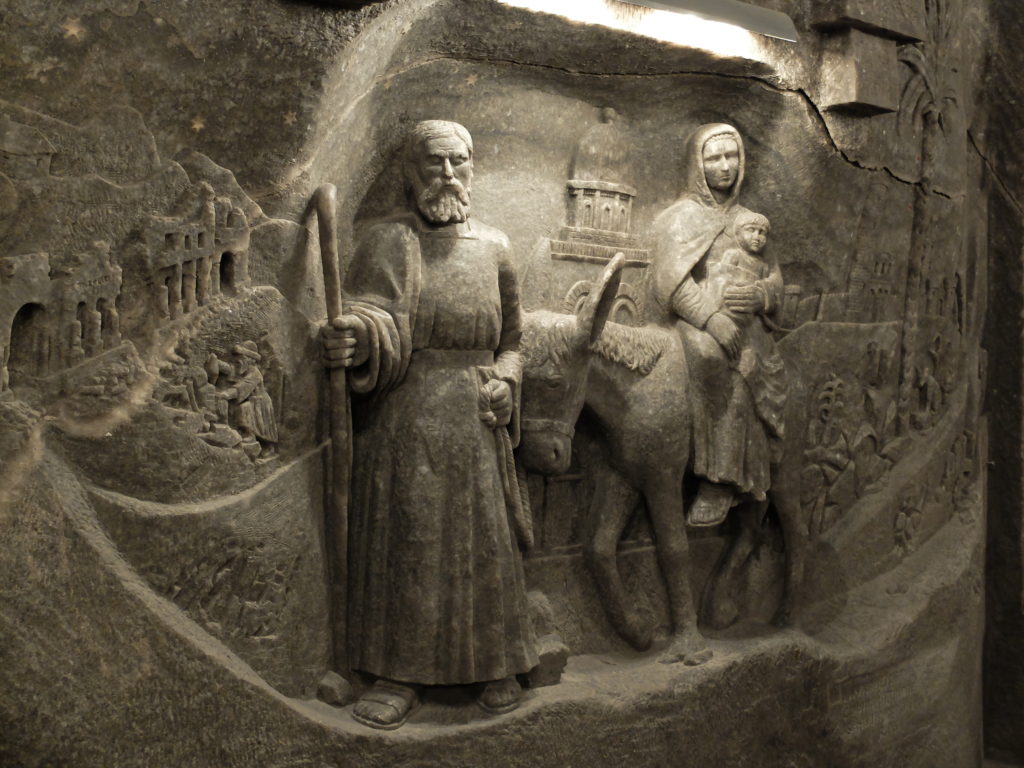
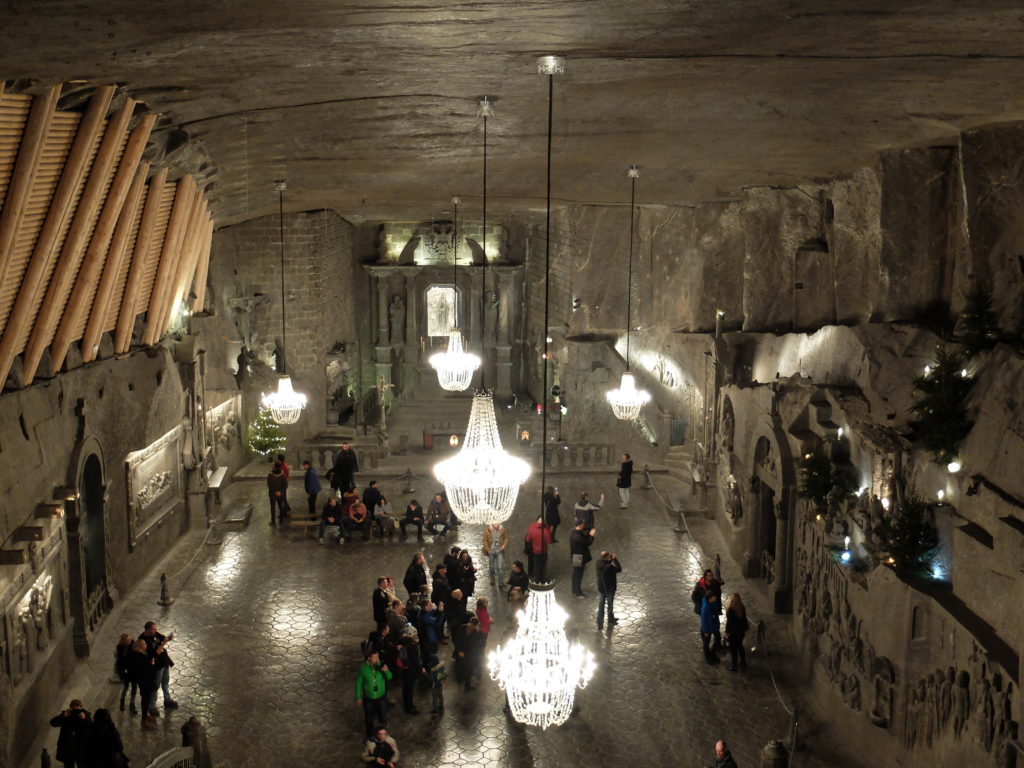
And finally, a little seasoning spices up any meal. So here is an image from the Polish salt mines of Wieliczka, near Kraków. These reliefs, held in a cavernous underground salt mine, are carved entirely out of rock salt. And yes, I did lick the walls.
DailyArt Magazine needs your support. Every contribution, however big or small, is very valuable for our future. Thanks to it, we will be able to sustain and grow the Magazine. Thank you for your help!

Candy's remote, rain-soaked farmhouse clings to a steep-sided valley in rural Wales. She raises cats, chickens, and children with varying degrees of success. Art, literature, and Lakrids licorice save her sanity on a daily basis.

Antonia Chela is an avid art history fan, always seeking to know more about the wonderful world of art! She is a student of museum studies, and she is interested in learning about all aspects of the art world, current, past and future.
Few beverages have shaped culture quite like coffee. Artists across centuries have captured coffee in paintings, from intimate domestic moments to...
Elizabeth Provost 13 February 2026
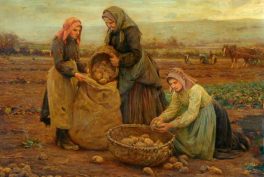
Do you prefer your potatoes in a landscape or in a still life or in a stew? Come with me on a tour of the humble potato in art.
Candy Bedworth 9 February 2026
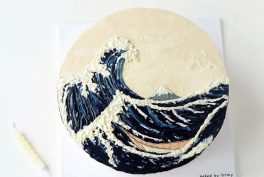
Birthday cakes are an established tradition for many. Baking in itself is an art – a delicious one. So why have a cake that is only delicious? Make...
Vithória Konzen Dill 21 July 2026
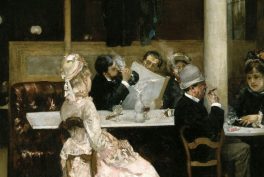
Is there something more iconic for Paris than its bistros (after the Eiffel Tower, of course)? Let’s have a closer look at the artistic...
Camilla de Laurentis 21 April 2026