
Masterpiece Story: Judith and Holofernes by Caravaggio
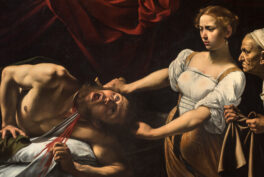
Judith and Holofernes is a Caravaggio masterpiece that captures Biblical murder and drama. Rarely has death been captured so intensely and violently...
James W Singer 13 September 2026
1 May 2026 min Read
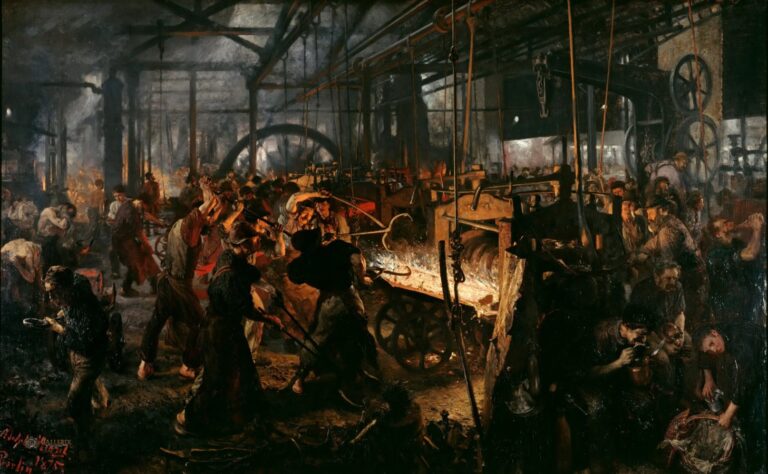
Adolph Menzel, The Iron Rolling Mill (Modern Cyclopes), 1872-1875, Alte Nationalgalerie, Staatliche Museen, Berlin, Germany.
The 19th century, the age of steel and steam, witnessed not only the development of the industry but also the new themes in painting. Now, simple workers have found their place next to mythological heroes and saints, and you might know them from Gustave Courbet’s and Jean-François Millet’s works. Yet one of the most iconic depictions of physical labor in art history is The Iron Rolling Mill painted by Adolph Menzel.
Adolph Menzel (1815-1905) was one of the two most prominent German painters of the 19th century (the other one is obviously Caspar David Friedrich). He was a Realist known for drawings, etchings, and paintings. Menzel was born in Breslau, Silesia but as a 15-year-old he moved to Berlin where he studied briefly at the Berlin Academy of Art. During the early years of his sojourn in the capital, he produced mostly drawings and etchings, including a series on the works of Frederick the Great, Illustrationen zu den Werken Friedrichs des Grossen (1843-1849).
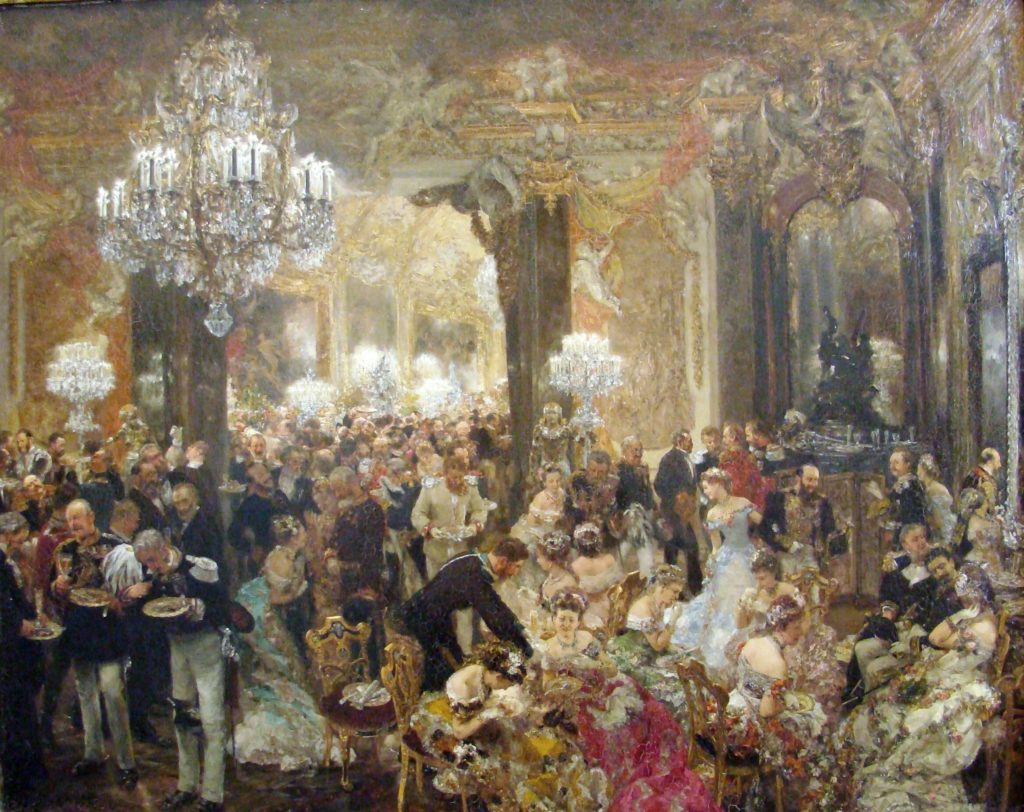
During that time Menzel started studying painting on his own and soon created a variety of works, mostly scenes of everyday life. Among them The Market-place at Verona, In the Tuileries, The Ball Supper, and At Confession. His paintings demonstrated keen observation and honest workmanship and focused on contemporary people shown during various everyday life situations. His works were appreciated not only by Otto von Bismarck and King William I but also by Edgar Degas who admired and copied his work, calling him “the greatest living master.”
The Iron Rolling Mill, also called Modern Cyclopes, is one of Menzel’s most renowned paintings. It’s a group scene in an industrial setting: dozens of workers are shown during the tough factory work, they are gathered around an open hearth of a furnace in the factory in Königshütte (today’s Chorzów), in Upper Silesia. Menzel traveled there in 1872 to familiarize himself with work conditions and to make some preparatory sketches. The result is overwhelming – it’s one of those theatrical paintings in which one can admire the general composition of the whole scene but can also look out for details and particular parts with their own dynamics and interactions.
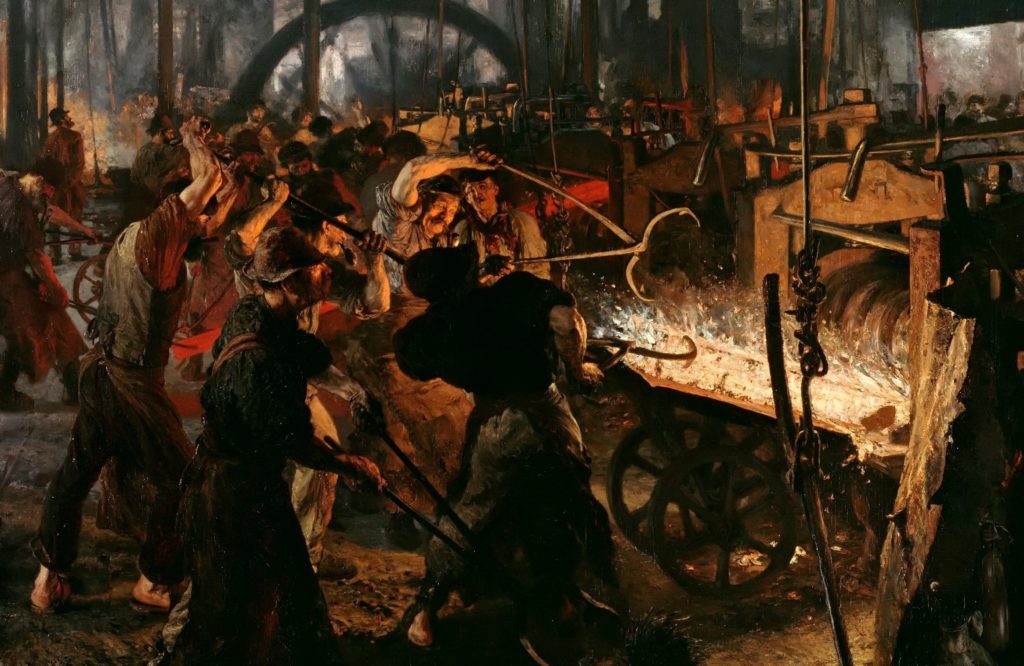
In the center of the composition, Menzel placed a group of workers responsible for the crucial task of rolling the iron. Thanks to the play of light and shadow created by the artist, the viewer can almost feel the heat of the piping hot iron. The way in which the characters are shown, their positions and their tensed muscles, express their hard work.
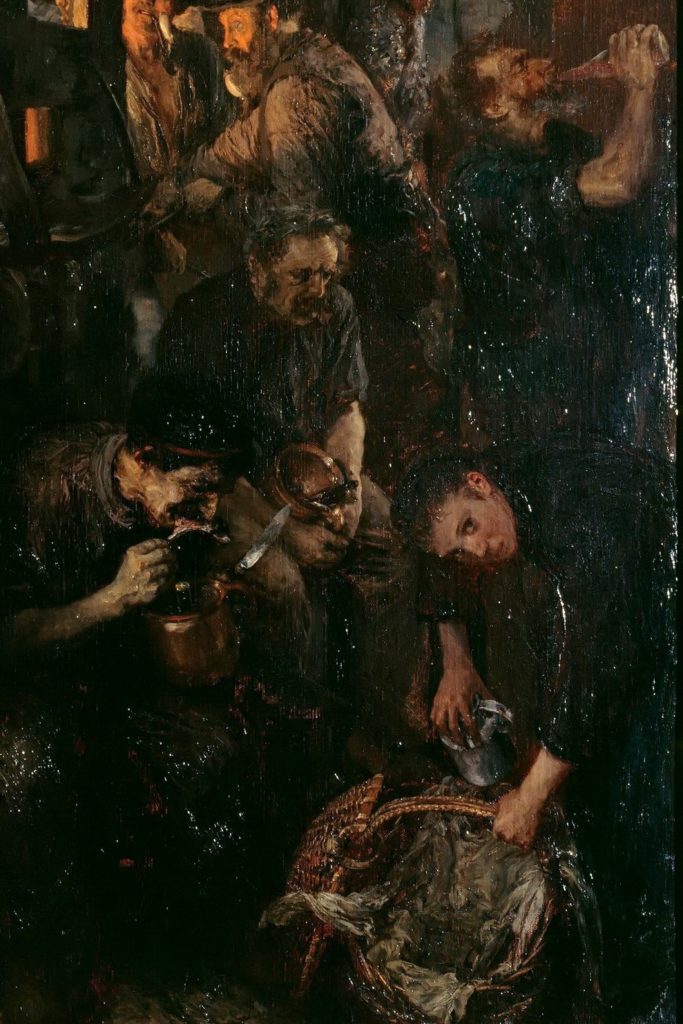
On the right, we can see a group of people having a break from work. The tired men have a few minutes to drink and eat some simple food they brought with them to the factory. Most of the characters are focused on their own activities, however, one young boy is looking straight at the viewer and he gives quite a heavy, pitiful look. Yet Menzel’s main concern was not a social critique, but the artistic challenge of portraying the production process and the various groups of people involved in it.
DailyArt Magazine needs your support. Every contribution, however big or small, is very valuable for our future. Thanks to it, we will be able to sustain and grow the Magazine. Thank you for your help!

DailyArt Magazine Editor-in-Chief holding a PhD in art history; editor, writer, stylist, and adamant traveler almost constantly on the move.
Judith and Holofernes is a Caravaggio masterpiece that captures Biblical murder and drama. Rarely has death been captured so intensely and violently...
James W Singer 13 September 2026
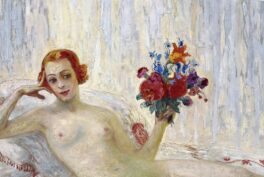
Explore an astonishing 1915 nude self portrait by American modernist painter Florine Stettheimer.
Candy Bedworth 21 September 2026
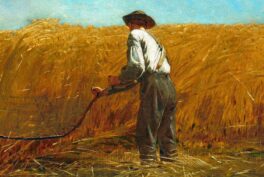
Winslow Homer (1836–1910) was one of the leading American Realist painters. His painting The Veteran in a New Field is a masterpiece of late...
James W Singer 30 August 2026
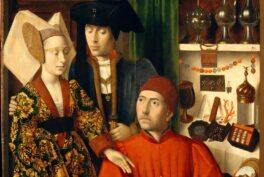
At first glance, A Goldsmith in His Shop (1449) appears to depict an ordinary visit to a jeweller. Yet Petrus Christus transformed an ordinary...
Shivani Gupta 23 August 2026