

Ellora: 34 Caves Reveal Three Religions Side by Side in Ancient India
Carved into a nearly 1.2-mile stretch of basalt in Maharashtra, India, the Ellora Caves are an astonishing rock-cut architectural achievement and...
Maya M. Tola 14 September 2026
16 November 2026 min Read
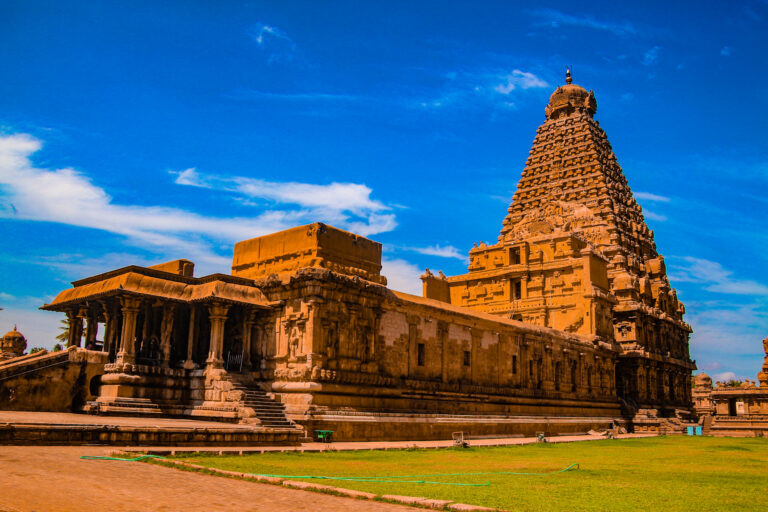
Brihadeeswarar Temple, Thanjavur, Tamil Nadu, India. Photograph by Anupam Mukherjee via Wikimedia Commons (CC BY-SA 4.0).
Mount Meru, known across various traditions by various names such as Sumeru, Sineru, or Mahāmeru, is the legendary golden mountain standing at the center of the universe. In Hindu, Buddhist, and Jain cosmologies, it functions as an axis mundi, the cosmic center connecting the earthly realm with the celestial worlds and beyond.
While it lacks a single verified physical location, ancient texts and traditions have associated it with the Himalayas, Mount Kailash, or the Pamir Mountains of Central Asia, though these associations remain highly speculative. Meru is regarded as the abode of the gods and a cosmic axis around which celestial order is organized.
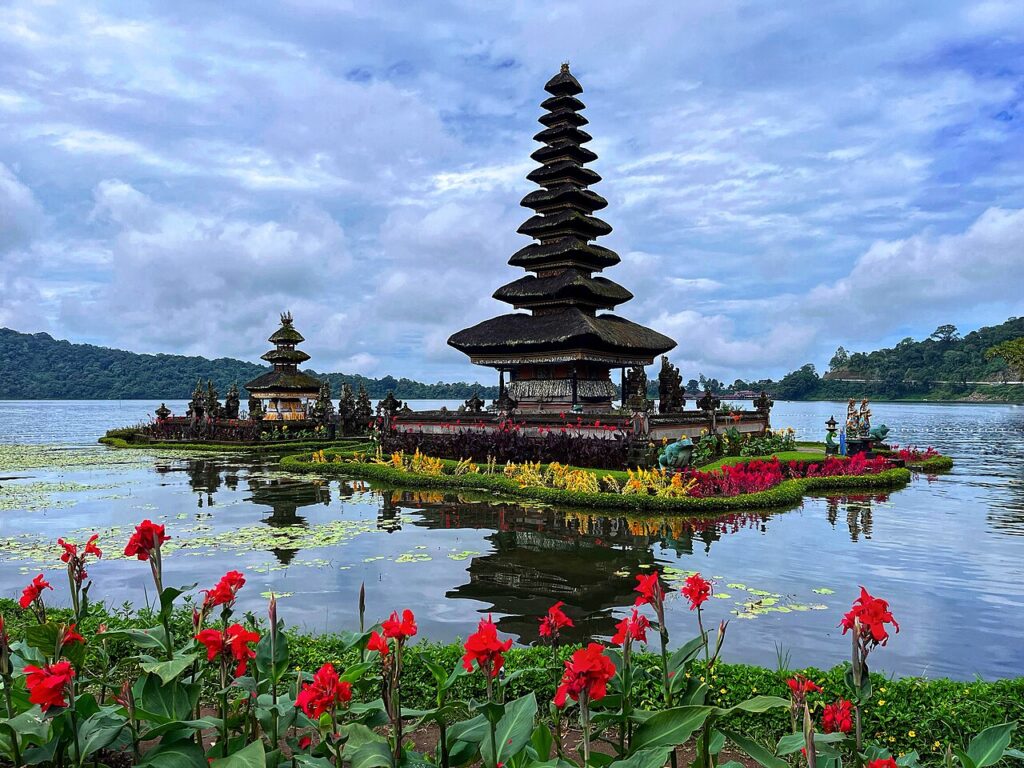
Pura Ulun Danu Bratan, Bali, Indonesia. Photograph by LukeTriton via Wikimedia Commons.
In Hindu cosmology, Mount Meru is a towering peak surrounded by concentric continents and oceans, with divine beings inhabiting its slopes, the city of Brahma at its summit, and the cities of the guardian deities surrounding it. Hindu builders and temple traditions later expressed the idea of the cosmic mountain through architecture, although the precise symbolism vary considerably by region, period, and local architectural traditions.
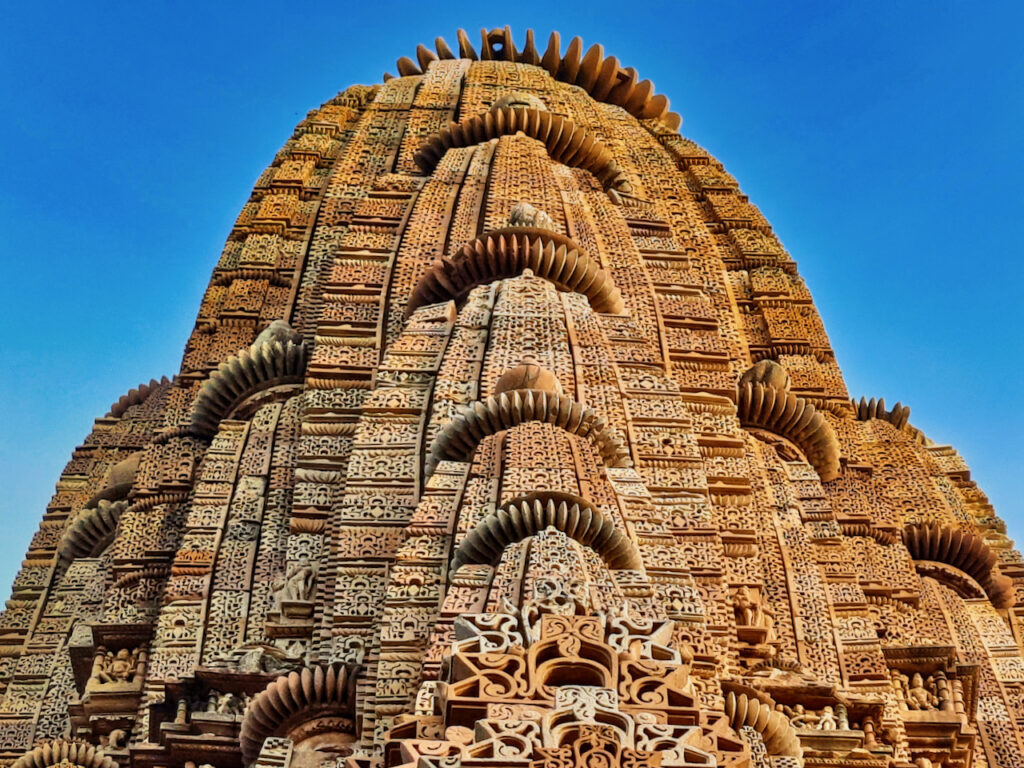
Kandariya Mahadev Temple, Khajuraho, Madhya Pradesh, India. Photograph by Ms Sarah Welch via Wikimedia Commons. Detail.
In North Indian architectural traditions, the śikhara rises directly above the inner sanctum. Its mountain-like silhouette is often clustered with smaller miniature spires, creating a visual composition that evokes a central sacred mountain surrounded by lesser peaks. In South India, the vimāna above the sanctum often takes the form of a stepped pyramid, its progressively rising tiers reminiscent of a mountain.
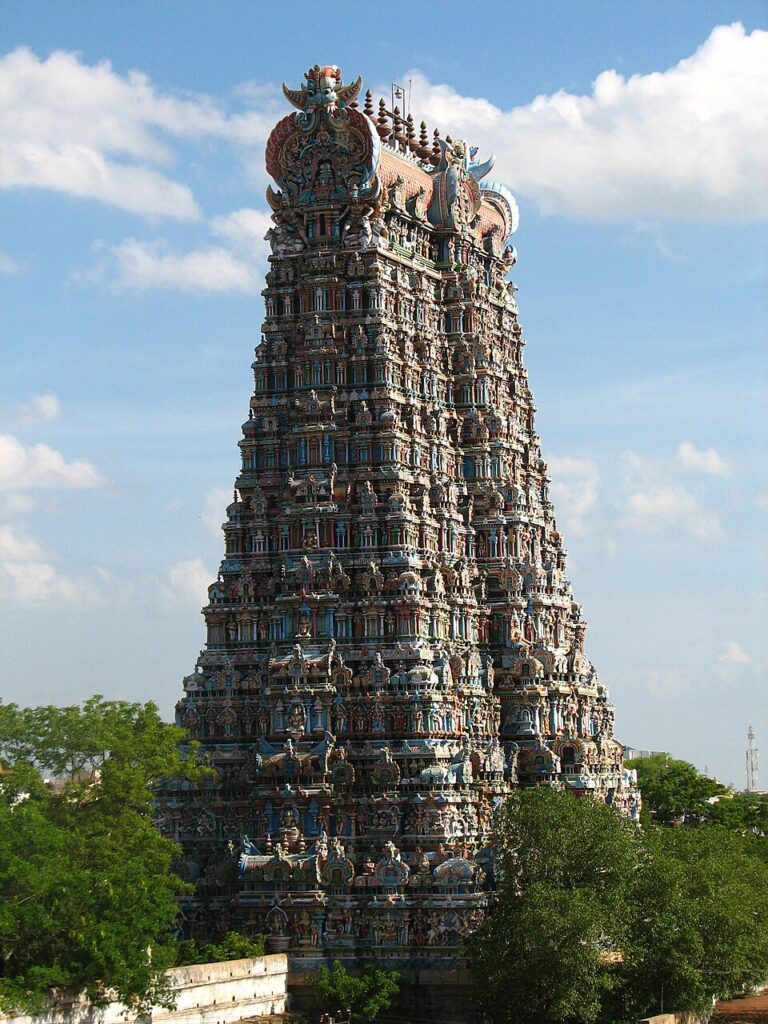
Meenakshi Temple Gopuram, Madurai, Tamil Nadu, India. Photograph by mckaysavage via Wikimedia Commons.
It should be noted that the Mount Meru symbolism is not universal for every Hindu temple. Hindu traditions, including temple architecture, lack unified principles. Temple traditions and symbolism are no exception. Temples use different architectural components and terminology that have varying symbolic meanings. Nevertheless, the vertical progression of the temple, from its earthly foundation toward its elevated superstructure and finial, has often been understood in cosmological terms, with the temple functioning as a sacred meeting point between the human and divine realms.
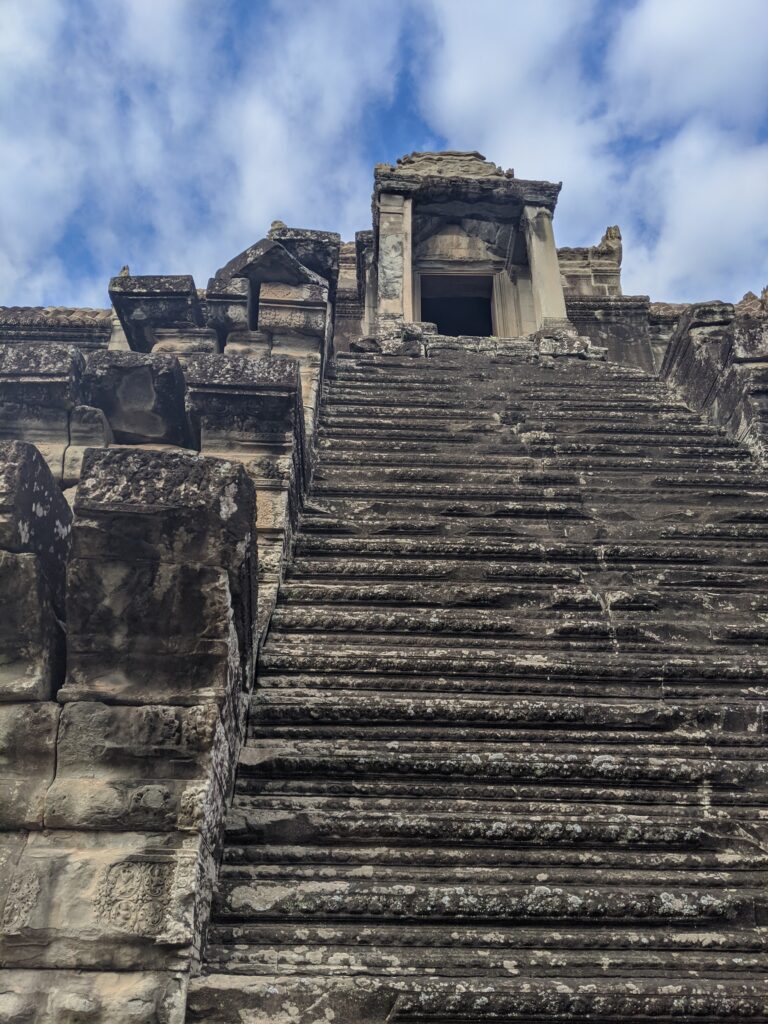
Angkor Wat, Siem Reap, Cambodia. Photograph by the author. Detail.
In Buddhist tradition, Mount Meru stands at the center of the world, surrounded by seven concentric mountain ranges separated by seas. At its summit lies Trāyastriṃśa, the Heaven of the Thirty-Three, where the Buddha is said to have ascended to teach his mother. This cosmic mountain took on diverse architectural forms as Buddhism spread across Asia.
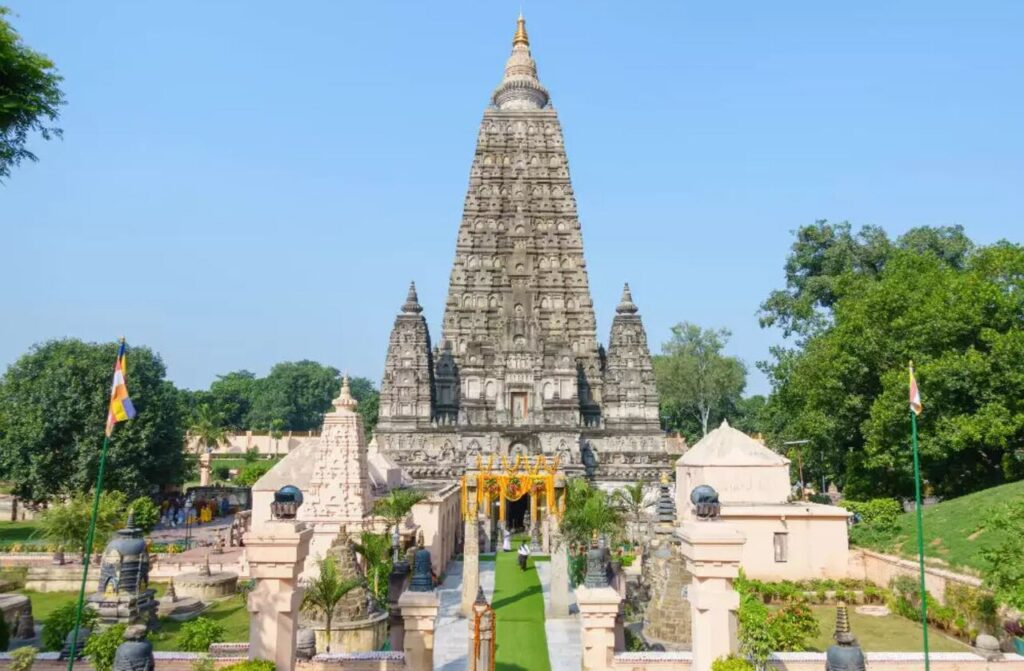
Mahabodhi Temple, Bodh Gaya, India. Photograph by WeeKeeEditor via Wikimedia Commons.
The Mahabodhi Temple in India features a tall, straight-sided pyramidal tower above the sanctum. In Southeast Asia, the central prang of Wat Arun in Thailand has been interpreted as Mount Meru. The Hsinbyume Pagoda in Myanmar uses seven concentric terraces to represent the seven mountain ranges surrounding Meru. In China, Buddhist images and architectural works may rest upon bases known as Sumeru Thrones, whose form symbolizes Mount Meru and its cosmic centrality.
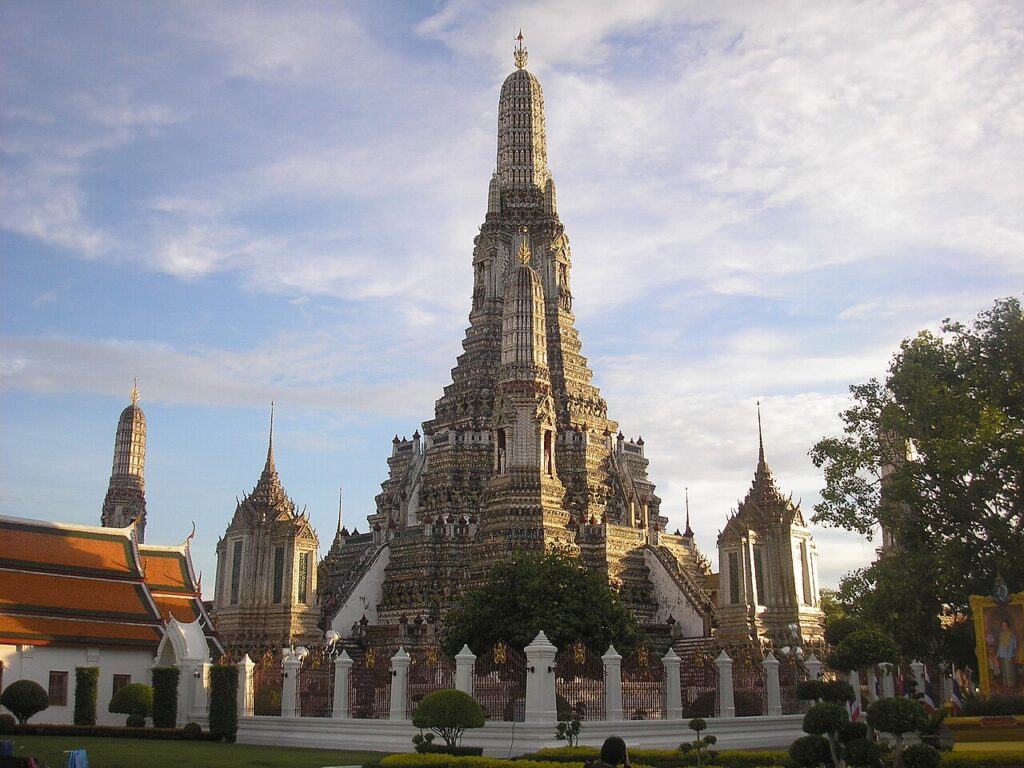
Wat Arun, Bangkok, Thailand. Photograph by Dominik Tefert via Wikimedia Commons.
In Jain tradition, Mount Meru is the sacred mountain at the center of Jambūdvīpa and the axis of the Jain universe. According to Jain tradition, Indra carries every newly born Tirthankara (a spiritual teacher) to Mount Meru, where the Tirthankara receives a ceremonial bath.
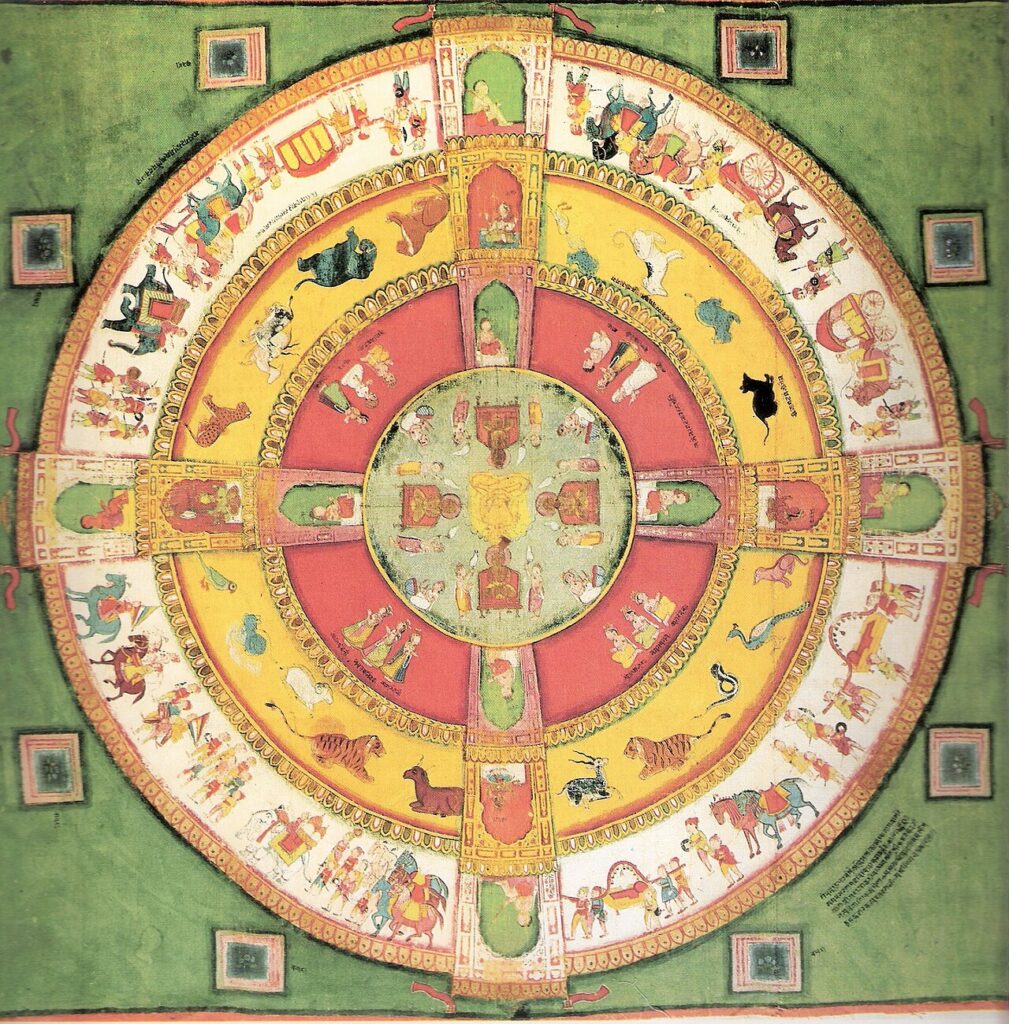
Samavasarana (Assembly Hall) of a Jain Tirthankara, ca 1800 CE. Wikimedia Commons.
Jain art and architecture depict Mount Meru through vivid spatial models, including three-dimensional models of Mount Meru, crafted from materials such as marble, brass, and stone. Jain art also depicts the samavasaraṇa, a divine preaching assembly in which a Tirthankara teaches after attaining spiritual liberation. These representations are often organized as concentric, circular spaces.
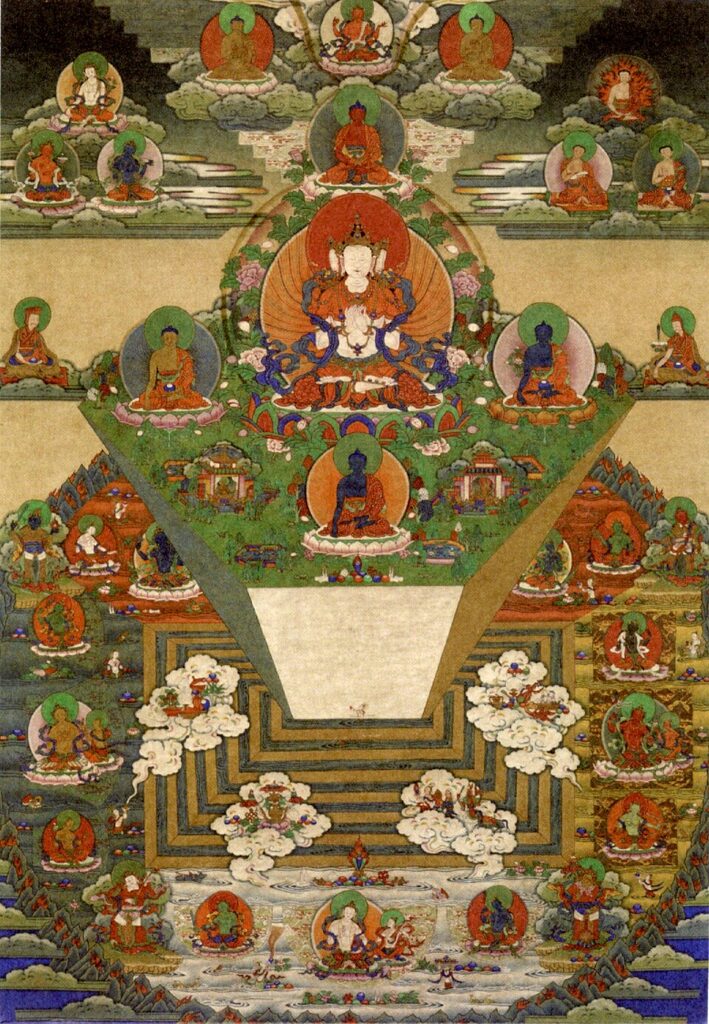
Bhutanese Thanka, Mt. Meru and the Buddhist Universe, Trongsa Dzong, Trongsa, Bhutan, ca. 19th century. Wikimedia Commons.
By transforming a mythic peak into a tangible form, architects and artists materialized this enduring cosmological idea of the axis mundi. Across Asia, Mount Meru became an important source of sacred architectural, artistic, and religious imagery. Whether rendered as a curvilinear temple spire in North India, a stepped vimāna in South India, a monumental prang in Thailand, a terraced pagoda in Myanmar, or even in a three-dimensional cosmological model in Jain art, the mountain offered a powerful visual language for expressing the relationship between the earthly yearning for divine realms.
DailyArt Magazine needs your support. Every contribution, however big or small, is very valuable for our future. Thanks to it, we will be able to sustain and grow the Magazine. Thank you for your help!

Maya Tola is a Dallas-based attorney, with a zest for art history. A time traveler at heart, Maya often finds herself consumed in the contemplation of life in antiquity. She has been sharing her infectious enthusiasm for art and history since 2018 through her posts and articles for the DailyArt App and DailyArt Magazine. When she's not working or writing, you'll find Maya obsessing over plants, animals, and food (in no particular order).

Carved into a nearly 1.2-mile stretch of basalt in Maharashtra, India, the Ellora Caves are an astonishing rock-cut architectural achievement and...
Maya M. Tola 14 September 2026
Carved into a nearly 250-foot-wide (75 m) cliff in the Aurangabad district of Maharashtra, India, the Ajanta Caves are renowned as among the finest...
Maya M. Tola 24 September 2026
When we talk about the beautiful sights of Paris, many first think of the obvious ones—the Eiffel Tower, the Louvre Museum, and the Notre-Dame...
Nikolina Konjevod 15 March 2026
American cities are renowned for their many architectural landmarks, featuring ornate domes, columns, and sculpted façades. Less widely recognized,...
Maya M. Tola 4 August 2025