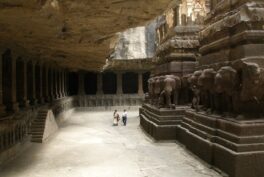





Ellora: 34 Caves Reveal Three Religions Side by Side in Ancient India
Carved into a nearly 1.2-mile stretch of basalt in Maharashtra, India, the Ellora Caves are an astonishing rock-cut architectural achievement and...
Maya M. Tola 14 September 2026
24 September 2026 min Read
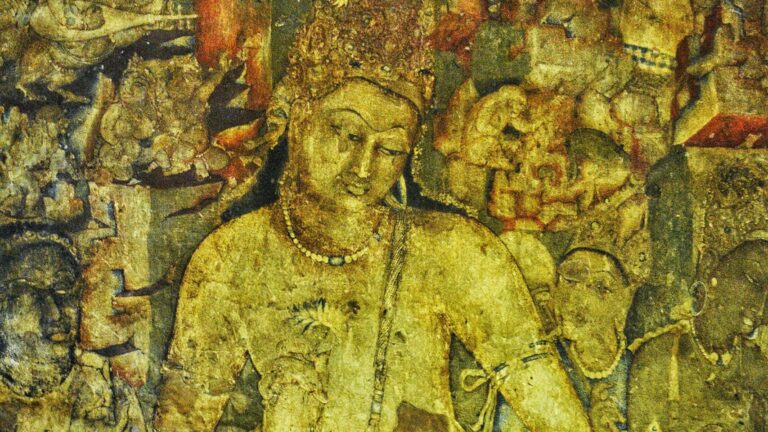
Painting of Bodhisattva Padmapani, Cave 1, Ajanta Caves, Maharashtra, India. Photograph by Abhideo21 via Wikimedia Commons (CC-BY-SA-4.0). Detail.
Carved into a nearly 250-foot-wide (75 m) cliff in the Aurangabad district of Maharashtra, India, the Ajanta Caves are renowned as among the finest surviving examples of Indian art. This site is recognized as a UNESCO World Heritage Site and universally celebrated as masterpieces of early Buddhist religious art.
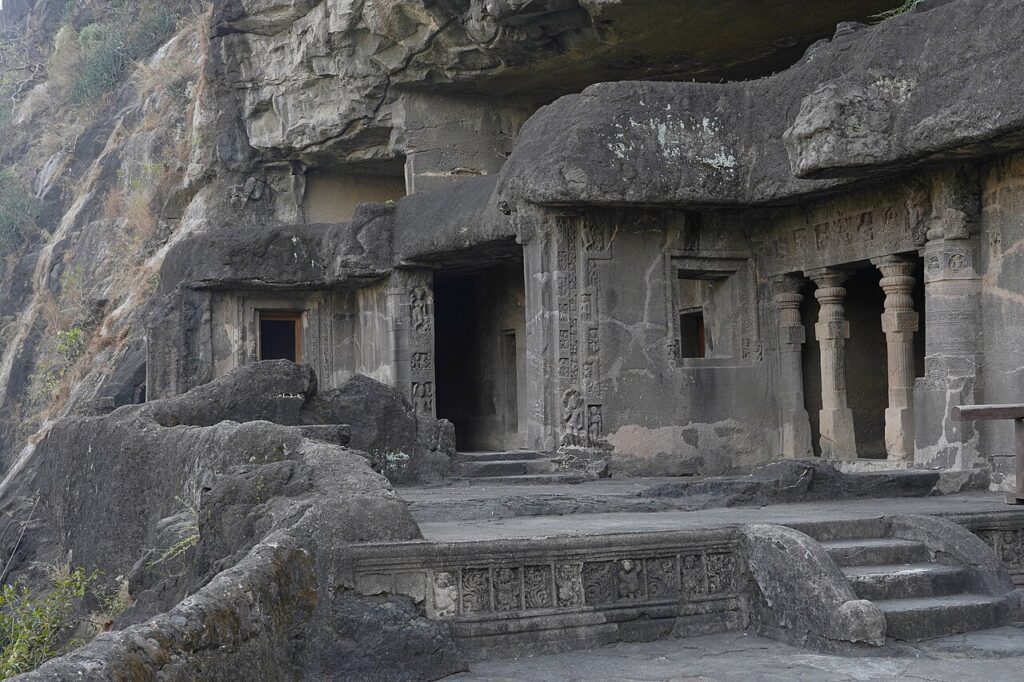
Exterior view of Cave 26, Ajanta Caves, Maharashtra, India. Photograph by Amitabha Gupta via Wikimedia Commons (CC-BY-SA-4.0).
Construction of the caves occurred across two distinct eras: the first under the Satavahana Dynasty (2nd–1st century BCE) and the second under the Vakataka Dynasty roughly 400 years later (5th–6th century CE). Skilled ancient builders carved 30 caves into a steep, horseshoe-shaped rock cliff along the Waghora River gorge. Stone staircases connected the cliffside complex directly to the river below.
The builders worked from the top of the cliff downward to excavate massive and intricate structures without scaffolding. Sunlight bouncing off water basins and polished metal sheets illuminated the pitch-black interiors, while artisans meticulously carved solid stone ceilings to imitate traditional wooden structures.
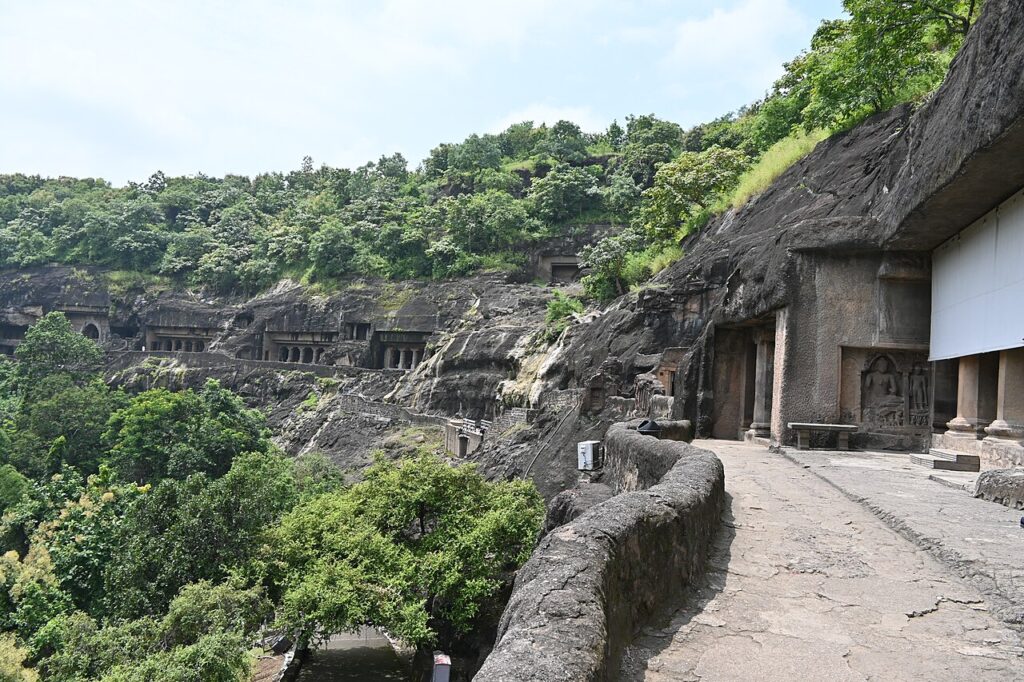
Exterior view of the Ajanta Caves, Maharashtra, India. Photograph by Vinayaraj via Wikimedia Commons (CC-BY-SA-4.0)
For over 13 centuries, the abandoned complex remained swallowed by dense jungle growth. That changed in April 1819, when British officer Captain John Smith, while hunting tigers in the ravine, was led to a carved arch hidden beneath heavy foliage. After hacking through the brush, Smith entered Cave 10—infamously scratching his name and the date onto a painted pillar above eye level.
This dramatic discovery uncovered one of Asia’s greatest historical art treasures. The paintings found inside, particularly within Cave 10, rank among the oldest surviving artworks at the site and demonstrate evidence of realism, a style that was lost to later Indian painting traditions.
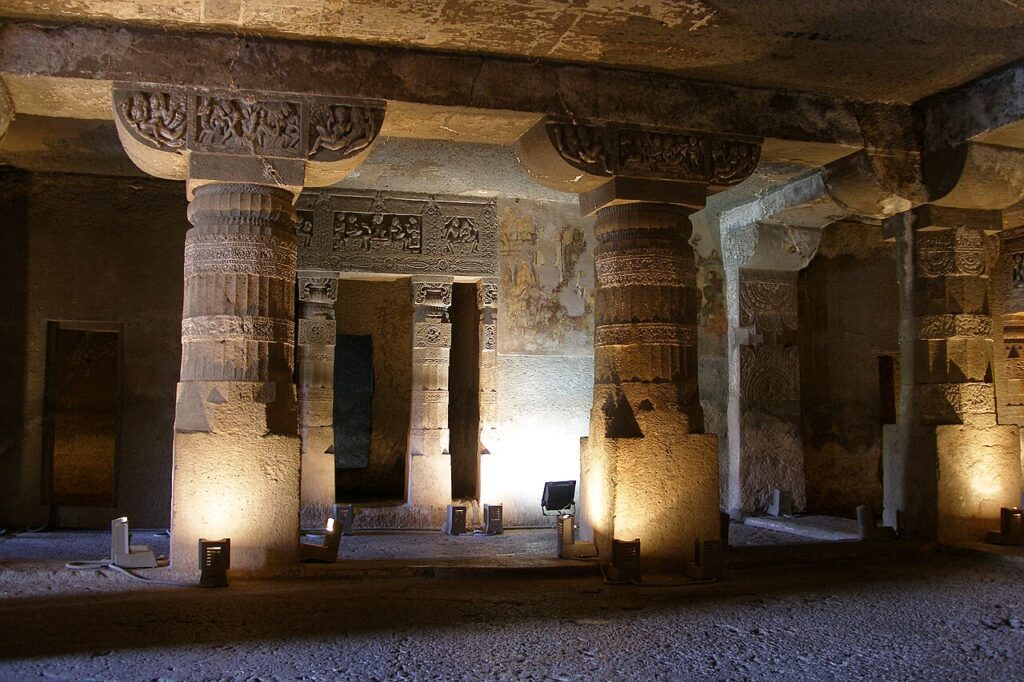
Interior Hall, Ajanta Caves, Maharashtra, India. Photograph by Vyacheslav Argenberg via Wikimedia Commons (CC-BY-SA-4.0)
The cave murals adorning the Ajanta Caves feature visual narratives depicting the Jataka Tales, stories of morality used to convey lessons of Buddhism, as well as representations of Buddha‘s previous incarnations, both in human and animal form. The figures on the murals are deeply vibrant scenes of bustling palaces, courtly fashions, musicians, and deeply expressive human emotions. Figures such as the “flying apsaras” are painted with extraordinary movement and grace, mirroring the fluid poses of classical Indian dance.
Painters applied mineral and organic pigments (such as lapis lazuli, ochre, and plant dyes) bound with animal glue and plant gum on wet lime plaster, a technique similar to fresco. Some of these vibrant pigments have survived for over 1,500 years.
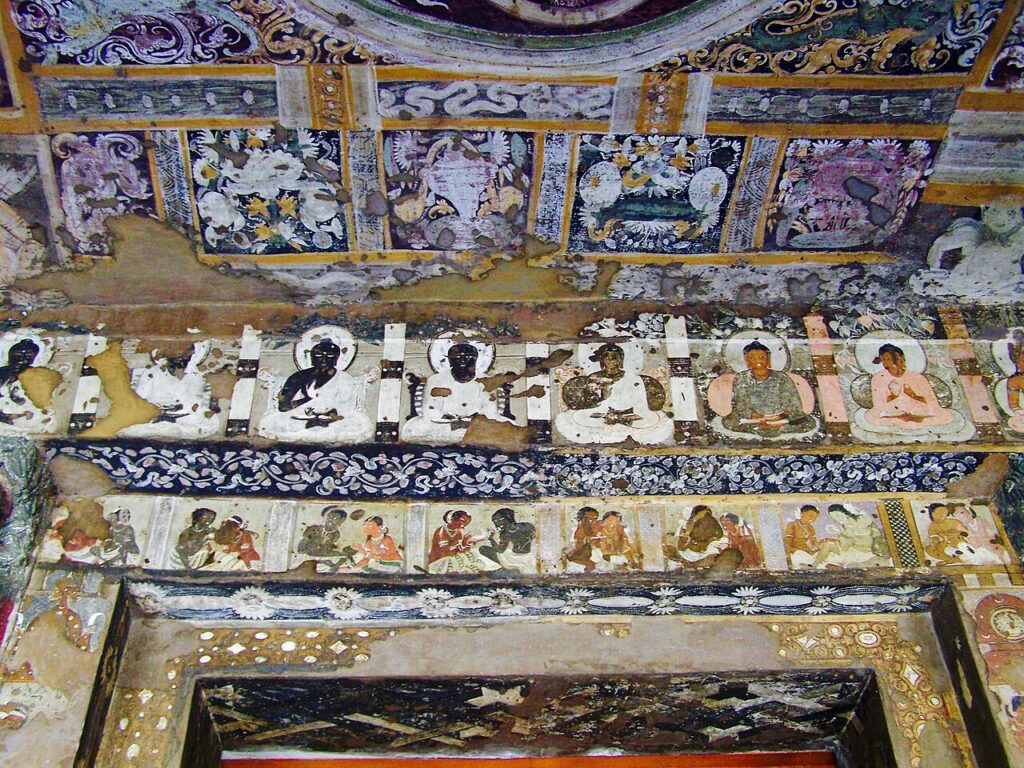
Frescoes in Cave 17, Ajanta Caves, Maharashtra, India. Photograph by Woudloper via Wikimedia Commons (CC-BY-SA-4.0)
A bodhisattva represents a compassionate, enlightened being who forgoes or delays entering nirvana to guide living beings on their path to liberation. A Padmapani refers to a being that holds a lotus flower. The Bodhisattva Padmapani, perhaps the most recognized mural of the Ajanta Complex, dating back to the 5th century during the site’s second construction phase.
Located in Cave 1, the figure stands in an iconic three-bend pose known as the tribhanga, giving the body a fluid, graceful curve that conveys poise and movement. The portrait features gentle downcast eyes, an intricate royal crown, and a delicate blue lotus flower held in the right hand. Through subtle shading techniques that create three-dimensional depth, the mural stands as an unprecedented masterpiece of realism for its era, a technique that was highly uncharacteristic of Indian painting at the time.
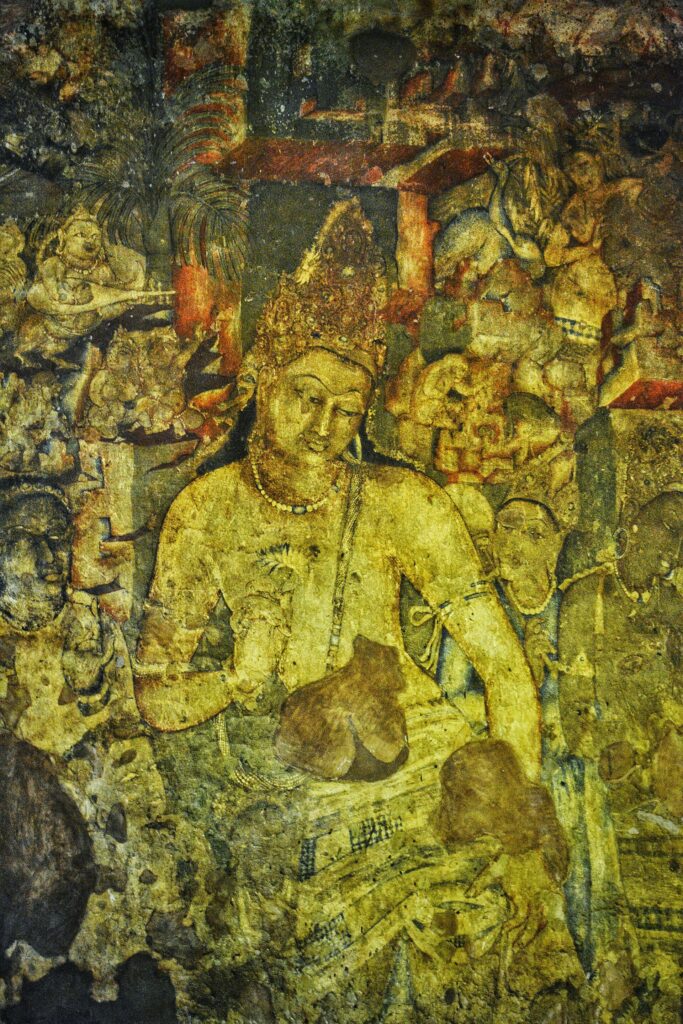
Painting of Bodhisattva Padmapani, Cave 1, Ajanta Caves, Maharashtra, India. Photograph by Abhideo21 via Wikimedia Commons (CC-BY-SA-4.0).
The site’s construction unfolded across two major eras separated by four centuries. The first phase produced simple, restrained spaces that reflected early Theravada traditions that favored symbolic representations of the Buddha. The second phase brought a golden age of patronage, transforming the complex into a rich Mahayana sanctuary filled with elaborate stone statues, intricate relief carvings, and sprawling murals.
However, around 480 CE, sudden political upheaval and the unexpected fall of royal patronage caused work to stop abruptly. Entire halls were left frozen in time and were reclaimed by the dense jungle until their rediscovery in 1819.
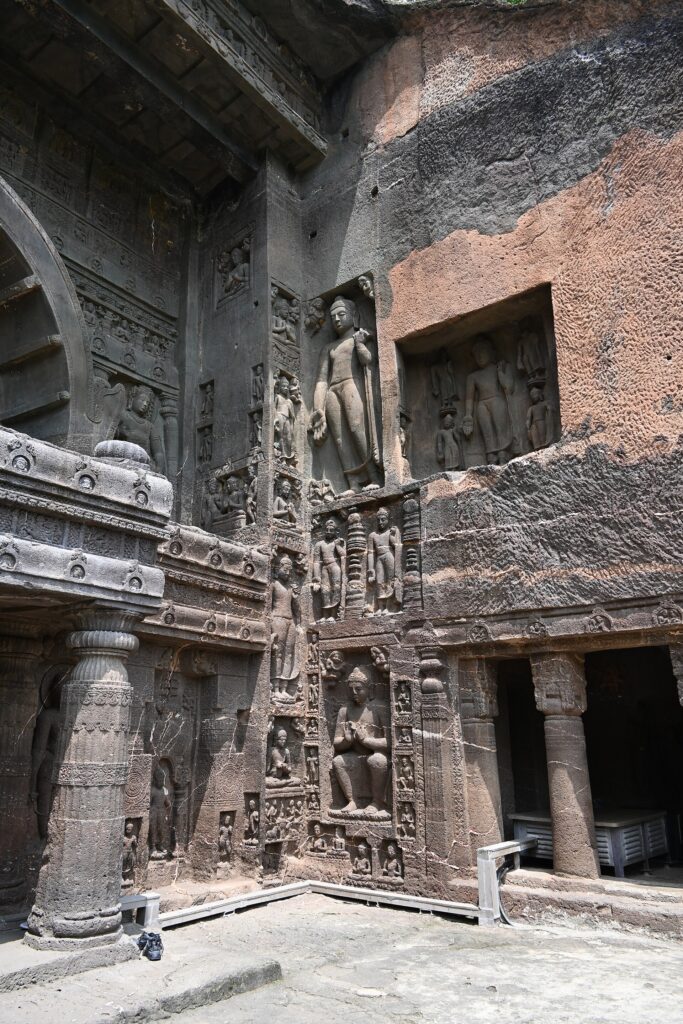
Cave 19, Ajanta Caves, Maharashtra, India. Photograph by Vinayaraj via Wikimedia Commons (CC-BY-SA-4.0).
The art of Ajanta reached far beyond its secluded ravine, establishing the aesthetic benchmark for Buddhist visual traditions across Asia. The sheer mastery required to hand-carve complex sanctuaries directly into basalt cliffs continues to inspire awe today, showcasing an extraordinary level of ancient engineering and artistic devotion.
Just a short journey away lie the Ellora Caves, where this same incredible discipline of rock-cut architecture expanded to honor three distinct faiths within a single complex.
DailyArt Magazine needs your support. Every contribution, however big or small, is very valuable for our future. Thanks to it, we will be able to sustain and grow the Magazine. Thank you for your help!

Maya Tola is a Dallas-based attorney, with a zest for art history. A time traveler at heart, Maya often finds herself consumed in the contemplation of life in antiquity. She has been sharing her infectious enthusiasm for art and history since 2018 through her posts and articles for the DailyArt App and DailyArt Magazine. When she's not working or writing, you'll find Maya obsessing over plants, animals, and food (in no particular order).

Leigh is a writer, reader, art lover, radio nerd and herbalist based in Nashville, TN.
Carved into a nearly 1.2-mile stretch of basalt in Maharashtra, India, the Ellora Caves are an astonishing rock-cut architectural achievement and...
Maya M. Tola 14 September 2026
When we talk about the beautiful sights of Paris, many first think of the obvious ones—the Eiffel Tower, the Louvre Museum, and the Notre-Dame...
Nikolina Konjevod 15 March 2026
American cities are renowned for their many architectural landmarks, featuring ornate domes, columns, and sculpted façades. Less widely recognized,...
Maya M. Tola 4 August 2025
Alvar Aalto (1898–1976) is one of the most famous Finnish architects of the 20th century connected with modernism. His style has been associated...
Catherine Razafindralambo 11 May 2026



.jpg)
.jpg)


.jpg)