

Experimenting on Paper: 3 Artists Following in Rembrandt’s Footsteps
This Autumn, the Rembrandt House Museum opens up its treasure chest: more than 50 works on paper from the museum’s prized collection show how...
Guest Author 19 October 2026
4 December 2025 min Read
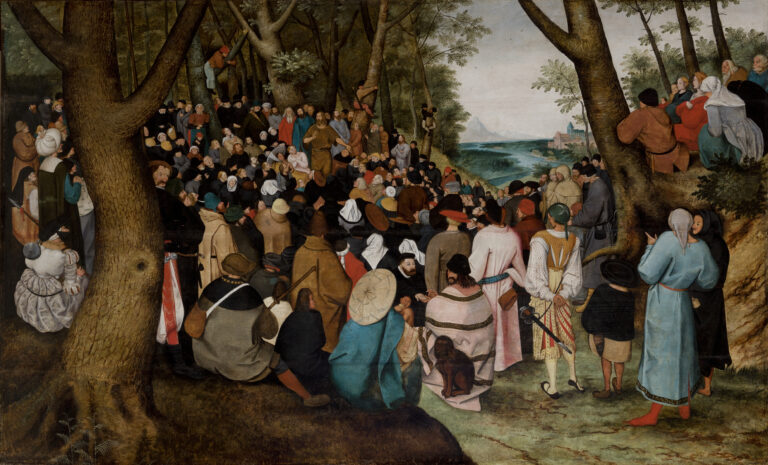
Attributed to Pieter Brueghel the Younger, Sermon of Saint John the Baptist, 16th century, National Museum in Kraków, Kraków, Poland.
The new European Art Gallery at the National Museum in Kraków invites visitors to embark on a captivating journey through eight centuries of creativity, beauty, and history. Bringing together more than 120 masterpieces of European painting and sculpture from the 13th to the 20th century, this gallery showcases the richness and diversity of Europe’s artistic heritage. We’ll guide you through the defining artworks of the gallery—paintings and sculptures that reflect the cultural spirit of their age, reveal the skill of their makers, and continue to inspire admiration today.
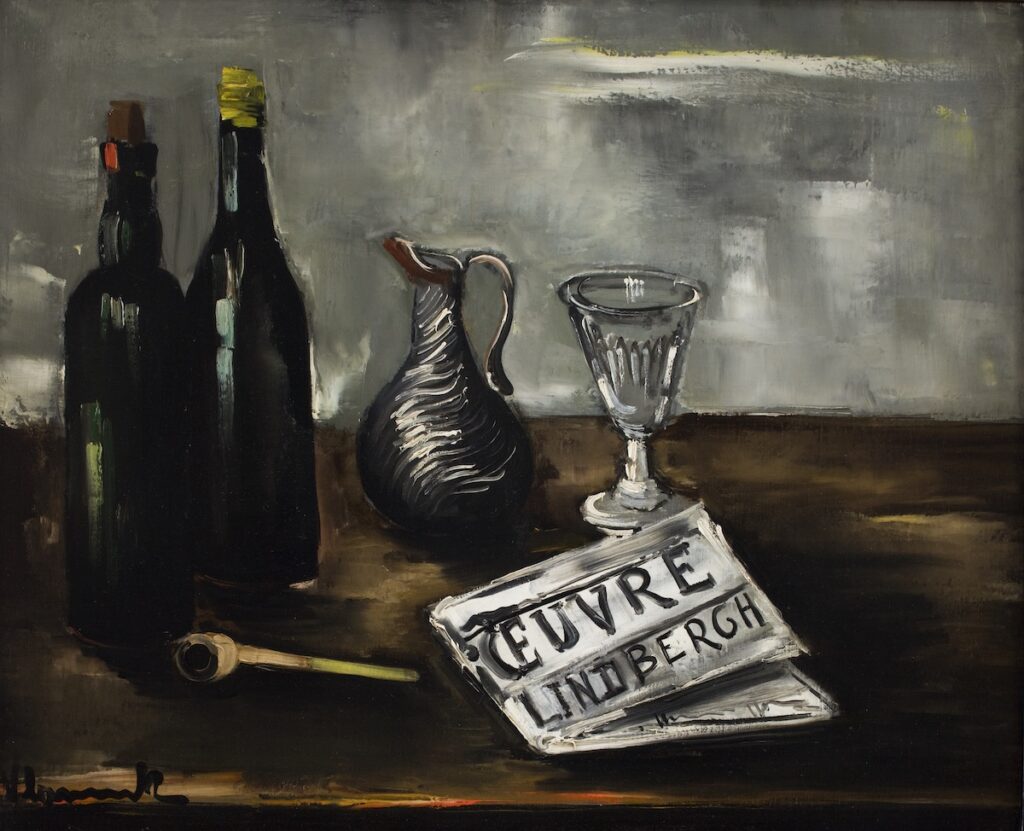
Maurice de Vlaminck, Still Life with a Newspaper, after 1927, National Museum in Kraków, Kraków, Poland.
In this still life, maintained in dark tones and simplified in form, we can see the influence of Cubism. We can find a direct reference to an actual historical event in the composition: the inscription on the folded newspaper lying on the table indicates Charles Lindbergh, American pilot and aviation pioneer, who in 1927 made the first-ever solo transatlantic flight.
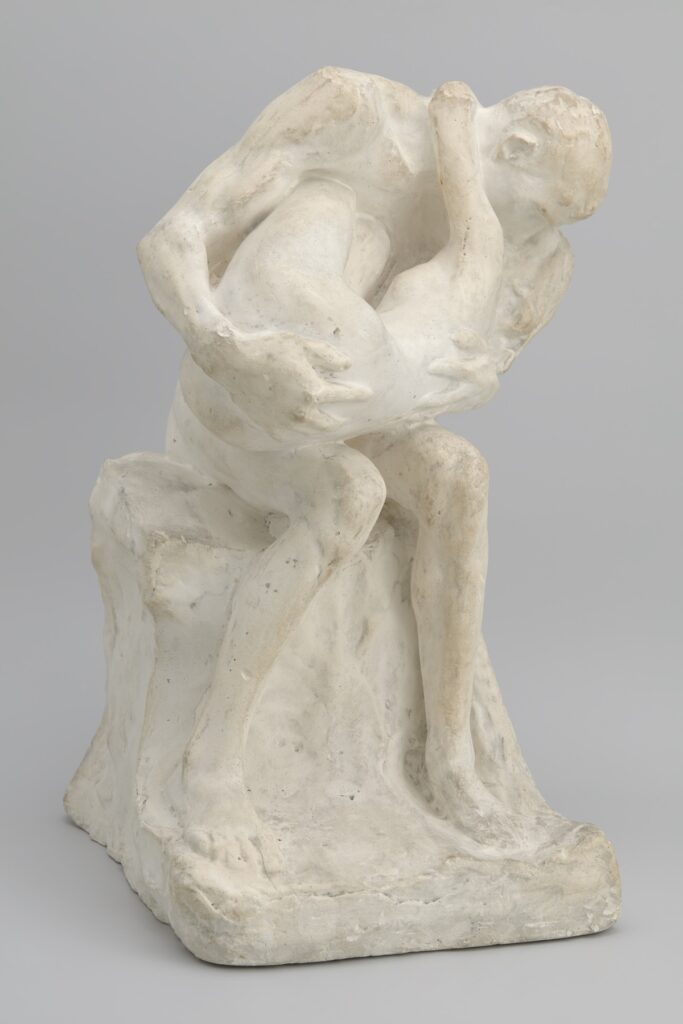
Gustav Vigeland, Kiss, 1897, National Museum in Kraków, Kraków, Poland.
Gustav Vigeland studied under Auguste Rodin and is considered to be one of the most outstanding Norwegian sculptors. In this extraordinarily sensual and expressive composition, the human body plays the main role. It is depicted in a relaxed yet simplified manner, which aptly renders the lively quality of the scene. The kiss provided the artist with a starting point to explore the intimacy and beauty of the human body.
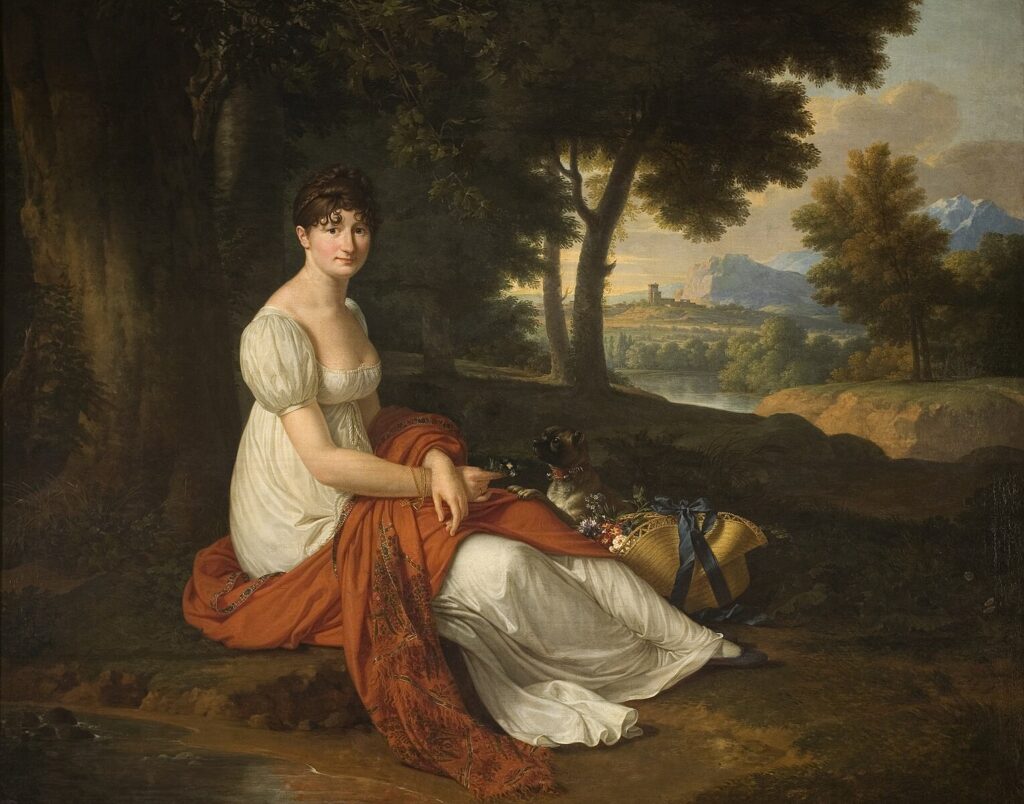
François-Xavier Fabre, Portrait of Elżbieta Skotnicka, née Laskiewicz, 1807, National Museum in Kraków, Kraków, Poland.
For young members of the aristocracy, a crucial event in their lives would be a tour of the largest European cities with an emphasis on Italy. The phenomenon, referred to as the Grand Tour, was a kind of educational trip, meant to expose the traveler to the European cultural legacy. The portrait was painted during an Italian journey of the spouses, Elżbieta and Michał Skotnicki.
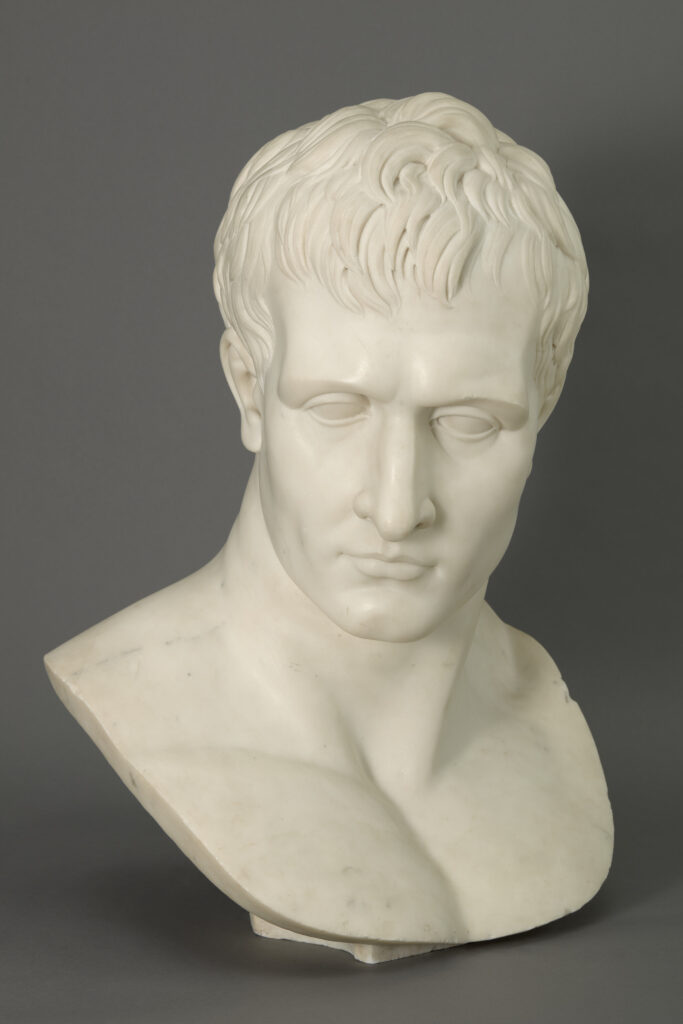
Antonio Canova, Bust of Napoleon Bonaparte, after 1803, National Museum in Kraków, Kraków, Poland.
Another artwork from the National Museum in Kraków collection is the replica of the head of Napoleon as Mars the Peacemaker (Pacificator). The original statue is today housed at Apsley House in London—the residence of Arthur Wellesley, the 1st Duke of Wellington, who greatly contributed to the victory of Waterloo.
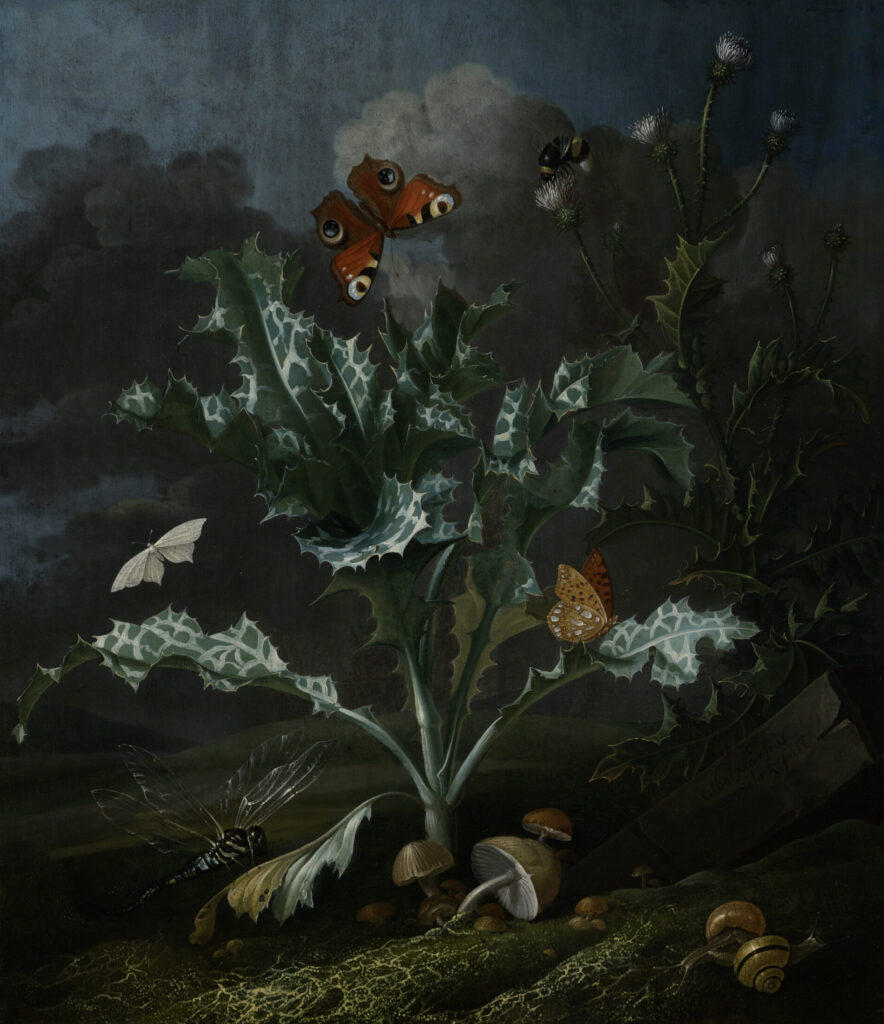
Otto Marseus van Schrieck, Thistles and Butterflies (Sottobosco), c. 1670, National Museum in Kraków, Kraków, Poland.
The painting is an example of a depiction of nature “in close-up”, focusing the viewer’s eyes on small plants, fungi, insects, and other creatures living close to the ground. Such works are known as sottobosco, an Italian word for “undergrowth”.
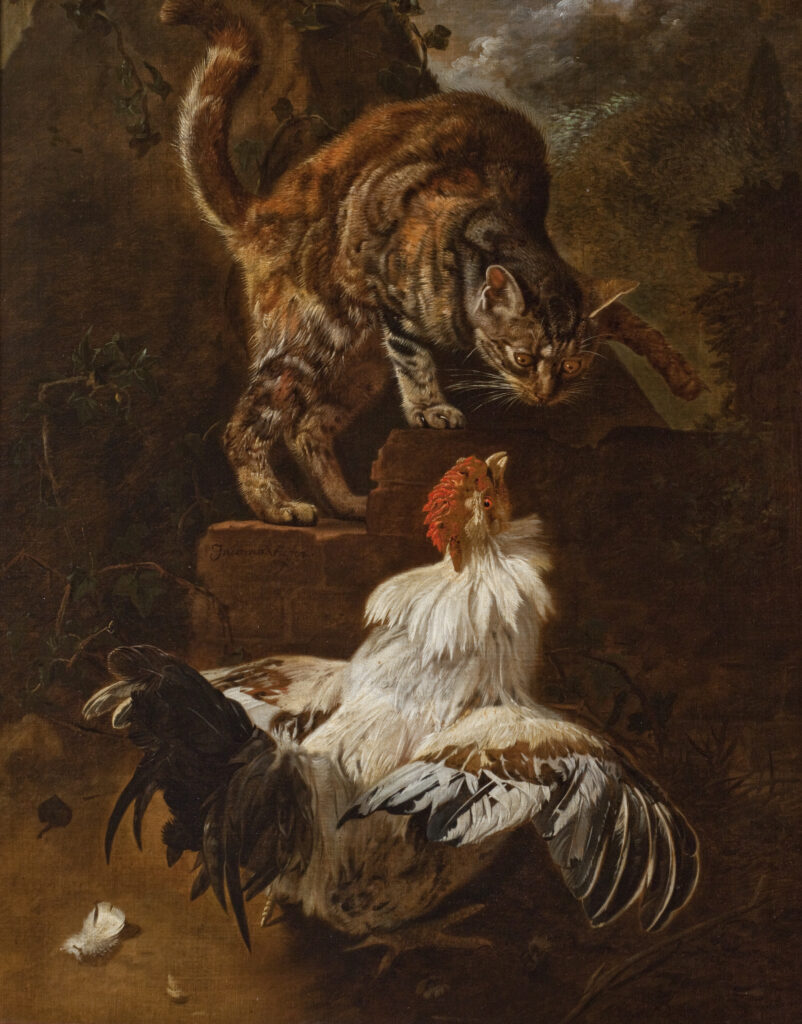
Jacomo Victors, Fight Between a Rooster and a Cat, 17th century, National Museum in Kraków, Kraków, Poland.
As in many other animal-themed compositions painted in the 17th century, this scene may be interpreted as a kind of parable of human emotions. In such pictures—just as in fables so popular in the Baroque era, analyzing human behaviors under the guise of animals—we can find a metaphorical portrayal of human vices and flaws.
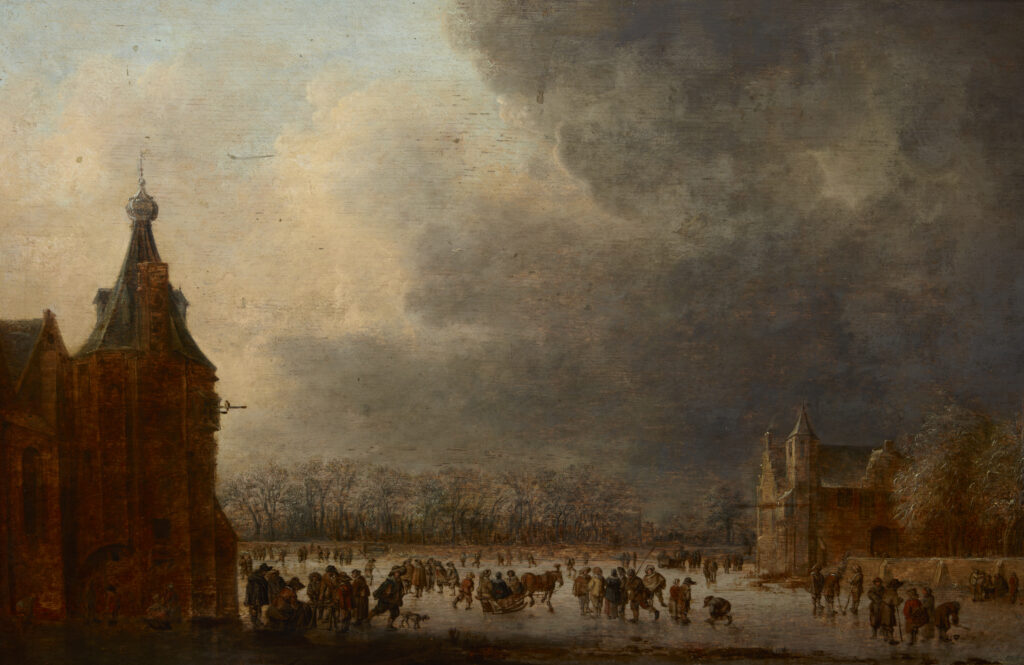
Jan van Goyen, At the Rink, before 1636, National Museum in Kraków, Kraków, Poland.
Depicted with detailed realism, the view of a frozen pond in the center of The Hague with its landmark architecture, among other buildings, a gate demolished in 1636. People were immortalized in the course of various activities and plays on the skating rink. To the right side of the composition, two groups occupy themselves playing kolf—an early precursor of modern golf.
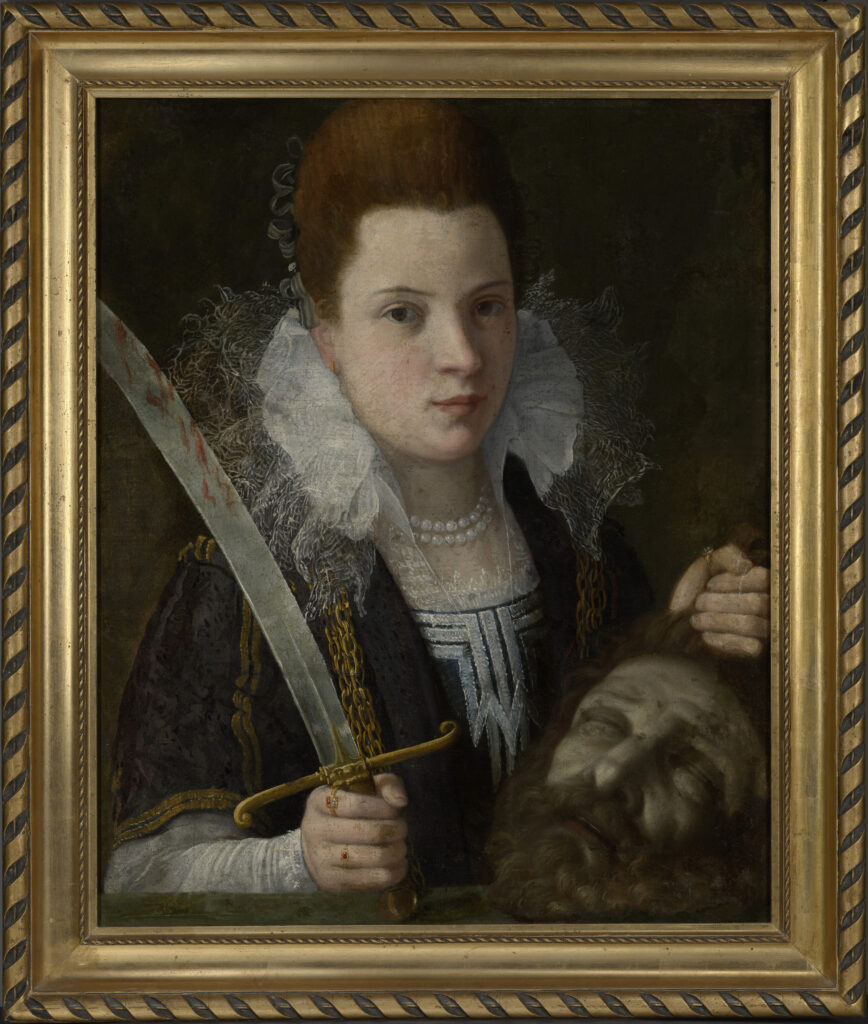
Attributed to Lavinia Fontana, Judith with the Head of Holofernes, 1590–1595, National Museum in Kraków, Kraków, Poland.
Lavinia Fontana, a painter working in Bologna and Rome, was the first woman artist widely known both in Italy and abroad. She painted religious scenes, yet the most interesting portion of her oeuvre is portraits. This painting is a combination of a depiction of a biblical heroine with the painter’s self-portrait.
The Old Testament Judith saved her native city from destruction by the Assyrian army by killing their general, Holofernes, and it was not by accident that this subject— showcasing women’s initiative, agency, as well as revenge understood as opposition against violence—was employed multiple times by women artists. The picture was painted on an inverted, unfinished portrait of a veiled woman. Such reuse of an incomplete composition is not unusual in the creative process of painters of the early modern era.
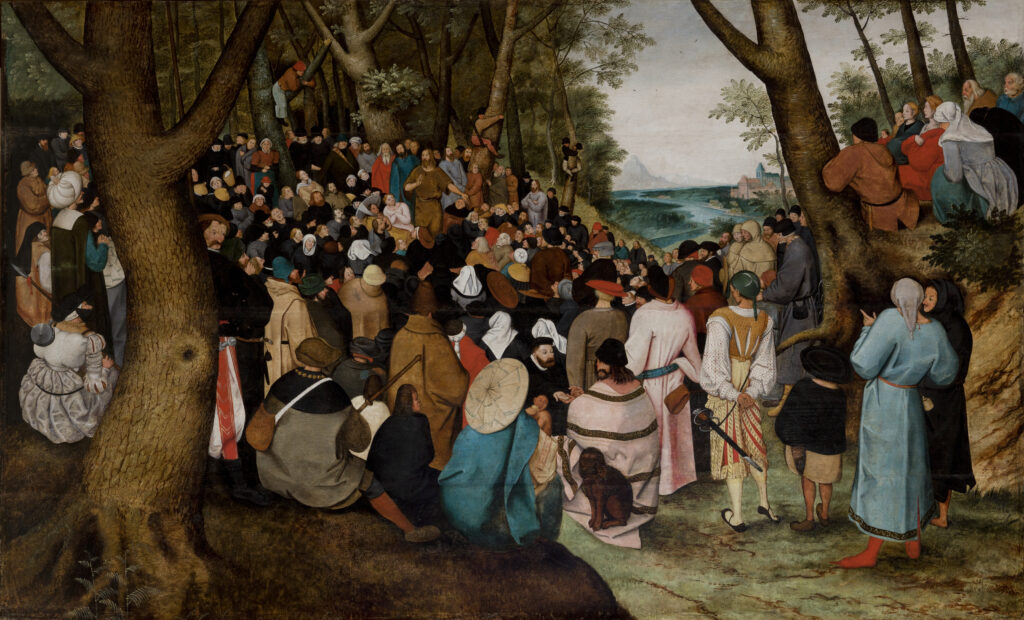
Attributed to Pieter Brueghel the Younger, Sermon of Saint John the Baptist, 16th century, National Museum in Kraków, Kraków, Poland.
Copy of a painting by the painter’s father, Pieter Breugel the Elder (1520/1525–1569), today at the Szépművészeti Múzeum in Budapest. The 16th-century clothing of the diverse group of listeners suggests that the biblical subject, taken from the Gospel of St Luke (3:1–7), provided an excuse to depict an event contemporary to the painter: a secret religious gathering during the period of intolerance of Protestants in the Catholic Habsburg Netherlands.
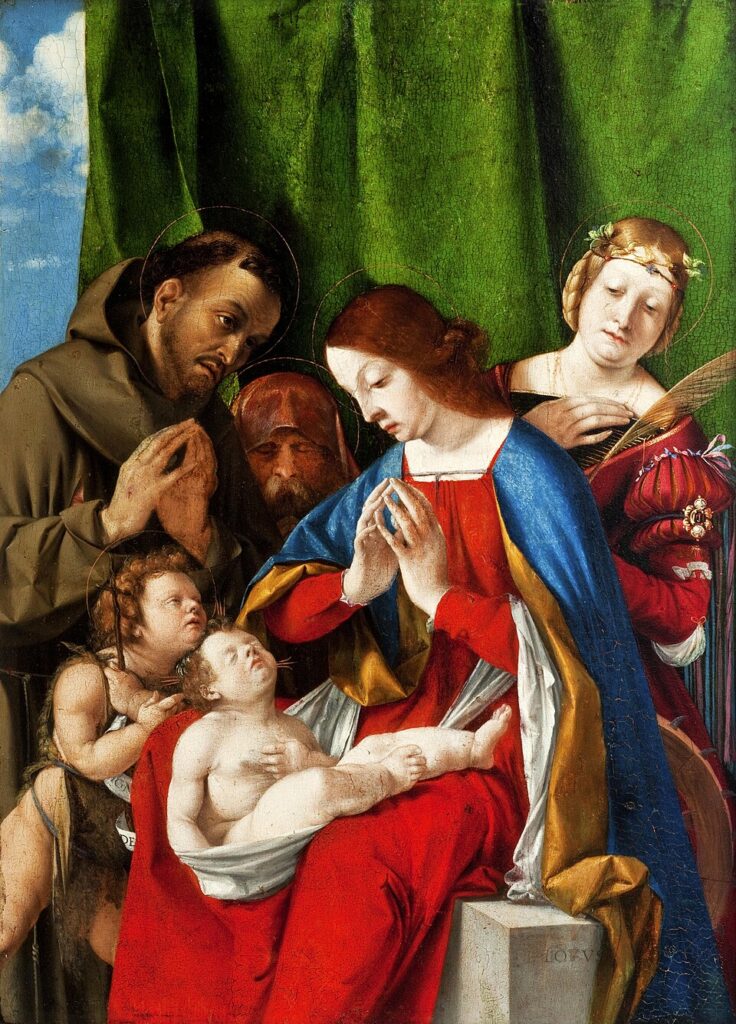
Lorenzo Lotto, Adoration of the Child with Saints, c. 1508, National Museum in Kraków, Kraków, Poland.
The position of the Child Jesus asleep on the lap of his Mother resembles the position of the dead body of Christ in depictions of Pietà. At the same time, Mary’s white veil, on which he lies, may be associated with a burial shroud. This makes the scene of the Adoration of the Child Jesus allude to his future Passion and redemptive Death. The ancient connotations of sleep are not without significance, as Hypnos (Sleep) was believed to be the brother of Thanatos (Death).
The artworks at the National Museum in Kraków offer a journey through centuries of European creativity, from the Renaissance to Modernism. Experience centuries of art and be inspired by the masterpieces on display at Kraków’s European Art Gallery.
DailyArt Magazine needs your support. Every contribution, however big or small, is very valuable for our future. Thanks to it, we will be able to sustain and grow the Magazine. Thank you for your help!

Art historian interested the most in the Polish art market, the history of art collecting and contemporary art.

This Autumn, the Rembrandt House Museum opens up its treasure chest: more than 50 works on paper from the museum’s prized collection show how...
Guest Author 19 October 2026
What makes a work of art unforgettable? We asked some of the young staff members at the Rijksmuseum to share their favorite artworks from the...
Gabriela Boryszewska 22 October 2026
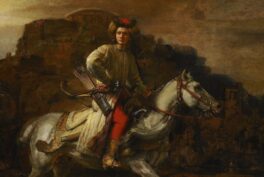
Rembrandt’s The Polish Rider is now the centerpiece of New York’s Frick Collection. For many years, however, it was considered the jewel of a...
The Royal Castle in Warsaw 28 September 2026
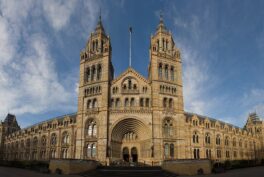
Looming over South Kensington like a grand cathedral or a royal residence, the Natural History Museum in London honors science and human curiosity...
Maya M. Tola 17 September 2026