It has become undeniable in recent years that the art world is increasingly aware of the systematic exclusion of women from its narratives. Now, great efforts are being made to highlight their contributions and heal still-open wounds. Therefore, major institutions are committed to programming exhibitions and events that revisit great female figures forgotten by art history, while contemporary art fairs proudly celebrate a significant increase in the percentage of women artists represented by participating galleries.
This condition is evidently reshaping the sector, and the art market reflects it. However, let’s take a look at how many of these women artists have been helping other women through their creative process.
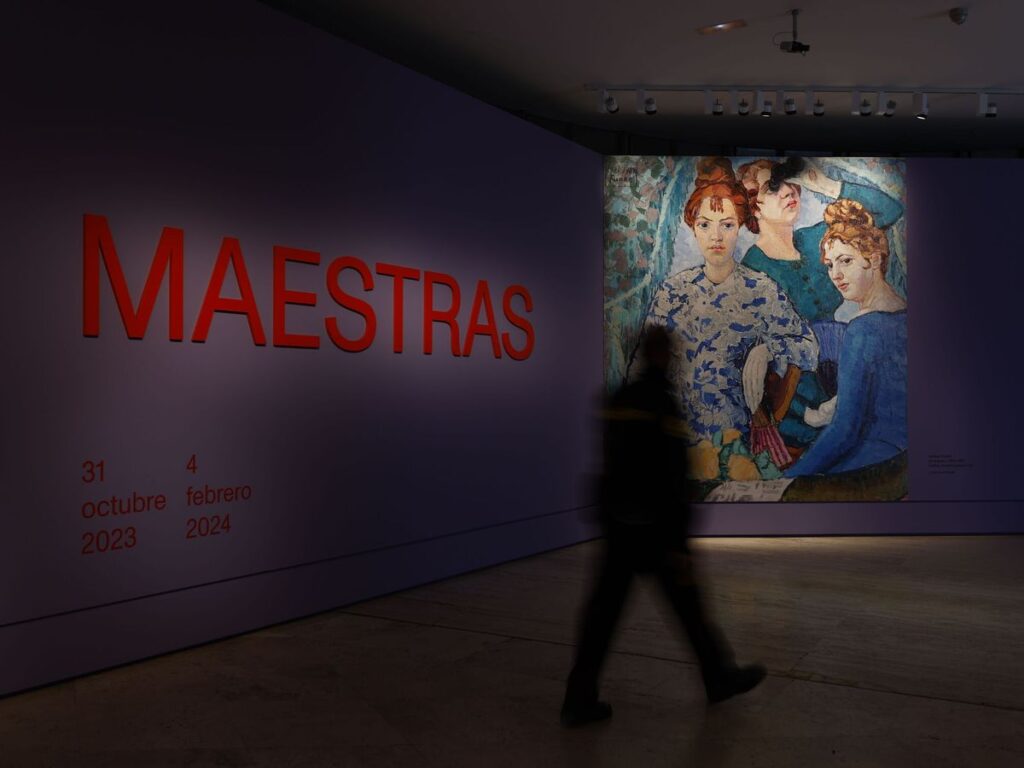
Specifically addressing the artistic ecosystem in Spain, in 2024, the Thyssen-Bornemisza Museum in Madrid hosted a remarkable exhibition titled Maestras. This historiographical show, organized into different thematic sections, showcased great yet forgotten women artists from the Renaissance and Baroque periods, such as Artemisia Gentileschi, alongside major 20th-century women artists like Frida Kahlo.
Without any doubt, it was an absolute pleasure to see these extraordinary figures brought together in an exhibition of such significance in my country. However, what captivated me most was witnessing strictly female themes, such as motherhood, labor, caregiving, and intimacy, being explored by women themselves. These themes have always been present in art, but historically, we have mostly only been able to witness them when depicted through the lens of male artists. However, on this occasion, it was the women themselves who engaged in dialogue with their own condition. This offered a committed and affirming perspective that resonated deeply with the women attending the show.
During this moving encounter and recognition of shared experiences, I was reminded of a remarkable group of contemporary female artists who work in this specific way: addressing female issues often highly overlooked in our society, from a female perspective. These are artists who, through their committed, sensitive, and intellectual work, create safe spaces where other women can find their voices and gain recognition for the experiences that shape them as women.
1. Laia Arqueros Claramunt (Spain)
Through her multidisciplinary practices, Laia Arqueros explores the intimate and the collective from a feminist perspective. Her work reclaims female genealogies and care practices, creating delicate yet powerful visual spaces where the body becomes a site of memory and resistance.
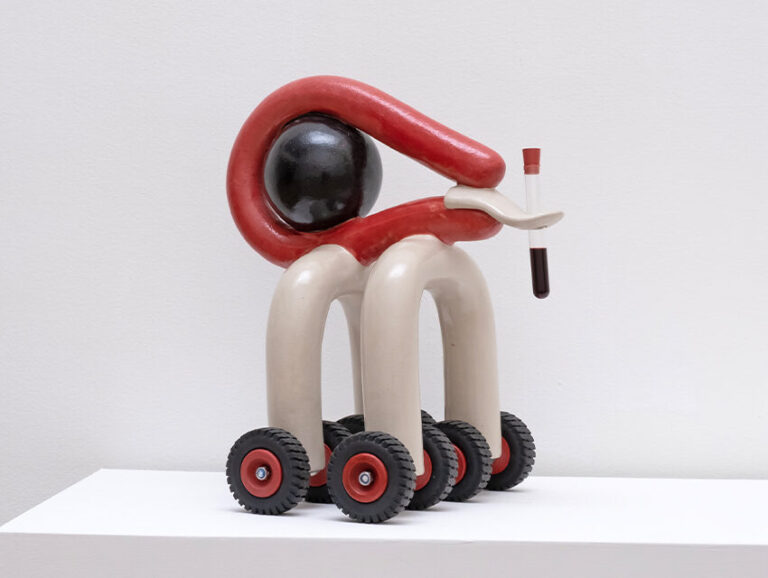
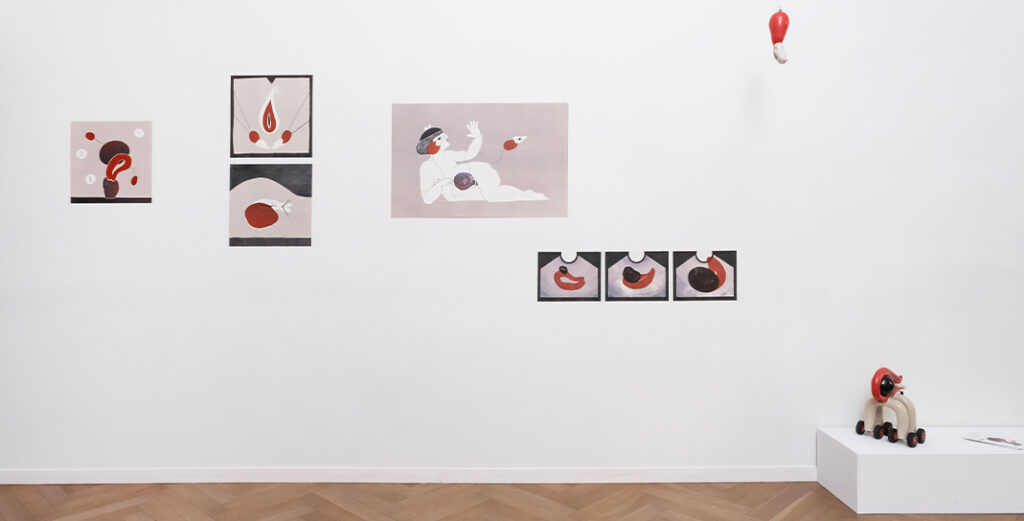
In her 2023 exhibition Gynopia and the Spasm at the Chiquita Room Gallery (Barcelona, Spain), the artist presented a project where she directly explored what it means to be a hysterectomized woman in contemporary society. In fact, she decided to elaborate on these pieces due to the need for references and in order to share the experience of her own hysterectomy. Through her pieces made of ceramics, wood, rubber, glass, blood, or engraving, the Catalan artist reappropriated the organs as an act of emancipation while questioning the symbolism and historical-patriarchal narratives of the uterus.
2. Marina Vargas (Spain)
Known for her reappropriation of classical iconography, Marina Vargas transforms religious and mythological symbols to challenge patriarchal structures. Her performances and sculptures blur the line between devotion and rebellion, turning art into a ritual of emancipation.
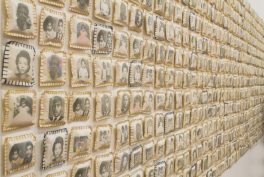
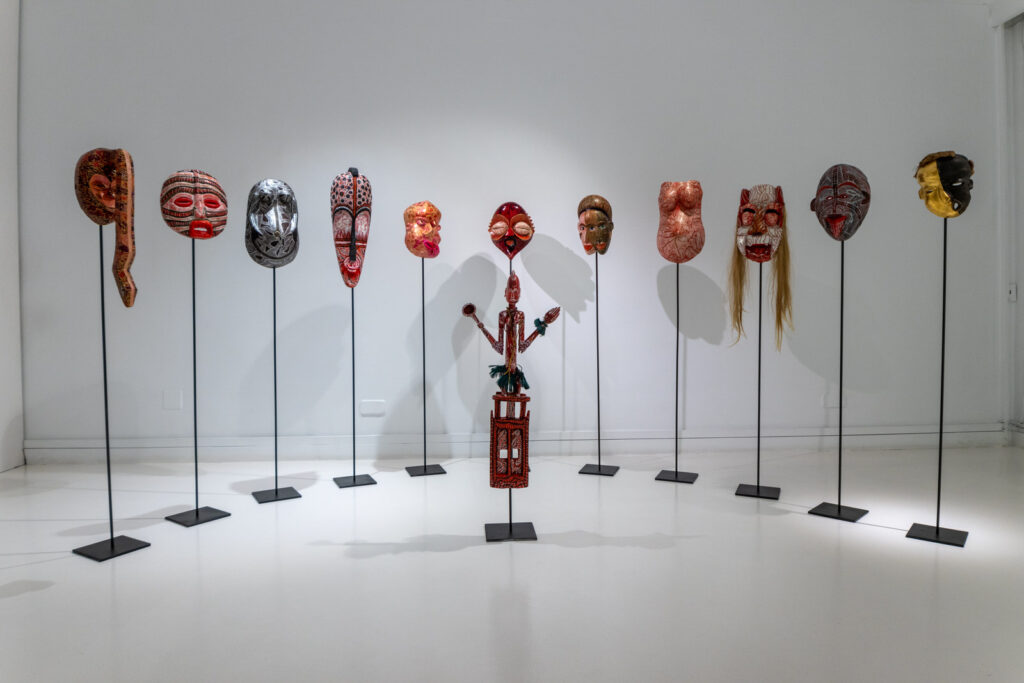
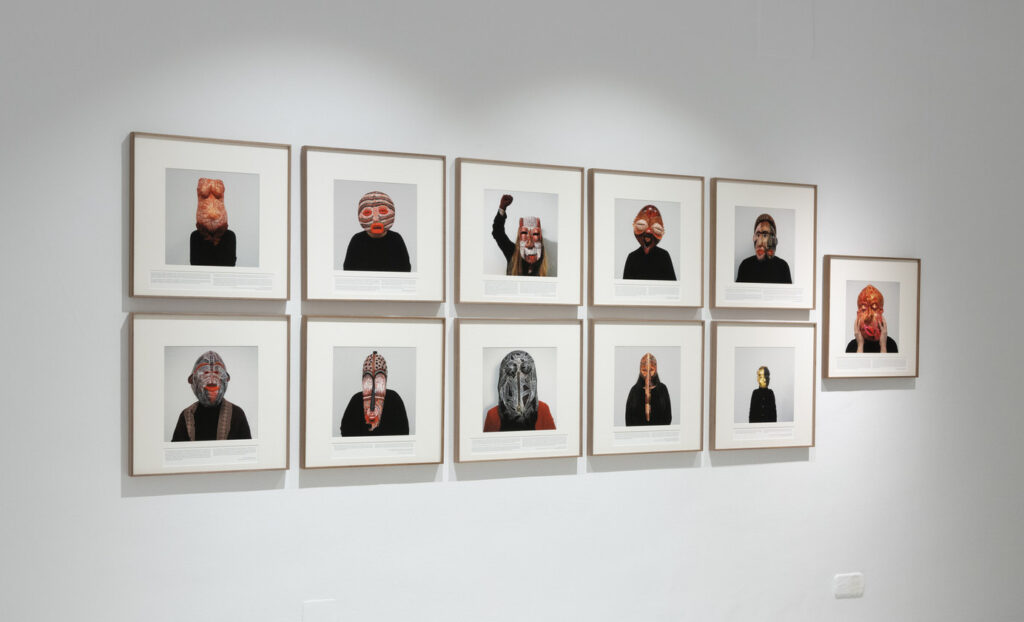
In her piece La Tribu, Marina Vargas constructs a powerful collective portrait of female resilience. The project brings together a video installation and a series of 12 African ritual masks, each one associated with a woman’s testimony of violence or abuse. The masks serve as both shelter and voice, allowing the women to speak while preserving their anonymity.
Each mask is accompanied by a photograph and a fragment of their story, creating an intimate dialogue between concealment and revelation. After that, Vargas intervenes in these masks with her own drawings, adding new layers of meaning to the symbolic power already contained in them. The result is a ritual of shared healing of women who, by reclaiming their narratives, transform pain into collective strength.
3. Delfina Vollmer (Argentina/Spain)
Delfina Vollmer defines her creative process as an intuitive search guided by touch, movement, and emotion. Through ceramics, poetry, textiles, and installations, she gives form to what cannot be said, translating fragility into presence.
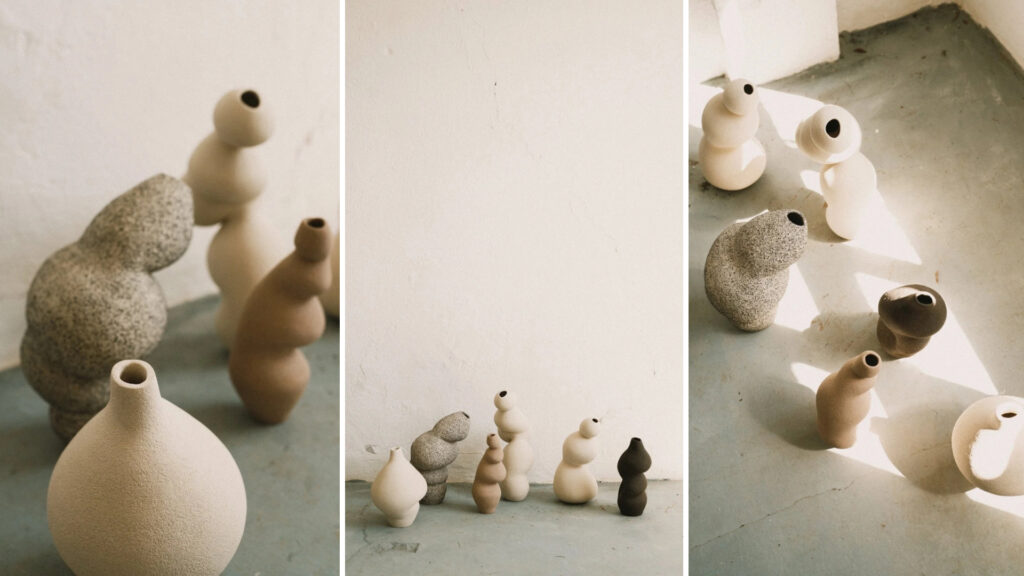
In Cuerpo arado, Delfina Vollmer weaves together ceramics, poetry, and photography to reflect on the body, motherhood, and the slow processes of care and transformation. It is a horizon of gestures between a mother and her daughter, where being beside the other also means meeting oneself again. Her ceramic pieces capture the contortion of bodies as they fold, translating movement and emotion into form. In fact, each curve seems to preserve a gesture. Created through intuition and touch, these works embody the fragility and resilience of the human body itself.
4. Aïda Muluneh (Ethiopia)
Through her bold portraits, Muluneh reclaims the image of African women and turns photography into a gesture of dignity and resistance. Her striking visual language redefines beauty and resilience, positioning photography as a tool for empowerment and cultural pride. Born in Ethiopia and raised between Yemen, England, Cyprus, and Canada, Muluneh later studied and worked in the United States as a photojournalist.
Muluneh’s portraits merge fact and fiction to portray the complexities of postcolonial Africa. Her subjects, often women adorned with painted faces, stand before bold, graphic backdrops that evoke everyday rituals and performances of identity in Addis Ababa.
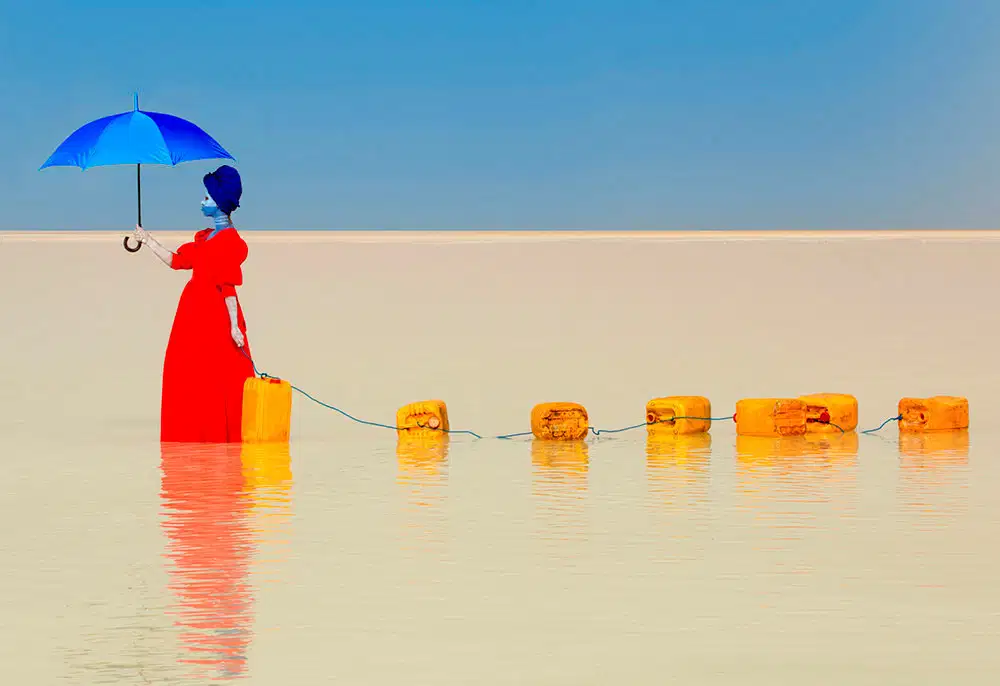
Her The Shackles of Limitations (2018) belongs to Muluneh’s ongoing reflection on the politics of water, which is a vital resource unequally distributed. Through this image, the artist reflects on the psychological and social barriers that constrain women, using symbolism drawn from Ethiopian folklore and modern iconography. The result is a portrait that feels at once sacred and political, a quiet defiance against systems that silence.
5. Las Nietas de Nonó (Puerto Rico)
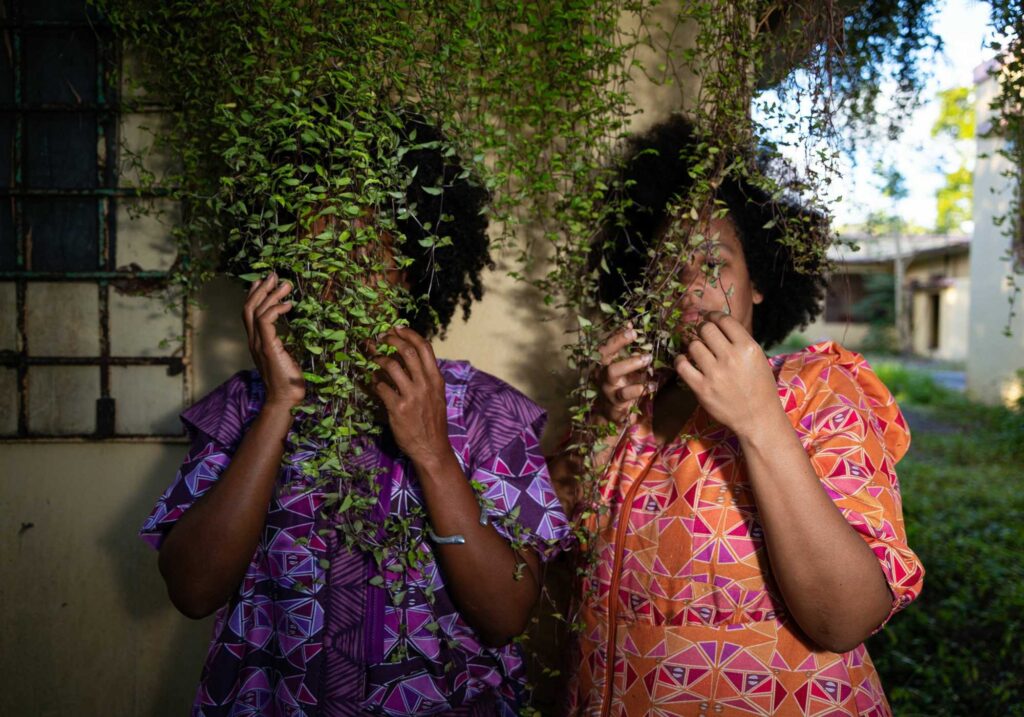
The fifth artist on our list is an Afro-Caribbean duo, formed by the sisters Mulowayi Iyaye Nonó and Mapenzi Chibale Nonó. Together, they use performance, video, and community-based practices to address the intersections of race, colonial history, and ecology. Their projects often take place in their family’s ancestral home in Barrio San Antón (Carolina, Puerto Rico), which they transform into a living archive of memory and resistance.
In Ilustraciones de la Mecánica (from 2016), the Nonó sisters address the history of medical and pharmaceutical experimentation in Puerto Rico linked to colonial and racial legacies. This complex work brings together video, installation, found objects, and organic materials. Within it, they invite viewers to enter a space that reveals how especially Black, Puerto Rican, and female bodies have been at the same time sites of control, science, and power. Through this activation, the duo creates a symbolic safe space where Afro-Caribbean women can reclaim their stories, honor their memory, and build dialogue through the body and the community.
Las Nietas de Nonó, Ilustraciones de la Mecánica at Whitney Biennial, 2019. YouTube.