
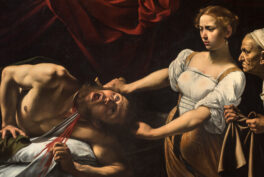
Masterpiece Story: Judith and Holofernes by Caravaggio
Judith and Holofernes is a Caravaggio masterpiece that captures Biblical murder and drama. Rarely has death been captured so intensely and violently...
James W Singer 13 September 2026
12 July 2026 min Read
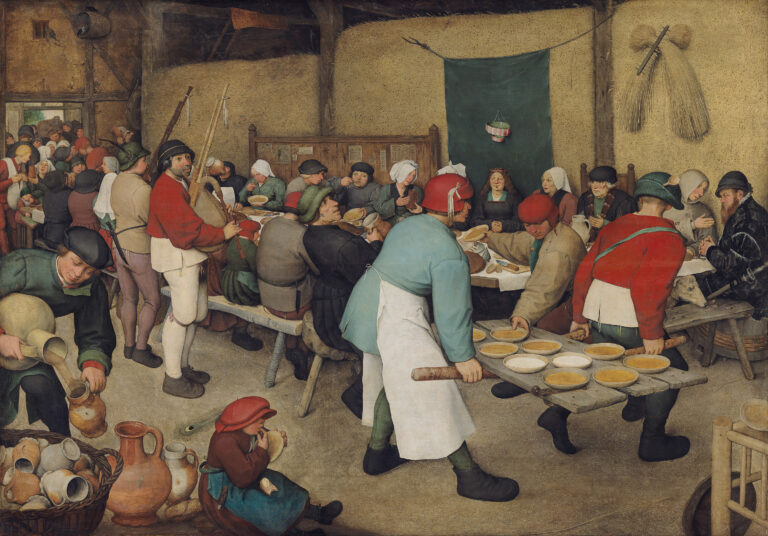
Pieter Bruegel the Elder, The Peasant Wedding, 1567, Kunsthistorisches Museum, Vienna, Austria.
The Kunsthistorisches Museum (the Museum of Art History) is located in Vienna, Austria. It is the largest art gallery in the country, housing the grand art collections of the Habsburgs. The museum holds works by Raphael, Johannes Vermeer, Titian, and Pieter Bruegel the Elder among others. The Bruegel collection, 12 paintings in total, is the largest and most important collection of the artist’s work in the world.
Genre and landscape painting emerged as as art genres during the 16th century in Northern Europe. Due to the protestant Reformation, the Church no longer commissioned or bought art; as a result artist were seeking new wealthy patrons and these patrons required new subjects. Pieter Bruegel the Elder is known for his many genre scenes featuring the life and customs of peasants in 16th-century Flanders. He loved those themes so much that he is also known as the Peasant-Bruegel. He gave importance to the lives of everyday people by painting them on large canvases. Up to that point, these canvases were used only to paint the lives of saints and pagan gods. Now, let’s take a closer look at one of Bruegel’s most famous genre painting – The Peasant Wedding.
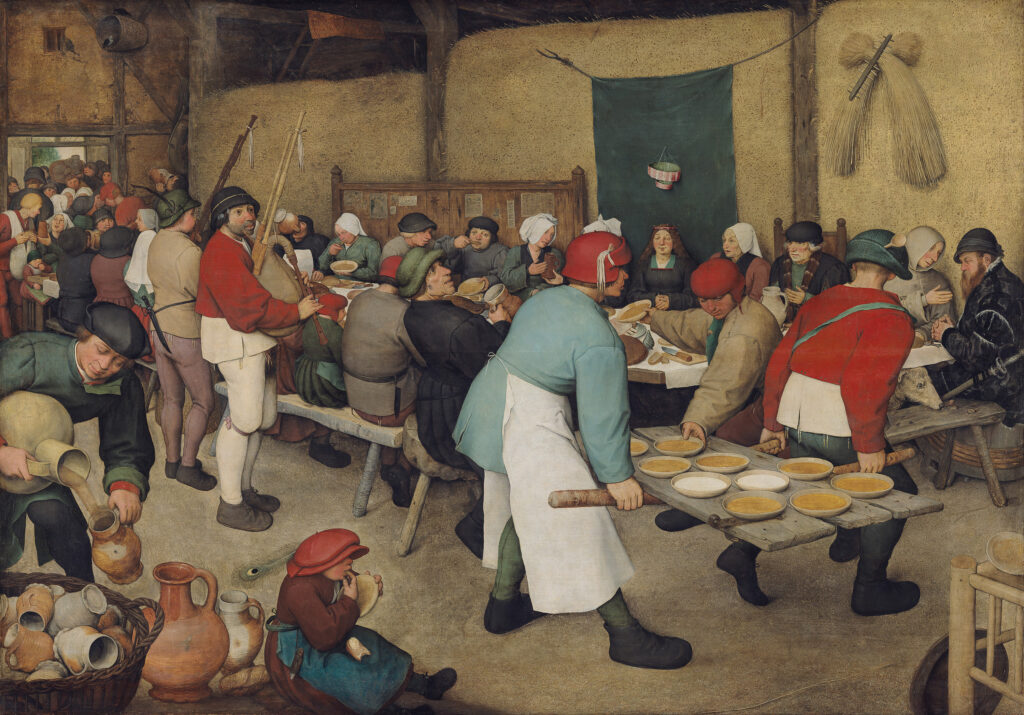
Pieter Bruegel the Elder, The Peasant Wedding, 1567, Kunsthistorisches Museum, Vienna, Austria.
We arrive at the wedding when the celebrations are in full swing. A big table is set, and food is passed around. People are pouring into the hall from the door to the far left, while others are making merry drinking beer. The painting is full of little vignettes, like the little boy, down and to the left, who scrapes his dish clean, or the woman near the front door asking for a refill. All those add realism and a sense of warmth to the whole composition.
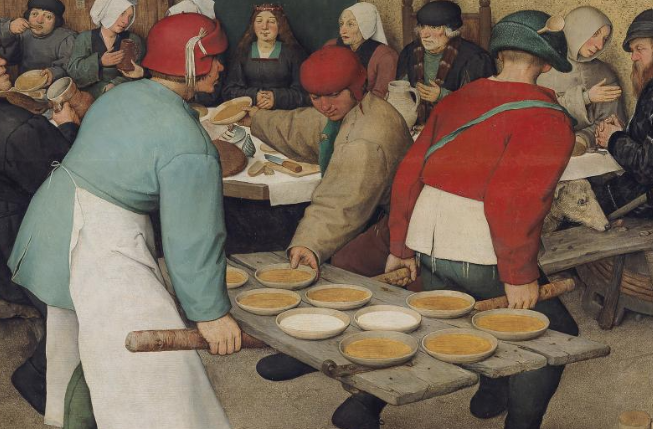
Pieter Bruegel the Elder, The Peasant Wedding, 1567, Kunsthistorisches Museum, Vienna, Austria. Detail.
Front and to the right the two waiters are using a door taken off its hinges as a makeshift serving tray. Another man is helping them, passing around the food. Following this man’s right hand, we arrive at the protagonist of every wedding, the bride. She sits demurely, in front of a green screen to stand out. Over her head is the traditional paper crown. Some scholars believe that because this is a two-piece crown, it indicates that she is already pregnant.
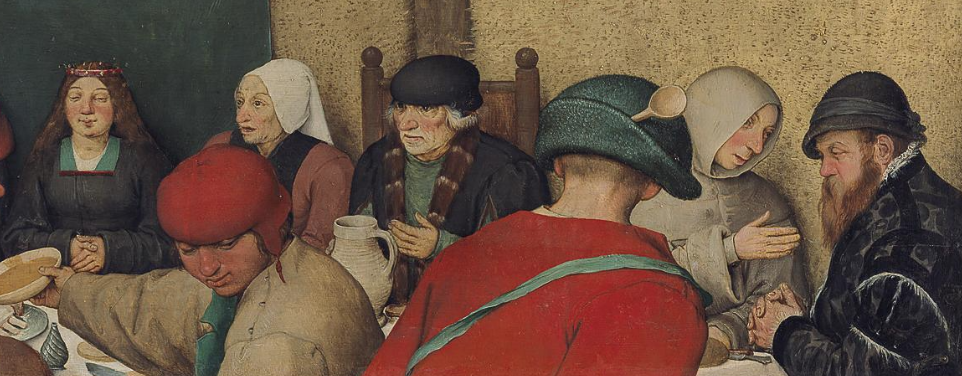
Pieter Bruegel the Elder, The Peasant Wedding, 1567, Kunsthistorisches Museum, Vienna, Austria. Detail.
On the bride’s left, we see a man with white hair. He is the notary, the public officer who certified the wedding. Next to him, a Franciscan monk speaking with a well-dressed man, the landowner, on whose land all these peasants live and work. It seems very strange, that the groom is nowhere to be seen, but according to Flemish custom he was not allowed to take part in the celebrations until the evening. Following the same custom, the bride was not allowed to eat or speak to anyone until the groom came.
To this day, there are many different opinions about the true meaning of the piece. Some think it holds a moralizing aspect while others believe there may be an element of satire about peasant life. Whatever the truth may be, with the Peasant Wedding Bruegel the Elder succeeds in offering a glimpse into rural life and customs in 16th-century Netherlands to the modern viewer but also to the city dwellers of his time.
DailyArt Magazine needs your support. Every contribution, however big or small, is very valuable for our future. Thanks to it, we will be able to sustain and grow the Magazine. Thank you for your help!

Art Historian, she graduated from the Department of History and Archeology of the University of Athens and has an MA in Art History from the University of Sussex. She is a member of the Association of Greek Art Historians. Her articles have been published in Ta Nea tis Technis and avopolis.gr.

Judith and Holofernes is a Caravaggio masterpiece that captures Biblical murder and drama. Rarely has death been captured so intensely and violently...
James W Singer 13 September 2026
Explore an astonishing 1915 nude self portrait by American modernist painter Florine Stettheimer.
Candy Bedworth 21 September 2026
Winslow Homer (1836–1910) was one of the leading American Realist painters. His painting The Veteran in a New Field is a masterpiece of late...
James W Singer 30 August 2026
At first glance, A Goldsmith in His Shop (1449) appears to depict an ordinary visit to a jeweller. Yet Petrus Christus transformed an ordinary...
Shivani Gupta 23 August 2026