

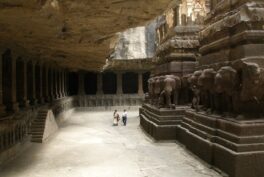
Ellora: 34 Caves Reveal Three Religions Side by Side in Ancient India
Carved into a nearly 1.2-mile stretch of basalt in Maharashtra, India, the Ellora Caves are an astonishing rock-cut architectural achievement and...
Maya M. Tola 14 September 2026
23 September 2026 min Read
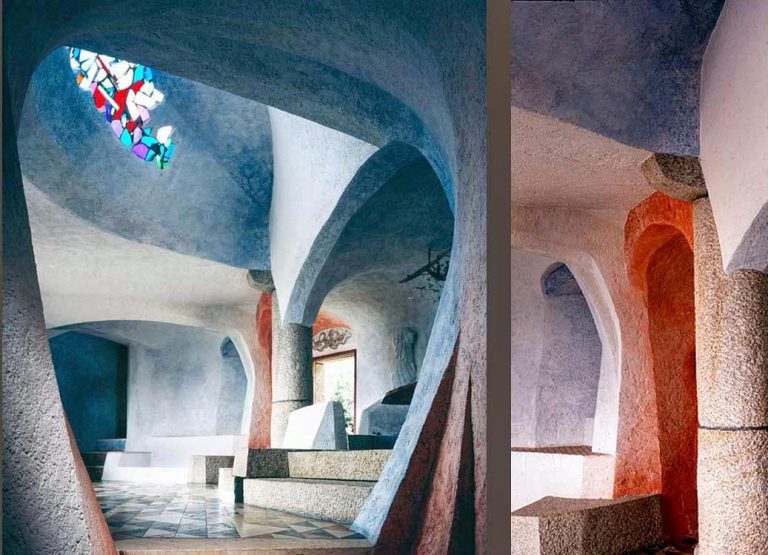
Savin Couëlle, Villa dei Due Mari (House of Two Seas), Sardinia, Italy. Couelle.com.
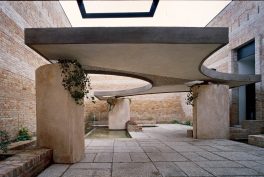
Architect Savin Couëlle’s (1929–2020) organic designs go beyond extensions of the natural landscape. He created a feeling of being one with nature. Couëlle designed living spaces that are actually alive. By integrating raw, natural materials into his designs (stone, wood, and clay) he gave them a life of their own. Exteriors and interiors seem to merge into one, adding a contemporary layer to the land. He designed with a great appreciation and respect for nature. Couëlle’s architecture is sculptural. He created gestural shapes and forms that are reminiscent of a seashell: organic and fluid, always with a surprise waiting inside.
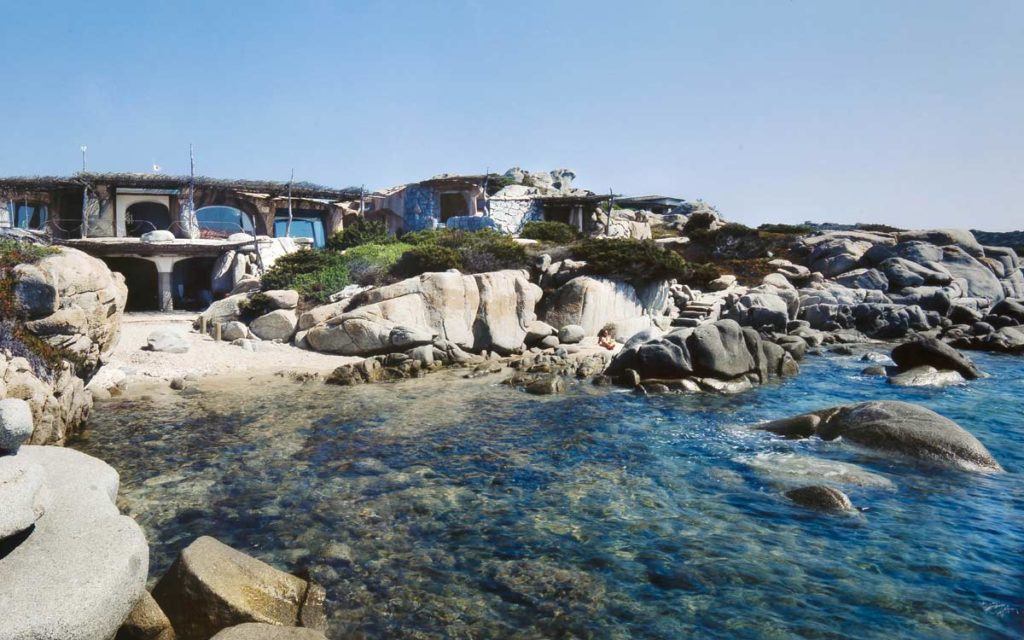
Little is known about the personal history of architect Savin Couëlle. He was born on February 25, 1929, in Aix-en-Provence, France. Later, he attended L’Ecole des Beaux-Arts in Paris and studied architecture. After completing his education, Couëlle moved to Madrid, Spain, and worked for seven years as a production set designer for cinema. In the early 1960s, he collaborated with his father, renowned architect Jacques Couëlle, on the renovation of the Hotel Cala di Volpe in Costa Smeralda, Sardinia, Italy. Savin Couëlle lived in Sardinia for many years, but also traveled around the world to build homes in Spain, Australia, the Bahamas, Santo Domingo, New Zealand, and Dubai.
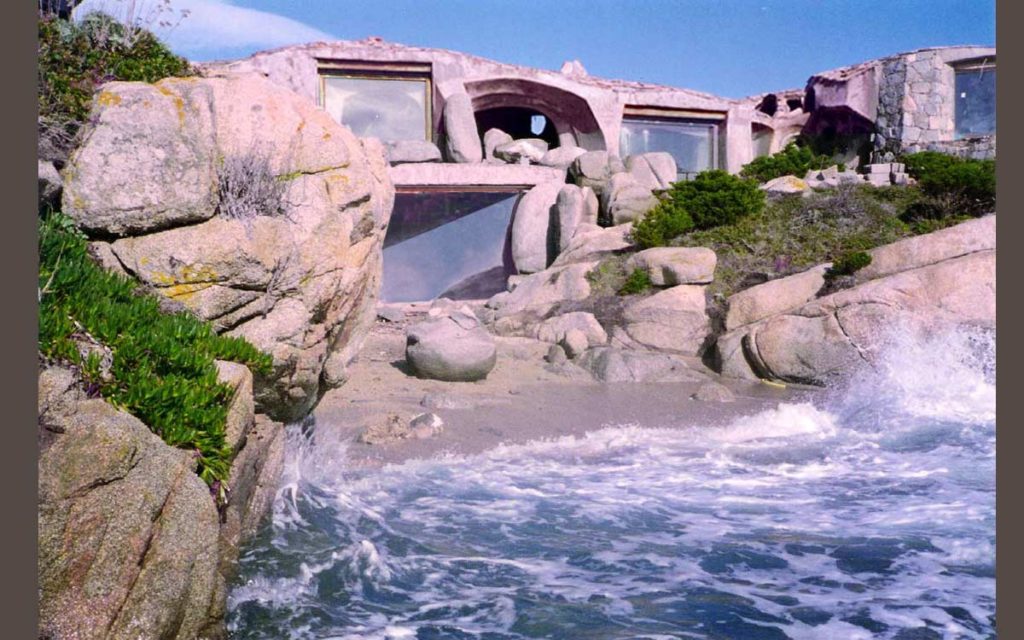
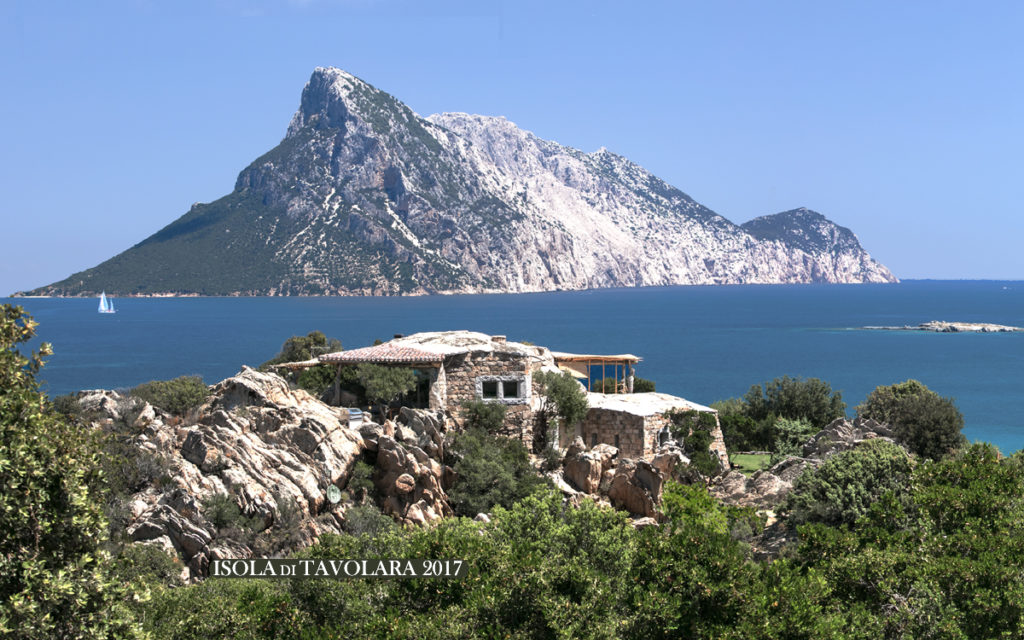
In Sardinia, Couëlle certainly left his mark through organic architecture, which creates a harmonious balance between building and nature. The majority of his designs can be seen all over the island, especially around the popular resort area of Costa Smeralda. He definitely designed these homes with nature in mind. Couëlle’s knowledge and appreciation of the island’s natural landscape are clearly visible in his work. He worked with raw, natural, and locally sourced materials such as granite and juniper wood to display the beauty of the island in his designs.
As an architect, he wanted to work with the landscape, not to compete with it. Couëlle’s awareness of the energy and flow of the natural environment was valuable observation that helped him realize his visions. For example, the shape of a window might mimic the shape of a mountain seen from that window. Over the years, Couëlle worked with a hand-picked team of craftsmen and artisans whom he had trained to help him successfully execute his designs.
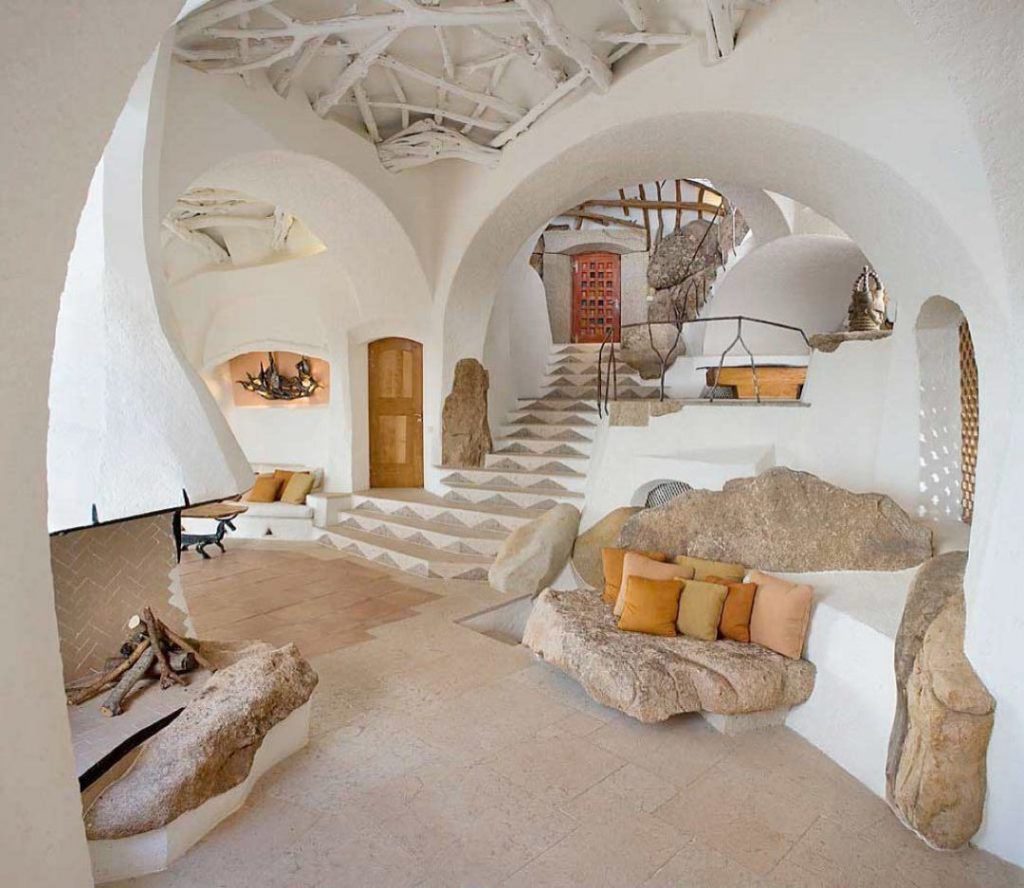
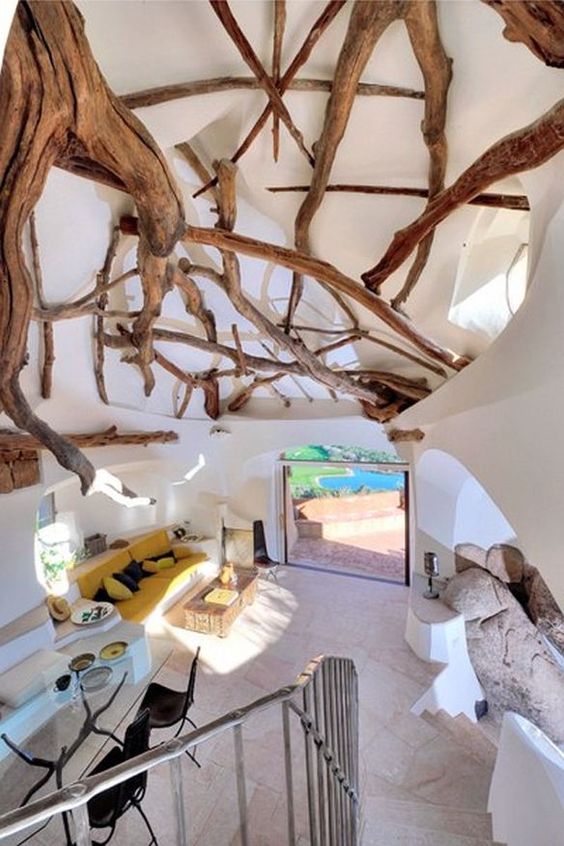
Both modern and organic, the interiors of Savin Couëlle’s homes echo the harmony of the natural world. His style tends to include staircases, often winding, that are usually carved from stone and feel like they have always been there. He liked to design wide, swooping arches that resemble cave interiors and vaulted, plaster ceilings sometimes covered with natural reeds or tree trunks to bring a certain energy to the space.
Couëlle also knew exactly where to place a window to let the sunlight in so that the space could breathe. Although many of his Sardinian interiors have a cave-like feel, the rooms lack the darkness of a cave. Instead, they are bright, warm areas that are spacious and inviting. In many of his designs, he included boulders to be used as seating areas or as day beds. Other staples of his style are the inclusion of tiled floors, stone archways, and arched or circular windows.
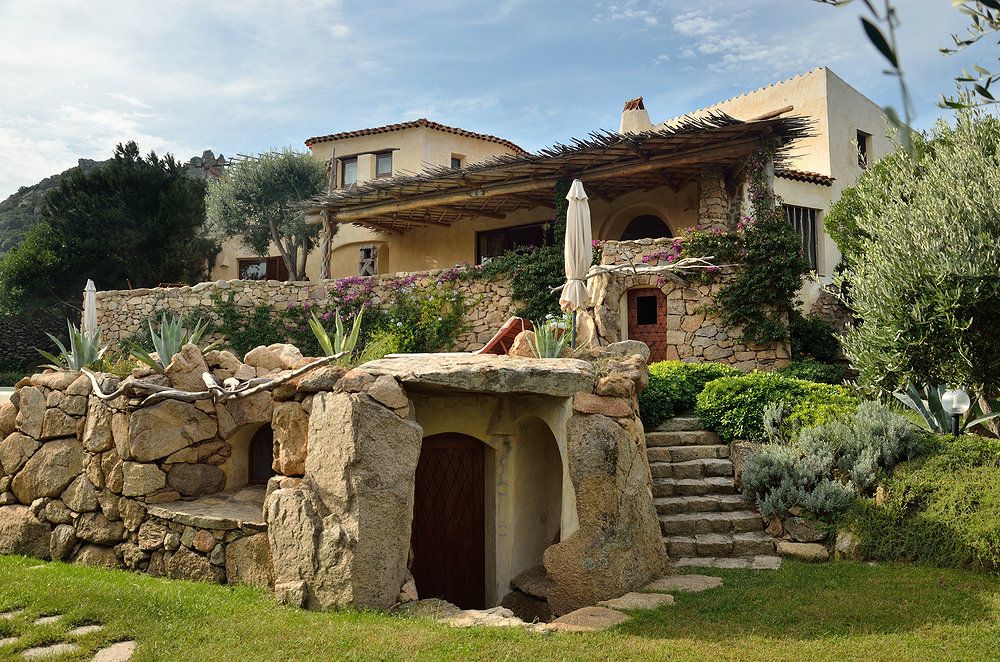
Many of the exteriors Couëlle designed seem to blend into the landscape. If it weren’t for the windows or doors, these houses could easily be overlooked. This is what is most impressive about his designs—the ability to connect architecture and nature in a harmonious way without destroying the natural environment.
His designs also put a spin on the classic Mediterranean style by embracing the topography to create exteriors with a balance between home and nature. Balconies and terraces stretch out towards the horizon and embrace the seascape. Couëlle often worked with in situ raw stone to create tables or seating areas so homeowners and their guests could temporarily become a part of the native terrain.
One of Savin Couëlle’s last projects was to create a waterfront home in Dubai, United Arab Emirates. His designs were inspired by both Islamic and Western cultures. Because of his extensive travels, he left his signature organic style all around the world, which encourages us to think about how to design mindfully to keep a balance with nature.

DailyArt Magazine needs your support. Every contribution, however big or small, is very valuable for our future. Thanks to it, we will be able to sustain and grow the Magazine. Thank you for your help!

Artist and Writer. Marga is fascinated and inspired by the ancient world, art history and archaeology. You can find more of her work here: www.margapatterson.com
Carved into a nearly 1.2-mile stretch of basalt in Maharashtra, India, the Ellora Caves are an astonishing rock-cut architectural achievement and...
Maya M. Tola 14 September 2026
Carved into a nearly 250-foot-wide (75 m) cliff in the Aurangabad district of Maharashtra, India, the Ajanta Caves are renowned as among the finest...
Maya M. Tola 24 September 2026
When we talk about the beautiful sights of Paris, many first think of the obvious ones—the Eiffel Tower, the Louvre Museum, and the Notre-Dame...
Nikolina Konjevod 15 March 2026
American cities are renowned for their many architectural landmarks, featuring ornate domes, columns, and sculpted façades. Less widely recognized,...
Maya M. Tola 4 August 2025