


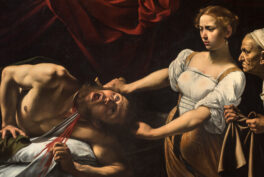
Masterpiece Story: Judith and Holofernes by Caravaggio
Judith and Holofernes is a Caravaggio masterpiece that captures Biblical murder and drama. Rarely has death been captured so intensely and violently...
James W Singer 13 September 2026
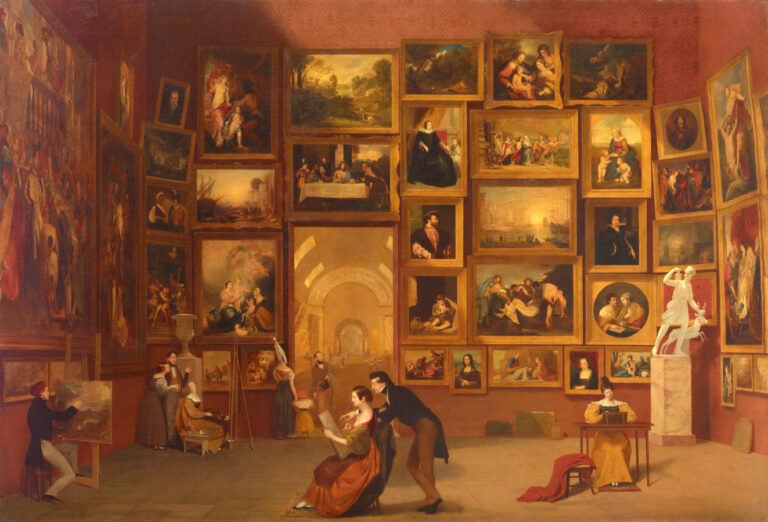
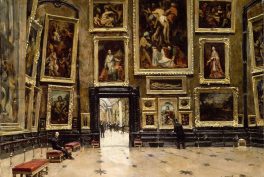
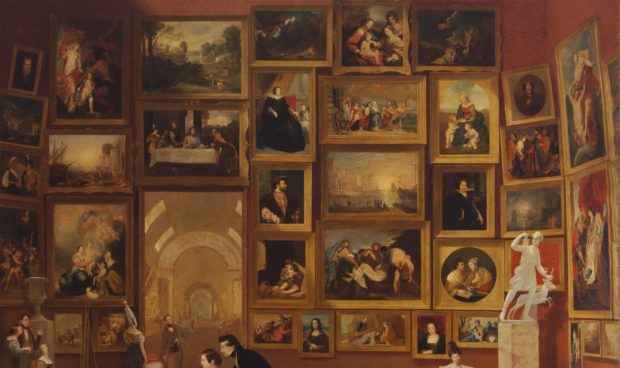
Samuel Morse, Gallery of the Louvre, 1831–1833, Terra Foundation for American Art, Chicago, IL, USA.
Samuel F. B. Morse was an American painter who graduated from Yale University and went on to the Royal Academy in England, where he studied painting. Yes, it was he who invented the telegraph and Morse code, no small feats, which allowed for the laying of the transatlantic cable in 1858 and greatly affected the outcomes of both the Mexican-American and Civil War. Disappointed with his success as a painter, Morse turned to inventing.
But before that, Morse painted this masterpiece. From 1830–1832 Morse traveled to Europe to further improve his painting skills stopping in Paris where he created The Gallery of the Louvre; this large oil on canvas painting included miniature artworks of 38 of the Louvre’s most famous pieces including works by Veronese, Tintoretto, Caravaggio, Titian, Jouvenet, Murillo, Poussin, Vernet, and Reni. For this canvas, Morse imaginatively “reinstalled” them in one of the museum’s grandest spaces, the Salon Carré.
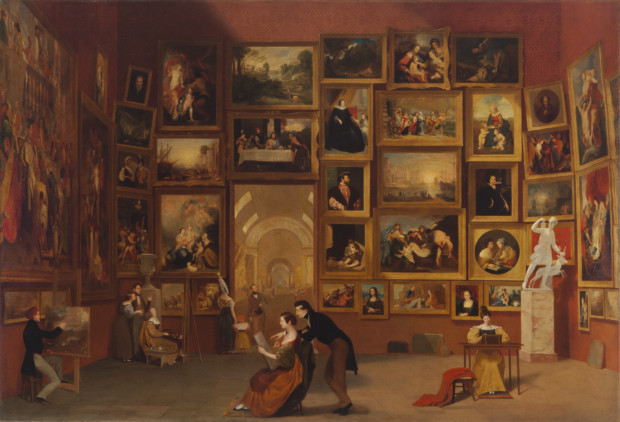
Morse included several interesting figures in The Gallery of the Louvre, including himself in the center, looking over the shoulder of his possibly daughter, Susan, as she paints. Also, we see a woman painting alone at the easel, this is presumably his late wife, Lucretia Pickering, and the writer James Fennimore Cooper stands in the corner gesturing to his daughter.
Richard Habersham, a portraitist and former roommate of Morse, is painting a seascape in the forefront, and emerging from the long hall is Horatio Greenough, a sculptor whom Morse met in Paris and who went on to create a colossal marble monument to George Washington. We also see a woman and child with their backs to us, who appear to be from Brittany; this serves as a reminder that the Louvre was open to people from all walks of life.
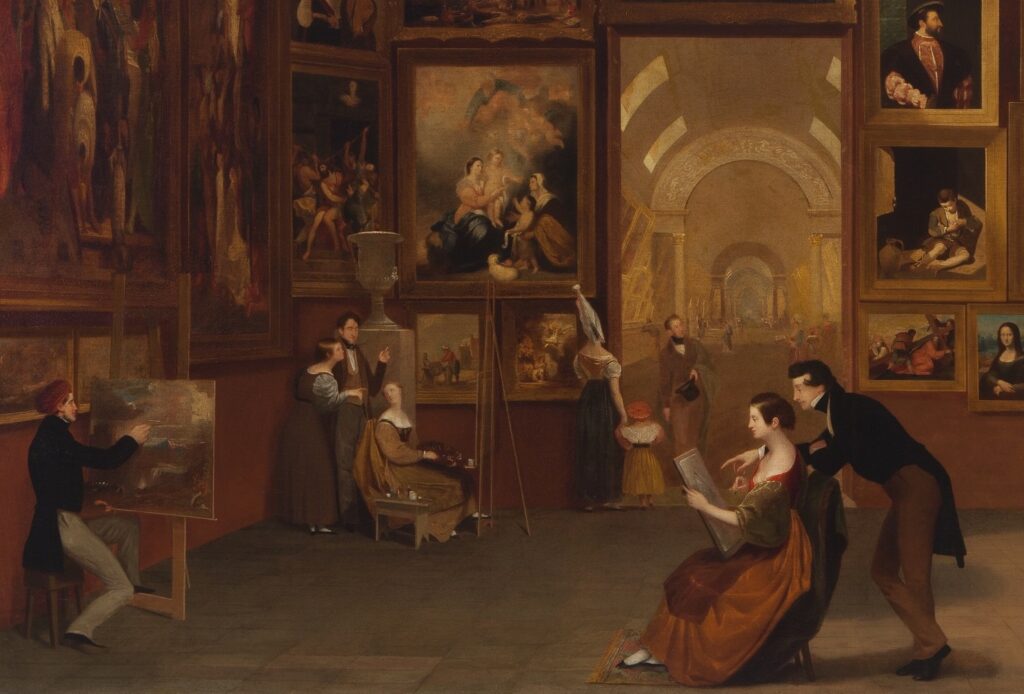
Morse completed Gallery of the Louvre upon his return to America with the intention of charging 25 cents per viewing of this remarkable work. At the time in the U.S., there were no museums to display Italian or French Renaissance masterpieces, so his intention was to educate the American public.
In 1883, the New-York Mirror wrote: “Here shine in one grand constellation, the brilliant effusions of these great names destined to live as long as the art of painting exists”. However, the viewing public was not as enthusiastic and rejected the artwork. It eventually sold for half of what Morse was asking. Today, Gallery of the Louvre belongs to the Terra Foundation for American Art.
How many famous pieces from the Louvre can you recognize here?
DailyArt Magazine needs your support. Every contribution, however big or small, is very valuable for our future. Thanks to it, we will be able to sustain and grow the Magazine. Thank you for your help!

Art Historian, founder and CEO of DailyArtMagazine.com and DailyArt mobile app. But to be honest, her greatest accomplishment is being the owner of Pimpek the Cat.
Judith and Holofernes is a Caravaggio masterpiece that captures Biblical murder and drama. Rarely has death been captured so intensely and violently...
James W Singer 13 September 2026
Winslow Homer (1836–1910) was one of the leading American Realist painters. His painting The Veteran in a New Field is a masterpiece of late...
James W Singer 30 August 2026
At first glance, A Goldsmith in His Shop (1449) appears to depict an ordinary visit to a jeweller. Yet Petrus Christus transformed an ordinary...
Shivani Gupta 23 August 2026
With Virgin and Child as a cornerstone of her reputation, Elisabetta Sirani should be recognized as an important Italian Baroque artist. Far more...
James W Singer 16 August 2026