

Dancing Through Art! The Best Depictions of Dance in Art History
Dance has appeared in art since humans began creating artworks, reflecting it’s importance in people’s lives. Artists have captured the...
Jimena Escoto 16 October 2025

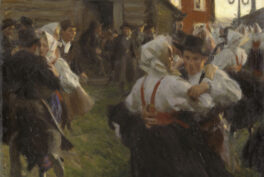
Nils Blommér, Fairies of the Meadow, 1850, Nationalmuseum, Stockholm, Sweden. Detail.
Dance has long been a captivating subject in art, serving as a dynamic reflection of human movement, rhythm, and emotion. Even in the stillness of painted canvases, artists capture the fluidity and energy of dance. Though stationary, these artworks narrate stories of rhythm and movement, revealing a dynamic interplay between form and motion.
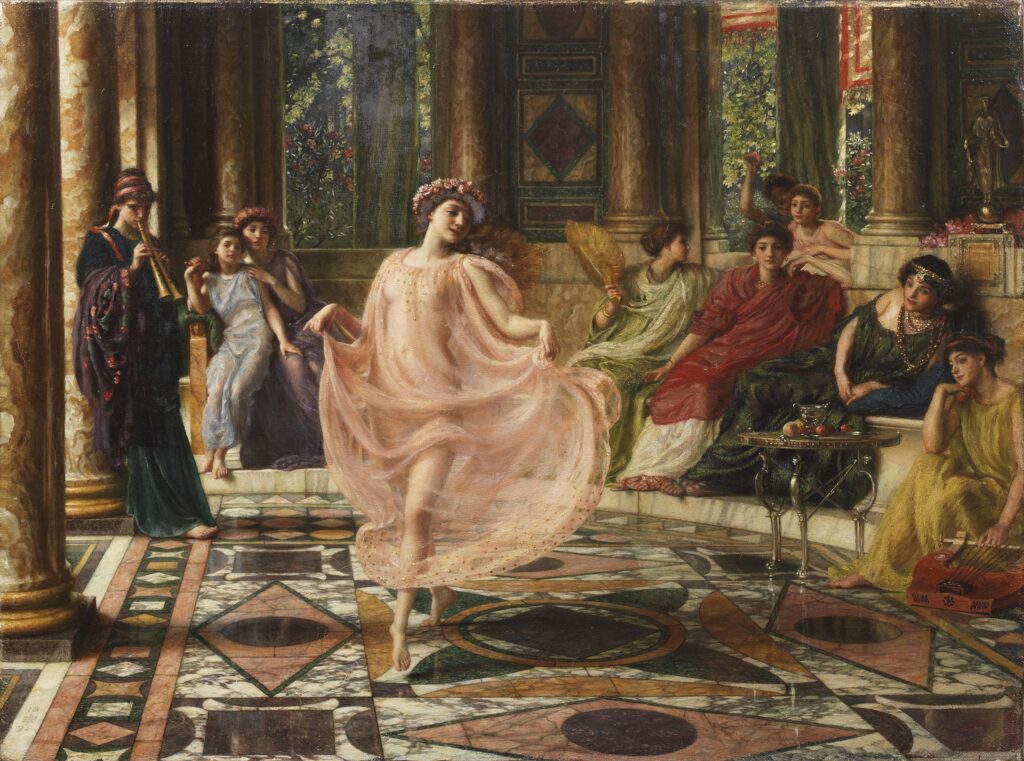
Edward Poynter, The Ionian Dance, 1895, private collection. Wikimedia Commons (public domain).
British artist Edward John Poynter, known for his meticulous historical detail, spent considerable time in Rome during the 19th century and was profoundly influenced by the discoveries at Pompeii.
His painting The Ionian Dance vividly captures a scene from Ancient Rome. It features a young Greek girl in a translucent gown performing a native Ionian dance for her Roman mistress, who reclines in a dark green dress adorned with jewelry. Set against a backdrop of intricate Roman interiors, this work reflects the ancient Roman fascination with exotic cultures and entertainment.
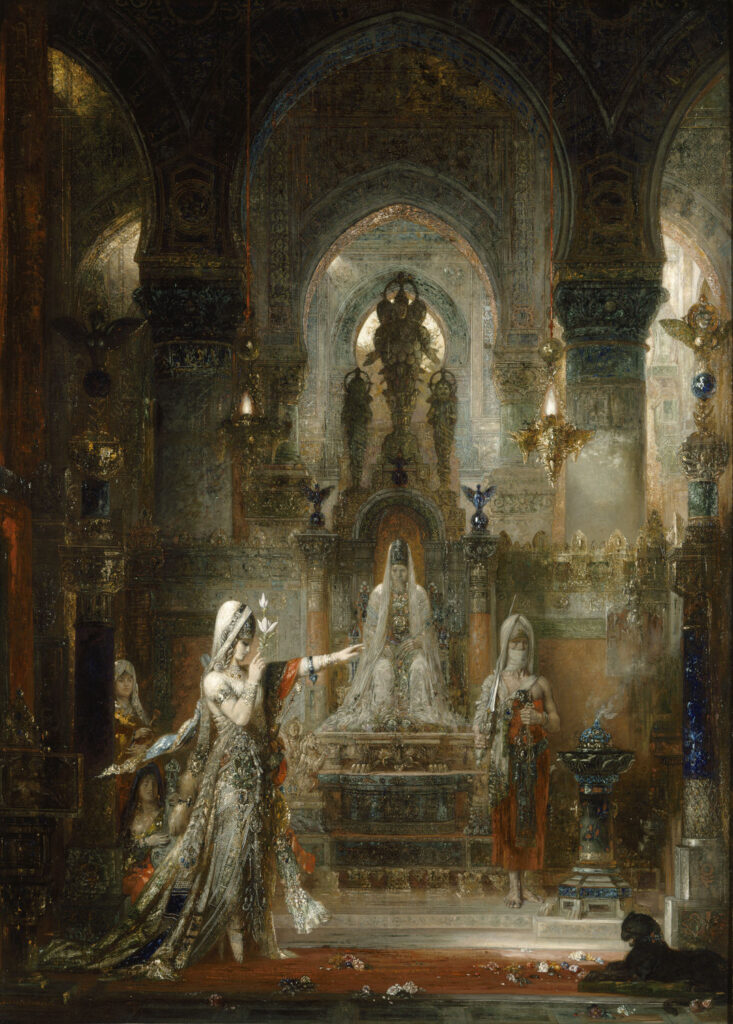
Gustave Moreau, Salome Dancing Before Herod, 1876, Hammer Museum, Los Angeles, CA, USA.
Gustave Moreau, a French symbolist painter known for his mystical and richly detailed works, captures the dramatic intensity of Salome’s dance in Salome Dancing Before Herod. The painting’s opulent details and bold colors highlight the tension and allure of the scene, with Moreau’s vivid ornamentation bringing to life both the sensuality of the dance and its profound narrative significance.
The biblical story behind the painting involves Salome, daughter of Herodias, performing for King Herod Antipas. Herod, pleased by the dance, offers a reward. Under her mother’s influence, Salome demands the head of John the Baptist, leading to his execution and revealing a backdrop of political intrigue and personal vendettas.
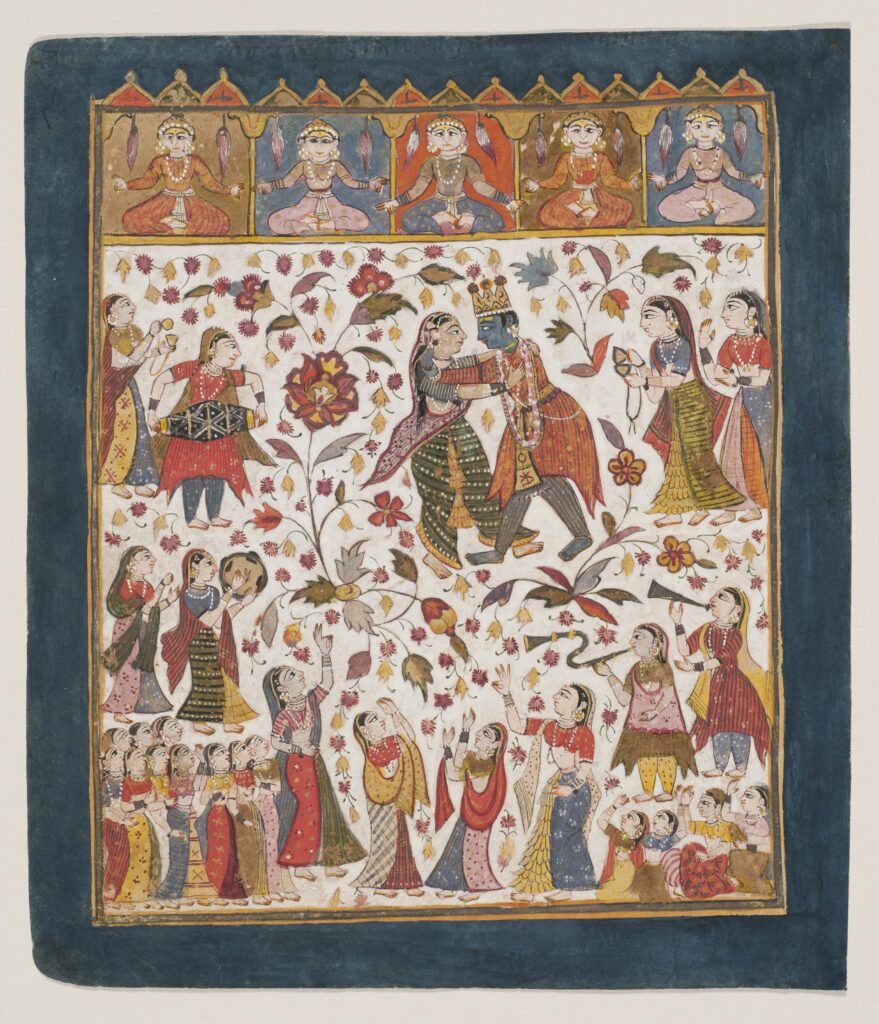
Krishna Dances with One Gopi, ca. 1720, Philadelphia Museum of Art, Philadelphia, PA, USA.
In Krishna Dances with One Gopi, housed at the Philadelphia Museum of Art, the artist or artists focus on a singular, intimate moment of the Hindu god Krishna. Unlike other paintings of the Rasalila, in which Krishna is surrounded by numerous women, this artwork highlights the divine lover’s personal connection with a single gopi. The scene portrays an intimate performance by the pair, surrounded by gopis playing an array of musical instruments.
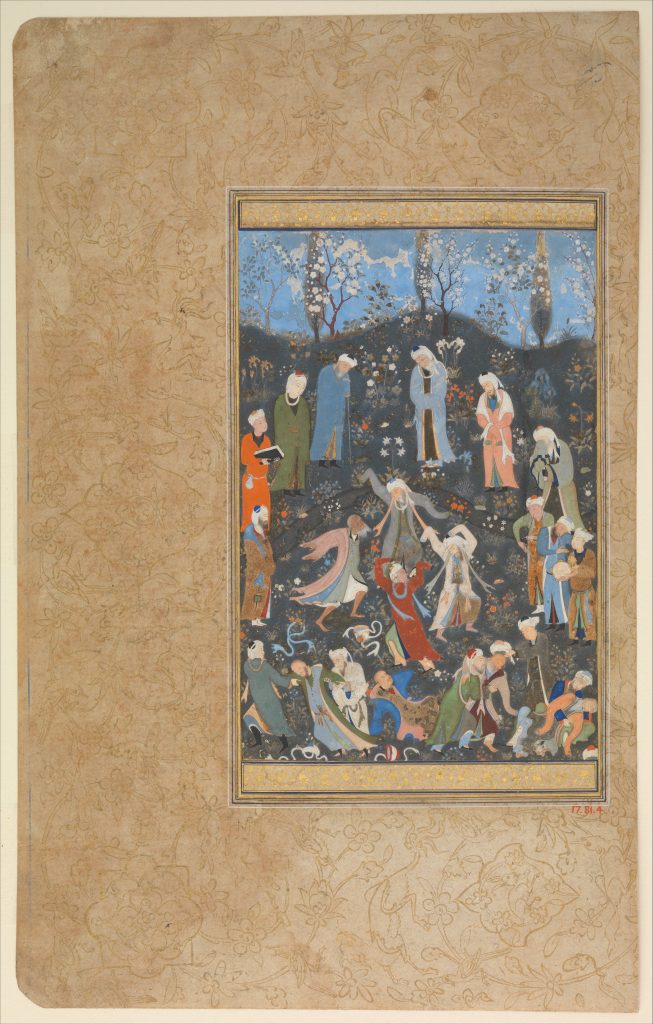
Bihzad (attributed), Dancing Dervishes, folio from The Divān of Hafez, ca. 1480, Metropolitan Museum of Art, New York City, NY, USA.
Sufism, the mystical branch of Islam, is perhaps most visually recognized through the rhythmic whirling of its practitioners. This moving meditation is meant to induce a state of religious ecstasy and direct communion with the Divine.
This spiritual fervor is captured in a 15th-century miniature folio from The Divan of Hafez, attributed to the celebrated Iranian painter Bihzad. The artwork illustrates a Sama ceremony where dervishes appear to be dancing as if intoxicated. Their fluid movements are set against a vibrant landscape that symbolizes firdous, or paradise. Within this lush environment, the energetic spiraling of the dancers is beautifully balanced by the still, meditative figures encircling them.
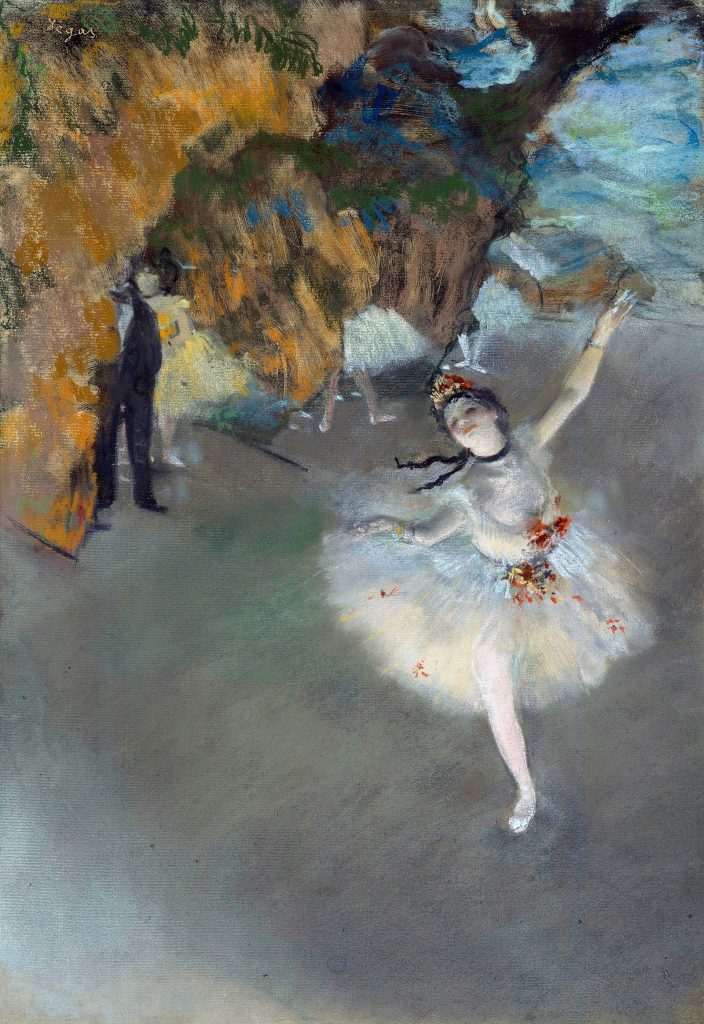
Edgar Degas, Ballet (The Star), ca. 1876–1877, Musée d’Orsay, Paris, France.
No list exploring the depiction of dance in art is complete without Edgar Degas. In countless works, Degas demonstrated an obsession with dancers, particularly ballerinas. While many of these depict dancers in transitional moments, such as during rehearsal or in exhaustion after a performance, Ballet (The Star) focuses on a prima ballerina during a live performance, captured in a moment of stardom. The painting’s specific angle suggests a view from a private box located near and above the stage.
Get your daily dose of art
Click and follow us on Google News to stay updated all the time

DailyArt Magazine needs your support. Every contribution, however big or small, is very valuable for our future. Thanks to it, we will be able to sustain and grow the Magazine. Thank you for your help!

Maya Tola is a Dallas-based attorney, with a zest for art history. A time traveler at heart, Maya often finds herself consumed in the contemplation of life in antiquity. She has been sharing her infectious enthusiasm for art and history since 2018 through her posts and articles for the DailyArt App and DailyArt Magazine. When she's not working or writing, you'll find Maya obsessing over plants, animals, and food (in no particular order).

Coffee-fueled writer, artist, and daydreamer.
Dance has appeared in art since humans began creating artworks, reflecting it’s importance in people’s lives. Artists have captured the...
Jimena Escoto 16 October 2025
Ballets Russes was a ballet company founded by the famous impresario Sergei Diaghilev. No doubt, Ballets Russes made Russian ballet famous all around...
Guest Author 21 May 2025
Can-can paintings depict the most famous dance of the Belle Époque era. Originating in France, the Can-can, associated with skirts, petticoats, high...
Charlotte Stace 6 November 2025
Anna Pavlova, a Russian ballerina, was highly independent for her times. She formed her own company and choreographed her own performances. She toured the world for twenty years and introduced ballet to other parts of the world. Pavlova was so famous that she was honored with a dessert named after her, it is called the Pavlova cake!
Anuradha Sroha 21 May 2025