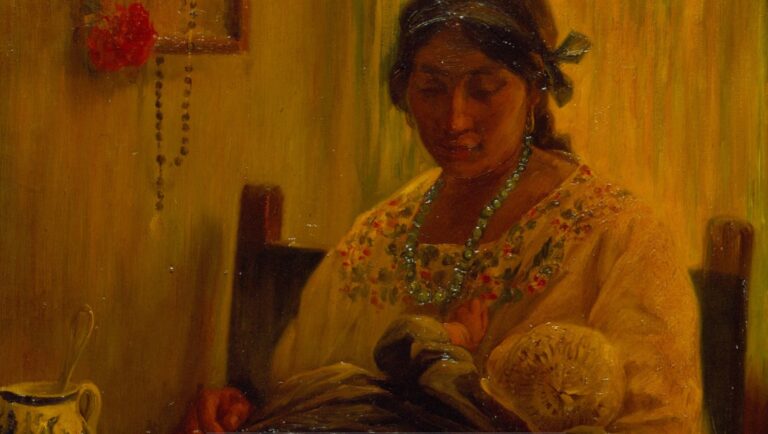
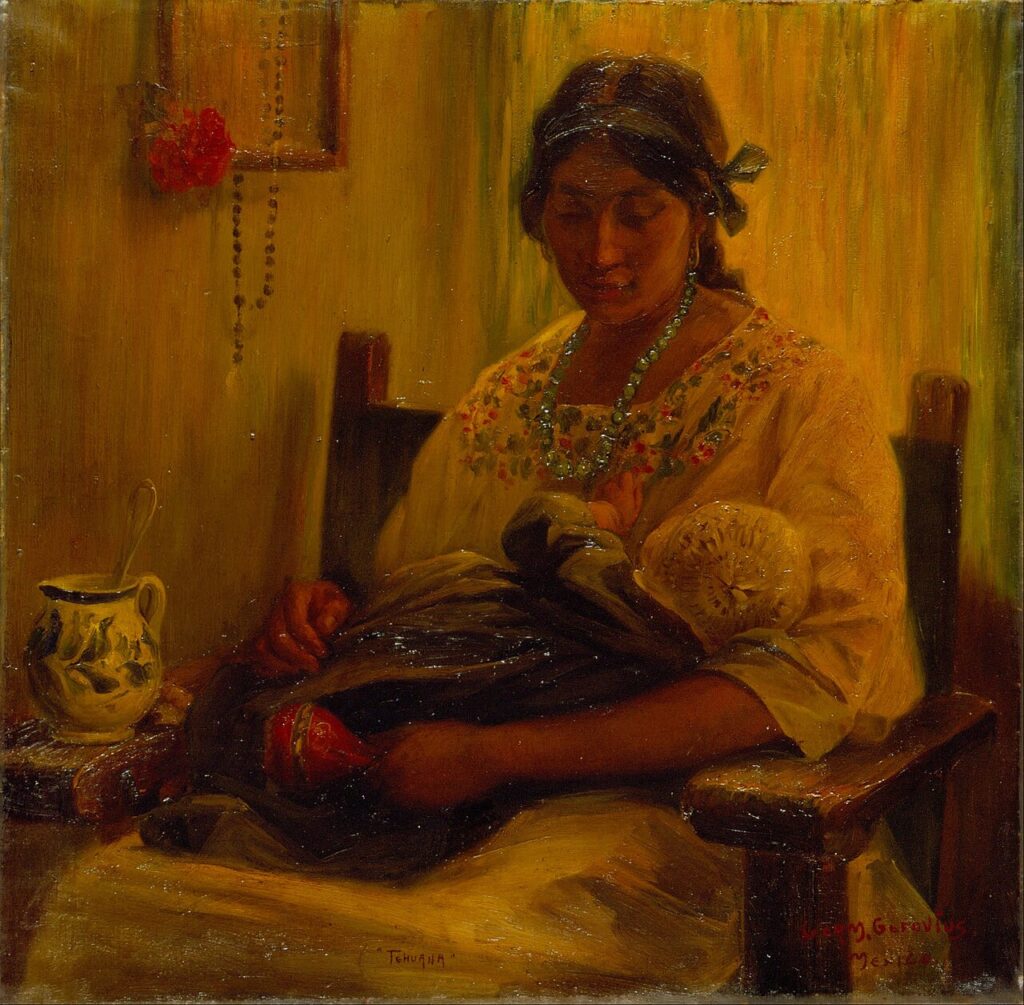
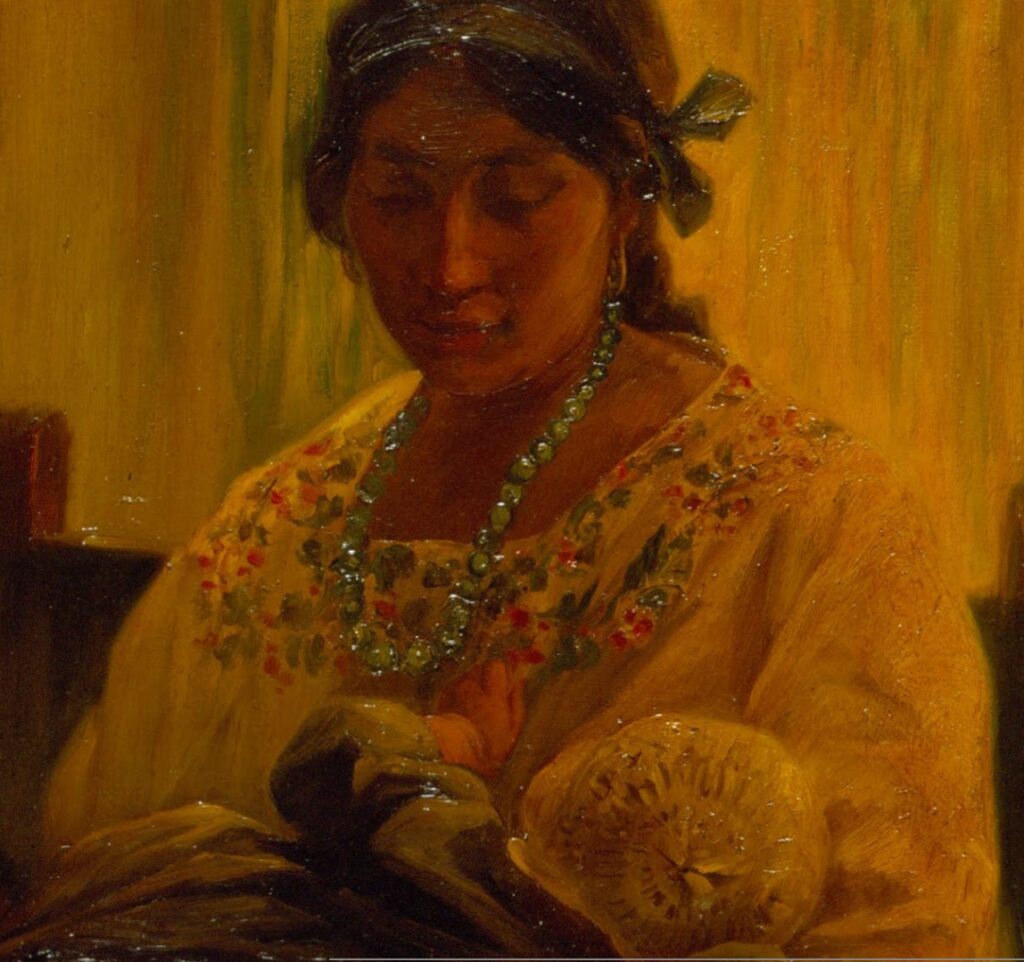
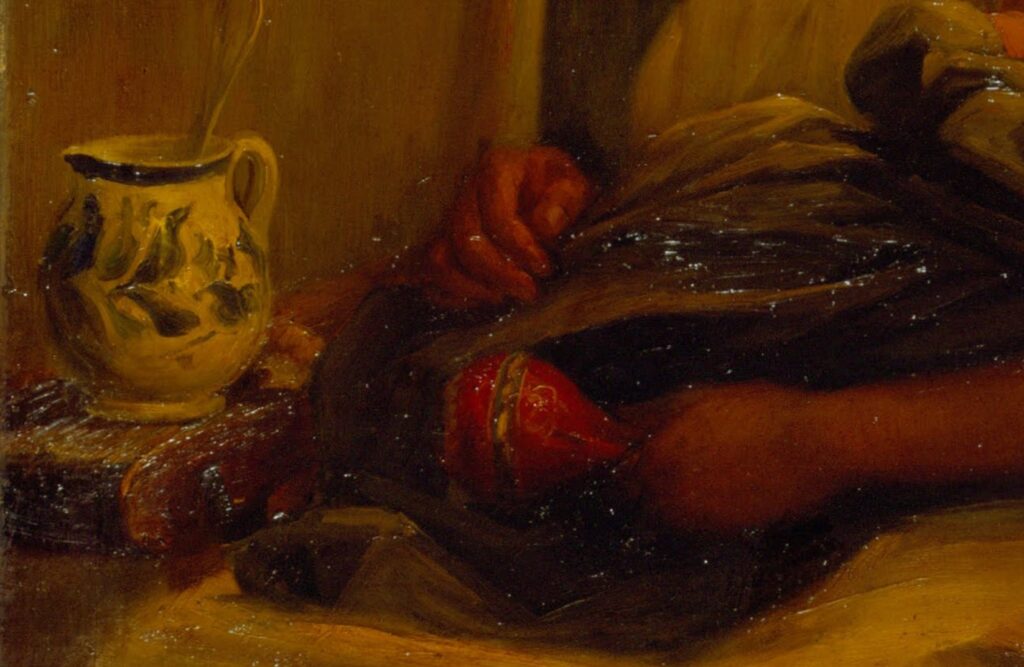
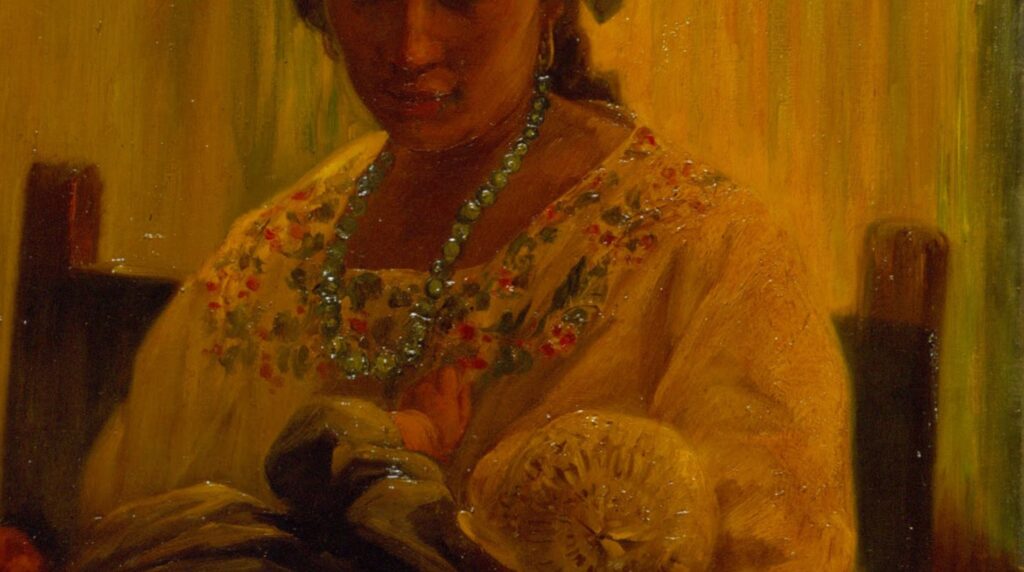
A brown-skinned woman sits in a wooden chair while she carries her child. In her left hand, she holds a rattle, but the baby seems more entertained by the huipil’s embroidery. The mother’s necklace, made of green or blue stones, matches the ribbon tied in her hair. A traditionally-made jar with a blue design sits on the armrest.
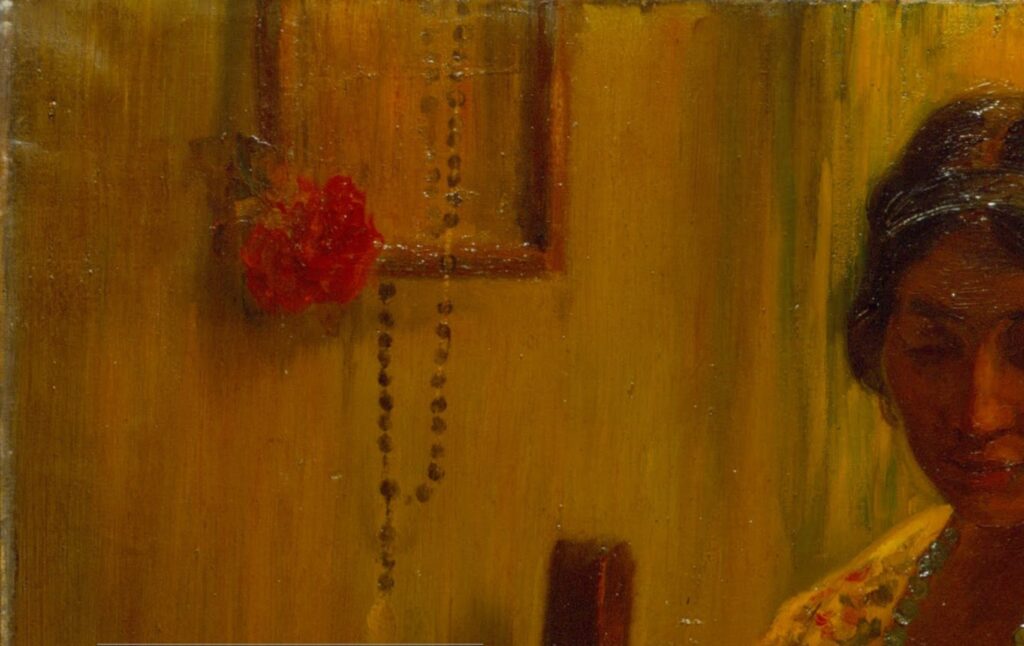
The only decoration visible in the room is a frame on the wall with no clear image. A pink flower and a rosary hang from it, which may indicate the religious theme of the unseen painting. The rest of the space is filled with broad strokes of paint in yellow, orange, red, and green tones. In fact, the entire scene is bathed with warm colors that create an intimate atmosphere.
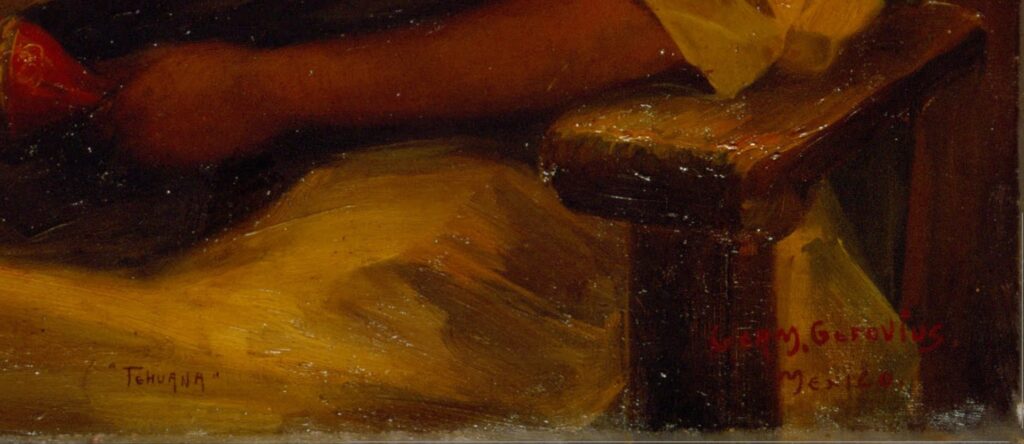
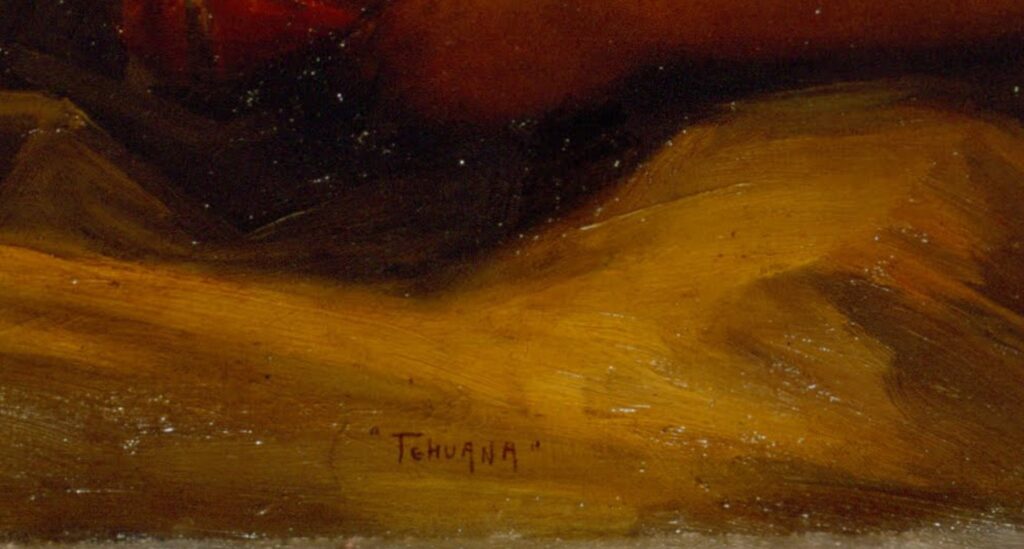
In the lower middle region, Gedovius added in capital letters, “Tehuana”. To its right, he signed with the text: “Germ. Gedovius. Mexico.”
Germán Gedovius
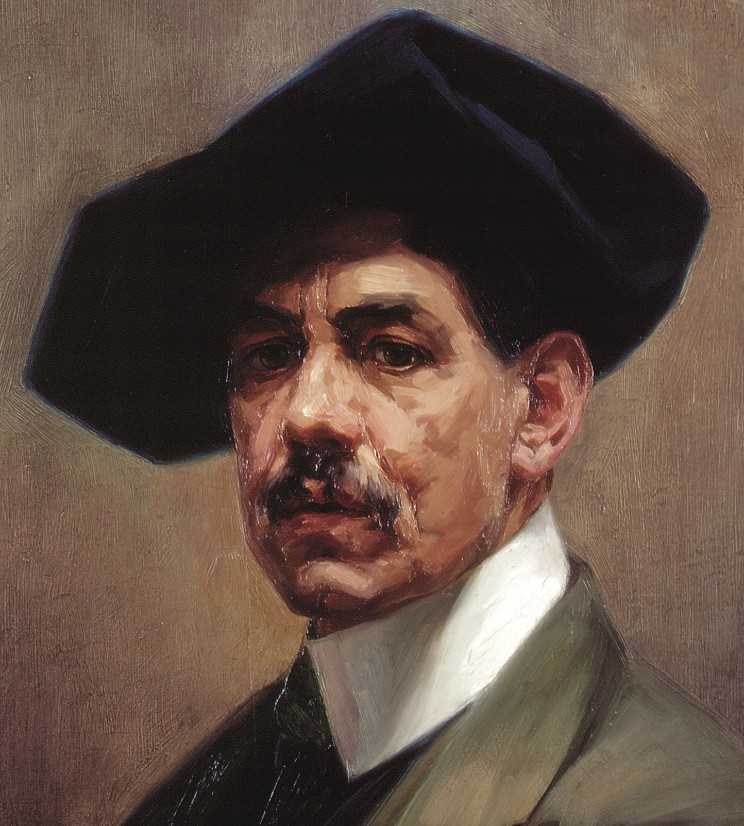
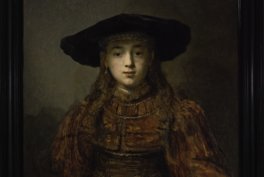
Germán Gedovius Huerta (1866–1937) was born in Mexico City, Mexico, although he moved to San Luis Potosí soon afterward. In 1882, he returned to the capital to study painting at the San Carlos Academy. Years later, he went to Germany to try out treatments for his deafness and to continue his education as an artist. Contact with European art influenced his training and shaped his identity. This self-portrait, for example, shows him in a Flemish traditional attire.
Upon his return to Mexico in 1893, he became an influential artist who participated in exhibitions at the Academy and others organized by the state. He also worked as a professor at the San Carlos Academy and taught some of the greatest artists of the next generation, namely, Diego Rivera, Ángel Zárraga, and María Izquierdo.
Motherhood in Mexican Art
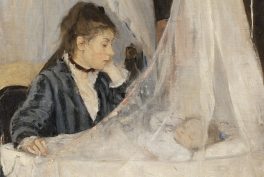
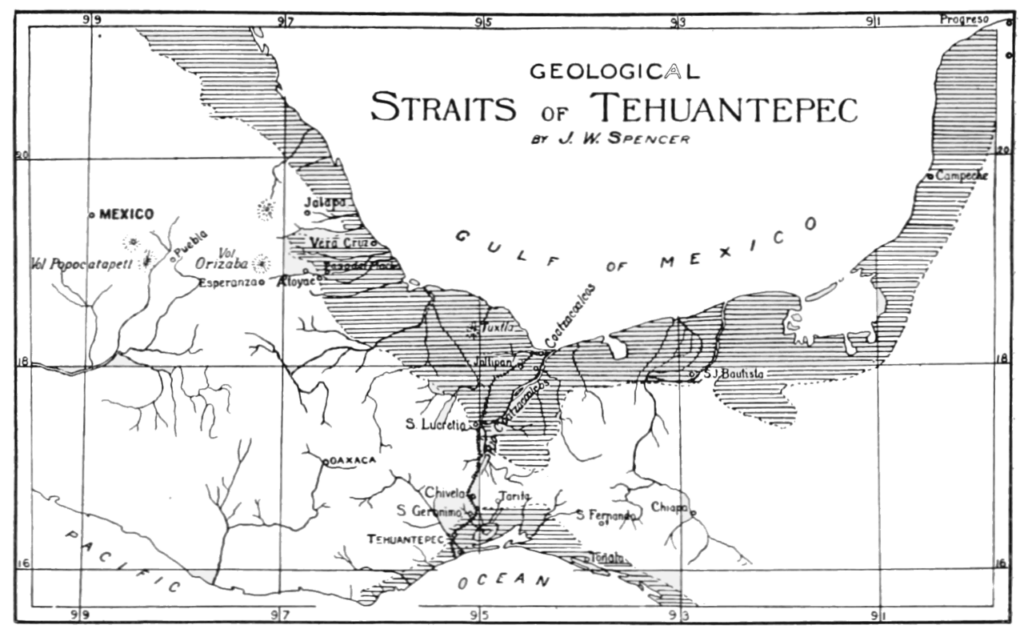
In 19th-century Mexico, mothers were seen as the main educators of morals. Later on, in the revolutionary and post-revolutionary Mexico of the 20th century, images of mothers became a pillar of the government’s nationalistic narrative. Artists created dozens of paintings, murals, sculptures, and monuments that cemented the importance of these women. There was a clear link to the Catholic faith of the majority of Mexicans, in which these works of art recalled the theme of the Virgin Mary and Child. But this is not just any mother. This is a mother from the Tehuantepec region.
Women from Tehuantepec in Mexican Art
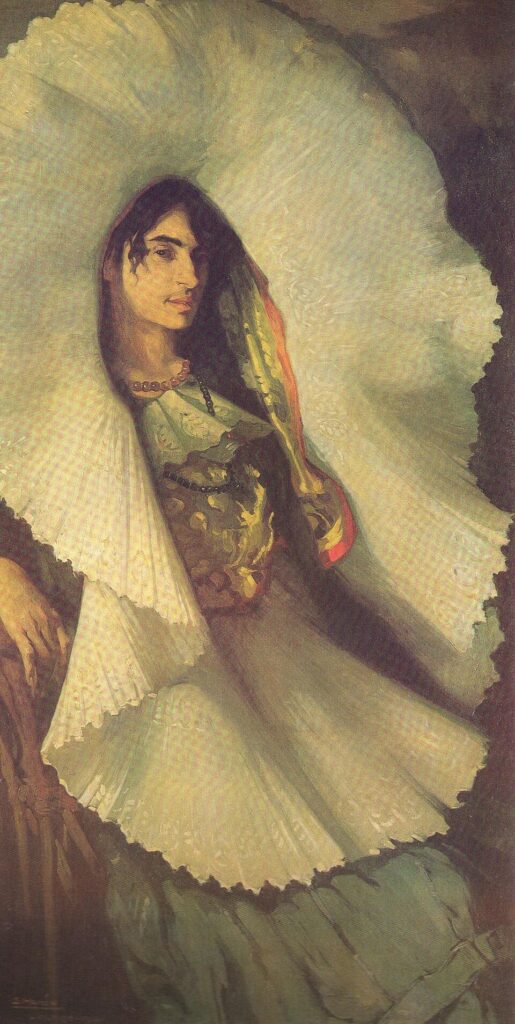
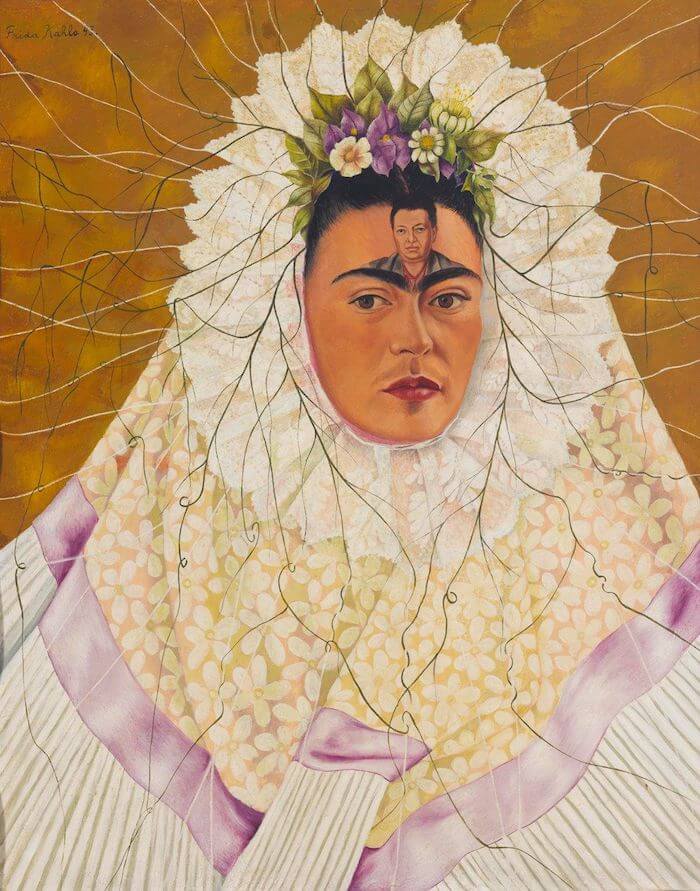
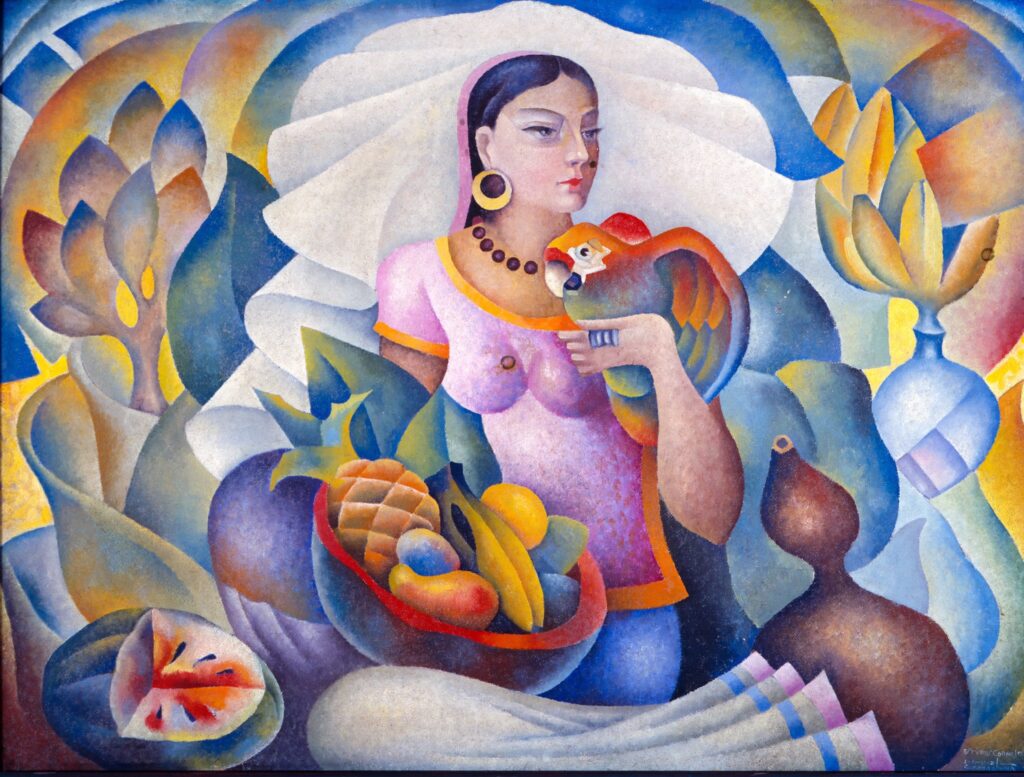
Germán Gedovius’ painting forms part of a long tradition of Tehuan women in Mexican art history. Here are three examples from the 20th century: