
Joan Brown: Painting a Life in San Francisco
American artist Joan Brown (1938–1990) painted her life as she experienced it. Her son, her husbands, her cats and dogs, swimming in San Francisco...
Charlotte Stace 16 November 2026
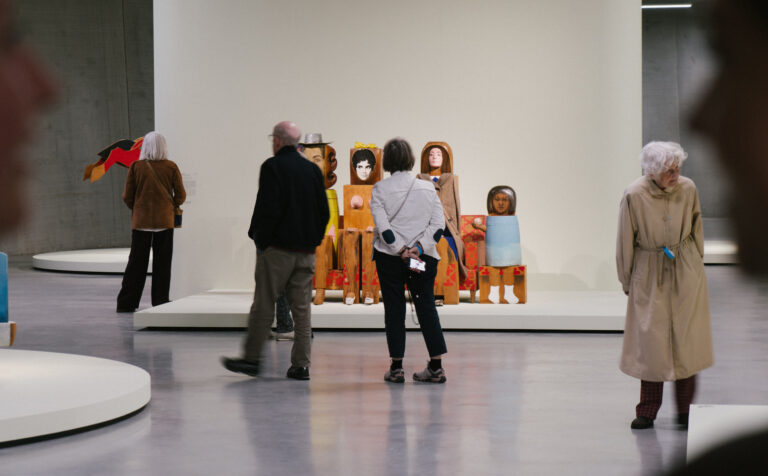
Exhibition view of Marisol, Museum Boijmans Van Beuningen, Rotterdam, Netherlands. Detail.
Marisol Escobar (known simply as Marisol) was a Venezuelan-American artist best known for her colorful, playful sculptures that made her one of the most distinctive figures of the Pop Art movement. Now, Museum Boijmans Van Beuningen is bringing renewed attention to Marisol’s remarkable career with a major retrospective at its Depot in Rotterdam, on view through March 29, 2027. Press officer René Timmermans takes us through five highlights from the exhibition.
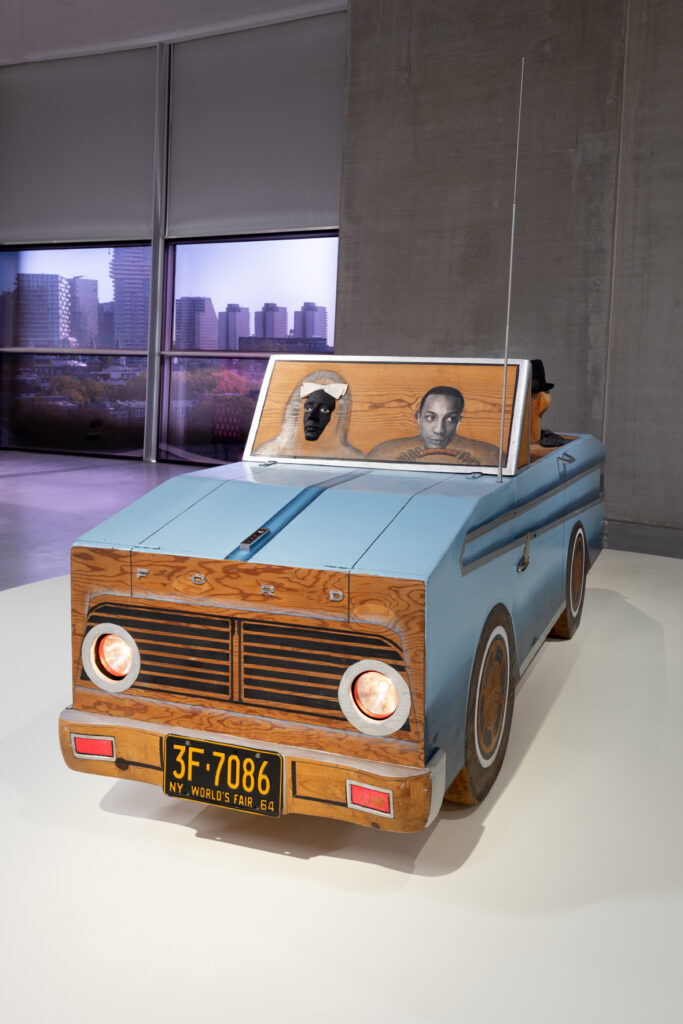
Marisol Escobar, The Car, 1964, Museum Boijmans Van Beuningen, Rotterdam, Netherlands.
A visitor favourite from the museum’s own collection. This blue half-scale Ford Falcon convertible carries five passengers: young and old, male and female, black and white. They hold various accessories, including sunglasses, a hat, a cigarette, and hair bows. The car even has working headlights, and the radio plays cheerful tunes by artists such as The Beatles.
The New York Times once described the work as “a group of joyriders”. But is that really what it is? In this sculpture, Marisol explores questions of identity: Who am I? Where am I going? At the same time, she criticises and challenges the limits of freedom. For many people, the car is the ultimate symbol of freedom. Marisol points out that, for non-white Americans, this freedom was still more of an ideal than a reality.
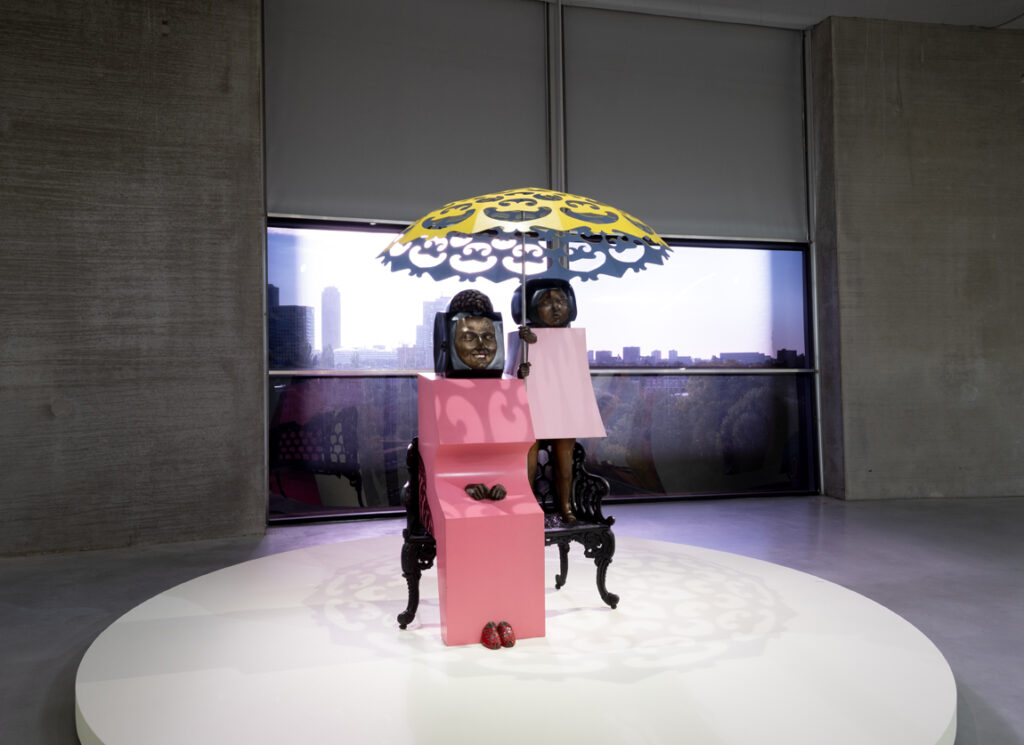
Marisol Escobar, Mi Mama y Yo, 1968, Buffalo AKG Art Museum, Buffalo, NY, USA.
In this work, Marisol portrays herself as a young girl standing beside her smiling mother, Josephina. Behind this image lies great sadness: her mother died by suicide when Marisol was 11 years old. Josephina is given casts of Marisol’s own hands and feet. The clenched fists, with the thumb held between the fingers, symbolize protection, while the child holds a parasol above her mother to protect her. Marisol kept this work with her throughout her life.
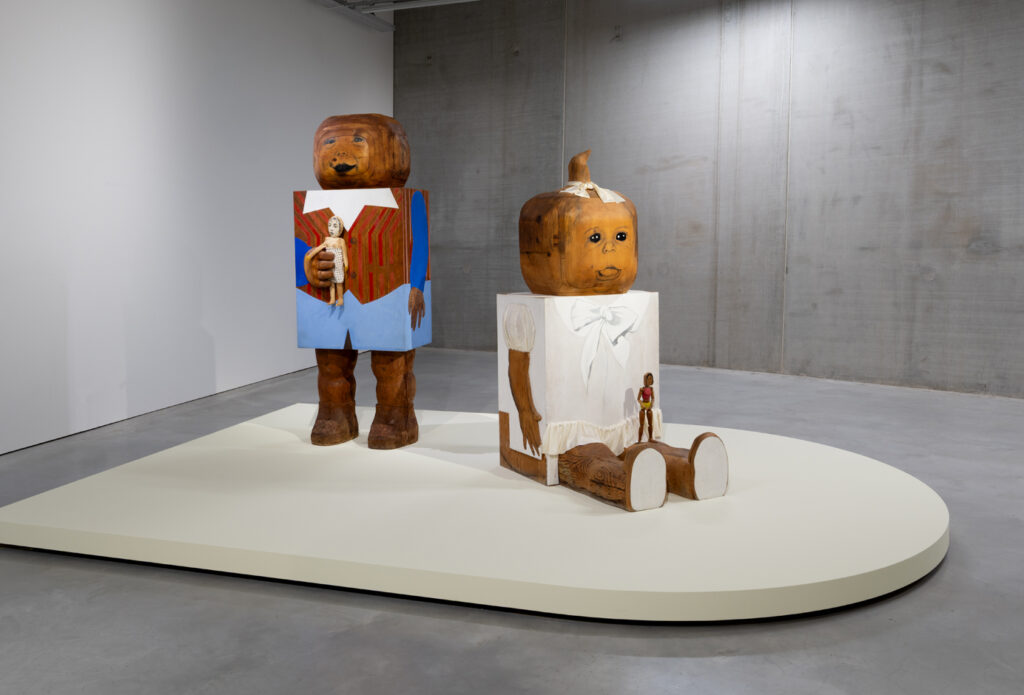
Left: Marisol Escobar, Baby Boy, 1962–1963, collection of Susan G. and Richard M. Rieser, Jr.; right: Marisol Escobar, Baby Girl, 1963, Buffalo AKG Art Museum, Buffalo, NY, USA.
Marisol created these enormous wooden sculptures in the early 1960s. They show that babies do not always have to look cute. The artist appears in the works herself on the faces of the small doll-like figures. The boy’s doll is partly undressed, while the girl holds an anatomical artist’s mannequin dressed like Midge, Barbie’s best friend. The boy stands upright, wearing an outfit in red, white, and blue. According to Marisol, he represents the United States as a world power: a young and irresponsible America.
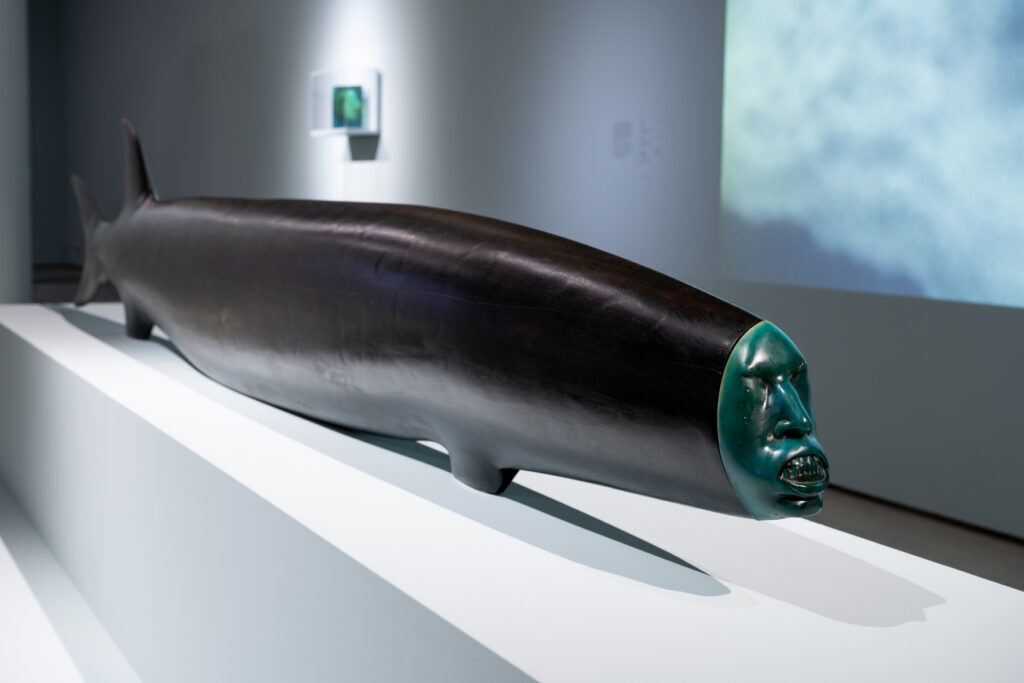
Marisol Escobar, Barracuda, 1971, Buffalo AKG Art Museum, Buffalo, NY, USA.
The fish has Marisol’s face but also the sharp teeth of a predator. The barracuda, known for its aggression, refers here to humanity’s destructive nature, particularly towards the oceans. Its shape also recalls a nuclear submarine. Marisol named several of her sculptures after American naval vessels, such as the USS Barracuda and the USS Greenfish. Through these references, she draws attention to the traces of destruction she encountered while diving in the early 70s.
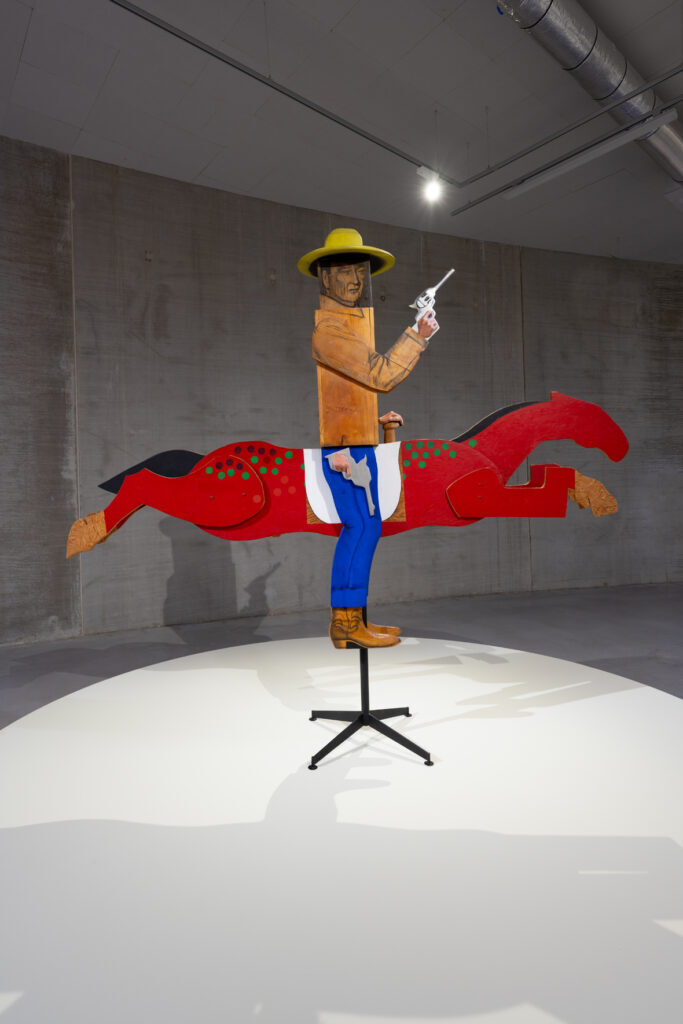
Marisol Escobar, John Wayne, 1963, Colorado Springs Fine Arts Center, Colorado Springs, CO, USA.
The famous cowboy from Hollywood westerns is, of course, John Wayne. He embodied the classic American hero. Life magazine commissioned Marisol to create this portrait. She depicted him larger than life, yet as flat as his Hollywood image. Riding a rocking horse, he sets off on an adventure with his toy gun. This satirical portrayal makes it clear that Marisol was not one of his admirers.
Marisol is on view at the Depot Museum Boijmans Van Beuningen in Rotterdam, the Netherlands, through March 29, 2027.
DailyArt Magazine needs your support. Every contribution, however big or small, is very valuable for our future. Thanks to it, we will be able to sustain and grow the Magazine. Thank you for your help!

Art historian interested the most in the Polish art market, the history of art collecting and contemporary art.

Univ. of New Orleans, Fine Arts and History; Fine Artist, Professional Graphic Designer, Art Historian, Historian, Musician, worked at the New Orleans Museum of Art and MS Museum of Art; learning enthusiast!
American artist Joan Brown (1938–1990) painted her life as she experienced it. Her son, her husbands, her cats and dogs, swimming in San Francisco...
Charlotte Stace 16 November 2026
'Painting the Light: The Story of Berthe Morisot, First Woman Impressionist' is written by Natalia Iacobelli and illustrated by Rosanna Tasker. Read about this inspiring new children's book from Reycraft Books.
Candy Bedworth 7 September 2026
Rolinda Sharples painted the world of Jane Austen, and the political turmoil unfolding beyond the ballroom. Her paintings capture Regency society as...
Guest Author 31 August 2026
She was photographed beside Claude Monet in his garden at Giverny. She was called “the blue angel” by Georges Clemenceau. She is remembered as...
Guest Author 30 July 2026