Tracey Emin, now Dame Tracey, was born in 1963. She fought hard to find a way into the art world, and took the spotlight as one of Young British Artists of the 1980’s Cool Britannia culture. She partied hard and horrified the traditional arts establishment with her unflinching, unapologetic works. Now Tracey Emin is the subject of perhaps the UK’s biggest art event of the year, a journey through her 40-year career.
Sacred and Profane
This is art as it should be: passionate, real, and moving. But this is not suffering for its own sake. This is real, messy, human life, lived out in all its beauty and anguish. Emin is visceral and brave in a way that only a woman can be. She is unflinching in her grief, and yet she also reveals redemption, healing, and beginning again.
The Female Body
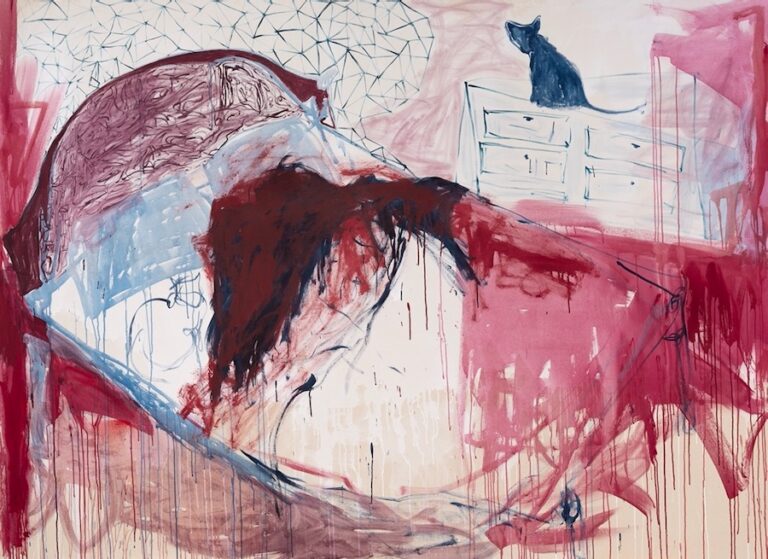
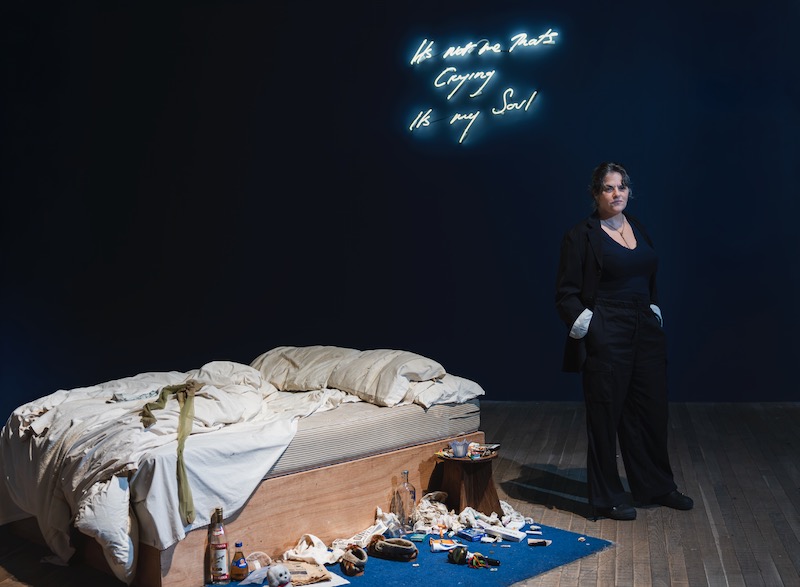
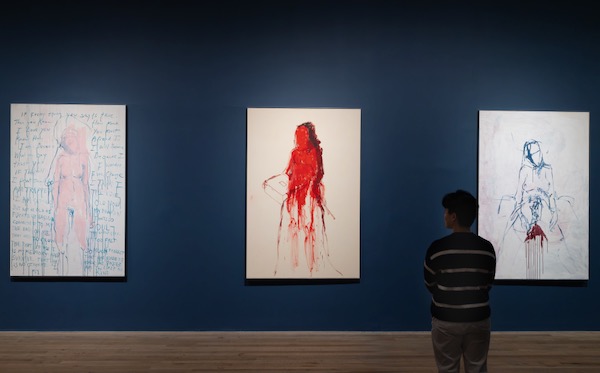
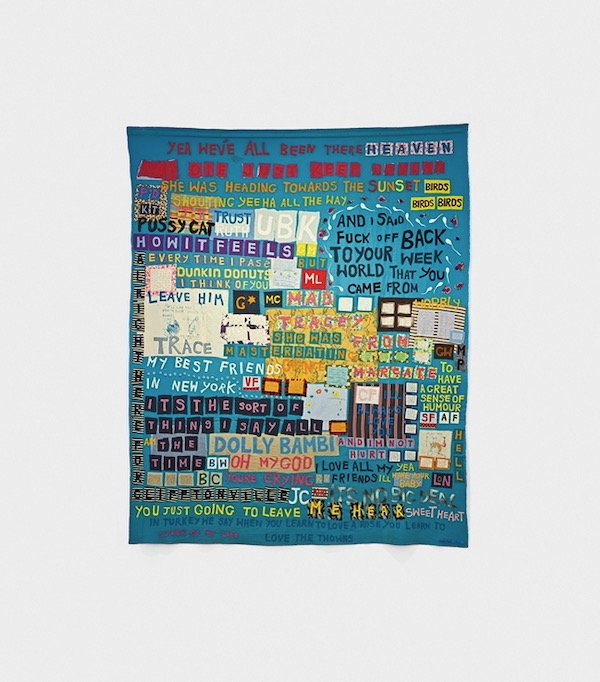
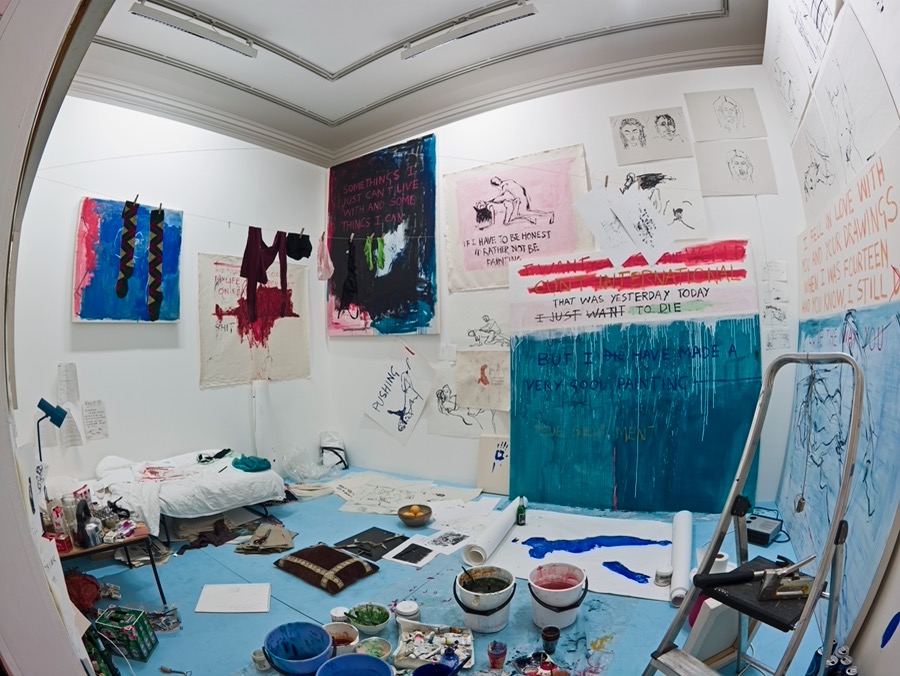
The materials here are wide-ranging—video, photography, neon, quilting, embroidery, sculptural bronzes, and paintings. And wow, those paintings! Huge, engulfing canvases, taking you up close and personal to the naked body, the sexual body, the mourning body, the broken body. Emin’s works feel almost like religious ecstasy, a modern-day Artemisia Gentileschi.
Working Class Girl
When she first tried to tell us what it is to be a woman, we weren’t ready. Too many male critics and the arts elite told us that Emin’s art was narcissistic rubbish. Their repulsion was aggressive and patronizing. Although they worshipped at the altar of the male troubled genius, a working-class woman’s life could not be considered to offer universal truths. This upstart girl was impolite and uncouth. And even today, the naysayers prattle on. The right-wing oligarch-owned Standard newspaper is still ploughing that furrow in their review of this show. But nobody is surprised by that, are they?
Money
Emin is happy to say that she makes money from her art. And she is happy to use her money to enrich lives in her community—art schools, gardens, a swimming pavilion. The upper classes are embarrassed and offended by this honesty and kindness. This might not be the art or the artist you want. But it is the art and the artist you need.
Witnessing
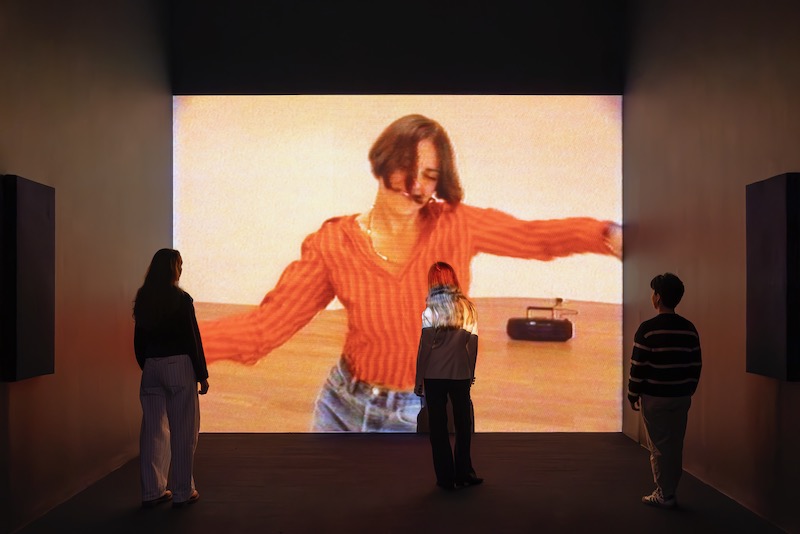
There are two incredible videos playing on a loop in the exhibition. It was so moving to see young women, mothers, and older women clustered together in the dark, watching. Men were there too, of course, witnessing how Emin deconstructs and tries to understand her struggles. Raped at just 13, racially abused, groomed, bullied, and sexually coerced—commonplace yet heart-rending experiences for so many young women.
Mighty Real
The 1995 film Why I Never Became A Dancer begins as a tragedy of sexual violence. But by the end, Emin turns this pain into something ecstatic. “Shane, Eddie, Tony, Doug, Richard, this one’s for you,” she says to the men who chanted “slag” at her during a dance contest. And in the final moments of the film, she dances freely and joyously to the disco anthem You Make Me Feel (Mighty Real). The video How It Feels shows Emin talking to the camera about the devastation of a botched abortion that almost killed her.
Sinner to Saint
At a time when women and children are still being used and abused, when Virginia Giuffre and Gisele Pelicot still have to ask shame to change sides, Emin is a warrior, a Boudica. Coming upon Emin’s bronze death mask in the exhibition, Saint Joan came immediately to mind. Women who fight against immense odds don’t look pretty or glossy. They have broken hearts and bloody mouths.
Rebirth
After her recent bladder cancer, dramatic surgery, sepsis, and exhaustion, bowing out to a quiet life would be fair enough. But for Emin, this is the breakthrough moment into her “second life.” A narrow corridor of photographs shows on one side, her as a young woman. On the other side, photos show her post-op, sore and bleeding. Here is rebirth, new works, and renewed passion. And if that is not great art, then I do not know what is.
Tracey Emin: A Second Life is at Tate Modern, London, UK, until August 31, 2026.