

Masterpiece Story: Judith and Holofernes by Caravaggio
Judith and Holofernes is a Caravaggio masterpiece that captures Biblical murder and drama. Rarely has death been captured so intensely and violently...
James W Singer 13 September 2026
11 May 2026 min Read
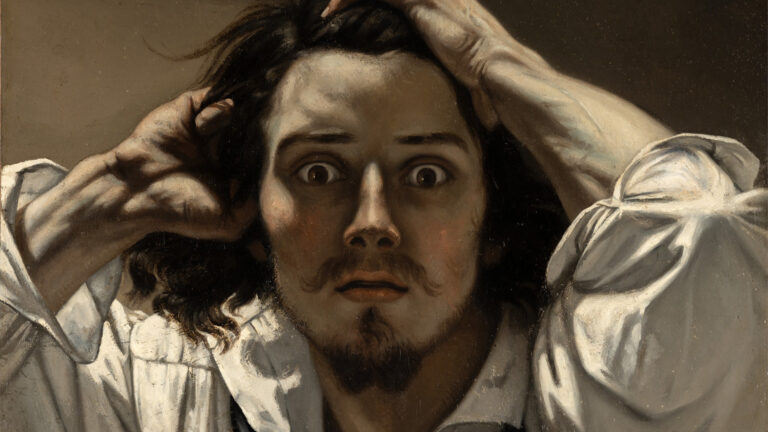
Gustave Courbet, The Desperate Man (Self-Portrait), c. 1844–1845, Musée d’Orsay, Paris, France. Detail.
In The Desperate Man (Le Désespéré), Gustave Courbet presents a powerful self-portrait filled with psychological tension, where intense expression and dramatic light reveal fear, anxiety, and inner conflict. Blending Romantic emotion with his early move toward Realism, the work stands as one of his most striking early statements. Let’s explore this rare self-portrait and the story behind it.
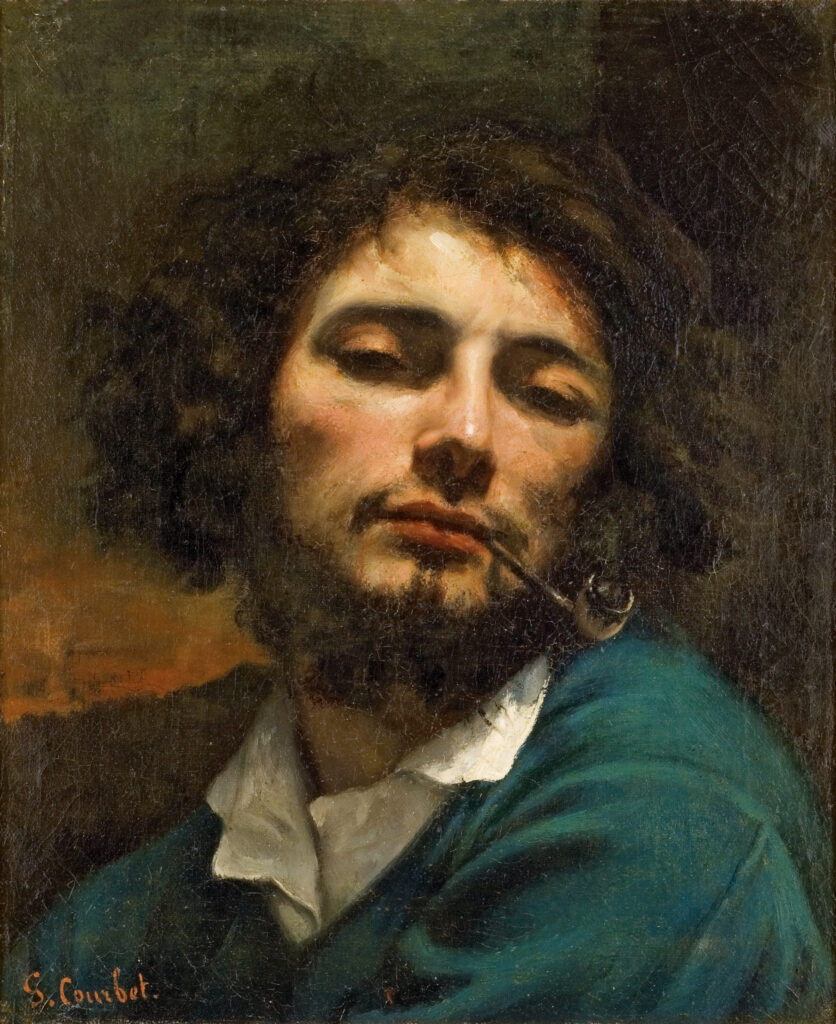
Gustave Courbet, The Man with a Pipe, c. 1849, Musée Fabre, Montpellier, France. Museum’s website.
Gustave Courbet was a pioneering French artist and a central figure in the development of Realism. Born in Ornans in 1819, he rejected academic conventions and instead focused on depicting ordinary people and everyday scenes with honesty and directness. Courbet’s bold approach challenged the dominant artistic norms of his time—particularly in works like A Burial at Ornans—and he became known not only for his art but also for his outspoken political views, including his involvement in the Paris Commune.
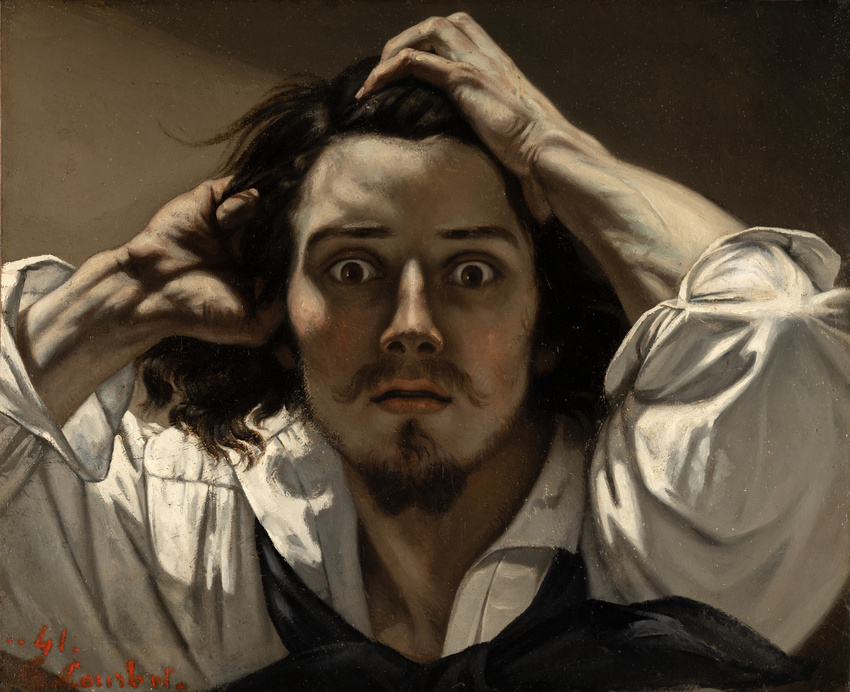
Gustave Courbet, The Desperate Man (Self-Portrait), c. 1844–1845, Musée d’Orsay, Paris, France. Museum’s website.
Created between 1843 and 1845, The Desperate Man (Le Désespéré) marks a key moment in the early career of Gustave Courbet. At this stage, he was still experimenting with his style before emerging as a leading figure of Realism. Painted in Paris, the work reflects his admiration for earlier masters such as Rembrandt, as well as the Romantic emphasis on intense emotion.
During this time, France was entering a period of mounting social and political unrest. This unrest would culminate in the Revolutions of 1848, fostering a climate in which questions of identity and personal struggle became central to artistic expression.
Courbet’s early self-portraits are performances of identity, in which the artist stages himself as both hero and victim of his own ambition.
T. J. Clark, Image of the People: Gustave Courbet and the 1848 Revolution, University of California Press, Berkeley, 1973.
Courbet never commented on this enigmatic work, which remained in his possession until his death. It has been interpreted as an “expressive head,” reflecting contemporary interest in studies of facial expression and the academic tradition of artists such as Charles Le Brun.
The painting can also be read as a reflection of Courbet’s inner psychological state during his early career. His youth was marked by uncertainty and self-doubt, even as he expressed strong artistic ambition in letters to family and friends. This tension between outward confidence and inner insecurity suggests a divided sense of self that may be echoed in the work.
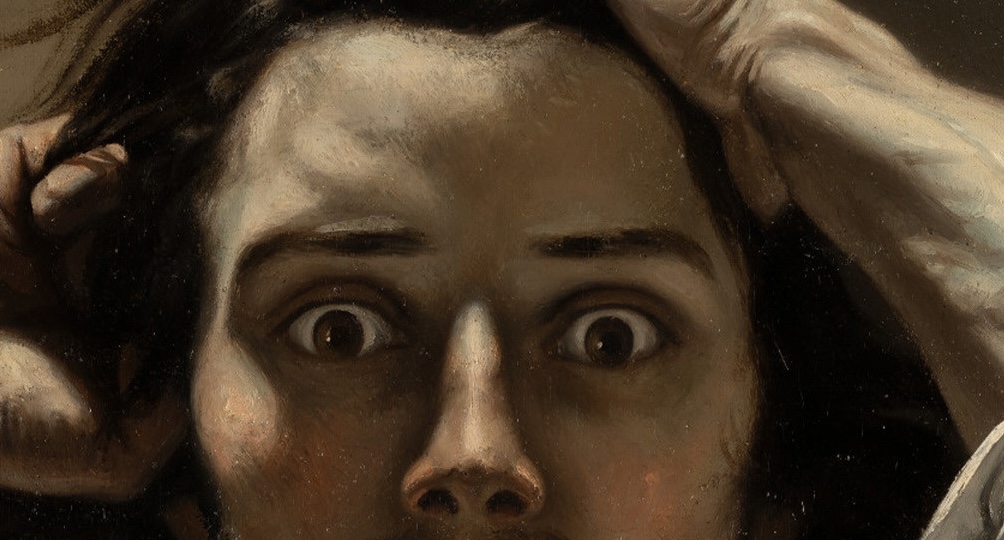
Gustave Courbet, The Desperate Man (Self-Portrait), c. 1844–1845, Musée d’Orsay, Paris, France. Detail.
Painted after repeated rejection from the Paris Salon, it reflects a formative stage in which Courbet was still defining his artistic identity and seeking recognition within the Parisian art world. This lack of institutional acceptance may have intensified his inner sense of instability, reinforcing the tension between ambition and self-doubt suggested in the work. More broadly, it can be understood as constructing the figure of the artist as a solitary and elevated genius—separated from society yet burdened by fear, ambition, and inner instability.
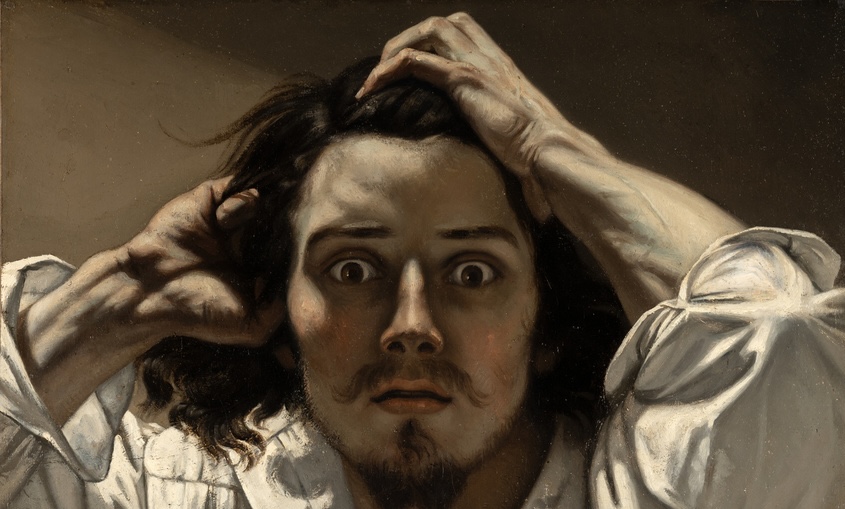
Gustave Courbet, The Desperate Man (Self-Portrait), c. 1844–1845, Musée d’Orsay, Paris, France. Museum’s website. Detail.
This masterpiece is an oil on canvas work in which Gustave Courbet combines careful modeling with expressive brushwork to heighten emotional impact. Using a restrained palette of dark tones contrasted with the shirt’s stark white, he creates a strong interplay of light and shadow. A single light source from the upper left sharply illuminates the face and hands while casting the rest into darkness. This dramatic contrast enhances the figure’s dimensional presence and intensifies the psychological tension, focusing attention on the distorted expression and conveying a sense of inner turmoil.
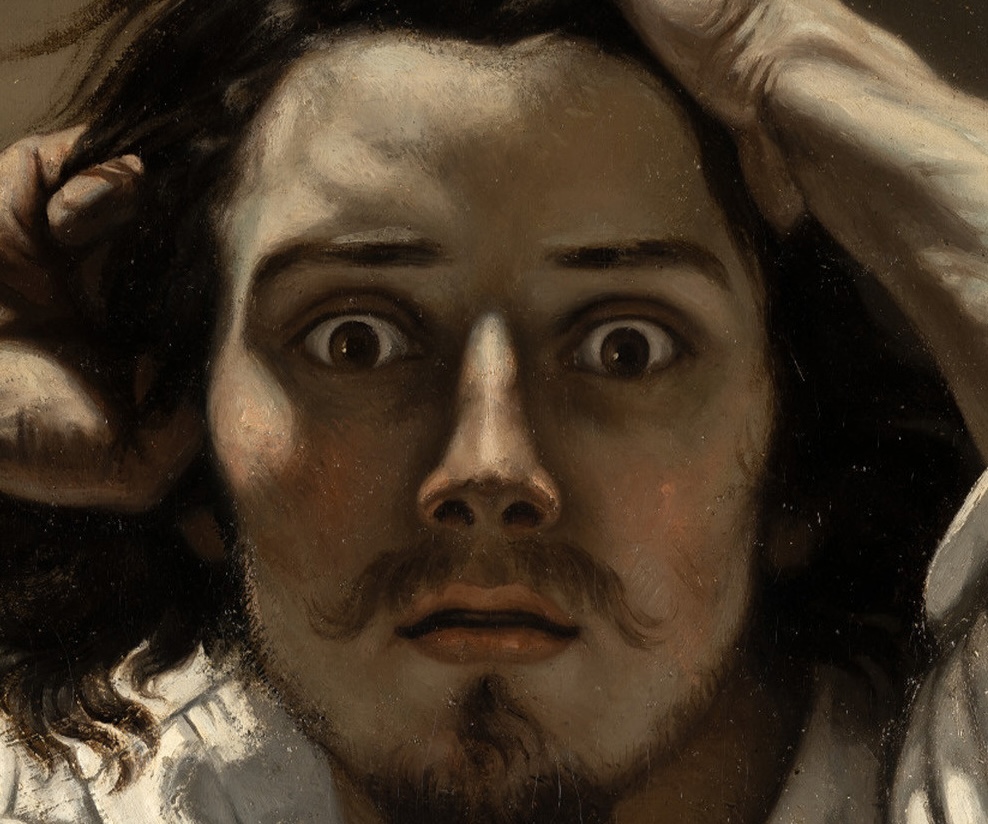
Gustave Courbet, The Desperate Man (Self-Portrait), c. 1844–1845, Musée d’Orsay, Paris, France. Detail.
The composition is dominated by Courbet’s face—wide eyes, raised brows, and parted lips that suggest shock or breathlessness. Subtle redness in the cheeks intensifies the sense of emotional heat and agitation. The gaze does not quite meet the viewer but seems to look beyond us, suggesting that the source of distress lies outside the frame. This ambiguity heightens the emotional impact, turning the face into the core of the painting’s narrative.
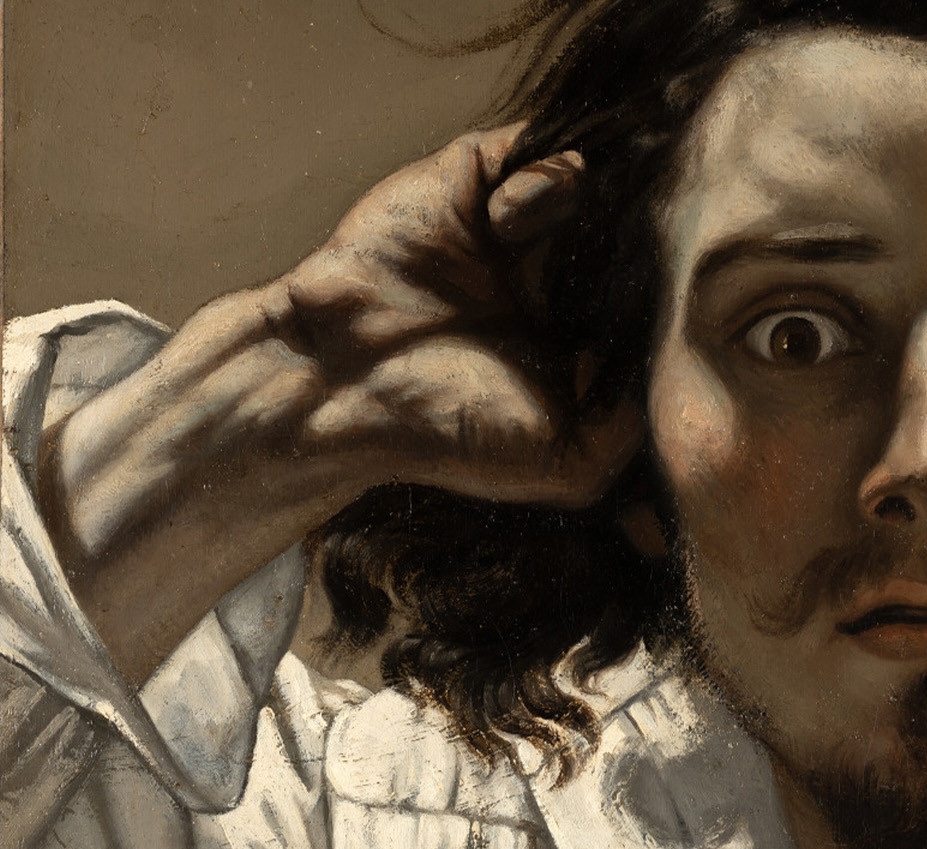
Gustave Courbet, The Desperate Man (Self-Portrait), c. 1844–1845, Musée d’Orsay, Paris, France. Detail.
On the left side of the painting, the hand remains partially in shadow. Yet the tension is palpable as the fingers grip the hair tightly, emphasizing psychological strain. The visible veins further heighten this intensity. They suggest that even the smallest physical detail becomes a symbol of anxiety. In this way, every inch of the composition is charged with emotional force.
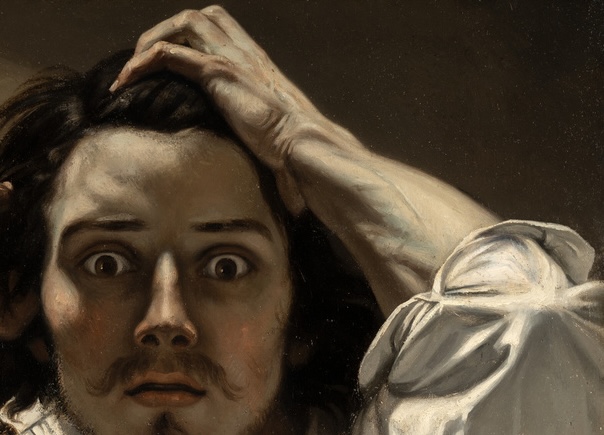
Gustave Courbet, The Desperate Man (Self-Portrait), c. 1844–1845, Musée d’Orsay, Paris, France. Detail.
On the right side, the other hand is more clearly illuminated. This makes the gesture more visible, though not necessarily more intense. The contrast between light and shadow further emphasizes this difference. It shifts the focus between visibility and emotion, reinforcing the overall sense of inner turmoil.
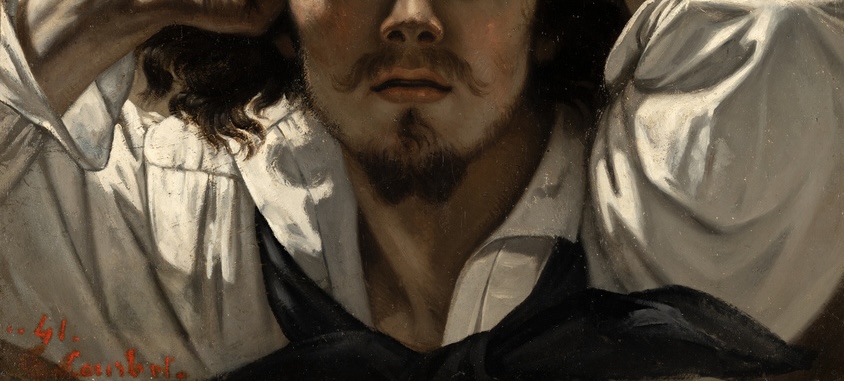
Gustave Courbet, The Desperate Man (Self-Portrait), c. 1844–1845, Musée d’Orsay, Paris, France. Detail.
At the bottom, the white shirt and loose scarf stand out sharply against the dark background. The brightness draws attention downward briefly before returning the eye to the face. The disordered clothing—the collar and open shirt—suggests agitation and conveys a moment of emotional upheaval. On the left, Gustave Courbet’s signature subtly affirms his presence, reinforcing the painting’s focus on identity.
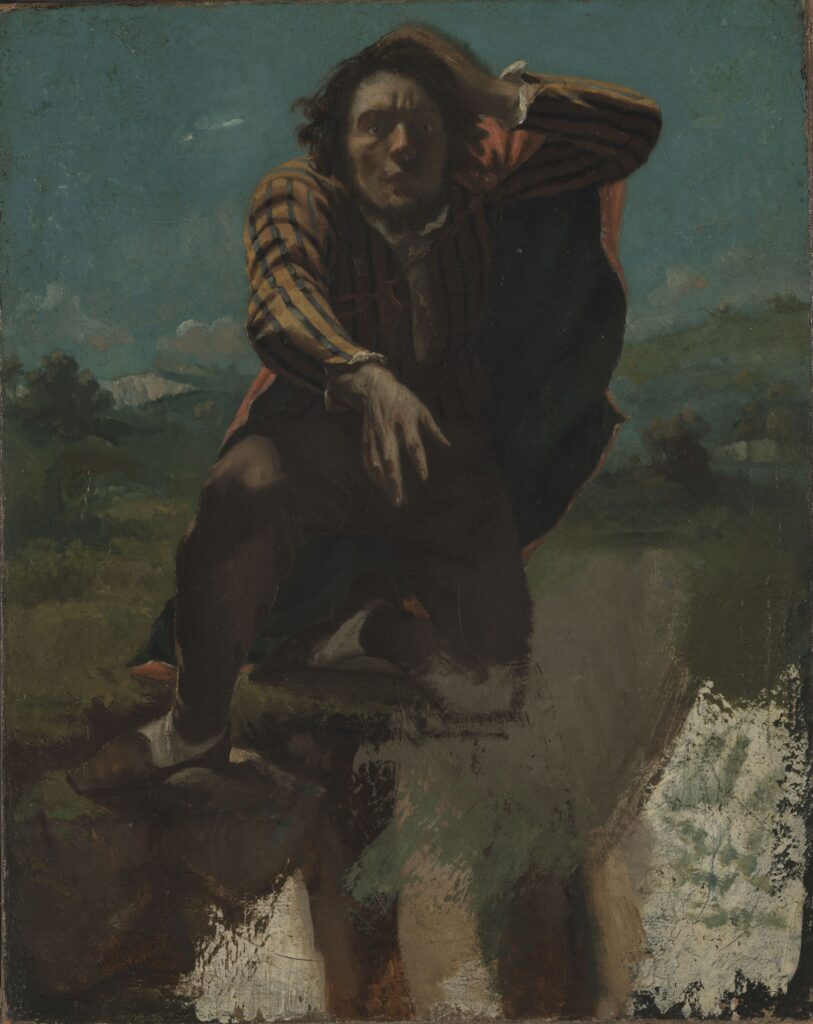
Gustave Courbet, The Man Mad with Fear, c. 1844, National Museum of Norway, Oslo, Norway. Museum’s website.
In the same period, Courbet created another closely related work, The Man Mad with Fear, which explores a similar psychological tension. While one compresses despair into an intense close-up of the face and hands, the other expands it into a more dramatic scene of instability and near collapse. Together, they echo Courbet’s early struggle between ambition and anxiety, shaped by Romantic ideas of the tormented artist and anticipating his later turn toward Realism.
DailyArt Magazine needs your support. Every contribution, however big or small, is very valuable for our future. Thanks to it, we will be able to sustain and grow the Magazine. Thank you for your help!

Katerina is an art enthusiast and lover of masterpieces. She holds a Bachelor’s degree with specialization in Archaeology and Art History from Aristotle University of Thessaloniki, Greece. She plans to continue her studies in Art History and enjoys exploring the world of art infinitely and beyond.

An admirer of antiquity, art, and architecture. An avid reader and amateur photographer. Always curious, always on an adventure.
Judith and Holofernes is a Caravaggio masterpiece that captures Biblical murder and drama. Rarely has death been captured so intensely and violently...
James W Singer 13 September 2026
Explore an astonishing 1915 nude self portrait by American modernist painter Florine Stettheimer.
Candy Bedworth 21 September 2026
Winslow Homer (1836–1910) was one of the leading American Realist painters. His painting The Veteran in a New Field is a masterpiece of late...
James W Singer 30 August 2026
At first glance, A Goldsmith in His Shop (1449) appears to depict an ordinary visit to a jeweller. Yet Petrus Christus transformed an ordinary...
Shivani Gupta 23 August 2026