If you are familiar with Élisabeth Vigée Le Brun (1755–1842), chances are that your knowledge begins with her Self-Portrait with a Straw Hat. But there is much more to her than that masterful, popular work. Over her long and illustrious career, she authored over 600 portraits (and that’s not counting her landscapes). Her affiliation with Marie Antoinette catapulted her onto the European scene. Her exile after the French Revolution, although traumatic, allowed her to travel extensively and immortalize the greatest and most powerful individuals of the time. Here are 10 portraits of illustrious royals made by Élisabeth Vigée Le Brun.
1. Marie Antoinette
Marie Antoinette (1755–1793), Queen of France, was perhaps the most prominent of Le Brun’s portrait subjects. She liked her so much that she became Le Brun’s patron, sitting for over 30 portraits for her. Le Brun was often invited to the grand palace of Versailles to capture remarkably intimate scenes between the queen and her family. In this 1787 painting, Le Brun combines intimacy with a bit of a PR stunt. She was commissioned for a portrait to help restore the queen’s reputation after it had hit rock bottom following a series of scandals.
Le Brun depicts Marie Antoinette as a loving mother, in a relatively simple dress and wearing minimal jewellery. She also leaves the cradle by her side empty, to draw attention to the recent death of Marie Antoinette’s youngest child and present a sympathetic perspective toward the young queen.
2. Élisabeth of France
Princess Élisabeth (1764–1794) was the sister of King Louis XVI, husband of Marie Antoinette. Her character and legacy are markedly different from those of her controversial sister-in-law. She was a level-headed figure and a devout Catholic, highly respected by the court as well as the people of France. Le Brun immortalized her in 1782, wearing a rustic dress and surrounded by flowers–in line with Le Brun’s ability to show a more intimate side to her royal subjects.
Princess Élisabeth was also a staunch royalist and remained loyal to and by the side of her brother throughout the French Revolution. She was executed by guillotine in 1794. In the 1900s, the Catholic Church began the process of beatification of Élisabeth, which is still ongoing.
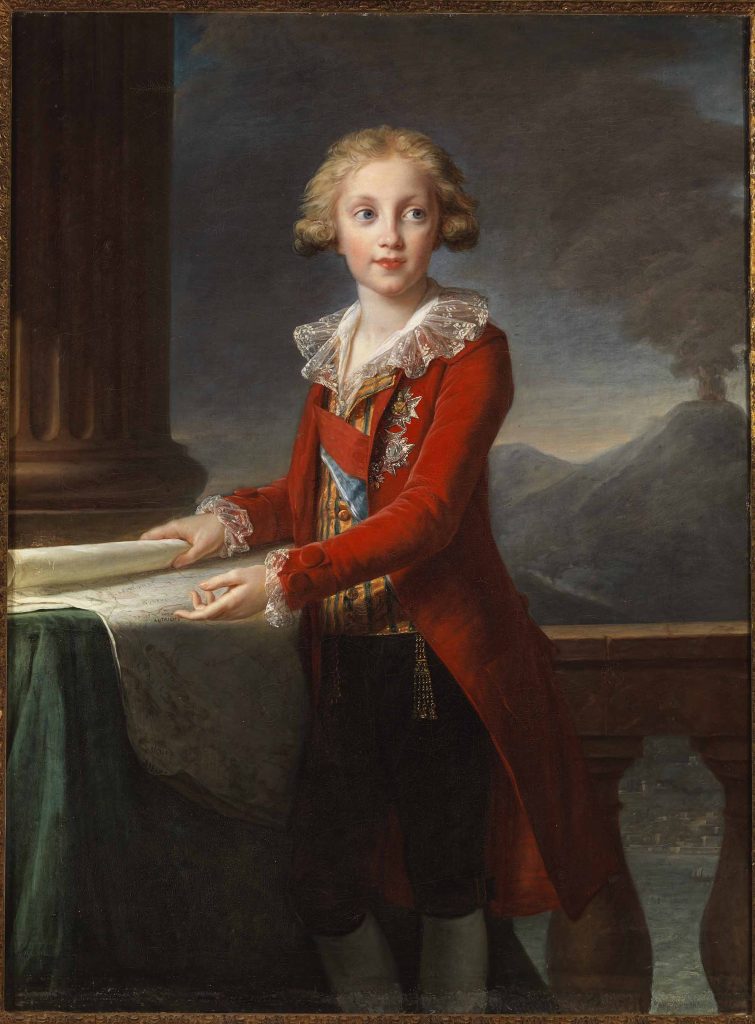
3. Francesco di Borbone
In 1790, Le Brun was invited to the court of Naples by Queen Maria Carolina of Austria, sister of her patron, Marie Antoinette. Her husband was the King of Naples, Ferdinand IV (who would go on to be King of the Two Sicilies under the name of Ferdinand I). Anecdotally, upon the insistent request of the queen, Le Brun agreed to delay her departure to capture the royal children in portraits. Francesco, immortalized here aged 13, went on to become the King of the Two Sicilies in 1825.
4. Maria Teresa di Borbone
In the same visit, Le Brun also painted Francesco’s sister Maria Teresa. Older than her brother, she was 18 at the time of the portrait. In that same year, she married Francis, who soon ascended the throne of Holy Roman Emperor. Maria Teresa was the last Holy Roman Empress, though, as her husband dissolved the Empire in 1806, after suffering a devastating loss at the hands of Napoleon. She can, however, claim the title of very first Empress of Austria–a new empire created by Francis after the dissolution, which lasted until the end of World War I.
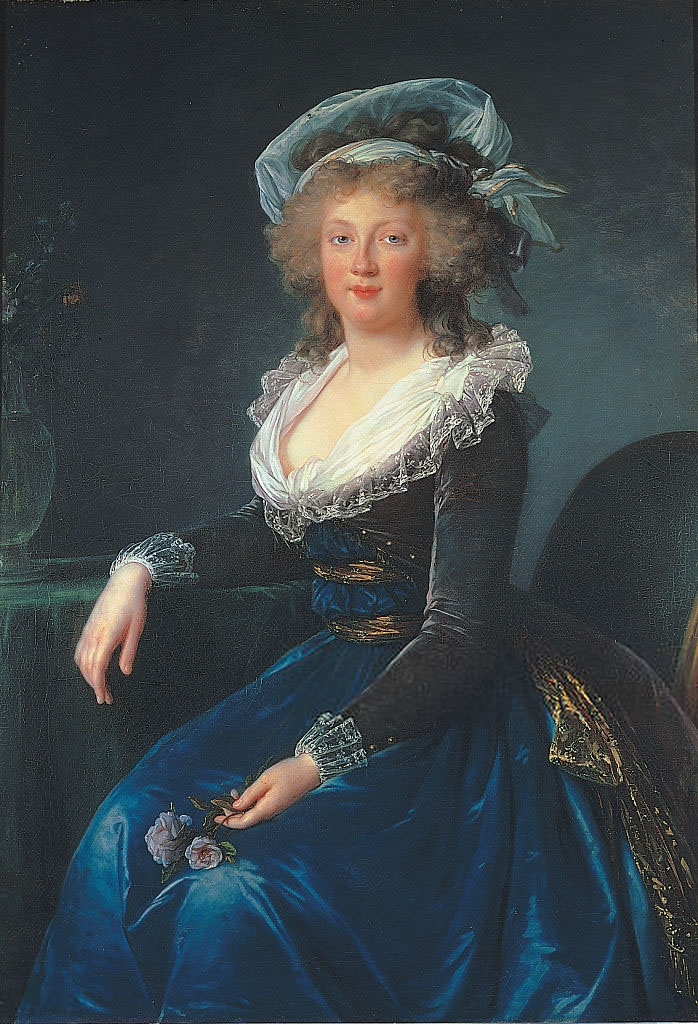
5. Maria Carolina of Austria
During her time in the court of Naples, Le Brun also painted Maria Carolina herself. Maria Carolina (1752–1814) was a key figure in European politics of the time. Thanks to a clause in her marriage contract with Ferdinand, she entered the Privy Council upon giving birth to a male heir in 1777. From then on until 1812, she was a powerful voice and is considered responsible for significant shifts in the kingdom’s policy, including veering away from long-standing Spanish influence and establishing closer ties with England.
Le Brun greatly respected Maria Carolina, but, unlike her sister Marie Antoinette, she had little patience with sitting for portraits. Despite her reluctance, Le Brun completed at least one portrait of her. Maria Carolina was herself passionate about art and a patron of many artists, notably Angelica Kauffman (one of the only two female founding members of the Royal Academy of Art in London).
6. Louise of Mecklenburg-Strelitz
While in exile, Le Brun travelled extensively, including to modern-day Germany. In 1801, she was invited to the royal residence of Potsdam, near Berlin. There, she met the Queen of Prussia, Louise of Mecklenburg-Strelitz. Louise was a charming and strong character with whom Le Brun felt a strong connection. During her stay, Le Brun captured the queen in a handful of portraits, including this one of 1802. Louise remained a prominent figure in Prussian (and German) history and is particularly remembered for meeting with Napoleon himself to negotiate terms after Prussia’s defeat in war. Upon her death in 1810, even her rival Napoleon is said to have paid homage to her.
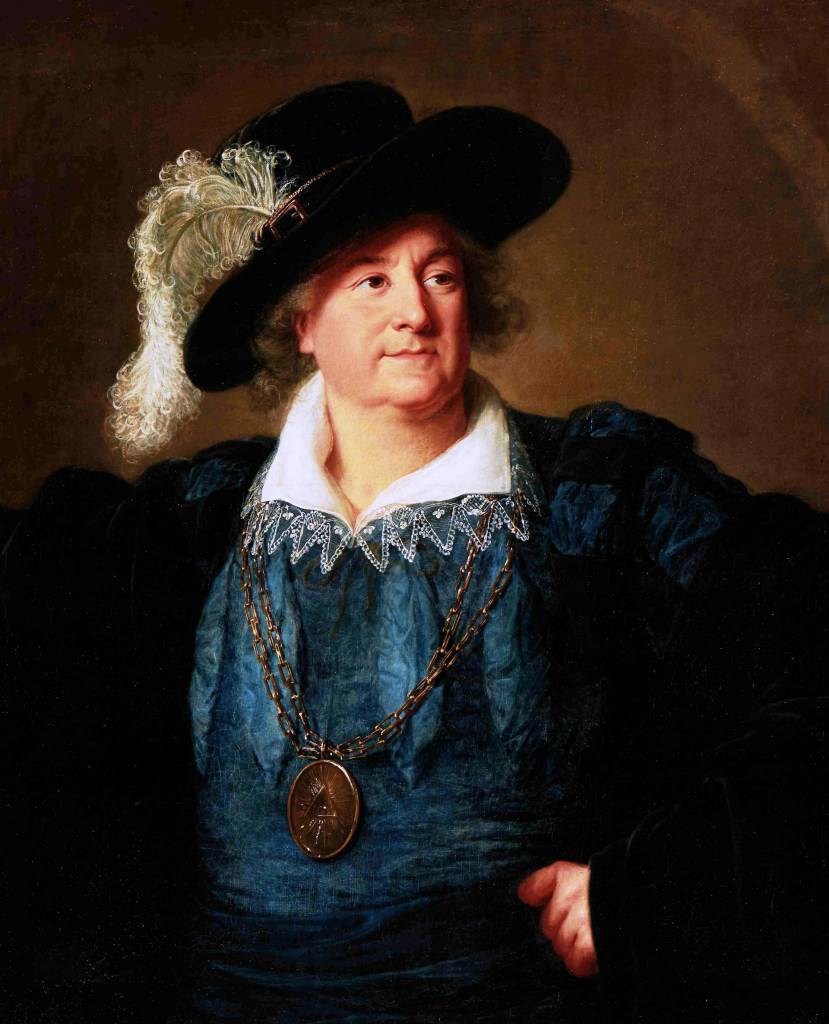
7. Stanislaus Augustus of Poland
Stanislaus Augustus Poniatowski (1732–1798) was the King of Poland and Grand Duke of Lithuania between 1764 and 1795. Le Brun met him in Russia in 1797, during his exile after a forced abdication, and she painted him twice. If the first of her paintings is more traditionally “royal,” in this one she shows a different side to his character. Stanislaw is portrayed dressed up as Henry IV of France, hinting at a care-free attitude and a love for a good party. There are two versions of this painting, as Le Brun enjoyed it so much that she painted a copy to keep herself (now housed in Kraków, Poland).
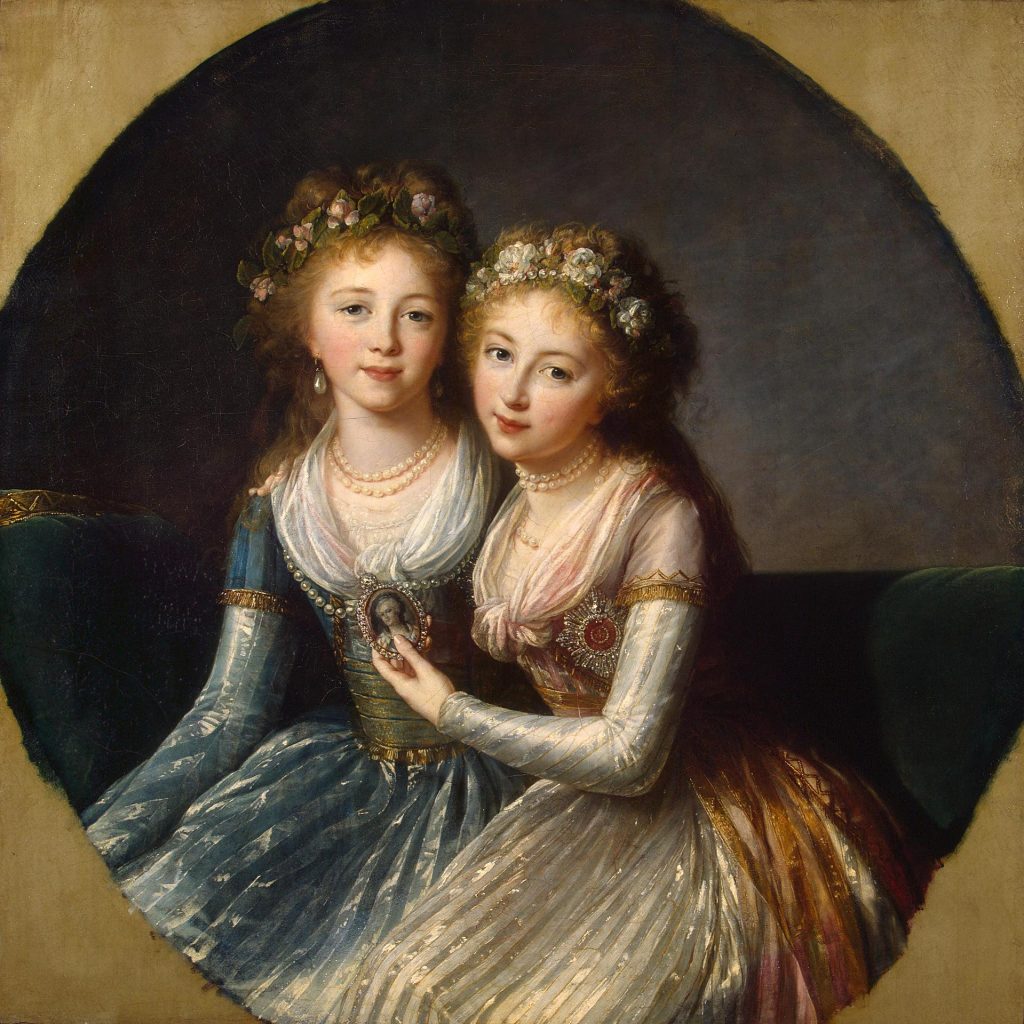
8. Alexandra and Elena Pavlovna of Russia
In her career, Le Brun painted many powerful and inspiring women, but none was, to her, more aspirational than Empress Catherine the Great of Russia (1729–1796). At the time Le Brun travelled to Russia, the country was living through a period of enlightenment, peace, and splendour under her reign.
Le Brun greatly admired Catherine, but she never got to paint her. After many attempts, Catherine eventually arranged a sitting with Le Brun, but she died shortly after, in November 1796. She did, however, paint close family members of the Empress, including her granddaughters, Alexandra and Elena. Their father, Paul I, ascended the throne upon Catherine’s death.
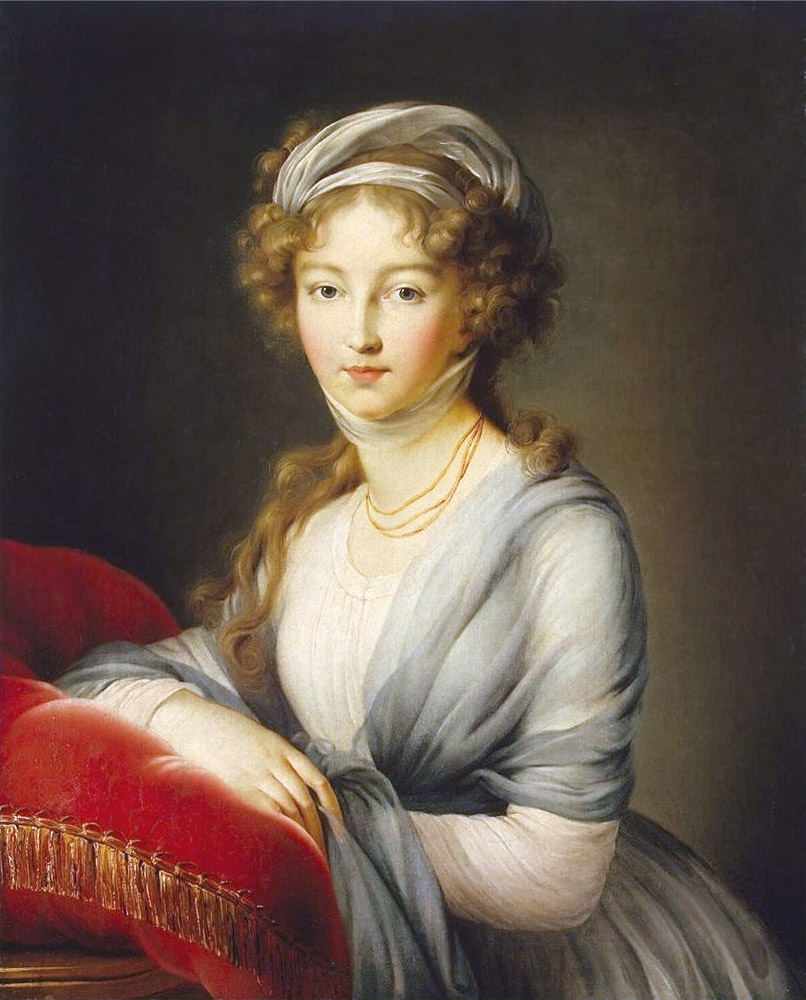
9. Elizaveta Alexeevna
During her time in Russia, Le Brun also painted a young Elizabeth Alexeevna (1779–1826). Born Louise of Baden, she moved out of her native Germany and into Russia in 1793, when she married Catherine the Great’s grandson, Alexander. Elizabeth never found her place in the Russian court and was often homesick. Le Brun painted her on a handful of occasions, including for a painting Elizabeth sent back as a gift to her mother. In 1801, after the assassination of Paul I, Alexander became emperor and, with him, Elizabeth became empress.
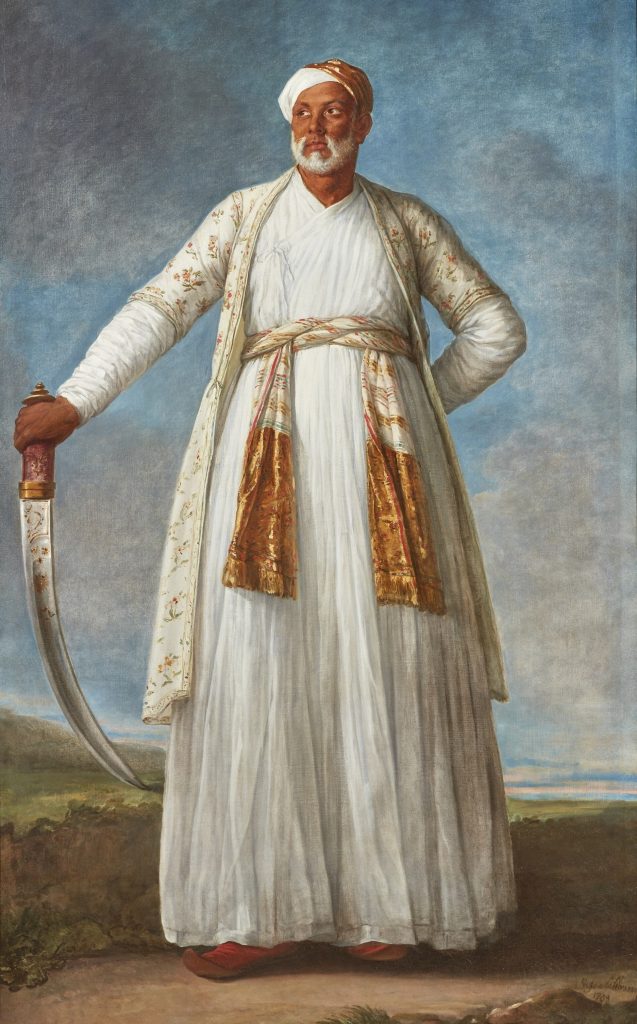
10. Muhammad Dervish Khan
Our last painting is not one of a Western royal, but of an Indian ambassador. Muhammad Dervish Khan was one of three ambassadors sent to France in 1788 to attempt to gain King Louis XVI’s military support against British forces. Le Brun was keen to paint Dervish Khan, who initially refused. Only later did he reluctantly agree, after Louis XVI himself asked him to pose for her. This seven-foot-tall portrait conveys a sense of majesty and power rarely found in the usually more intimate portraits by Le Brun. This painting became Le Brun’s most expensive one in 2019, when it was sold at an auction for over $7m.