
Why Sacred Images Look Different in Every Culture
Sacred figures travel remarkably well. They cross borders, but they rarely remain visually unchanged. Jesus, the Virgin Mary, the Buddha, and...
Tunacan Tuna, 31 August 2026
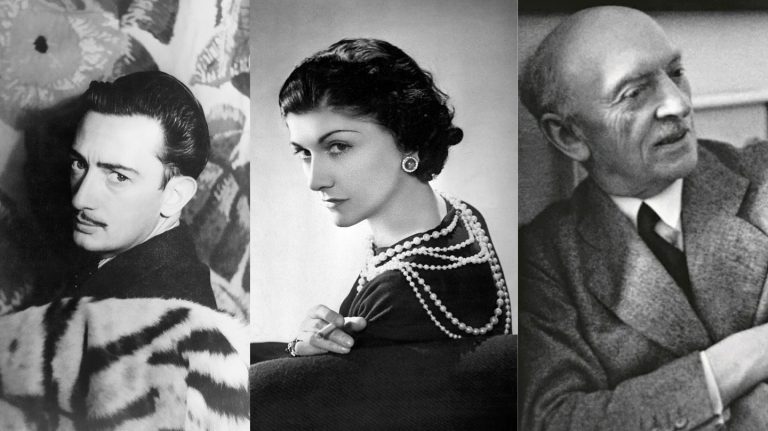
Left: Carl Van Vechten, Salvador Dalí, 1939. Library of Congress. Center: Roger Viollet, Coco Chanel. Vogue. Right: Emil Nolde, 1937. Kunsthaus Arte.
When it comes to art and Nazis, attention often goes to those artists persecuted as creators of so-called “Degenerate Art” or robbed of their artwork. However, as difficult as it is to admit, many beloved artists had tight relations with Nazis: some shared their ideals, others turned a blind eye to make a living, others took advantage of discriminatory laws for their own benefit, and others played a double life by supporting and resisting the regime. These cases show the complexity of life in the 1930s and 1940s, especially in Europe.
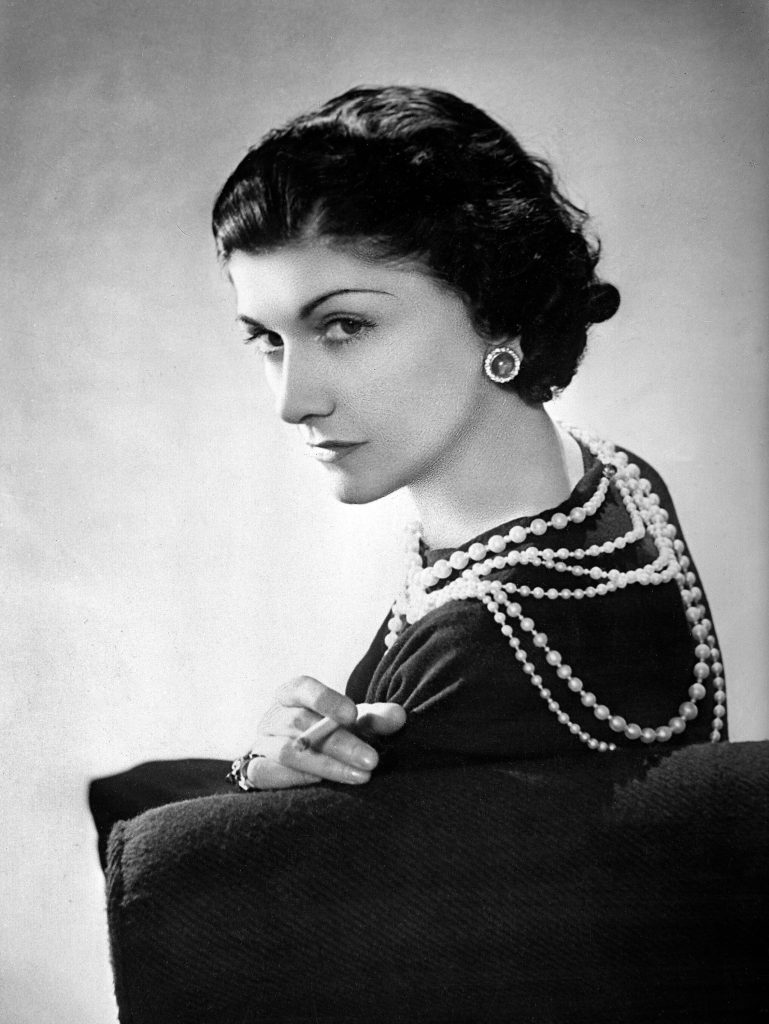
Roger Viollet, Coco Chanel. Vogue.
Behind Coco Chanel’s (1883–1971) stylish, corset-less black dresses lies a convoluted story with Nazis and the Resistance. It is a fact that Chanel maintained a years-long affair with a Nazi agent, Hans Günther von Dincklage. However, it is also a fact that this relationship helped her free her nephew André from a German prison during World War II. She also famously closed her store in Paris when the Nazis invaded France, which has been interpreted as a sign of resistance.
At the same time, she was associated with German officers under the codename “Westminster,” and there are claims she used her friendship with Winston Churchill for spy operations. Some historians argue that her friendship with British Prime Minister Winston Churchill helped protect her from prosecution after the war. But perhaps, worst of all, was her willingness to use Nazi Aryan laws against the Jewish Wertheimer brothers to recover the rights to her perfumes, which she gave away in 1924. Recently, newly revealed documents suggest she may have had some involvement with the French Resistance, though historians disagree on its extent.
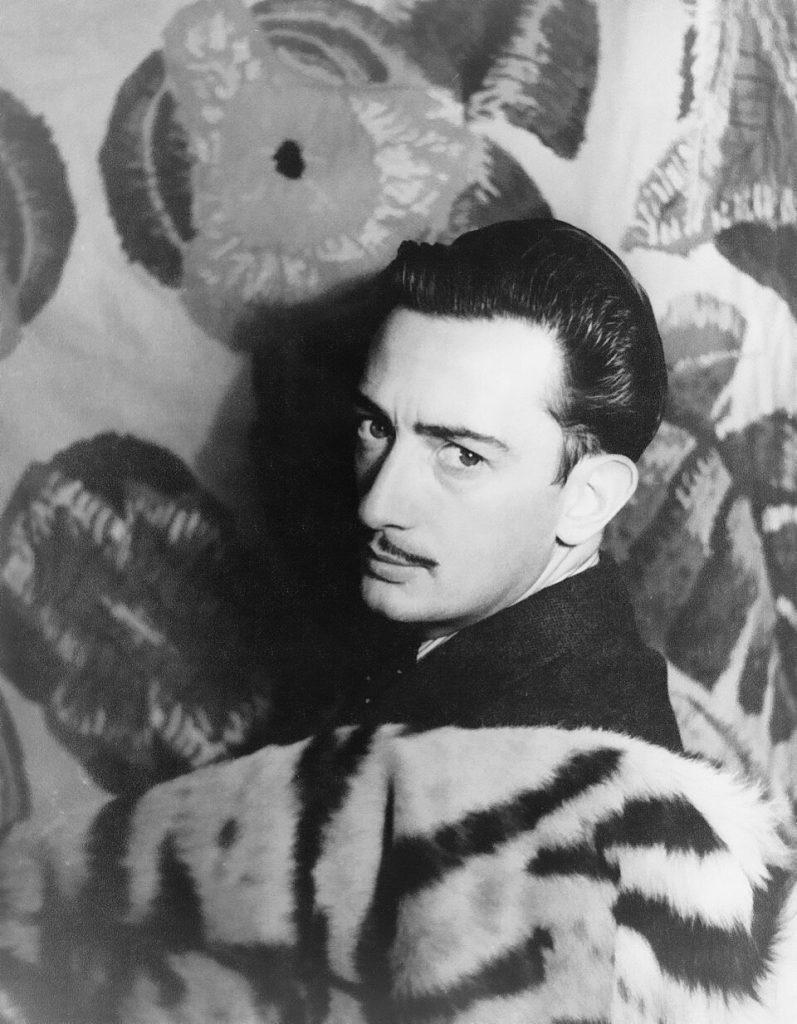
Carl Van Vechten, Salvador Dalí, 1939. Library of Congress.
Salvador Dalí’s (1904–1989) eccentric nature and bizarre paintings have captivated art lovers for generations. However, the lesser-known connections between him, Spanish dictator Francisco Franco, and Nazi ideology are an obscure part of his life that should not be ignored. While many Spanish artists lived in exile until the end of the authoritarian regime in 1975, Dalí not only returned after World War II, but also painted a portrait of Franco’s granddaughter, Carmen Martínez-Bordiu.
His open support of fascist ideas and an odd willingness to discuss the Nazis’ beliefs led to a rift between him and other Surrealists, mainly André Breton. He also claimed to be developing a new religion based on racist, elitist, masochistic, and sadistic ideas. Dalí ignored the damage that Franco’s forces did to his friends and family, let alone millions of people.
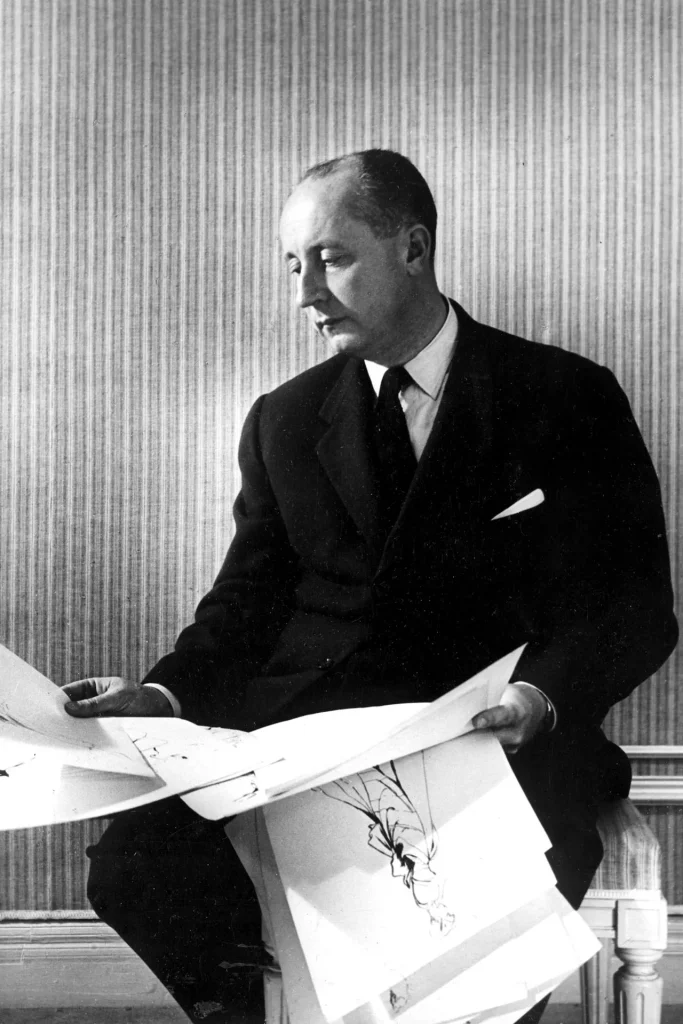
Photograph of Christian Dior. British Vogue.
Christian Dior (1905–1957) is another French artist who worked for clients associated with the Nazis. He remained in Paris during World War II, designing haute couture garments for the wives of Nazis and their sympathizers. It should be noted that these were the few privileged individuals who could afford his work. Otherwise, he might have had to close his store or go into exile. Does this justify his actions, especially when he went on to design for Wallis Simpson, a woman closely tied to the Nazis after the war?
At the same time, he supported his sister Catherine, who joined the Resistance and operated under the codename “Caro”. He provided a safe place for her to hide in his apartment. Later, he hid her after the Vichy government discovered her identity, although she was found eventually and tortured. Even though he never actively joined the Resistance against the German invasion, he is regarded as a loyal citizen of his country.
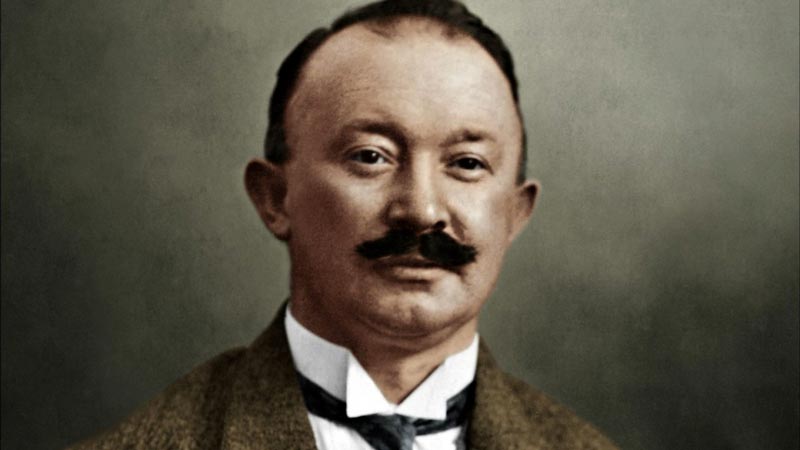
Photograph of Hugo Boss. Wikimedia Commons (public domain).
Hugo Boss (1885–1948) is perhaps the designer most commonly linked to the Nazis, since he designed their uniforms and was a member of the Nazi Party. His factory employed forced laborers who lived and worked under dire conditions. At some point, he expressed concern for them. Additionally, he justified his adherence to the party as a way to save his business. Nevertheless, after the war ended, he faced legal proceedings for his affiliations and actions. In 2011, the firm offered an apology amid the publication of a book that detailed Boss’s affiliations.
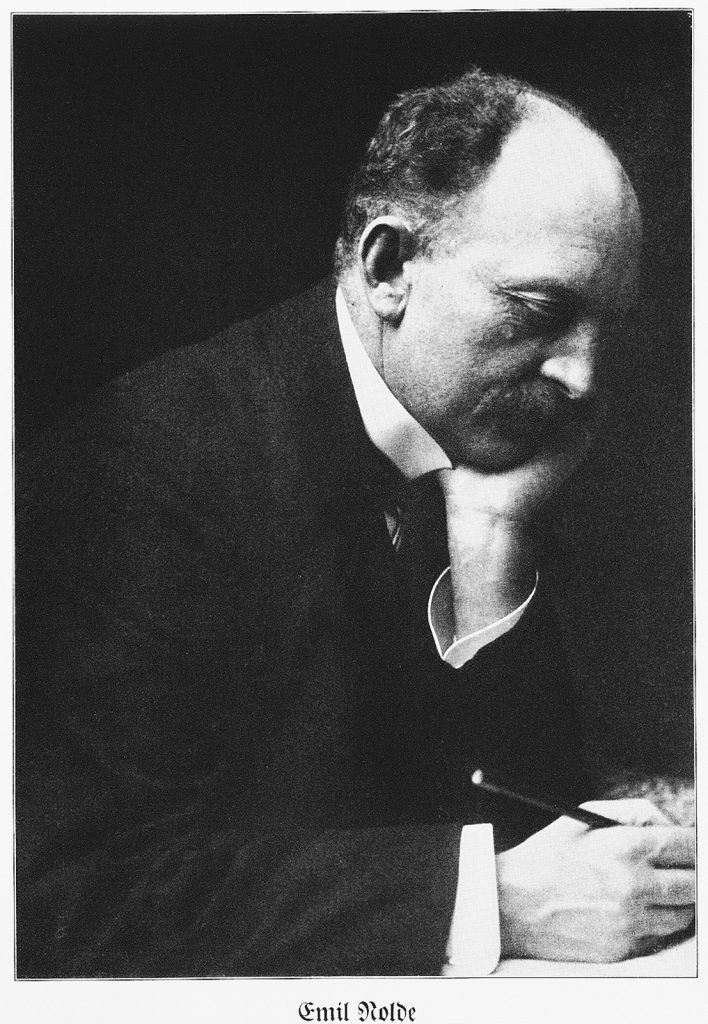
Minya Diez-Dührkoop, Emil Nolde, ca. 1929. Wikimedia Commons (public domain).
Is it possible to be a “degenerate” artist and a Nazi supporter? Emil Nolde (1867–1956) certainly makes a prime case for it. In 2019, the Nationalgalerie in Berlin opened the exhibition Emil Nolde–A German Legend. The Artist during the Nazi Regime. In it, they paired his works with documents related to his affiliation with the Danish Nazi Party and his antisemitism.
The evidence provided by the Nolde Foundation also documents his deep hatred for Jewish artists, whom he resented for their dominance in the German art world. He also denounced his fellow artist Max Pechstein (1881–1955) for being a Jew. Moreover, his paintings included stereotypical depictions of Jews that fueled hate speech. Even so, the Nazis deemed his works “degenerate” and banned him from painting in 1941. However, as Jonathan Jones from The Guardian stated, it provided an alibi that protected his legacy for decades.
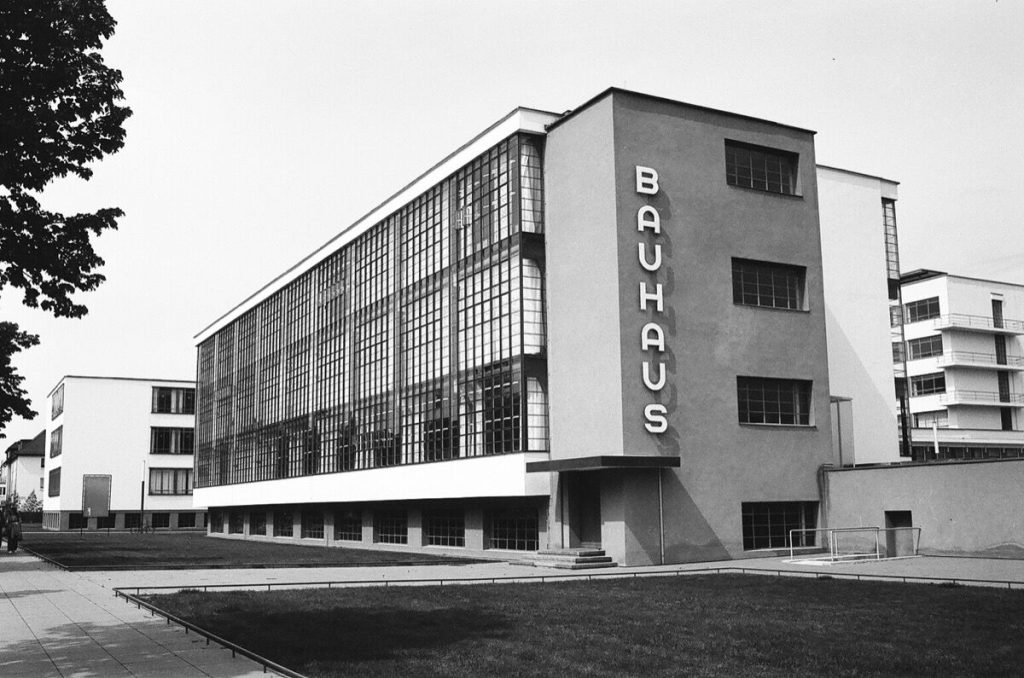
Bauhaus, Dessau, Germany. Photograph by Nate Robert via Flickr.
The Bauhaus was a German art school that trained modern artists in Germany. After the Nazis closed it in 1933, some students suffered under Nazi rule, while others benefited from it. For instance, the Austrian architect Fritz Ertl (1908–1982) joined the Austrian Nazi party and later the SS. His career led him to build the crematoriums to dispose of corpses in Auschwitz. Similarly, Herbert Bayera, a former Bauhaus member, designed propaganda posters for the regime. In 2024, the exhibition Bauhaus and National Socialism addressed the subject, contrasting with the long-lasting reputation of the school as a victim of Nazi censorship and a defender of democratic values.
This article does not intend to cancel anyone, but rather to have a more honest, if uncomfortable, discussion about the artists we admire. There is no denying that all of these painters and designers were creative geniuses, but that should never erase their links with a regime that massacred millions of people and spread hate all around the world.
Hugo Boss apology for Nazi past as book is published, 2011, BBC.
Álex Vicente: Not just heroes: The renowned Bauhaus art school also collaborated with the Nazis, 2024, El País.
Anastasiia Kirpalov: The Shocking Truth About Salvador Dali, 2025, The Collector.
Charles Darwent: The Bauhaus Nazis: the collaborators – and worse – among the design icons, 2024, The Guardian.
Caryn James: The truth about Coco Chanel and the Nazis, 2024, BBC.
Graham Keeley: Catalonia forgives Dalí at last for Franco links, 2014, The Times.
Josep Massot: The day Salvador Dalí invented a racist religion, 2022, El País.
Tom Almeroth-Williams: Exposing a Nazi: The exhibition destroying a myth, 2019, University of Cambridge.
Vanessa Thorpe: How Coco Chanel embroidered her contradictory life story, 2023, The Guardian.
DailyArt Magazine needs your support. Every contribution, however big or small, is very valuable for our future. Thanks to it, we will be able to sustain and grow the Magazine. Thank you for your help!

An International Relations graduate and an art lover. I prefer art prior to the 20th century, in general. I'm interested in art from Mexico and by female artists.
Sacred figures travel remarkably well. They cross borders, but they rarely remain visually unchanged. Jesus, the Virgin Mary, the Buddha, and...
Tunacan Tuna, 31 August 2026
In November 1936, the Prado Museum became a temporary refuge while Madrid was under bombardment. Its galleries were emptied, its masterpieces were...
Javier Abel Miguel 13 July 2026
When British agent James Bond, played at the time by a young Sean Connery, enters Dr. No’s secret base, he stops in front of a painting resting...
Javier Abel Miguel 16 April 2026
Portraits of five regal bad boys. We scratch at the paint on the canvas to find the tyranny, treachery and devilish debauchery behind paintings of rotten royals.
Candy Bedworth 16 April 2026