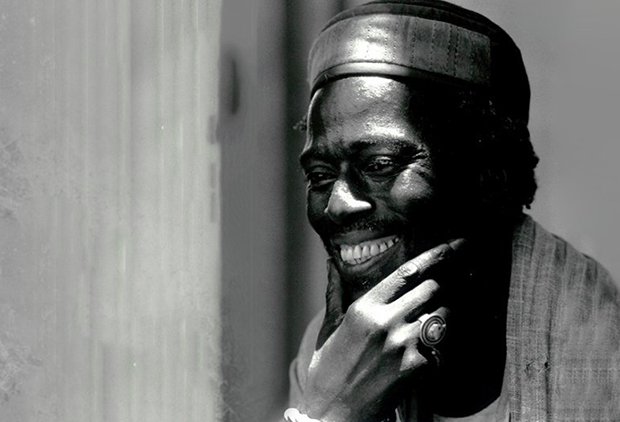
“It is good for the future of cinema that Africa exists.”Born on January 23, 1945, in Colobane, a small town south-west of Dakar, Djibril Diop Mambéty remains one of the most recognized African filmmakers of his generation.
After studying theater, he became a member of the Sorano National Theater in Dakar. At the age of only 17, he created the first Senegalese café-theater, wishing, perhaps, to highlight the art of his country. Meanwhile, he made his debut as an actor in the theater plays as well as in Senegalese and Italian films. He soon went on to shoot his first two short films, Contras’ City (1969) and Badou Boy (1970).
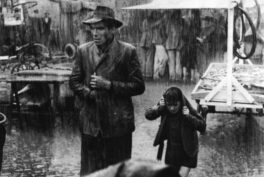
Movie still from Badou Boy, Lamine Bá plays Badou Boy, directed by Djibril Diop Mambéty, 1970. Pinterest.
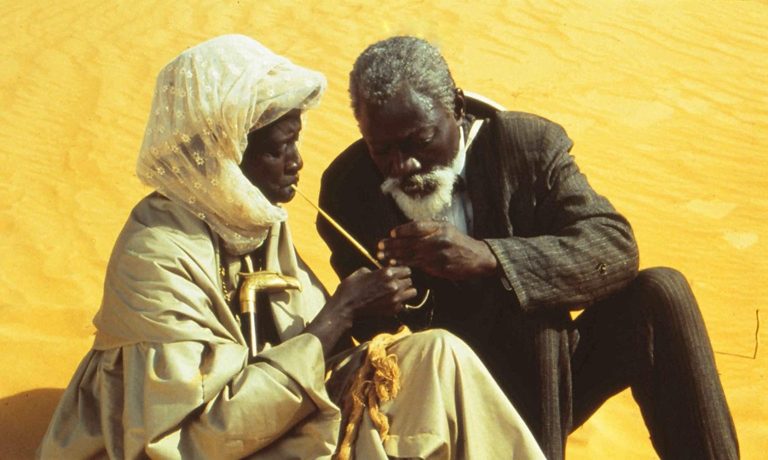
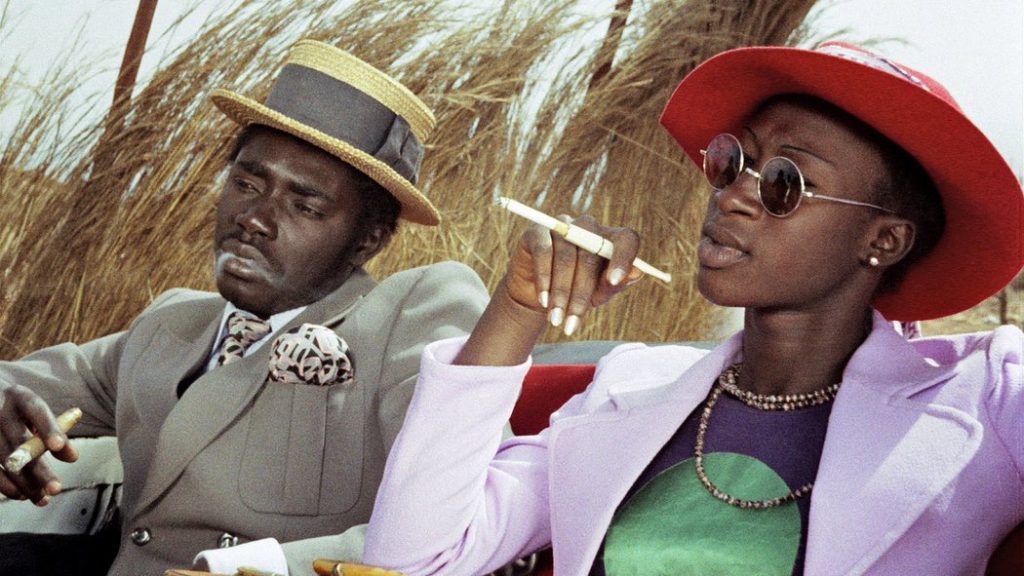
In 1972, Mambéty directed his first feature film, Touki-Bouki (also called Le Voyage de la Hyène). It features two young Senegalese, eager to leave their country for France at any cost. The film won the International Critics’ Prize at the Cannes Film Festival in 1973 and became the masterpiece of the African filmmaker’s short but intense career.
20 years later, he continued to address the theme of ambition mingled with madness by shooting his second—and final—feature film that once again stunned both critics and audiences, Hyènes (1992). This film, which evokes the terrible and disastrous revenge of a humiliated woman, is adapted from Friedrich Dürrenmatt’s play, The Visit of the Old Lady. The hyena, a recurring motif in Mambéty’s art, is his favorite animal. Decorating his ring, it symbolizes a cowardly and fearful man, who also clings to life as best he can.
Movie still from Touki Bouki, Magaye Niang (Mory) and Mareme Niang (Anta), directed by Djibril Diop Mambéty, 1972. Pinterest.
Djibril Diop Mambéty subsequently undertook a trilogy, which he called Histoires de petites gens (Tales of Little People). They were for the filmmaker “the only true, coherent people […], for whom every morning brings the same question: how to preserve what is essential for themselves”. Only the first two parts of this manifest trilogy actually saw the light of day; Le Franc in 1995—which won the Best Short Film Prize at the 5th African Film Festival in Milan—and his last film,La Petite Vendeuse de soleil (The Little Girl Who Sold the Sun, 1998).
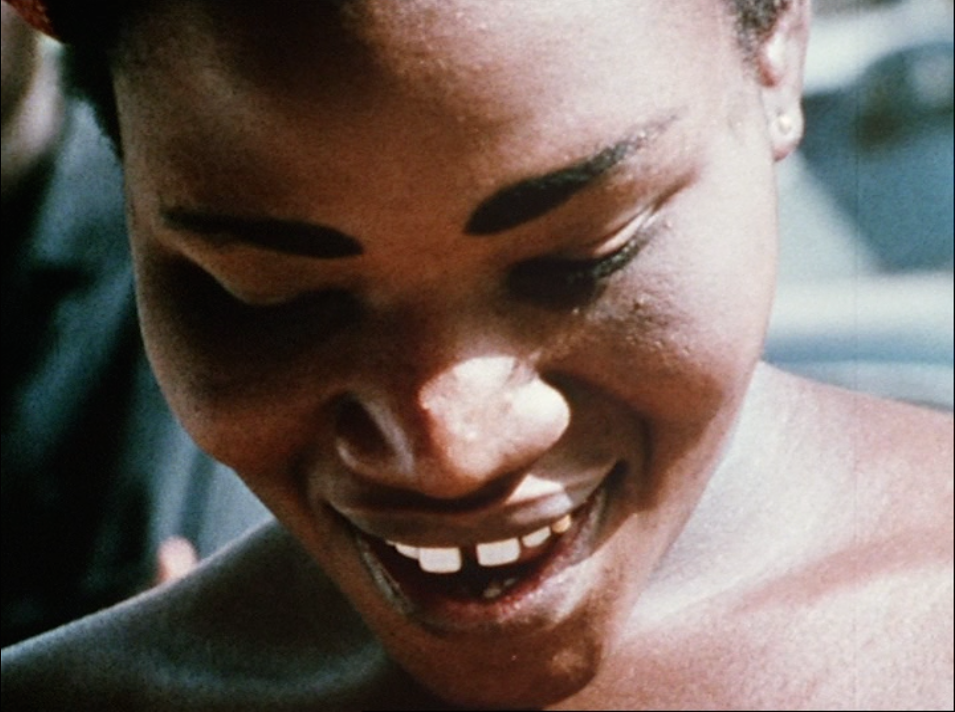
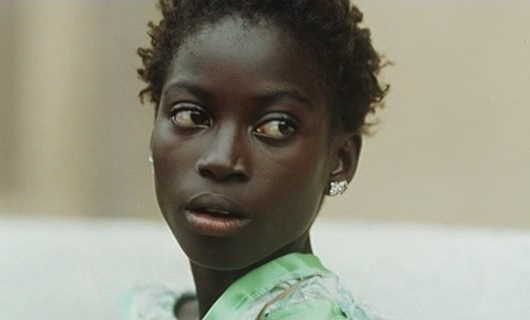
This luminous medium-length film features the young Sili, a veritable ray of sunshine. She perfectly illustrates a Senegalese youth full of optimism and determination. The director did not have time to finish editing La Petite Vendeuse de soleil. On July 23, 1998, Mambéty died of lung cancer in Paris.
Movie still from La Petite Vendeuse de Soleil, Lissa Balera is Sili, directed by Djibril Diop Mambéty, 1998.
Institut Francais.
Djibril Diop Mambéty was fully in line with Senegalese narrative cinema, which is characterized by a certain social and didactic realism. It should be noted that the beginnings of Senegalese cinema go back well before independence from France. In 1955, Paulin Soumanou Vieyra directed Afrique-sur-Seine, disobeying French law as inhabitants of the colonies were prohibited from making films at the time. The tone was set. Therefore, Djibril Diop Mambéty was an important part of this artistic continuity and marked African cinema in the same way as Ousmane Sembène, the “father of African cinema.”
Movie still from La Noire de … [Black Girl], directed by Ousmane Sembène, 1966. New York Times.
Djibril Diop Mambéty has continued to show the world the qualities and the shortcomings of Senegalese society. The filmmaker seems to have been constantly driven by the desire to create his art with respect for African traditions, omnipresent in a staging of colorful, carnival-like characters, animated by dialogues crying out for truth. Dressed in visually strong costumes, they evolve within panoramas revealing both the beauty of Senegal and its character—deeply natural and urban.
Declaring that he “breathes Africa,” Mambéty merged a formidable sense of aesthetics with great sonic efficiency. Throughout his filmography, music becomes a character in its own right, telling its own story.
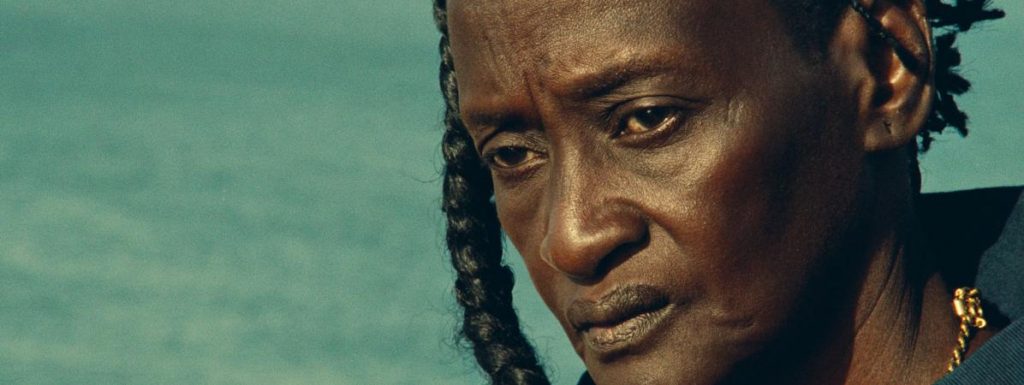
Movie still from Hyènes, Ami Diakhate as Linguere Ramatou, directed by Djibril Diop Mambéty, 1992. Independance Set Creation.
Djibril Diop Mambéty left behind films that remain true artistic gems, referenced in African cinema. Through moving tales, oscillating between documentary and musical genres, he revealed Senegal—his Senegal—to the world.
We love art history and writing about it. Your support helps us to sustain DailyArt Magazine and keep it running.
DailyArt Magazine needs your support. Every contribution, however big or small, is very valuable for our future. Thanks to it, we will be able to sustain and grow the Magazine. Thank you for your help!
Hi ! Graduated from the Ecole du Louvre in Art History, I'm studying at the Sorbonne University. Art became the center of my life through my studies but I also love to practice it, especially drawing and photography, my favorite hobbies.
I hope you will enjoy reading my articles on DailyArt Magazine !
Millions of viewers around the world recognize the red jumpsuits and masks of the famous Netflix series Money Heist (La Casa de Papel). The image has...
![Picture from feature La Noire de ... [Black Girl], dir. Ousmane Sembène,](https://www.dailyartmagazine.com/wp-content/uploads/2020/12/18SEMBENE-facebookJumbo-1024x535.jpg)