
The Migrant Experience Captured in 10 Photographs
The act of leaving and going somewhere else has always been a major element of humanity. Spanning over a hundred years, the 10 photographs on this...
Sam Malone 18 June 2026
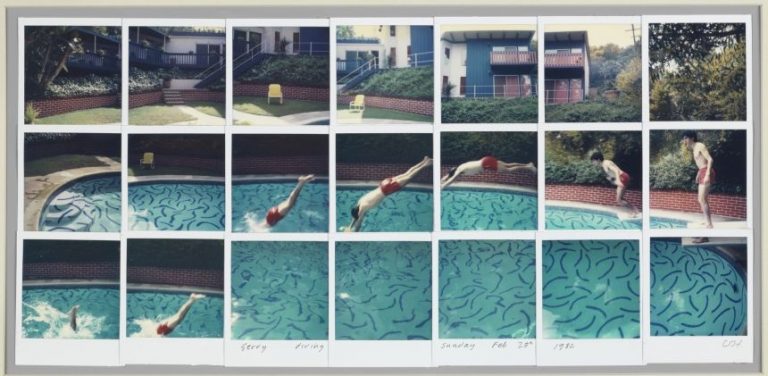
David Hockney, Jerry Diving Sunday Feb. 28th 1982, 1982. Photo credit: Richard Schmidt. Detail.
Sometime before 1982, David Hockney remarked, “Photography is all right if you don’t mind looking at the world from the point of view of a paralyzed cyclops—for a split second.” However, his tough opinion changed in February 1982 when a curator visiting his house in the Hollywood Hills accidentally left some Polaroid film behind. Hockney began experimenting with the film, leading to the creation of some of the most stunning composite photo collages you’ll ever see. Explore David Hockney’s photographs below.
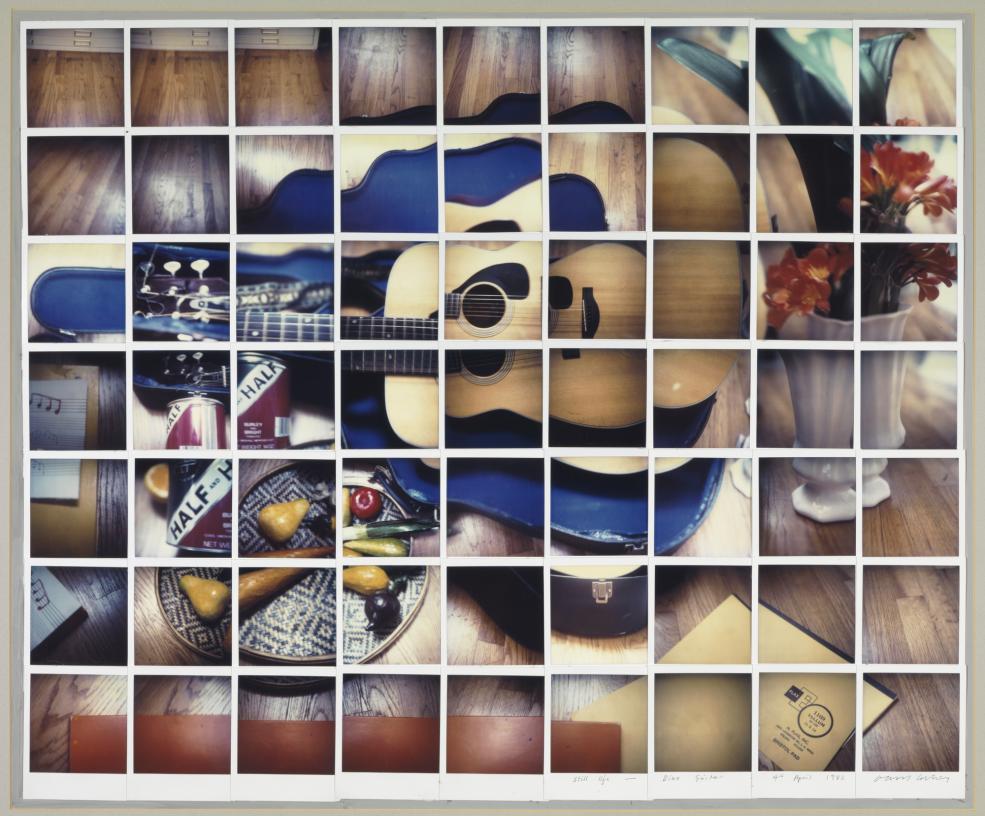
Hockney’s attitude towards photography was modernist. He took photos sequentially and pasted them together, calling them “joiners.”
If you put six pictures together, you look at them six times. This is more what it’s like to look at someone.
David Hockney, Phillips.
He admitted that his works are very Cubist and often reference Synthetic Cubism with their distorted perspective.
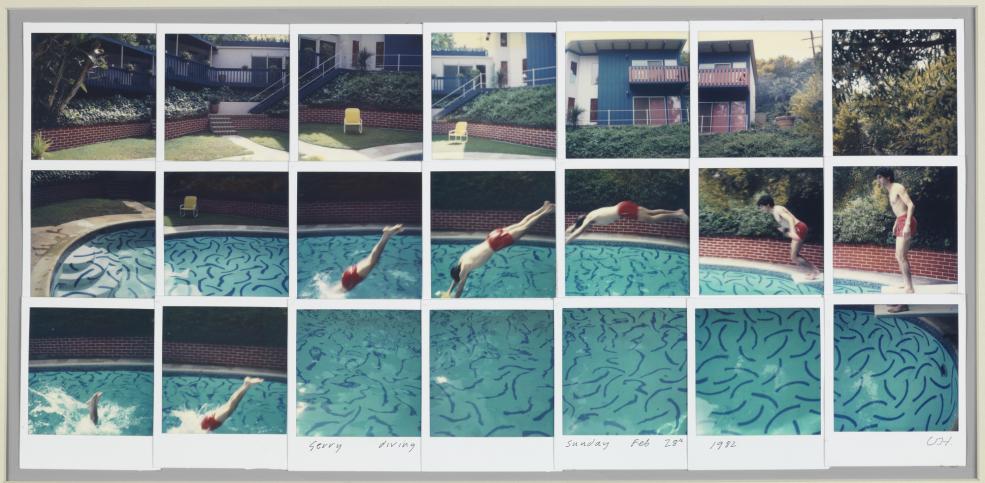
Fascinated by movement, Hockney often portrayed his subjects as moving or tried to highlight his own movement in the photograph. His photographs invite our gaze to move from side to side, up and down.
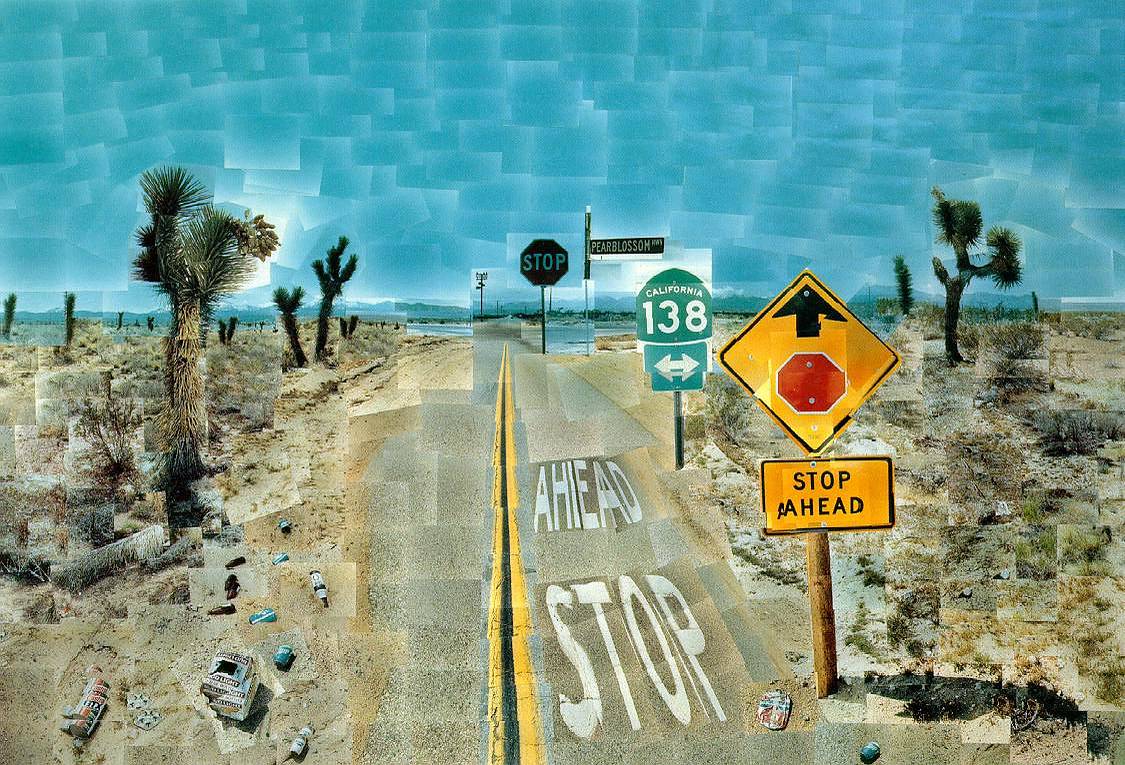
What started as an exploration of the spaces of his house and the portrayal of his family and friends developed into a monumental work depicting vast American scenery. Yet instead of simply documenting the landscapes, Hockney depicted depth, trying to overcome the limits of eye-vision. He viewed his collages as a combination of painting and photography. He presented multiple perspectives in the same artwork to show how there is never a single true and privileged one that we should blindly follow.
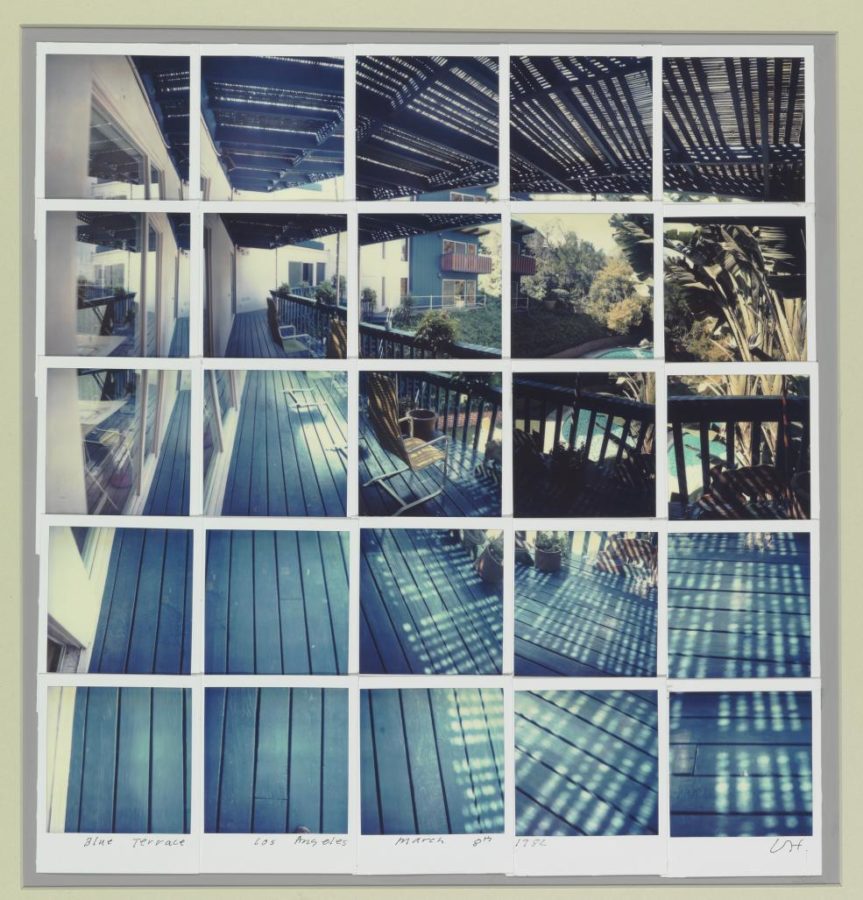
By using the Cubist shifting vantage points, Futurist glorification of movement, and traditional representational iconography, David Hockney’s photographs depicted reality in a new sharpened way, heightening our perception of the surrounding world.
DailyArt Magazine needs your support. Every contribution, however big or small, is very valuable for our future. Thanks to it, we will be able to sustain and grow the Magazine. Thank you for your help!

Magda, art historian and Italianist, she writes about art because she cannot make it herself. She loves committed and political artists like Ai Weiwei or the Futurists; like Joseph Beuys she believes that art can change us and we can change the world.

The act of leaving and going somewhere else has always been a major element of humanity. Spanning over a hundred years, the 10 photographs on this...
Sam Malone 18 June 2026
Artist Carrie Mae Weems was born in Portland, Oregon, USA. Now in her seventies, she is still actively working, and is considered one of America’s...
Candy Bedworth 1 February 2026
Tadeusz Rolke, hailed as an icon and legend of Polish photojournalism, died in his native Warsaw in July 2025, at the age of 96. He dedicated his...
Guest Author 6 October 2025
Salvador Dalí and Philippe Halsman’s 37-year collaboration challenged viewers and revealed connections between the traditionally realistic medium...
Theodore Carter 24 October 2025