Born in Pereiaslav, today’s Ukraine, Louise Nevelson (1899-1988) is recognized as one of America’s most innovative sculptors. Her most famous outsized sculptures were made of cast-off wood parts from the streets that were transformed into completely different objects by monochromatic spray paint. Although they seemed rather abstract, in reality they were meant to tackle themes related to Nevelson’s complicated past (like emigration, a love affair with Diego Rivera, a divorce), and her fractious present.
Always Being the “Other”
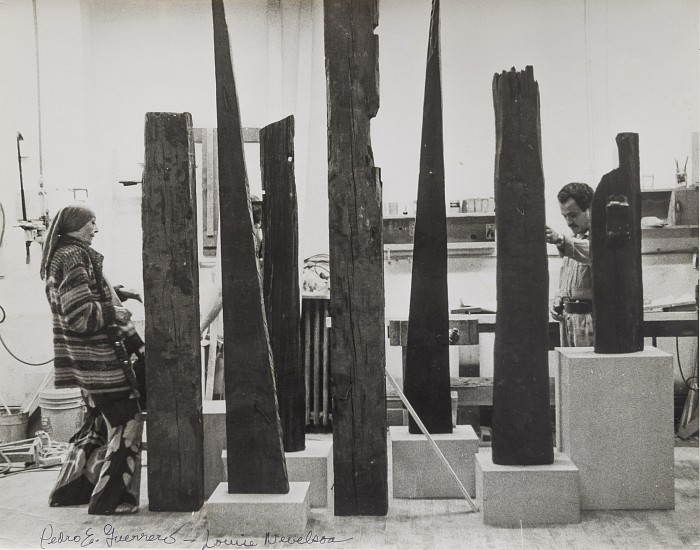
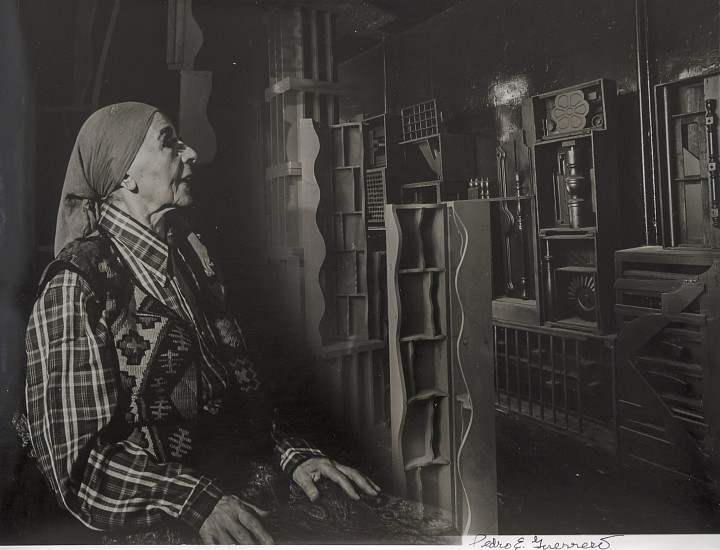
Pedro E. Guerrero, Louise Nevelson with Salvaged Wood Sculpture, 1978. Artsy.
Louise Nevelson’s sense of selfhood was a force that propelled her work and it might have been caused by the uneasy feeling of “otherness” she felt her whole life. As an Eastern European emigrant to the United States, she never really felt she belonged anywhere. Born Leah Berliawsky in nowadays Ukraine, Nevelson was taken to America in 1905 by her parents. Unlike the majority of Jews who moved to urban centers, Isaac and Minna Berliawsky settled in Rockland, Maine. Nevelson never fully managed to assimilate into the chaste New England community and her most important goal was to leave Rockland and live in New York City. When she was 19, she met a Jewish cargo ship owner, Charles Nevelson who made her dream possible: the two married two years later and moved to New York. However, their happiness was short-lived.
A Love Affair
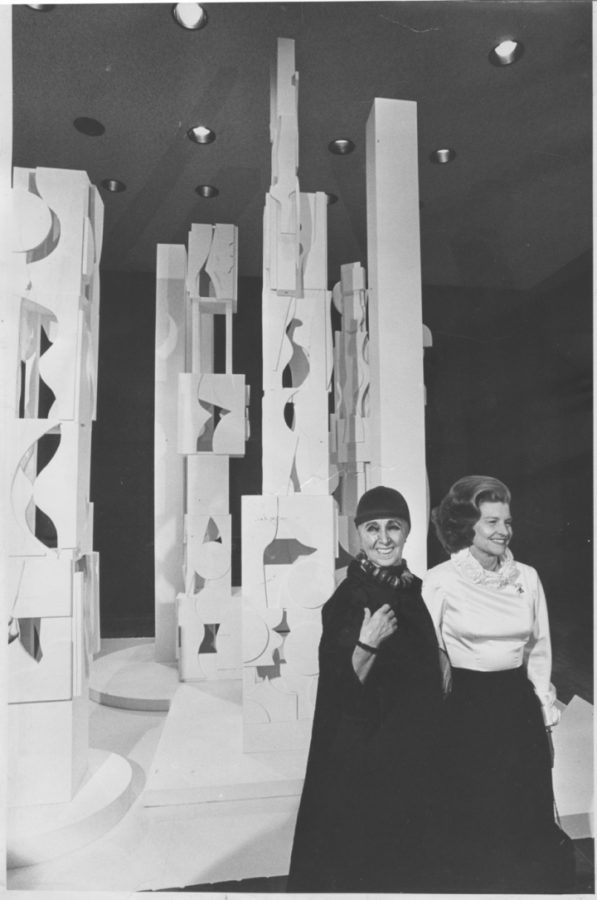
Al Schell, First Lady Betty Ford and Louise Nevelson standing with Bicentennial Dawn, 1976, Temple University Libraries, SCRC, Philadelphia, PA, USA.
Charles didn’t understand Nevelson’s passion for art and subsequently forbade her to practice it. She fell into depression, and her mother helped Nevelson leave Charles and pursue her dreams by promising to take care of her newborn son Myron Nevelson. Nevelson separated from her husband in 1931 and began to seriously develop her art, traveling to Europe and studying sculpture. On her return to New York, she met Diego Rivera and worked as his assistant on the mural Man at the Crossroads at Rockefeller Plaza. The two had an affair (not surprising since Diego was quite a character) which caused a rift between Nevelson and Frida Kahlo, whom Nevelson greatly admired.
A Ready-Made Artist
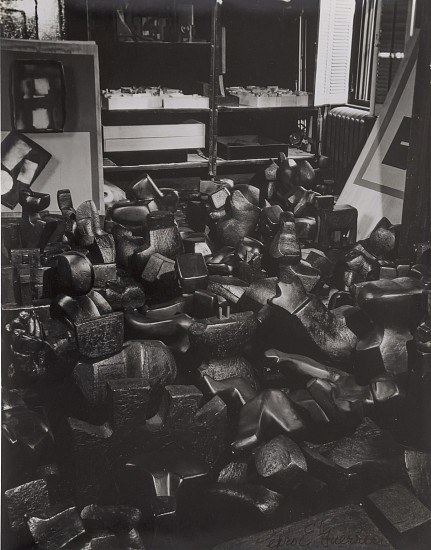
Pedro E. Guerrero, Found objects in Louise Nevelson’s NY house, 1978. Edward Cella.
In her monumental narrative installations made of carefully arranged wooden debris, Nevelson mirrored the artistic processes of Marcel Duchamp, whose readymades and found object sculptures Nevelson studied in her early career. However, it took her years to attract the attention of critics and the public: they were not interested in a female artist. Why? Because the most dominant trend in those years was Abstract Expressionism, a highly masculine movement. Seeing a young female who claimed to be brilliant was too much for the misogynist art environment of the States. Yet, Nevelson steadily kept working. Her perseverance can be linked to a prophecy that her parents heard when she was born.
A Legend
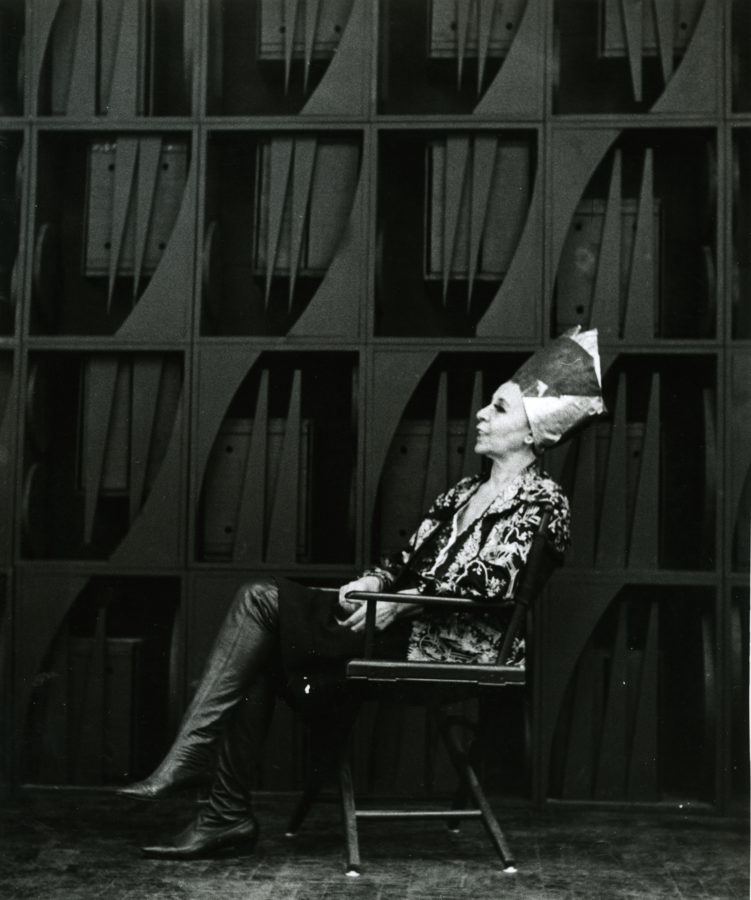
Pedro E. Guerrero, Louise Nevelson in her NY studio, 1978. Edward Cella.
“This child is destined for greatness,” declared Sholem Aleichem, the famous writer of Yiddish tales, when he saw baby Nevelson. Not surprisingly, this prophecy became legendary and let Nevelson believe in eventually achieving success. Her colorful persona, which some believed was just a marketing tool to get her work sold (in the 1930s and 1940s she became known as “The Hat” because she wore gorgeous chapeaux – sometimes stolen, when she was broke, and sometimes given by lovers in exchange for favors), was in reality a coping tool she had taken after her mother, who had hidden her pain at the lack of social acceptance in their new homeland behind a façade of expensive and elegant outfits in the latest fashion. Louise, in turn, hid her numerous rejections from art galleries with a cigarillo on her lips, three layers of false eyelashes, heavy jewelry, a chinchilla coat and stunning headdresses.
And she finally made it! In 1962, the Martha Jackson Gallery in NY gave her a solo show and she presented at the VeniceBiennale, while Princeton University commissioned her to create a monumental outdoor steel sculpture in 1969. More commissions and acclaim were to come in the next years. Her career sped up and Nevelson was finally free and successful.
We love art history and writing about it. Your support helps us to sustain DailyArt Magazine and keep it running.
DailyArt Magazine needs your support. Every contribution, however big or small, is very valuable for our future. Thanks to it, we will be able to sustain and grow the Magazine. Thank you for your help!
Magda, art historian and Italianist, she writes about art because she cannot make it herself. She loves committed and political artists like Ai Weiwei or the Futurists; like Joseph Beuys she believes that art can change us and we can change the world.
'Painting the Light: The Story of Berthe Morisot, First Woman Impressionist' is written by Natalia Iacobelli and illustrated by Rosanna Tasker. Read about this inspiring new children's book from Reycraft Books.
Rolinda Sharples painted the world of Jane Austen, and the political turmoil unfolding beyond the ballroom. Her paintings capture Regency society as...
Bologna, in northern Italy, fostered more women artists in the early modern period than any other European city. Nowhere else matched the number, the...