
Whistler in 10 Works: The Poetry of Sight
James Abbott McNeill Whistler can sometimes appear as insubstantial and vague as one of his Nocturnes. He flits across the late 19th-century art...
Catriona Miller 16 October 2026
3 September 2026 min Read
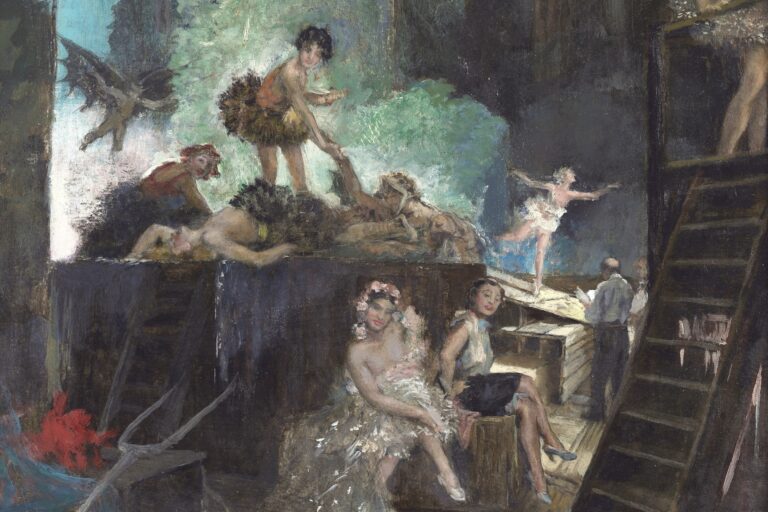
Mariano Fortuny y Madrazo, Rehearsal at La Scala Theater, Fortuny Museum, Venice, Italy. Detail.
Mariano Fortuny y Madrazo was not originally from Venice, as he was born in Granada, Spain, in 1871, as the son of a painter also called Mariano Fortuny. However, he is considered a naturalized Venetian as he spent most of his life in Venice, and it’s where his artistic talent and genius flourished.
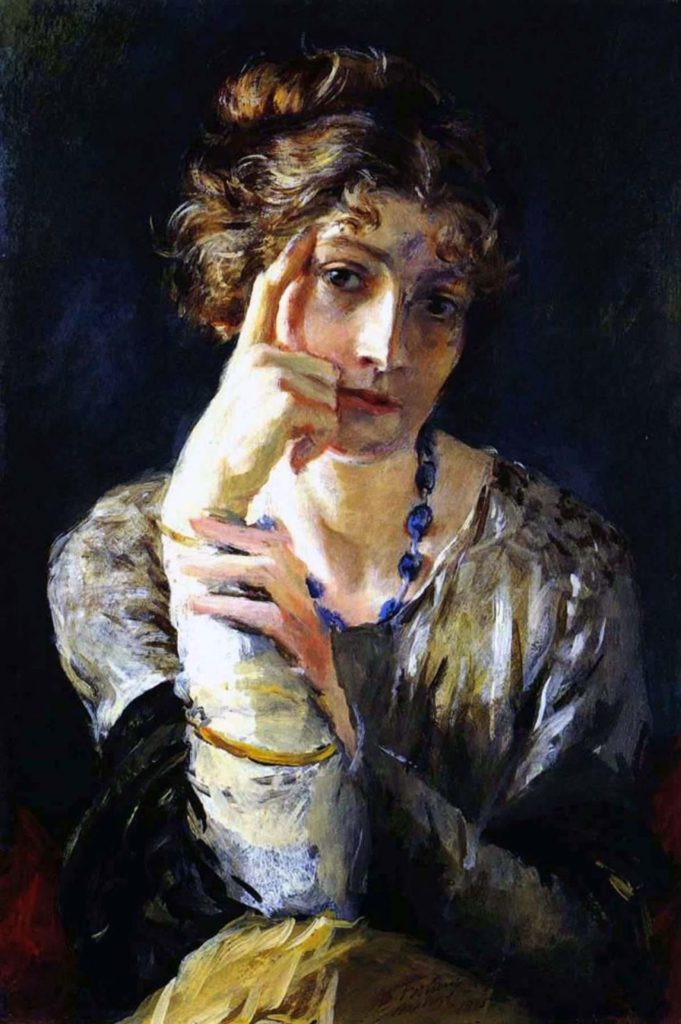
Following the early death of his father, Fortuny and the family moved to Paris, where the boy studied fine art. Later, his mother moved the family to Venice when Mariano had just turned 18 and he quickly became a member of Venetian high society. He frequented intellectual and artistic circles, making friends with the poet Gabriele D’Annunzio, the actress Eleonora Duse, the writer Hugo von Hofmannsthal, the duchess Luisa Casati, the painter Giovanni Boldini, and even the prince Fritz Hohenlohe-Waldenburg. In this period, he also met his future wife, Henriette Negrin, a Parisian who became his model, muse, and collaborator.
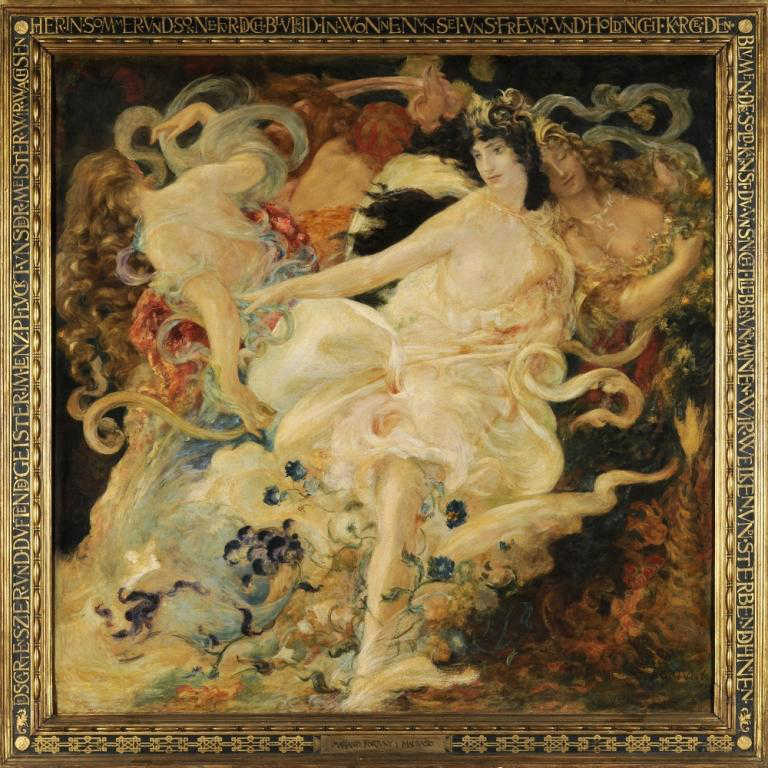
Fascinated by Richard Wagner, Fortuny decided to travel to Bayreuth, Germany, a visit that turned his interests towards set design and lighting practices. He wanted to, precisely as Wagner did, unite music and theater sets. In 1900, he designed sets and costumes for the premiere of Tristan and Isolde in the most famous Milanese opera house, La Scala. At the same time, he worked on an innovative lighting system that would free the stage from using direct light sources and make them more diffused, a project called “Dome”.
Thanks to the financial support of the duchess Bearn, he managed to install his system in her private theater in 1906. The design, which allowed the projection of colorful skies and clouds onto the stage, was a huge breakthrough and was taken up by various German theaters.
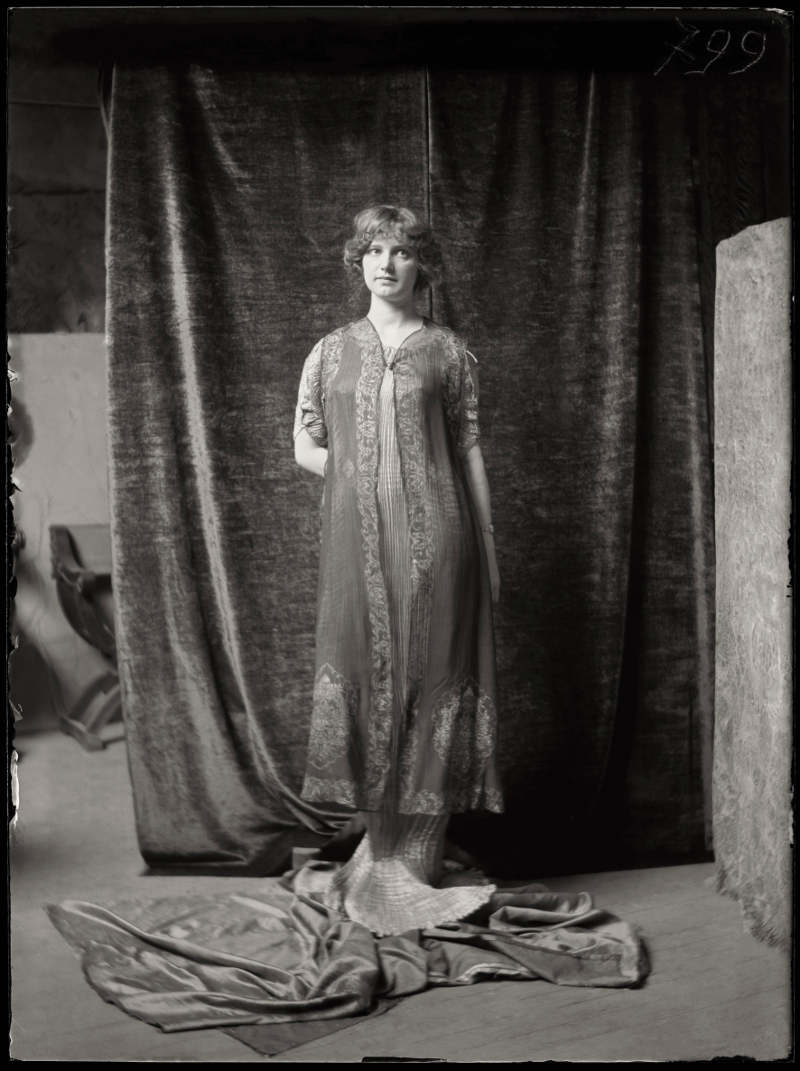
Yet, Fortuny had already moved onto a new area. He began designing fabrics and stamped materials together with his future wife, Henriette. It was the silk dress, Delphos, which they designed together in 1907, that made them famous worldwide. Marcel Proust described it as “faithfully antique but markedly original”. The popularity of his designs was so high that in 1919, he opened a factory in Giudecca Island, where he worked on clothes made from a new material—cotton.
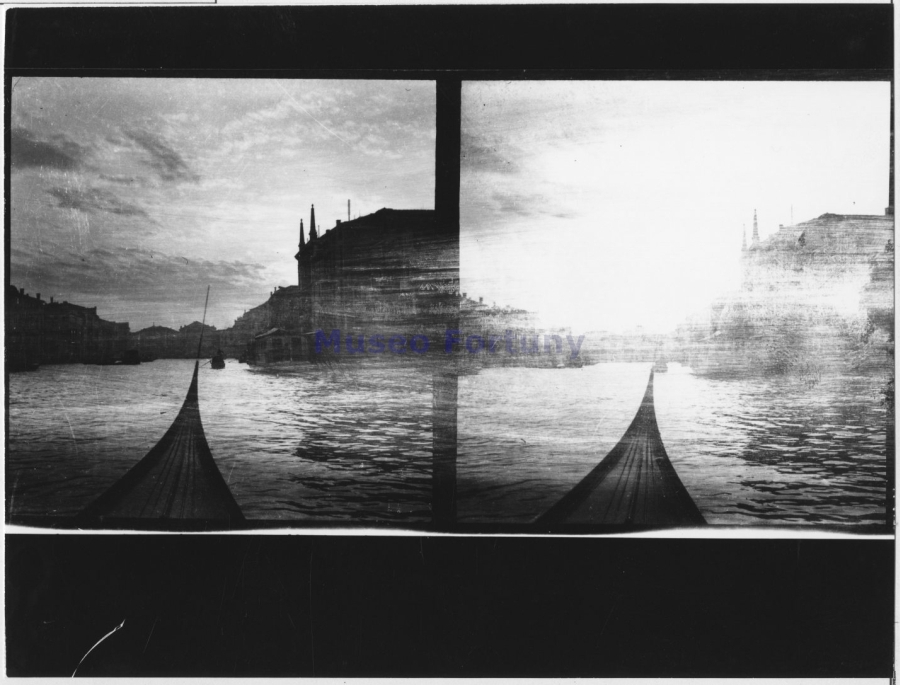
The family lived in the Palazzo Pesaro degli Orfei, today the Fortuny Museum, where Fortuny could shut himself away from the world in his private library, working on paintings, architectural models for theaters, photography, and fashion design.
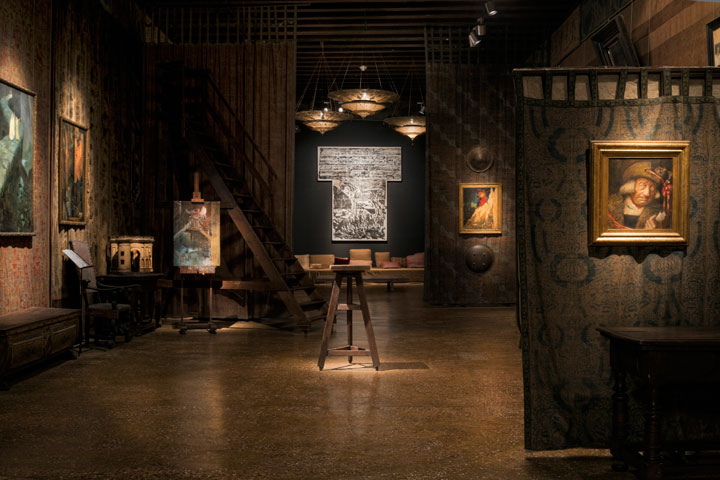
After Fortuny’s death in 1949, his palazzo was donated to the city of Venice and made a museum in 1975. Today you can see the eclectic collection of various objects amassed by the artist, his paintings and models, and a collection of 20th-century Italian art.
DailyArt Magazine needs your support. Every contribution, however big or small, is very valuable for our future. Thanks to it, we will be able to sustain and grow the Magazine. Thank you for your help!

Magda, art historian and Italianist, she writes about art because she cannot make it herself. She loves committed and political artists like Ai Weiwei or the Futurists; like Joseph Beuys she believes that art can change us and we can change the world.
James Abbott McNeill Whistler can sometimes appear as insubstantial and vague as one of his Nocturnes. He flits across the late 19th-century art...
Catriona Miller 16 October 2026
Think art school is the only path to greatness? Think again. These 10 artists defied convention through persistence, originality, and vision, without...
Wen Gu 14 September 2026
Bronzino was of the generation of artists who had to find a way of following the perfection of the High Renaissance. They pushed the conventions of...
Catriona Miller 28 September 2026
From early roots in rural Ontario, Canada, to New York City and back again, David Milne was an artist who rarely settled for long. His works span a...
Bec Brownstone 1 July 2026