Tom Wesselmann in 5 Striking Pop Art Masterpieces
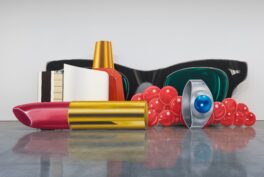
Tom Wesselmann rose to prominence during the Pop Art movement, though he rejected the label himself. While many Pop artists used familiar objects to...
Errika Gerakiti 14 August 2025
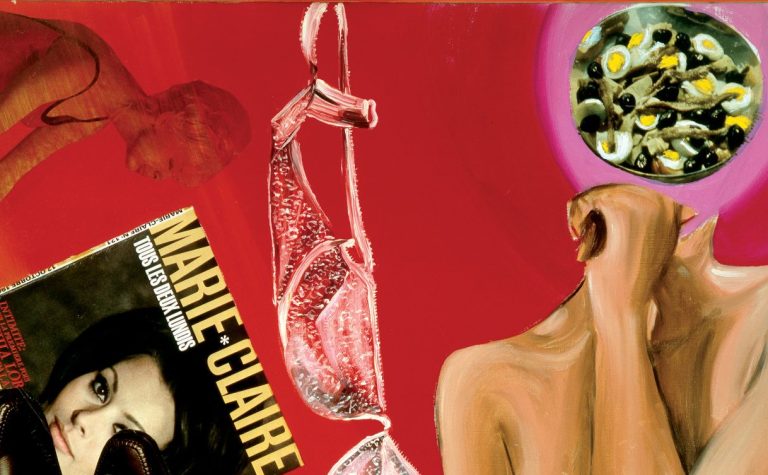
Evelyne Axell, Marie Claire, 1964. AwareWomenArtists. Detail.
Pop Art is one of the most iconic movements in history, and its influence continues today. While often dominated by male artists, several women created extraordinary work that deserves recognition. Here are 10 women of Pop Art you should know!
Pop Art burst onto the scene in the 1950s, transforming everyday objects into bold, eye-catching art. It celebrated consumer culture while challenging traditional ideas about creativity. Although male artists often dominate the narrative, women also played a vital role in shaping the movement. They brought fresh perspectives, explored identity, and questioned societal norms in unique ways. For example, some used bright colors to highlight femininity, while others mixed pop culture with personal stories. Their work influenced fashion, media, and design, expanding Pop Art’s impact beyond galleries.
Today, these artists continue to inspire new generations to merge art with social commentary. By recognizing their contributions, we gain a richer understanding of the movement. Ultimately, the women of Pop Art proved that the movement’s creativity knows no gender, leaving a lasting mark on modern culture.
Rosalyn Drexler (1926–2025) emerged as a distinctive voice in Pop Art during the 1960s, blending humor, drama, and social critique. She drew inspiration from comic books, magazines, and film, transforming popular imagery into vivid paintings and mixed-media works. Drexler often explored conflict, gender roles, and modern life by using bold colors and dynamic compositions to draw viewers in. In addition to painting, she created performance pieces and wrote plays and novels, showing her multidisciplinary approach to storytelling.
By combining pop culture with personal and societal commentary, Drexler challenged traditional art boundaries and expectations. As one of the influential women of Pop Art, her work continues to inspire artists to merge entertainment, critique, and creativity in innovative ways.
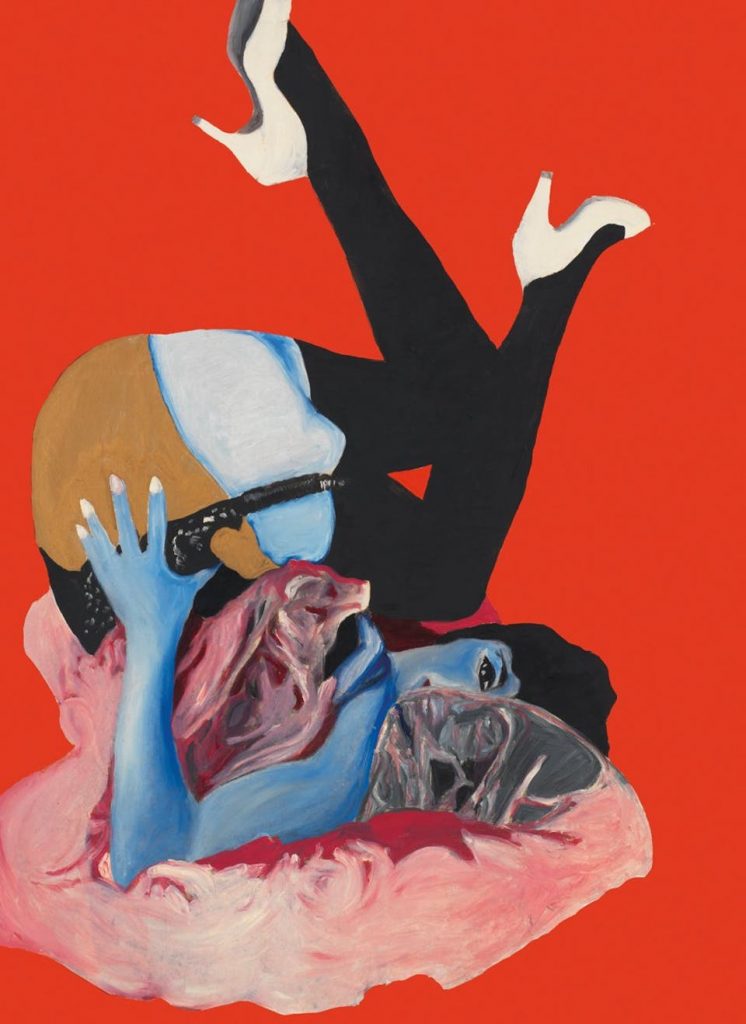
Rosalyn Drexler, Self-Portrait, 1964, private collection of Beth Rudin DeWoody. © 2016 Rosalyn Drexler / Artists Rights Society (ARS), Garth Greenan Gallery, New York City, NY, USA.
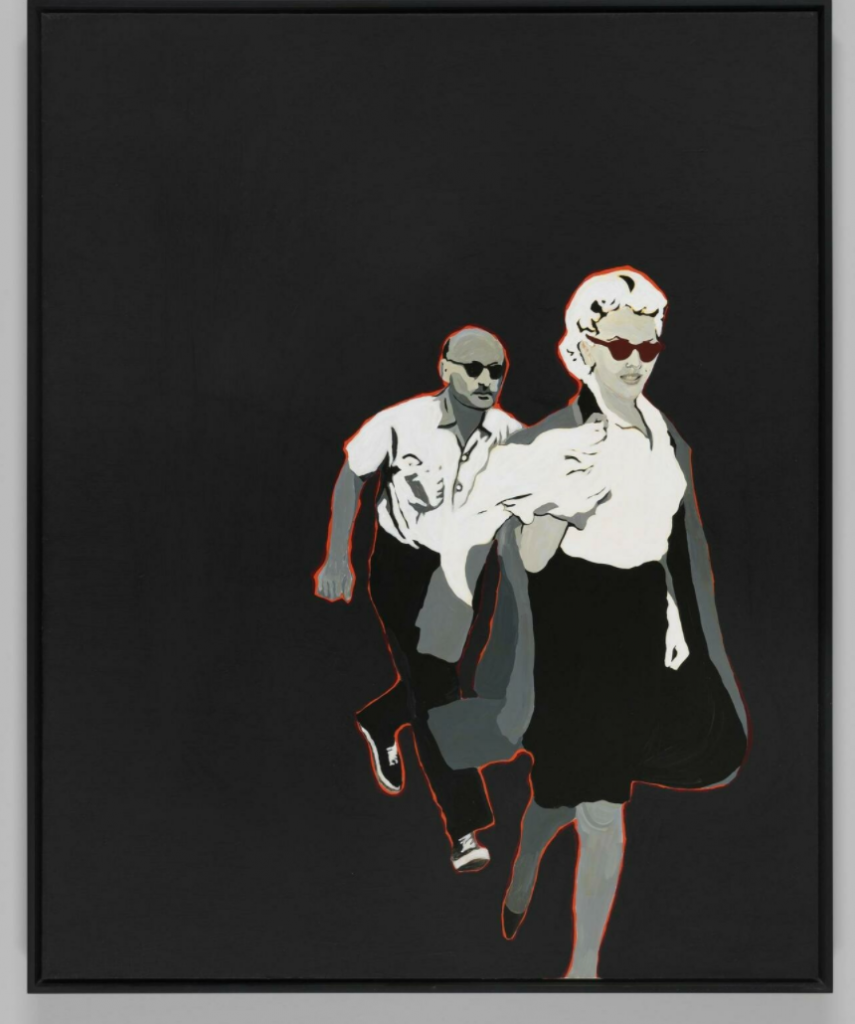
Rosalyn Drexler, Marilyn Pursued by Death, 1963, Whitney Museum, New York City, NY, USA.
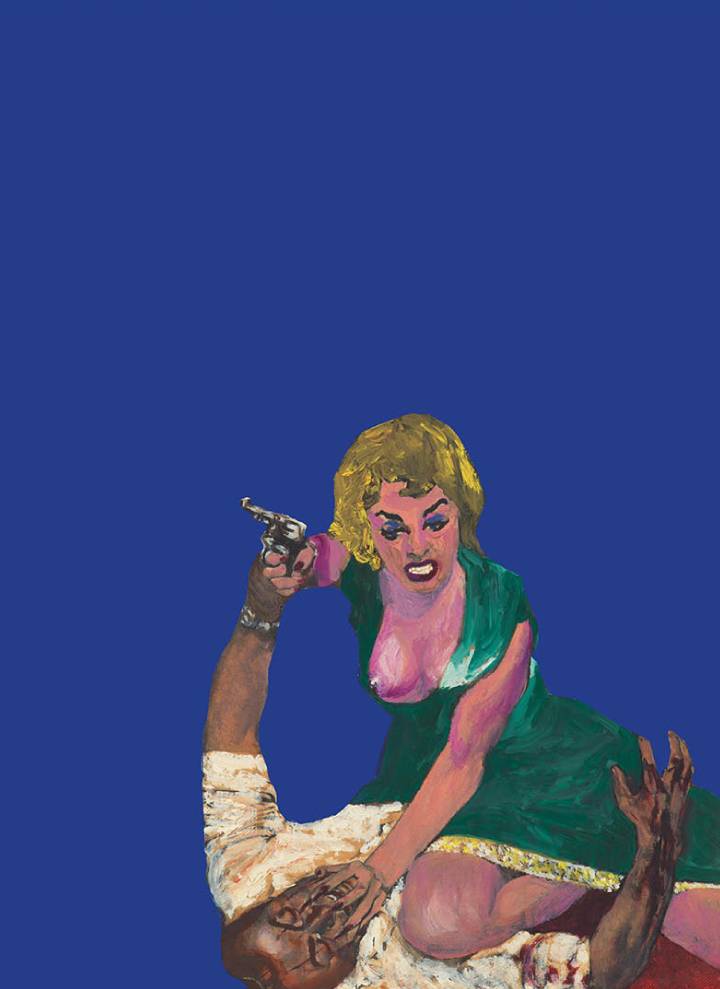
Rosalyn Drexler, Self-Defense, 1963, Garth Greenan Gallery, New York City, NY, USA.


In Self-Portrait, Drexler turns the pin-up trope on its head, portraying a blue-skinned, unsettling figure isolated against a red background. The figure’s tense pose and anxious gaze convey confinement within the male gaze. By claiming the image as a self-portrait, Drexler asserts her own sexual agency, challenging the typical objectification of women in Pop Art.
In Marilyn Pursued by Death, the artist presents Marilyn Monroe fleeing from the paparazzi, set against a black background outlined in red to suggest danger. Unlike her male counterparts, who celebrated Monroe as a glamorous sex symbol, Drexler emphasizes the darker realities of media obsession and public scrutiny. Marilyn becomes a symbol of victimization, reflecting Drexler’s underlying feminist critique.
In Self-Defense, Drexler portrays a woman in a moment of decisive strength, holding a gun while pinning down her attacker and clawing his face. Contrary to her other works that highlight vulnerability, this painting presents the woman active rather than objectified. Through this dramatic depiction, Drexler explores themes of self-protection, empowerment, and resistance, reinforcing her feminist perspective within the Pop Art framework.
Marisol Escobar (1930–2016), known simply as Marisol, brought a playful and critical voice to Pop Art through her sculptural work in the 1960s. She combined wood, plaster, and found objects to create three-dimensional portraits and narrative tableaux. Her sculptures often portrayed celebrities, friends, and social archetypes, blending humor with sharp commentary on identity, fame, and societal roles.
Marisol also incorporated painted surfaces, photographs, and everyday materials, making her work both tactile and visually engaging. By merging painting, sculpture, and installation, she challenged traditional artistic boundaries and expanded the possibilities of Pop Art.
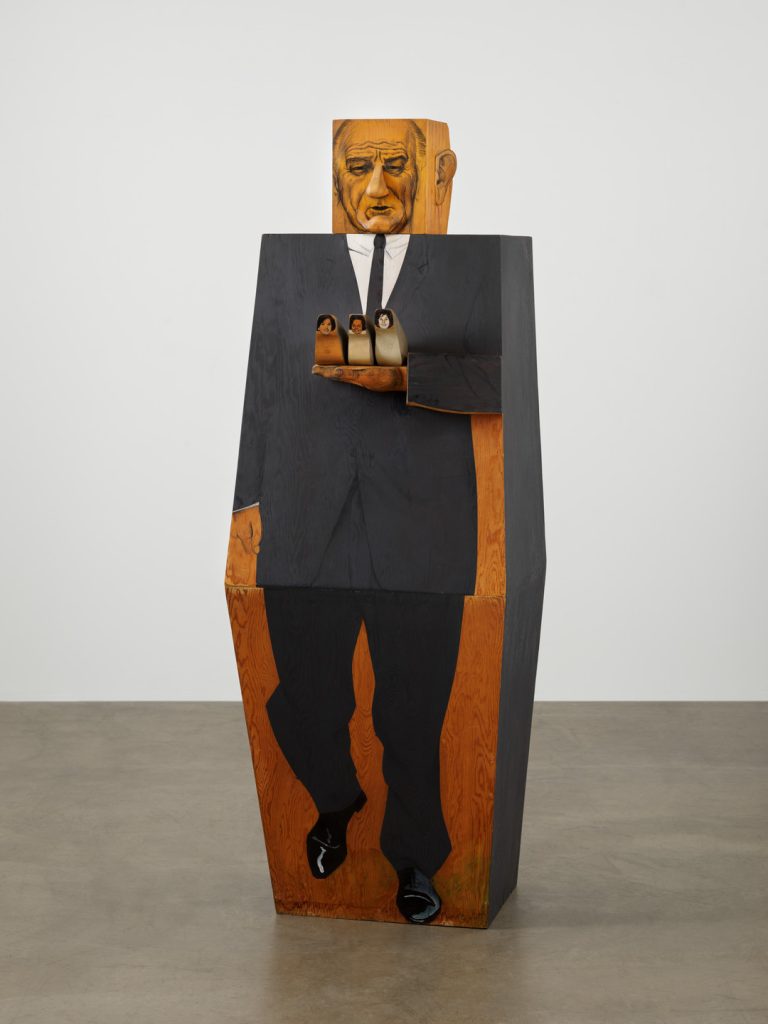
Marisol Escobar, LBJ, 1967, Museum of Modern Art, New York City, NY, USA.
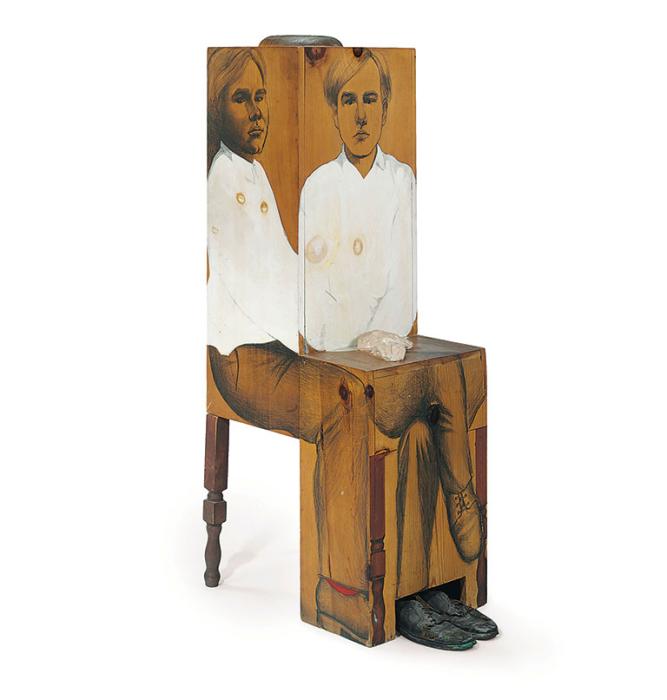
Marisol Escobar, Andy, 1962–1963. National Gallery of Art.
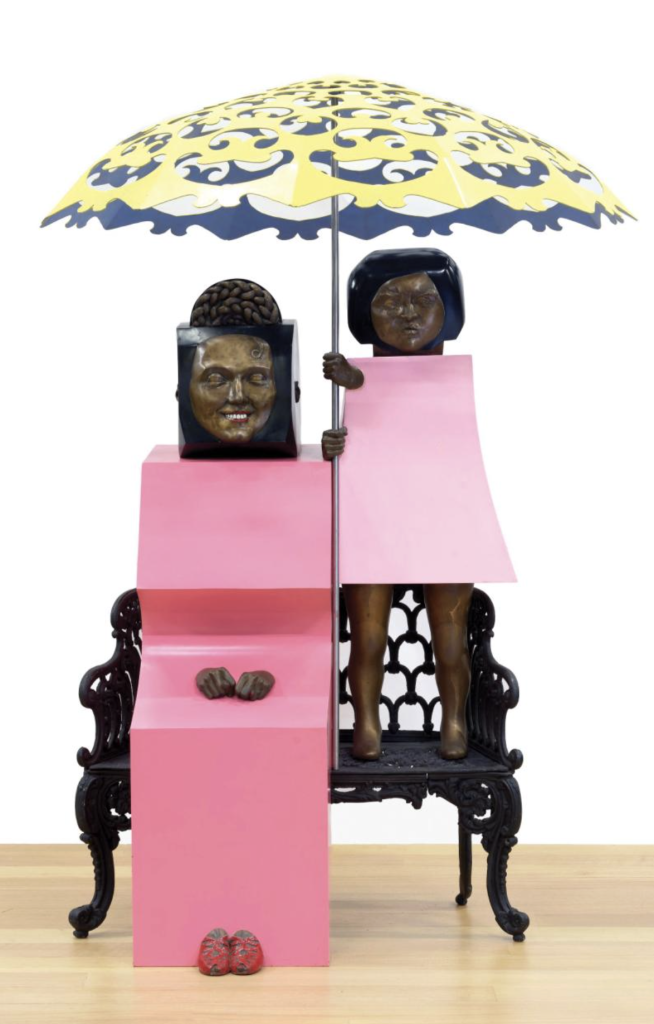
Marisol Escobar, Mi Mama Y Yo, 1968. National Endowment for the Humanities
In Marisol’s wood construction LBJ, President Lyndon B. Johnson is depicted holding small portraits of his wife and daughters, rendered as smiling gray house wrens—a nod to Lady Bird Johnson. In stark contrast, Marisol portrays LBJ himself as a grimacing, blocklike figure with exaggerated facial features, evoking both the circumstances of his rise to the presidency and his controversial role in the Vietnam War. Created at the height of his unpopularity, the sculpture combines satire with social commentary, highlighting Johnson’s domineering personality and the public tensions surrounding his leadership.
Marisol’s close relationship with Andy Warhol informed her playful yet critical perspective in the sculpture Andy. Drawing on her experiences at The Factory and her familiarity with Warhol’s persona, she rendered him in a simplified, almost caricatured style, blending admiration with subtle satire. By translating Warhol’s distinctive features into a sculptural form, Marisol captured both his celebrity aura and the performative nature of his public image.
Mi Mamá y Yo reflects the lasting impact of the artist’s mother’s suicide, which left her fearing her own voice. The wooden figures convey both intimacy and emotional tension, transforming personal grief into a universal exploration of family, loss, and identity. Through this work, Marisol channels trauma into a poignant statement within Pop Art.
Pauline Boty (1938–1966) was a pioneering British artist and one of the few women at the forefront of 1960s Pop Art. She combined bold colors, figurative painting, and imagery from cinema, music, and advertisements to create vibrant, energetic works. Boty often celebrated femininity, youth culture, and sexual liberation while subtly critiquing societal norms. Her compositions merged portraiture with narrative scenes, giving viewers both visual pleasure and thoughtful commentary.
Unlike many of her male contemporaries, she directly addressed the female experience, making her perspective unique within the movement. Although her career was tragically short, her work continues to influence contemporary artists who explore gender, culture, and identity.
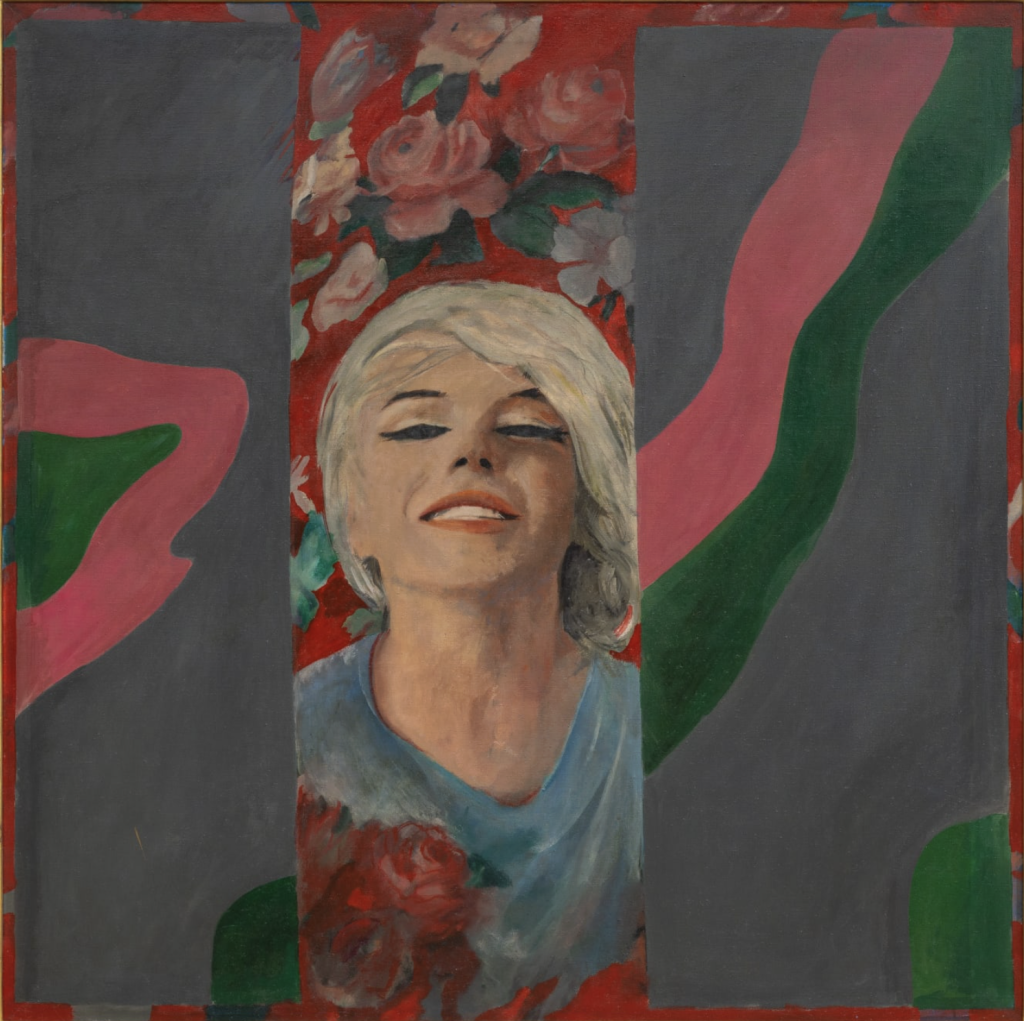
Pauline Boty, Colour Her Gone, 1962. Gazelli Art House.
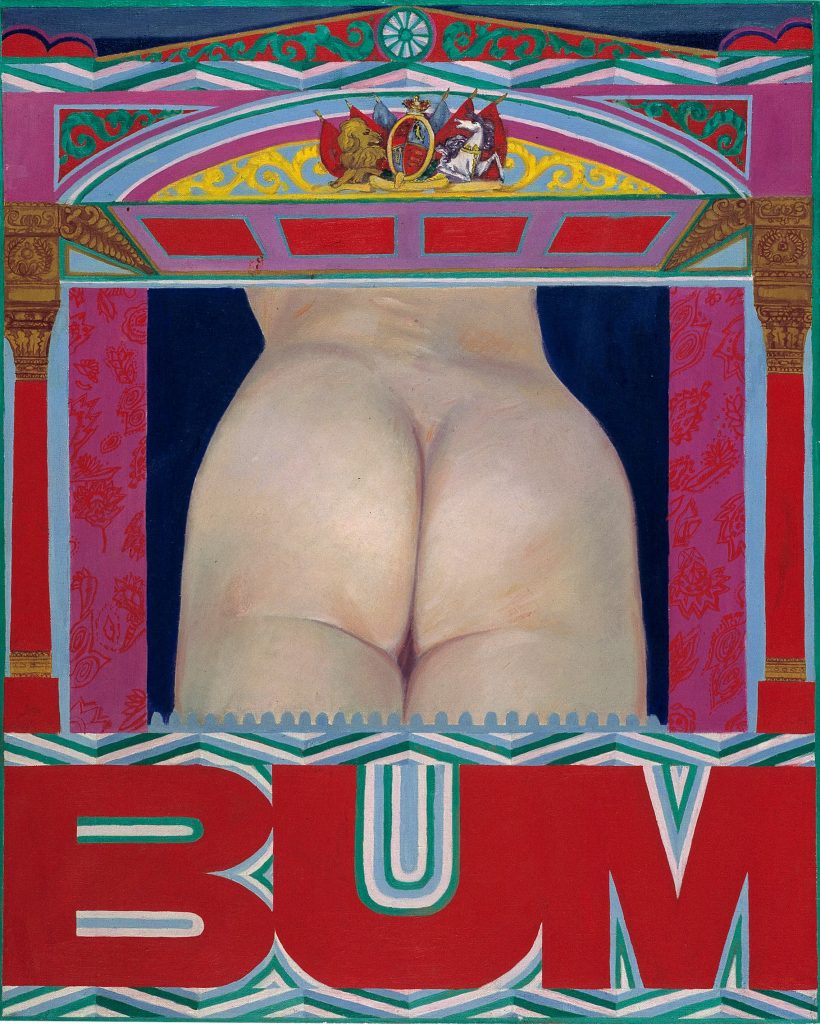
Pauline Boty, BUM, 1966. The Guardian.
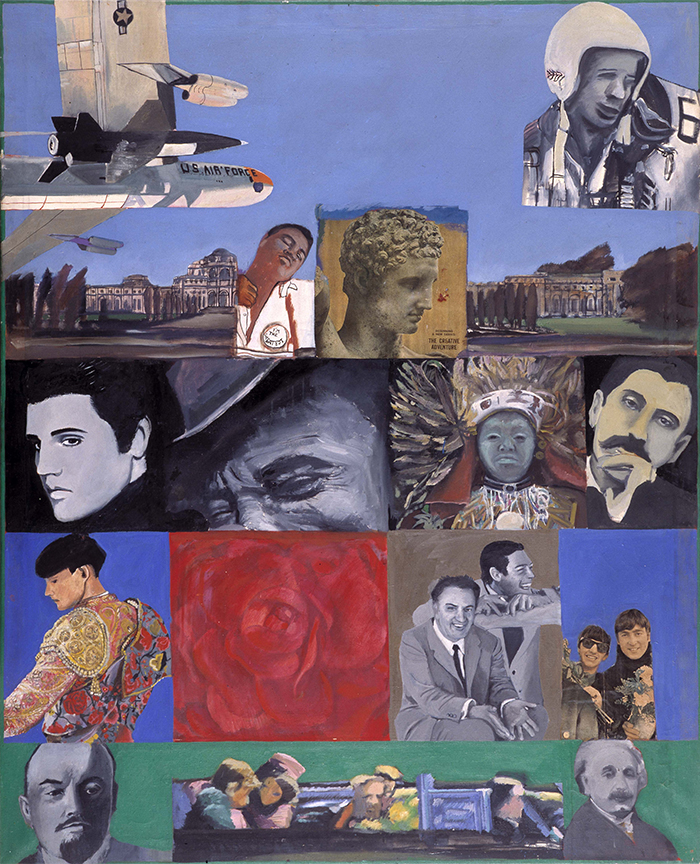
Pauline Boty, It’s a Man’s World I, 1964. Artist’s website.
The painting is a tribute to Marilyn Monroe, painted shortly after her death. It combines vibrant colors and floral motifs to humanize the actress beyond her public image. The title references a popular song of the era, emphasizing both mourning and cultural memory, while Boty’s ironic yet affectionate style critiques media-driven ideals of femininity.
BUM captures the playful and provocative energy of 1960s youth culture. The painting features a close-up of a female figure’s posterior, rendered in bright colors and outlined with clear lines, highlighting both humor and sexuality. Through this exaggerated depiction, Boty critiques the male gaze while simultaneously celebrating female confidence and bodily autonomy.
This vivid collage presents male figures, such as Muhammad Ali, Elvis Presley, and Albert Einstein, juxtaposed with symbols of power, war, and celebrity. Boty subtly inserts a female element through a red rose atop Jackie Kennedy, highlighting the tension between masculine dominance and female presence. With bold colors and sharp imagery, the artist critiques the cultural and social structures that elevate men while limiting women, turning the title into a pointed, ironic commentary on the male-centered world of the 1960s.
Corita Kent (1918–1986) transformed Pop Art through her vibrant, text-driven prints and serigraphs in the 1960s and 1970s. A nun and educator, she infused her work with messages of hope, love, and social justice, blending popular culture with spiritual and political themes. Her pieces often layered bold colors, playful typography, and imagery from advertising and mass media, turning familiar visuals into uplifting statements.
Unlike many Pop artists who focused on commercial or celebrity culture, Kent emphasized community, activism, and moral reflection, making her work both visually striking and deeply meaningful. Through her innovative use of words and design, she inspired viewers to see art as a force for communication and change.
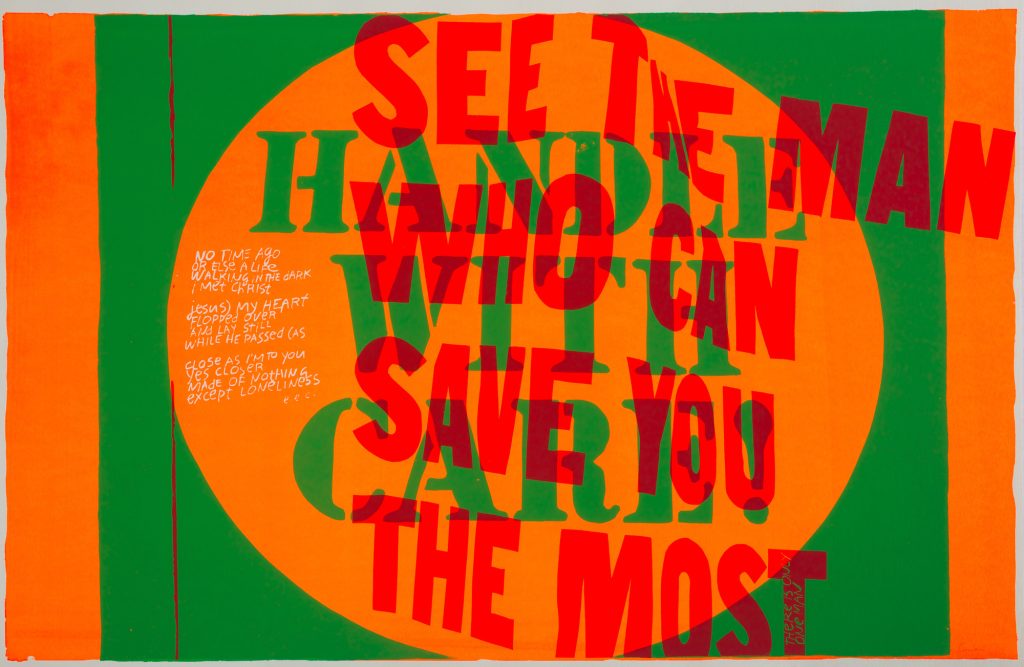
Corita Kent, Handle with Care, 1967, Corita Art Center, Los Angeles, CA, USA.
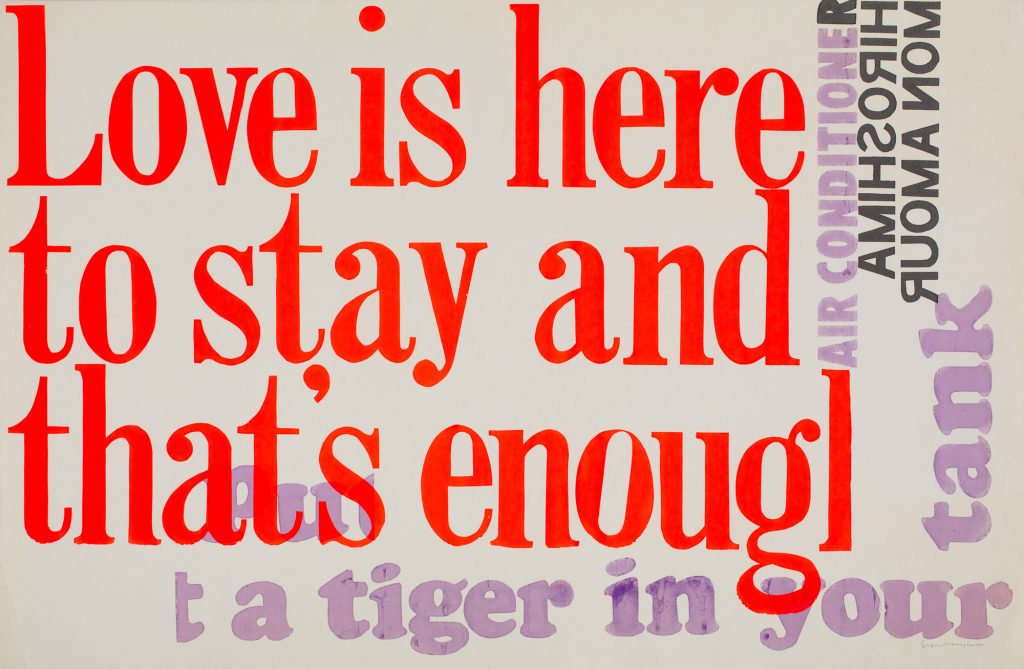
Corita Kent, Tiger, 1965, Corita Art Center, Los Angeles, CA, USA.
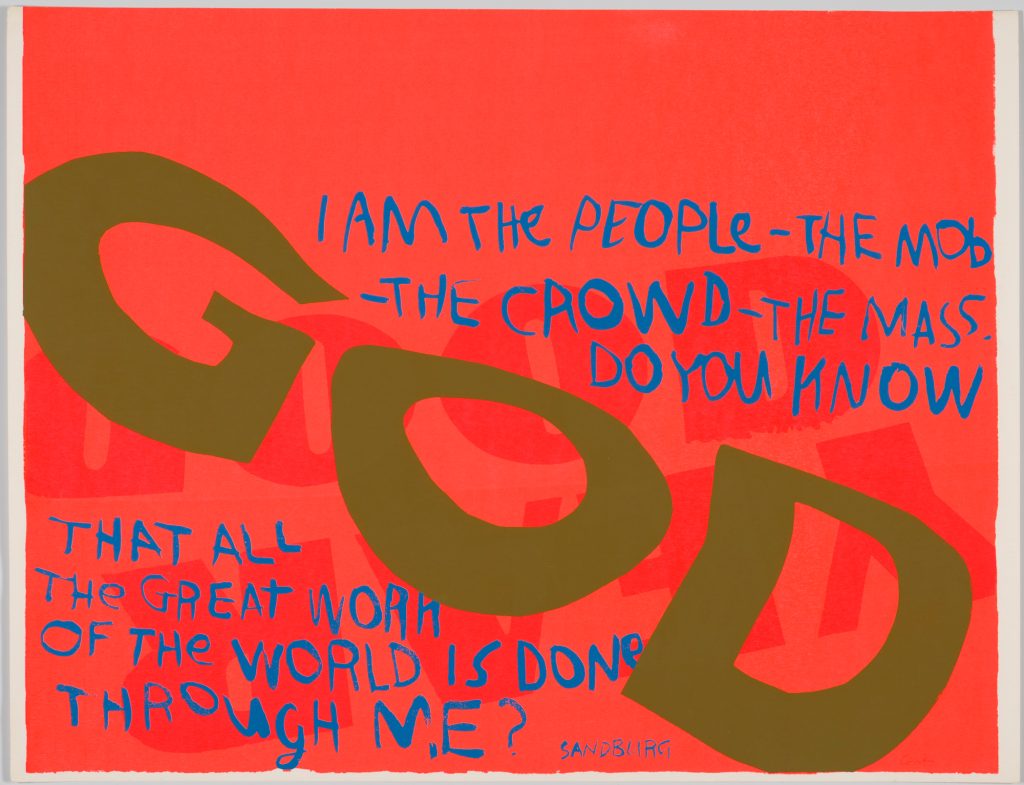
Corita Kent, I Am the People, 1967, Corita Art Center, Los Angeles, CA, USA.
Here, Kent blends bold typography and vibrant color to deliver a message of compassion and caution. Words and phrases are layered across the composition, creating both visual rhythm and a sense of urgency, while the playful palette draws the viewer in. By combining text, color, and pop culture references, Kent transforms a simple directive into a universal call for empathy, reflecting her belief in art as a tool for social engagement.
Corita Kent’s Tiger is a screenprint that transforms a popular advertising slogan into vibrant visual art. Using bold typography and dynamic composition, Kent repurposes the phrase Put a tiger in your tank to explore the energy of language and commercial culture.
Corita Kent’s I Am the People layers bold text over vibrant, graphic forms to emphasize the strength and influence of ordinary people. Using her signature Pop Art style, Kent transforms language into visual power, highlighting themes of collective action, community, and shared responsibility.
Evelyne Axell (1935–1972) brought a daring, sensual edge to Pop Art in the late 1960s. Her brightly colored paintings and Plexiglas works combined erotic imagery with bold, geometric forms, creating a striking, modern aesthetic. Axell often explored female desire, liberation, and identity, challenging the male-dominated narratives of the movement. She also experimented with transparency and layering, adding depth and a playful, luminous quality to her pieces.
While her career was tragically brief, Axell’s work remains influential for its fearless expression and innovative use of materials. As one of the notable women of Pop Art, she demonstrated that the movement could embrace not just consumer culture, but also personal freedom, empowerment, and bold experimentation.
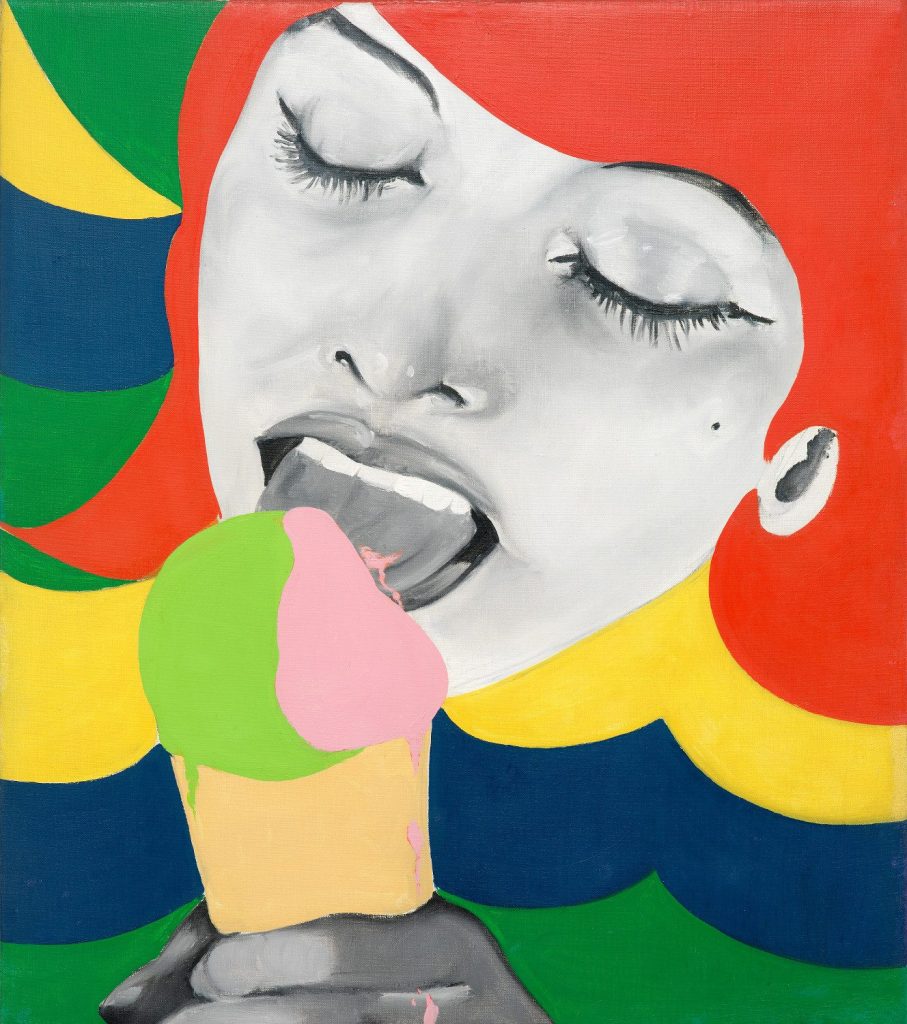
Evelyne Axell, Ice Cream, 1964. AwareWomenArtists.
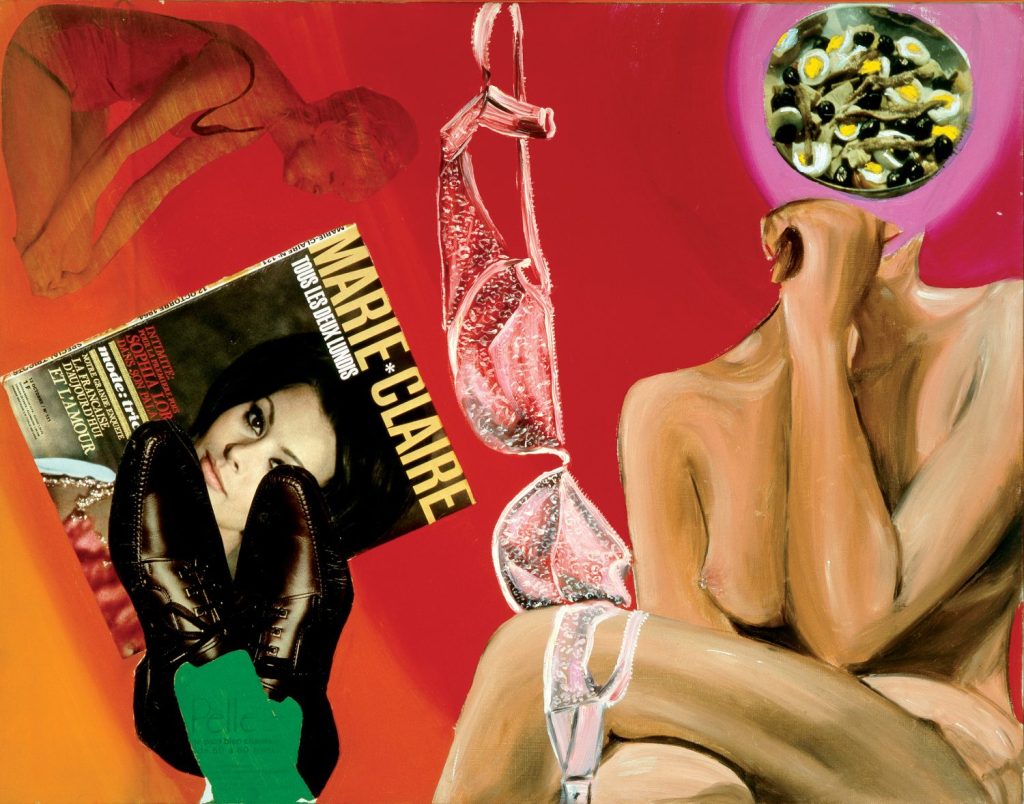
Evelyne Axell, Marie Claire, 1964. AwareWomenArtists.
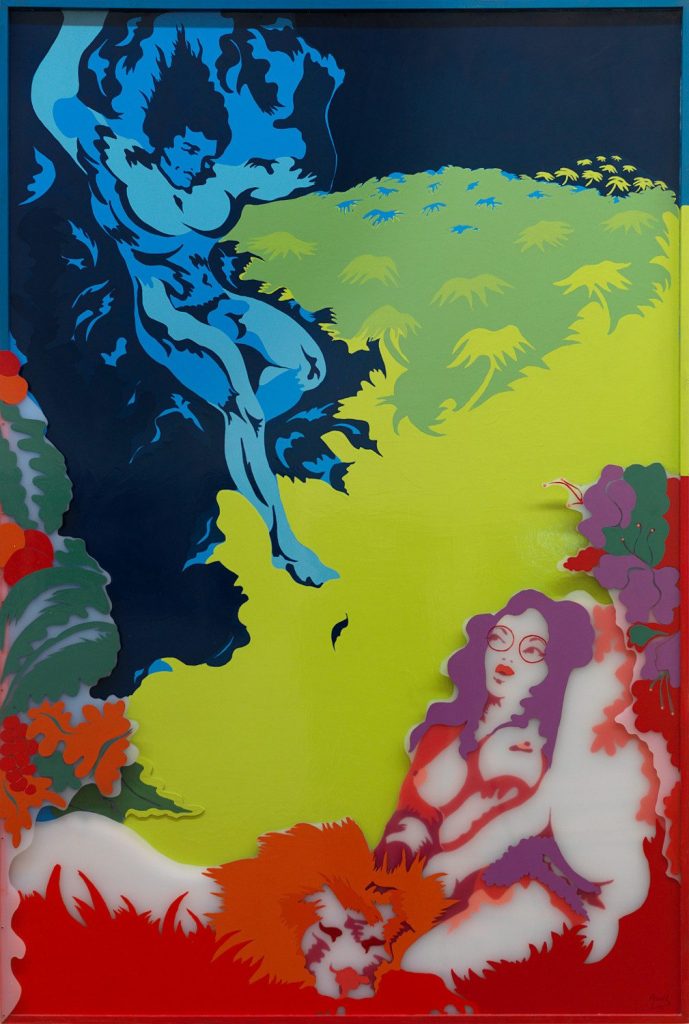
Evelyne Axell, Le Retour de Tarzan, 1972. WikiArt.
Axell’s painting shows a woman confidently enjoying an ice cream cone, painted in bold, flat colors. The painter challenges traditional depictions of women, reflecting the exploration of female subjectivity by the women of Pop Art. The work’s provocative imagery sparked debate, emphasizing its playful critique of desire and cultural norms.
This piece uses collage and painting to rework imagery taken from the popular fashion magazine of the same name. By isolating and recontextualizing the female figure, Axell exposes how mass media constructs ideals of beauty and femininity. The bold colors and simplified forms assert control over the image, shifting it away from passive consumption.
In Le retour de Tarzan, Axell appropriates the iconic male hero to reverse traditional power dynamics. She places a nude female figure at the center of the composition, presenting desire from a female perspective rather than through the male gaze. Using bright colors and smooth, stylized forms, Axell blends eroticism with irony, challenging heroic masculinity and pop stereotypes.
Kiki Kogelnik (1935–1997) reimagined Pop Art with a futuristic and experimental vision. She explored the intersection of women, fashion, and technology, often transforming everyday objects into whimsical, thought-provoking art. Her paintings, cut-outs, and inflatable sculptures combined bright colors with bold shapes, creating a sense of movement and playfulness. Kogelnik challenged conventional representations of the female body, blending satire, science, and modern life in unexpected ways. Rather than simply reflecting pop culture, she critiqued it, offering a forward-looking perspective that was both witty and visually striking.
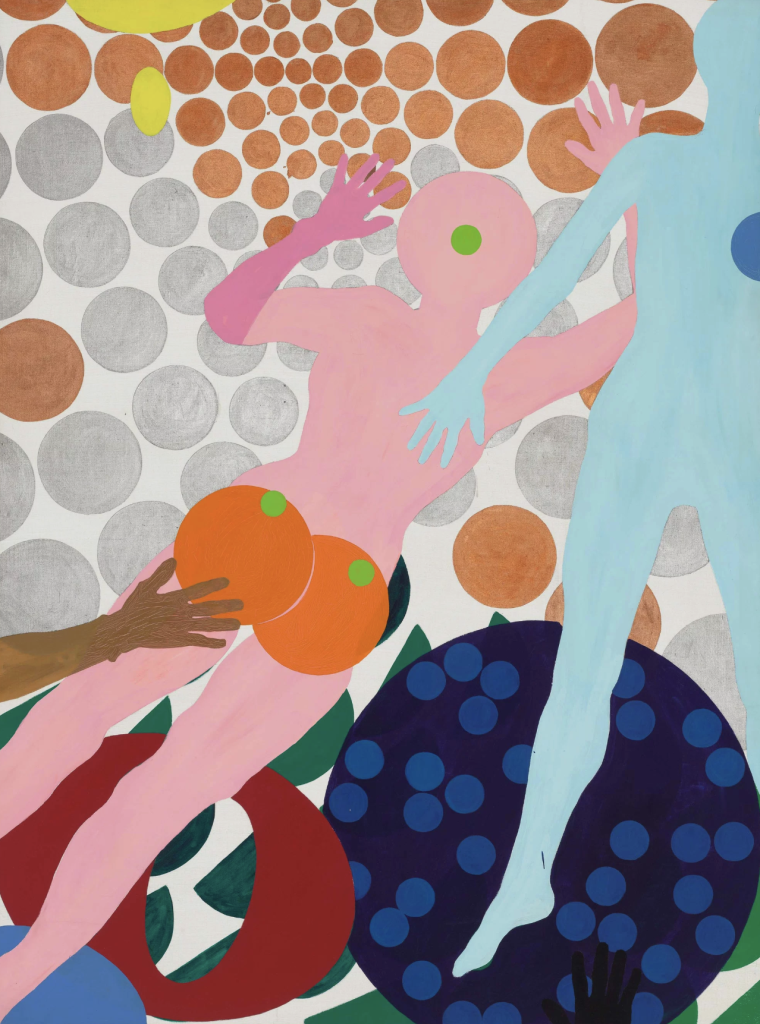
Kiki Kogelnik, Outer Space, 1964. © Kiki Kogelnik Foundation. Pace Gallery.
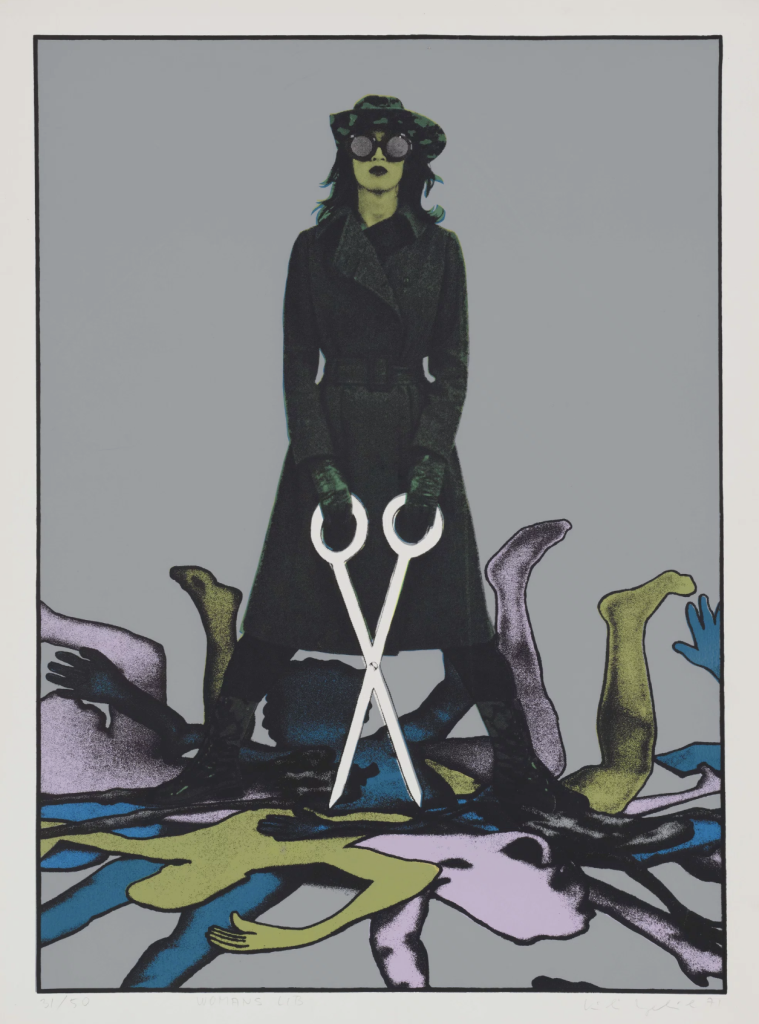
Kiki Kogelnik, Woman’s Lib, 1971. © Kiki Kogelnik Foundation. Artnet.
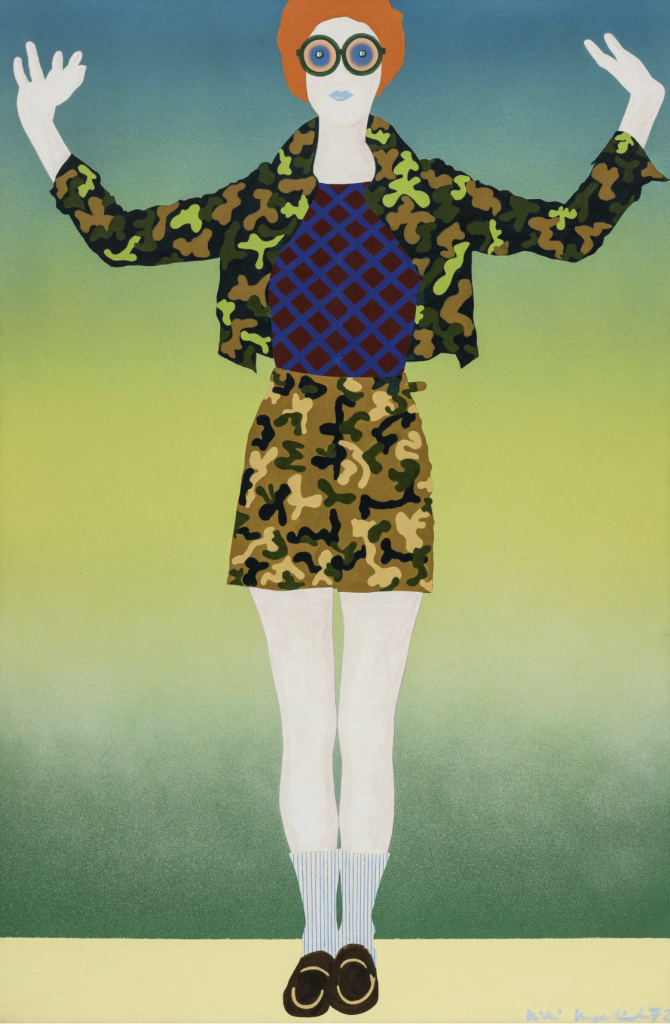
Kiki Kogelnik, War Baby, 1972. © Kiki Kogelnik Foundation. Ro Gallery.
In Outer Space, Kogelnik depicts a stylized female figure floating against a flat, cosmic background, merging the space-race imagery of the era with Pop Art aesthetics. The simplified body, bright colors, and weightless pose reflect her interest in technology, futurism, and the changing role of women in modern society. Rather than presenting space as a heroic male domain, Kogelnik inserts a distinctly female presence into this futuristic vision.
In this piece, the artist directly engages with the feminist movement through bold color, simplified forms, and graphic clarity. The work presents a female figure as emblematic rather than individual, emphasizing collective identity and political presence. By reducing the body to a striking visual symbol, Kogelnik avoids idealization and instead foregrounds autonomy and resistance.
In War Baby, Kogelnik confronts the violence of the Vietnam War by combining imagery of infancy with military symbolism. The work presents a childlike figure marked by elements associated with warfare, creating a stark contrast between innocence and destruction. Through simplified forms and bold color, Kogelnik exposes the absurdity and cruelty of conflict, especially its impact on future generations. The piece shows how the women of Pop Art used Pop’s visual language not only to reflect popular culture, but also to critique political violence and global unrest.
Yayoi Kusama (1929–) is a pioneering figure whose immersive installations and polka-dot motifs have made her one of the most recognizable women associated with Pop Art. She blends repetition, pattern, and scale to create environments that reflect her fascination with infinity, obsession, and psychological experience.
Kusama’s work often turns personal visions of hallucination and compulsive repetition into public, participatory art, inviting viewers to become part of her endless polka-dot worlds. Through paintings, sculptures, and mirrored installations, she challenges traditional boundaries between artist, audience, and space.
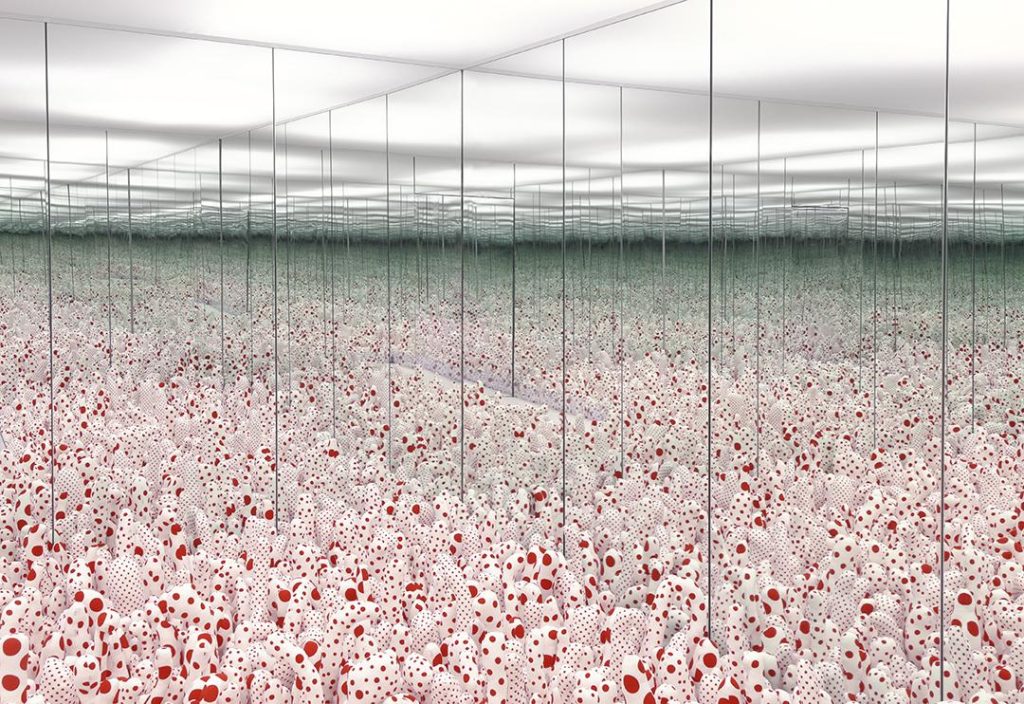
Yayoi Kusama, Phalli Field, 1965. The Cambridge Spy.
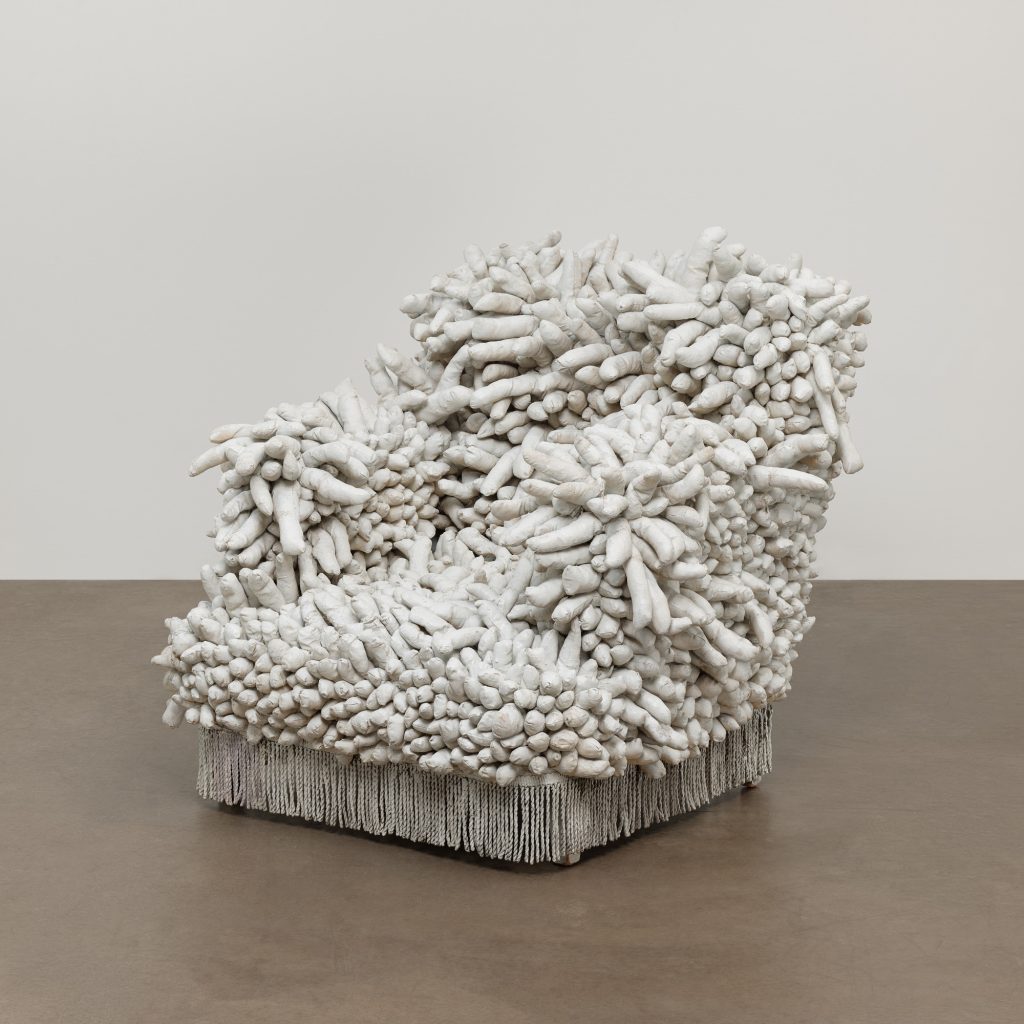
Yayoi Kusama, Accumulation No. 1, 1962, Museum of Modern Art, New York City, NY, USA.
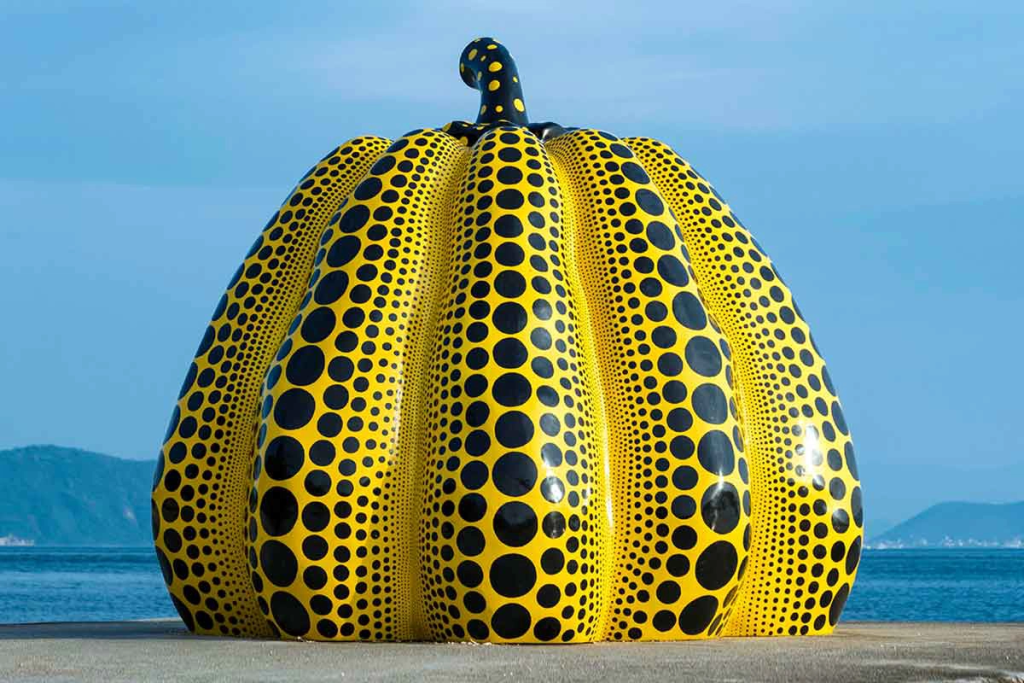
Yayoi Kusama, Yellow Pumkin, 1994. Hypebeast.
Yayoi Kusama’s Phalli’s Field is an early Pop Art installation featuring hundreds of soft, phallus-shaped forms arranged across the gallery floor. Using repetition and bright color, Kusama transforms erotic and personal imagery into a visual pattern that immerses the viewer. The work critiques gender, desire, and social norms while reflecting her signature use of obsessive repetition, positioning the female perspective within the male-dominated Pop Art scene.
Accumulation No. 1 (1962) is a soft sculpture in which a chair is covered with protruding, phallic fabric forms. By transforming a domestic object into a provocative artwork, Kusama merges everyday life with erotic imagery, reflecting her Pop Art interest in repetition and mass-produced forms. The work challenges conventional ideas of gender and sexuality, asserting a distinctly female perspective within the male-dominated art world of the 1960s.
Yayoi Kusama’s Yellow Pumpkin (c. 1994, building on her 1960s Pop Art motifs) features her signature polka-dotted pumpkin, rendered in bright yellow with black spots. The simple, repetitive pattern transforms an ordinary vegetable into a bold, playful icon, reflecting her fascination with pattern, repetition, and pop imagery. The work merges humor, visual rhythm, and a sense of infinity, demonstrating how Kusama reclaims everyday forms as immersive, symbolic art within the context of Pop Art.
Marta Minujín (1943–) brought Pop Art into the realm of large-scale, interactive experiences. She created monumental installations and happenings that invited audience participation, blending humor, spectacle, and social commentary. Using everyday materials, bright colors, and playful forms, Minujín transformed public spaces into immersive art environments. Her work often celebrated culture, consumerism, and Argentine identity, while challenging traditional boundaries between artist and viewer.
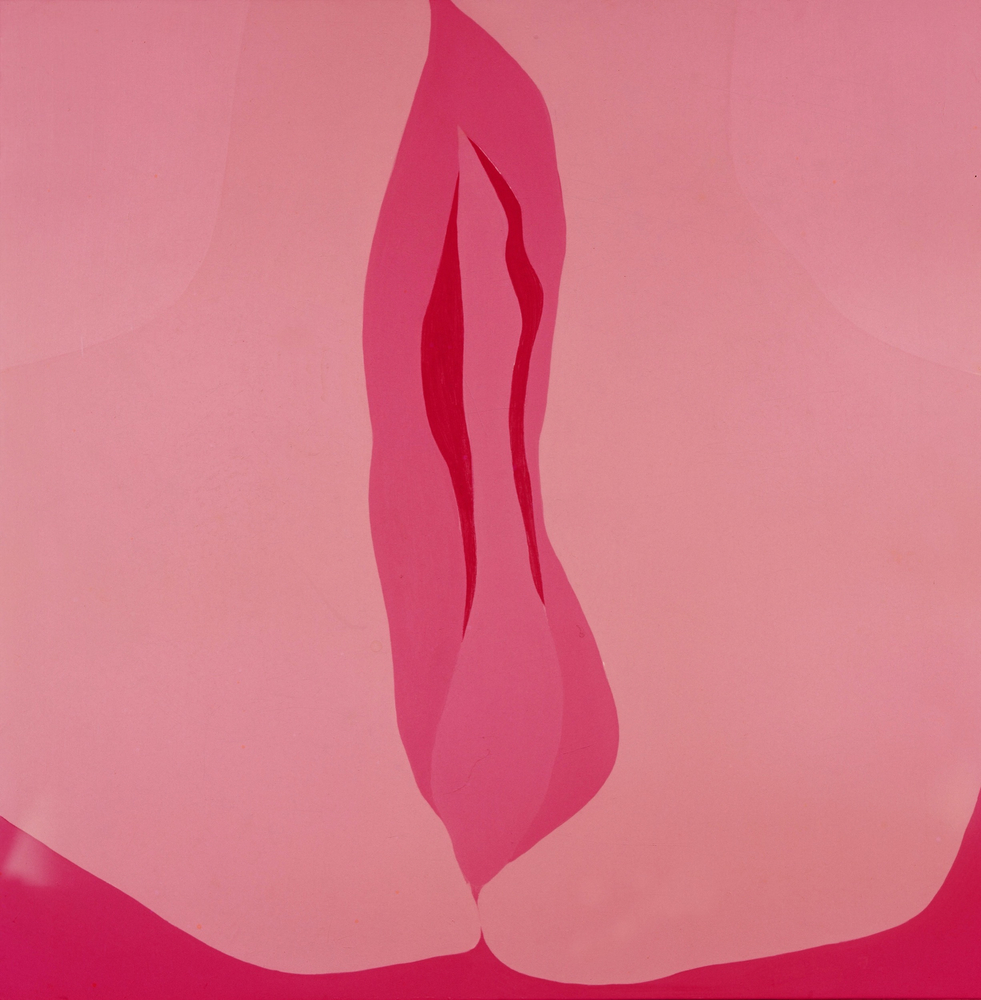
Marta Minujín, Untitled, from the series Frozen Sex, 1974–1975. Kurimanzutto.
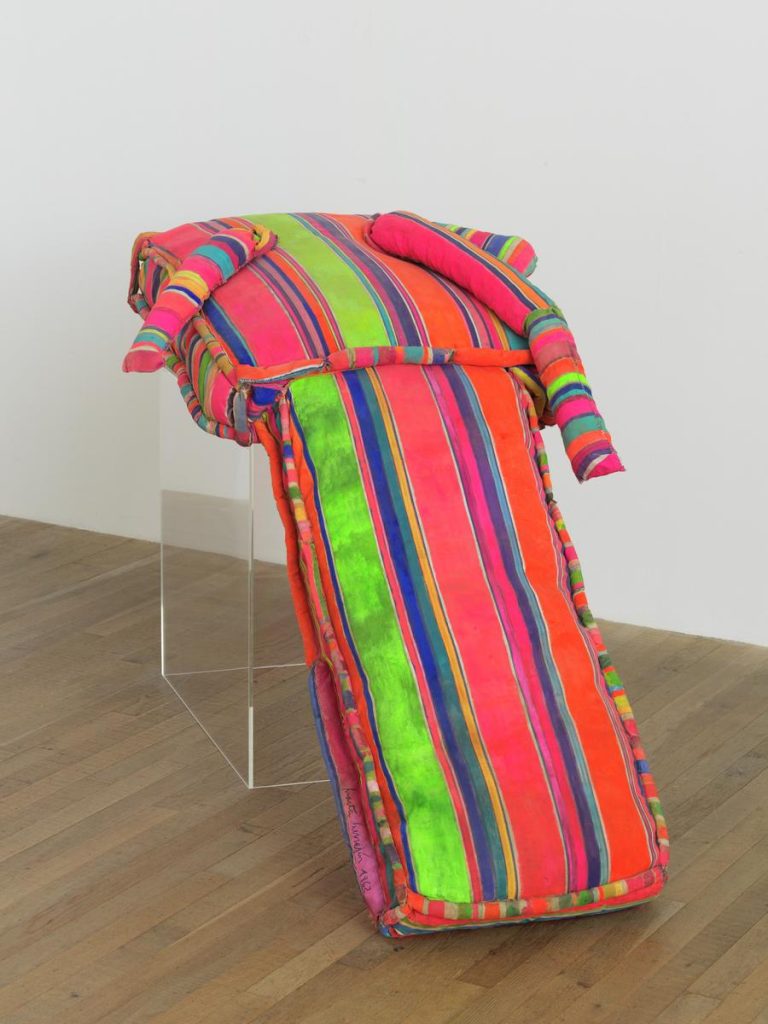
Marta Minujín, Mattress, 1962, Tate Modern, London, UK.
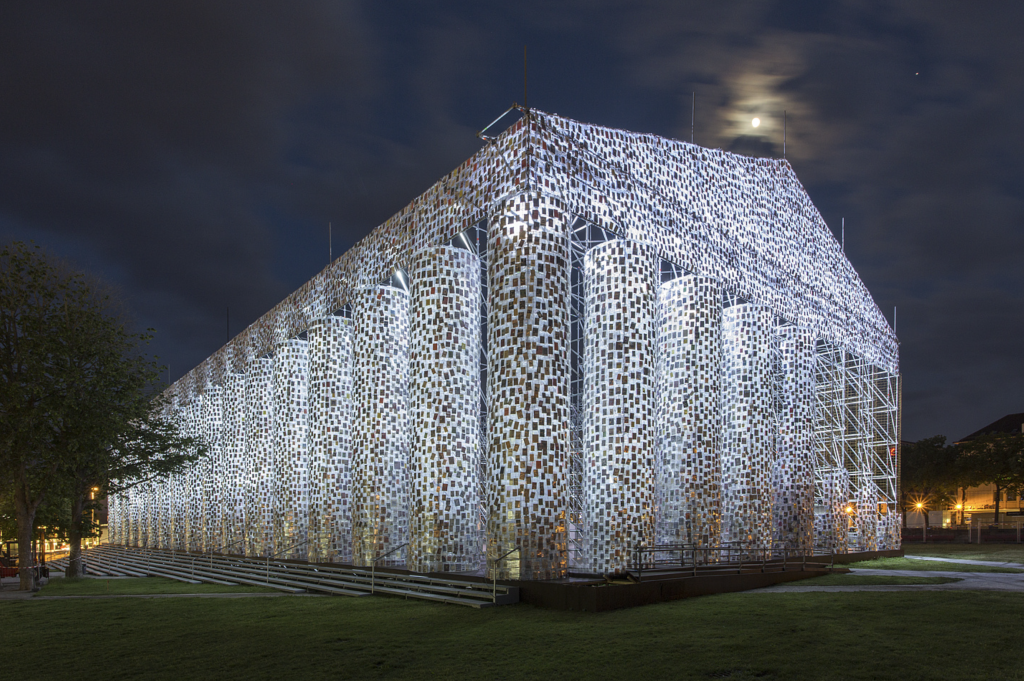
Marta Minujín, The Parthenon of Books, 2017. Documenta 14.
Minujín’s Untitled from the Frozen Sex series (1974–1975) presents a zoomed-in depiction of the female reproductive part, rendered with bold, exaggerated forms and bright colors. The work confronts viewers with themes of sexuality, bodily autonomy, and female subjectivity, challenging traditional taboos around the female body. By magnifying intimate anatomy, Minujín transforms private forms into public, visually striking statements, reflecting how the women of Pop Art used erotic imagery to assert agency and critique societal norms.
Mattress is a vibrant, handmade futon, stitched and painted in striking neon hues. By transforming an ordinary mattress into art, she invites viewers to connect with its texture and imagine the tactile experience. Beginning in 1961 during her time in Paris, Minujín collected discarded mattresses from hospitals and dumps, turning them into expressive, colorful pieces. For her, mattresses embody the rhythms of daily life and human experience.
The Parthenon of Books is a monumental installation that recreates the Greek Parthenon entirely from banned and censored books. First realized in 1983 in Buenos Aires and recreated internationally in 2017, the work celebrates freedom of expression while confronting censorship and authoritarian control. By transforming books into architectural form, Minujín elevates literature into a participatory, visual spectacle, inviting viewers to reflect on the power of ideas and the importance of access to knowledge. The piece exemplifies her Pop Art-inspired approach, blending scale, color, and social commentary into an immersive experience.
In the 1960s, Marjorie Strider (1931–2014) transformed everyday objects into bold, sculptural statements. Her “swinging women” fiberglass sculptures exaggerated movement and form, blending humor with commentary on consumer culture and sexuality. Beyond sculpture, she painted vivid canvases inspired by advertisements and fashion, merging pop imagery with artistic experimentation.
Strider’s work questioned traditional portrayals of women and challenged conventional boundaries between media. Recognized among the women of Pop Art, she brought wit, energy, and innovation to a movement often dominated by men.
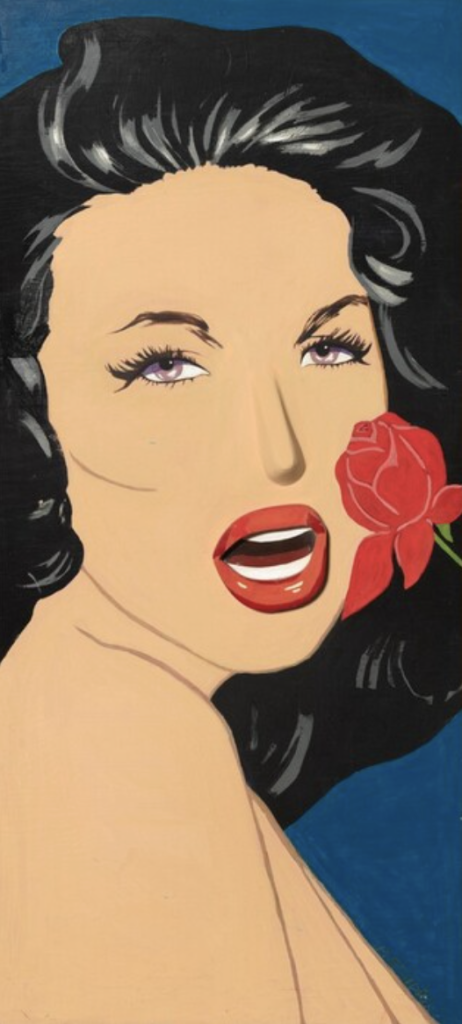
Marjorie Strider, Girl with Rose, 1963, National Gallery of Art, Washington, DC, USA.
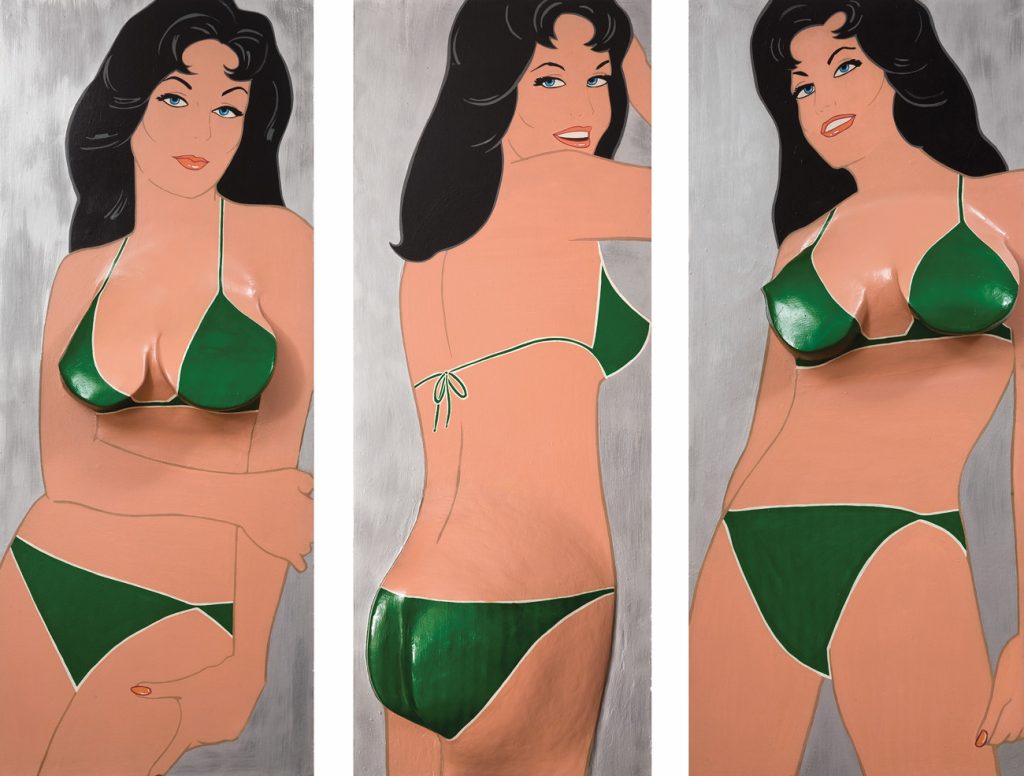
Marjorie Strider, Green Triptych, 1963. AwareWomenArtists.
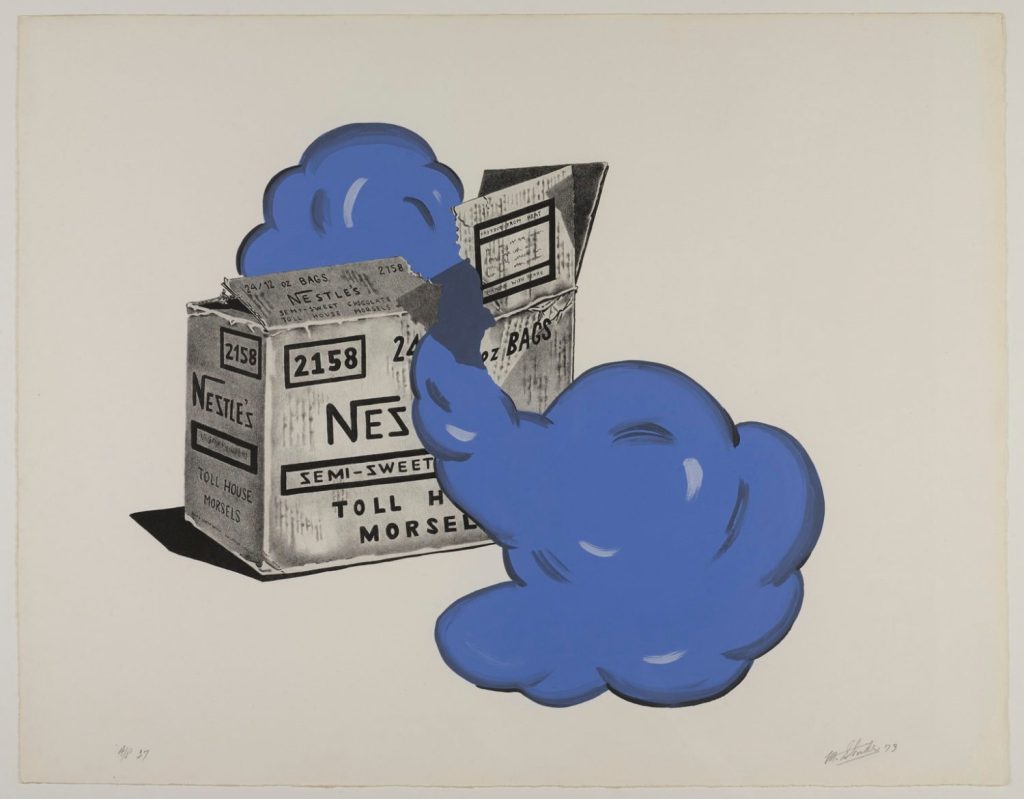
Marjorie Strider, Nestle’s Box, 1973. AwareWomenArtists.
In Girl with Rose, the painter presents a female figure whose exaggerated lips and sculpted breasts protrude from the canvas. By pushing painted features into three-dimensional space, Strider blurs the boundary between painting and sculpture. The work mimics advertising imagery, yet its physical excess exposes how popular culture reduces women to eroticized fragments. Through this confrontation, Strider critiques the visual language of Pop Art from within, asserting a distinctly female perspective.
In Green Triptych, the artist divides the female figure across three panels, encouraging a slow, comparative way of looking. The raised, molded forms disrupt the flatness of the canvas, creating a tension between image and object. Rather than presenting a single idealized body, the triptych format fractures and multiplies the figure, emphasizing construction over seduction.
In Nestlé’s Box, Strider alters a familiar Nestlé package by adding a blue, cloud-like form that spills out of the box. The soft shape contrasts with the box’s rigid structure and printed branding. Rather than depicting a figure, the work focuses on material and form, disrupting the neat appearance of a consumer product. Through this contrast, Strider draws attention to the tension between mass-produced packaging and physical presence.
Martine Canneel (1936–) emerged in the 1960s as a Belgian artist experimenting with industrial materials and playful installations. Drawn to Plexiglas, neon, resin, and small plastic toys, she built luminous sculptures that blended color, light, and everyday objects. Her pieces often carried subtle political and ecological messages, using cheerful surfaces to confront issues such as intensive farming in works like Ô, où sont les champs? (O, Where Have the Fields Gone?). Later, Canneel ran a design shop, exhibited widely, and won recognition as a “Young Sculptor” in Belgium, before shifting in the 1980s to natural materials influenced by Buddhist thought.
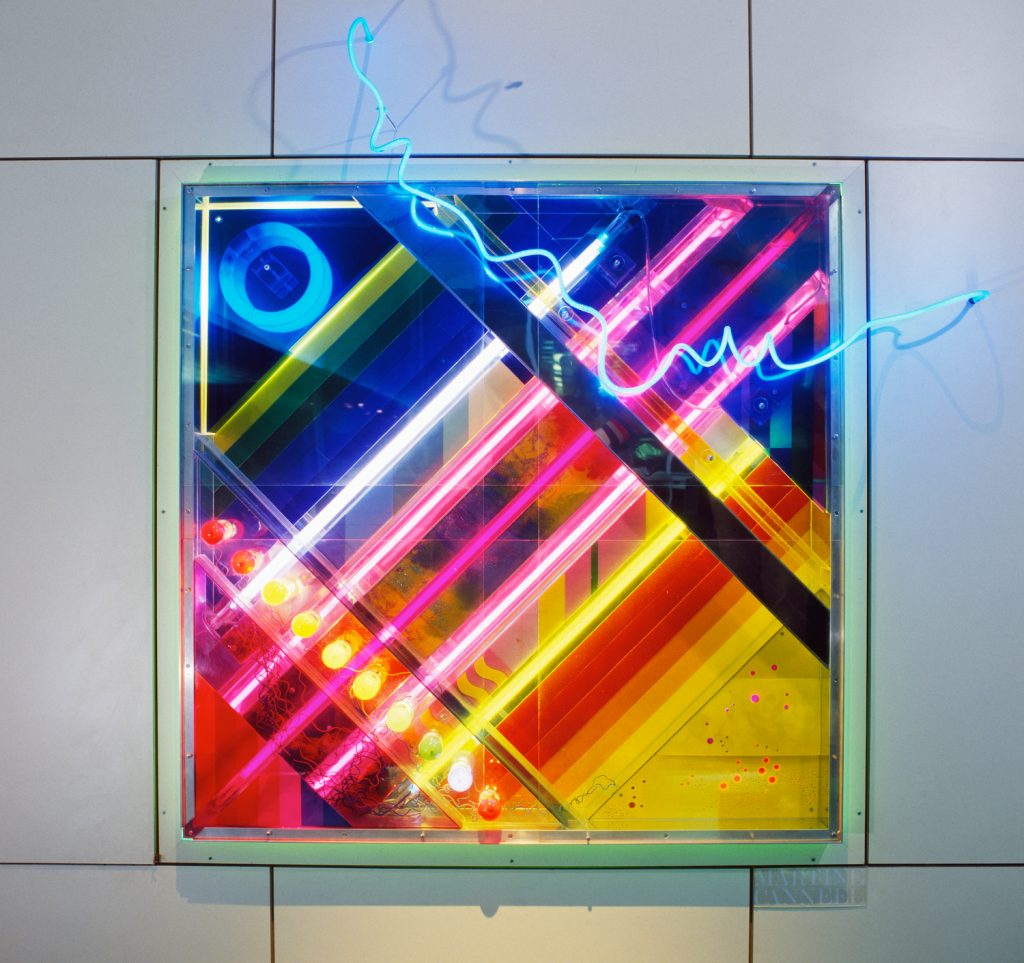
Martine Canneel, Advertising Icon, 1984. AwareWomenArtists.
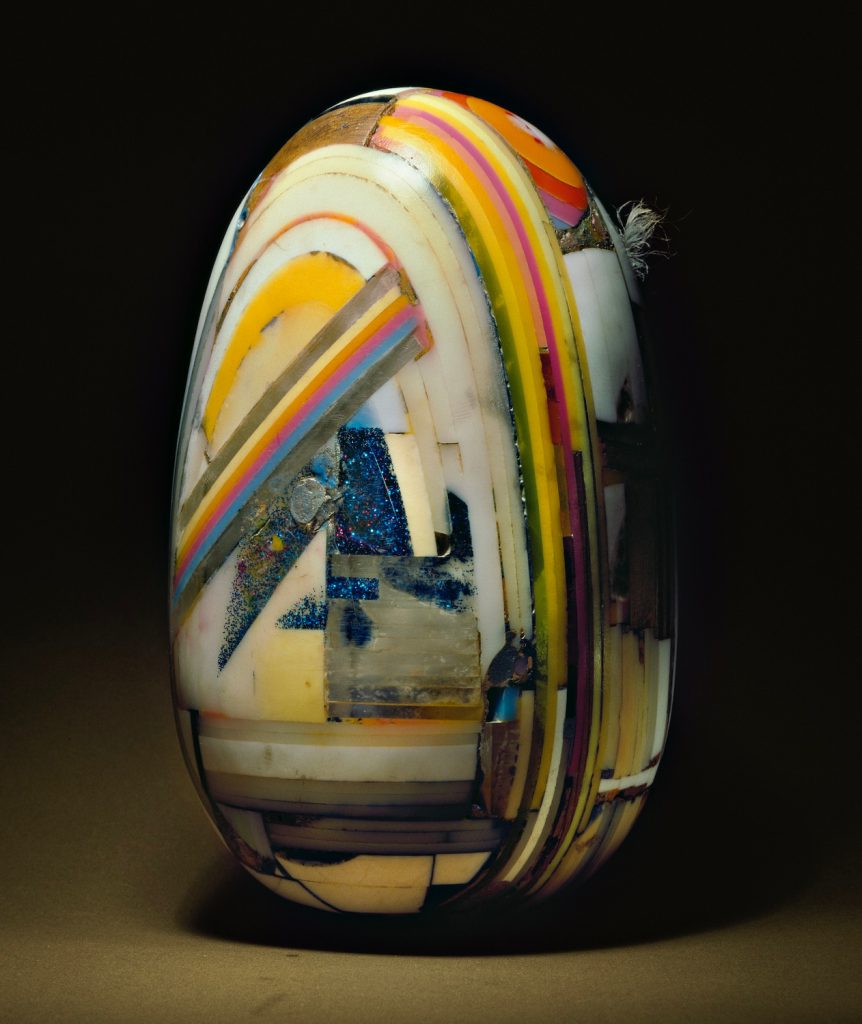
Martine Canneel, Terrestial Egg, 1981. AwareWomenArtists.
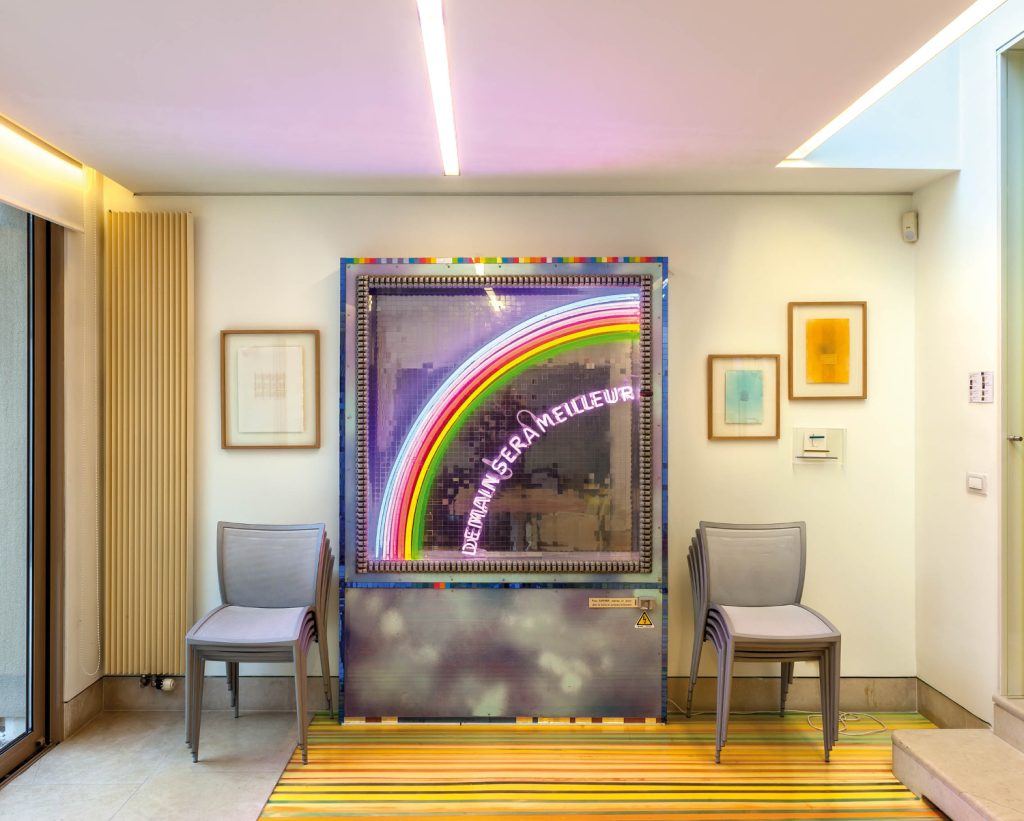
Martine Canneel, Demain Sera Meilleur, 1972. AwareWomenArtists.
The Advertising Icon turns the visual style of commercial signage into a sculptural artwork. Created for an advertising agency in Sydney, it uses bold colors and clear, graphic forms reminiscent of branded media. By transforming a familiar visual language into art, Canneel explores the intersection of everyday commercial imagery and Pop Art aesthetics, highlighting how ordinary materials and signs can become expressive objects.
This piece is a small mixed‑media work that takes the shape of an egg as its primary form. It uses this simple, organic shape to contrast with the industrial materials Canneel often explored earlier in her career, reflecting her evolving interest in naturalistic forms and visual symbolism.
Canneel’s Demain sera meilleur is a bright, interactive sculpture that combines neon lights, a toy-like rainbow, and cheerful colors. Viewers activate the piece by inserting a token, which turns on the illuminated phrase Demain sera meilleur (Tomorrow Will Be Better). While it appears playful and optimistic, the work subtly links hope to an act of participation, questioning the way consumer culture mediates expectations and desire.
The women of Pop Art brought diverse voices, bold experimentation, and critical perspectives to a movement often dominated by men. From Drexler and Marisol to Minujín, Strider, and Canneel, their work explored identity, culture, and the possibilities of art itself.
Many other artists, including Niki de Saint Phalle, Renate Bertlmann, Nicola L, and countless others, also shaped Pop Art in remarkable ways, but here we could only highlight a selection. Their contributions remind us that the movement’s energy, creativity, and influence extend far beyond the familiar names, leaving a lasting legacy in contemporary art.
Get your daily dose of art
Click and follow us on Google News to stay updated all the time

DailyArt Magazine needs your support. Every contribution, however big or small, is very valuable for our future. Thanks to it, we will be able to sustain and grow the Magazine. Thank you for your help!

Errika has a Master's degree in curatorial practices. She has been a writer for DailyArt Magazine since 2019 and loves sharing what she loves: weird, unusual art, female artists, and contemporary creations.
Tom Wesselmann rose to prominence during the Pop Art movement, though he rejected the label himself. While many Pop artists used familiar objects to...
Errika Gerakiti 14 August 2025
Keith Haring’s Once Upon a Time mural is a 4-walled orgiastic display of penises, eager orifices, splashing ejaculate, and extended tongues tangled...
Theodore Carter 15 June 2025
Keith Haring and Grace Jones did more than just collaborate—they created a cultural earthquake. Their partnership was bold, vibrant, and...
Sabrina Phillips, Szymon Jocek 24 October 2025
Christmas overflows with iconic imagery—Santa Claus, Rudolph, snowmen, candy canes, presents, and sparkling ornaments. These vibrant visuals...
Errika Gerakiti 23 December 2025


