Today we commemorate the anniversary of the end of the Great War. On this occasion we want to present you with artists who enlisted as soldiers during the war and hence pay our tribute to all souls who were lost in this terrible war.
Ernst Ludwig Kirchner
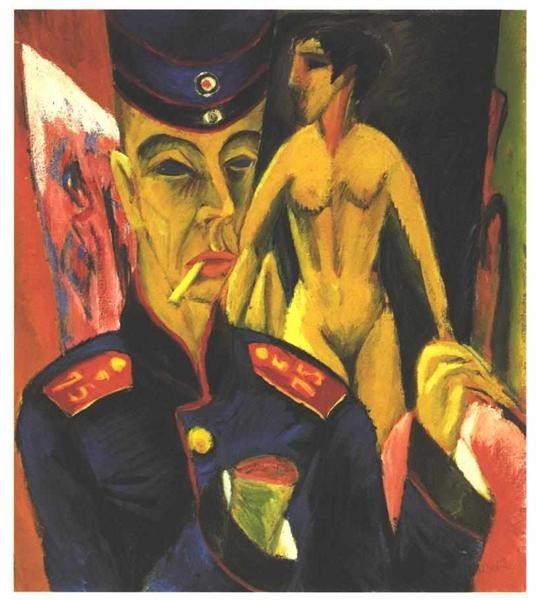
Ernst Ludwig Kirchner, Self-Portrait As A Soldier, 1915, Allen Memorial Art Museum (AMAM), Oberlin College, OH, USA.
Kirchner never fought as he was clever enough to sign up as a volunteer to serve as a driver in order to avoid being drafted into a more dangerous role. However, after suffering panic attacks and due to issues with his mental health, he was soon declared unfit for service and was sent away to recover. Self-Portrait was painted during that recovery. It shows him with an amputated arm and wearing a military uniform despite being in a studio. In this way Kirschner tried to face his fear of impotency as an artist, a soldier, and a man.
Egon Schiele
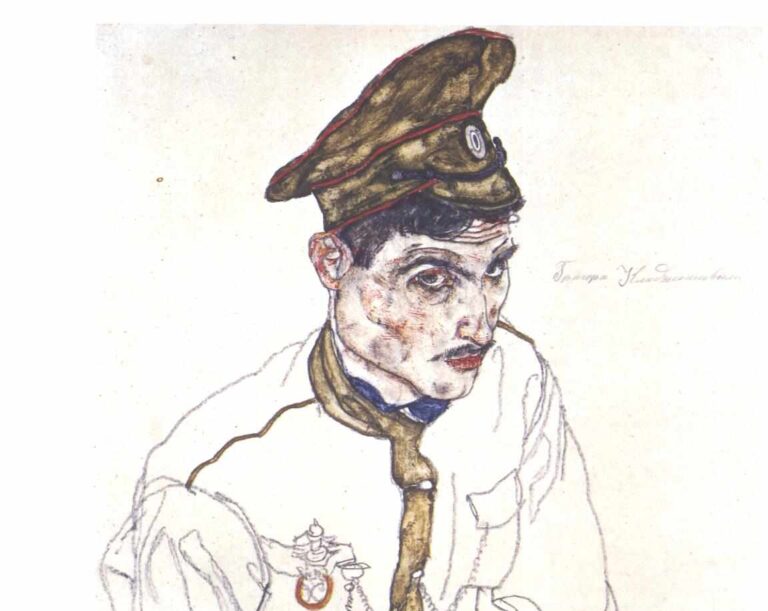
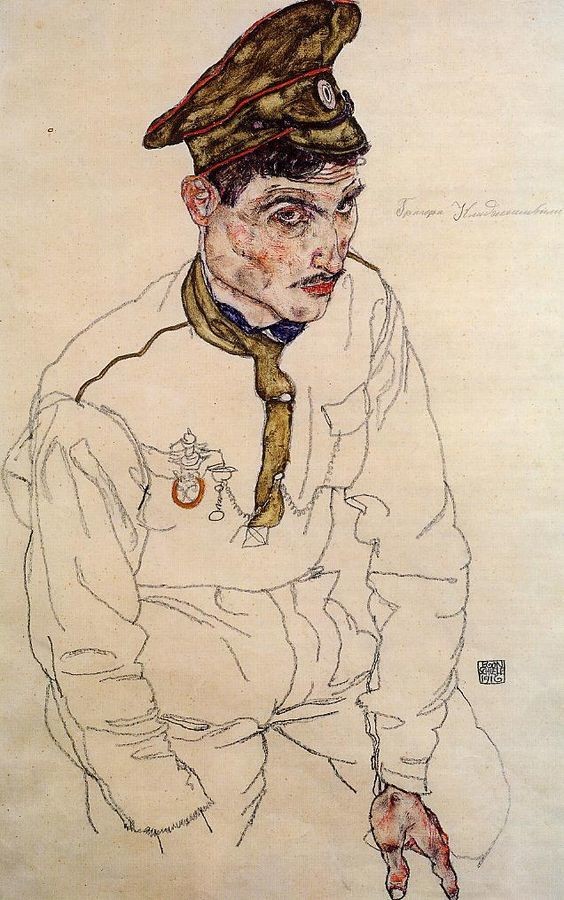
Egon Schiele, Russian Prisoner of War (Grigori Kladjishuli), 1916, Art Institute of Chicago, Chicago, IL, USA.
In 1915 artist Egon Schiele went to war. He survived the fights but lost his battle with influenza which took over Europe after the war and killed more people than the war itself. The 28-year-old Schiele along with his wife Edith were two of its approximately 40 million victims.
The Futurists
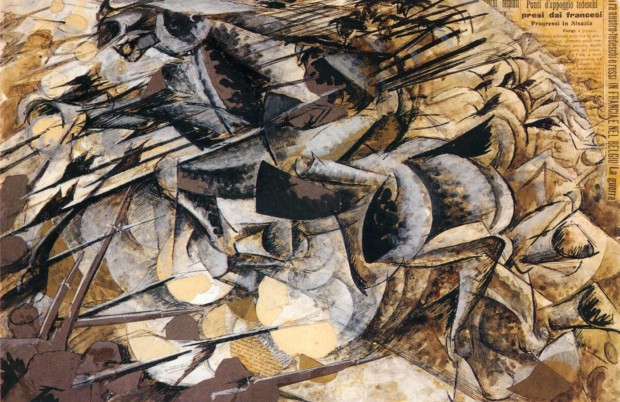
Umberto Boccioni, The Charge of Lancers, 1915, Collection of Dr. Riccardo Juncker, Milan, Italy.
The Futurists declared war in The Futurist Manifesto as “the world’s only hygiene”. Because of such extreme views many of the Futurists enlisted in the army when Italy joined the war in 1915. Two of them lost their lives: Umberto Boccioni was wounded and died 1915 and Antonio Sant’Elia died in the battle of Monfalcone at the age of 28 in 1916. Meanwhile Filippo Tommaso Marinetti was scarred by his experiences fighting in the mountains of the Trentino region and he was severely wounded in 1917.
Otto Dix
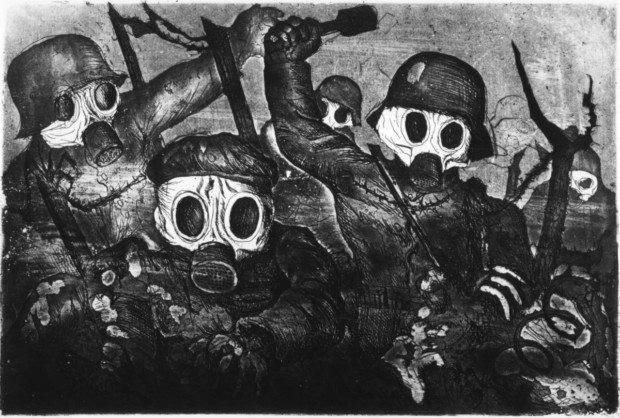
Otto Dix, Storm Troops Advance under Gas Attack, 1924, The British Museum, London, UK.
Dix’s series of war images is one of the most poignant depictions of the disasters of WW1. He executed these prints between 1923 and 1924 in a technique of etching and aquatint, in which acid etches a metal printing plate, in order to heighten the visual effect of decay and degradation of the post-battle landscapes. Dix experienced the horrors first hand; he served as a machine gunner from 1914 to 1918 and saw combat on both the Eastern and Western fronts.
Henri Gaudier-Brzeska
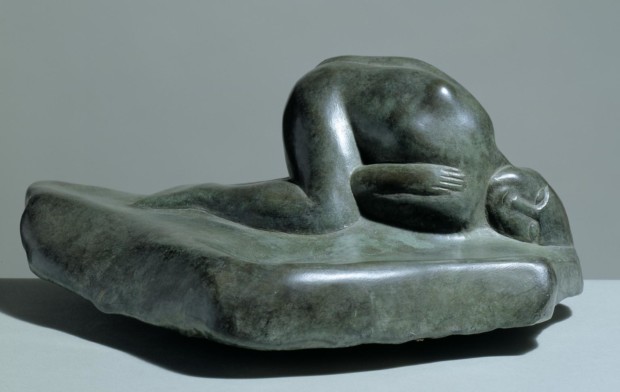
Henri Gaudier-Brzeska, Mermaid, 1913, Tate, London, UK.
This French sculptor and painter lived and worked in Britain where he shared the radical modernist views of his friends the Vorticists, Ezra Pound and Jacob Epstein. When the war began he joined the French army and was so brave in combat that he received a decoration for bravery before being killed in the trenches at Neuville-St.-Vaast at the age of 23. His lover Sophie Brzeska became distraught after his death and died in an asylum in 1925.
Click and follow us on Google News to stay updated all the time
We love art history and writing about it. Your support helps us to sustain DailyArt Magazine and keep it running.
DailyArt Magazine needs your support. Every contribution, however big or small, is very valuable for our future. Thanks to it, we will be able to sustain and grow the Magazine. Thank you for your help!
Magda, art historian and Italianist, she writes about art because she cannot make it herself. She loves committed and political artists like Ai Weiwei or the Futurists; like Joseph Beuys she believes that art can change us and we can change the world.
ProofreaderBec Brownstone
Bec is an art nerd, bicycle enthusiast, cat mom, artist/crafter/maker from sunny Toronto, Canada.
The Mona Lisa by Leonardo da Vinci is probably the most famous painting in the world. But is she famous for her beauty? Or for being stolen? Read our crime caper and decide for yourself.