Ancient Origins and Discoveries
The tradition of carpet weaving dates back over 2,500 years to the Achaemenid Empire. Historical records show that the court at Pasargadae, the capital of Cyrus the Great, was adorned with exquisite textiles.
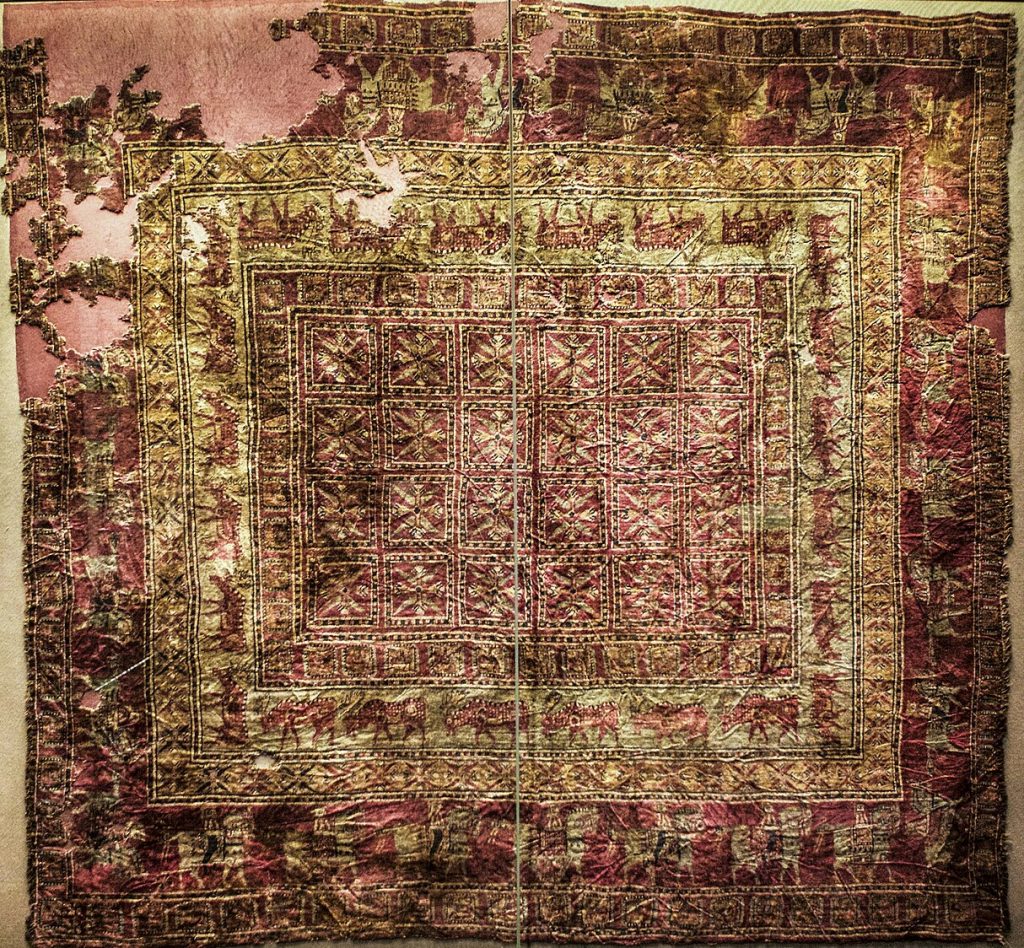
The oldest known surviving carpet today is the Pazyryk Carpet, which was famously discovered in 1949 in a frozen Scythian tomb all the way in Siberia. Radiocarbon testing indicated that the rug was woven in the 5th century BCE, so its incredible preservation in a frozen tomb continues to astonish historians and art enthusiasts today.
Though the provenance of the Pazyryk Carpet remains a subject of scholarly debate, it is believed to be of Central Asian origins, either from Armenia or Achaemenid Persia.
The Production of Persian Rugs
Creating a single Persian rug is a monumental task that can take months or even years. The process requires a team of specialized artisans including spinners, dyers, designers, and weavers. Rugs are produced on a loom, and the quality is often measured by knot density. A higher number of knots allows weavers to convey more complex and intricate designs.
Wool from sheep is the most common material because it is durable, dirt-resistant, and absorbs dyes well. Sometimes silk is used to provide a lustrous sheen and allow for the finest, most intricate knotting. Cotton provides internal structure to ensure the rug stays flat and retains its shape over time.
The Chemistry of Color
Traditionally, the colors of Persian rugs were derived from natural sources like saffron, madder root, and walnut shells. Color variations of natural dyes enhance the handmade character of Persian rugs. In the modern era, synthetic dyes are often used for their cost-effectiveness and consistency. However, traditional weavers continue to utilize natural dyes for their unique, soulful qualities that honor the ancient roots of these creations.
The Golden Safavid Age
The Safavid Dynasty from the 16th to the 19th centuries is considered the Golden Age of Persian rugs, when rulers like Shah Abbas I turned weaving into a royal industry.
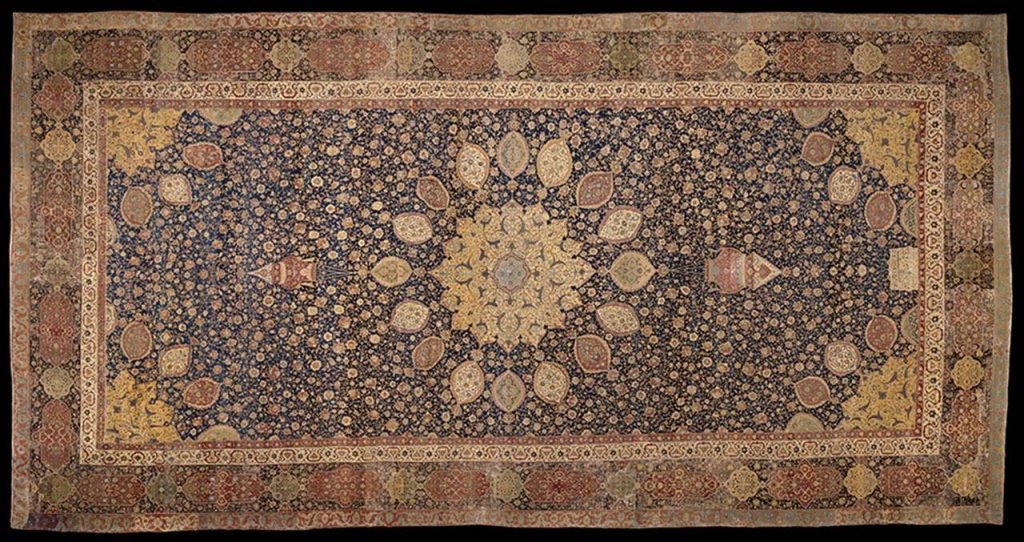
The iconic Ardabil Carpet was created during this period and is the world’s oldest dated carpet, featuring millions of knots and intricate central medallions. Adorned throughout this large rug are patterns featuring long curving leaves and a variety of florals.
Persian Design Patterns
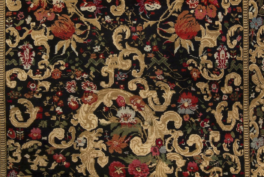
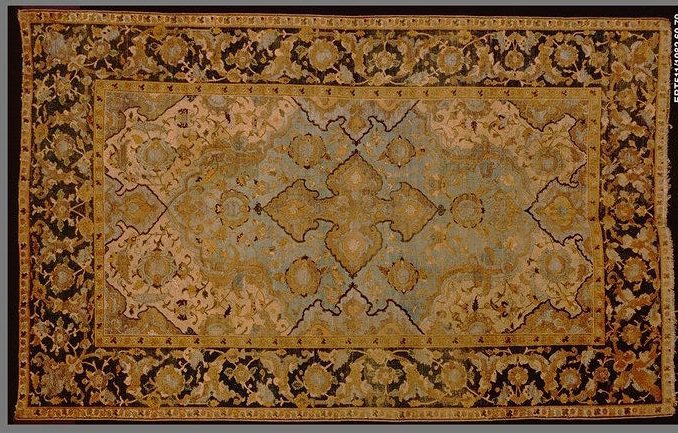
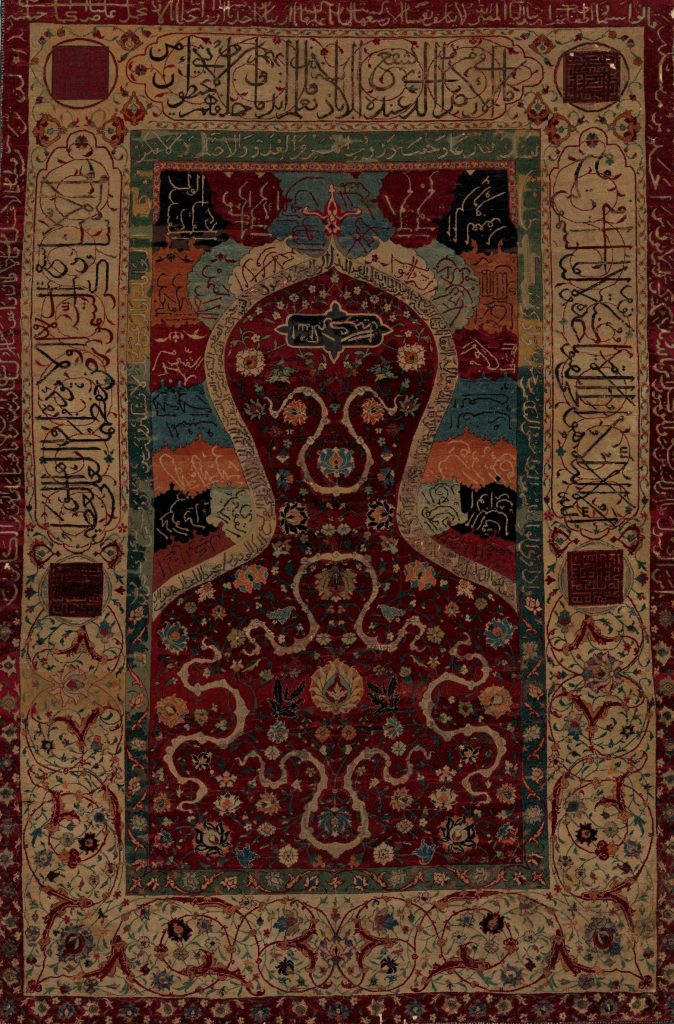
Persian rugs are well known for elaborate vegetal motifs featuring scrolling vines, palmettes, and floral and geometric patterns. Calligraphic inscriptions appear on some Persian rugs, particularly since the Islamic period onwards. Carpets made for mosques or devotional use would exclusively be decorated with non-figurative ornamentation.
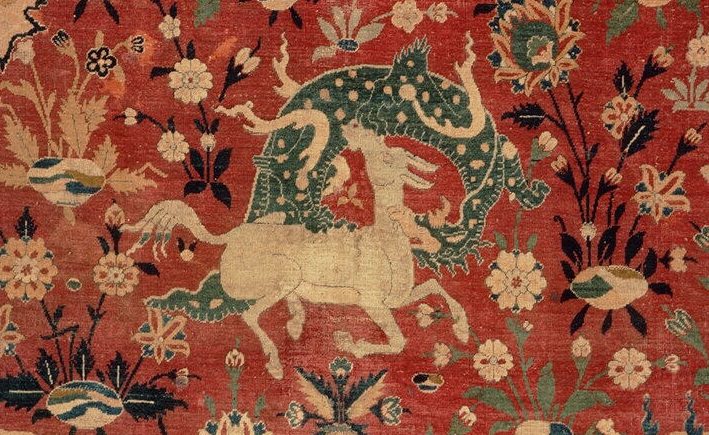
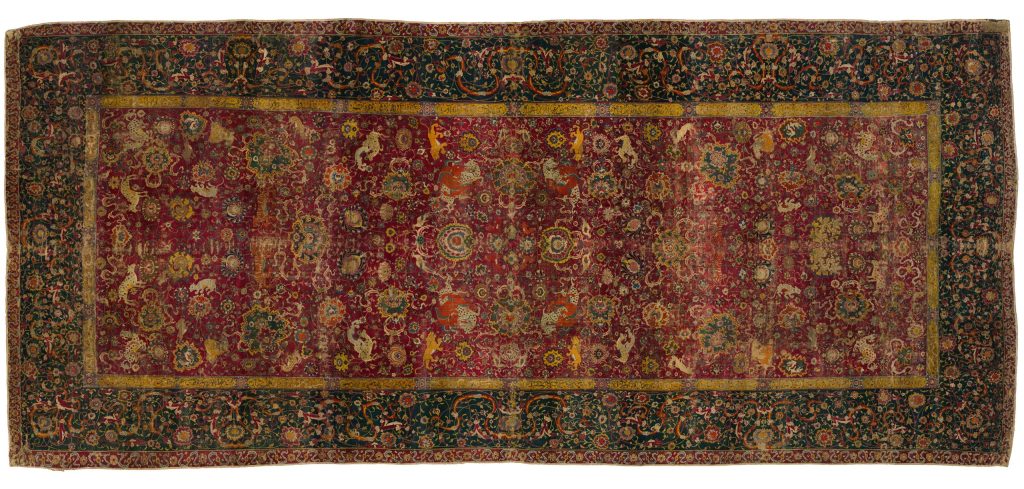
In contrast, royal and court-produced rugs, particularly from the Safavid period, sometimes incorporated figurative imagery, including animals, garden landscapes, courtly scenes, and well-known hunting compositions, reflecting elite patronage and secular themes.
Global Influence
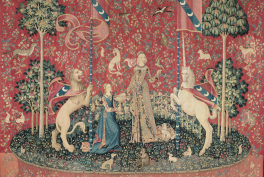
There was strong demand for Persian rugs in Europe, where they were regarded as prized possessions. Persian designs also heavily influenced neighboring empires, leading to the development of unique styles in the Ottoman and Mughal courts. The Mughals in India originally employed Persian artisans, eventually blending those designs with Indian motifs like elephants and peacocks.
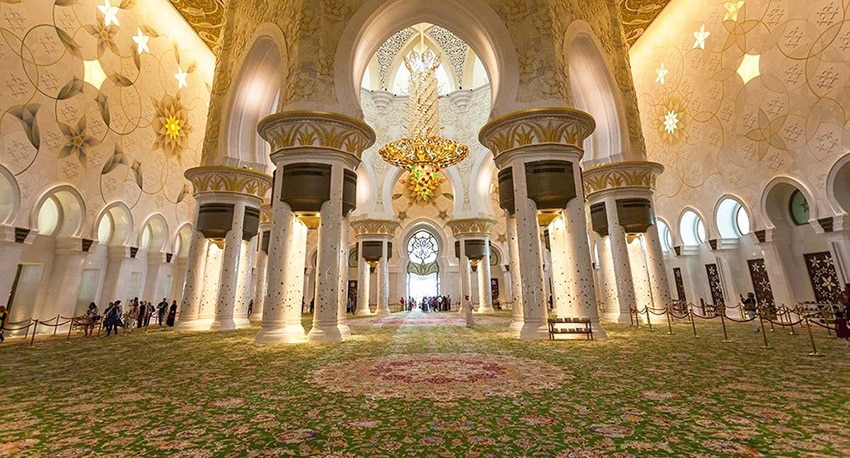
Today, this legacy of grand-scale luxury continues; a famous example is the massive handmade carpet created for the Sheikh Zayed Grand Mosque in Abu Dhabi.
A Continuing Legacy
Persian rugs remain highly sought-after treasures that connect the modern world to ancient traditions. While the technology now allows for modern machinery, computer-aided designs, and synthetic materials, the demand for traditional, handmade Persian rugs persists. Whether found in a museum, a place of worship, or a family home, these rugs remain a testament to a long tradition of Persian craftsmanship.