
10 Japanese Artworks Where Animals Steal the Show
From playful monkeys and majestic tigers to sleepy cats and elegant egrets, animals have always held a special place in Japanese art. Let’s explore...
Lisa Scalone 10 September 2026
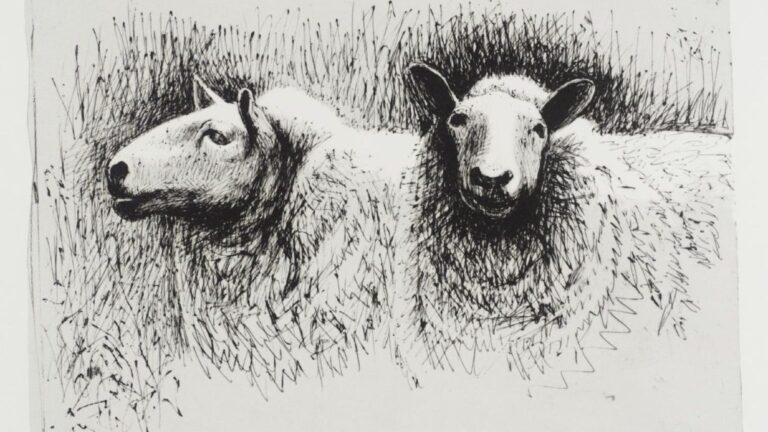
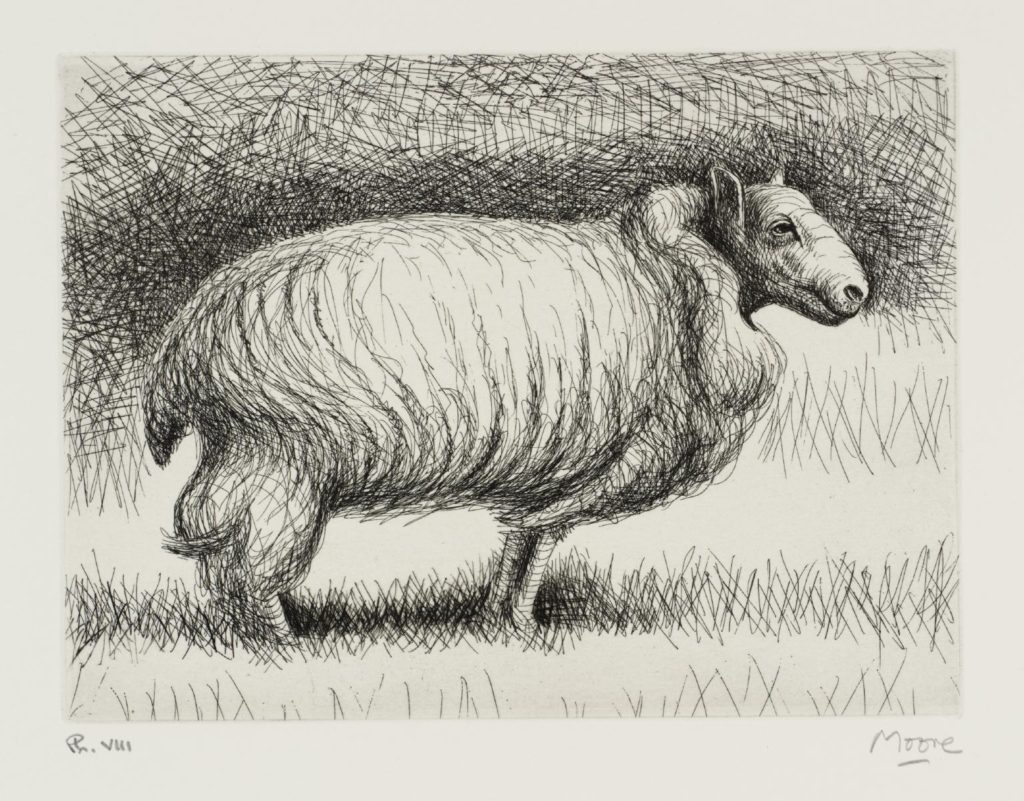
Henry Moore, Sheep Before Shearing, 1974, Tate, London, UK.
Henry Spencer Moore was a famous English artist. Although his primary role was as a sculptor, there are lots of examples of his sketches. His forms are usually abstract human figures, often depicting mother and child or reclining figures, but some of the drawings depict animals, for example, sheep.

Henry Moore often sketched ideas for his sculptures in pencil, charcoal, color washes, and even a ballpoint pen. But have you ever taken a close look at his sketches of sheep? Like the sculptures, these drawings of ewes and lambs look closely at form and texture. And like the sculpture, they seem to form part of the very landscape they inhabit.
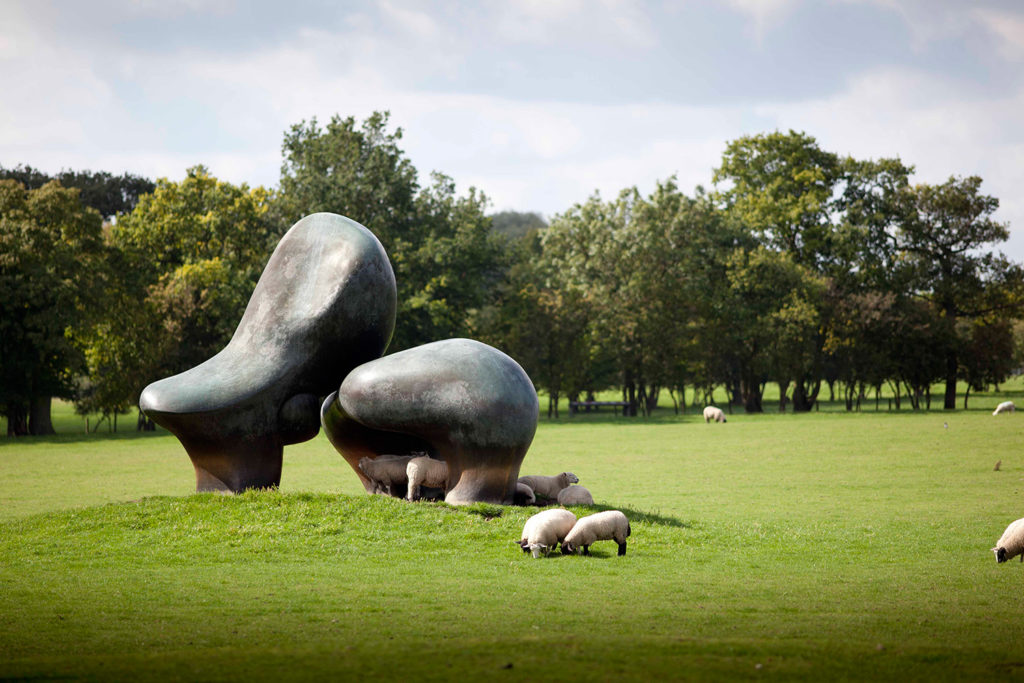
Moore lived in Much Hadham, a small village in East Hertfordshire, and worked in a studio overlooking a sheep field. It was whilst working in this small room that Henry Moore first became aware of the sheep grazing outside. He began to draw them, exploring the way they moved and the shape of their bodies under the fleece. He drew a ewe and lamb—a large form sheltering a small one—which is an important theme in his larger sculpture work.
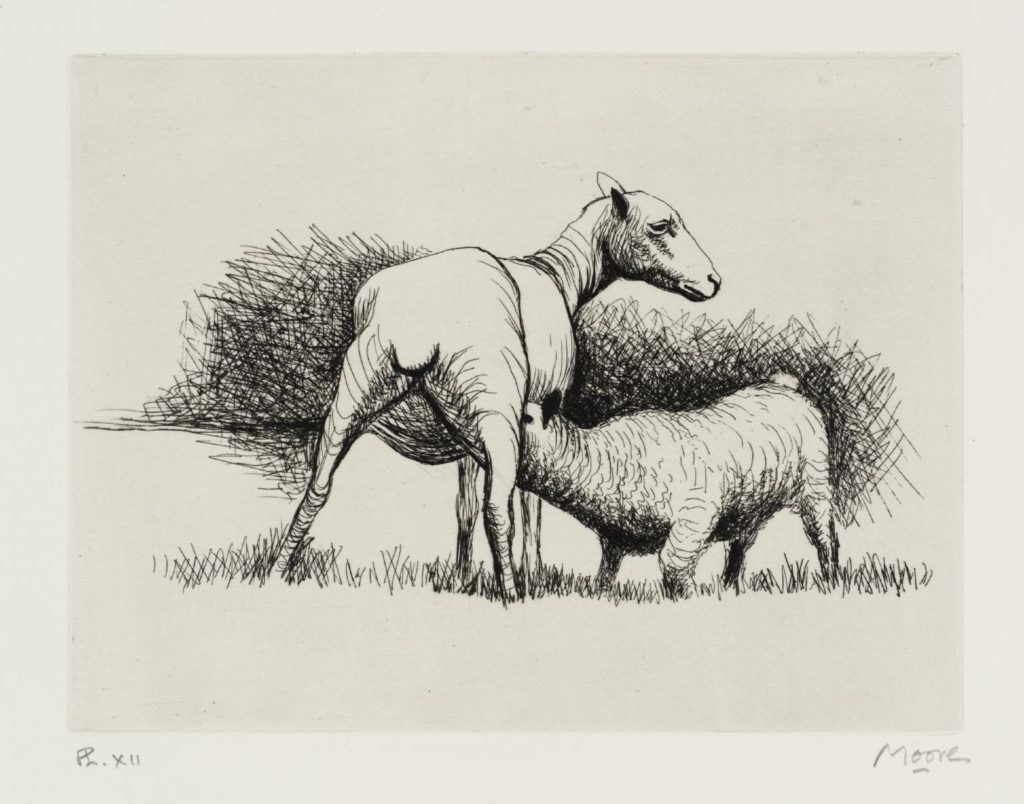
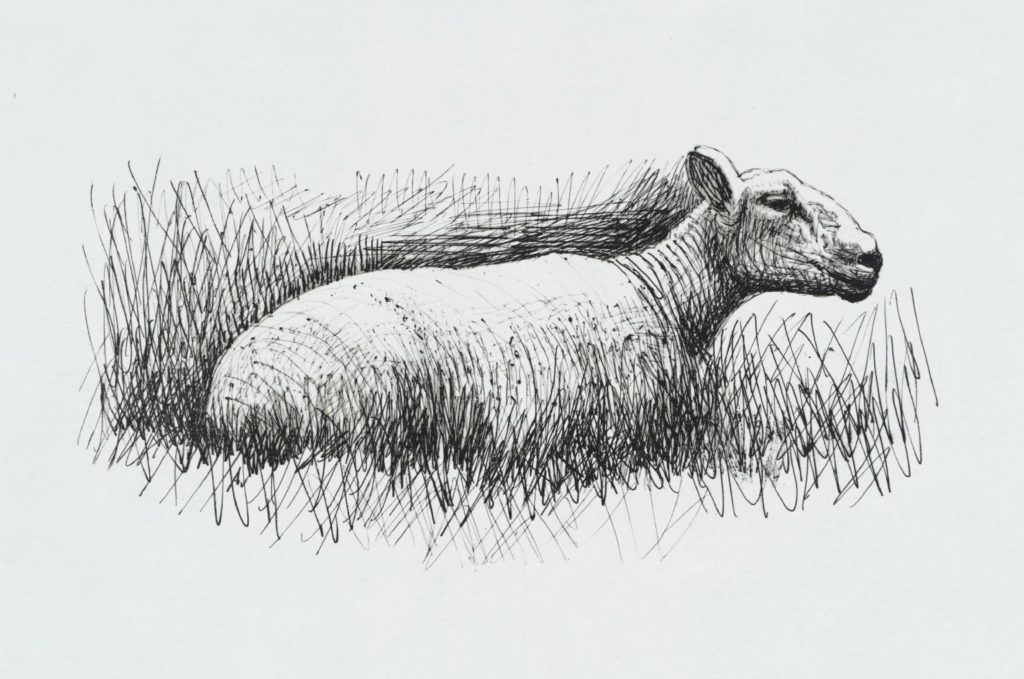
The sketches are often made with a ballpoint pen, with swirling lines and zigzags. You can see thick and thin scratching lines and shading. And of course, with a ballpoint pen, no amendments or changes can be made.
Apparently, in order to capture the sheep’s faces in very intricate detail, Moore would make a small, sharp noise to grab the sheep’s attention so that they would turn to look at him.
I live deep within a sheep farming country. The year is punctuated by the ancient ways of working the land. In September, farmers are checking the condition of their ewes, ready for them to join the rams and begin the mating game in October. This is traditionally known as “tupping”. Sturdy Welsh breeds like ours will over-winter in the fields around our home, and by April, those cute, bouncy lambkins will start to appear.
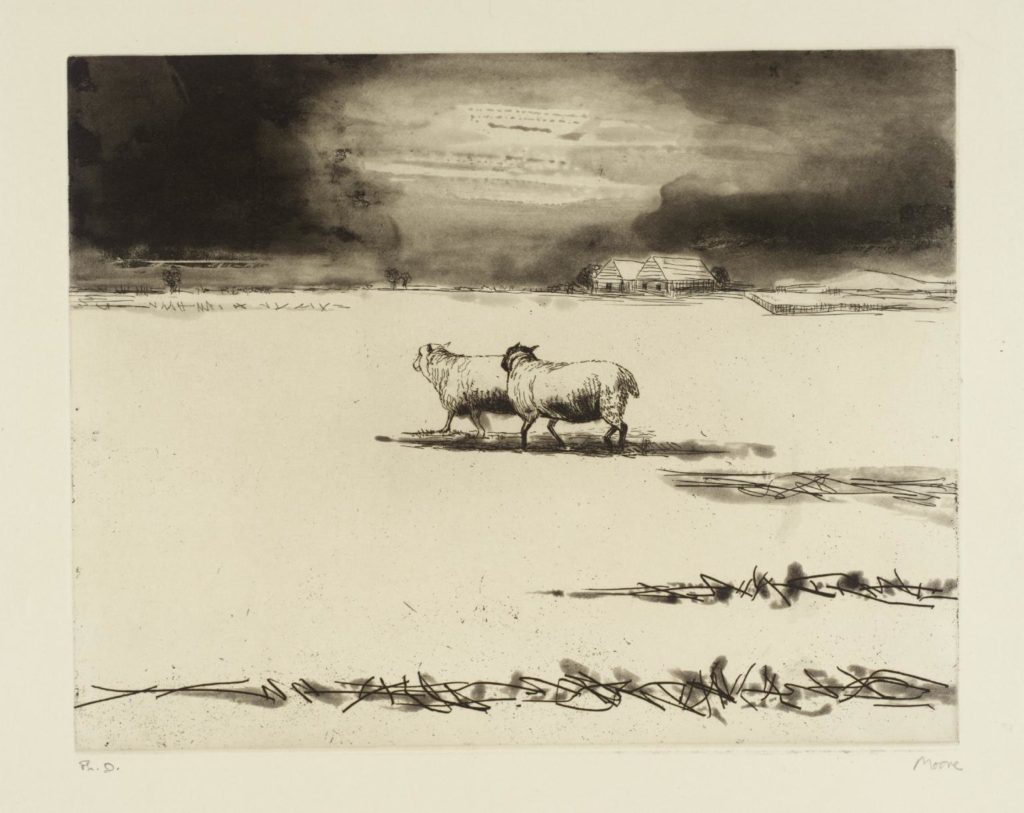
The time Moore spent watching sheep from his window gave him an insight into the nature and temperament of the sheep. He saw the changes in them over the year. He drew them fluffy and fleecy, and later drew them just after shearing time, when he could see the fluid shapes of their bodies.
The English writer Roger Deakin understood Moore’s fascination with sheep. He said:
I watched a ewe standing between two big rocks the shape of goat’s cheeses. They were just far enough apart to allow the animal in, and I began to understand the relationship Henry Moore perceived between sheep and stones. He saw sheep as animate stones, the makers of their own landscape.
Roger Deakin, quoted in Robert Macfarlane, “Force of nature“, The Guardian, 16 Sep 2006.
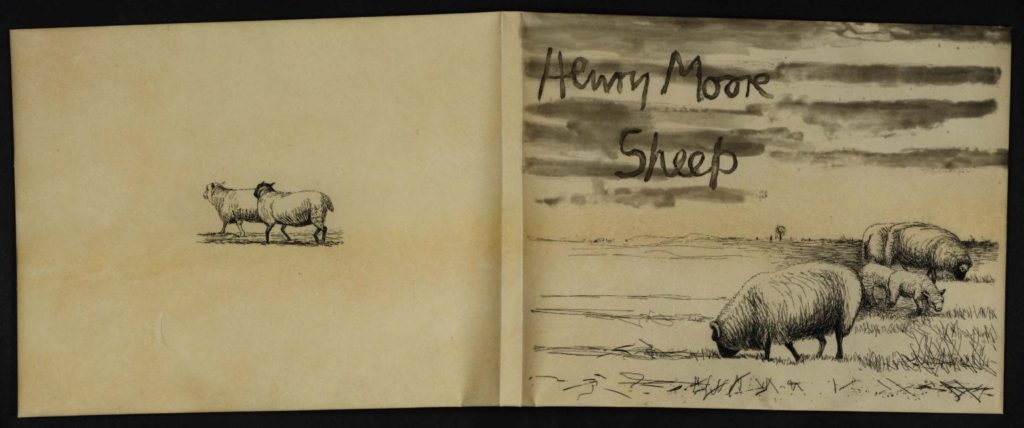
In 1972, Moore presented a large number of these sketches to his daughter Mary in a Sheep Sketchbook. These have since been published and distributed to a worldwide audience. Henry Moore died in 1986, but his work is timeless. Whether you are interested in sculpture, sketching, or sheep, these are well worth a look!
DailyArt Magazine needs your support. Every contribution, however big or small, is very valuable for our future. Thanks to it, we will be able to sustain and grow the Magazine. Thank you for your help!

Candy's remote, rain-soaked farmhouse clings to a steep-sided valley in rural Wales. She raises cats, chickens, and children with varying degrees of success. Art, literature, and Lakrids licorice save her sanity on a daily basis.
From playful monkeys and majestic tigers to sleepy cats and elegant egrets, animals have always held a special place in Japanese art. Let’s explore...
Lisa Scalone 10 September 2026
Elephants hold a profound place in art across cultures around the world, appearing as sacred creatures, symbols of power, and mysterious beings.
Guest Author 17 September 2026
The lamb serves as an enduring and multifaceted symbol that connects ancient pre-Christian ritual with the long history of Christian art. Throughout...
Maya M. Tola 4 May 2026
One cannot, while hoping to make a very valid argument, say dogs and humans are anything but almost entirely alike. After all, they share the same...
Guest Author 30 April 2026