Background
Van Gogh was a Dutch Post-Impressionist, now admired worldwide for his distinctive style. Though it was not always this way. Born into a middle-class family, he did not lack much as a child. Adulthood, however, brought hardship and constant struggle to achieve success as an artist. After failing to become a pastor, his brother Theo convinced Van Gogh to take up painting. He practiced by painting still lifes and peasant life.
Following several unsuccessful romantic endeavors, Vincent eventually ended up in Antwerp. There, his living conditions worsened. Though supported by Theo, he lived in poverty, spending most of his money on art supplies. Throughout the rest of his life, Van Gogh struggled financially.
Van Gogh’s paintings weren’t always as bright or colorful as the ones we adore today. During his years in the Netherlands, his work relied on dark and muted shades of brown. His style shifted only after moving to Paris in 1886. There, he encountered many great artists, like the Impressionists. Their influence transformed his approach to art. His brushwork grew looser, and he adapted Pointillism into his own style. At the same time, his fascination with Japanese prints also continued.
Japan
Japanese art swept through Europe in the 19th century, captivating artists, collectors, and the public. Van Gogh was among those deeply fascinated by this distant culture. Soon after arriving in Antwerp, he purchased his first Japanese woodblock print. That moment marked the beginning of his role as a dedicated print collector. Despite financial instability, he amassed an impressive collection of more than 600 prints.
He studied and copied many of them using oils, adapting their techniques to his own. This fascination had a huge impact on his style, too. His palette grew brighter and more vibrant. Even the portraits adopted subtle Asian features, echoing the figures he admired in the prints.
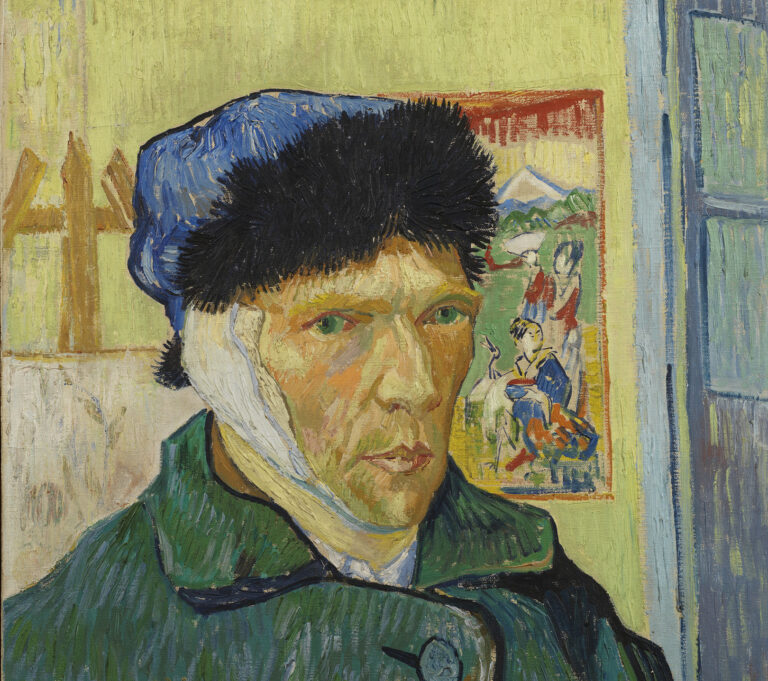
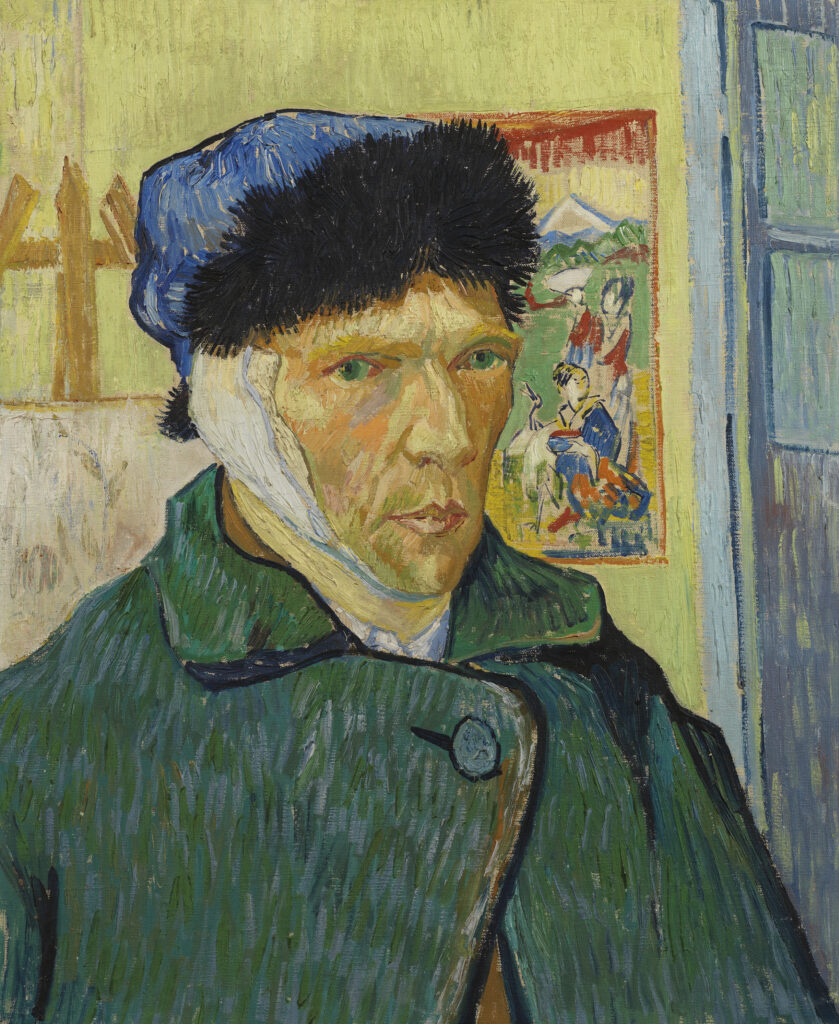
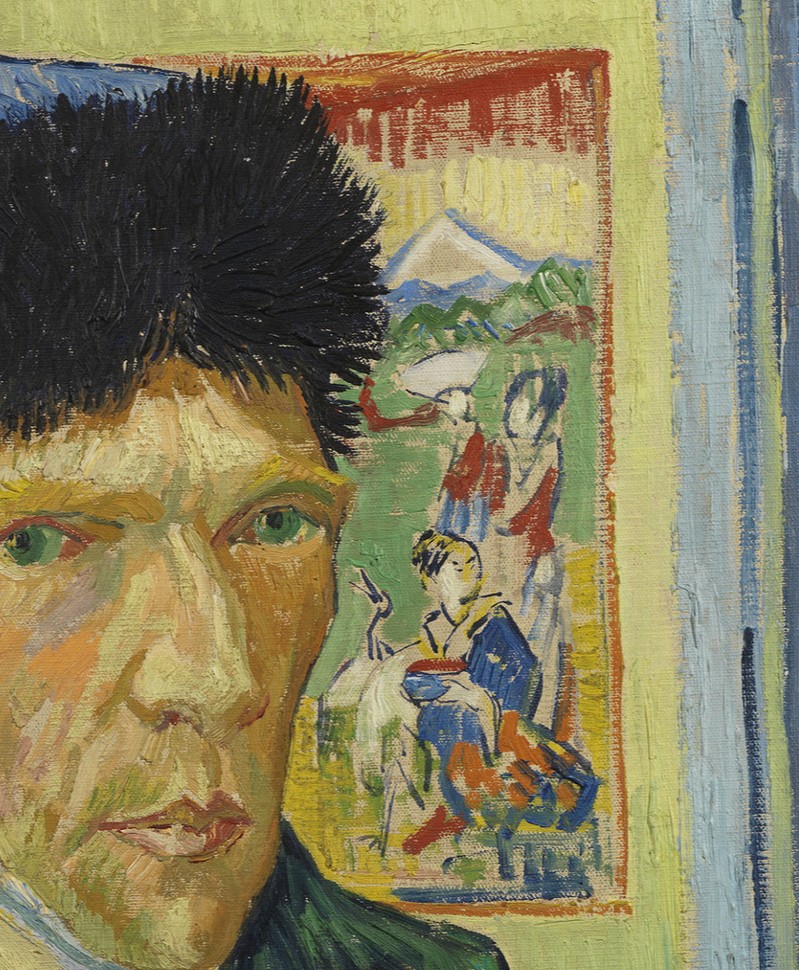
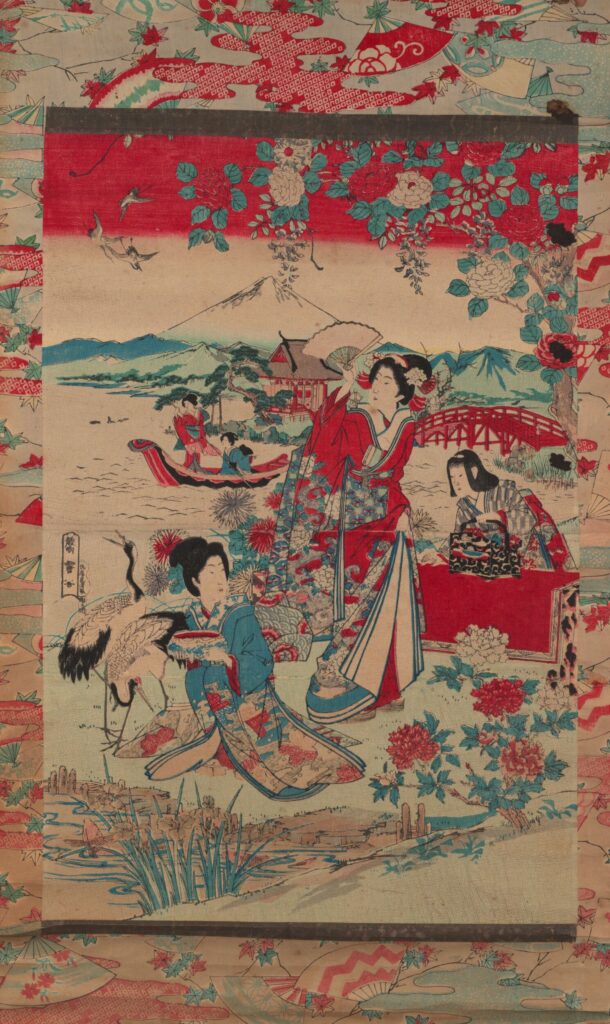
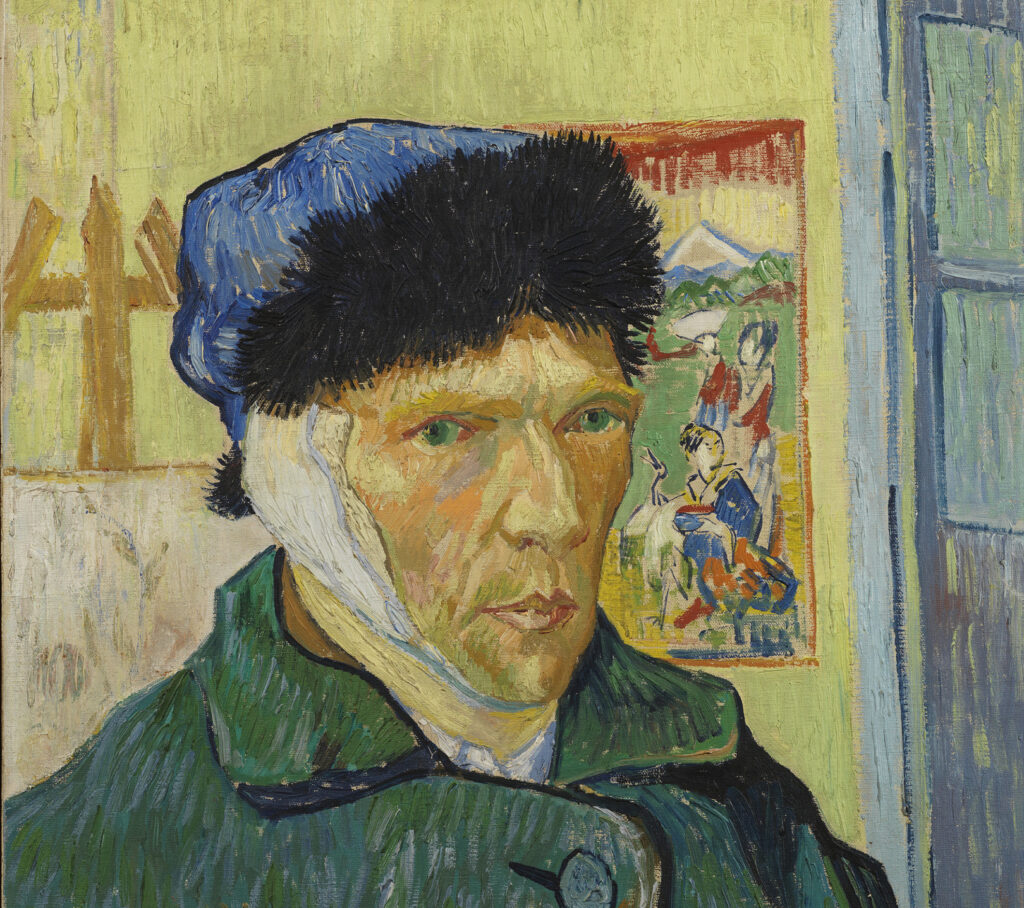
Van Gogh loved decorating his living space with the Japanese prints he collected. They brought him joy and comfort in difficult times. He even included some of them in his paintings, such as this self-portrait. The print behind him has been identified as Geishas in a Landscape by Satō Torakiyo.
The Yellow House
After two years in Paris, Van Gogh sought refuge from the bustling city. He relocated to the south of France, a place he deeply romanticized. In letters to his brother, he described Arles as a distant and exotic place. He often compared it to Japan. But the change of scenery was not enough to heal his inner struggles. In reality, Van Gogh remained lonely and often misunderstood. “You know I’ve always thought it ridiculous for painters to live alone. You always lose when you’re isolated,” he wrote to Theo in 1888.
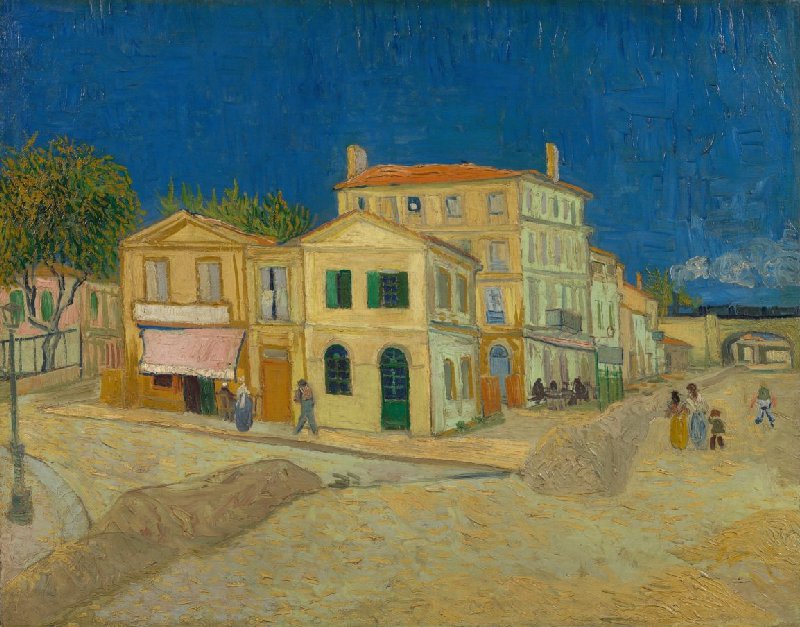
He dreamed of starting an artist colony in Arles. To fulfill that dream, he rented four rooms in the “Yellow House”. After much persuasion, the fellow artist Paul Gauguin agreed to join him in Arles. Yet their time together ended far differently than Van Gogh had envisioned.
Fight with Gauguin
Unfortunately, the dream of an artist’s studio in the south quickly became a nightmare. Gauguin and Van Gogh often quarreled and eventually had an altercation in December 1888.
Signs of Van Gogh’s declining mental health had appeared long before this incident. Years later, Gauguin recalled a moment when Van Gogh threatened him with a razor. Fortunately, Gauguin left the attack without any injuries. However, on the night of December 23, after their final quarrel, Van Gogh returned to his room and used the razor again—this time to cut his own ear.
The reasons remain uncertain. Some point to constant fights with Gauguin. Others note that on the same day, Vincent received news of his brother’s engagement. Relying on Theo’s support for eight years, he may have felt threatened by Theo’s obligation to his future family. He could also have envied his brother’s success in love, something Van Gogh struggled with all throughout his life. Another possibility is that he simply tried to silence the voices in his head, which is something he had been diagnosed with.
Aftermath
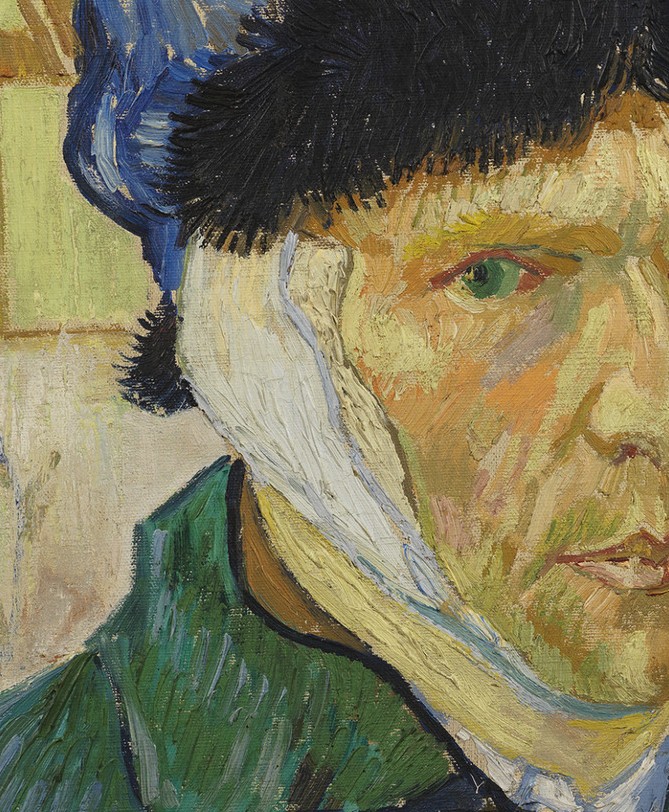
Gauguin did not return to the Yellow House that night. After learning what happened, he fled to Paris. For Van Gogh, the story took a far darker turn. He was hospitalized for two weeks following the incident. This marked the beginning of Van Gogh’s tragic decline. His condition worsened steadily, leading to admission at the mental asylum in Saint-Rémy. A week after returning to the now-empty Yellow House, he painted this self-portrait.
The bandage in the painting appears wrapped around his right side, though he cut his left ear. This reversal occurred because Van Gogh painted self-portraits while looking in a mirror. He also wears a fur cap, purchased to help secure the bandage in place. This piece stands as a testament to the artist’s ambition and resilience. Despite mental and physical struggles, he remained determined to keep painting.