
Nakedness or Nudity? To Be a Woman Is to Perform
Throughout the centuries, women’s bodies have consistently been staged for display rather than simply allowed to exist. John Berger’s...
Guest Author 12 March 2026
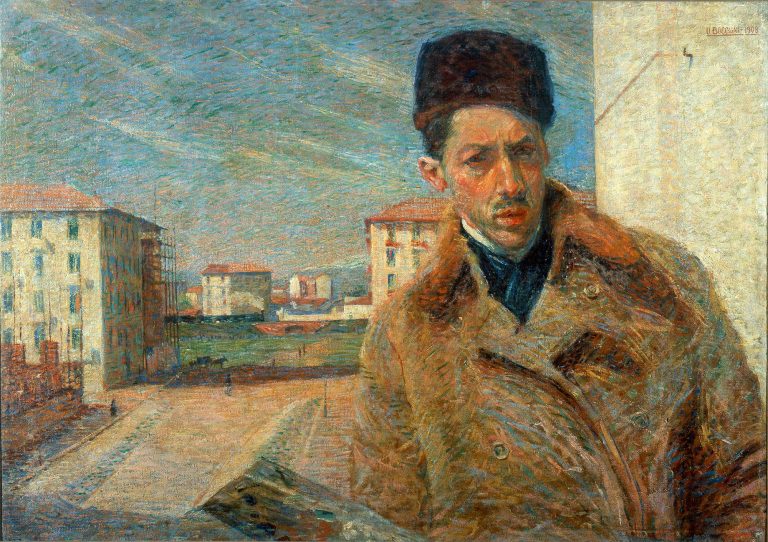
Umberto Boccioni, Self-portrait, 1908, Pinacoteca di Brera, Brera, Italy.
Very few artists developed their styles early in their careers. Most of them searched for new means of expression their entire lives, often making unexpected turns and changes. One such artist was Umberto Boccioni, a leader of the Italian Futurists. They were a group of radicals who wanted to reconstruct the world. However, before Boccioni denied history and anything that had come before Futurists, his style drew from…
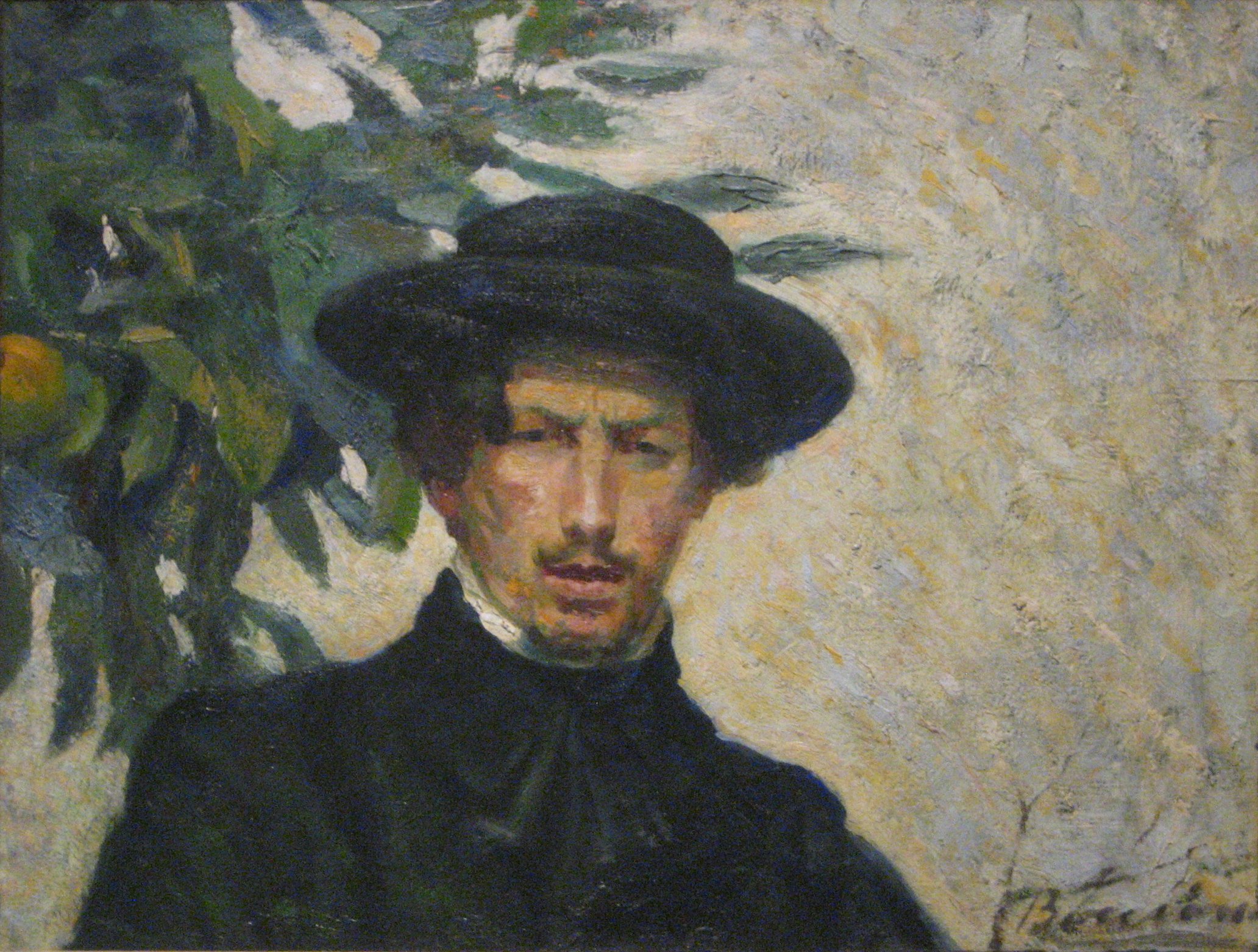
This self-portrait shows Boccioni as a student at the Academy in Rome. The brushwork is soft and the tone mild. The entire composition resembles many Impressionist portraits that Boccioni must have seen. He was very attached to this painting; he never sold it, although his style completely changed.

Divisionism was an Italian response to French Post-Impressionism. Divisionists, inspired by the scientific theories about complementary colors and the works of Georges Seurat and Paul Signac, created works shimmering with light. However, instead of small dots like the French painters, they applied thin and elongated lines of paint, the so-called ”filaments.” You can see them in the trees, sky, grass, and the orchard wall.
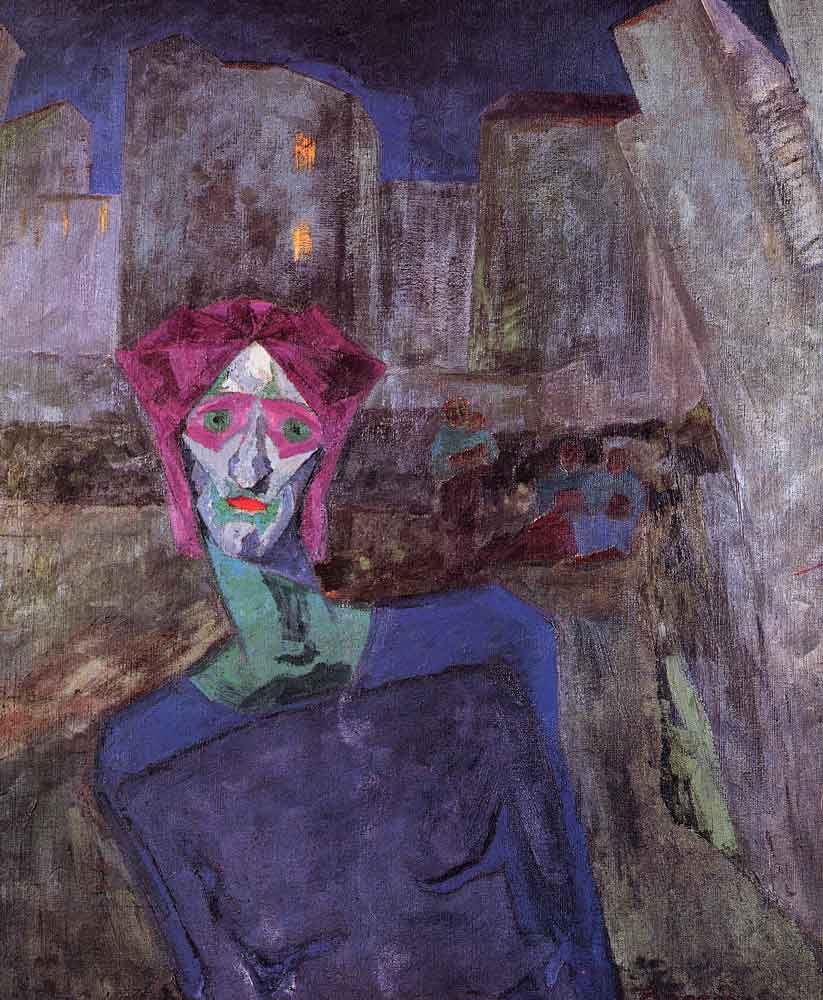
Look at the dramatic change of palette, which in this painting is much darker and charged with emotion. The colors are not verisimilar. Boccioni chose them to better express the atmosphere of the mystery of the night. The contorted buildings, which are so close to one another that it seems there is no way out, induce the feeling of doom or oppression.
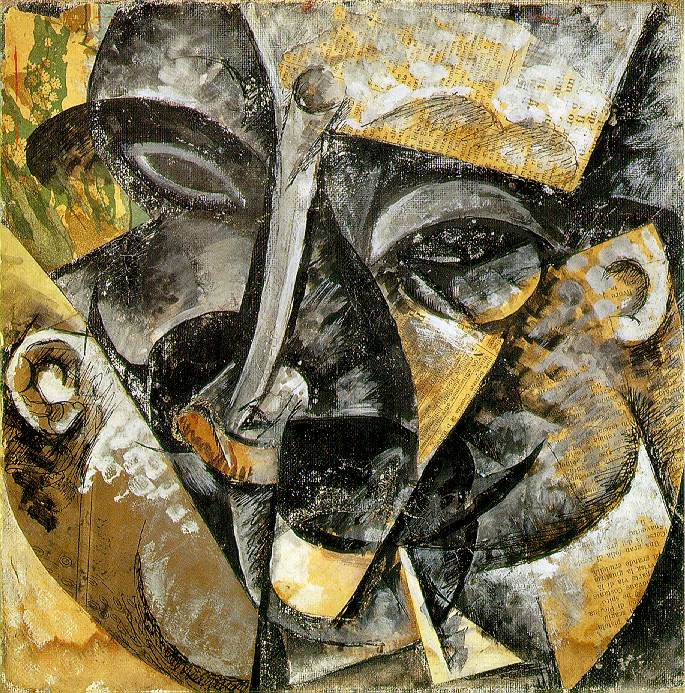
Boccioni’s searches are heading towards the ultimate discovery or creation of Futurism, which contrary to Cubism, would not show geometric volumes over time but strive to depict how environment and time shape the forms. Here, however, we can see the influence of Georges Braque’s papier collé by looking at the pieces of newspaper and Pablo Picasso’s studies of human forms.
Get your daily dose of art
Click and follow us on Google News to stay updated all the time

DailyArt Magazine needs your support. Every contribution, however big or small, is very valuable for our future. Thanks to it, we will be able to sustain and grow the Magazine. Thank you for your help!

Magda, art historian and Italianist, she writes about art because she cannot make it herself. She loves committed and political artists like Ai Weiwei or the Futurists; like Joseph Beuys she believes that art can change us and we can change the world.

Throughout the centuries, women’s bodies have consistently been staged for display rather than simply allowed to exist. John Berger’s...
Guest Author 12 March 2026
As we are in the middle of the season of Great Lent, sacred imagery becomes a bridge between the material world and spiritual reflection. Even today,...
Guest Author 12 March 2026
Fanny Eaton was a regular model for the Pre-Raphaelites during the 1860s and features in a number of famous works. Yet for most of the last century,...
Catriona Miller 19 February 2026
From van Gogh’s sunflowers, through golden dresses, to tranquil landscapes—yellow lights up the scene. It is the color of the sun, associated...
Kinga Dobosz 26 February 2026