Immersive Art to Enjoy in London—Chiharu Shiota and Yin Xiuzhen
Nestled in a cluster of brutalist buildings, the Hayward Gallery is a large exhibition space, part of the multidisciplinary Southbank Centre in...
Edoardo Cesarino 2 March 2026
At large international art biennials, it’s easy to move quickly—pavilion to pavilion, room to room—there is so much to see! Especially with the recently inaugurated Malta Biennale. This year, it opened for the second time with the theme Clean | Clear | Cut, which enhances critical awareness of the past and present, while acknowledging and even appreciating the heritage of the past generations.
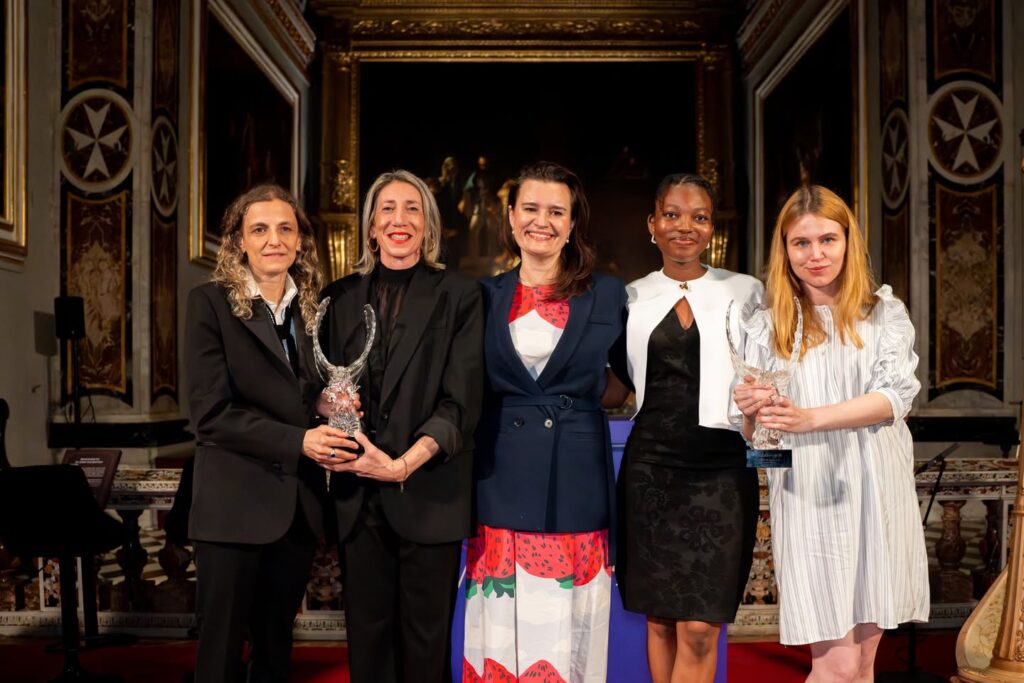
With so much going on there, including the 27 national and thematic pavilions, we want to put a spotlight on the one that won the Malta Biennale 2026 award. This year’s Maltese Falcon was presented to the Redefining. Polish-Ghanaian Textile Narratives pavilion. Here are five reasons to step inside—and stay a while.
Artists presented at the OmenaArt Foundation’s Pavilion: Eliza Proszczuk (in the center), Ernestina Doku, and Marta Nadolle (on the right) with The Maltese Falcon Award. Press materials.
The art world often organizes itself along predictable lines—North and South, Europe and Africa, center and periphery. This pavilion rearranges that map.
The project draws on historical exchanges between Poland and Ghana dating back to the 1960s—a period after Ghana gained independence, when Ghanian students were studying in Poland, and Polish specialists were working in Ghana. However, it’s really about the present moment, showing artists from both countries working side by side, drawing on textile traditions that developed thousands of miles apart.
Organized by the Polish cultural and philanthropic initiative OmenaArt Foundation, founded by Polish-Ghanaian philanthropist Omenaa Mensah, the exhibition reflects the organization’s mission to build connections between these two countries through contemporary art and cultural exchange. And while experiencing the exhibition, the distance between Warsaw and Accra begins to feel surprisingly small.
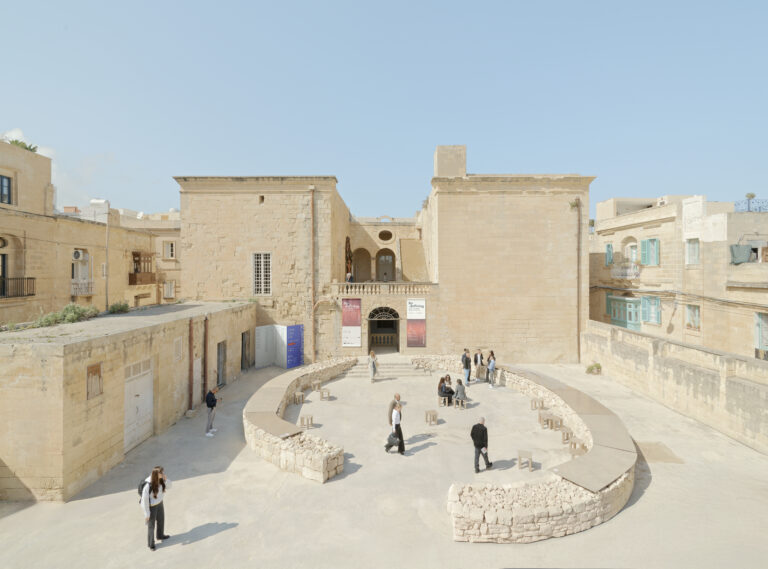
The pavilion, housed in the picturesque Birgu Old Armory (built in the 1550s!), features three artists: Marta Nadolle, Eliza Proszczuk (both from Poland), and Ernestina Mansa Doku (from Ghana). Each approaches textiles from a different perspective.
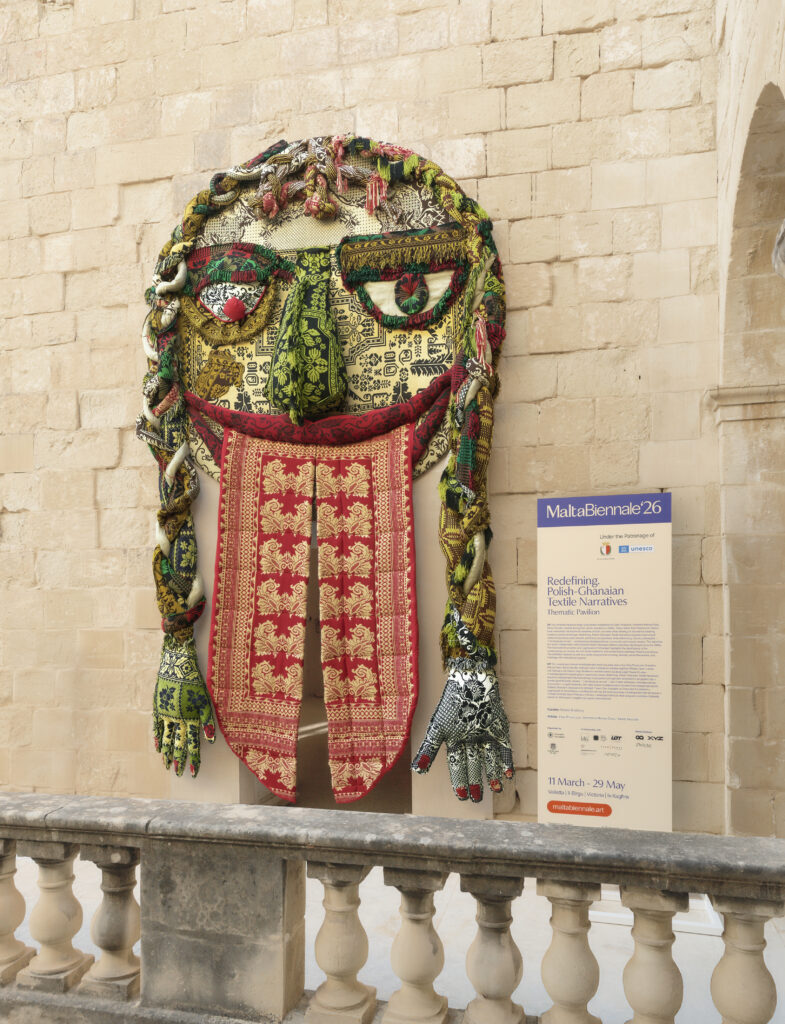
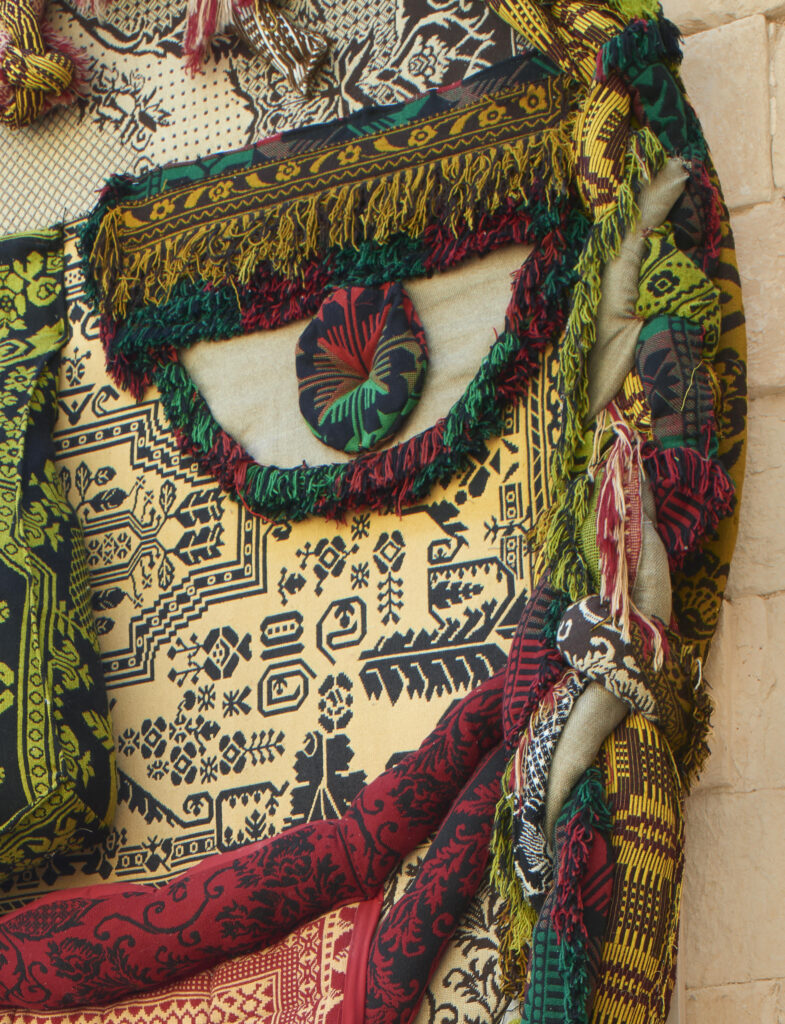
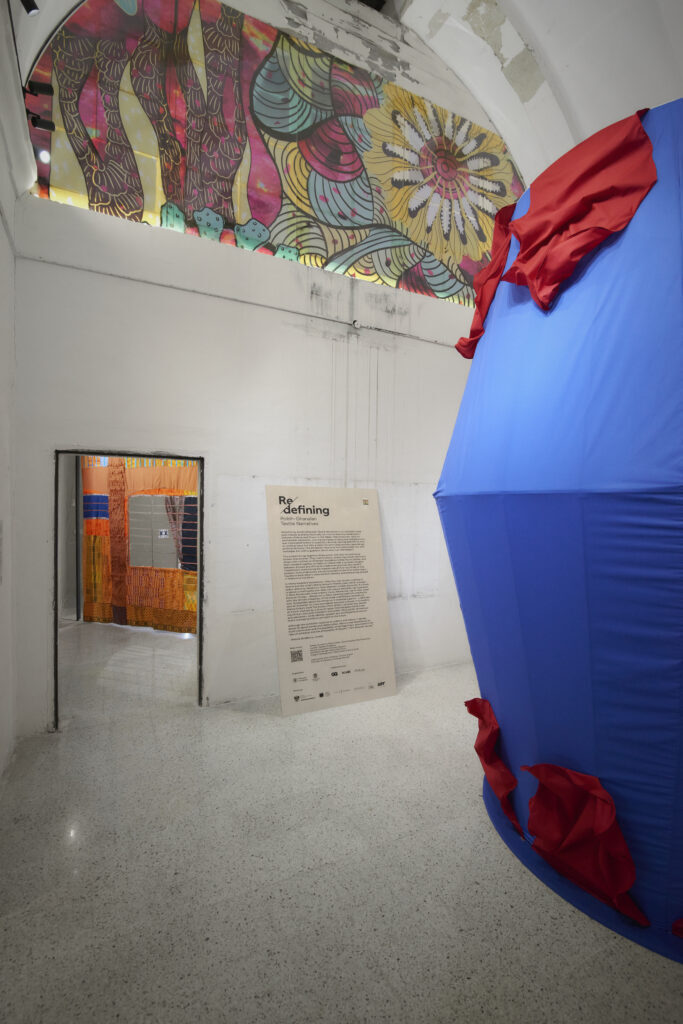
At the entrance to the exhibition, we see Eliza Proszczuk’s work Where the Lad Arrives, Good Fortune Thrives. The Cow Will Calve, the Maiden Will Wed. It engages with ritual and symbolic roles of the mask, and I must admit, with its stuffed paws, it is very welcoming. Present in both Polish and Ghanaian cultures, masks mediate between the worlds of the living and the dead, marking transitions such as the farewell to the old year and the arrival of the new. Proszczuk’s work references the figure of the New Year’s drab from the Podkarpacie region (in Poland)—a costumed visitor who symbolically ushers in renewal.
Functioning as a kind of threshold, her textile installation welcomes viewers into the exhibition, acting as a portal into a non-physical, spiritual dimension. Constructed from repurposed woolen blankets from communist-era sofa beds, alongside jacquard-woven and more traditional fabrics, the piece is a gesture of goodwill that offers a blessing for what is to come.
In the pavilion, fabric becomes a way of thinking. The installations are large, tactile, and layered, created during an artistic residency on Malta and drawing from weaving traditions of both Poland and Ghana.
This all links to the Polish School of Tapestry, one of the most influential movements in 20th-century textile art. It emerged in Poland in the 1960s, when artists began transforming traditional textiles into a powerful medium of contemporary art. Rather than treating tapestry as a decorative craft, Polish artists experimented with scale, texture, and unconventional materials, creating large, sculptural textile works that blurred the boundaries between weaving, sculpture, and installation. The movement gained international recognition during the 1962 Lausanne International Tapestry Biennial, where Polish artists—including now famous Magdalena Abakanowicz—presented monumental woven forms that revolutionized the perception of textile art.
In this specific (and quite heavy!) context, the art of Ernestina Doku works surprisingly well. Doku, Ghanaian and the youngest artist in the project, explores identity as a process shaped by layered exchanges rather than a linear trajectory. She works across textiles, painting, and sculpture. Her key reference in The Echoes from Within is the chevron bead, once used as currency in colonial trade. The artist treats it as a symbol that shaped systems of exchange and, in turn, people’s identities.
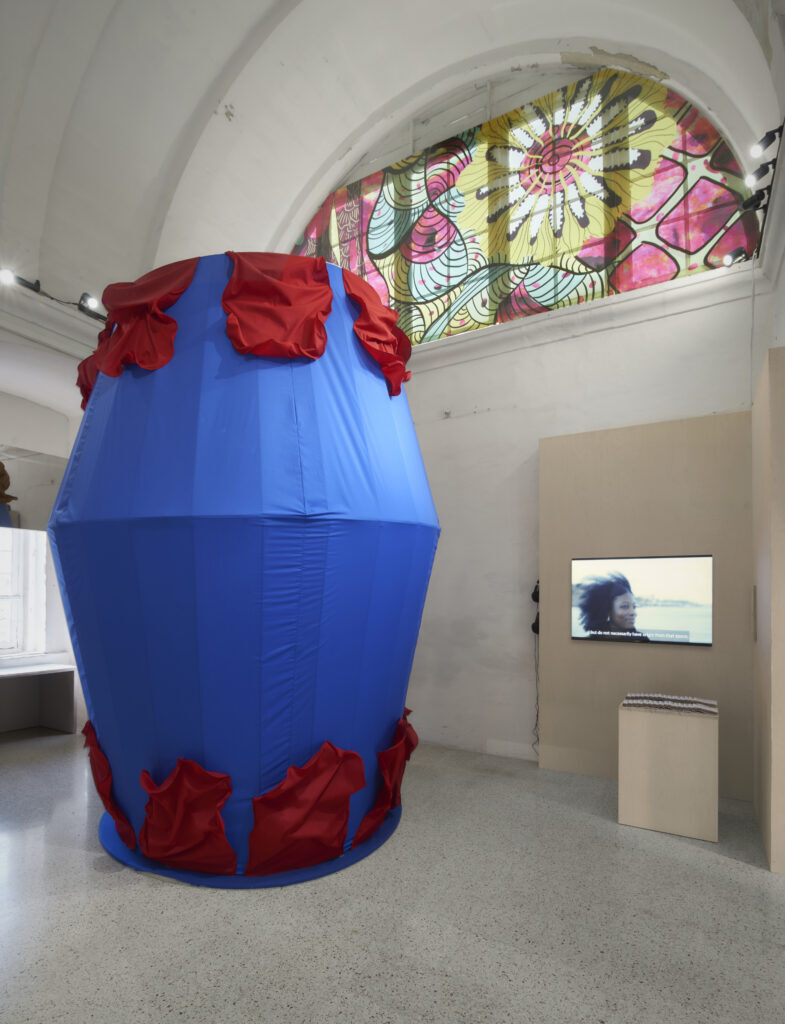
Doku’s work focuses on how identity is formed through contact and circulation rather than belonging to a single origin. She uses materials and forms that are not strictly Ghanaian but are tied to her country’s history. Among the pieces are African wax prints—visible among her works presented in the windows—which are widely seen as “African” despite their complex, global production history. The light also becomes an active component of the work, filtering through surfaces of the pavilion evoking stained glass and subtly referencing Malta’s Christian architectural context.
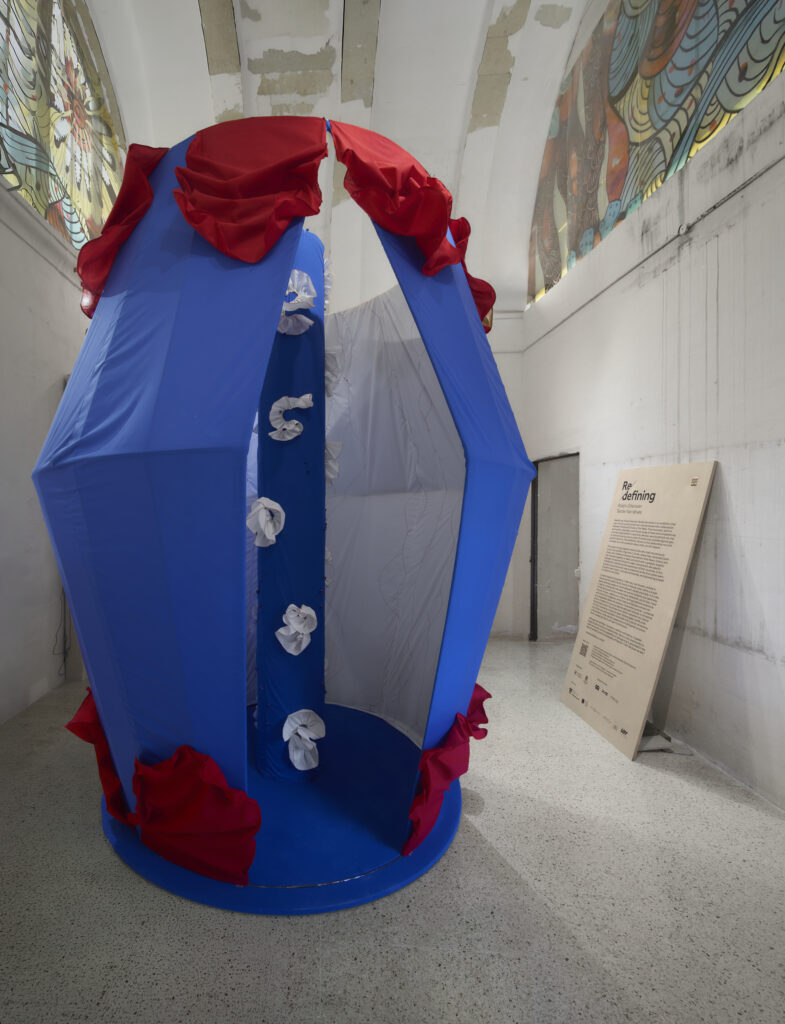
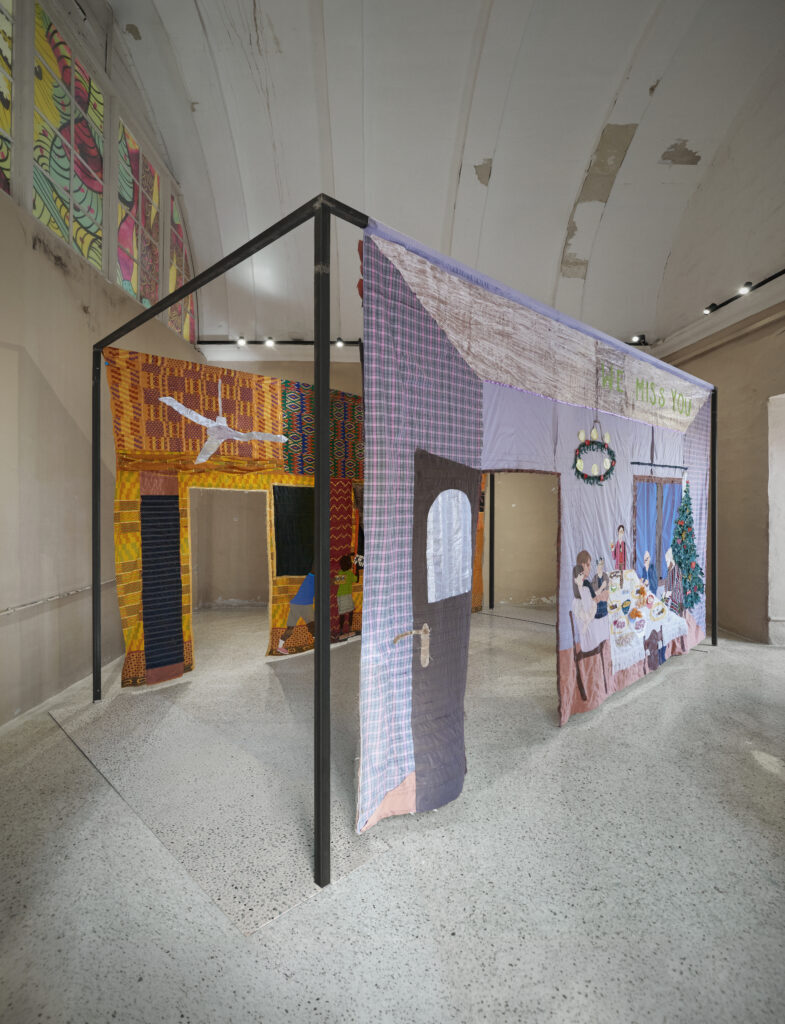
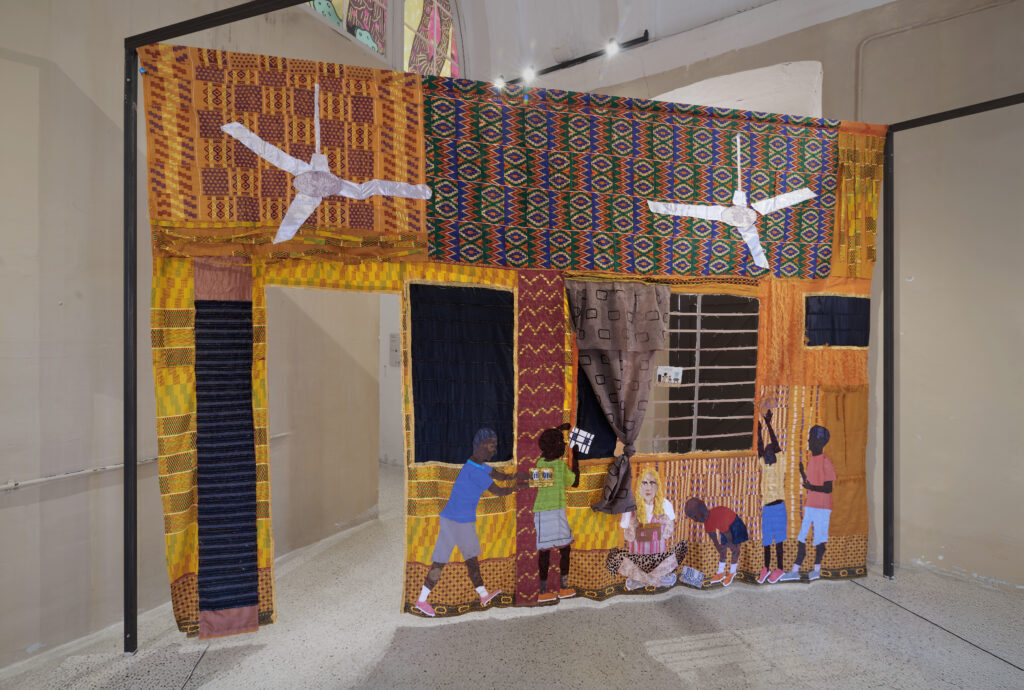
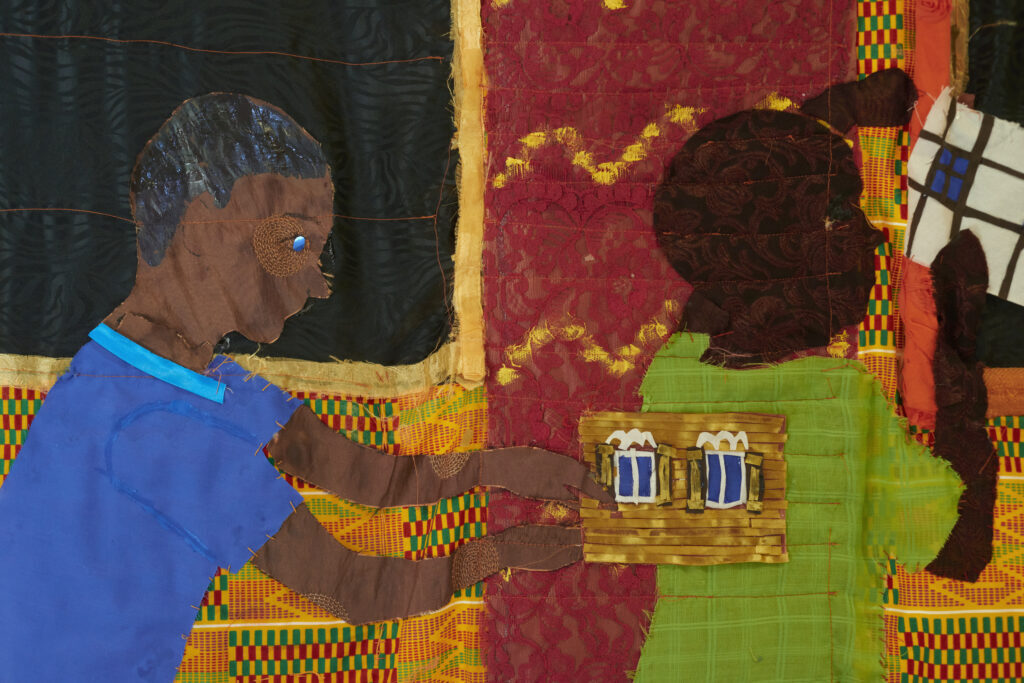
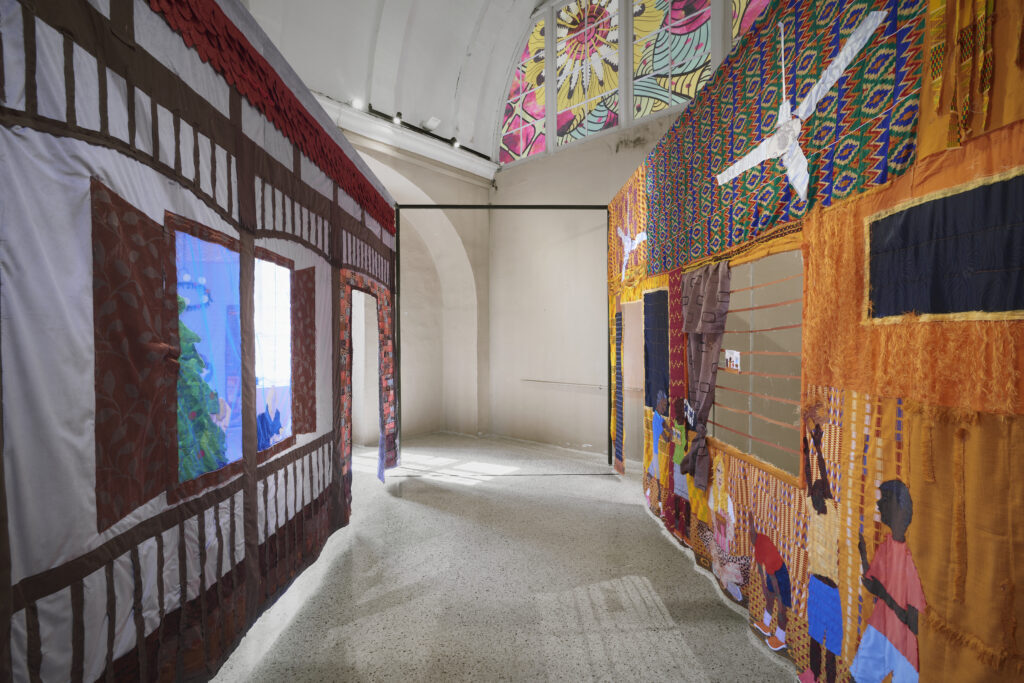
The conceptual backbone of the pavilion is Ubuntu, the African idea often summarized as “I am because we are.” It is a beautiful statement emphasizing the importance of collaboration. We see this especially in the work of Marta Nadolle, whose artistic practice grows out of painting but expands into participatory, spatial environments made of patchworked textiles. Her work started during workshops conducted with children in Ghana, where she co-created textile “houses” inspired by traditional architecture from both Poland and Ghana.
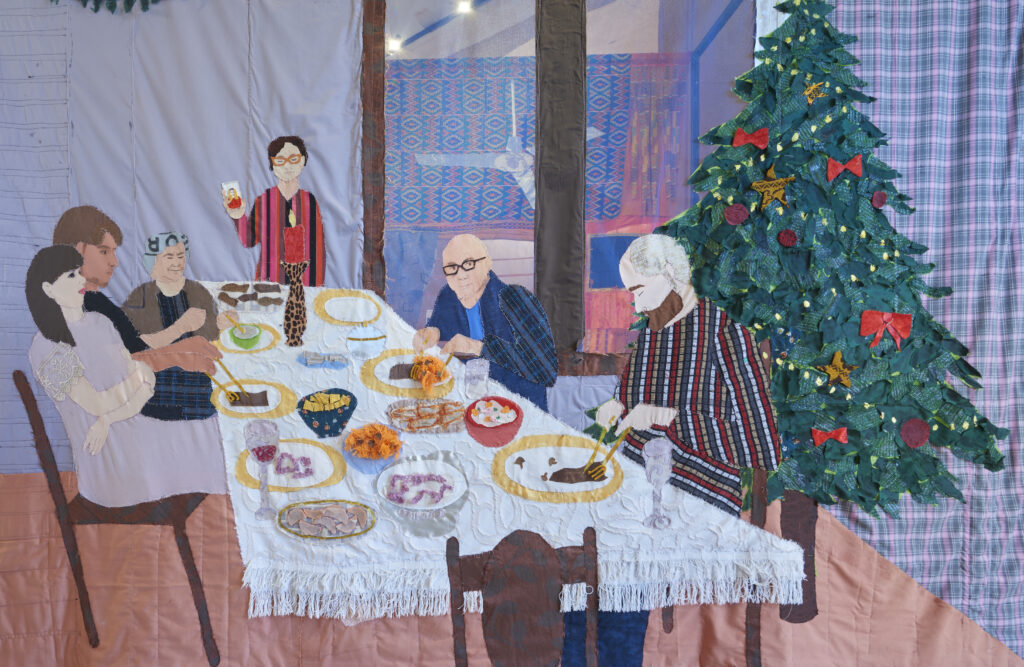
The piece presented in the pavilion, I Miss You, is composed of two buildings: one is a Ghanaian school (built during workshops in Ghana), and the other is the artist’s family house in Poland. These forms are the reminiscence of a utopian landscape that bridges different worlds and histories, showing the experience of unfamiliar communities coming together. A personal thread, typical of Nadolle, is particularly vivid—the work recalls the artist’s absence at the family’s Christmas Eve (she could join it only via FaceTime)—and is underlined by the lingering sentiment: “we miss you.”
The jury’s explanation for awarding the pavilion stated that “rooted in the Biennale’s theme, [it] revisits a little-known history of solidarity between Poland and Ghana, transforming it into a hopeful vision for future cooperation. Guided by the philosophy of Ubuntu—I am because we are—the installation celebrates interdependence, empathy, and shared humanity.”
This idea comes through in the works themselves. Nadolle’s collaborative “houses,” Proszczuk’s ritual-based installation, and Doku’s layered, non-linear approach to identity all deal with exchange—between people, places, and histories. The pavilion is shown as a connection of something built through difference, with the objects carrying traces of multiple contexts at once.
It is worth seeing and experiencing in person, particularly in a world increasingly shaped by individualism and loneliness.
The Malta Biennale runs from March 13 to May 31, 2026, with exhibitions staged in historic sites across Valetta, Il-Birgu, and Gozo. More information and the full program can be found at the biennale’s website.
DailyArt Magazine needs your support. Every contribution, however big or small, is very valuable for our future. Thanks to it, we will be able to sustain and grow the Magazine. Thank you for your help!