The Scramble for Africa
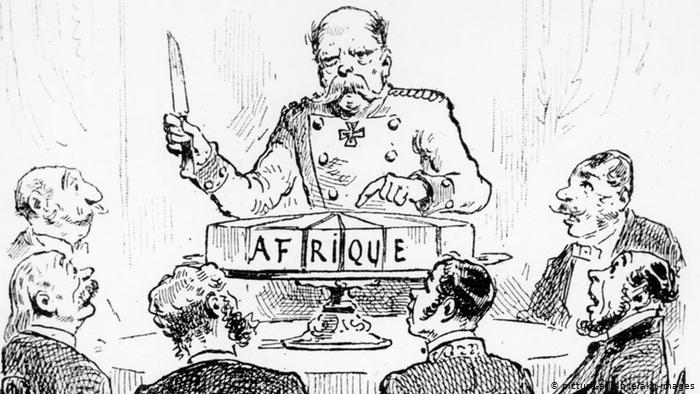
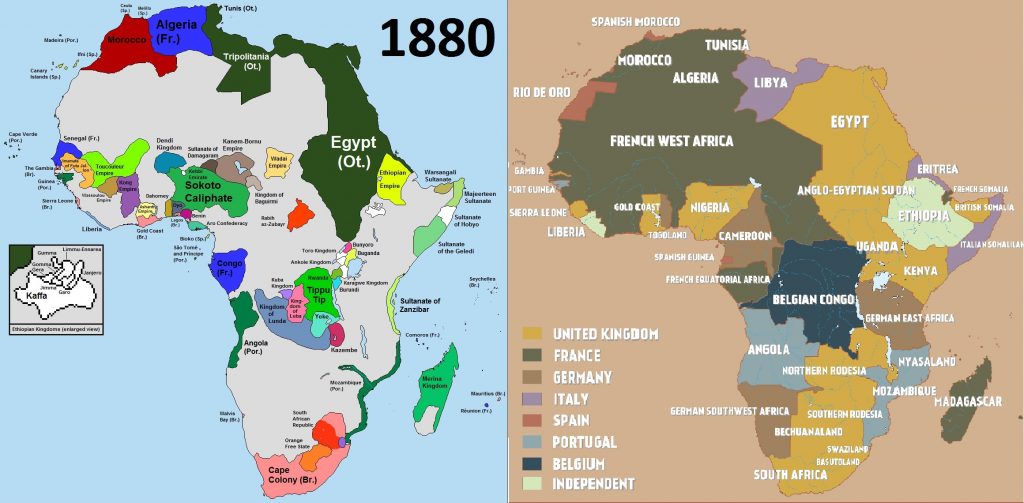
The colonization of Africa began formally in 1885 with the Congress of Berlin, also known as “the Scramble for Africa”. Africa and Europe already had a long history of commercial and cultural exchanges, but this was different. Without the presence of a single African leader, the European rulers decided the fate of the continent according to their economic and political interests.
Europeans drew artificial borders that hardly matched the political divisions of the kingdoms and ethnic groups that existed then. In the end, a continent three times the size of Europe fell under the control of seven nations. Only Ethiopia and Liberia remained independent.
The Rise of Colonial Looting
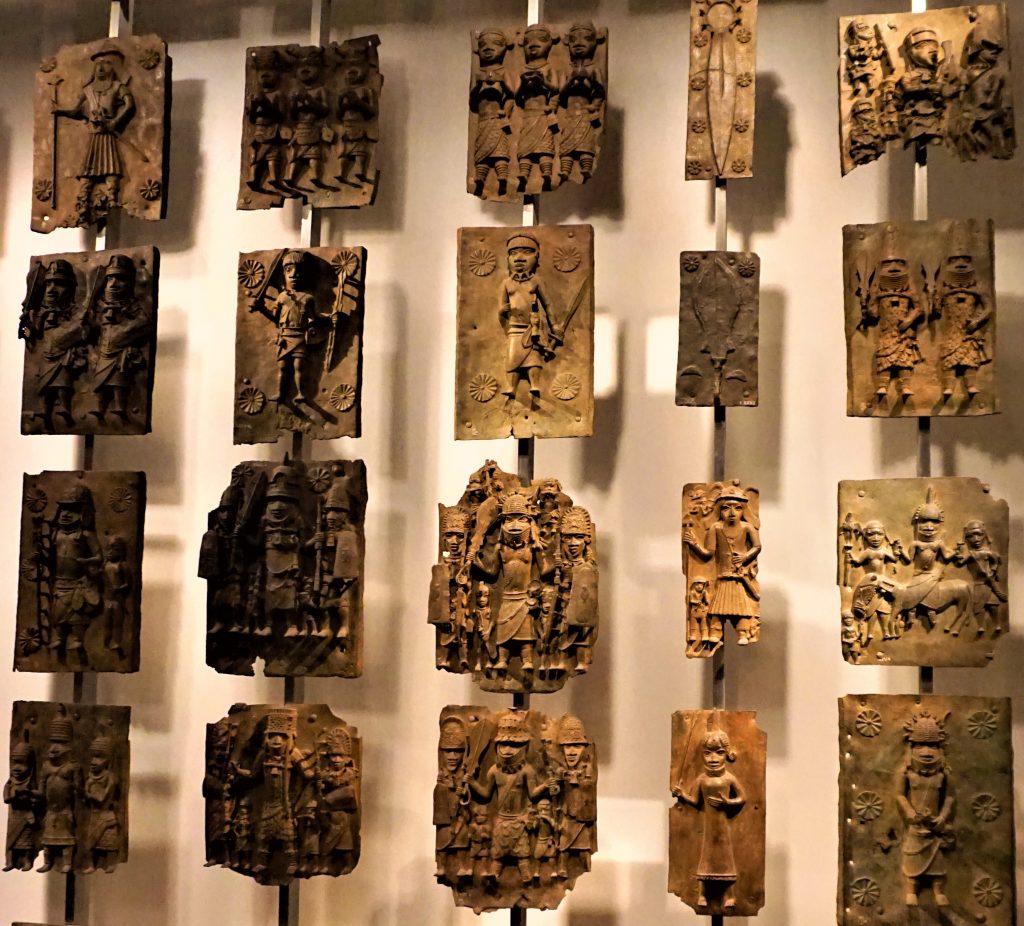
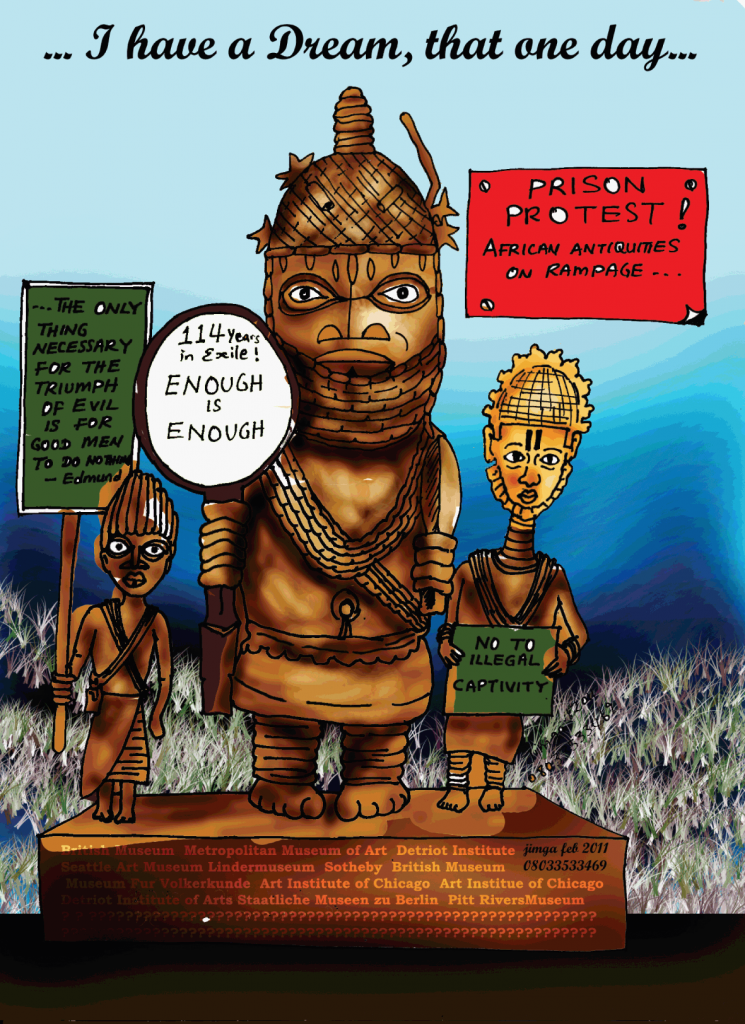
Europeans used various strategies to control the territory. One of them was through punitive colonial expeditions, many of which ended with looting. For example, in 1897, the British sent an expedition to the Kingdom of Benin, in modern-day Nigeria. From this event, pieces such as the Benin Bronzes or the Queen Mother Idia of Benin found their way into European collections.
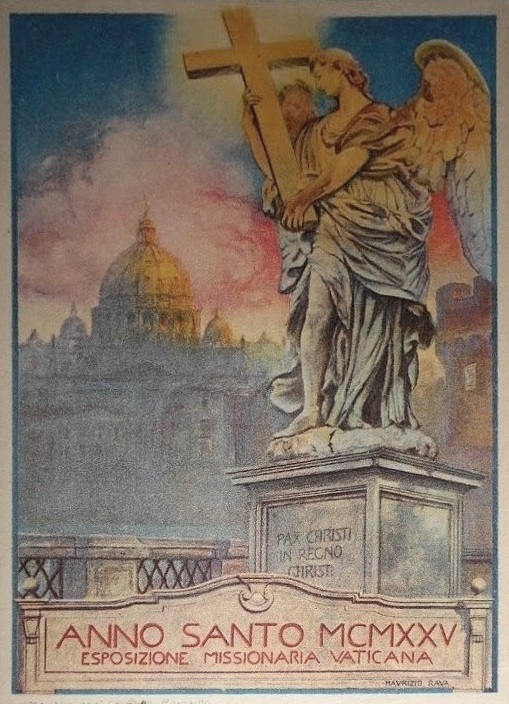
At the same time, anthropology and ethnology emerged to study these cultures through the lens of white superiority. Some museums sent professionals to assess and bring back certain works, while the Church sent priests to convert the people. They destroyed their “pagan” artifacts but sent the most valuable examples to Europe. These objects were exhibited in “missionary museums” where artists surely saw them. The largest one of its kind was l’Esposizione missionaria vaticana in 1925, which consisted of colonial looting from all around the world.
And yet, there were those who believed such masterpieces must have been made by the Portuguese due to their quality!
A Legitimate Claim
Many colonies gained their independence in the 1960s. In order to keep stability, they kept the artificial borders. However, they needed to create a national identity. But how could they do it when all their cultural objects were gone? In 1969, the Organization of African Union published the Pan-African Cultural Manifesto. In it, they called cultural expressions “the cement of every social group.”
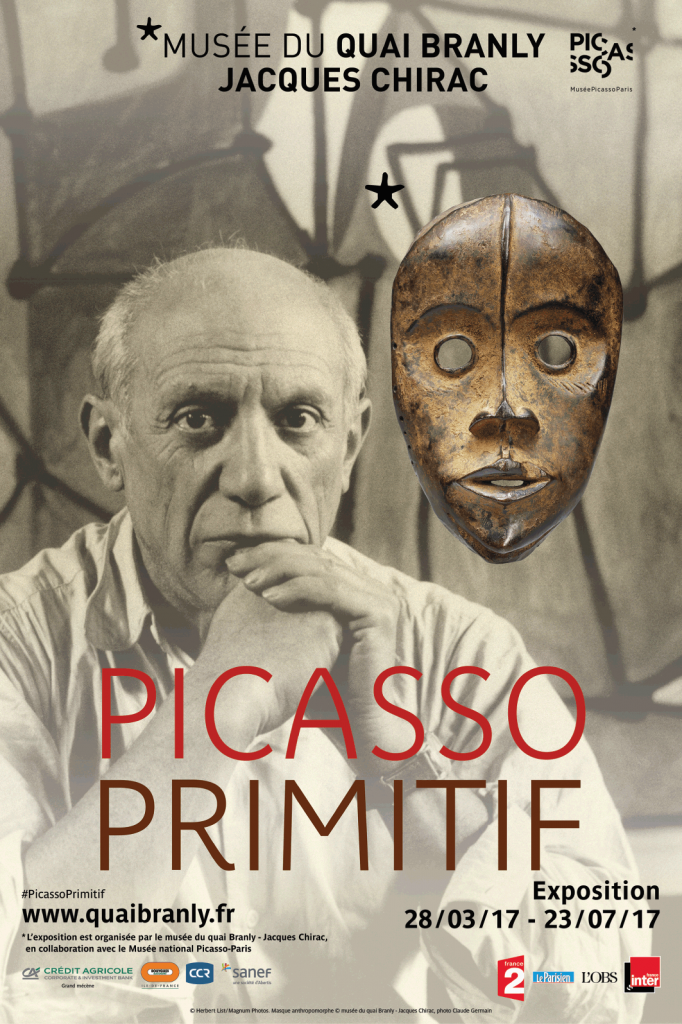
People had been calling African art “primitive” since the 19th century. Scholars refused to consider it as “fine art”. But when modern artists used them as inspiration, they were called revolutionaries, and their canvases became well-known masterpieces. Just think for a moment about how we talk about Picasso’s works.
Later, in 1978, the UNESCO director-general, Amadou-Mahtar M’Bow, released A Plea for the Return of an Irreplaceable Cultural Heritage to Those Who Created It. It was important to establish that African states only wanted the most representative objects back.
And this was the start of a long, frustrating, and ongoing fight to recover these treasures.
African Art Through Western Lenses
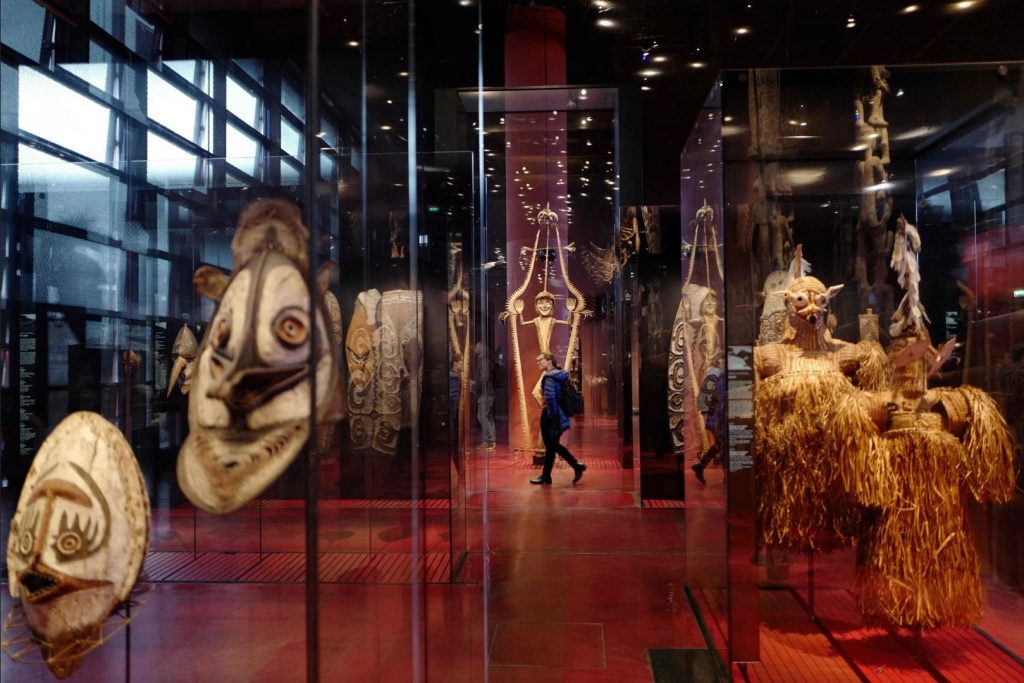
A crucial element in this issue is the matter of interpretation. Museum professionals studied and taught about these artworks from Western perspectives. Moreover, as much as we love museums, we have to acknowledge that they are Western institutions. Not everyone shares the idea of art as a contemplative product. In many cultures, it serves a further purpose. For example, in Mali, the National Museum lends objects to the community for rituals and retrieves them afterward. These objects were not made to stand in glass boxes.
This is also a matter of human rights. African countries have the right to their culture and artistic heritage. African cultures put great importance on oral tradition, unlike the West, which focuses on written records. Many pieces help them tell stories and teach the next generations about the past. Furthermore, some play a role in important ceremonies.
In truth, there are a few international legal instruments that African countries can use, and those processes take plenty of resources that the states cannot easily spare.
The Museums’ Defense?
In general, museums refuse to give the pieces back. Colonization is one of those hard pills to swallow. They would have to accept their responsibility in the colonial looting. Furthermore, for centuries across the globe, looting was normal. So, if they say yes to Africa, they’d have to say yes to the rest of the world, including European countries like Greece. Can you imagine how many pieces these museums would lose? And, in consequence, how many tourists and revenue?
They appeal to cultural universalism, in which culture belongs to all humanity. Furthermore, they call themselves “universal museums.” According to them, they are merely the repositories of these pieces. In the spirit of sharing, they make them accessible to everyone. However, few people from developing countries can afford a trip to Europe, or the objects remain in storage. And yet, they still have an ace up their sleeve: security.
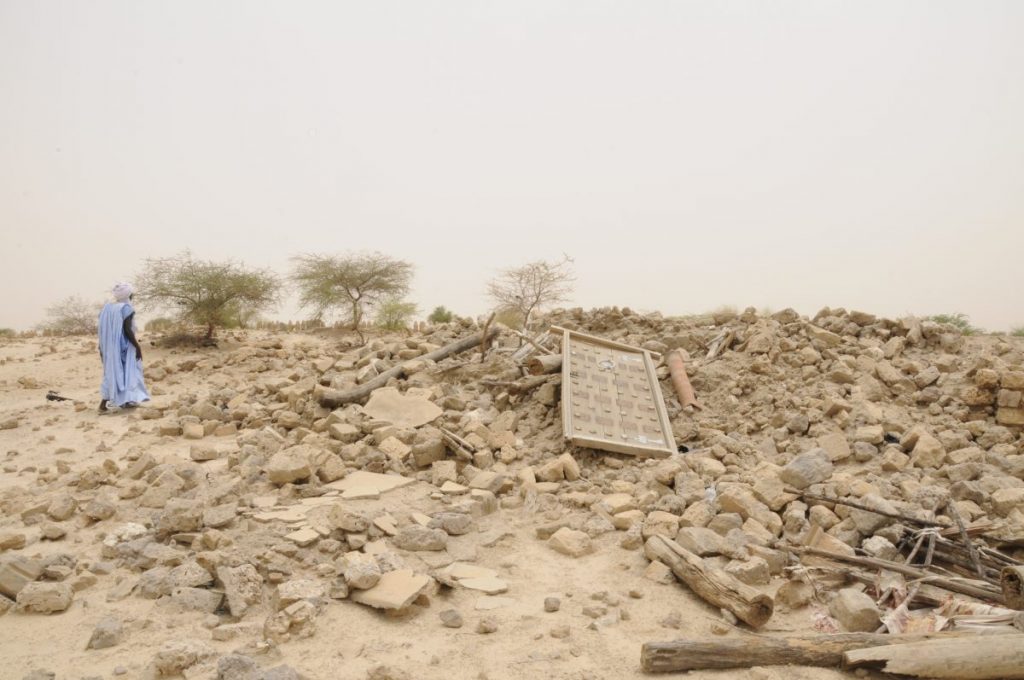
Yes, the museums claim that developing countries do not have the proper security to preserve those pieces and that some events cause worry. In 2012, a group of extremists destroyed 10 religious and historical monuments in Timbuktu, Mali. Actually, it became the first case at the International Criminal Court that focused exclusively on the destruction of cultural heritage as a war crime. Therefore, many people believe that returning the colonial loot would put the pieces in grave danger.
Efforts That Stay in Speeches and Bureaucracy
More people are becoming aware of the injustices of colonization and see restitution as an ideal way to heal old wounds and establish relationships. A notable example of political efforts was President Macron’s speech at the University of Ouagadougou, Burkina Faso, in 2017.
Later on, The Restitution of African Cultural Heritage. Toward a New Relational Ethics was published, commonly referred to as the Sarr-Savoy Report. According to the plan, between 2018 and 2022, 90,000 pieces would return to their places of origin. But did it work? According to the African Modern Affordable Art Gallery, as of February 2026, France has only returned 27 objects! Yes, only 27 objects have made it back to their original place. The last one happened in 2025 when the French Parliament approved the return of the Ayôkwé Djidji (talking drum) to Ivory Coast.
On a positive note, on January 28, 2026, the French Senate approved a law to facilitate the legal procedures for objects taken between 1815 and 1972. The law still needs the approval of the National Assembly, but it is a step in the right direction. Currently, there are more than 10 countries waiting for their requests to be processed. Let us hope this new legislation accelerates the process in the following years.
Restitution Elsewhere
Influenced by France’s efforts and speeches, other countries have shown willingness to discuss restitution, too. In December 2022, Germany returned 22 objects to Nigeria together with a recognition of past wrongs. Likewise, the Netherlands returned more than 100 Benin Bronzes to Nigeria in 2025. These numbers seem almost insignificant and performative in the face of hundreds of thousands of objects that have stayed in Western collections. For instance, the British Museum (and the UK as a state) continues to be one of the most reluctant actors in this issue (not only of African heritage), even though they hold huge collections of stolen objects.
Colonial Looting at Exhibitions
Of course, not only governments are demanding these objects back. Research and discussions on heritage justice are advancing. African civil society, scholars, art professionals, and artists are claiming them too. For example, Nigerian artist Peju Layiwola and other African artists participated in the Resist! The Art of Resistance, an exhibition in the Rautenstrauch-Joest Museum in Cologne, Germany, that addressed the restitution of colonial looting from the Benin Kingdom.
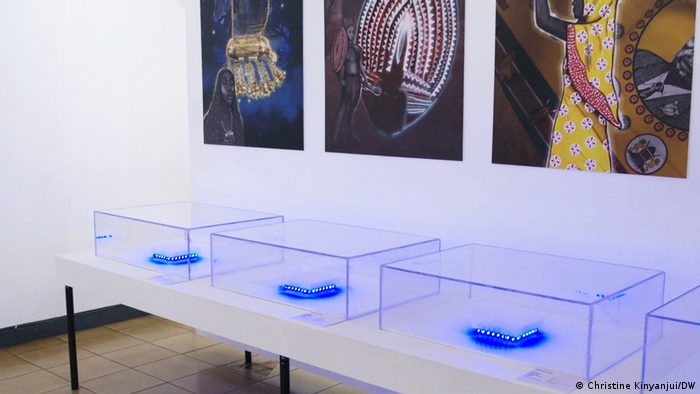
African museums have joined the claim. In 2021, Nairobi’s National Museum was home to a very peculiar exhibition. The project Invisible Inventories showed empty cases to visualize the lack of cultural objects that remain in the West. More recently, the Museum of West African Art (MOWAA) in Benin City, Nigeria, opened the exhibition Nigeria Imaginary: Homecoming, which addresses the restitution of the Benin Bronzes.
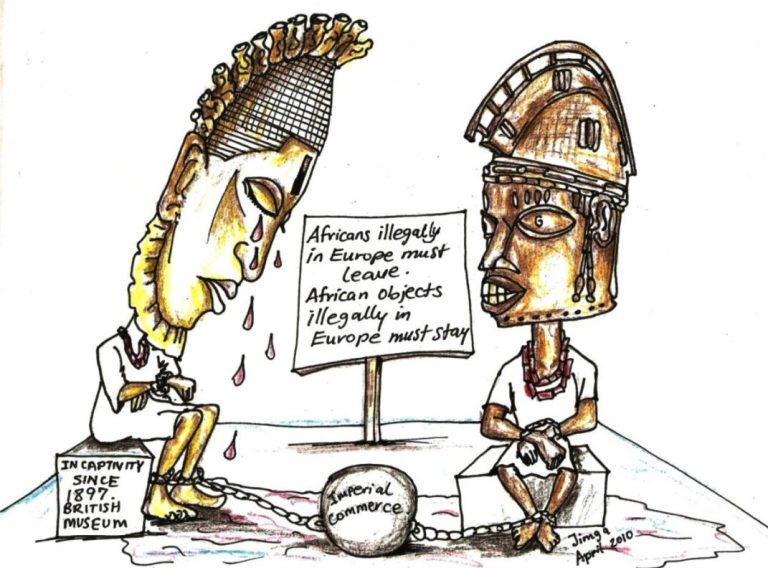
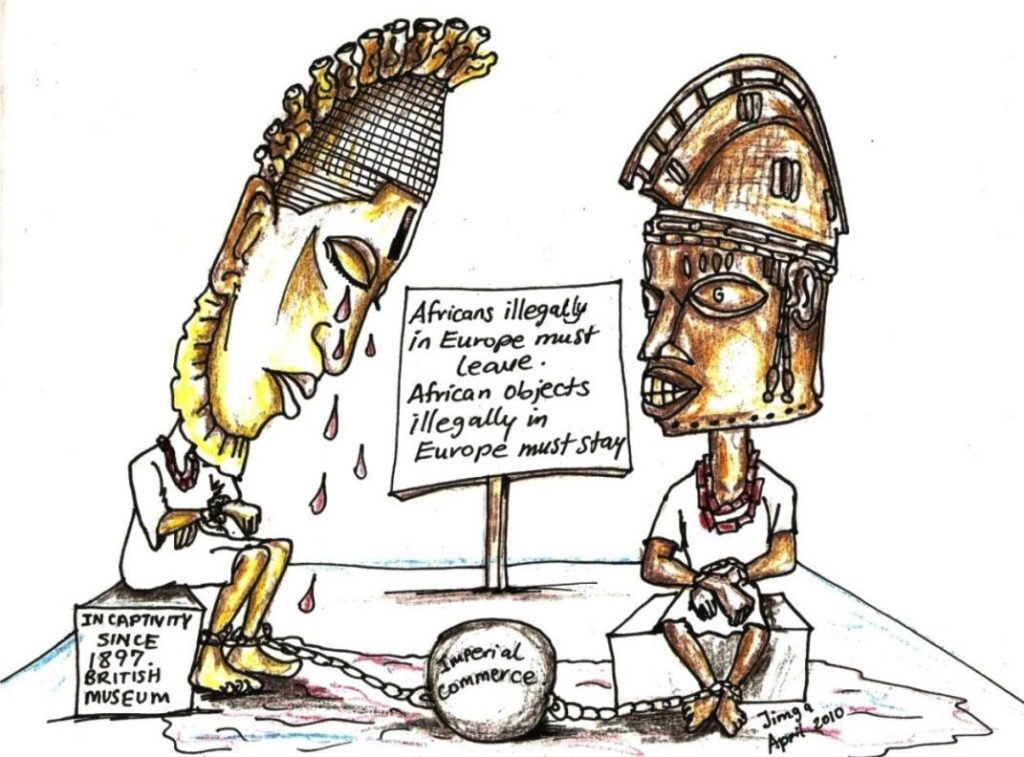
Meanwhile, Nigerian artist Jimoh Ganiyu (Jimga) addressed both the restitution and the migration crisis in Europe in this artwork. The message is brutal and invites reflection. On the one hand, there is the reluctance of museums to give back those objects. On the other hand, the xenophobic and racist narratives in the European political and social arena. Such is the reality.