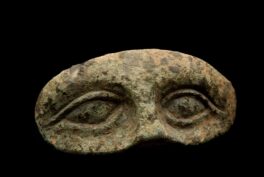


Sliman Mansour, Painter of Palestinian Resistance, Dies at 79
Sliman Mansour, one of the leading figures in Palestinian art, died yesterday at the age of 79. Mansour’s practice was profoundly intertwined...
Martha Teverson 25 August 2026
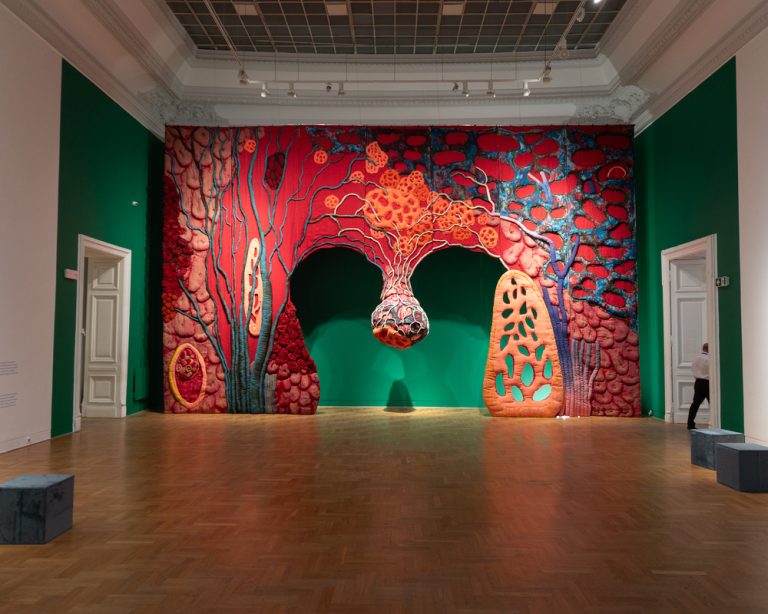
Piotr Uklański, Untitled (Wide Open), 2012, exhibition view of Tears of Joy, 2024. Photo by Kuba Celej. Zachęta—National Gallery of Art, Warsaw, Poland.
Contemporary sculpture long ago broke free from classical forms and traditional aesthetics. More and more often, artists choose nondurable, ephemeral, unconventional materials in their art that provoke questions and force us to reflect. These five extraordinary works redefine the concept of sculpture, in both form and material.
In contemporary art, a sculpture is no longer a permanent monument—it can be a message, an experiment, and sometimes even serves as a testament to personal emotions and experiences. The collection held by the Zachęta—National Gallery of Art includes many works of art that break with the canon of traditional sculpture, where artists have used surprising, unconventional materials. Let’s explore five of them.
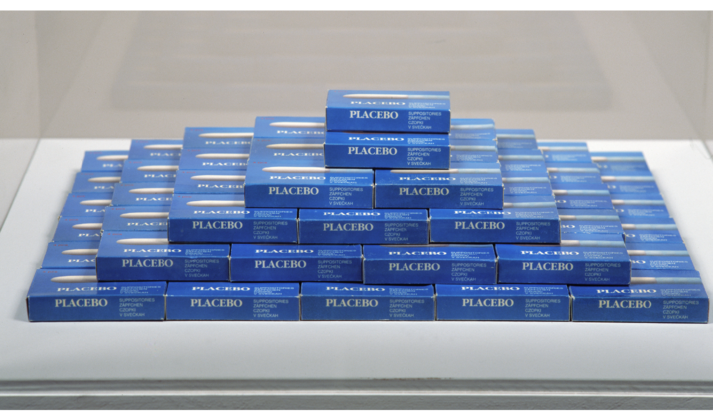
Zbigniew Libera, Placebo, 1995, Zachęta—National Gallery of Art, Warsaw, Poland.
Drug packaging as a work of art? Zbigniew Libera has created objects that are almost indistinguishable from real medical preparations. The Placebo (1995) consists of 71 identical boxes containing pure suppository mass, with no active substance, which the artist commissioned from a pharmaceutical factory.
Placebo treads a fine line between the form of a pharmaceutical product and a ready-made object for the gallery. It is a witty commentary on how the media, advertising, and the pharmaceutical industry manipulate our collective consciousness. Libera uses irony to denounce our tendency to believe in the fast-acting remedy, and hints that sometimes a mere suggestion is enough for us to feel better.
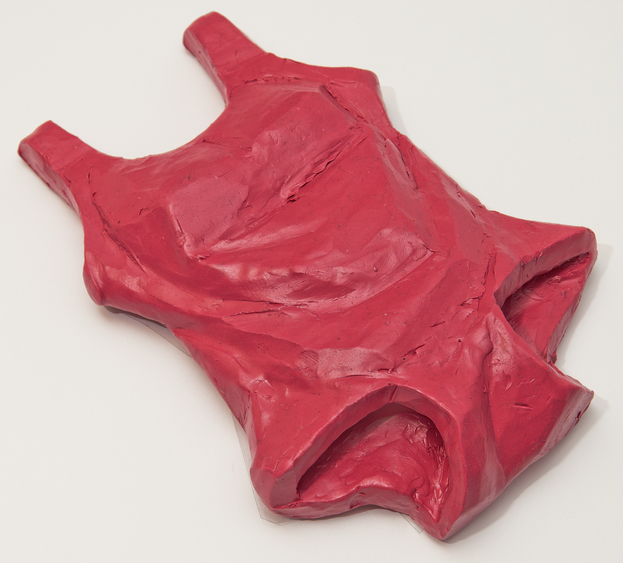
Jadwiga Sawicka, Untitled, 1999, Zachęta—National Gallery of Art, Warsaw, Poland.
Jadwiga Sawicka’s Untitled (1999) is a sculpture made of plasticine, a material usually associated with a children’s pastime rather than the art gallery. The artist chose this “banal” raw material on purpose, forming an object that looks like a piece of clothing or a body part, suspended between corporeality and its representation. The smell, softness, and subdued colors of plasticine create an intimate, sensuous atmosphere.
The artist uses the material not just as a means of expression, but also as a medium that conveys physical and emotional experience. It is a study in the expressive power of the material, helpful in weaving a tale of everyday life and vulnerability.
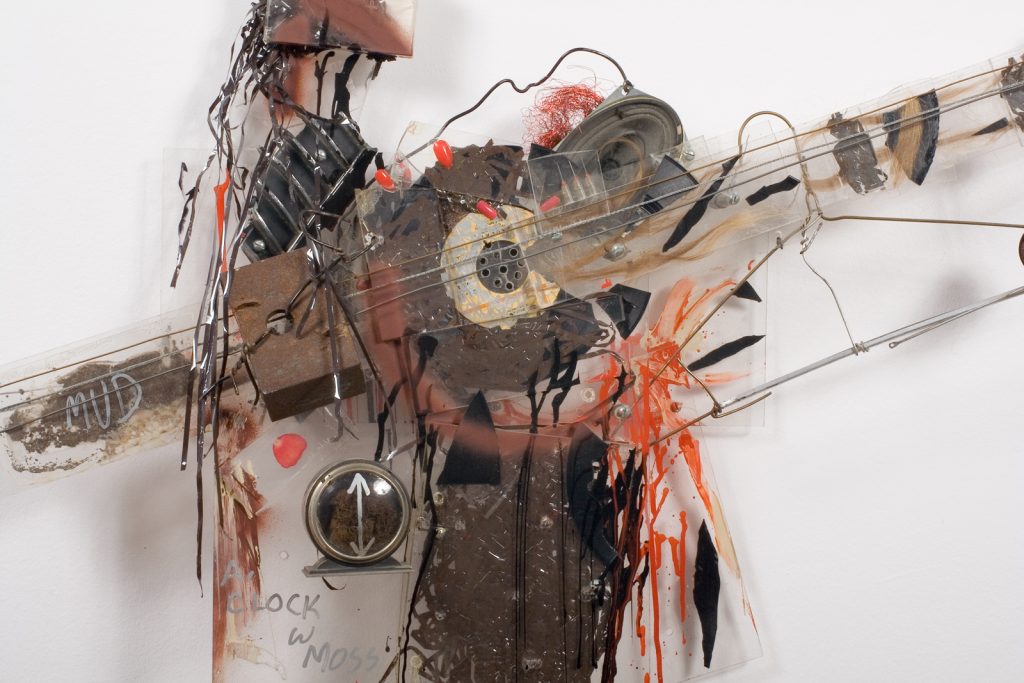
Krzysztof Zarębski, Guitar, 1988, Zachęta—National Gallery of Art, Warsaw, Poland.
Krzysztof Zarębski has mastered combining ready-made objects into surprising constellations. In his installation titled Guitar (1988), he put together artificial elements such as – plexiglass, metal, and audio tape – with organic items such as moss, a flower petal, dried-out mud, and human hair. The resulting visual collage is a symbolic record of man’s encounter with reality, in both its physical and emotional aspects.
Although Guitar is not literally a musical instrument, it does evoke memories of the touch, sounds, and smell. The work is an attempt at restoring the beauty of “ugly” objects—items that have once been rejected, but whose value is now rediscovered by the artist.
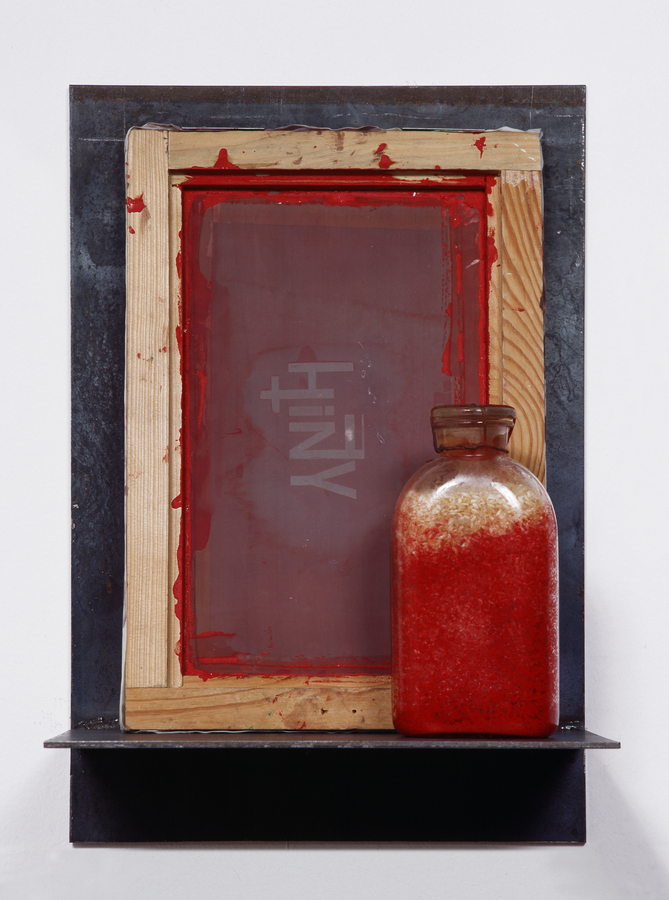
Krzysztof Bednarski, Hiny, 1982, Zachęta—National Gallery of Art, Warsaw, Poland.
In the sculpture titled Hiny (1982), Krzysztof Michał Bednarski enclosed rice grains and printing ink in a glass bottle, and put them together with authentic screen-printing tools he had used to produce underground newspapers during martial law in Poland. The expectation was for the rice to absorb the ink and gradually turn from white to red over time. This way, the work was meant to influence the viewer not only visually, but also through the process itself, as a slow-paced record of the change.
The process, however, was disrupted by an unexpected incident. In 1991, while being transported to Tokyo for the artist’s exhibition, the bottle fell over, and nearly all of the rice turned red. Exhibition organizers wanted to replace it with new rice but did not have the same type as used originally—and went for Japanese rice instead. The artist accepted that accidental intervention in the material of his work.
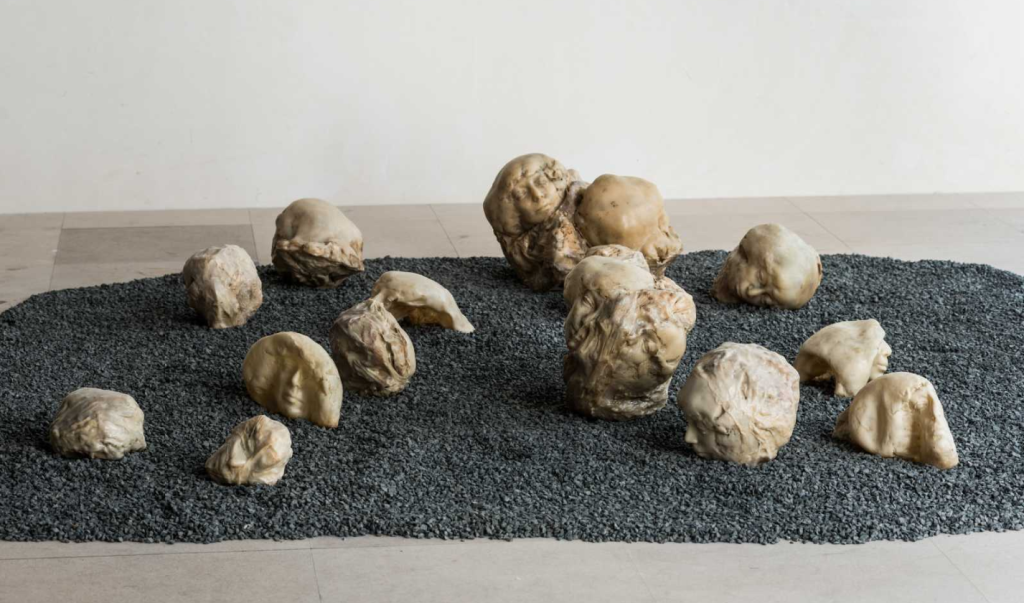
Alina Szapocznikow, Tumors Personified, 1971. © The Estate of Alina Szapocznikow, Galerie Loevenbruck, Paris— Hauser&Wirth. Work from the Zachęta collection.
In Tumours Personified (1971), one of the most moving series created by Alina Szapocznikow, polyester becomes a vehicle for expressing intimate physical truth. The work consists of over a dozen head casts, which are deformed self-portraits. Born of the artist’s watching her own body disintegrate, the sculptures record her struggle with cancer and express attempts at coming to terms with the disease. By sinking cotton wool, newspapers, and photographs in the transparent mass, Szapocznikow created sculptures that both portray her and commemorate the pain.
The artist made the first self-portrait cast of her own face in 1965, and went on to produce casts of various body parts while experimenting with new materials such as polyester resin. Over time, autobiographical topics came to dominate her works. The late 1960s saw the creation of the series titled Bellies, Fetishes and Tumours, with photographs sunk into the polyester mass; as the artist’s disease progressed, that last series was continued as Great Tumours, Souvenirs, and finally Tumours Personified.
Contemporary art continues to surprise us, not only with its forms, but also with the unconventional materials used to create it. Artists’ hands turn the seemingly banal or ephemeral materials into powerful means of expression. The collection at the Zachęta—National Gallery of Art in Warsaw, Poland, proves that the limits of art are defined by the limits of imagination, or even extend further beyond.
Text by Justyna Wydra
DailyArt Magazine needs your support. Every contribution, however big or small, is very valuable for our future. Thanks to it, we will be able to sustain and grow the Magazine. Thank you for your help!

Zachęta – National Gallery of Art in Warsaw promotes contemporary art, showcasing key 20th–21st century works. Its 3,700-piece collection spans painting, sculpture, video, and performance. The gallery hosts temporary exhibitions and, for over 70 years, has overseen Poland’s participation in Venice Biennale.

Leigh is a writer, reader, art lover, radio nerd and herbalist based in Nashville, TN.
Sliman Mansour, one of the leading figures in Palestinian art, died yesterday at the age of 79. Mansour’s practice was profoundly intertwined...
Martha Teverson 25 August 2026
There is a particular vertigo in crouching down to look at something the size of a fingernail. Since 2006, Slinkachu has built an entire career...
Errika Gerakiti 3 August 2026
Few would claim real shock at the loss of an artist a month shy of turning 89. And then David Hockney passed away on June 11. Born in 1937, the lad...
MJ Rivera 22 June 2026
Between marquee art fairs, auction-house madness, downtown openings, uptown previews, long-awaited gallery and museum exhibitions, and the artsy...
MJ Rivera 28 May 2026