Niki de Saint Phalle, Three Graces, 1999, installation view from New York Avenue Sculpture Project: Niki de Saint Phalle, National Museum of Women in the Arts, Washington, DC, USA. Photo from Lee Stalsworth.
We all have seen somewhere these voluminous, beautifully dressed, and dancing sculptures. They are called Nanas, and they were made by a French-American artist, Niki de Saint Phalle, a woman, a precursor of feminist art, and an extremely talented sculptor. Read on to learn how Nana came to be and what meanings she carries.
Nana’s Origins
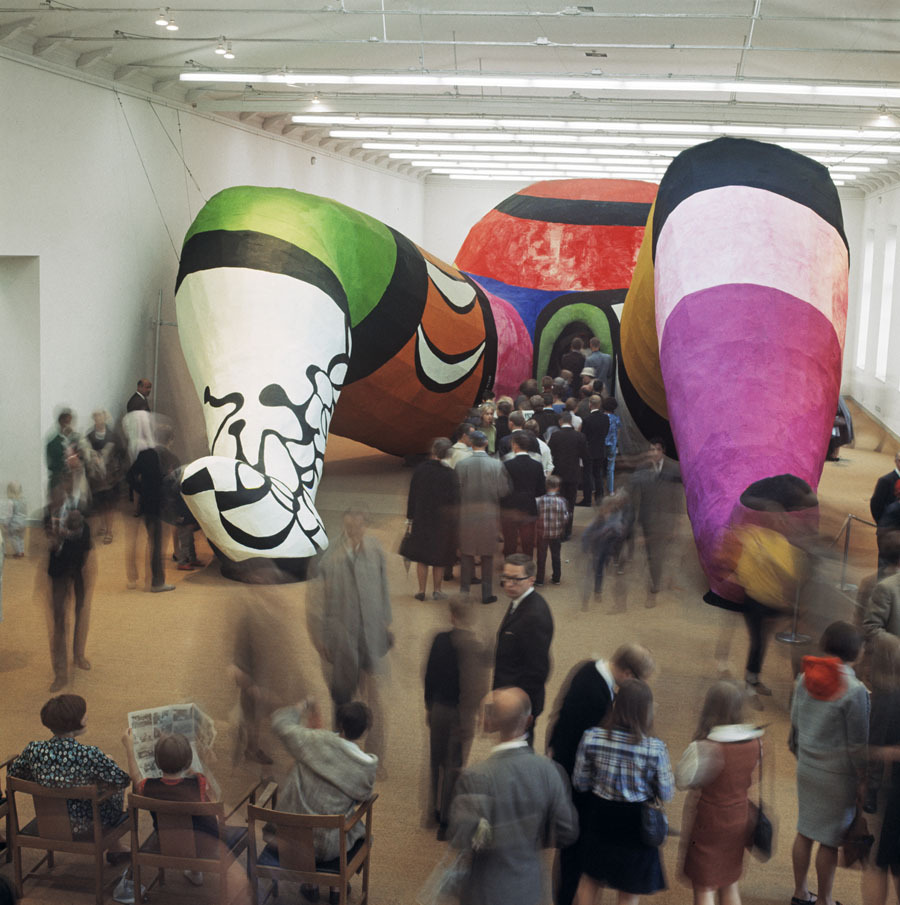
Niki de Saint Phalle, Hon, 1966, Moderna Museet, Stockholm, Sweden. ArchDaily.
In 1966, in Stockholm, Sweden an incredible art event occurred about which not even the press present at the launch knew what to say. A gigantic version of a strange form of sculpture known as Nana Statues was to be found at the Moderna Museet entitled Hon-en-Katedrall.
Three international artists had been brought together under the auspices of the Director of Moderna Museet of Sweden, Pontus Hulten, to create something in collaboration for the museum: Niki de Saint Phalle (French-American), Jean Tinguely (Swiss), and Per Olof Ultvedt (Swedish).
After much deliberation and frustration, a decision was made to create a giant version of one of Niki de Saint Phalle’s Nana statues. Named Hon (“she” in Swedish), this colossal “cathedral” to womanhood took 40 days to create and was designed to be entered through the birth canal, and explored with, it must be said, trepidation by those who wished to experience a return to the womb. Saint Phalle described this work as “a doll’s house for adults just big enough to sit and dream in.”
10 years earlier, in 1956, Saint Phalle met the artist Jean Tinguely and their collaborations appear to have released her unique talent. Prior to this moment, she had become famous for her abstract works where she used guns to shoot bags of paint over the canvas. But now, Saint Phalle turned her attention to another form and her statues were voluptuous depictions of women in all manner of positions. Made of paper mache, the Nana statues explored the female role in society. From these statues, Hon was the only natural development of Saint Phalle’s ideas.
Niki de Saint Phalle, Three Graces, 1999, National Museum of Women in the Arts, Washington, DC, USA. Meer.
Inspiration
Nana statues were originally inspired by a pregnant friend of Saint Phalle’s. The original statues were made of fabric and found objects and as more were created, Saint Phalle used polyester, ceramic, and other components to make the statues more curvaceous.
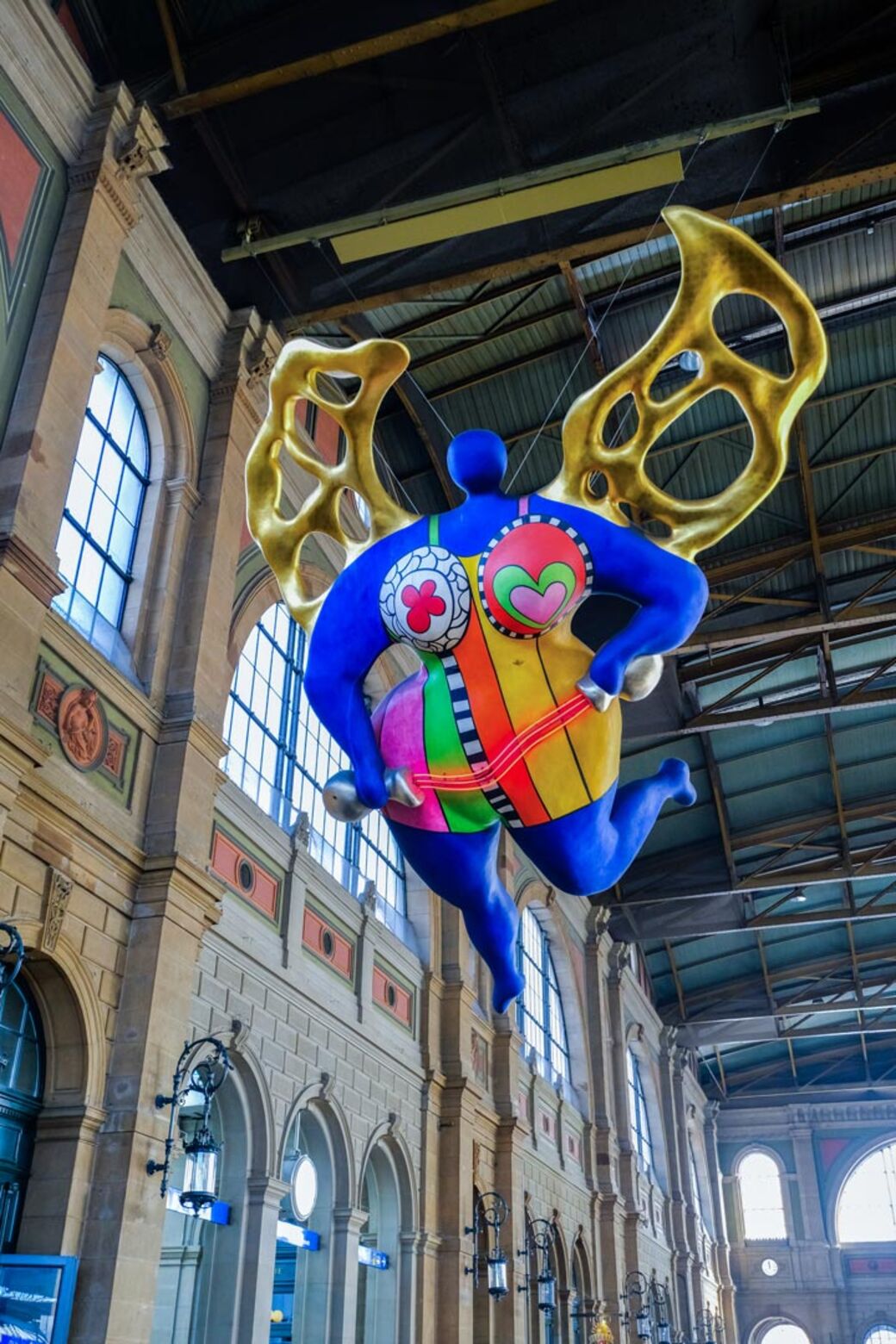
Niki de Saint Phalle, Guardian Angel, 1998, Zurich Station, Zurich, Switzerland. Hello Zurich.
Sculpture
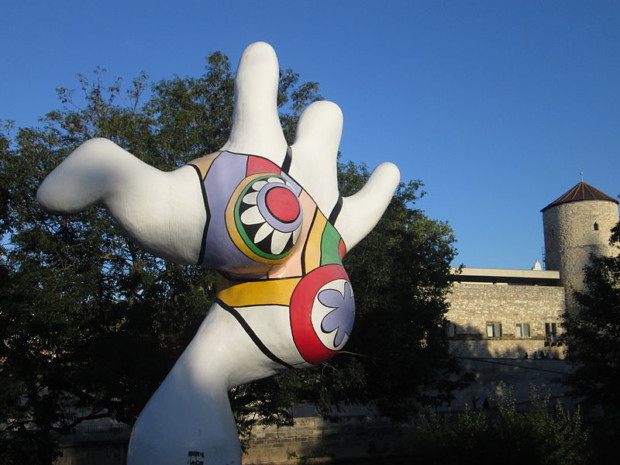
The Nana statues can be found all over the world as seen in the image below and it can be safely said that they are eye-catching and thought-provoking all in one beautifully voluptuous body.
Niki de Saint Phalle, Sophie, Hintergrund Beginen, Hanover, Germany. Photograph by Gil Maria Koebberling via Wikimedia Commons (CC-BY-SA-3.0).
We love art history and writing about it. Your support helps us to sustain DailyArt Magazine and keep it running.
DailyArt Magazine needs your support. Every contribution, however big or small, is very valuable for our future. Thanks to it, we will be able to sustain and grow the Magazine. Thank you for your help!
'Painting the Light: The Story of Berthe Morisot, First Woman Impressionist' is written by Natalia Iacobelli and illustrated by Rosanna Tasker. Read about this inspiring new children's book from Reycraft Books.
Rolinda Sharples painted the world of Jane Austen, and the political turmoil unfolding beyond the ballroom. Her paintings capture Regency society as...
Bologna, in northern Italy, fostered more women artists in the early modern period than any other European city. Nowhere else matched the number, the...