Painting

Are You Into Illusions? Oops, It’s Op Art again!

Magda Michalska 22 April 2017 min Read

Ever been to an optometrist? Then you probably know these graphic cards which check whether you are colour blind. I remember how stressed I always felt to do them right.
Well, Op Art, that is Optical Art, may seem very very very similar to those. With one small difference: Op Art is about creating illusions and making us confused. So no worries if you see something move, you are totally fine.

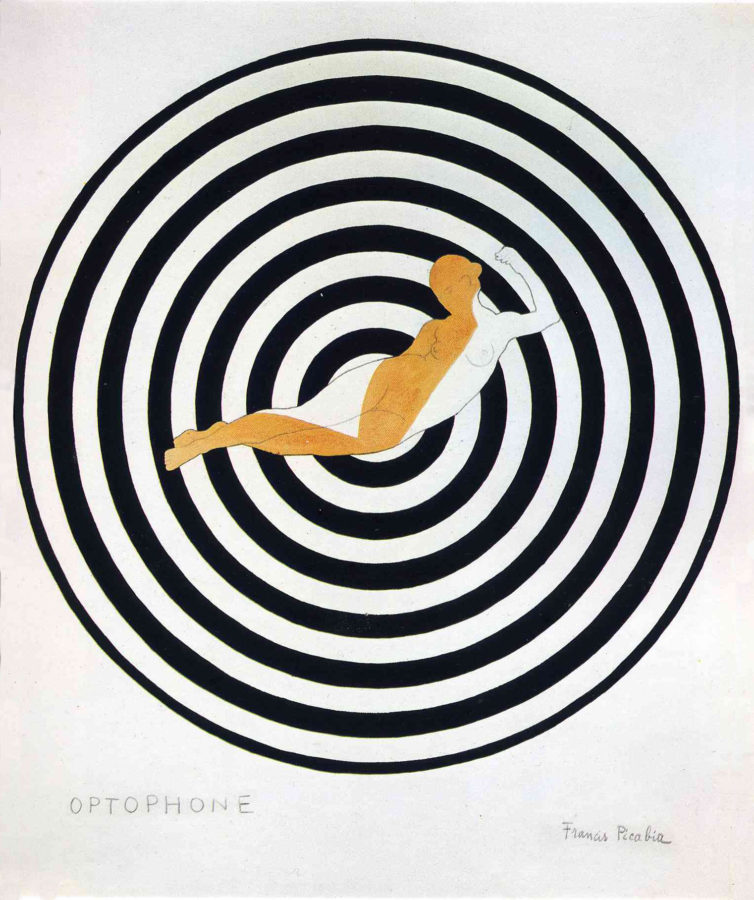
Dada circles and Op Art
Francis Picabia, Optophone I, c. 1921-22, source: Wikimedia op art
Francis Picabia, Optophone I, c. 1921-22, source: Wikimedia

It all started already with Dada. Dada artists were the first ones to play with the eye and illusions, following the searches by the Post-Impressionists like Seurat. Simultaneously some  similar works were developed by the artists associated with Bauhaus, yet with a more practical scope. The world war II silenced for a while the next explorations, to let them rise again in the fifties with…

Victor Vasarely
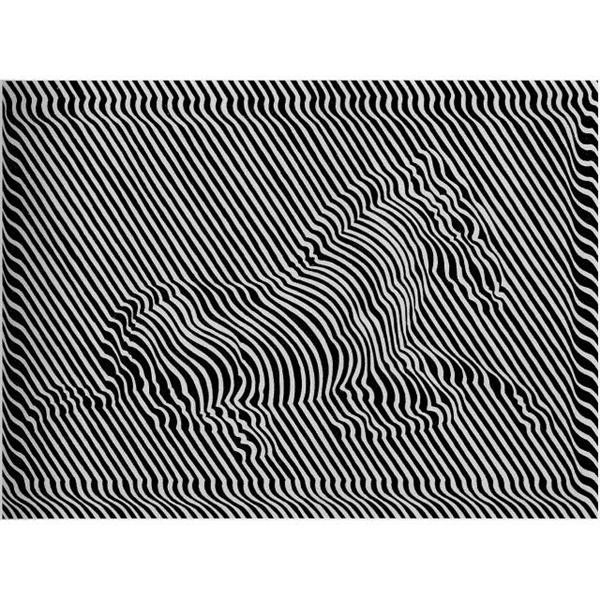
Victor Vasarely, Zebra, 1950, Source: Christies. op art
Victor Vasarely, Zebra, 1950, Source: Christies.

This Hungarian-French artists created his first zebras already in the thirties, to pick up the subject twenty years later. Then he progressed to more abstract works based on the interactions between different shapes, or even more simply, lines. He investigated how lines repeated on a surface in a certain way can create movement.
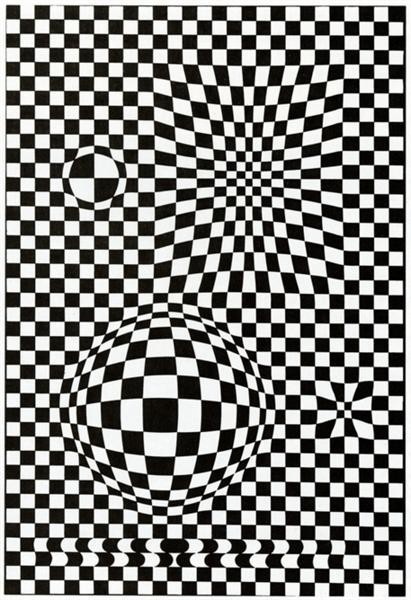
Victor vVasarely, Vega, 1957, source: Wikiart op art
Victor Vasarely, Vega, 1957, source: Wikiart

The Responsive Eye

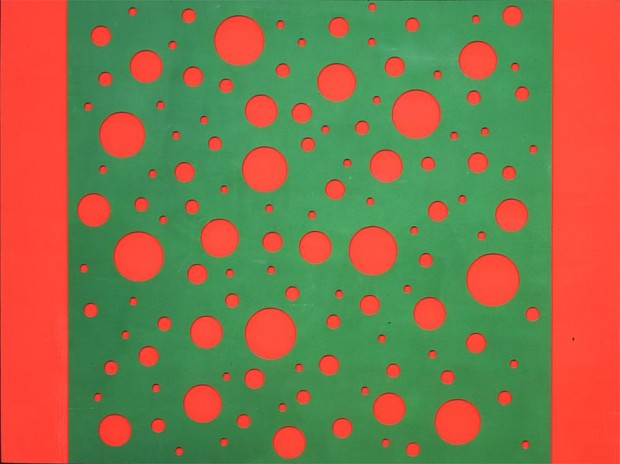
Wen-Ying Tsai, Super-imposed Painting- Random Field, 1963, source: Wikimedia op art
Wen-Ying Tsai, Super-imposed Painting- Random Field, 1963, source: Wikimedia

This was the title of a 1965 exhibition organized in MoMA in New York in which a number of artists, very diverse because ranging from minimalists to op artists, showed their works dealing with the notions of how our eyes perceive things. The critics did not like it at all, as they compared Op to mere tricks of the eye, but the public loved it and kept on coming.

Still in vogue
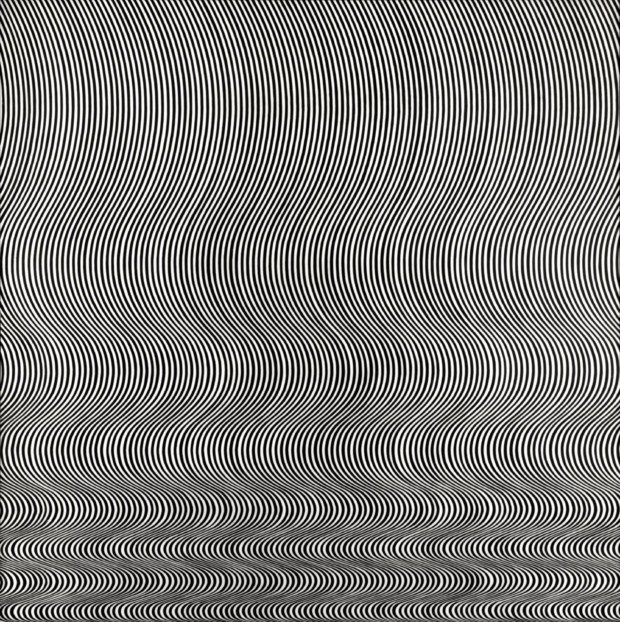
Bridget Riley, Fall, 1963, Tate Britain op art
Bridget Riley, Fall, 1963, Tate Britain

Although the 1960s were the hay days of the trend, Op art remains attractive and reused, especially in the commercial context, just think of a textile market for example. Who wouldn’t like to wear these stripes?!
The only thing I wonder about: how did they paint it without getting dizzy?
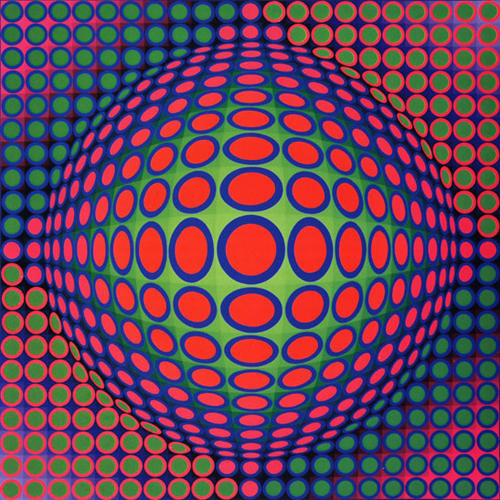

Victor Vasarely, Vega 200, 1968, Source: Wikimedia op art
Victor Vasarely, Vega 200, 1968, Source: Wikimedia

Get your daily dose of art

Click and follow us on Google Profile

Recommended

Painting

Goya’s Visions of Fear: Witches and Saturn

Three figures hover in the air, their bodies angled downward as they descend upon a limp man below. His arms stretch outward, his body slack, as if...

Frank Schildiner 28 May 2026

Flower Symbolism in Art. Adriaen van Utrecht, Still Life with Bouquet and Skull, c. 1642. Private collection. Via Wikimedia Commons. Painting

The Flora of Folklore: Hidden Flower Symbolism in Art’s Greatest Paintings

Every Old Master canvas speaks in two registers at once: one for the eye, one for those who know how to read the flowers. Artists used flower...

Errika Gerakiti 18 May 2026

Face to face Painting

Georges Papazoff: The Surrealist Who Refused to Behave

Too wild for the canon, too slippery for nationalism, and too early to be officially celebrated: that’s Georges Papazoff—a 20th-century Bulgarian...

Katie Mikova 2 April 2026

Painting

Nakedness or Nudity? To Be a Woman Is to Perform

Throughout the centuries, women’s bodies have consistently been staged for display rather than simply allowed to exist. John Berger’s...

Guest Author 12 March 2026