


Halloween Monsters: What Our Fears Reveal About Society
Halloween monsters have long served as mirrors of human fear and imagination. From vampires and witches to zombies and digital phantoms, they reveal...
Errika Gerakiti 30 October 2025
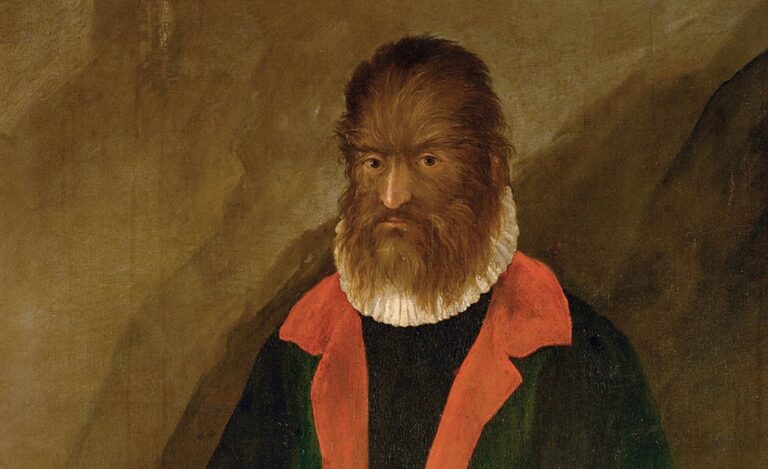
Peter Gonsalvus, 1580, Kunsthistorisches Museum, Vienna, Austria. Detail.
The Kunsthistorisches Museum in Vienna, one of the foremost museums in the world, owns rich holdings comprising artworks from seven millennia – from Ancient Egypt to the late 18th century. We decided to share some masterpieces from this museum with you. Check out 5 weird portraits from the Kunsthistorisches Museum collection that will make you wonder about human physiognomy. Enjoy!
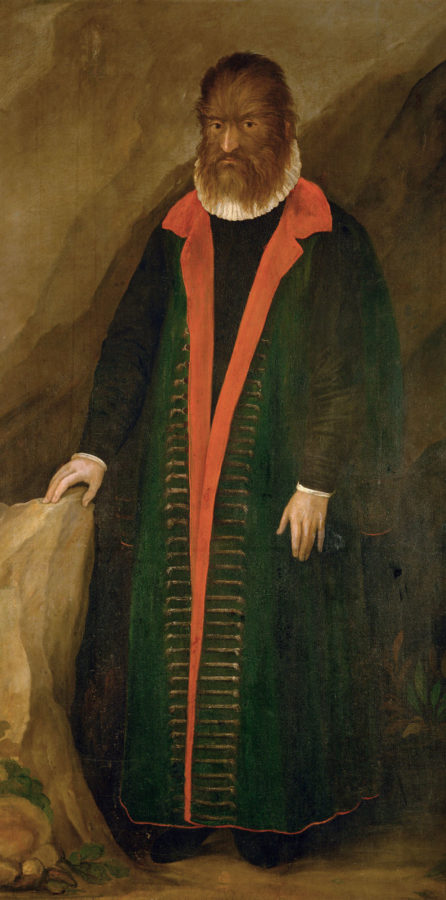
Petrus Gonsalvus, “the man of the woods,” was born in 1537 in Tenerife. His life has been well chronicled as he became famous during his lifetime because of his condition called hypertrichosis, an abnormal amount of hair growth over the body. Gonsalvus was a nobleman, although he was never considered fully human in the eyes of his contemporaries. He married and had children (of which four out of seven were also afflicted with hypertrichosis). It is believed that the marriage between Petrus Gonsalvus and lady Catherine inspired the fairy tale Beauty and the Beast.
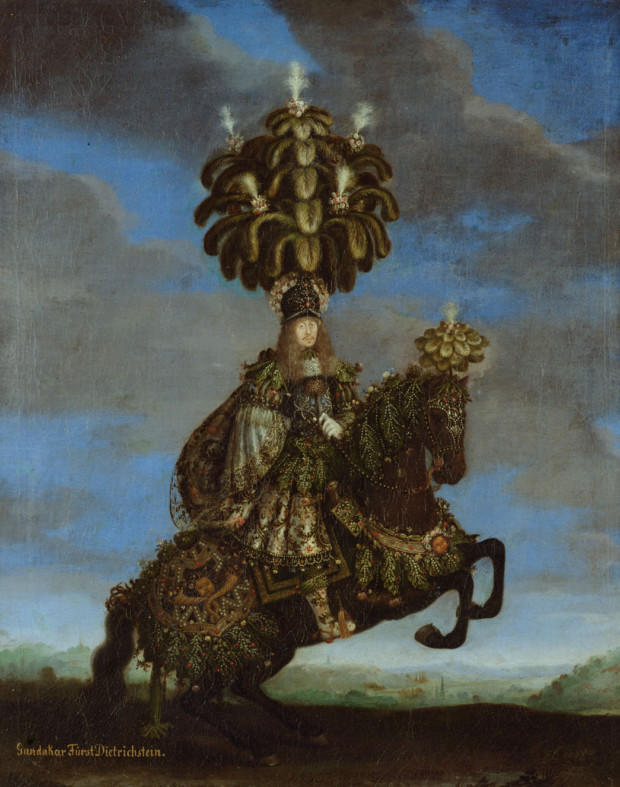
Prince Gundakar took part in the equestrian ballet, one of the elaborate festivities held at the Viennese court to mark the marriage of Emperor Leopold I and the Spanish infanta Margarita Teresa (that famous one from Velázquez portraits) in Vienna in 1667. I really wonder how on earth this poor horse endured all these decorative elements – they seem to be heavy!
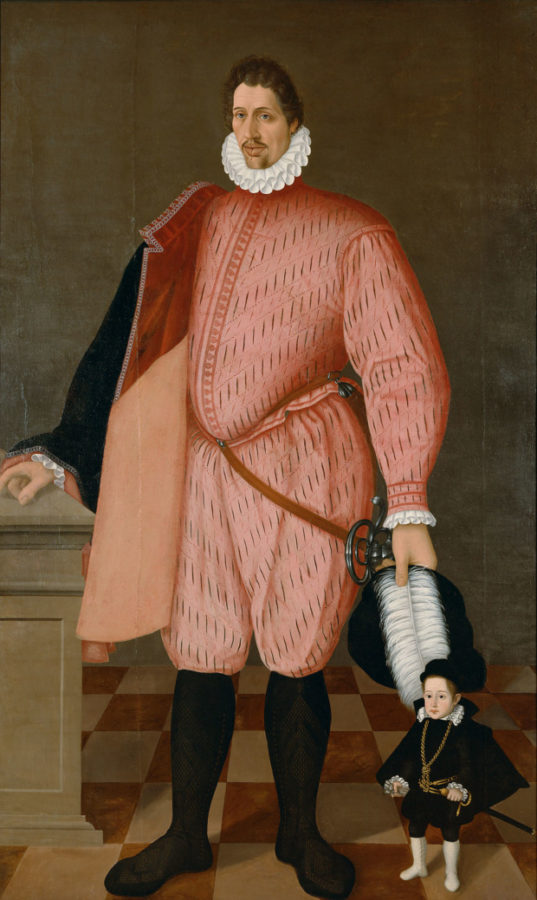
Legend has it that the men in this portrait are Archduke Ferdinand’s court giant, Bartlmä Bon, and court dwarf, Thomele. The Habsburg court was famous of its love of curiosities and interest in weird discoveries. Both sitters often played their part in court festivities and pageants. But why the dwarf looks like a child, I have no idea.
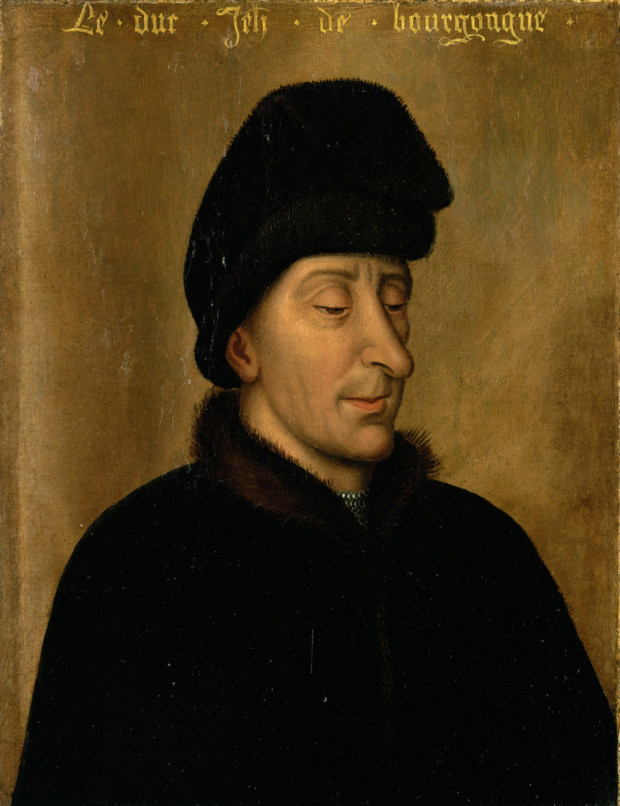
Duke John the Fearless was the ruler of a territory that, at the time, was regarded as the most powerful of Western Europe. He was murdered in 1419 on the bridge at Montereau during a parley with the French dauphin (the future Charles VII of France), by Tanneguy du Chastel and Jean Louvet, the dauphin’s close counselors. Sounds a bit like Games of Thrones, doesn’t it? Still, we published this portrait here because of Duke’s famous long nose.
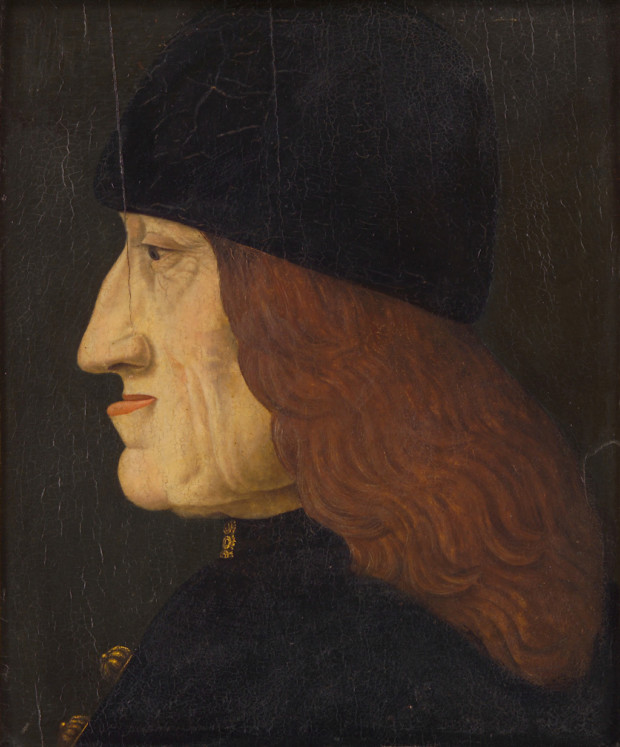
Frederick III, called the Peaceful, was Holy Roman Emperor from 1452 until his death, and the first emperor of the House of Habsburg. While in power, Frederick concentrated on re-uniting the lands he considered to rightfully belong to the Habsburg family of Austria. He was way less interested in Imperial affairs. Because he felt entitled to the lands of Hungary as well as by the Burgundian inheritance, was the first to establish the later Habsburg Empire. During his lifetime, he was mocked as “Arch-Sleepyhead of the Holy Roman Empire,” but today is increasingly seen as a quite efficient ruler.
DailyArt Magazine needs your support. Every contribution, however big or small, is very valuable for our future. Thanks to it, we will be able to sustain and grow the Magazine. Thank you for your help!

Art Historian, founder and CEO of DailyArtMagazine.com and DailyArt mobile app. But to be honest, her greatest accomplishment is being the owner of Pimpek the Cat.

Bec is an art nerd, bicycle enthusiast, cat mom, artist/crafter/maker from sunny Toronto, Canada.
Halloween monsters have long served as mirrors of human fear and imagination. From vampires and witches to zombies and digital phantoms, they reveal...
Errika Gerakiti 30 October 2025
When you picture Halloween, a flood of familiar images rushes in: glowing jack-o’-lanterns, fluttering bats, skeletons, and black cats. But the...
Errika Gerakiti 31 October 2025
Marian Henel’s tapestries are huge. The largest one measures over 6 m in length and 3 m in width (19 ft. 8 in. by 9 ft. 10 in.). Created in the...
Zuzanna Stańska 22 May 2026
Los Caprichos are some of the most disturbing of Francisco Goya’s works. A sharp critique of society and its values, there are plenty of monsters...
Edoardo Cesarino 31 October 2024