


Masterpiece Story: Judith and Holofernes by Caravaggio
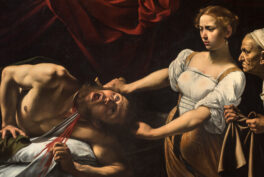
Judith and Holofernes is a Caravaggio masterpiece that captures Biblical murder and drama. Rarely has death been captured so intensely and violently...
James W Singer 13 September 2026
11 November 2021 min Read
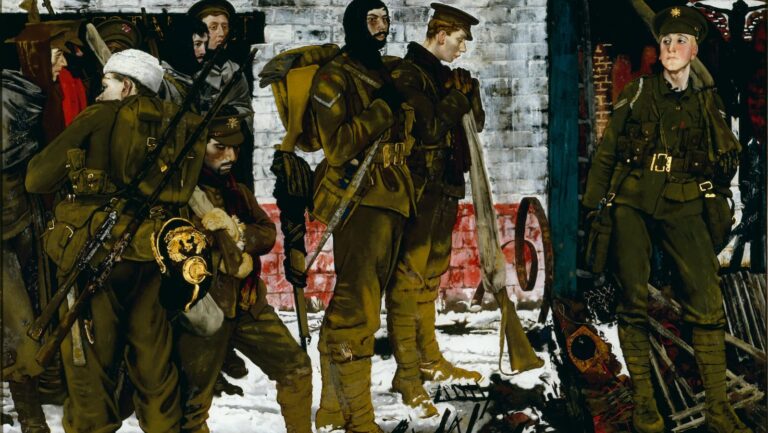
Eric Kennington, The Kensingtons at Laventie, 1914, Imperial War Museum, London, UK.
The painting The Kensingtons at Laventie, which we present today, is Eric Kennington’s most famous work. It has been described as “one of the iconic images of the First World War”. When it was first exhibited in 1916, the painting had a large impact and hastened the establishment of an official British scheme for war artists.
As today it’s Remembrance Day we feel obliged to feature a painting regarding the First World War.
The Kensingtons at Laventie is a large oil painting on glass by Eric Kennington completed in 1915 that depicts a First World War platoon of British troops. The group depicted was Kennington’s own infantry platoon; Platoon No 7, C Company, the 1/13th (County of London) Battalion, London Regiment (Kensington), which was commonly known as the Kensingtons.
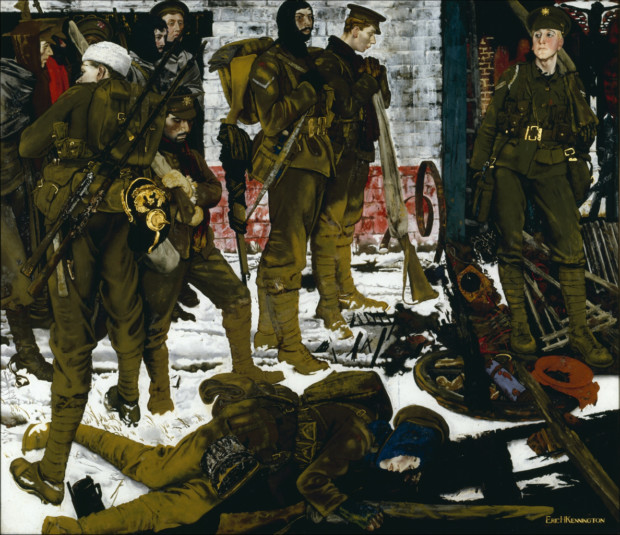
On 6 August 1914 Kennington enlisted with the 1/13th (Kensington) Battalion of the London Regiment, as their recruiting office was the nearest one to his London studio. He fought with his battalion on the Western Front from November 1914, but was wounded in January 1915. One toe of Kennington’s left foot was amputated, and he was fortunate not to lose a foot due to an infection. He spent four months in hospital in London and Liverpool before being discharged as unfit for further service in June 1915. After his convalescence, he spent six months painting The Kensingtons at Laventie.
During his few months of active service before he was wounded, Kennington’s unit suffered 127 casualties, approximately 20 percent of its original strength; by the time he completed the painting, 90 percent of the 700 soldiers who arrived in France with the battalion in late 1914 had been killed or wounded.
The Kensingtons spent the extremely cold winter of 1914 in the front-line trenches in the Pas-de-Calais in France. Their trenches were poorly built and frequently under artillery fire. The painting depicts a moment when the platoon, having spent four days and nights in a forward fire trench, have made their way through a flooded communications trench to the ruined village of Laventie. The men are waiting for the order to ‘fall in’ for the 5 miles march to an overnight billet outside of shelling range
The painting was first exhibited at Goupil Gallery on Regent Street from April to July 1916. The exhausted soldiers caused a sensation. The painting was widely praised for its technical virtuosity, iconic color scheme, and its “stately presentation of human endurance”. Kennington himself was appointed a war artist and returned to France in 1917.
DailyArt Magazine needs your support. Every contribution, however big or small, is very valuable for our future. Thanks to it, we will be able to sustain and grow the Magazine. Thank you for your help!

Art Historian, founder and CEO of DailyArtMagazine.com and DailyArt mobile app. But to be honest, her greatest accomplishment is being the owner of Pimpek the Cat.

Judith and Holofernes is a Caravaggio masterpiece that captures Biblical murder and drama. Rarely has death been captured so intensely and violently...
James W Singer 13 September 2026
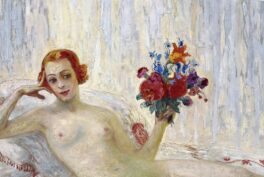
Explore an astonishing 1915 nude self portrait by American modernist painter Florine Stettheimer.
Candy Bedworth 21 September 2026
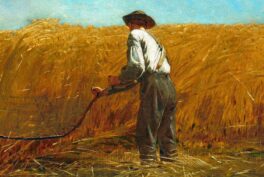
Winslow Homer (1836–1910) was one of the leading American Realist painters. His painting The Veteran in a New Field is a masterpiece of late...
James W Singer 30 August 2026
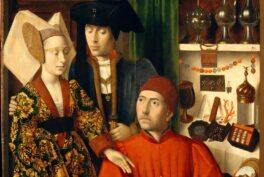
At first glance, A Goldsmith in His Shop (1449) appears to depict an ordinary visit to a jeweller. Yet Petrus Christus transformed an ordinary...
Shivani Gupta 23 August 2026